
 Download PDF
Market Overview
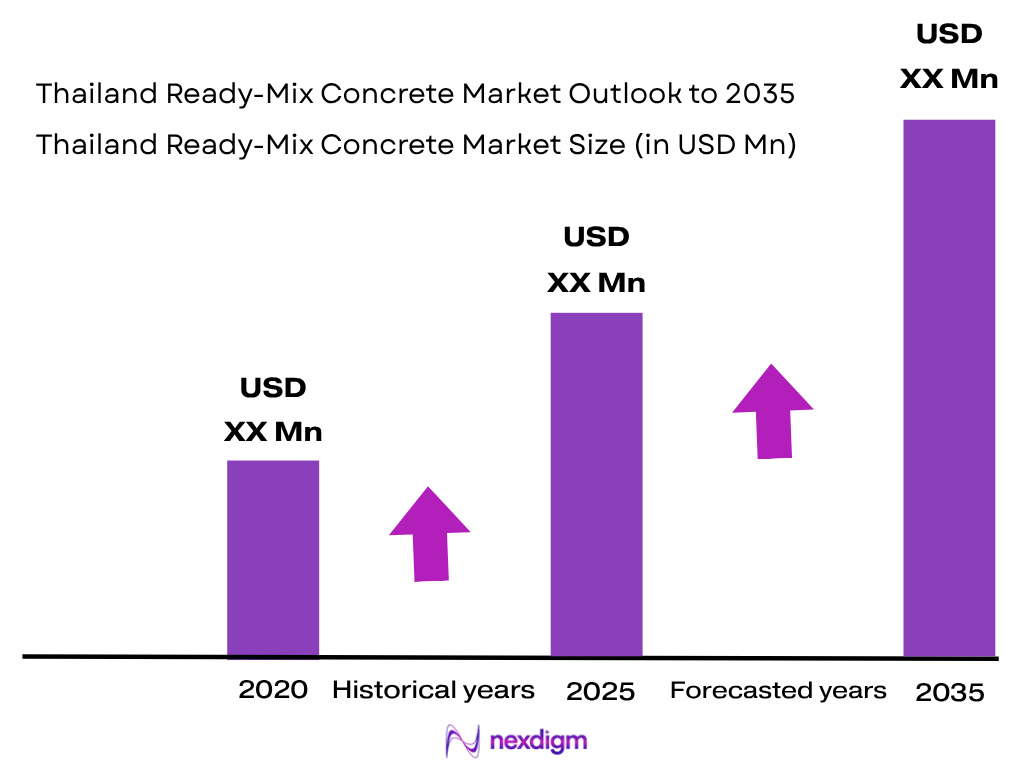
The Thailand ready-mix concrete market is valued at ~USD XX billion in 2024 and is projected to expand at a CAGR of ~XX% during 2026-2035. The market growth is supported by infrastructure modernization, urban redevelopment, industrial estate expansion, and increasing adoption of quality-controlled concrete solutions. Demand is primarily driven by transportation projects, residential construction, commercial developments, and manufacturing investments. According to Thailand’s construction sector indicators, infrastructure spending and private construction activity remain key contributors to concrete consumption, particularly in metropolitan and industrial regions.
The Thailand ready-mix concrete market is concentrated around Bangkok, the Eastern Economic Corridor (EEC), Chonburi, Rayong, and other economically active provinces due to high construction intensity and industrial development. Bangkok dominates demand because of high-rise residential projects, commercial buildings, urban redevelopment, and transportation infrastructure. The EEC region has emerged as a major consumption center due to industrial estates, automotive manufacturing facilities, logistics infrastructure, and port-related development. These regions benefit from established construction ecosystems, better transportation connectivity, and availability of ready-mix suppliers.
Market Segmentation
By Concrete Type
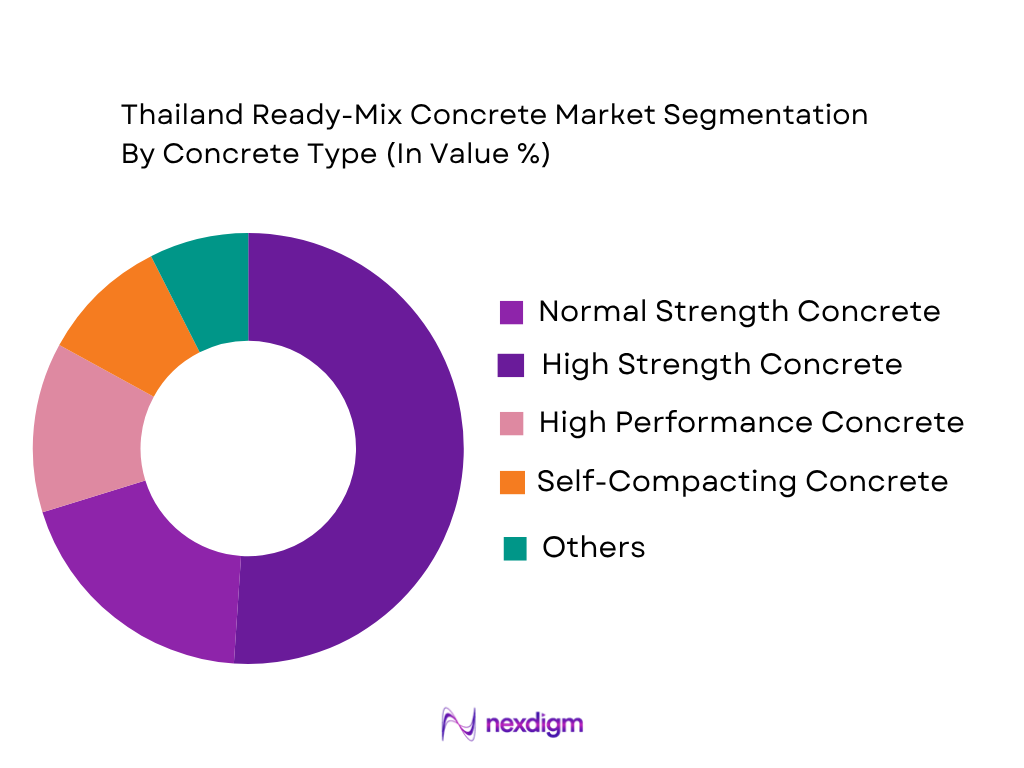
Thailand ready-mix concrete market is segmented by concrete type into normal strength concrete, high strength concrete, high performance concrete, self-compacting concrete, fiber reinforced concrete, and lightweight concrete. Normal strength concrete holds the dominant market position due to its extensive use across residential buildings, commercial structures, roads, and general construction applications. The segment benefits from standardized construction practices and suitability for large-scale projects requiring conventional structural performance. Infrastructure projects, housing developments, and commercial buildings continue to rely heavily on normal strength mixes because of their availability and compatibility with existing construction methods. However, demand for specialized concrete types is increasing due to requirements for higher durability, faster construction cycles, and sustainable building solutions.
By Application
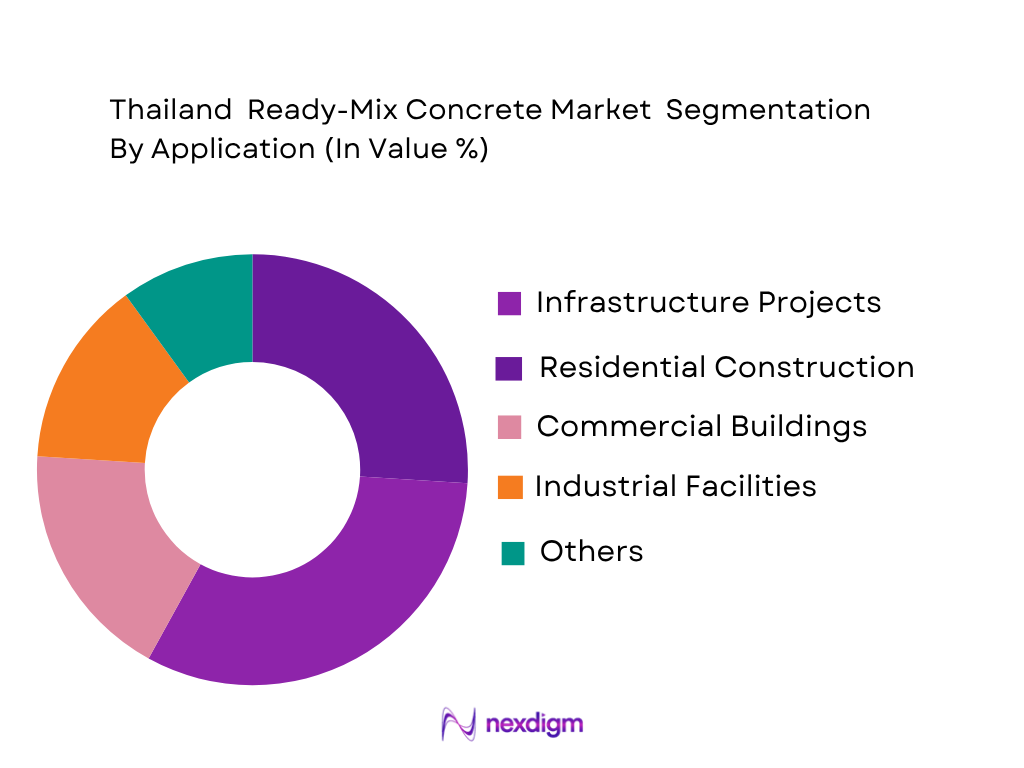
Thailand ready-mix concrete market is segmented by application into residential construction, commercial construction, industrial facilities, infrastructure projects, transportation infrastructure, and tourism infrastructure. Infrastructure projects represent a leading application segment due to continuous government investment in highways, rail networks, airports, and urban transportation systems. Large infrastructure projects require significant volumes of consistent-quality concrete, creating strong demand for ready-mix suppliers. The expansion of industrial zones and economic corridors also contributes to demand as factories, warehouses, and logistics facilities require durable concrete structures. Additionally, residential and commercial construction activities in Bangkok and surrounding urban areas support regular consumption of ready-mix concrete for buildings and redevelopment projects.
Competitive Landscape
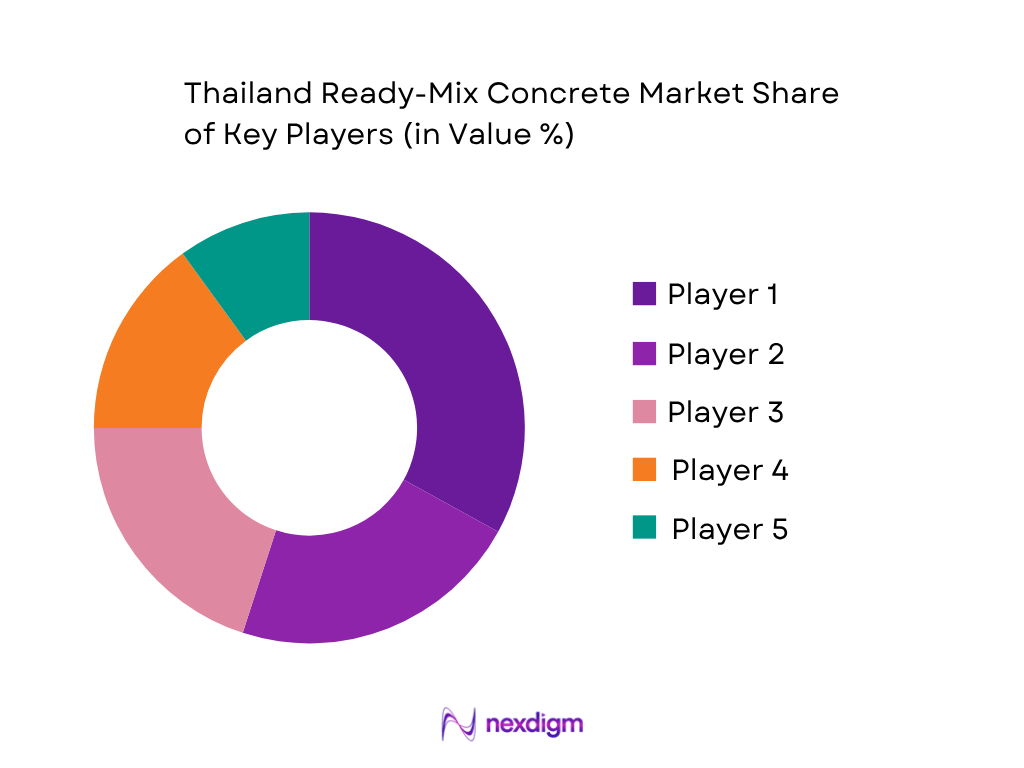
The Thailand ready-mix concrete market is characterized by the presence of integrated cement companies, specialized ready-mix producers, and construction companies with internal concrete capabilities. Major players compete through production capacity, batching plant networks, geographic coverage, product innovation, sustainable concrete solutions, and long-term supply contracts with infrastructure developers and contractors.
| Company | Establishment Year | Headquarters | Business Focus | Ready-Mix Concrete Capability | Geographic Presence | Key Strengths | Product Portfolio |
| Siam Cement Group (SCG) | 1913 | Bangkok, Thailand | ~ | ~ | ~ | ~ | ~ |
| CPAC | 1975 | Bangkok, Thailand | ~ | ~ | ~ | ~ | ~ |
| Siam City Cement Public Company Limited (SCCC) | 1969 | Bangkok, Thailand | ~ | ~ | ~ | ~ | ~ |
| TPI Polene Public Company Limited | 1987 | Bangkok, Thailand | ~ | ~ | ~ | ~ | ~ |
| Asia Cement Public Company Limited | 1989 | Bangkok, Thailand | ~ | ~ | ~ | ~ | ~ |
Thailand Ready-Mix Concrete Market Analysis
Growth Drivers
Eastern Economic Corridor Development
The Eastern Economic Corridor (EEC) continues to support demand for ready-mix concrete through industrial infrastructure, logistics facilities, and urban development projects across Chonburi, Rayong, and Chachoengsao. The National Economic and Social Development Council reported continued investment activity in targeted industrial sectors, supported by Thailand’s manufacturing base and foreign direct investment inflows. Thailand recorded inward foreign direct investment applications valued at THB 848 billion in 2024, according to the Thailand Board of Investment, strengthening demand for factories, warehouses, and industrial construction requiring controlled concrete quality. The World Bank reported Thailand’s GDP at approximately USD 526 billion in 2024, reflecting continued economic activity supporting construction requirements. Large-scale industrial projects within the EEC require consistent concrete strength, faster project execution, and centralized batching operations, increasing contractor preference for ready-mix concrete compared with conventional site mixing. The expansion of industrial estates, transportation links, and manufacturing facilities is therefore creating sustained opportunities for ready-mix suppliers with regional plant networks and specialized concrete solutions.
Bangkok Urban Expansion and Infrastructure Modernization Programs
Bangkok’s continued urban development, high-density construction activity, and infrastructure modernization programs remain significant drivers for ready-mix concrete demand. Thailand’s urban population reached approximately 36 million people in 2024, according to World Bank urban development indicators, increasing demand for residential buildings, commercial complexes, transportation infrastructure, and public facilities. The Bangkok Metropolitan Administration has continued implementing infrastructure improvement projects focused on transportation connectivity, drainage systems, and urban resilience. Thailand’s transport infrastructure development includes expansion of mass transit networks, highways, and logistics corridors requiring large volumes of quality-controlled concrete. The Ministry of Transport reported continued investment allocation toward rail and road infrastructure development, supporting construction activity across metropolitan areas. Ready-mix concrete benefits from these projects because it enables consistent quality, reduces on-site preparation requirements, and improves construction efficiency in densely populated locations. The concentration of high-rise buildings, commercial developments, and public infrastructure projects around Bangkok and surrounding provinces continues to strengthen demand for advanced ready-mix concrete solutions.
Market Challenges
Raw Material Supply Variability and Cement Supply Dependency
Thailand’s ready-mix concrete industry faces challenges from fluctuations in raw material availability, particularly cement, aggregates, and construction minerals. Concrete production depends heavily on stable supplies of cement and aggregates, while regional differences in quarry locations create logistical complexities. Thailand produced approximately 40 million tonnes of crude cement-related materials in recent years, according to national industrial statistics, highlighting the scale of material requirements supporting construction activities. The Ministry of Industry regulates mineral extraction and quarry operations, which can affect aggregate availability through environmental approvals and operational restrictions. Ready-mix producers must maintain inventory management systems to ensure uninterrupted supply for infrastructure and real estate projects. The World Bank reported Thailand’s economic growth remained moderate in 2024, with construction activity influenced by investment cycles and public spending schedules. These conditions require ready-mix companies to optimize sourcing networks, maintain multiple supplier relationships, and invest in efficient logistics systems to manage raw material variability and production continuity.
Transportation Distance Limitations and Operational Constraints
Transportation limitations represent a major operational challenge for Thailand’s ready-mix concrete market because concrete quality depends on timely delivery from batching plants to construction sites. Ready-mix concrete typically requires delivery within controlled timeframes, making plant location and mixer truck availability critical factors. Thailand’s geographic structure, including dispersed provincial construction markets and island regions, increases logistics complexity compared with concentrated urban markets. The Department of Land Transport reported that Thailand operates millions of registered commercial vehicles, but specialized construction transport equipment such as concrete mixer trucks requires dedicated fleet investment and maintenance. Weather conditions, traffic congestion in Bangkok, and seasonal rainfall patterns can further affect delivery schedules. Thailand recorded significant rainfall variations during the monsoon period, influencing construction timelines and concrete transportation efficiency. These operational constraints increase the importance of strategically located batching plants, route optimization systems, and fleet management technologies to maintain service reliability. Smaller suppliers may face difficulties competing due to higher operational requirements associated with transportation infrastructure.
Market Opportunities
Green Concrete Adoption and Low-Carbon Construction Materials
Growing emphasis on sustainable construction is creating opportunities for Thailand’s ready-mix concrete producers to introduce low-carbon concrete solutions and environmentally optimized materials. Thailand has committed to reducing greenhouse gas emissions under its climate targets, encouraging industries including construction materials to adopt cleaner production methods. The Ministry of Natural Resources and Environment has highlighted Thailand’s pathway toward carbon neutrality by 2050, increasing demand for lower-emission building materials. The country’s construction sector is increasingly adopting sustainable certification systems such as Thailand’s TREES green building standards, supporting demand for environmentally responsible concrete products. Low-carbon cement alternatives, supplementary cementitious materials, recycled aggregates, and optimized concrete mixtures provide opportunities for ready-mix producers to differentiate their offerings. Thailand’s industrial sector remains significant, with manufacturing contributing more than USD 100 billion in merchandise exports annually according to government trade data, creating demand for sustainable industrial facilities. Ready-mix companies investing in green concrete technologies can support infrastructure developers seeking environmentally compliant construction solutions while improving resource efficiency.
Smart Infrastructure Development and Digital Concrete Solutions
Digital transformation in construction is creating opportunities for ready-mix concrete companies through automated dispatch systems, digital ordering platforms, and advanced delivery management solutions. Thailand’s digital economy continues expanding, supported by government initiatives under the Thailand Digital Economy and Society Development Plan. The World Bank reported Thailand’s internet usage exceeded 85 million subscriptions in 2024, reflecting strong digital infrastructure adoption across businesses and consumers. Construction companies are increasingly adopting technology solutions to improve project scheduling, reduce material wastage, and enhance supply chain visibility. Smart city initiatives in Bangkok, Phuket, Chiang Mai, and other urban areas are supporting demand for technology-enabled infrastructure development. Digital concrete ordering platforms allow contractors to schedule deliveries, monitor concrete requirements, and coordinate projects more efficiently. Automated dispatch systems improve mixer truck utilization and reduce delivery delays, addressing operational challenges within the ready-mix sector. High-performance concrete applications for transportation infrastructure, industrial facilities, and advanced buildings further expand opportunities for suppliers capable of combining material innovation with digital construction management capabilities.
Future Outlook
Over the next decade, the Thailand ready-mix concrete market is expected to experience continued development driven by infrastructure expansion, industrial investment, urban redevelopment, and increasing demand for sustainable construction materials. Government transportation projects, Eastern Economic Corridor development, and private-sector real estate construction are expected to support concrete consumption. The adoption of green concrete, digital ordering systems, and advanced concrete technologies will influence future market competitiveness. Ready-mix suppliers focusing on operational efficiency, regional expansion, and environmentally responsible products are expected to strengthen their market position.
Major Players
- Siam Cement Group (SCG)
- CPAC
- Siam City Cement Public Company Limited
- TPI Polene Public Company Limited
- Asia Cement Public Company Limited
- Jalaprathan Cement Public Company Limited
- LafargeHolcim Thailand
- Eastern Concrete Products
- Bhumibol Concrete
- Ch. Karnchang Public Company Limited
- Italian-Thai Development Public Company Limited
- STECON Group
- Syntec Construction Public Company Limited
- Pre-Built Public Company Limited
- Nawarat Patanakarn Public Company Limited
Key Target Audience
- Ready-Mix Concrete Manufacturers
- Cement and Building Material Companies
- Real Estate Developers and Property Construction Firms
- Infrastructure Development Companies
- Investments and Venture Capitalist Firms
- Government and Regulatory Bodies (Ministry of Transport, Department of Public Works and Town & Country Planning, Thai Industrial Standards Institute)
- Construction Contractors and Engineering Companies
- Industrial Estate Developers and Manufacturing Companies
Research Methodology
Step 1: Identification of Key Variables
The initial phase involves developing a comprehensive ecosystem map covering Thailand’s ready-mix concrete stakeholders, including cement producers, aggregate suppliers, batching plants, contractors, developers, and infrastructure authorities. Secondary research is conducted to identify demand drivers, supply structures, regional concentration, and industry-specific variables influencing market performance.
Step 2: Market Analysis and Construction
This stage involves collecting historical market information related to concrete production, construction activity, project pipeline, application demand, and supplier operations. Market estimates are developed through analysis of construction consumption patterns, ready-mix adoption levels, production infrastructure, and demand from residential, commercial, industrial, and infrastructure sectors.
Step 3: Hypothesis Validation and Expert Consultation
Market assumptions are validated through discussions with industry participants, including ready-mix suppliers, contractors, material providers, and construction professionals. These interactions provide operational insights regarding production capacity, customer preferences, logistics challenges, and emerging trends affecting Thailand’s ready-mix concrete ecosystem.
Step 4: Research Synthesis and Final Output
The final stage combines secondary research, industry discussions, and supply-demand analysis to create a validated assessment of the Thailand ready-mix concrete market. The analysis covers market structure, competitive landscape, segmentation, future opportunities, and strategic recommendations for stakeholders.

- Executive Summary
- Research Methodology (Market Definition and Scope, Ready-Mix Concrete Ecosystem Mapping, Market Sizing Framework, Revenue Estimation Approach, Top-Down Market Assessment, Bottom-Up Market Reconstruction, Demand-Side Analysis, Supply-Side Analysis, Primary Industry Interviews, Contractor and Supplier Validation, Data Triangulation, Forecasting Framework, Market Assumptions, Research Limitations)

- Definition and Scope of Thailand Ready-Mix Concrete Industry
- Role of Ready-Mix Concrete in Thailand Construction Ecosystem
- Evolution of Commercial Batching Plant Networks
- Timeline of Major Developments in Thailand Concrete Supply Industry
- Thailand Construction Sector Overview and Concrete Demand Drivers

- Growth Drivers (Eastern Economic Corridor Development, Bangkok Urban Expansion, Infrastructure Modernization Programs, Highway and Expressway Development, Rail Infrastructure Expansion, Industrial Estate Growth, Manufacturing Facility Construction, Tourism Infrastructure Development, Public Infrastructure Spending, Increasing Contractor Preference for Quality-Controlled Concrete)
- Market Challenges (Raw Material Supply Variability, Cement Supply Dependency, Aggregate Availability Constraints, Transportation Distance Limitations, Mixer Truck Fleet Requirements, High Plant Establishment Investment, Construction Seasonality, Weather-Related Project Delays, Regional Demand Concentration, Competition from Site-Mixed Concrete)
- Market Opportunities (Green Concrete Adoption, Low-Carbon Cement Integration, Sustainable Construction Materials, Smart City Development, Industrial Park Expansion, Digital Concrete Ordering Platforms, Automated Dispatch Systems, High-Performance Concrete Applications, Recycled Aggregate Concrete, Infrastructure Rehabilitation Projects)
- Market Trends (Low-Carbon Concrete Development, Sustainable Concrete Mix Designs, Digitalization of Concrete Supply Chains, Automated Batching Technologies, High-Durability Concrete Demand, Prefabricated Construction Growth, Advanced ConcreteAdditives Adoption, Carbon Reduction in Construction Materials)
- Government Regulations and Industry Standards (Thai Industrial Standards for Concrete Products, Building Control Act Requirements, Environmental Compliance Standards, Construction Safety Regulations, Sustainable Building Guidelines, Concrete Quality Testing Standards, Aggregate Mining Regulations)
- SWOT Analysis
- Porter’s Five Forces Analysis

- By Market Value (2020-2025)
- By Concrete Consumption Volume (2020-2025)
- By Ready-Mix Production Volume (2020-2025)
- By Average Selling Price (2020-2025)
- By End-Use Application Demand (2020-2025)
- By Regional Consumption Pattern (2020-2025)

- By Concrete Strength Grade (In Value %)
Normal Strength Concrete
High Strength Concrete
High Performance Concrete
Ultra-High Performance Concrete
Self-Compacting Concrete
Fiber Reinforced Concrete
Lightweight Concrete
Specialized Construction Concrete - By Application (In Value %)
Residential Construction
Commercial Real Estate Projects
Industrial Facility Construction
Infrastructure Development Projects
Transportation Infrastructure
Energy and Utility Construction
Tourism and Hospitality Infrastructure
Public Sector Construction - By End User (In Value %)
Construction Contractors
Real Estate Developers
Government Infrastructure Agencies
Industrial Developers
Manufacturing Companies
Engineering Procurement and Construction Companies
Infrastructure Project Developers - By Supply Model (In Value %)
Direct Ready-Mix Supply Contracts
Project-Based Bulk Supply
Dealer and Distributor Networks
Contractor Procurement
Infrastructure Tender-Based Supply - By Region (In Value %)
Bangkok Metropolitan Region
Eastern Economic Corridor (EEC)
Central Thailand
Northern Thailand
Northeastern Thailand
Southern Thailand

- Market Share Analysis of Major Players (By Revenue Contribution, Production Capacity, Geographic Presence, Customer Segment, Product Portfolio)
- Cross Comparison Parameters (Ready-Mix Production Capacity, Number of Batching Plants, Geographic Coverage, Mixer Truck Fleet Strength, Concrete Grade Portfolio, Infrastructure Project Experience, Sustainable Concrete Capability, Digital Ordering and Dispatch Systems)
- SWOT Analysis
- Detailed Profiles of Major Companies
Siam Cement Group
CPAC
Siam City Cement Public Company Limited
TPI Polene Public Company Limited
Asia Cement Public Company Limited
Jalaprathan Cement Public Company Limited
Lafarge
Holcim Thailand
Bhumibol Concrete
Eastern Concrete Products
Ch. Karnchang Public Company Limited
Italian-Thai Development Public Company Limited
STECON GroupSyntec Construction Public Company Limited
Pre-Built Public Company Limited
Nawarat Patanakarn Public Company Limited

- Infrastructure Construction Analysis
- Eastern Economic Corridor Concrete Demand Assessment
- Real Estate Construction Analysis
- Industrial Construction Demand Analysis
- Contractor Procurement Analysis
- Ready-Mix Concrete Consumption Pattern Analysis
- Thailand Ready-Mix Concrete Production and Supply Chain Analysis

- By Market Value (2026-2035)
- By Concrete Consumption Volume (2026-2035)
- By Ready-Mix Production Volume (2026-2035)
- By Average Selling Price (2026-2035)
- By End-Use Application Demand (2026-2035)
- By Regional Consumption Pattern (2026-2035)


 Request a Sample
 Ask for Customization
 Get a Quote
 Enquire Now