

 Download PDF
 Download PDF
Market Overview
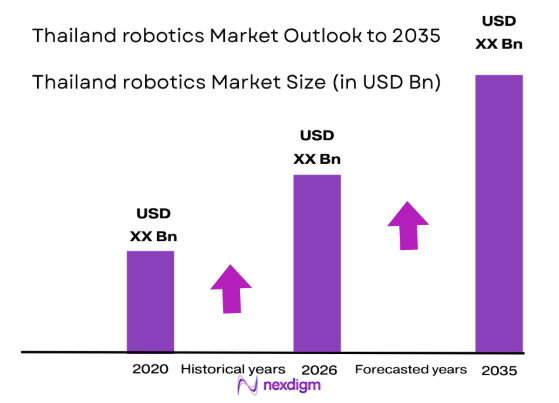
The Thailand robotics market has experienced robust growth, with the market size driven by the increasing demand for automation across various sectors. Based on a recent historical assessment, the market size is valued at approximately USD ~ billion. This growth is fueled by the rising need for industrial automation, driven by technological advancements in robotics, increased labor costs, and the push for higher efficiency across industries such as manufacturing, logistics, and healthcare. The adoption of robotics solutions in Thailand is seen as a strategic move to boost productivity and competitiveness in the global market.
Thailand has emerged as a key player in the robotics market within Southeast Asia, with a growing focus on industrial automation, smart manufacturing, and robotics integration. Dominant regions such as Bangkok, Ayutthaya, and Chonburi are leading the way due to their proximity to manufacturing hubs and infrastructure development. The Thai government’s initiatives, such as Thailand 4.0, have played a significant role in driving robotics adoption, fostering a favorable environment for robotics companies. Additionally, the increasing focus on the automotive and electronics sectors, along with the rise of robotics in healthcare, has made Thailand a hub for robotics in the region.
Market Segmentation
By System Type
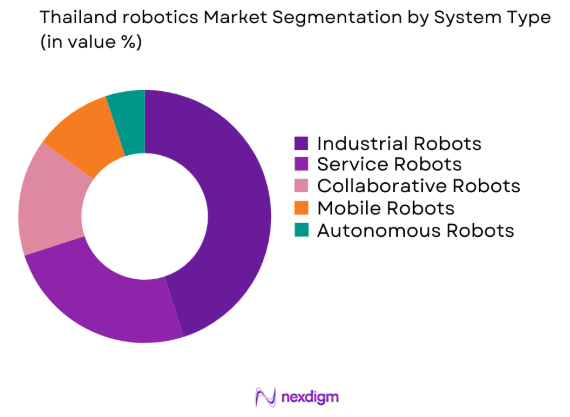
The Thailand robotics market is segmented by system type into industrial robots, service robots, collaborative robots, mobile robots, and autonomous robots. Recently, industrial robots have dominated the market share due to the country’s growing manufacturing sector, particularly in automotive and electronics. The high demand for precision, speed, and consistency in manufacturing processes has led to the widespread adoption of industrial robots, which are highly effective in repetitive tasks. Furthermore, government incentives supporting automation in manufacturing have contributed to the rapid growth of this segment.
By Platform Type
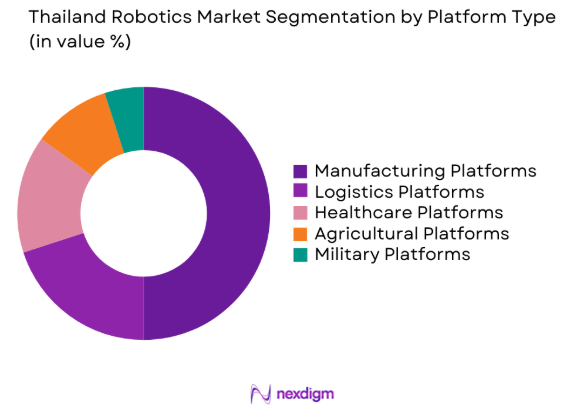
The Thailand robotics market is segmented by platform type into manufacturing platforms, logistics platforms, healthcare platforms, agricultural platforms, and military platforms. Recently, manufacturing platforms have had a dominant market share, driven by the country’s strong industrial base, especially in automotive and electronics. Robotics on manufacturing platforms offers enhanced productivity, better quality control, and reduced operational costs. With government policies pushing for industrial upgrades, the adoption of robotic platforms in manufacturing remains strong, making it the leading segment in the market.
Competitive Landscape
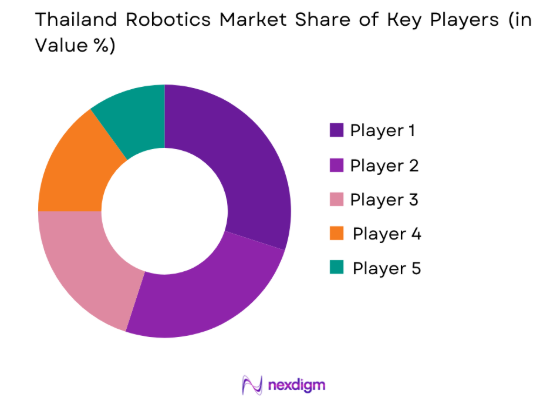
The competitive landscape of the Thailand robotics market is characterized by both global and local players. Major international companies, along with several local startups, are increasing their presence in the market, which has led to significant consolidation. Companies such as ABB, KUKA, and Fanuc dominate the robotics space due to their advanced technology, strong product offerings, and extensive market reach. The market is highly competitive, with players focusing on offering innovative robotics solutions to cater to the growing demand from industries such as manufacturing, logistics, and healthcare.
| Company Name | Establishment Year | Headquarters | Technology Focus | Market Reach | Key Products | Revenue (USD) | Additional Parameter |
| ABB | 1988 | Switzerland | ~ | ~ | ~ | ~ | ~ |
| KUKA | 1898 | Germany | ~ | ~ | ~ | ~ | ~ |
| Fanuc | 1956 | Japan | ~ | ~ | ~ | ~ | ~ |
| Yaskawa Electric | 1915 | Japan | ~ | ~ | ~ | ~ | ~ |
| Universal Robots | 2005 | Denmark | ~ | ~ | ~ | ~ | ~ |
Thailand Robotics Market Analysis
Growth Drivers
Increased Demand for Industrial Automation
The demand for robotics in Thailand is largely driven by the expanding manufacturing sector, particularly in automotive and electronics. These industries are increasingly turning to robotics to improve productivity, ensure consistent quality, and reduce operational costs. The need for automation has been accelerated by labor shortages and rising labor costs, with robotics providing greater precision and efficiency compared to traditional labor. Government initiatives, such as the Thailand 4.0 plan, have further fueled the integration of robotics across sectors. These initiatives aim to enhance industrial competitiveness and technological innovation, fostering a favorable environment for the adoption of robotics in manufacturing, logistics, and other critical industries.
Technological Advancements in Robotics
Advancements in robotics technology are significantly driving the growth of the Thailand robotics market. Innovations in artificial intelligence, machine learning, and automation systems have made robots more flexible, adaptable, and cost-effective. The integration of sensors, AI, and real-time data analytics has enhanced robotic systems, enabling smarter and more autonomous robots capable of performing complex tasks with minimal human intervention. These technological improvements make robots increasingly accessible to various industries in Thailand, from manufacturing to logistics, enhancing efficiency and productivity. As robots become more intelligent and versatile, their adoption is expanding, contributing to the ongoing market growth and fostering innovation across key sectors.
Market Challenges
High Capital Investment
A major challenge for the Thailand robotics market is the high capital investment required for implementation. The costs associated with robotic systems, including installation, maintenance, and training, create a significant barrier for small and medium-sized enterprises (SMEs). Despite the long-term cost-saving benefits, the initial financial outlay for automation is often prohibitive for many businesses in Thailand. This challenge is worsened by limited financing options and the lack of government subsidies specifically targeting SMEs adopting robotics. As a result, many businesses struggle to justify the upfront costs, hindering broader market adoption and slowing the overall growth of the robotics sector in Thailand.
Skilled Workforce Shortage
The shortage of a skilled workforce to manage and maintain robotic systems presents a significant challenge for the Thailand robotics market. As robotics technology advances, the demand for highly trained engineers and technicians has increased. However, the talent pool in Thailand is not sufficient to meet this demand, hindering businesses from fully leveraging automation’s potential. The lack of skilled professionals makes it difficult for companies to maintain and optimize their robotic systems, which in turn affects operational efficiency and productivity. Without the necessary expertise, businesses may struggle to keep systems running smoothly, leading to increased downtime and higher operational costs, ultimately limiting the effectiveness and profitability of robotics investments in Thailand.
Opportunities
Expansion in Healthcare Robotics
The growing demand for robotics in healthcare presents a significant opportunity in the Thai market. With an aging population and rising healthcare needs, the use of robots for surgery, rehabilitation, and patient management is increasing. Robotic systems enhance surgical precision, reduce recovery times, and improve patient outcomes. The COVID-19 pandemic has further emphasized the importance of robotics in minimizing human contact, accelerating their adoption in healthcare settings. This shift is expected to drive the growth of healthcare robotics in Thailand, offering substantial market opportunities for robotics companies to expand their presence in the medical field and address the country’s evolving healthcare demands.
Growth in Agricultural Robotics
The agricultural sector in Thailand presents a promising opportunity for robotics adoption. The rise of precision farming techniques, combined with the need for efficient and cost-effective solutions to address labor shortages, is driving the demand for agricultural robots. These robots are capable of performing tasks such as planting, harvesting, and monitoring crop health, leading to improved efficiency and reduced operational costs. The Thai government’s support for smart agriculture initiatives further boosts the adoption of robotics in farming. As the agricultural industry continues to modernize, the market for agricultural robotics is expected to expand, offering significant growth opportunities for robotics companies to contribute to the sector’s transformation and increased productivity.
Future Outlook
The Thailand robotics market is expected to experience significant growth in the coming years, driven by advancements in technology, government support for automation, and increasing demand across various sectors. As industries continue to adopt robotics to enhance productivity and efficiency, the market will benefit from the growing need for automation solutions. Technological advancements in AI, IoT, and collaborative robotics will further accelerate this growth, making robots more accessible and affordable to a wider range of industries. Additionally, government policies supporting robotics adoption, particularly in manufacturing and healthcare, will help create a favorable environment for market expansion.
Major Players
- ABB
- KUKA
- Fanuc
- Yaskawa Electric
- Universal Robots
- Rethink Robotics
- Omron Corporation
- Kawasaki Robotics
- Epson Robots
- Mitsubishi Electric
- Denso Robotics
- StäubliRobotics
- Adept Technology
- Festo
- Nachi-Fujikoshi
Key Target Audience
- Investments and venture capitalist firms
- Government and regulatory bodies
- Robotics manufacturers
- Industrial automation companies
- Healthcare providers
- Agricultural enterprises
- Logistics service providers
- Automotive manufacturers
Research Methodology
Step 1: Identification of Key Variables
This step involves identifying the key market drivers, trends, and challenges that affect the robotics market in Thailand, including technological advancements, industry demands, and government initiatives.
Step 2: Market Analysis and Construction
Data from primary and secondary sources is analyzed to construct a comprehensive market model, identifying growth patterns, market size, and potential opportunities within the robotics sector.
Step 3: Hypothesis Validation and Expert Consultation
We validate the market hypotheses with industry experts, stakeholders, and key players in the robotics market, ensuring the data reflects current trends and potential future shifts in the market.
Step 4: Research Synthesis and Final Output
The data and findings are synthesized into a comprehensive market report, which includes analysis, forecasts, and strategic insights for stakeholders.

- Executive Summary
- Research Methodology (Definitions, Scope, Industry Assumptions, Market Sizing Approach, Primary & Secondary Research Framework, Data Collection & Verification Protocol, Analytic Models & Forecast Methodology, Limitations & Research Validity Checks)

- Market Definition and Scope
- Value Chain & Stakeholder Ecosystem
- Regulatory / Certification Landscape
- Sector Dynamics Affecting Demand
- Strategic Initiatives & Infrastructure Growth

- Growth Drivers
Increased Industrial Automation
Government Support for Robotics Adoption
Rising Demand for Robotics in Healthcare - Market Challenges
High Initial Investment Costs
Lack of Skilled Workforce
Technological Integration Issues - Market Opportunities
Expansion of Robotics in Agriculture
Adoption of Collaborative Robots
Growth in Service Robotics Applications - Trends
Rising Demand for Autonomous Robotics
Increased Investment in AI-powered Robotics
Integration of Robotics with IoT
Government Regulations
SWOT Analysis of Key Competitors
Porter’s Five Forces

- By Market Value, 2020-2025
- By Installed Units, 2020-2025
- By Average System Price, 2020-2025
- By System Complexity Tier, 2020-2025

- By System Type (In Value%)
Industrial Robots
Service Robots
Collaborative Robots
Mobile Robots
Autonomous Robots - By Platform Type (In Value%)
Manufacturing Platforms
Logistics Platforms
Healthcare Platforms
Agricultural Platforms
Military Platforms - By Fitment Type (In Value%)
On-premise Solutions
Cloud-based Solutions
Hybrid Solutions
Modular Solutions
Integrated Solutions - By End User Segment (In Value%)
Manufacturers
Logistics Providers
Healthcare Providers
Government Agencies
Agricultural Enterprises - By Procurement Channel (In Value%)
Direct Procurement
Online Bidding Platforms
Private Sector Procurement
Government Tenders
Third-party Distributors

- Market Share Analysis
- Cross Comparison Parameters (System Type, Platform Type, Procurement Channel, End User Segment, Fitment Type, Market Size, Growth Rate, Regional Dynamics, Technological Advancements, Regulatory Compliance)
- SWOT Analysis of Key Competitors
- Pricing & Procurement Analysis
- Key Players
ABB
KUKA Robotics
Fanuc
Yaskawa Electric
Universal Robots
Rethink Robotics
Omron Corporation
Kawasaki Robotics
Epson Robots
Mitsubishi Electric
Denso Robotics
Stäubli Robotics
Adept Technology
Festo
Nachi-Fujikoshi

- Increased Adoption of Robotics by Manufacturers
- Government Investment in Robotics Research
- Healthcare Providers’ Growing Use of Robotics
- Expansion of Robotics in Agriculture

- Forecast Market Value, 2026-2035
- Forecast Installed Units, 2026-2035
- Price Forecast by System Tier, 2026-2035
- Future Demand by Platform, 2026-2035


 Request a Sample
 Ask for Customization
 Get a Quote
 Enquire Now