
 Download PDF
Market Overview
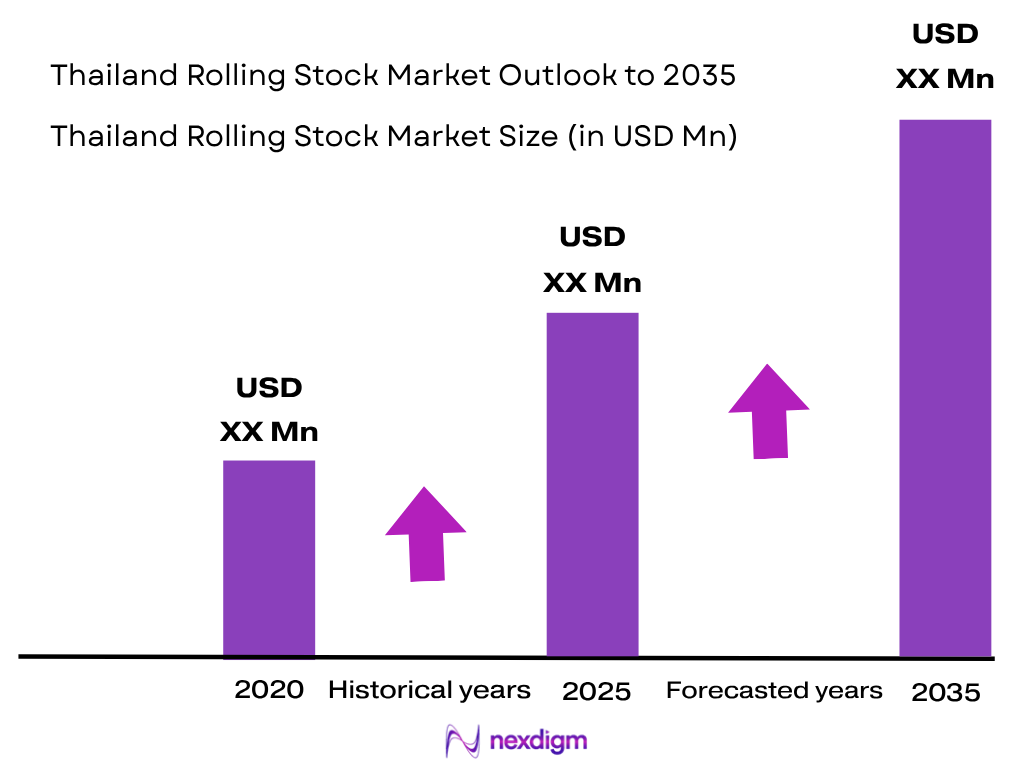
The Thailand Rolling Stock Market is valued at ~USD XX billion in 2024, supported by increasing investments in railway modernization, urban transit expansion, fleet replacement programs, and large-scale infrastructure projects. The market growth is driven by government initiatives focused on shifting passenger and freight movement from road to rail, including double-track railway development, Bangkok metropolitan rail expansion, and high-speed rail corridors. Thailand’s railway modernization has accelerated with projects such as the Bangkok Red Line commuter railway, which introduced electric multiple units and advanced signaling systems.
Thailand’s rolling stock demand is concentrated around Bangkok Metropolitan Region, Eastern Economic Corridor (EEC), and major logistics corridors due to high passenger density, industrial activity, and infrastructure development. Bangkok dominates urban rolling stock deployment because of extensive BTS, MRT, Airport Rail Link, and SRT commuter rail networks. The Bangkok Red Line operates electric trainsets supplied by international manufacturers, reflecting the city’s transition toward high-capacity electrified transportation. Industrial regions such as Chonburi and Rayong are also important due to freight connectivity requirements linked with ports and manufacturing clusters.
Market Segmentation
By Rolling Stock Type
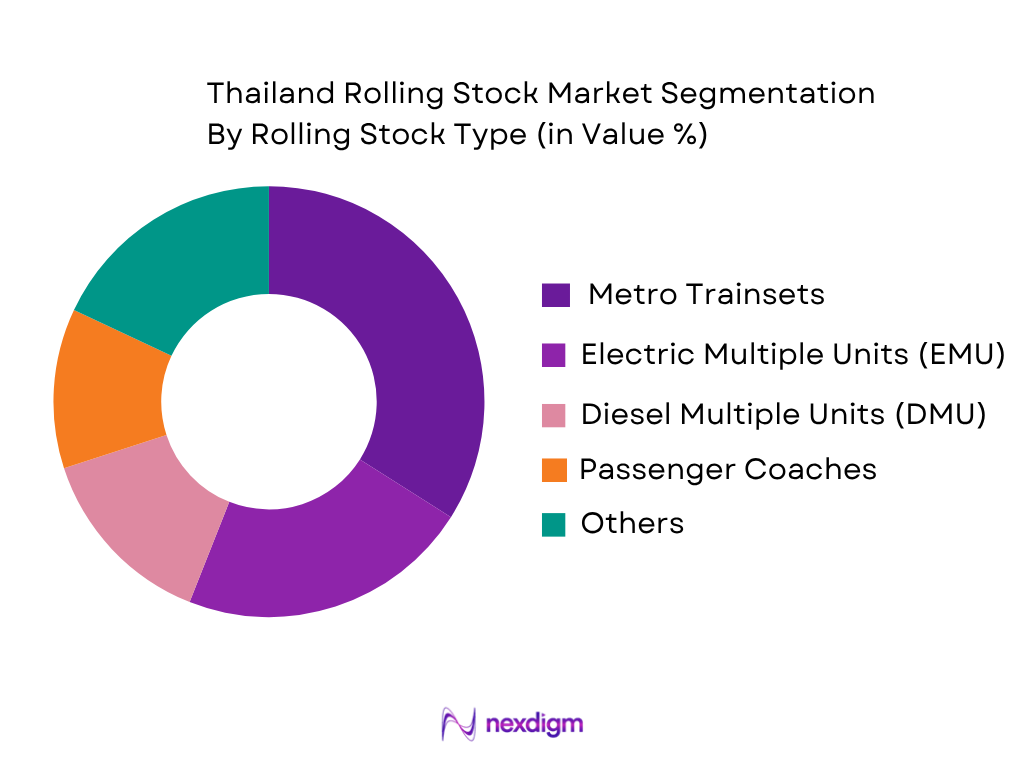
Thailand’s metro trainsets segment holds the leading position due to continuous expansion of Bangkok’s urban rail network and increasing adoption of mass rapid transit systems. Bangkok’s metropolitan area has developed multiple rail corridors, including BTS Skytrain, MRT systems, Airport Rail Link, and SRT Red Line commuter services. The introduction of electric trainsets under the Red Line project demonstrates the country’s transition from conventional railway equipment toward modern electrified rolling stock. Demand is further supported by urban congestion reduction strategies, increasing commuter usage, and government focus on public transportation development.
By Propulsion Type
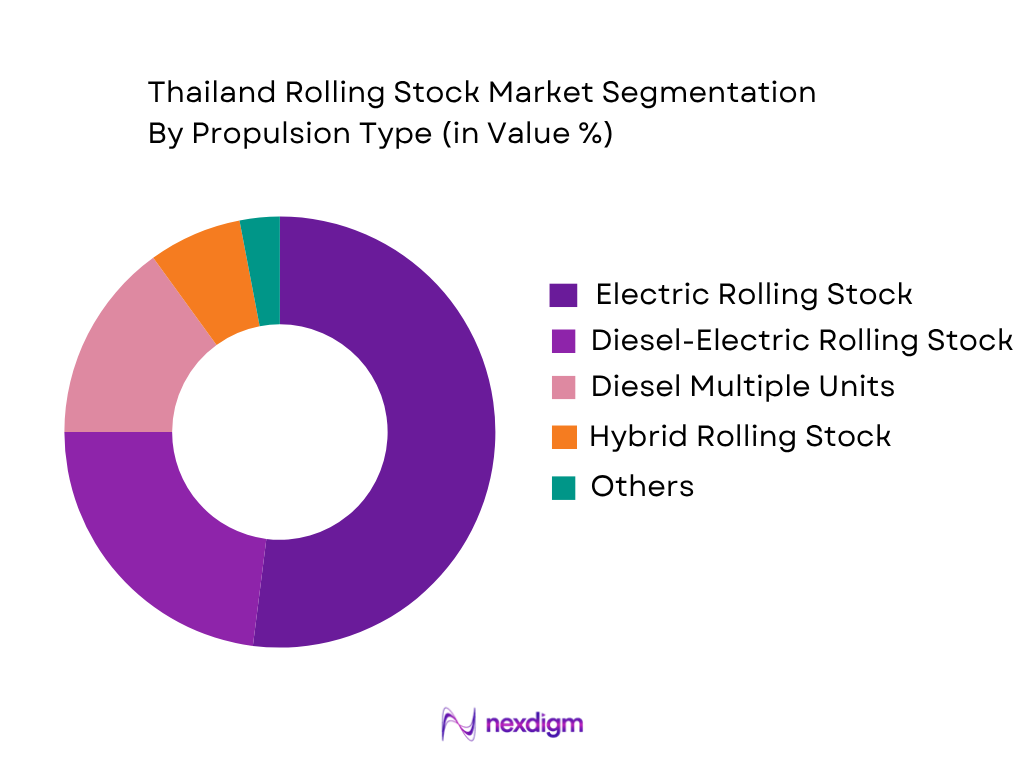
The electric rolling stock segment dominates Thailand’s propulsion market due to increasing railway electrification initiatives and urban transit modernization. Electrified systems are preferred for metro networks because of operational efficiency, lower emissions, and higher service frequency. The Bangkok Red Line uses overhead catenary electrification and electric multiple units, representing Thailand’s shift toward sustainable rail transportation. Future high-speed rail and commuter rail projects are expected to further strengthen demand for electric propulsion technologies.
Competitive Landscape
The Thailand Rolling Stock Market is characterized by strong participation from global rolling stock manufacturers due to limited domestic manufacturing capabilities. International companies provide trainsets, signaling integration, maintenance solutions, and railway technologies through partnerships with Thai government agencies and operators. Key players include CRRC, Hitachi Rail, Alstom, Siemens Mobility, Hyundai Rotem, and Stadler Rail. The competitive environment is influenced by technological capabilities, previous railway project experience, lifecycle service support, and ability to participate in large government transportation programs.
| Company | Establishment Year | Headquarters | Key Products | Thailand Project Presence | Rolling Stock Capability | Electrification Expertise | Maintenance Services |
| CRRC Corporation | 2015 | China | ~ | ~ | ~ | ~ | ~ |
| Hitachi Rail | 2015 | Japan/Italy | ~ | ~ | ~ | ~ | ~ |
| Alstom | 1928 | France | ~ | ~ | ~ | ~ | ~ |
| Siemens Mobility | 1847 | Germany | ~ | ~ | ~ | ~ | ~ |
| Hyundai Rotem | 1999 | South Korea | ~ | ~ | ~ | ~ | ~ |
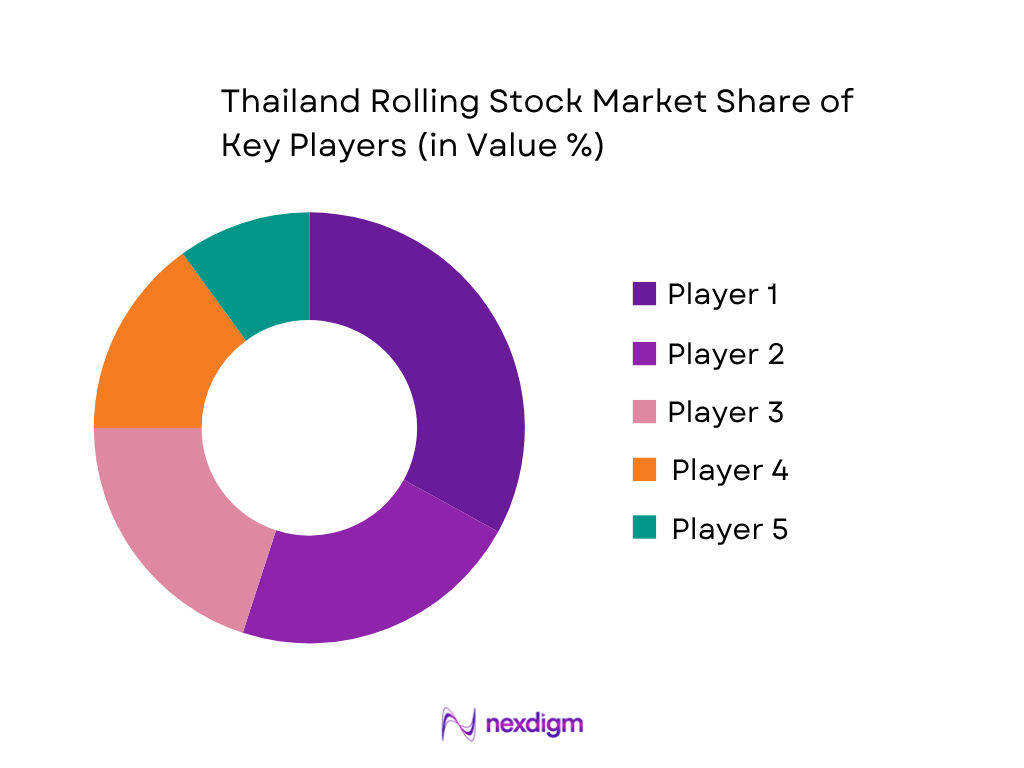
Thailand Rolling Stock Market Analysis
Growth Drivers
Fleet Modernization Programs
Thailand’s rolling stock modernization is supported by the government’s focus on improving railway efficiency, replacing aging rolling stock, and enhancing passenger service quality. The State Railway of Thailand (SRT) operates a network of approximately 5,000 km, with a significant portion of its locomotive and passenger coach fleet requiring replacement or refurbishment. The SRT procurement of 20 diesel locomotives from China in recent years reflects efforts to improve operational reliability and reduce service disruptions. Thailand’s transport infrastructure investment remains supported by economic activity, with the World Bank reporting Thailand’s GDP at approximately USD 512 billion in 2024, strengthening public investment capacity for transportation modernization. Fleet renewal programs are also aligned with Thailand’s National Transport Infrastructure Development Plan, which prioritizes railway upgrades, double-track expansion, and improved passenger connectivity. Modern rolling stock equipped with energy-efficient propulsion, improved safety systems, and digital monitoring capabilities is expected to support higher service frequency and operational efficiency. The modernization trend is further reinforced by increasing demand from Bangkok metropolitan commuters and intercity travelers seeking alternatives to road transportation.
Bangkok Metro Expansion
Expansion of Bangkok’s urban rail network is a major driver for Thailand’s rolling stock market as rising urban mobility requirements continue to increase demand for metro trainsets and electric multiple units. Bangkok’s population exceeds 10 million people in the metropolitan area, creating significant pressure on existing transportation infrastructure. The Mass Rapid Transit Authority of Thailand (MRTA) and Bangkok Mass Transit System (BTS) are implementing network extensions, including new MRT Orange Line, Purple Line extensions, and other urban rail projects. Thailand’s urban population reached approximately 36 million people in 2024, according to World Bank demographic indicators, increasing the need for efficient mass transit solutions. New metro projects require modern electric rolling stock with automated operation capabilities, advanced signaling compatibility, and higher passenger capacity. The expansion of Bangkok’s rail system is also connected with government initiatives to reduce road congestion and improve air quality. Increasing integration between MRT, BTS, Airport Rail Link, and commuter rail systems is creating demand for standardized rolling stock platforms and technologically advanced train systems.
Market Challenges
High Dependence on Imported Rolling Stock Technology
Thailand’s rolling stock industry faces challenges due to limited domestic manufacturing capability and significant dependence on international suppliers for advanced train systems, propulsion technology, signaling integration, and specialized components. Major metro and railway projects have historically relied on suppliers from countries such as Japan, China, Germany, and South Korea for trainsets and railway technologies. Thailand’s domestic manufacturing sector remains concentrated mainly on maintenance, assembly support, and component supply rather than complete rolling stock production. The World Bank recorded Thailand’s manufacturing sector contribution at approximately USD 100 billion in 2024, highlighting the country’s industrial capability; however, railway-specific manufacturing remains limited compared with automotive and electronics industries. Dependence on imported rolling stock creates challenges related to foreign exchange fluctuations, technology transfer limitations, and longer supply lead times. Additionally, procurement processes often require international technical standards compliance, increasing complexity for operators and government agencies. Developing local railway manufacturing capabilities remains challenging due to the specialized engineering requirements associated with traction systems, bogies, braking systems, and train control technologies.
Complex Railway Integration Requirements
Thailand’s rolling stock market faces integration challenges due to the requirement to coordinate new train systems with existing railway infrastructure, signaling networks, track standards, and operational procedures. The country operates a mixed railway environment consisting of conventional railways, metro systems, airport rail services, and future high-speed rail corridors. Different projects require compatibility with varying technical specifications, creating complexity during procurement and deployment. The development of Thailand’s double-track railway network requires integration between new rolling stock and upgraded infrastructure managed by SRT. According to Thailand’s Ministry of Transport, multiple railway infrastructure projects remain under development, including double-track routes covering thousands of kilometers to improve national connectivity. Infrastructure compatibility challenges are intensified by differences between existing diesel-based systems and emerging electrified railway networks. Railway operators must ensure interoperability of signaling systems, maintenance facilities, and operational control platforms. These requirements increase project complexity and extend implementation timelines, particularly for large-scale urban rail and high-speed railway developments.
Market Opportunities
Thailand-China High-Speed Railway Development
Thailand’s high-speed rail development creates significant opportunities for advanced rolling stock adoption, particularly through the Thailand-China high-speed railway project connecting Bangkok with northeastern provinces. The project forms part of broader regional connectivity initiatives linking Thailand with neighboring ASEAN economies. The first phase of the Bangkok–Nong Khai high-speed railway involves approximately 253 km of railway development and requires modern high-speed trainsets, advanced signaling systems, and specialized maintenance technologies. Thailand’s strategic location within ASEAN trade corridors supports continued investment in rail connectivity. The Asian Development Bank highlights Southeast Asia’s infrastructure development requirements as governments seek improved transport networks to support economic growth and regional integration. Thailand’s GDP growth and logistics sector expansion provide additional support for railway investments, with the World Bank reporting continued economic activity supported by trade, manufacturing, and tourism recovery. High-speed rail development is expected to create demand for electric multiple units, automated train control technologies, and long-term maintenance services.
Smart Railway Technologies
Digital transformation of Thailand’s railway sector presents opportunities for smart rolling stock technologies, including predictive maintenance systems, automated diagnostics, condition monitoring, and railway asset management platforms. The increasing adoption of digital solutions is driven by the need to improve operational reliability and reduce downtime across expanding rail networks. Thailand’s transport authorities are implementing intelligent transportation solutions as part of broader infrastructure modernization initiatives. The country recorded more than 35 million international tourist arrivals in 2024, according to Thailand’s Ministry of Tourism and Sports, increasing demand for reliable passenger transportation systems, particularly in Bangkok and major tourism corridors. Smart railway technologies enable operators to monitor train performance, optimize maintenance schedules, and improve passenger experience through real-time information systems. The integration of Internet of Things (IoT) sensors, artificial intelligence-based analytics, and automated inspection systems provides opportunities for rolling stock manufacturers and technology providers. As Thailand expands electric rail networks and urban transit systems, digital railway solutions will become increasingly important for managing complex operations and improving lifecycle efficiency.
Future Outlook
The Thailand Rolling Stock Market is expected to experience steady expansion driven by railway infrastructure modernization, metropolitan rail expansion, freight transportation improvement, and regional connectivity initiatives. Future growth will be supported by high-speed railway development, ASEAN connectivity projects, electrification programs, and adoption of intelligent railway technologies. The transition toward automated operations, energy-efficient trainsets, and predictive maintenance systems will create additional opportunities for rolling stock manufacturers and technology providers.
Major Players
- CRRC Corporation Limited
- Hitachi Rail
- Alstom
- Siemens Mobility
- Hyundai Rotem
- Stadler Rail
- CAF
- Talgo
- Mitsubishi Heavy Industries
- Sumitomo Corporation
- Toshiba Infrastructure Systems & Solutions
- Knorr-Bremse
- Thales Group
- Kawasaki Heavy Industries
- Bombardier Transportation
Key Target Audience
- Rolling Stock Manufacturers
- Railway Operators
- Metro Rail Operators
- Railway Infrastructure Developers
- Railway Component Manufacturers
- Investments and Venture Capitalist Firms
- Government and Regulatory Bodies (Ministry of Transport Thailand, State Railway of Thailand, Mass Rapid Transit Authority of Thailand)
- Railway Maintenance and Service Providers
Research Methodology
Step 1: Identification of Key Variables
The initial phase involves developing a comprehensive ecosystem map covering rolling stock manufacturers, railway operators, infrastructure developers, government agencies, and technology providers. Secondary research is conducted to identify railway investments, fleet composition, procurement trends, and infrastructure development priorities affecting Thailand’s rolling stock industry.
Step 2: Market Analysis and Construction
Historical railway procurement data, rolling stock deployment trends, infrastructure expansion programs, and passenger and freight transportation developments are analyzed. Supply-side and demand-side assessments are integrated to estimate market development patterns across rolling stock categories, propulsion technologies, and applications.
Step 3: Hypothesis Validation and Expert Consultation
Market assumptions are validated through discussions with railway industry participants, technology providers, operators, and infrastructure stakeholders. Expert inputs are used to evaluate procurement cycles, technology adoption patterns, maintenance requirements, and future railway investment priorities.
Step 4: Research Synthesis and Final Output
The final stage combines primary and secondary research findings to create a comprehensive Thailand Rolling Stock Market assessment. Data triangulation is performed to ensure consistency across market segmentation, competitive analysis, project pipeline evaluation, and future outlook projections.

- Executive Summary
- Research Methodology (Market Definition and Scope, Rolling Stock Ecosystem Mapping, Market Sizing Framework, Top-Down Market Assessment, Bottom-Up Market Assessment, Demand-Side Analysis, Supply-Side Analysis, Primary Industry Interviews, Railway Project Pipeline Assessment, Data Validation Framework, Forecasting Methodology, Market Limitations and Assumptions)

- Definition and Scope
- Evolution of Thailand Railway Transportation System
- Historical Development of State Railway of Thailand (SRT)
- Transformation from Conventional Railway Network to Modern Electrified Rail Systems
- Thailand Rolling Stock Value Chain Analysis

- Growth Drivers (Fleet Modernization Programs, Double Track Railway Expansion, Bangkok Metro Expansion, High-Speed Rail Development, Freight Transportation Growth, Railway Electrification Initiatives)
- Market Challenges (High Dependence on Imported Rolling Stock Technology, Complex Railway Integration Requirements, Long Procurement Cycles, Infrastructure Standardization Issues, Maintenance Capability Constraints, Skilled Railway Workforce Availability)
- Market Opportunities (Thailand-China High-Speed Railway Development, ASEAN Railway Connectivity, Electric Rolling Stock Adoption, Smart Railway Technologies, Predictive Maintenance Systems, Freight Rail Automation)
- Market Trends (Shift Toward Electric Trainsets, Automated Metro Operations, Digital Railway Management Systems, Energy-Efficient Rolling Stock Adoption, Railway Asset Monitoring Technologies, Sustainable Transportation Development)
- Government Regulations and Industry Standards (Thailand Railway Safety Regulations, Ministry of Transport Railway Development Policies, State Railway of Thailand Operating Standards, Railway Electrification Standards, Rolling Stock Certification Requirements, Environmental Compliance Standards)
- SWOT Analysis
- Porter’s Five Forces Analysis
- PESTLE Analysis

- By Market Value (2020-2025)
- By Rolling Stock Procurement Expenditure (2020-2025)
- By New Trainset Deliveries (2020-2025)
- By Fleet Replacement Demand (2020-2025)
- By Railway Project Investment Pipeline (2020-2025)
- By Average Cost Per Trainset (2020-2025)

- By Rolling Stock Type (In Value %)
Diesel Locomotives
Electric Multiple Units (EMU)
Diesel Multiple Units (DMU)
Passenger Coaches
Freight Wagons
Metro Trainsets
Light Rail Vehicles (LRVs)
High-Speed Rail Trainsets
Maintenance and Inspection Vehicles - By Propulsion Type (In Value %)
Diesel Powered Rolling Stock
Electric Overhead Catenary Rolling Stock
Third Rail Electric Rolling Stock
Battery Electric Rolling Stock
Hybrid Rolling Stock - By Application Type (In Value %)
Passenger Transportation
Urban Metro Transit
Intercity Rail Transportation
High-Speed Railway Services
Freight Transportation
Industrial Railway Operations - By Railway Network Type (In Value %)
State Railway of Thailand Network
Bangkok Mass Transit Systems
Airport Rail Link
Double Track Railway Network
High-Speed Rail Corridors - By Procurement Type (In Value %)
New Rolling Stock Procurement
Fleet Replacement Programs
Railway Expansion Projects
Maintenance and Refurbishment Contracts
Leasing and Public-Private Partnership Models - By End User (In Value %)
State Railway of Thailand
Mass Rapid Transit Authority of Thailand
Bangkok Mass Transit System Operators
Private Railway Operators
Industrial Freight Railway Operators

- Market Share Analysis of Major Players (By Rolling Stock Type, Railway Application, Project Participation, Technology Segment)
- Cross Comparison Parameters (Trainset Portfolio Coverage, Electric Rolling Stock Capability, Metro System Expertise, High-Speed Rail Technology Capability, Manufacturing Capacity, Maintenance Service Capability, Railway Digitalization Solutions, Thailand Project Experience)
- Detailed Profiles of Major Companies
Global and Regional Rolling Stock Manufacturers
CRRC Corporation Limited
Alstom
Siemens Mobility
Hitachi Rail
Hyundai Rotem
Stadler Rail
CAF
Talgo
Knorr-Bremse
Thales
Thailand Railway Operators and Industry Participants
State Railway of Thailand
Mass Rapid Transit Authority of Thailand
Bangkok Mass Transit System
Bangkok Expressway and Metro
Eastern Economic Corridor Office

- Passenger Mobility Assessment
- Demographic Mobility Analysis
- Regional Passenger Demand Analysis
- Passenger Transportation Preference Analysis
- Passenger Experience Evaluation
- Public Transportation Adoption Analysis

- By Market Value (2026-2035)
- By Rolling Stock Procurement Expenditure (2026-2035)
- By New Trainset Deliveries (2026-2035)
- By Fleet Replacement Demand (2026-2035)
- By Railway Project Investment Pipeline (2026-2035)
- By Average Cost Per Trainset (2026-2035)


 Request a Sample
 Ask for Customization
 Get a Quote
 Enquire Now