
 Download PDF
Market Overview
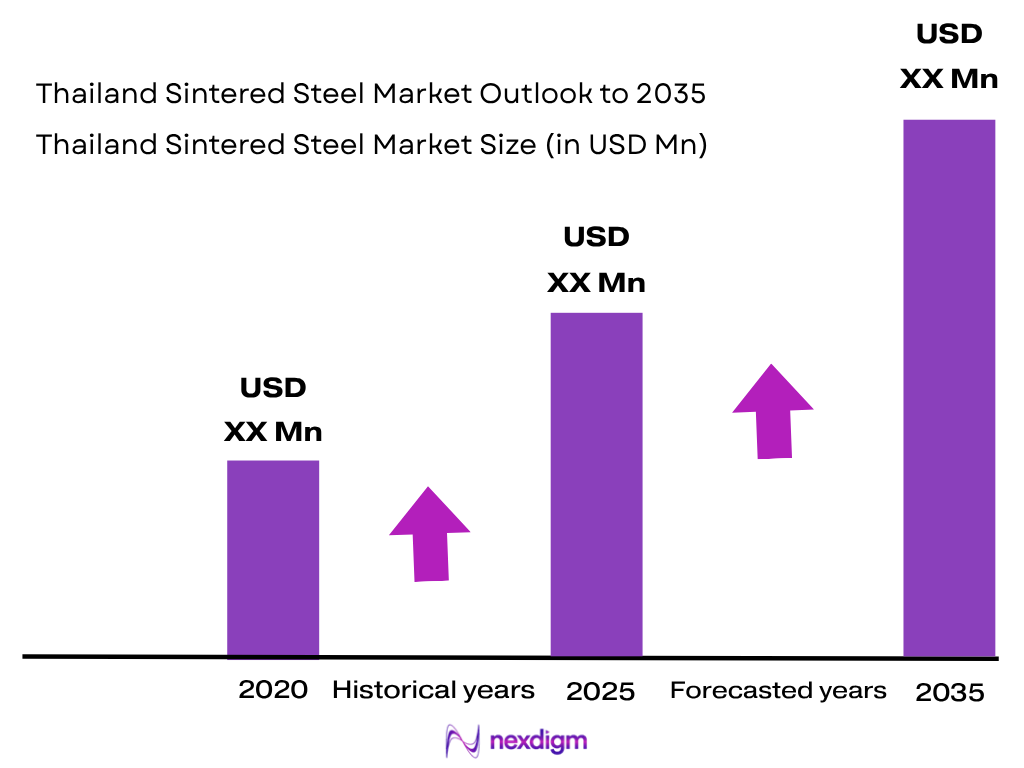
The Thailand Sintered Steel Market is supported by the country’s established automotive, motorcycle, electronics and industrial manufacturing ecosystem. Thailand produced 1,468,997 vehicles during the latest full-year automotive observation, while motorcycle production reached approximately 1.92 million units. The industrial base is also expanding into higher-value electronics and EV components. Thailand’s Board of Investment recorded 1.14 trillion baht of investment-promotion applications, including 309 automotive and parts projects worth 102.4 billion baht. These downstream manufacturing activities create demand for precision gears, bushings, rotors and structural powder-metal components. Reuters
Thailand’s Eastern Economic Corridor, particularly Chonburi and Rayong, represents a major manufacturing cluster for sintered steel demand because it combines automotive production, electronics manufacturing, industrial estates, logistics infrastructure and component suppliers. Sumitomo Electric Sintered Components operates a manufacturing facility in Chonburi, while the wider EEC hosts automotive and advanced-electronics investments. Thailand’s BOI recorded 291 electronics and electrical projects worth 183.4 billion baht during the first nine months of the latest reported investment period. Chonburi, Rayong, Samut Prakan and Ayutthaya therefore provide important downstream customer bases for powder-metallurgy suppliers.
Market Segmentation
By Product Type
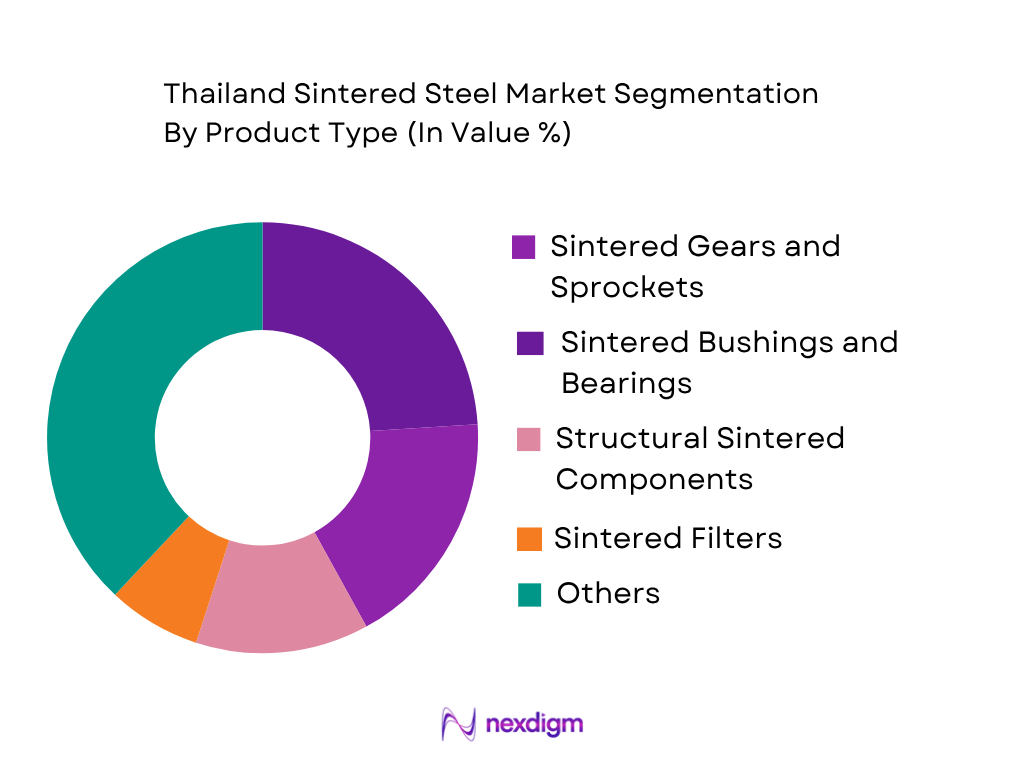
The Thailand Sintered Steel Market is segmented by product type into sintered gears and sprockets, sintered bearings and bushings, sintered structural components, sintered filters, sintered rotors and pulleys, sintered hubs and shafts, sintered camshaft components, sintered synchronizer components, sintered magnetic components and sintered wear-resistant components. Sintered gears and sprockets are positioned as the leading modeled category because Thailand’s automotive and motorcycle manufacturing ecosystem creates recurring requirements for compact, high-volume transmission and power-transmission components. Sintered gears can combine near-net-shape manufacturing with repeatable dimensional control and reduced material waste, making them suitable for selected drivetrain applications. Thailand’s automotive sector produced 1,468,997 vehicles, while motorcycle production was approximately 1.92 million units, establishing a large downstream base for precision mechanical components. The country’s growing EV ecosystem further broadens the potential application base toward motor-related components and other precision parts. Reuters
By End-Use Industry
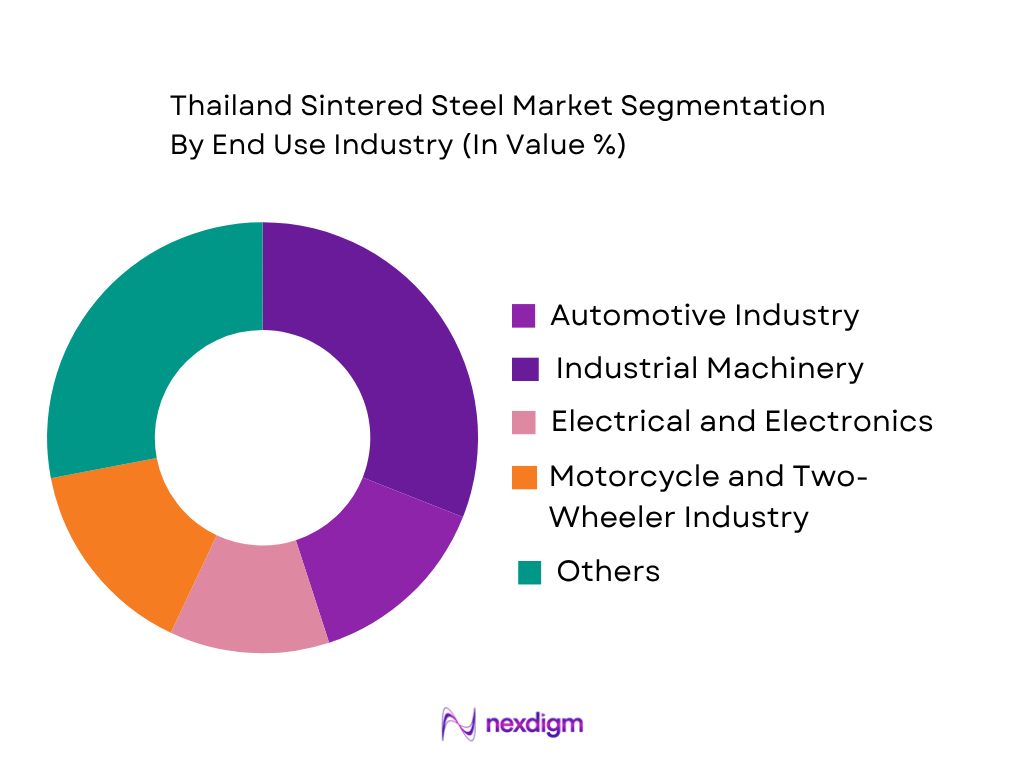
The Thailand Sintered Steel Market is segmented by end-use industry into automotive, motorcycle and two-wheeler, industrial machinery, electrical and electronics, home appliances, agricultural machinery, construction equipment, power tools, medical equipment and general engineering. Automotive is positioned as the leading modeled end-use segment because Thailand has a large established vehicle and component manufacturing ecosystem supported by international OEMs and Tier-1 suppliers. The automotive and parts sector attracted 309 investment-promotion projects worth 102.4 billion baht, while total vehicle production reached 1,468,997 units. The motorcycle industry adds another substantial component base, with approximately 1.92 million motorcycles produced. Meanwhile, electronics and electrical manufacturing is expanding rapidly, with 291 investment-promotion projects worth 183.4 billion baht recorded during the first nine months of the latest reported period. These conditions support applications across drivetrain components, bearings, structural parts, motor components and precision mechanical assemblies.
Competitive Landscape
The Thailand Sintered Steel Market comprises international powder-metallurgy companies, specialized sintered-component manufacturers and Thailand-based production facilities serving automotive, motorcycle, industrial and electronics customers. The competitive environment is closely connected to Thailand’s automotive localization and advanced-manufacturing ecosystem. Sumitomo Electric Sintered Components has an established manufacturing operation in Chonburi, while the Thai Powder Metallurgy Association identifies companies including Sumitomo Electric Sintered Component, Thaicheer Powder Industry and K.Powder Metal among its corporate members. Sumitomo Electric
| Company | Establishment Year | Headquarters | Thailand Manufacturing Presence | Core Sintered Products | Automotive Components | Powder Metallurgy Capability | Key End-Use | Key Application |
| Sumitomo Electric Sintered Components | 1939* | Osaka, Japan | ~ | ~ | ~ | ~ | ~ | |
| GKN Powder Metallurgy | 1759* | London, UK | ~ | ~ | ~ | ~ | ~ | |
| Höganäs AB | 1797 | Höganäs, Sweden | ~ | ~ | ~ | ~ | ~ | |
| Miba AG | 1927 | Laakirchen, Austria | ~ | ~ | ~ | ~ | ~ | |
| Porite Thailand | 1968* | Tokyo, Japan | ~ | ~ | ~ | ~ | ~ |
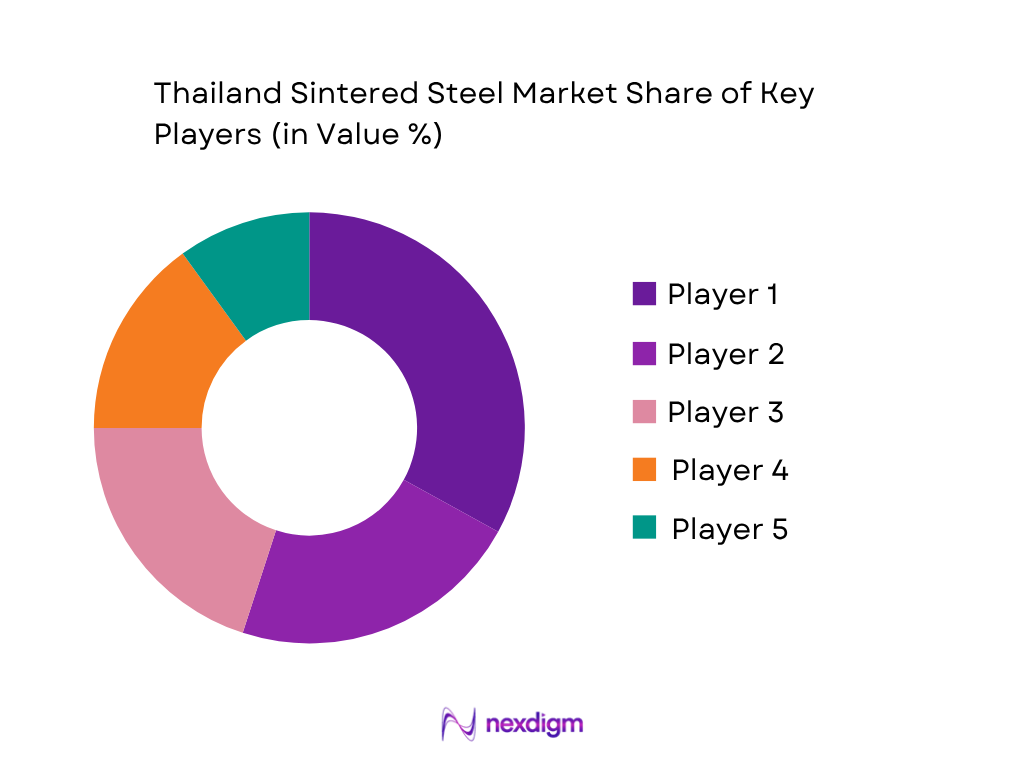
Thailand Sintered Steel Market Analysis
Growth Drivers
Automotive Production Localization
Automotive production localization is a key growth driver for the Thailand Sintered Steel Market because the country’s manufacturing ecosystem creates sustained demand for precision, high-volume metal components such as gears, sprockets, synchronizer components, bushings, hubs and structural parts. Thailand’s Board of Investment recorded 309 automotive and parts investment projects valued at 102.4 billion baht in 2024, demonstrating continued capital deployment across the vehicle-component ecosystem. The broader investment environment also recorded 1.14 trillion baht in investment-promotion applications, indicating strong industrial expansion. Thailand’s automotive base is particularly relevant to powder metallurgy because manufacturers increasingly require components that can be produced close to net shape with repeatable dimensions and limited material waste. The country’s position as an ASEAN automotive production hub also supports localization among Tier-1 and Tier-2 suppliers, creating opportunities for domestic sourcing of sintered components. The EV transition further expands the addressable application base: BOI reported 305 xEV-related investment-promotion applications worth 99.402 billion baht during 2024. This combination of conventional vehicle production, component localization and electrification creates multiple demand pathways for sintered steel manufacturers. Sintered components can therefore increasingly be integrated into transmission systems, electric motors, actuators, braking systems and other precision assemblies manufactured within Thailand’s automotive supply chain.
Motorcycle Manufacturing Expansion
Motorcycle manufacturing expansion provides another important demand driver for the Thailand Sintered Steel Market because two-wheelers require substantial quantities of compact precision components, including gears, sprockets, bushings, hubs, oil-impregnated bearings and other drivetrain parts. Thailand’s established motorcycle manufacturing ecosystem creates a recurring production base for components that benefit from powder-metallurgy manufacturing, particularly where large production runs and dimensional repeatability are required. The country’s EV policy also explicitly includes motorcycles: the Board of Investment’s EV framework targets production of 675,000 electric motorcycles as part of the national 30@30 ambition. BOI’s investment-promotion data further show 99.402 billion baht of xEV-related applications across 305 projects during 2024, covering vehicles, batteries and critical components. This transition creates additional requirements for precision mechanical components used alongside electric motors, reduction systems, braking systems and thermal-management assemblies. Motorcycle manufacturers and component suppliers can use sintered steel where near-net-shape production reduces secondary machining and enables consistent geometry across high-volume parts. The combination of conventional motorcycle manufacturing, electric two-wheeler development and Thailand’s established component-supplier network therefore provides a broad industrial base for powder-metallurgy adoption. Demand can extend beyond complete vehicle manufacturers to Tier-1 and specialized component producers supplying domestic and regional ASEAN markets.
Market Challenges
Dependence on Imported Metal Powders
Dependence on imported specialized metal powders can constrain the development of the Thailand Sintered Steel Market because powder metallurgy requires controlled feedstock characteristics covering particle size, morphology, chemical composition, flowability, compressibility and apparent density. Thailand has a strong downstream manufacturing ecosystem, but specialized powder production and advanced alloy-feedstock capabilities remain more concentrated among international suppliers. This can increase exposure to international logistics, material availability and qualification lead times. The scale of Thailand’s industrial import dependence is reflected in its manufacturing supply chains, while the World Bank reports US$526.52 billion of GDP and 2.5% GDP growth for 2024, illustrating the scale of the economy in which these industrial supply chains operate. At the same time, Thailand’s investment pipeline is moving toward increasingly sophisticated manufacturing. BOI recorded 291 electronics and electrical projects worth 183.4 billion baht during the first nine months of 2024, alongside 212 automotive and parts projects worth 67.8 billion baht during that period. Higher-value manufacturing creates requirements for increasingly specialized materials and tighter component specifications. For sintered-steel producers, establishing reliable powder sourcing, local powder blending and material-characterization capabilities can therefore become important for reducing supply-chain exposure and meeting customer qualification requirements. The challenge is particularly relevant for stainless, low-alloy, high-density and application-specific powder grades.
Competition from Machining and Casting
Competition from machining and casting remains a structural challenge because Thai manufacturers can select among multiple component-manufacturing technologies according to production volume, geometry, dimensional requirements, mechanical performance and existing equipment. Sintered steel offers advantages for selected high-volume applications, but adoption requires dedicated tooling, powder handling, compaction and sintering capabilities. This can make conventional machining or casting attractive where component volumes are smaller or where manufacturers already possess established production lines. Thailand’s industrial investment data demonstrate the breadth of competing manufacturing capabilities: BOI recorded 722.5 billion baht in investment-promotion applications during the first nine months of 2024, with electronics and electrical projects accounting for 291 projects and automotive and parts accounting for 212 projects. The World Bank recorded Thailand’s 2024 GDP at US$526.52 billion, reflecting a substantial industrial economy supporting multiple manufacturing processes. Sintered-steel suppliers consequently need to demonstrate process advantages through material utilization, repeatability, integrated geometries, reduced machining and consistent production quality. Competition is likely to be strongest for structural components, shafts and relatively simple geometries where machining or casting can provide established production economics. Suppliers with advanced compaction, sinter-hardening and secondary-processing capabilities can address more demanding applications where conventional processes face limitations.
Market Opportunities
EV Powertrain Components
EV powertrain components represent a significant opportunity for the Thailand Sintered Steel Market because the country is actively developing localized electric-vehicle and critical-component manufacturing. BOI recorded 305 xEV investment-promotion applications worth 99.402 billion baht in 2024, while its investment framework covers electric vehicles, batteries and critical components. Earlier BOI data identified 18 BEV projects with annual capacity of 400,050 units and 6,737 charging points as of June 2024. The country’s EV ecosystem therefore extends beyond vehicle assembly into motors, control systems, batteries and associated components. This creates potential applications for sintered gears, reduction-system components, motor-related parts, structural components, bushings and other precision mechanical assemblies. Powder metallurgy can be particularly relevant where manufacturers require repeatable geometries at high production volumes and seek to minimize secondary machining. The opportunity is strengthened by Thailand’s objective of developing a regional EV manufacturing hub and by the presence of established automotive suppliers capable of transferring existing powder-metallurgy expertise into electrified platforms. Sintered-steel producers can consequently target both newly developed EV components and parts retained from conventional vehicle architectures. Material development around higher strength, density and wear resistance can further expand the application range. The combination of EV investment, localized component production and an established automotive supply chain provides a clear pathway for broader adoption of powder-metallurgy components.
Electric-Motor Components
Electric-motor components provide an emerging opportunity because Thailand’s EV investment ecosystem is increasingly moving toward localized production of critical components rather than vehicle assembly alone. BOI reported 49 approved EV critical-component projects with investment of 12.5 billion baht in its latest consolidated EV data, covering technologies such as drive motors, battery-management systems and power-control units. The broader EV ecosystem also includes 57 battery and energy-storage projects valued at 33.5 billion baht, creating an expanding industrial base around electrified powertrains. Although sintered steel is not required for every electric-motor component, powder metallurgy can support selected precision mechanical and magnetic applications where controlled material properties, repeatability and complex geometries are important. Thailand’s electronics industry provides an additional downstream ecosystem: BOI recorded 291 E&E investment projects worth 183.4 billion baht during the first nine months of 2024. This industrial convergence creates opportunities for suppliers capable of producing small, high-precision metal components for motors, actuators, control mechanisms and related assemblies. Development of higher-density sintered materials, specialized magnetic alloys and precision finishing can expand the range of addressable applications. Local production would also allow component suppliers to work more closely with EV manufacturers on material qualification, component redesign and platform-specific requirements.
Future Outlook
The Thailand Sintered Steel Market is expected to develop alongside automotive localization, motorcycle-component production, EV manufacturing, industrial automation and advanced electronics. Thailand’s BOI recorded 1.14 trillion baht in investment-promotion applications, while the automotive and parts sector attracted 102.4 billion baht across 309 projects. Advanced electronics also recorded 291 projects worth 183.4 billion baht in the first nine months of the latest reported period. These investment flows provide opportunities for suppliers of precision gears, bearings, structural components, motor components and other near-net-shape parts.
Major Players
- Sumitomo Electric Sintered Components (Thailand)
- GKN Powder Metallurgy
- Höganäs AB
- Miba AG
- Porite Thailand
- Fine Sinter Co., Ltd.
- PMG Holding GmbH
- Tsubaki Nakashima Co., Ltd.
- Keystone Powdered Metal Company
- Burgess-Norton
- AAM Powder Metal
- Tenneco
- Thai Sintered Products
- K.Powder Metal Co., Ltd.
- Thaicheer Powder Industry Co., Ltd.
Key Target Audience
- Automotive OEMs and Tier-1 Component Manufacturers
- Motorcycle and Two-Wheeler Component Manufacturers
- Industrial Machinery and Automation Manufacturers
- Electrical and Electronics Component Manufacturers
- EV and Electric-Motor Component Manufacturers
- Metal Powder and Powder-Metallurgy Equipment Suppliers
- Investments and Venture Capitalist Firms
- Government and Regulatory Bodies (Thailand Board of Investment, Ministry of Industry, Industrial Estate Authority of Thailand)
Research Methodology
Step 1: Identification of Key Variables
The initial phase involves constructing a Thailand Sintered Steel Market ecosystem covering metal-powder suppliers, component manufacturers, automotive OEMs, Tier-1 suppliers, motorcycle manufacturers and industrial users. Key variables include component volumes, powder consumption, production processes, material grades, component applications and manufacturing locations. The assessment also maps Thailand’s automotive, electronics and EV manufacturing clusters.
Step 2: Market Analysis and Construction
Historical market information is compiled through bottom-up assessment of sintered-component applications, production capacity, manufacturing facilities and end-use demand. Automotive and motorcycle production, electronics investment, industrial activity and powder-metallurgy capacity are incorporated into the demand framework. Product-level consumption is then mapped across gears, bearings, bushings, structural parts and other components.
Step 3: Hypothesis Validation and Expert Consultation
Market hypotheses are validated through consultations with powder-metallurgy manufacturers, automotive component suppliers, industrial machinery producers and metal-powder specialists. Discussions focus on component qualification, material selection, tooling requirements, production utilization, customer procurement criteria and technology adoption. These inputs are used to test assumptions developed through secondary research.
Step 4: Research Synthesis and Final Output
The final research stage integrates supply-side capacity, downstream manufacturing activity, product segmentation and end-use demand into a consolidated market model. Bottom-up estimates are cross-checked against automotive, motorcycle, electronics and industrial indicators. The resulting analysis provides a structured assessment of market size, segmentation, competitive positioning and future demand opportunities.

- Executive Summary
- Research Methodology (Market Definitions and Assumptions, Thailand Sintered Steel Market Scope, Powder Metallurgy Process Mapping, Sintered Steel Product Classification, Metal Powder Consumption Assessment, Compaction and Sintering Process Analysis, Material Grade Mapping, Density and Porosity Assessment, Dimensional Accuracy Evaluation, Mechanical Property Assessment, Near-Net-Shape Manufacturing Analysis, Automotive Component Demand Assessment, Motorcycle Component Demand Assessment, Industrial Machinery Demand Assessment, Electronics Component Demand Assessment, EV Component Assessment, Supply-Side Assessment, Demand-Side Assessment, Primary Industry Interviews, Data Triangulation, Forecasting Framework, Limitations and Validation)

- Definition and Scope
- Thailand Sintered Steel Industry Evolution
- Sintered Steel Value Chain Analysis
- Sintered Steel Supply Chain Analysis

- Growth Drivers (Automotive Production Localization, Motorcycle Manufacturing Expansion, Expansion of Automotive Tier-1 Suppliers, Electronics Manufacturing Growth, Industrial Machinery Development, Electric Vehicle Manufacturing, Demand for Near-Net-Shape Components, Precision Component Manufacturing, Lightweight Component Requirements, Increasing Component Localization)
- Market Challenges (Dependence on Imported Metal Powders, Limited Specialized Powder Metallurgy Feedstock Production, High Tooling Requirements, Complex Die Manufacturing, Sintering Equipment Requirements, Specialized Technical Workforce Requirements, Quality-Control Requirements, Material-Grade Qualification Requirements, Competition from Machining and Casting, Supply-Chain Exposure)
- Market Opportunities (EV Powertrain Components, Electric-Motor Components, Automotive Transmission Components, Motorcycle Drivetrain Components, Precision Sintered Gears, Self-Lubricating Bearings and Bushings, Industrial Automation Components, Electronics and Electrical Components, Stainless-Steel Powder Metallurgy, Metal Injection Molding, Local Powder Metallurgy Capacity Expansion)
- Market Trends (Automotive Component Localization, EV Component Development, Sinter-Hardening Adoption, High-Density Powder Metallurgy, Advanced Alloy Powder Utilization, Precision Gear Manufacturing, Lightweight Component Development, Automated Powder Compaction, Digital Process Monitoring, Reduced Secondary Machining, High-Performance Sintered Materials)
- Government Regulations and Standards (Thailand Board of Investment Investment Promotion, Eastern Economic Corridor Incentives, Ministry of Industry Manufacturing Regulations, Industrial Estate Authority of Thailand Requirements, Factory Operation Requirements, Industrial Product Standards, Environmental Compliance Requirements, Occupational Health and Safety Requirements, Hazardous Substance Management, Industrial Waste Management, Import and Export Regulations)
- SWOT Analysis
- Porter’s Five Forces Analysis
- PESTLE Analysis
- Stakeholder Ecosystem
- Competition Ecosystem

- By Market Value (2020-2025)
- By Production Volume (2020-2025)
- By Sales Volume (2020-2025)
- By Sintered Component Production Volume (2020-2025)
- By Metal Powder Consumption Volume (2020-2025)
- By Automotive Sintered Component Production Volume (2020-2025)
- By Motorcycle Sintered Component Production Volume (2020-2025)

- By Product Type (In Value %)
Sintered Gears and Sprockets
Sintered Bearings and Bushings
Sintered Structural Components
Sintered Rotors and Pulleys
Sintered Hubs and Shafts
Sintered Camshaft Components
Sintered Synchronizer Components
Sintered Magnetic Components
Sintered Wear-Resistant Components - By Material Grade (In Value %)
Iron-Based Sintered Steel
Low-Alloy Sintered Steel
High-Alloy Sintered Steel
Stainless Sintered Steel
Nickel-Alloy Sintered Steel
Copper-Alloy Sintered Steel
High-Carbon Sintered Steel
Pre-Alloyed Sintered Steel - By Manufacturing Process (In Value %)
Conventional Press-and-Sinter
Warm Compaction
High-Velocity Compaction
Metal Injection Molding
Powder Forging
Hot Isostatic Processing
Sinter-Hardening
Secondary Machining and Finishing - By End-Use Industry (In Value %)
Automotive Industry
Motorcycle and Two-Wheeler Industry
Industrial Machinery
Electrical and Electronics
Home Appliances
Agricultural Machinery
Construction Equipment
Power Tools
Medical Equipment
General Engineering - By Component Function (In Value %)
Power Transmission Components
Motion-Control Components
Load-Bearing Components
Fluid-Handling Components
Wear-Resistant Components
Magnetic and Electromagnetic Components
Structural Components
Thermal-Management Components
Precision Mechanical Components
Self-Lubricating Components - By Region (In Value %)
Central Thailand
Eastern Thailand
Bangkok Metropolitan Region
Northern Thailand
Northeastern Thailand
Western Thailand
Southern Thailand
Chonburi
Rayong
Samut Prakan
Ayutthaya

- Market Share of Major Players (By Thailand Revenue, Production Volume, Sintered Component Portfolio, Automotive Component Coverage, Motorcycle Component Coverage, Industrial Component Coverage, Metal Powder Capability, Manufacturing Capacity, Production Technology, Customer Coverage, Export Presence, Distribution Network, Quality Certification, EV Component Capability)
- Cross Comparison Parameters (Sintered Component Portfolio Breadth, Powder Metallurgy Production Capacity, Automotive Component Coverage, Motorcycle Component Capability, Sinter-Hardening Capability, Metal Injection Molding Capability, EV Component Development Capability, Thailand Manufacturing and Customer Reach)
- SWOT Analysis of Major Players
- Detailed Profiles of Major Companies
Höganäs AB
GKN Powder Metallurgy
Sumitomo Electric Sintered Alloy Thailand Co., Ltd.
Hitachi Powdered Metals (Thailand) Co., Ltd.
Porite Thailand Co., Ltd.
Fine Sinter Co., Ltd.
Miba AG
PMG Holding GmbH
Tsubaki Nakashima Co., Ltd.
Burgess-Norton Mfg. Co., Inc.
Keystone Powdered Metal Company
AAM Powder Metal
Tenneco Inc.
Sintercom India Limited
Thai Sintered Products Co., Ltd.

- Automotive OEM Sintered Component Requirement Assessment
- Automotive Tier-1 Supplier Procurement Analysis
- Motorcycle and Two-Wheeler Component Demand Analysis
- EV Powertrain Component Requirement Assessment
- Electric-Motor Component Demand Analysis
- Industrial Machinery Component Requirement Analysis
- Electronics and Electrical Component Assessment
- Home Appliance Component Demand Analysis

- By Market Value (2026-2035)
- By Production Volume (2026-2035)
- By Sales Volume (2026-2035)
- By Sintered Component Production Volume (2026-2035)
- By Metal Powder Consumption Volume (2026-2035)
- By Automotive Sintered Component Production Volume (2026-2035)
- By Motorcycle Sintered Component Production Volume (2026-2035)


 Request a Sample
 Ask for Customization
 Get a Quote
 Enquire Now