

 Download PDF
 Download PDF
Market Overview
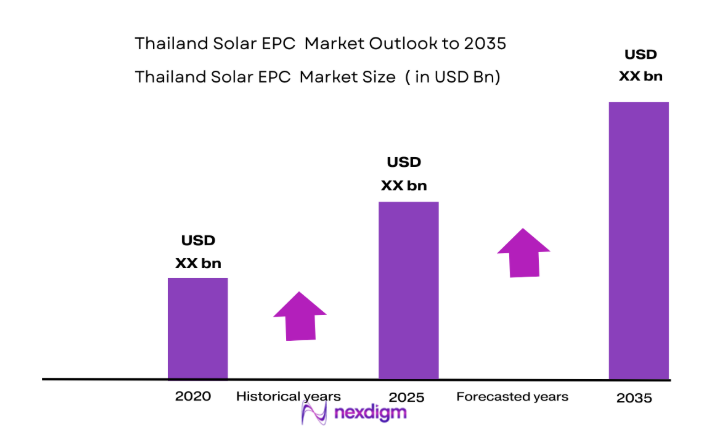
The Thailand Solar EPC market size is driven by rapid developments in renewable energy policies, government initiatives, and increasing investments. Based on recent assessments, the market size is expected to reach approximately USD ~ billion. This growth is propelled by favorable regulatory frameworks such as the Thai Renewable Energy Development Plan, which aims to increase solar energy adoption, alongside falling installation costs for solar systems. Furthermore, the increase in both residential and commercial solar installations contributes to the market’s expansion, aided by incentives such as subsidies and tax breaks.
Thailand’s solar energy market dominance is primarily driven by its urban centers and regions with high solar radiation. Key cities such as Bangkok, Chiang Mai, and Khon Kaen are significant players in the market due to their higher energy consumption, infrastructure, and government support for renewable energy projects. The adoption of solar technologies in these cities is also supported by private sector investments and global partnerships. The strategic location of Thailand in Southeast Asia further enhances its potential to serve as a hub for solar energy, leading to continued market dominance in the region.
Market Segmentation
By Product Type:
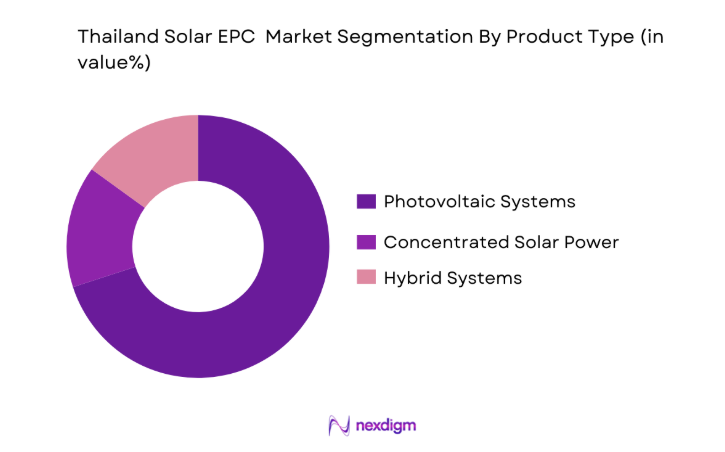
The Thailand Solar EPC market is segmented by product type into photovoltaic systems, concentrated solar power (CSP) systems, and hybrid systems. Recently, photovoltaic systems have dominated the market due to their cost-effectiveness and efficiency improvements. The demand for PV systems is primarily driven by both residential and commercial sectors, where solar energy is becoming a reliable and affordable source of power. The market for PV systems benefits from government incentives that lower installation costs, making them the preferred choice for various energy consumers. The increased awareness of sustainability practices and the integration of solar power with energy storage solutions further enhance the growth of this sub-segment.
By End-User Sector:
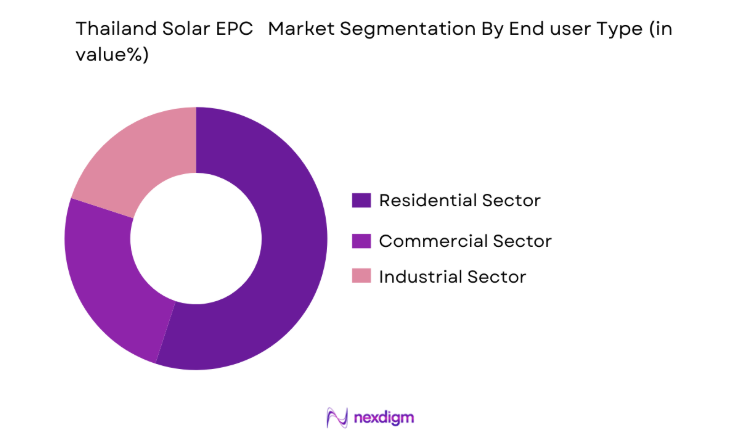
The Thailand Solar EPC market is also segmented by end-user sector, which includes residential, commercial, and industrial applications. The residential sector has recently dominated the market, driven by strong government incentives and favorable policies aimed at encouraging homeowners to adopt solar systems. Commercial and industrial sectors are increasingly investing in solar installations to reduce energy costs and meet sustainability goals. The growth in these sectors is supported by policies that promote energy independence and reduce operational costs, while the residential market continues to thrive due to lower initial investment costs and a focus on environmental responsibility.
Competitive Landscape
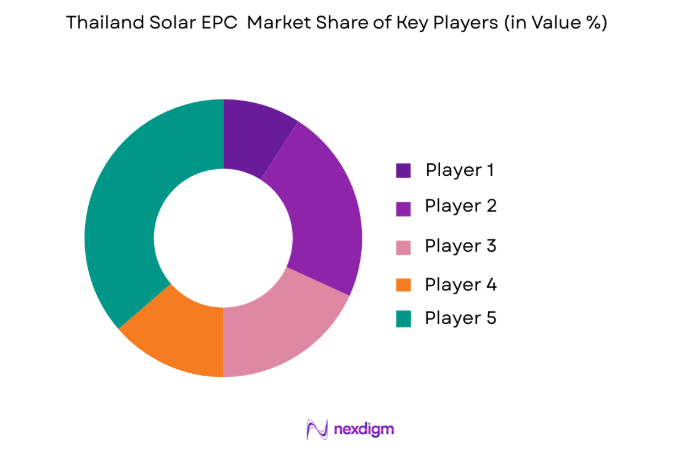
The competitive landscape of the Thailand Solar EPC market is characterized by a strong presence of both local and international players, with a focus on innovation, project execution efficiency, and competitive pricing. The market has seen significant consolidation as companies collaborate with government bodies and other stakeholders to expand their market reach. Major players in the market drive technological advancements and provide turnkey solutions that cater to diverse customer needs. This competitive environment promotes healthy market growth, ensuring that innovations and cost-effective solutions remain at the forefront of the industry.
| Company Name | Establishment Year | Headquarters | Technology Focus | Market Reach | Key Products | Revenue | Additional Parameter |
| Solartron | 2005 | Bangkok, Thailand | ~ | ~ | ~ | ~ | ~ |
| TSE Solar | 2008 | Chiang Mai, Thailand | ~ | ~ | ~ | ~ | ~ |
| SPCG | 2001 | Bangkok, Thailand | ~ | ~ | ~ | ~ | ~ |
| First Solar | 1999 | USA (Operating in Thailand) | ~ | ~ | ~ | ~ | ~ |
| Jinko Solar | 2006 | Shanghai, China | ~ | ~ | ~ | ~ | ~ |
Thailand Solar EPC Market Analysis
Growth Drivers
Government Incentives and Policies:
Government incentives and policies have played a pivotal role in driving the growth of the Thailand Solar EPC market. Thailand’s Renewable Energy Development Plan aims to increase the share of renewable energy sources in the country’s total energy consumption. The government has introduced subsidies, tax breaks, and feed-in tariffs for solar projects, making it financially attractive for both residential and commercial consumers to adopt solar systems. These initiatives provide long-term benefits, including reduced energy costs and a commitment to a cleaner, greener future. The supportive regulatory environment has not only boosted consumer confidence but also encouraged private investments, contributing to the market’s expansion. This environment of strong governmental backing has positioned Thailand as a leader in solar energy adoption in Southeast Asia.
Technological Advancements in Solar Energy:
The rapid advancements in solar energy technologies have significantly influenced the growth of the solar EPC market in Thailand. The cost of solar panels has decreased substantially over the years, making solar power a more affordable option for consumers. Additionally, innovations such as energy storage solutions and hybrid systems have enhanced the viability of solar energy, especially in off-grid areas. These technological advancements make solar energy more reliable and efficient, attracting both residential and commercial customers. The integration of artificial intelligence and smart grid systems into solar infrastructure further boosts energy efficiency and grid stability, positioning the market for sustainable growth.
Market Challenges
High Initial Capital Costs:
Despite the favorable government incentives, the high initial capital costs associated with solar installations remain a significant challenge in the Thailand Solar EPC market. While the cost of solar technology has decreased, the upfront investment required for installing a full solar system, including panels, inverters, and battery storage, can still be prohibitive for many consumers. This is particularly true in the residential sector, where the majority of potential customers are price-sensitive. Financing options and credit facilities provided by financial institutions and government schemes help alleviate this barrier, but the high capital expenditure required to set up large-scale solar installations remains a significant challenge for widespread adoption.
Regulatory Hurdles and Delays:
Regulatory barriers, including lengthy approval processes, permit requirements, and environmental assessments, pose a challenge to the growth of the Thailand Solar EPC market. While the Thai government supports renewable energy projects, the regulatory framework remains complex, and delays in obtaining necessary permits can result in project stagnation. These delays discourage private investors and slow down the implementation of solar energy projects. Furthermore, the varying regulations across different regions of the country complicate the installation process for EPC contractors, resulting in increased operational costs and project timelines.
Opportunities
Hybrid Energy Systems Integration:
One of the most promising opportunities in the Thailand Solar EPC market is the integration of hybrid energy systems that combine solar power with other renewable energy sources, such as wind and biomass. These hybrid systems provide a more stable and reliable power supply, particularly in areas that experience intermittency in solar power generation. Hybrid energy solutions also address the issue of energy storage, making them a viable option for both on-grid and off-grid applications. The increasing demand for energy security, especially in remote and rural areas, presents a strong opportunity for hybrid systems to gain traction, offering a new market avenue for EPC players.
Rural Electrification Initiatives:
Thailand’s government has prioritized rural electrification, and solar energy plays a key role in providing affordable electricity to off-grid areas. The decreasing cost of solar installations and the availability of solar-powered microgrids make it an ideal solution for rural communities. Rural electrification is a critical component of the government’s plan to reduce energy inequality and support sustainable development in underserved areas. This initiative offers a significant opportunity for the solar EPC market to expand its footprint across the country, contributing to both energy access and socioeconomic development in rural Thailand.
Future Outlook
Over the next five years, the Thailand Solar EPC market is expected to experience significant growth, driven by ongoing government support, technological advancements, and rising consumer demand for sustainable energy solutions. As the cost of solar technology continues to decline, and with the integration of storage systems, solar power will become even more accessible for both residential and commercial users. The increasing focus on energy independence and rural electrification will create further opportunities for solar energy deployment, particularly in remote areas. With the continued development of hybrid systems and the rise of smart grid technologies, the market is poised for sustained growth.
Major Players
- Solartron
- TSE Solar
- SPCG
- First Solar
- Jinko Solar
- Hanergy
- ET Solar
- ReneSola
- Trina Solar
- LONGiSolar
- Yingli Solar
- Canadian Solar
- Sharp Solar
- REC Group
- GCL-Poly Energy
Key Target Audience
- Investments and venture capitalist firms
- Government and regulatory bodies
- Utility companies
- Renewable energy technology providers
- Residential sector consumers
- Commercial sector consumers
- Large-scale energy consumers
- EPC contractors
Research Methodology
Step 1: Identification of Key Variables
In this step, we identify the key variables affecting the Thailand Solar EPC market, including market drivers, challenges, and trends, through a detailed review of market reports, databases, and expert consultations.
Step 2: Market Analysis and Construction
This phase involves analyzing market data to construct a comprehensive market model. We gather information from primary and secondary sources to develop a clear market structure, identifying segments and sub-segments.
Step 3: Hypothesis Validation and Expert Consultation
We validate market hypotheses and projections by consulting with industry experts, stakeholders, and major players. This ensures that the data reflects real-world conditions and anticipates future market dynamics.
Step 4: Research Synthesis and Final Output
The final research synthesis consolidates all findings into a comprehensive report. The output includes market insights, trends, and forecasts that provide actionable insights for stakeholders in the Thailand Solar EPC market.

- Executive Summary
- Research Methodology (Definitions, Scope, Industry Assumptions, Market Sizing Approach, Primary & Secondary Research Framework, Data Collection & Verification Protocol, Analytic Models & Forecast Methodology, Limitations & Research Validity Checks)

- Market Definition and Scope
- Value Chain & Stakeholder Ecosystem
- Regulatory / Certification Landscape
- Sector Dynamics Affecting Demand

- Growth Drivers
Government Incentives and Policies
Decreasing Solar Panel Costs
Technological Advancements in Solar Energy
Increasing Corporate Sustainability Initiatives
Rising Energy Demand and Environmental Awareness - Market Challenges
Regulatory Barriers and Permitting Delays
High Initial Capital Costs
Intermittency of Solar Energy
Dependence on Imported Components
Limited Skilled Workforce in Remote Areas - Market Opportunities
Expansion of Floating Solar Systems
Integration with Energy Storage Solutions
Development of Smart Grid and Microgrid Solutions - Trends
Adoption of Hybrid Renewable Energy Systems
Rising Use of Energy Storage in Solar Projects
Increasing Investment in Rural Solar Electrification - Government Regulations
- SWOT Analysis of Key Competitors

- By Market Value, 2020-2025
- By Installed Units, 2020-2025
- By Average System Price, 2020-2025
- By System Complexity Tier, 2020-2025

- By System Type (In Value%)
Photovoltaic Systems
Concentrated Solar Power (CSP) Systems
Hybrid Systems
Floating Solar Systems
BIPV Systems - By Platform Type (In Value%)
Residential Platforms
Commercial Platforms
Industrial Platforms
Utility-Scale Platforms
Rural Electrification Platforms - By Fitment Type (In Value%)\
Ground-Mounted Solutions
Rooftop Solutions
Floating Solutions
Building-Integrated Solutions
Hybrid Fitments - By EndUser Segment (In Value%)
Residential Sector
Commercial Sector
Industrial Sector
Utility Companies

- Market Share Analysis
- CrossComparison Parameters (System Type, Platform Type, Procurement Channel, EndUser Segment, Fitment Type)
- SWOT Analysis of Key Competitors
- Pricing & Procurement Analysis
- Porter’s Five Forces
- Key Players
Solartron
Siam Solar EPC
Bangkok Solar Solutions
SPCG
TSE Solar
First Solar
Hanergy
ET Solar
ReneSola
Trina Solar
Jinko Solar
LONGi Solar
Sungrow Power Supply
Canadian Solar
Sharp Solar

- Rising Demand from Commercial Sectors
- Growth in Residential Solar Installations
- Government Initiatives Driving Public Sector Projects
- Interest from Large Utility Providers

- Forecast Market Value, 2026-2035
- Forecast Installed Units, 2026-2035
- Price Forecast by System Tier, 2026-2035
- Future Demand by Platform, 2026-2035


 Request a Sample
 Ask for Customization
 Get a Quote
 Enquire Now