

 Download PDF
 Download PDF
Market Overview
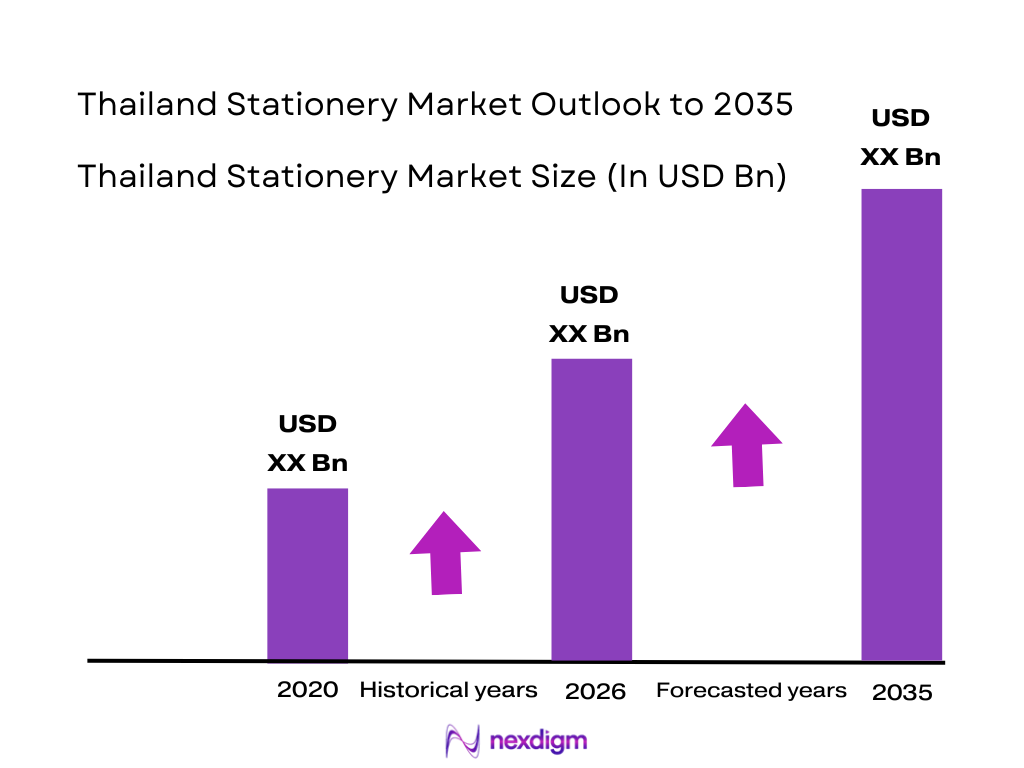
The Thailand Stationery market current size stands at around USD ~ million, reflecting a mature yet evolving landscape driven by steady demand from education, corporate, and personal consumption segments. The market demonstrates resilience supported by recurring academic cycles and office supply requirements. Product diversity across writing instruments, paper products, and art supplies contributes to stable consumption patterns, while increasing preference for premium and eco-friendly stationery is gradually reshaping product mix and consumer expectations.
Bangkok Metropolitan Region remains the dominant hub due to high concentration of educational institutions, corporate offices, and modern retail infrastructure. Cities such as Chiang Mai and Chonburi are emerging demand centers supported by regional economic development and expanding retail penetration. The presence of organized distribution networks, strong wholesale markets, and growing e-commerce adoption strengthens accessibility. Government education initiatives and urbanization trends further reinforce demand concentration in key metropolitan and semi-urban clusters.
Market Segmentation
By Category
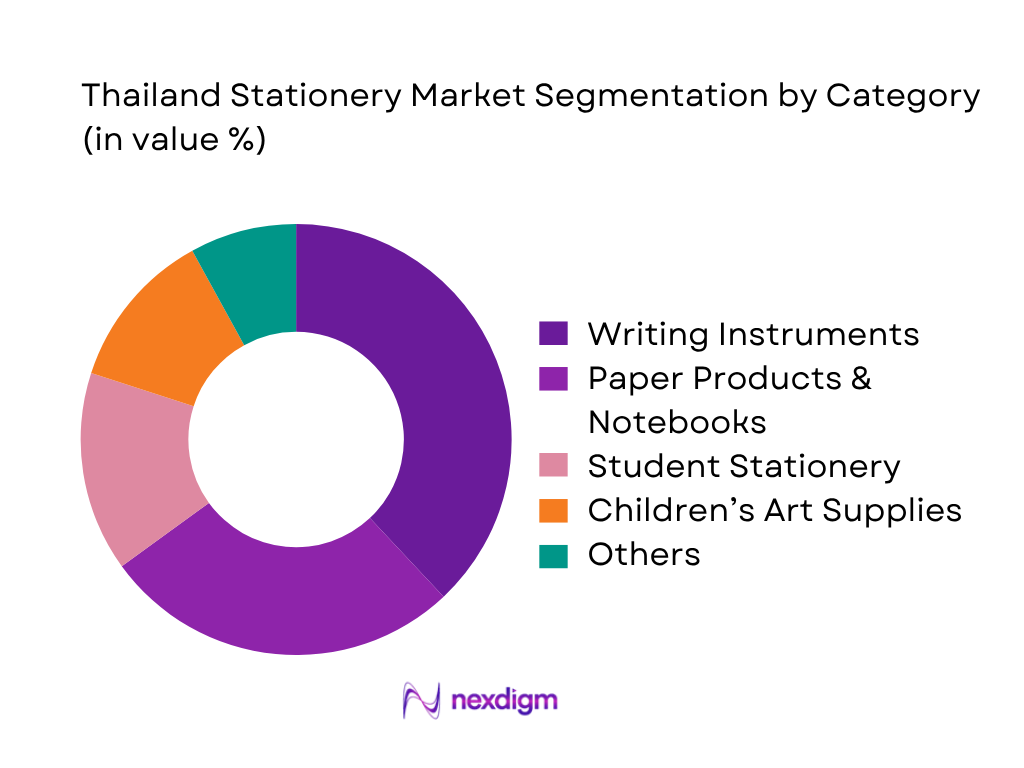
Writing instruments dominate the Thailand stationery market due to their essential usage across schools, offices, and households, ensuring consistent and repeat demand cycles. Ballpoint pens and gel pens lead consumption owing to affordability and ease of use. Paper products and notebooks follow closely, supported by academic demand and institutional procurement. Art supplies and student stationery segments are witnessing gradual growth driven by creative learning trends and hobby-based consumption. Premiumization is evident in writing instruments and notebooks, where branded and aesthetically designed products are gaining traction among urban consumers seeking quality and differentiation.
By Distribution Channel
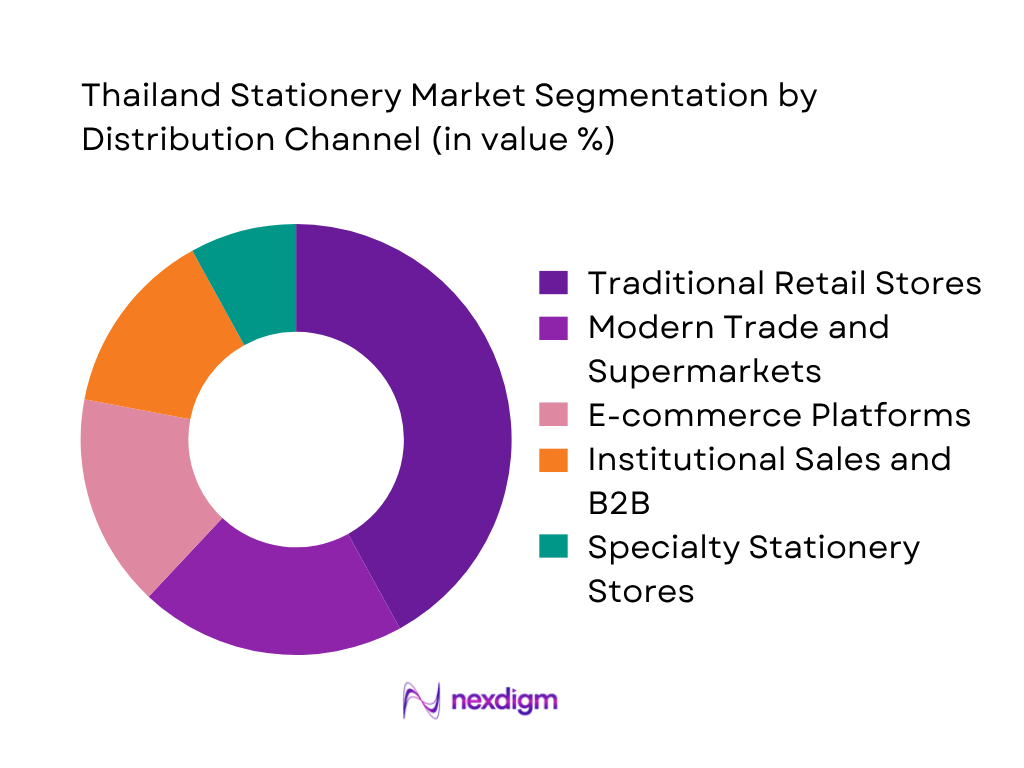
Traditional retail stores continue to dominate distribution due to widespread availability and strong relationships with local suppliers and schools. However, modern trade and supermarkets are gaining traction in urban areas, offering organized retail experiences and product variety. E-commerce platforms are expanding rapidly, driven by convenience and increasing digital adoption. Institutional sales remain significant, particularly for bulk procurement by schools and offices. Specialty stationery stores cater to niche demand for premium and imported products, contributing to diversification in channel dynamics and enhancing consumer access across different price segments.
Competitive Landscape
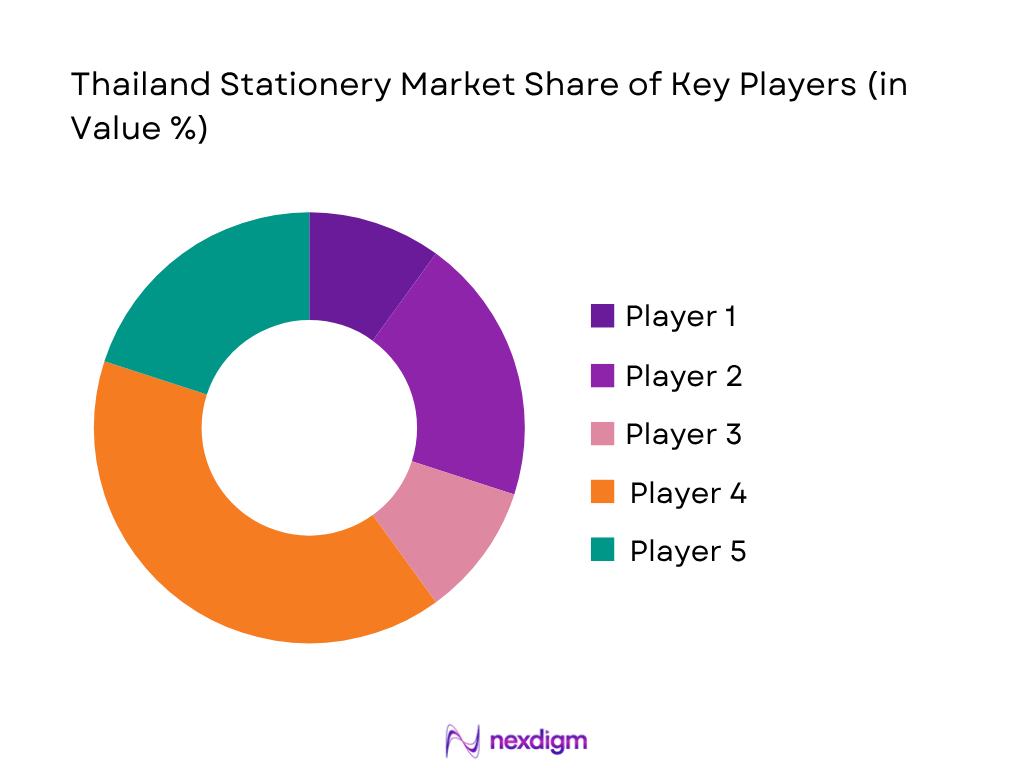
The Thailand stationery market is characterized by a mix of domestic manufacturers and international brands competing across price tiers and product categories. Market participants differentiate through product quality, brand positioning, and distribution strength, with increasing emphasis on sustainability and innovation.
| Company Name | Establishment Year | Headquarters | Formulation Depth | Distribution Reach | Regulatory Readiness | Service Capability | Channel Strength | Pricing Flexibility |
| Double A (1991) Public Company Limited | 1991 | Thailand | ~ | ~ | ~ | ~ | ~ | ~ |
| SCG Packaging Public Company Limited | 1975 | Thailand | ~ | ~ | ~ | ~ | ~ | ~ |
| BIC Group | 1945 | France | ~ | ~ | ~ | ~ | ~ | ~ |
| Pilot Corporation | 1918 | Japan | ~ | ~ | ~ | ~ | ~ | ~ |
| Faber-Castell AG | 1761 | Germany | ~ | ~ | ~ | ~ | ~ | ~ |
Thailand Stationery Market Analysis
Growth Drivers
Rising student population and education enrollment rates
Thailand recorded over 12 million enrolled students across primary and secondary education systems in 2024, supported by consistent public education funding and policy continuity. Annual school enrollment growth of 1.5 units between 2022 and 2025 has sustained demand for essential stationery products such as notebooks, pens, and learning materials. Government-led digital and hybrid learning programs still require physical stationery usage, particularly in early education. Expansion of private tutoring centers, estimated at over 3,000 active institutions in 2025, further contributes to recurring consumption cycles. Seasonal spikes aligned with academic calendars reinforce predictable demand patterns across product categories.
Expansion of organized retail and e-commerce platforms
Thailand’s retail landscape has evolved with over 2,500 modern trade outlets operational by 2025, improving product accessibility and category visibility. E-commerce penetration reached 35 users per 100 individuals in 2024, driving online stationery purchases, especially in urban areas. Digital payment transactions increased by 18 units between 2022 and 2025, supporting seamless purchasing behavior. Major platforms have expanded SKU listings beyond 50,000 items, enabling wider product discovery. Logistics improvements, including average delivery times reduced to 2 days in metropolitan regions, enhance consumer convenience and accelerate shift toward organized and online retail channels.
Challenges
Price sensitivity and dominance of low-cost imports
Thailand imports a significant portion of low-cost stationery products, with import volumes exceeding 1.2 million units annually between 2023 and 2025. Price-sensitive consumers, particularly in rural and semi-urban areas, prioritize affordability over brand value, limiting premium product penetration. Domestic manufacturers face margin pressures as imported alternatives are priced 20 to 30 units lower per product category. Informal retail channels further intensify competition by distributing unbranded goods. This pricing dynamic constrains innovation investment and reduces differentiation opportunities, especially for mid-tier brands attempting to scale across broader consumer segments.
Fluctuating raw material costs such as paper and plastic
Paper pulp prices fluctuated between 650 and 780 units per ton during 2022–2025, impacting production costs for notebooks and paper products. Plastic resin prices also varied within a 15-unit range annually, affecting manufacturing of pens and related products. Supply chain disruptions, including delays of up to 10 days in raw material imports, have added operational complexity. Manufacturers are required to adjust procurement strategies frequently, leading to inconsistent production planning. Smaller players with limited procurement leverage face greater vulnerability, resulting in cost pass-through challenges and reduced competitiveness in price-sensitive market segments.
Opportunities
Growth in eco-friendly and sustainable stationery products
Thailand introduced environmental policies targeting reduction of single-use plastics by 2024, encouraging adoption of sustainable materials. Over 150 product SKUs incorporating recycled paper and biodegradable plastics were launched between 2023 and 2025. Consumer awareness levels increased by 12 units during the same period, supporting demand for eco-friendly alternatives. Retailers have expanded shelf space for sustainable products by approximately 20 units in modern trade outlets. Institutional buyers, including government offices, have begun prioritizing environmentally compliant suppliers, creating long-term procurement opportunities for manufacturers investing in sustainable product innovation.
Expansion of premium and branded stationery segments
Premium stationery sales volumes increased by 9 units between 2022 and 2025, driven by urban consumers seeking design-oriented and high-quality products. Over 200 new premium SKUs were introduced in writing instruments and notebooks categories, reflecting growing product differentiation. Retail price points for premium pens exceed standard products by 15 to 25 units, indicating willingness to pay among targeted segments. Expansion of lifestyle-oriented retail stores, reaching over 300 outlets nationwide, has improved visibility of branded products. This shift toward premiumization creates opportunities for brand positioning, margin expansion, and innovation-led growth strategies.
Future Outlook
The Thailand stationery market is expected to evolve steadily through 2035, supported by consistent education demand, expanding retail infrastructure, and increasing digital integration in distribution. Sustainability and premiumization trends will shape product innovation, while e-commerce will continue to redefine consumer access and purchasing behavior across urban and regional markets.
Major Players
- Double A (1991) Public Company Limited
- SCG Packaging Public Company Limited
- BIC Group
- Pilot Corporation
- Mitsubishi Pencil Co., Ltd.
- Kokuyo Co., Ltd.
- Faber-Castell AG
- Staedtler Mars GmbH
- Maped Group
- Pentel Co., Ltd.
- Zebra Co., Ltd.
- Newell Brands (Paper Mate)
- Deli Group Co., Ltd.
- M&G Stationery Inc.
- Horse Brand
Key Target Audience
- Manufacturers and distributors of stationery products
- Retail chains and e-commerce platform operators
- Corporate procurement departments
- Government and regulatory bodies including Ministry of Education Thailand
- Investments and venture capital firms
- Wholesale traders and importers
- Office supply procurement agencies
- Packaging and raw material suppliers
Research Methodology
Step 1: Identification of Key Variables
Key variables were identified across product categories, distribution channels, pricing tiers, and consumer segments. Demand drivers such as education enrollment and office expansion were mapped alongside supply-side factors including imports and manufacturing capabilities.
Step 2: Market Analysis and Construction
Market structure was constructed using segmentation by category and distribution channel. Historical consumption patterns and channel performance were analyzed to establish baseline trends and identify structural shifts.
Step 3: Hypothesis Validation and Expert Consultation
Findings were validated through consultations with distributors, retailers, and industry participants. Cross-verification ensured alignment between demand indicators and supply-side realities across regions.
Step 4: Research Synthesis and Final Output
All insights were synthesized into a cohesive framework, ensuring consistency across segmentation, competitive landscape, and forward-looking analysis. Final output reflects integrated perspectives across value chain stakeholders.

- Executive Summary
- Research Methodology (Market Definitions and product classification framework, Primary interviews with manufacturers distributors and retailers, Trade data analysis and import export benchmarking, Pricing and SKU level tracking across channels, Consumer usage and purchase behavior assessment, Retail audit and channel mapping across urban and rural regions, Validation through industry associations and company reports)

- Definition and Scope
- Market evolution across traditional and modern retail
- Usage patterns across education corporate and personal segments
- Ecosystem structure including manufacturers distributors and retailers
- Supply chain and channel dynamics including offline and e-commerce
- Regulatory environment including import duties and local manufacturing policies

- Growth Drivers
Rising student population and education enrollment rates
Expansion of organized retail and e-commerce platforms
Increasing office setup and SME growth
Growing demand for creative and art supplies
Product innovation and branding by key players
Urbanization and rising disposable income - Challenges
Price sensitivity and dominance of low-cost imports
Fluctuating raw material costs such as paper and plastic
Limited differentiation in commoditized product categories
Counterfeit and unbranded product competition
Supply chain inefficiencies in remote regions
Environmental concerns related to paper usage - Opportunities
Growth in eco-friendly and sustainable stationery products
Expansion of premium and branded stationery segments
Increasing demand for personalized and customized products
Digital integration with smart stationery solutions
Untapped rural and tier 2 and tier 3 markets
Institutional bulk procurement opportunities - Trends
Shift towards eco-friendly and recycled materials
Increasing popularity of aesthetic and premium stationery
Growth of online stationery marketplaces
Bundling of products for school and office use
Rising influence of social media on product choices
Adoption of ergonomic and functional designs - Government Regulations
- SWOT Analysis
- Stakeholder and Ecosystem Analysis
- Porter’s Five Forces Analysis
- Competition Intensity and Ecosystem Mapping

- By Value, 2020–2025
- By Volume, 2020–2025
- By Distribution Channel, 2020–2025
- By Average Selling Price, 2020–2025

- By Category (in Value %)
- Writing Instruments
– Gel Pens
– Ballpoint Pens (Medium Oil-Based)
– Heat-Erasable Pens
– Highlighters
– Fountain Pens
– Pencils
– Refills
- Paper Products & Notebooks
– Exercise Books / Workbooks
– Notebooks
– Other Paper Products - Student Stationery
– Erasers
– Correction Tape / Liquid
– Sharpeners
– Rulers & Compasses
– Pencil Cases / Bags
- Children’s Art Supplies
– Markers / Watercolor Pens
– Paints
– Crayons
– Oil Pastels
– Colored Pencils - By Distribution Channel (in Value %)
Traditional Retail Stores
Modern Trade and Supermarkets
E-commerce Platforms
Institutional Sales and B2B
Specialty Stationery Stores - By End User (in Value %)
Students and Educational Institutions
Corporate Offices
Government Organizations
Artists and Hobbyists
Household Consumers - By Age Group (in Value %)
Children (3–12 Years)
Teenagers (13–18 Years)
Young Adults (19–24 Years)
Adults (25–44 Years)
Mature Adults (45 Years and Above) - By Region (in Value %)
Central Thailand - Bangkok Metropolitan Region
- Eastern Thailand
- Chonburi
- Rayong
Northern Thailand - Chiang Mai
- Phitsanulok
Southern Thailand - Phuket
- Songkhla

- Market structure and competitive positioning
- Market share snapshot of major players
- Cross Comparison Parameters (Product Portfolio Breadth, Pricing Strategy, Distribution Reach, Brand Recognition, Innovation Capability, Local Manufacturing Presence, Sustainability Initiatives, Partnership and Institutional Reach, Channel Mix Diversification, SKU Depth and Variants, Digital Commerce Capabilities, Institutional Contract Strength, Export Presence and ASEAN Reach, Cost Structure Efficiency, Marketing and Promotion Strategy)
- SWOT Analysis of Key Players
- Pricing and Commercial Model Benchmarking
- Detailed Profiles of Major Companies
Double A (1991) Public Company Limited
SCG Packaging Public Company Limited
BIC Group
Pilot Corporation
Mitsubishi Pencil Co., Ltd.
Kokuyo Co., Ltd.
Faber-Castell AG
Staedtler Mars GmbH
Maped Group
Pentel Co., Ltd.
Zebra Co., Ltd.
Newell Brands (Paper Mate)
Deli Group Co., Ltd.
M&G Stationery Inc.
Horse Brand (ตราม้า)

- Demand driven by academic cycles and office expansion
- Procurement through tenders and distributor networks
- Preference for quality durability and brand reputation
- Budget constraints influencing bulk purchasing decisions
- Barriers including price sensitivity and supply availability

- By Value, 2026–2035
- By Volume, 2026–2035
- By Distribution Channel, 2026–2035
- By Average Selling Price, 2026–2035


 Request a Sample
 Ask for Customization
 Get a Quote
 Enquire Now