

 Download PDF
Market Overview
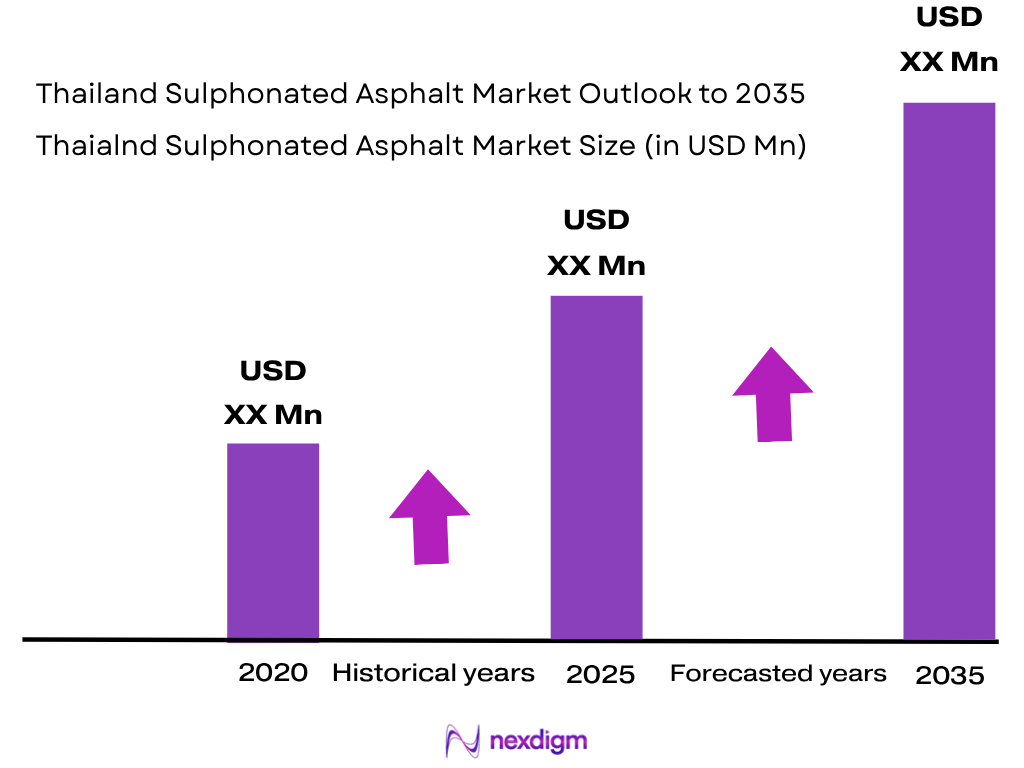
The Thailand Sulphonated Asphalt market is valued at ~USD XX million, based on historical industry assessment, with demand primarily driven by increasing utilization of specialized drilling fluid additives in oil and gas exploration activities. The market size is influenced by consumption from offshore drilling operations in the Gulf of Thailand, rising requirement for shale inhibition chemicals, and increasing adoption of high-performance mud systems. The market recorded consumption of ~XX thousand tons, supported by oilfield chemical imports and drilling service activities.
Thailand’s Sulphonated Asphalt market is concentrated around major energy and industrial hubs, with Bangkok, Rayong, Chonburi, Songkhla, and offshore Gulf of Thailand operations acting as key demand centers. Bangkok dominates due to its role as the headquarters location for oilfield service providers, chemical distributors, and procurement activities. Rayong and Chonburi contribute due to their petrochemical infrastructure and industrial chemical handling capabilities, while Songkhla supports demand through proximity to southern exploration and drilling activities.
Market Segmentation
By Product Type
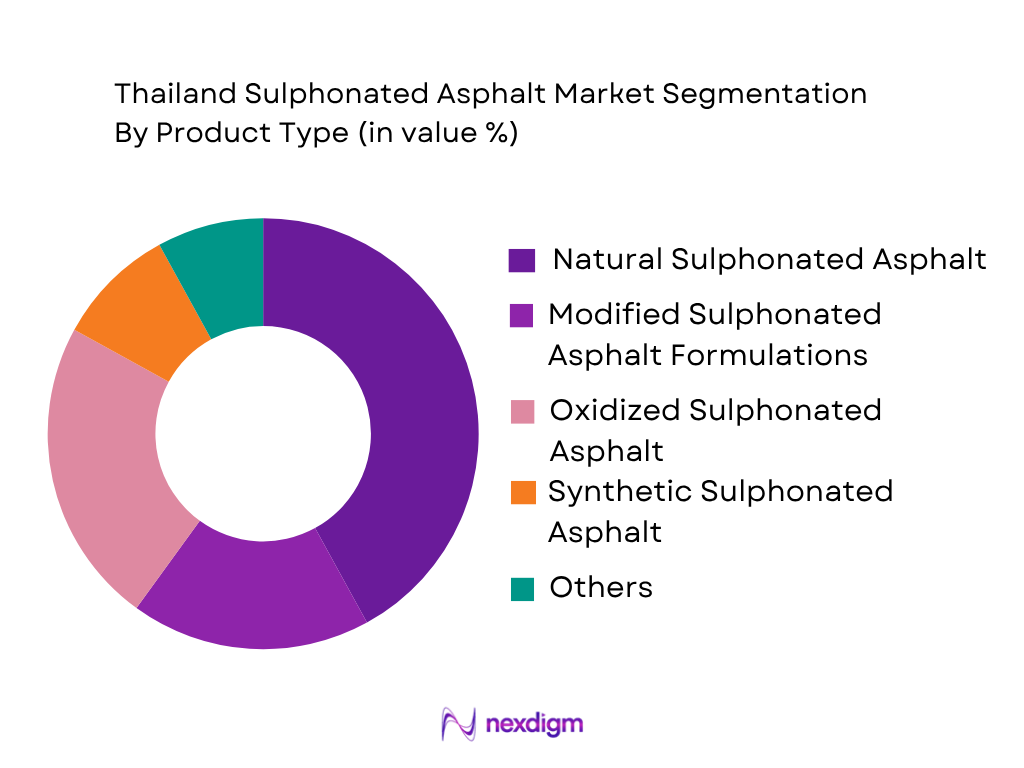
The Thailand Sulphonated Asphalt market is segmented by product type into natural sulphonated asphalt, oxidized sulphonated asphalt, modified sulphonated asphalt, synthetic sulphonated asphalt, and blended sulphonated asphalt formulations. Natural Sulphonated Asphalt holds a dominant position in the Thailand market due to its established application in conventional water-based drilling fluid systems and compatibility with multiple drilling conditions. The product is widely preferred by drilling contractors because of its effectiveness in controlling filtration loss, improving shale inhibition, and enhancing wellbore stability. Traditional oilfield chemical suppliers have extensive experience handling natural asphalt-based additives, resulting in strong acceptance among operators. Additionally, availability through international oilfield chemical supply networks supports consistent adoption. Modified and synthetic variants are gaining attention for advanced drilling requirements; however, conventional grades continue to maintain higher usage across standard exploration and production activities.
By Application Area
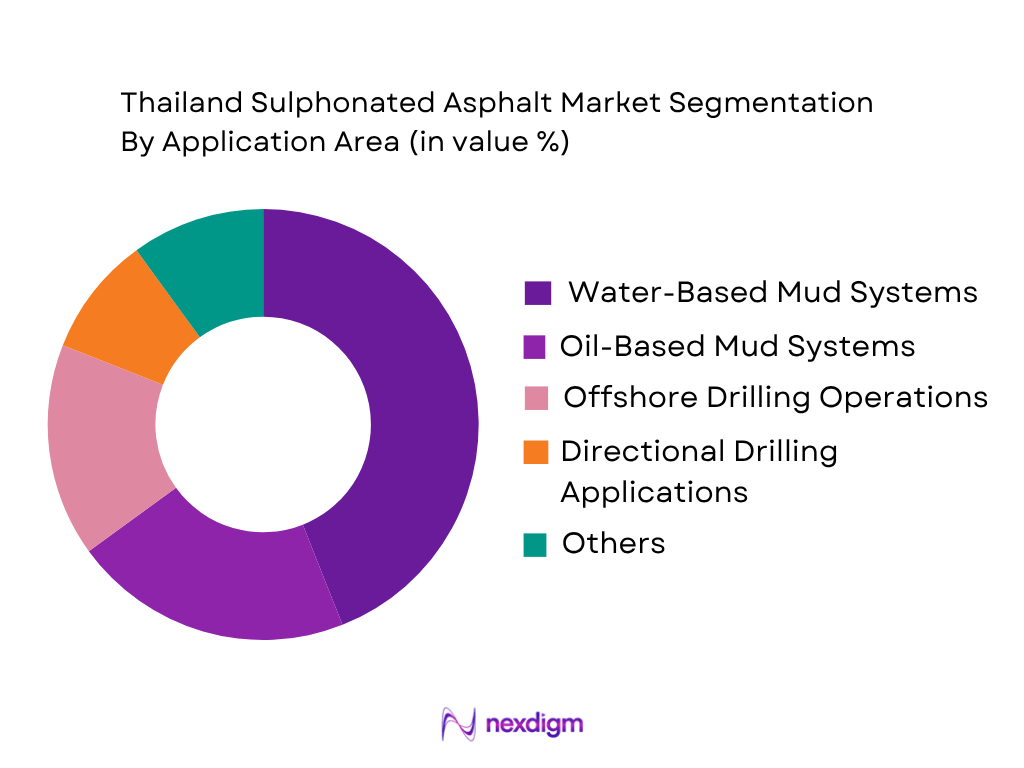
The Thailand Sulphonated Asphalt market is segmented by application area into water-based mud systems, oil-based mud systems, synthetic-based mud systems, offshore drilling operations, onshore drilling operations, directional drilling, and high-pressure high-temperature wells. Water-based mud systems account for the leading share of Sulphonated Asphalt consumption in Thailand due to their extensive utilization in conventional drilling operations and cost-efficient performance characteristics. These systems require additives that provide filtration control, lubricity enhancement, and formation stabilization, making sulphonated asphalt an important chemical component. Offshore drilling activities in the Gulf of Thailand further contribute to demand because operators require reliable drilling fluid performance under complex geological conditions. Although oil-based and synthetic-based mud systems are increasingly adopted for technically challenging wells, water-based systems continue to dominate due to operational familiarity, regulatory acceptance, and lower overall drilling fluid management costs.
Competitive Landscape
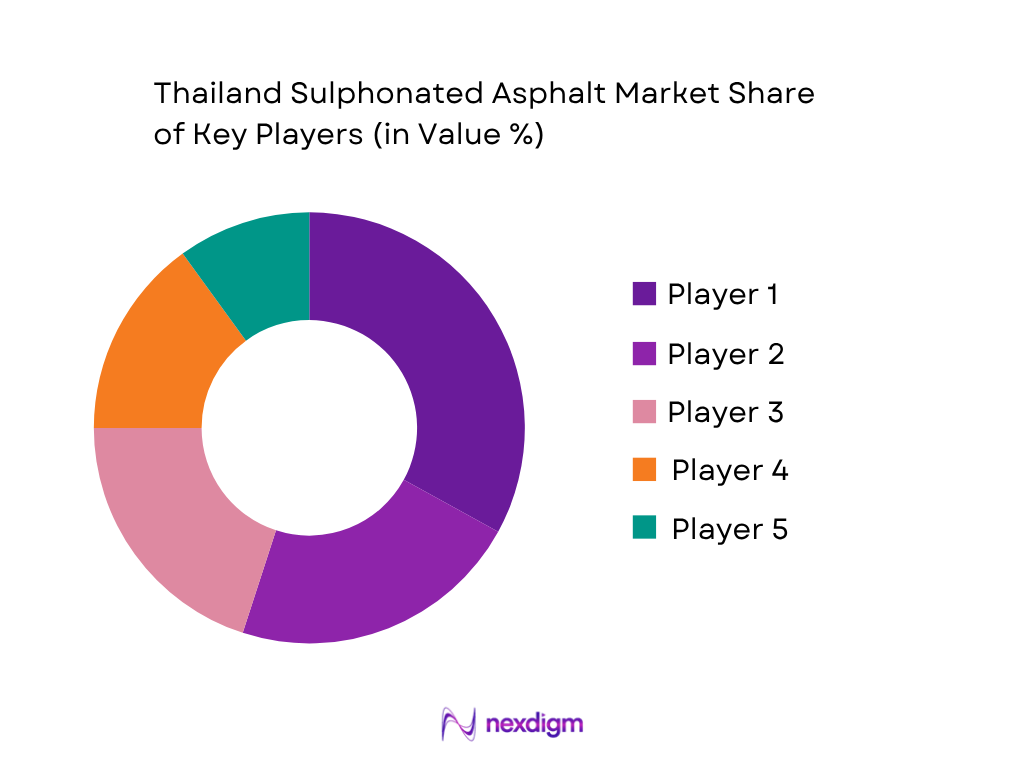
The Thailand Sulphonated Asphalt market consists of global oilfield chemical manufacturers, specialty chemical suppliers, and drilling fluid service providers. Competition is characterized by strong participation from multinational companies offering integrated drilling fluid solutions, technical support services, and customized formulations. Major players compete through product performance, application expertise, supply reliability, and relationships with drilling contractors and exploration companies.
| Company | Establishment Year | Headquarters | Key Product Focus | Thailand Market Presence | Oilfield Chemical Capability | Drilling Fluid Expertise | Distribution Strength |
| Halliburton | ~1919 | Houston, USA | ~ | ~ | ~ | ~ | ~ |
| SLB | ~1926 | Houston, USA | ~ | ~ | ~ | ~ | ~ |
| Baker Hughes | ~1907 | Houston, USA | ~ | ~ | ~ | ~ | ~ |
| Newpark Resources | ~1932 | The Woodlands, USA | ~ | ~ | ~ | ~ | ~ |
| Scomi Group | ~1969 | Kuala Lumpur, Malaysia | ~ | ~ | ~ | ~ | ~ |
Thailand Sulphonated Asphalt Market Analysis
Growth Drivers
Expansion of Oil and Gas Exploration Activities
Thailand’s Sulphonated Asphalt market is supported by continued oil and gas production activities, particularly from offshore fields in the Gulf of Thailand where drilling fluids require additives for shale control, filtration management, and borehole stabilization. Thailand produced approximately 14 million tonnes of crude oil and condensates and around 30 billion cubic meters of natural gas in 2024, according to the Energy Policy and Planning Office (EPPO), supporting continued demand for oilfield chemicals used during exploration and production activities. The country’s offshore petroleum ecosystem remains concentrated around mature fields operated through platforms requiring continuous drilling, workover, and maintenance operations. The Department of Mineral Fuels Thailand reported continued petroleum concession activities and exploration investment approvals, reinforcing the requirement for specialized drilling additives. Sulphonated asphalt is increasingly utilized in water-based and oil-based mud systems due to its ability to improve lubricity, reduce fluid loss, and control reactive shale formations. Thailand’s industrial sector also consumed approximately 70 million tonnes of oil equivalent of energy in 2024, according to national energy statistics, highlighting the importance of maintaining domestic energy production capabilities and supporting demand for advanced drilling chemical solutions.
Growth of Directional Drilling Operations and High-Performance Mud Systems
Increasing complexity of drilling activities in Thailand is driving demand for advanced sulphonated asphalt formulations designed for directional drilling, extended-reach wells, and challenging geological formations. Directional drilling requires drilling fluids with enhanced lubricity, filtration control, and formation stability, creating higher utilization of specialty additives. Thailand’s Energy Policy and Planning Office reported that natural gas continued to account for approximately half of domestic electricity generation in 2024, maintaining the importance of reliable gas production infrastructure. Offshore drilling operators increasingly require chemical additives capable of performing under high-temperature and high-pressure conditions, especially in mature offshore reservoirs where operational efficiency is critical. The International Energy Agency reported that Southeast Asia’s natural gas demand remained significant in 2024 due to industrial and power generation requirements, supporting continued upstream activity. Sulphonated asphalt additives contribute to improved drilling performance by reducing torque, preventing shale swelling, and maintaining mud properties during complex drilling operations. Growth in technical drilling requirements is encouraging oilfield service companies to adopt customized drilling fluid packages incorporating modified sulphonated asphalt grades.
Market Challenges
Dependence on Imported Sulphonated Asphalt Products
Thailand’s Sulphonated Asphalt market faces supply chain challenges due to limited domestic production capacity for specialized oilfield chemical additives. Thailand relies significantly on imported specialty chemicals and industrial inputs, increasing exposure to international supply disruptions and logistics constraints. According to Thailand Customs Department trade statistics, the country recorded industrial chemical imports exceeding USD 40 billion in 2024, reflecting strong dependence on imported chemical materials for multiple industrial applications. Sulphonated asphalt production requires specialized asphalt feedstock, sulphonation technology, and formulation expertise, which are primarily concentrated among international chemical manufacturers. Thailand’s Ministry of Industry has highlighted the importance of strengthening domestic chemical production capabilities to reduce dependence on imported industrial materials. Fluctuations in global crude oil markets also influence availability of petroleum-derived raw materials used in asphalt-based chemical production. Import dependency can affect procurement planning for drilling contractors and oilfield service providers, particularly during periods of increased exploration activity or international logistics disruptions. This creates challenges related to supply continuity, lead times, and availability of specialized product grades.
Environmental Concerns Related to Drilling Chemicals
Environmental regulations and sustainability requirements create challenges for Sulphonated Asphalt adoption as drilling operators face increasing requirements related to chemical safety, offshore waste management, and ecosystem protection. Thailand’s Pollution Control Department has strengthened environmental monitoring requirements for industrial activities, including petroleum exploration operations located near marine ecosystems. The Gulf of Thailand supports extensive offshore petroleum activities, requiring operators to manage drilling waste, produced water, and chemical discharge risks. Thailand reported approximately 3,200 kilometers of coastline under environmental management considerations, increasing the importance of responsible offshore operational practices. Sulphonated asphalt products must comply with evolving requirements related to toxicity, biodegradability, and disposal practices. The Department of Mineral Fuels Thailand emphasizes environmental management plans as part of petroleum exploration and production approvals. These regulatory requirements encourage oilfield service providers to develop environmentally compatible drilling fluid formulations while maintaining technical performance. The need for improved environmental compliance can increase formulation complexity and require additional testing before adoption in offshore drilling applications.
Market Opportunities
Development of Customized Drilling Fluid Formulations
Demand for customized drilling fluid solutions creates opportunities for Sulphonated Asphalt manufacturers to develop application-specific formulations for Thailand’s diverse drilling conditions. Offshore fields in the Gulf of Thailand involve varying geological formations requiring additives optimized for shale inhibition, filtration control, lubrication, and temperature stability. Thailand had more than 10,000 industrial establishments classified under chemical and petroleum-related manufacturing activities in 2024, according to the Ministry of Industry, supporting a broader ecosystem for specialty chemical development. The country’s petroleum sector continues to require advanced drilling technologies as operators manage mature reservoirs and improve extraction efficiency. The Department of Mineral Fuels Thailand reported continued petroleum resource management activities, including exploration and production monitoring across concession areas. Customized sulphonated asphalt products can address specific operational challenges such as reactive shale formations, high-pressure zones, and extended drilling intervals. Increasing collaboration between oilfield chemical suppliers and drilling service providers creates opportunities for technical differentiation through performance-based formulations rather than standardized chemical products.
Local Chemical Manufacturing Investments and Advanced Additive Technologies
Thailand’s established petrochemical infrastructure provides opportunities for expanding domestic production and blending capabilities for specialty drilling additives, including sulphonated asphalt formulations. The country’s Eastern Economic Corridor (EEC) remains a major industrial development zone, with significant concentration of petrochemical and chemical manufacturing facilities. The EEC Office reported continued investment promotion activities in advanced industries, including chemical and bio-based industries, supporting opportunities for local specialty chemical manufacturing. Thailand’s petrochemical sector benefits from existing infrastructure in Rayong and Chonburi, including refineries, chemical plants, storage facilities, and logistics networks. The Board of Investment Thailand reported continued investment applications in chemical and advanced manufacturing sectors during 2024, indicating industrial interest in expanding higher-value production capabilities. Local manufacturing or regional blending facilities can reduce dependency on imported drilling additives and improve supply responsiveness for oilfield operators. Development of advanced shale inhibition technologies, environmentally compatible formulations, and performance-enhanced sulphonated asphalt products can support future market expansion while aligning with Thailand’s industrial upgrading initiatives.
Future Outlook
Over the forecast period, the Thailand Sulphonated Asphalt market is expected to demonstrate steady growth driven by continued offshore exploration activities, increasing demand for efficient drilling fluid systems, and adoption of advanced oilfield chemical formulations. Growth will also be supported by increasing focus on wellbore stability, improved drilling efficiency, and customized chemical solutions for complex geological conditions. The market is expected to witness higher adoption of performance-based additives and integrated drilling fluid management services.
Major Players
- Halliburton
- SLB
- Baker Hughes
- Newpark Resources
- Scomi Group
- BASF
- Clariant
- Solvay
- Arkema
- Kemira
- Innospec
- Chevron Phillips Chemical
- TETRA Technologies
- M-I SWACO
- Baroid
Key Target Audience
- Oil and Gas Exploration and Production Companies
- Drilling Contractors and Oilfield Service Providers
- Oilfield Chemical Manufacturers and Suppliers
- Petrochemical and Specialty Chemical Companies
- Investments and Venture Capitalist Firms (Energy Investment Funds, Industrial Chemical Investment Firms)
- Government and Regulatory Bodies (Department of Mineral Fuels Thailand, Ministry of Energy Thailand, Pollution Control Department Thailand)
- Industrial Chemical Distribution Companies
- Offshore Energy Infrastructure Operators
Research Methodology
Step 1: Identification of Key Variables
The initial stage involves developing an ecosystem map covering all major stakeholders operating within the Thailand Sulphonated Asphalt market. This includes oil and gas operators, drilling contractors, oilfield chemical manufacturers, distributors, and regulatory authorities. Extensive secondary research is conducted using industry databases, trade publications, import-export records, and company disclosures to identify critical market variables.
Step 2: Market Analysis and Construction
This phase focuses on collecting and analyzing historical market information related to Sulphonated Asphalt consumption, pricing trends, application demand, and supply chain structure. Market construction includes assessment of drilling activity, chemical consumption patterns, import dependency, and demand contribution from offshore and onshore operations.
Step 3: Hypothesis Validation and Expert Consultation
Market assumptions are validated through primary interactions with industry participants, including oilfield chemical suppliers, drilling service providers, and technical professionals. Computer-assisted interviews and expert discussions are conducted to understand operational requirements, procurement practices, product performance expectations, and future demand trends.
Step 4: Research Synthesis and Final Output
The final stage combines primary and secondary research findings to develop a comprehensive market assessment. Information collected from manufacturers, distributors, and end users is cross-verified through data triangulation to ensure accuracy in market sizing, competitive analysis, segmentation, and future outlook evaluation.

- Executive Summary
- Research Methodology (Market Definitions and Product Scope, Sulphonated Asphalt Classification Framework, Market Sizing Methodology, Revenue Estimation Approach, Consumption Volume Assessment, Average Selling Price Calculation, Demand-Side Analysis, Supply-Side Analysis, Drilling Fluid Industry Interviews, Oilfield Chemical Supplier Interviews, Distributor Assessment, Import-Export Data Analysis, Bottom-Up Market Estimation, Top-Down Market Validation, Data Triangulation Methodology, Forecasting Framework, Market Assumptions, Research Limitations)

- Definition and Scope
- Sulphonated Asphalt Industry Evolution and Development Landscape
- Thailand Oilfield Chemical Industry Overview
- Role of Sulphonated Asphalt in Drilling Fluid Systems
- Sulphonated Asphalt Manufacturing and Processing Ecosystem

- Growth Drivers (Expansion of Oil and Gas Exploration Activities, Increasing Demand for Advanced Drilling Fluid Additives, Growth of Directional Drilling Operations, Need for Improved Wellbore Stability, Increasing Offshore Drilling Requirements, Rising Adoption of High-Performance Mud Systems)
- Market Challenges (Dependence on Imported Sulphonated Asphalt Products, Volatility in Bitumen Feedstock Prices, Limited Domestic Sulphonation Capacity, Declining Mature Oilfield Production, Environmental Concerns Related to Drilling Chemicals, Fluctuating Exploration Activities)
- Market Opportunities (Development of Customized Drilling Fluid Formulations, Growth of Offshore Drilling Applications, Expansion of Geothermal Exploration, Bio-Based Asphalt Additive Development, Local Chemical Manufacturing Investments, Advanced Shale Inhibition Technologies)
- Market Trends (Increasing Use of High-Temperature Resistant Additives, Demand for Low-Toxicity Drilling Chemicals, Customized Oilfield Chemical Packages, Enhanced Lubricity Requirements, Digital Monitoring of Drilling Fluid Performance, Integrated Mud Engineering Solutions)
- Technology Landscape (Sulphonation Processing Technology, Asphalt Modification Technologies, Particle Size Optimization, High Performance Drilling Fluid Formulations, Environmentally Compatible Additive Technologies)
- SWOT Analysis
- Porter’s Five Forces Analysis
- PESTLE Analysis
- Stakeholder Ecosystem Analysis
- Competition Ecosystem Analysis

- By Market Value (2020-2025)
- By Consumption Volume (2020-2025)
- By Average Selling Price (2020-2025)
- By Domestic Production and Import Contribution (2020-2025)

- By Product Type (In Value %)
Natural Sulphonated Asphalt
Oxidized Sulphonated Asphalt
Modified Sulphonated Asphalt
Synthetic Sulphonated Asphalt
Blended Sulphonated Asphalt Products - By Physical Form (In Value %)
Powder Sulphonated Asphalt
Granular Sulphonated Asphalt
Liquid Sulphonated Asphalt Dispersion
Concentrated Sulphonated Asphalt Formulations - By Sulphonation Level (In Value %)
Low Sulphonation Grade
Medium Sulphonation Grade
High Sulphonation Grade - By Functional Performance (In Value %)
Shale Inhibition Grade
High Temperature High Pressure (HTHP) Grade
Lubrication Enhancement Grade
Filtration Control Grade
Wellbore Stabilization Grade
Lost Circulation Mitigation Grade - By Application Area (In Value %)
Oil and Gas Drilling Fluids
Water-Based Mud Systems
Oil-Based Mud Systems
Synthetic-Based Mud Systems
Directional Drilling Applications
Offshore Drilling Operations
Onshore Drilling Operations - By End-User Industry (In Value %)
Upstream Oil and Gas Exploration Companies
Drilling Contractors
Oilfield Service Companies
Mud Engineering Service Providers
Geothermal Drilling Companies
Mining Exploration Drilling

- Market Share of Major Players (By Value, Volume, Product Grade, Application Segment, End-User Industry)
- Cross Comparison Parameters (Sulphonated Asphalt Product Portfolio Breadth, Drilling Fluid Additive Grade Availability, Manufacturing and Blending Capacity, Oilfield Application Coverage, High Temperature Performance Capability, Distribution Network Strength, Technical Mud Engineering Support, Customized Formulation Capability)
- SWOT Analysis of Major Players
- Detailed Profiles of Major Companies
Halliburton
SLB
Baker Hughes
Newpark Resources
Scomi Group
TETRA Technologies
Baroid
M-I SWACO
BASF
Solvay
Arkema
Clariant
Kemira
Innospec
Chevron Phillips Chemical

- End-User Demand Assessment
- Oilfield Application Analysis
- Procurement Behavior Analysis
- Product Selection Criteria Analysis
- Customer Pain Point Analysis
- Supplier Relationship Analysis

- By Market Value (2026-2035)
- By Consumption Volume (2026-2035)
- By Average Selling Price (2026-2035)
- By Domestic Production and Import Contribution (2026-2035)


 Request a Sample
 Ask for Customization
 Get a Quote
 Enquire Now