

 Download PDF
Market Overview
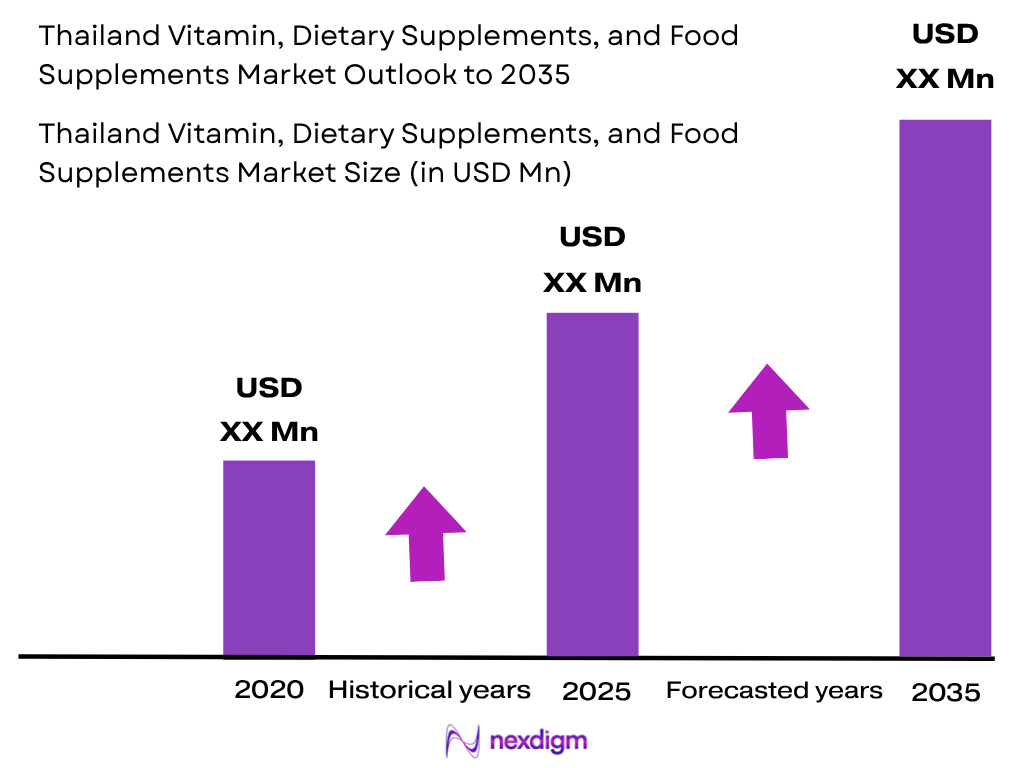
The Thailand Vitamin, Dietary Supplements, and Food Supplements Market is valued at approximately USD ~2.0 billion based on recent industry assessments, supported by rising preventive healthcare adoption, increased consumer focus on immunity, beauty, sports nutrition, and lifestyle disease management. The market recorded a strong base supported by growing demand for vitamins, herbal supplements, collagen products, and functional nutrition solutions. Thailand’s supplement ecosystem is supported by a large manufacturing base, with approximately 6,300 registered dietary supplement-related companies, indicating significant domestic production capability and market competition.
Thailand’s supplement consumption is concentrated in major urban centres, particularly Bangkok, Chiang Mai, Phuket, and Chonburi, due to higher healthcare awareness, stronger retail infrastructure, greater purchasing power, and higher penetration of modern distribution channels. Bangkok dominates due to its concentration of private hospitals, pharmacies, wellness centres, premium retail stores, and e-commerce adoption. Chiang Mai has developed as a wellness-focused destination supporting demand for herbal and natural supplements, while Phuket benefits from tourism-driven wellness consumption.
Market Segmentation
By Product Type
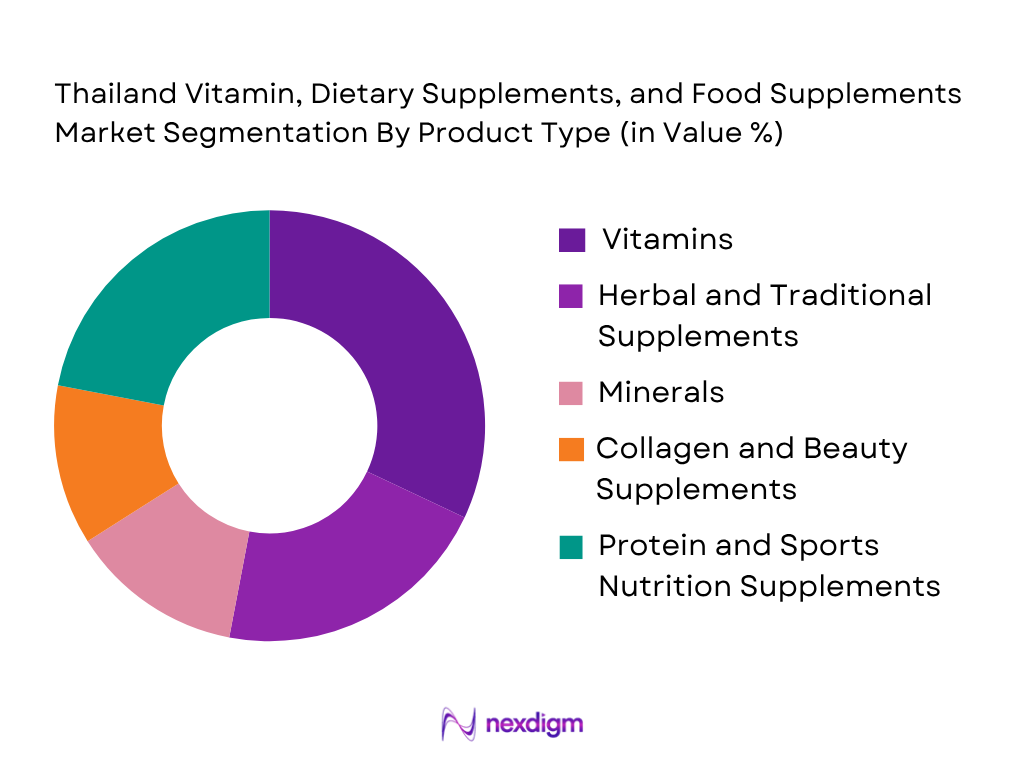
Thailand Vitamin, Dietary Supplements, and Food Supplements Market is segmented into vitamins, minerals, herbal supplements, collagen products, sports nutrition supplements, and functional food supplements. Among these categories, vitamin supplements dominate the market due to their broad consumer acceptance, daily usage patterns, and strong association with immunity and preventive healthcare. Vitamins such as vitamin C, vitamin D, and multivitamins are widely consumed across age groups because they address general wellness needs rather than specific health conditions. Growing awareness regarding nutritional gaps, workplace stress, aging-related health concerns, and immune support has strengthened vitamin adoption. In addition, pharmacies, supermarkets, and online platforms provide easy access to vitamin products from both domestic and international brands.
By Form Type
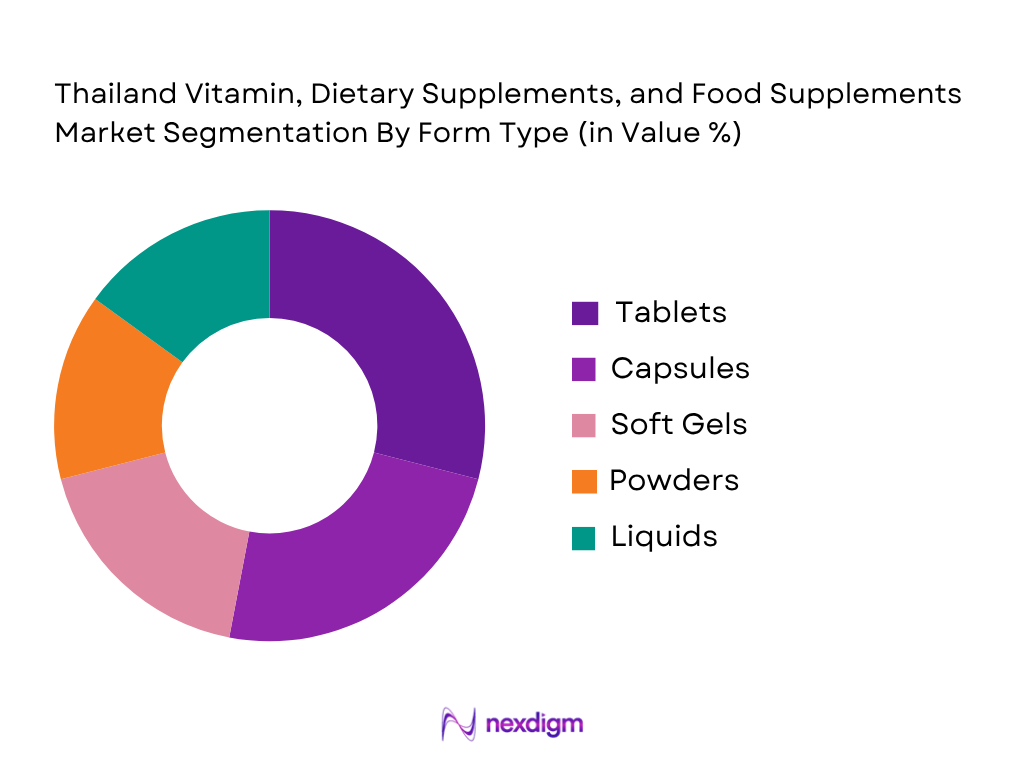
Thailand Vitamin, Dietary Supplements, and Food Supplements Market is segmented into tablets, capsules, soft gels, powders, liquids, and gummies. Tablets represent the leading form due to convenience, accurate dosage delivery, longer shelf stability, and widespread availability across pharmacies and retail stores. Consumers seeking daily vitamins, minerals, and general wellness supplements commonly prefer tablets because they are cost-effective and easy to store. Pharmacies and supermarkets maintain extensive tablet supplement portfolios, supporting mass adoption among adult consumers. However, newer formats such as gummies and powders are gaining attention among younger consumers due to improved taste, convenience, and lifestyle-oriented positioning.
Competitive Landscape
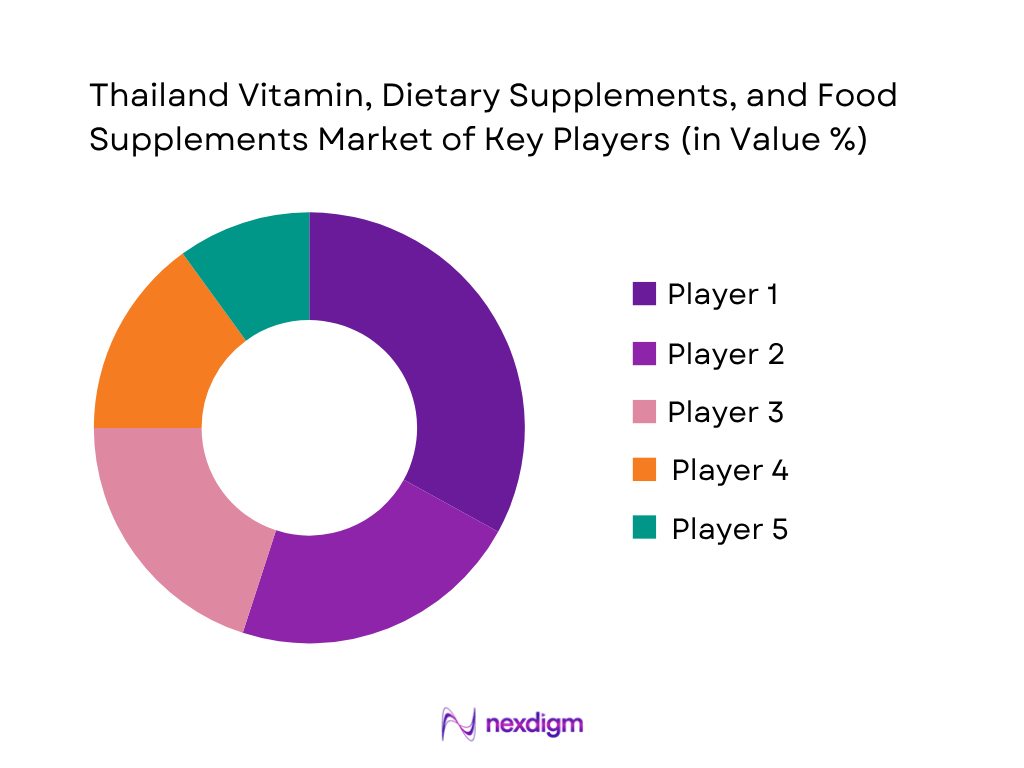
The Thailand Vitamin, Dietary Supplements, and Food Supplements Market is characterized by the presence of multinational supplement companies, domestic nutraceutical manufacturers, pharmaceutical-linked wellness companies, and direct-selling organizations. The competitive environment is shaped by strong brand recognition, extensive pharmacy distribution, e-commerce expansion, and product differentiation through ingredients such as collagen, probiotics, herbal extracts, and immunity-support supplements. Domestic companies benefit from Thailand’s traditional herbal medicine ecosystem, while global brands leverage advanced formulation capabilities, international certifications, and established consumer trust. Companies are increasingly focusing on premium formulations, clean-label products, personalized nutrition solutions, and digital consumer engagement strategies to strengthen their market positioning.
| Company | Establishment Year | Headquarters | Product Portfolio | OEM Partnerships | Manufacturing Capability | Distribution Network | R&D Capability | Aftermarket / Consumer Support |
| Mega Lifesciences | 1982 | Bangkok, Thailand | ~ | ~ | ~ | ~ | ~ | ~ |
| Blackmores | 1932 | Sydney, Australia | ~ | ~ | ~ | ~ | ~ | ~ |
| Amway Thailand | 1959 | Michigan, USA | ~ | ~ | ~ | ~ | ~ | ~ |
| Herbalife Nutrition | 1980 | California, USA | ~ | ~ | ~ | ~ | ~ | ~ |
| Swisse Wellness | 1969 | Victoria, Australia | ~ | ~ | ~ | ~ | ~ | ~ |
Thailand Vitamin, Dietary Supplements, and Food Supplements Market Analysis
Growth Drivers
Rising Preventive Healthcare Awareness
The Thailand Vitamin, Dietary Supplements, and Food Supplements Market is being supported by increasing consumer focus on preventive healthcare and daily wellness management. Thailand’s healthcare expenditure continues to expand alongside economic development, with the World Bank reporting Thailand’s GDP at approximately USD 512 billion in 2024, supporting higher household spending capacity on wellness-related products. The Ministry of Public Health reported that Thailand had more than 69 million people requiring continuous healthcare support, increasing awareness toward preventive solutions rather than treatment-focused consumption. The National Statistical Office of Thailand recorded an aging population trend, with approximately 13 million elderly citizens, creating higher demand for vitamins, minerals, calcium, and joint-health supplements. Increasing urban lifestyles in Bangkok, Chiang Mai, and Phuket are encouraging consumers to adopt supplements for immunity enhancement, energy management, and nutritional support. Growth of pharmacies, modern retail stores, and online supplement platforms has further improved product accessibility. The expansion of digital health content and wellness influencers has also increased consumer knowledge regarding supplement benefits, creating stronger demand for scientifically formulated and trusted supplement products.
Aging Population Growth and Lifestyle Disease Concerns
Thailand’s demographic transition is becoming a significant driver for vitamin and dietary supplement adoption as consumers increasingly seek solutions for age-related health management and lifestyle diseases. According to Thailand’s National Statistical Office, the country had more than 13 million elderly people, creating sustained demand for supplements supporting bone health, cardiovascular wellness, immunity, and cognitive functions. The World Bank reported that Thailand’s population exceeded 71 million people in 2024, with demographic aging becoming one of the country’s major healthcare priorities. Rising prevalence of non-communicable diseases has increased interest in nutritional supplementation, with Thailand’s Ministry of Public Health identifying diabetes, hypertension, and cardiovascular conditions as major health concerns requiring long-term management. Urban consumers with sedentary lifestyles are increasingly adopting probiotics, omega supplements, multivitamins, and functional nutrition products. The expansion of private healthcare facilities and wellness-focused services in metropolitan areas such as Bangkok has also strengthened supplement consumption. Manufacturers are responding by developing targeted products for elderly consumers, working professionals, and individuals seeking immunity and metabolic health support.
Market Challenges
Strict Regulatory Requirements
The Thailand Vitamin, Dietary Supplements, and Food Supplements Market faces regulatory challenges due to strict product registration, ingredient approval, and health-claim requirements established by national authorities. The Thai Food and Drug Administration regulates supplement products under food safety legislation, requiring manufacturers to comply with formulation standards, labeling requirements, and permitted health claims. Thailand’s Ministry of Public Health continues to strengthen monitoring of health products to ensure consumer safety and prevent misleading claims. The country’s import-dependent supplement ecosystem also requires compliance with customs documentation and ingredient approval procedures for international raw materials. According to Thailand’s trade data, the country imported significant quantities of pharmaceutical and health-related products in 2024, increasing the importance of regulatory coordination across global suppliers. Companies entering the Thai market must invest in compliance systems, quality testing, and documentation processes. These requirements create operational complexity, particularly for small and medium-sized supplement manufacturers. Regulatory scrutiny has increased as consumer demand expands for collagen, probiotics, herbal supplements, and functional foods requiring stronger scientific validation and safety assessments.
Imported Ingredient Dependency and Product Quality Concerns
The Thailand Vitamin, Dietary Supplements, and Food Supplements Market experiences challenges due to dependence on imported active ingredients, formulation technologies, and specialized nutritional compounds. Thailand’s domestic supplement industry relies on international supply chains for ingredients such as vitamins, minerals, botanical extracts, probiotics, and specialty nutritional compounds. The Ministry of Commerce data indicates that Thailand maintains substantial international trade activity in pharmaceutical and healthcare-related products, reflecting reliance on global suppliers for advanced healthcare inputs. Supply chain disruptions can affect availability of specialized ingredients and create challenges for manufacturers seeking consistent product quality. Product authenticity and quality verification remain important concerns due to the presence of unauthorized or counterfeit supplements in online channels. Thailand’s Food and Drug Administration has continued monitoring health product advertisements and unauthorized products to protect consumers. Increasing competition among domestic and international brands has also intensified the need for stronger quality certifications, transparent sourcing, and scientifically validated formulations. Manufacturers are required to strengthen quality-control systems and traceability mechanisms to maintain consumer trust.
Market Opportunities
Personalized Nutrition Solutions and Functional Food Innovation
The Thailand Vitamin, Dietary Supplements, and Food Supplements Market has significant opportunities through personalized nutrition and functional food development as consumers increasingly seek targeted health solutions. Thailand’s growing digital economy, supported by strong internet penetration, is enabling personalized wellness platforms, online consultations, and data-driven supplement recommendations. The World Bank reported that Thailand’s population exceeded 71 million people in 2024, creating a large consumer base for individualized nutrition products. Functional ingredients such as probiotics, collagen peptides, herbal extracts, and immunity-support compounds are gaining attention among health-conscious consumers. Thailand’s Ministry of Public Health continues to promote preventive healthcare approaches, supporting demand for products designed around specific health needs. Food manufacturers and supplement companies are increasingly developing products targeting immunity, digestive health, beauty enhancement, and healthy aging. The combination of Thailand’s traditional herbal medicine ecosystem and modern nutritional science creates opportunities for innovative supplement formulations. Companies investing in personalized product portfolios, digital engagement platforms, and functional food categories can strengthen consumer relationships and capture emerging wellness demand.
Plant-Based Supplements and Premium Natural Product Development
The Thailand Vitamin, Dietary Supplements, and Food Supplements Market is witnessing opportunities from increasing preference for natural, plant-based, and premium wellness products. Thailand has a strong agricultural ecosystem with access to botanical resources, traditional herbs, and natural ingredients that support development of herbal supplements and functional nutrition products. The Ministry of Agriculture and Cooperatives reported continued importance of agricultural production in Thailand’s economy, creating opportunities for locally sourced supplement ingredients. Consumer interest in clean-label products is encouraging manufacturers to develop supplements using natural extracts, plant-based proteins, and sustainably sourced ingredients. The growth of premium wellness consumption in urban markets such as Bangkok is supporting demand for high-quality collagen, herbal formulations, and organic supplements. Thailand’s tourism industry, which recorded more than 35 million international visitor arrivals in 2024 according to government tourism data, also creates opportunities for wellness-oriented products targeting health-conscious travelers. Companies focusing on natural formulations, traceable ingredients, and premium positioning can benefit from increasing consumer preference toward transparent and wellness-focused supplement solutions.
Future Outlook
The Thailand Vitamin, Dietary Supplements, and Food Supplements Market is expected to demonstrate sustained expansion due to increasing preventive healthcare adoption, rising consumer interest in wellness products, and continued development of digital supplement retail channels. Future market growth will be supported by demand for personalized nutrition, beauty supplements, plant-based formulations, and functional ingredients. Manufacturers are expected to increase investments in advanced formulations, localized herbal ingredients, and science-backed health solutions. The integration of technology, including online health assessments and personalized supplement recommendations, is likely to reshape consumer purchasing behaviour.
Major Players
- Mega Lifesciences
- Blackmores
- Amway Thailand
- Herbalife Nutrition
- Swisse Wellness
- DHC Corporation
- GNC Holdings
- Nestlé Health Science
- Bayer Consumer Health
- Nature Made
- NOW Foods
- Suntory Wellness
- Kobayashi Pharmaceutical
- Unicity International
- Puritan’s Pride
Key Target Audience
- Vitamin and Dietary Supplement Manufacturers
- Nutraceutical Product Manufacturers
- Pharmaceutical Companies Expanding into Wellness Products
- Retail Pharmacy Chains and Health Product Retailers
- E-Commerce Platforms and Online Wellness Marketplaces
- Investments and Venture Capitalist Firms (Healthcare, Wellness, Consumer Health Investment Funds)
- Government and Regulatory Bodies (Thai Food and Drug Administration, Ministry of Public Health Thailand)
- Ingredient Suppliers and Contract Manufacturing Organizations
Research Methodology
Step 1: Identification of Key Variables
The initial research phase involves developing a comprehensive ecosystem map of the Thailand Vitamin, Dietary Supplements, and Food Supplements Market. This includes identifying manufacturers, ingredient suppliers, distributors, regulatory authorities, retail channels, and consumer segments. Secondary research is conducted to evaluate market structure, product categories, regulatory environment, and industry dynamics.
Step 2: Market Analysis and Construction
This stage focuses on analysing historical market developments, supplement consumption patterns, category-level performance, and distribution channel evolution. Demand-side and supply-side factors are evaluated to understand consumer preferences, manufacturing capabilities, import dependency, and competitive positioning. Market estimates are validated through industry-level data assessment.
Step 3: Hypothesis Validation and Expert Consultation
Market assumptions are validated through discussions with industry participants, including supplement manufacturers, distributors, retail operators, and healthcare professionals. These consultations provide insights into consumer behaviour, product innovation, regulatory challenges, and emerging market opportunities.
Step 4: Research Synthesis and Final Output
The final stage combines primary and secondary findings to create a comprehensive market assessment. Data triangulation is performed by comparing manufacturer insights, regulatory information, consumer trends, and industry developments. The final report provides strategic insights regarding growth drivers, challenges, opportunities, and competitive positioning.

- Executive Summary
- Research Methodology (Market Definitions and Assumptions, Market Scope and Classification, Data Sources and Validation Framework, Market Sizing Approach, Top-Down Analysis, Bottom-Up Analysis, Demand-Side Assessment, Supply-Side Assessment, Primary Industry Interviews, Consumer Behaviour Analysis, Data Triangulation, Forecasting Framework, Research Limitations)

- Definition and Scope
- Market Evolution and Development Timeline
- Industry Value Chain Analysis
- Supply Chain Analysis
- Regulatory Framework Overview
- Consumer Health and Wellness Ecosystem

- Growth Drivers (Rising Preventive Healthcare Awareness, Aging Population Growth, Increasing Lifestyle Disease Concerns, Expansion of E-Commerce Supplement Sales, Beauty and Wellness Consumption Growth, Sports Nutrition Adoption)
- Market Challenges (Strict Regulatory Requirements, Imported Ingredient Dependency, Product Quality Concerns, High Market Fragmentation, Consumer Trust Issues, Counterfeit Supplement Availability)
- Market Opportunities (Personalized Nutrition Solutions, Functional Food Innovation, Plant-Based Supplement Growth, Premium Natural Supplements, Probiotic Expansion, Beauty Supplement Development)
- Market Trends (Clean Label Supplements, Herbal Ingredient Adoption, Immunity-Focused Products, Subscription-Based Supplement Purchasing, Premiumization of Wellness Products, Personalized Supplement Recommendations)
- Government Regulations (Thai FDA Supplement Registration Process, Health Claim Approval Standards, Import Licensing Requirements, Product Labelling Regulations, Advertising Restrictions)
- SWOT Analysis
- Porter’s Five Forces Analysis
- PESTLE Analysis

- By Market Value (2020-2025)
- By Consumption Volume (2020-2025)
- By Product Category Revenue Contribution (2020-2025)
- By Average Consumer Spending on Supplements (2020-2025)
- By Domestic Production and Import Value (2020-2025)

- By Product Type (In Value %)
Vitamins
Multivitamins
Vitamin C Supplements
Vitamin D Supplements
Vitamin B Complex Supplements
Other Specialty Vitamins
Minerals
Calcium Supplements
Iron Supplements
Magnesium Supplements
Zinc Supplements - By Form Type (In Value %)
Tablets
Capsules
Powders
Soft Gels
Liquid Supplements
Gummies and Chewable Supplements
Effervescent Supplements - By Consumer Application (In Value %)
Immune Health
Vitamin C
Zinc
Herbal Immunity Products
Bone and Joint Health
Calcium
Collagen
Vitamin D
Beauty and Skin Health
Collagen Supplements
Antioxidant Supplements
Sports and Fitness Nutrition
Protein Supplements
Recovery Supplements
General Wellness and Preventive Healthcare - By Distribution Channel (In Value %)
Modern Retail
Hypermarkets
Supermarkets
Health and Wellness Retail Stores
Pharmacies and Drug Stores
Chain Pharmacies
Independent Pharmacies
E-Commerce Platforms
Online Marketplaces
Brand-Owned Online Stores
Direct Selling Channels
Multi-Level Marketing Networks
Independent Distributors
Healthcare Professional Channels
Hospitals
Clinics
Nutrition Centers - By Consumer Demographics (In Value %)
Adults
Elderly Population
Women
Children
Athletes and Fitness Consumers
Working Professionals - By Ingredient Origin (In Value %)
Synthetic Ingredients
Natural Ingredients
Organic Ingredients
Marine-Based Ingredients
Plant-Based Ingredients

- Market Share Analysis of Major Players (By Product Category, Distribution Channel, Consumer Segment, Brand Positioning)
- Cross Comparison Parameters (Product Portfolio Breadth, Supplement Category Coverage, Manufacturing Capability, Ingredient Sourcing Network, Distribution Reach, E-Commerce Presence, Regulatory Compliance Capability, Research and Product Innovation Strength)
- Pricing Analysis (By Product Category, Dosage Form, Premium vs Mass Market Products)
- SWOT Analysis of Major Players
- Detailed Profiles of Major Companies
Blackmores
Mega Lifesciences
Amway Thailand
Herbalife Nutrition
DHC Corporation
GNC Holdings
Nature Made
Nestlé Health Science
Kobayashi Pharmaceutical
Swisse Wellness
NOW Foods
Suntory Wellness
Unicity International
Puritan’s Pride
Bayer Consumer Health

- Consumer Health Behaviour Assessment
- Demographic Consumption Analysis
- Lifestyle and Wellness Influence Analysis
- Purchasing Behaviour Analysis
- Consumer Preference Analysis
- Brand Awareness and Trust Assessment

- By Market Value (2026-2035)
- By Consumption Volume (2026-2035)
- By Product Category Revenue Contribution (2026-2035)
- By Average Consumer Spending on Supplements (2026-2035)
- By Domestic Production and Import Value (2026-2035)


 Request a Sample
 Ask for Customization
 Get a Quote
 Enquire Now