

 Download PDF
 Download PDF
Market Overview
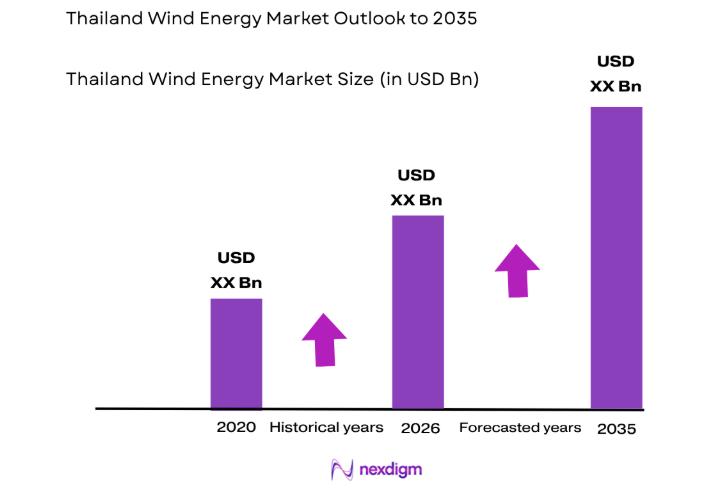
The Thailand wind energy market is poised for significant growth, with its market size reaching approximately USD ~ billion based on a recent historical assessment. This expansion is largely driven by government incentives, technological advancements in turbine design, and an increasing focus on sustainable energy. Thailand’s commitment to achieving renewable energy goals, along with international investments in clean energy, plays a key role in the market’s growth trajectory. The country is focusing on diversifying its energy mix and reducing its reliance on fossil fuels, which propels wind energy adoption.
Key regions contributing to the development of wind energy in Thailand include areas along the coastal provinces and northeastern regions where wind resources are most viable. Bangkok, the capital, leads the charge in policy-making and infrastructure development, fostering an environment conducive to renewable energy investments. These regions benefit from the combination of strategic geographical positioning and supportive government policies that encourage the growth of wind energy projects. The overall push for renewable energy development, including wind, makes Thailand a prime market for future wind energy investments.
Market Segmentation
By Wind Type
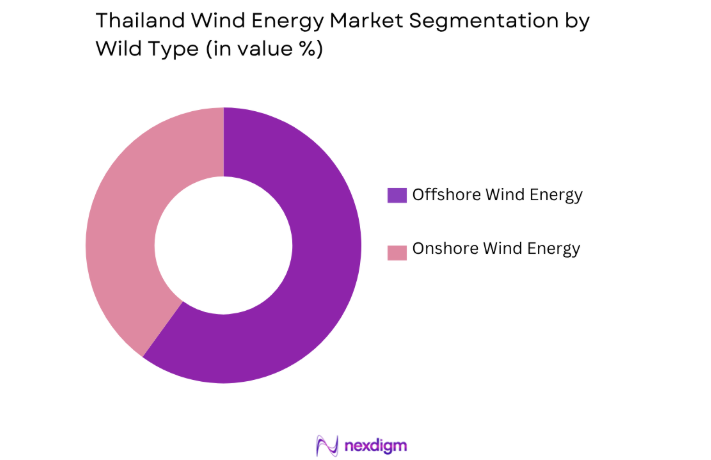
The Thailand wind energy market is segmented into onshore and offshore wind energy types. Offshore wind energy has a dominant market share due to favorable wind conditions along the country’s coastline. The offshore wind farms benefit from higher and more consistent wind speeds, making them more efficient than their onshore counterparts. The development of offshore wind energy is expected to increase, driven by advancements in turbine technologies that reduce costs and enhance energy output.
By End-User
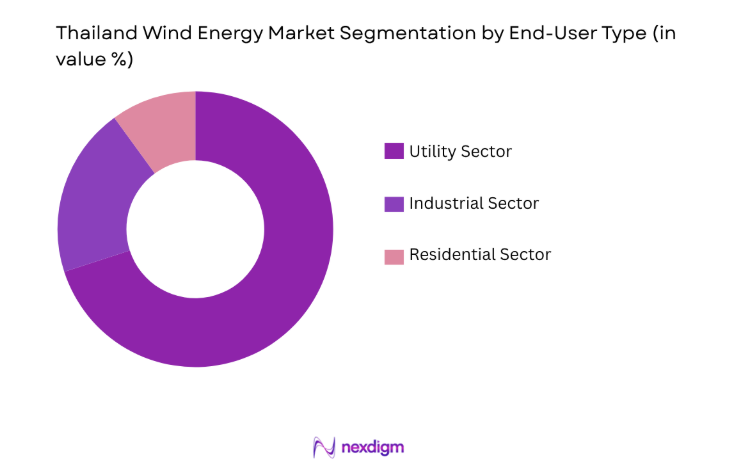
The market is segmented by end-user into utilities, industrial, and residential sectors. The utility sector holds the largest share due to its role in large-scale power generation projects. As Thailand continues to pursue its renewable energy goals, utilities are investing heavily in wind energy infrastructure. This sector benefits from economies of scale and government incentives, making it the most significant adopter of wind energy technologies in the country.
Competitive Landscape
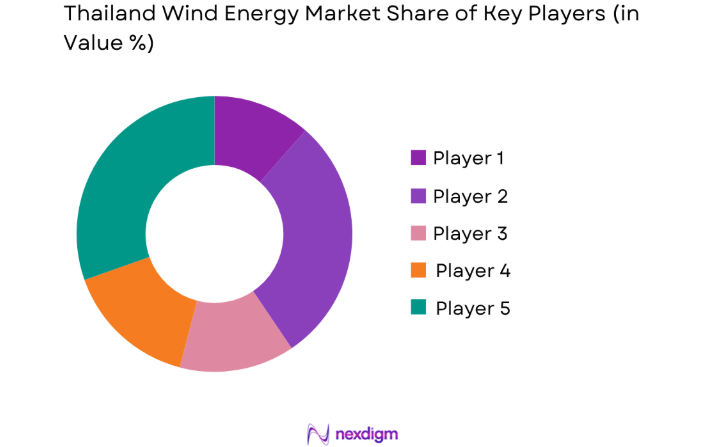
The Thailand wind energy market is competitive, with both local and international players contributing to its growth. Major international wind turbine manufacturers, such as Siemens Gamesa and Vestas, dominate the market by offering advanced turbine technology for large-scale wind projects. Thailand’s government policies and regulatory framework also support local companies, which in turn fosters healthy competition in the sector. With the increasing interest in sustainable energy, major players are focusing on both technological advancements and collaborative projects with the government to increase their market reach.
| Company Name | Establishment Year | Headquarters | Technology Focus | Market Reach | Key Products | Revenue | Market-specific Parameter |
| Siemens Gamesa | 1976 | Spain | ~ | ~ | ~ | ~ | ~ |
| GE Renewable Energy | 1892 | USA | ~ | ~ | ~ | ~ | ~ |
| Vestas | 1945 | Denmark | ~ | ~ | ~ | ~ | ~ |
| Suzlon Energy | 1995 | India | ~ | ~ | ~ | ~ | ~ |
| Nordex | 1985 | Germany | ~ | ~ | ~ | ~ | ~ |
Thailand Wind Energy Market Analysis
Growth Drivers
Government Renewable Energy Policies
One of the key drivers of the Thailand wind energy market is the government’s focus on increasing renewable energy sources in the national energy mix. Thailand’s Power Development Plan (PDP) outlines ambitious goals for renewable energy adoption, with wind energy playing a crucial role in meeting those targets. Through policies such as feed-in tariffs and subsidies for renewable energy developers, the government has made wind energy more attractive to both local and international investors. The national emphasis on reducing dependence on fossil fuels and promoting green technologies further supports the wind energy market’s growth. These initiatives, coupled with Thailand’s strong commitment to sustainability, provide a stable environment for the development and expansion of wind power in the country. As the government pushes towards a low-carbon economy, the demand for clean energy sources like wind will continue to grow, driving the market forward.
Technological Advancements in Wind Turbine Efficiency
The technological advancements in wind turbine designs are another significant growth driver for the Thailand wind energy market. New turbine models are more efficient, cost-effective, and capable of operating in a wider range of environmental conditions, including lower wind speeds and difficult terrains. This is particularly important in Thailand, where wind speeds can vary across different regions. Innovations in turbine blade designs, energy storage solutions, and smart grid technologies make wind energy a more reliable and viable option. These advancements not only reduce operational costs but also improve the energy yield from wind farms. As turbine technology continues to evolve, the economic feasibility of large-scale wind projects in Thailand becomes more attractive, further driving the adoption of wind energy as a sustainable power source.
Market Challenges
High Initial Capital Investment
One of the main challenges facing the Thailand wind energy market is the high initial capital investment required for wind farm development. The cost of land acquisition, wind turbine equipment, and infrastructure can be significant, especially for large-scale offshore projects. While government incentives such as subsidies and tax rebates help offset some of these costs, the high upfront investment remains a barrier for smaller players and new entrants. The cost of offshore projects, in particular, is elevated due to the complex installation processes and the need for specialized equipment. However, as economies of scale and technological advancements drive down costs over time, the capital intensity of wind energy projects may decrease, making them more accessible to a wider range of investors.
Geographic Constraints and Low Wind Speed Areas
Another challenge for wind energy development in Thailand is the limited availability of suitable land for large-scale onshore wind farms. Thailand’s geography, with vast mountainous regions and urbanized areas, limits the potential for onshore wind farm locations. In addition, some regions with high potential for wind energy have lower wind speeds, making them less economically viable for wind energy production. These factors contribute to the need for significant investments in land and infrastructure, especially in remote areas, to make wind energy projects feasible. While offshore wind farms offer a solution, the high initial costs and technological requirements still present significant challenges for widespread adoption.
Opportunities
Offshore Wind Energy Potential
One of the key opportunities in the Thailand wind energy market is the expansion of offshore wind energy capacity. The country has access to strong and consistent wind resources along its coastlines, making offshore wind farms an attractive option for large-scale power generation. Offshore wind energy provides higher energy yields compared to onshore projects due to more consistent and stronger wind speeds, particularly in the Gulf of Thailand. Technological advancements in offshore wind turbine technology are making these projects more viable and cost-effective. As Thailand seeks to meet its renewable energy targets, offshore wind projects present a significant opportunity to diversify its energy mix and reduce reliance on fossil fuels. The growing focus on offshore energy generation will help position Thailand as a leader in renewable energy in Southeast Asia.
Regional Energy Export Opportunities
Another opportunity for Thailand in the wind energy sector is the potential for regional energy export. Thailand’s proximity to neighboring countries with high energy demands, such as Vietnam, Laos, and Cambodia, creates the potential for cross-border energy trade. By developing a strong wind energy infrastructure, Thailand can position itself as a regional energy exporter, supplying clean energy to neighboring countries that are also looking to reduce their dependence on fossil fuels. The development of interconnection grids and regional energy trading agreements will be crucial in unlocking this opportunity. As Southeast Asia transitions to a more sustainable energy future, Thailand has the potential to become a key player in the regional renewable energy market, further boosting its economy and its standing as a renewable energy hub.
Future Outlook
The future of the Thailand wind energy market looks promising as the country continues to expand its renewable energy capacity. With strong government support, ongoing technological advancements, and a commitment to reducing carbon emissions, wind energy will play an increasingly important role in the energy mix. Offshore wind energy, in particular, is expected to see significant growth, driven by favorable wind conditions and improved turbine technology. Over the next five years, Thailand’s wind energy market is set to benefit from both local and international investments, with increased focus on sustainability and clean energy solutions.
Major Players
- Siemens Gamesa
- GE Renewable Energy
- Vestas
- Nordex
- Suzlon Energy
- Siemens Energy
- Envision Energy
- Sinovel
- Mingyang Smart Energy
- Senvion
- Goldwind
- Gamesa Electric
- Shanghai Electric
- TPI Composites
- Suzlon Wind Energy
Key Target Audience
- Investments and venture capitalist firms
- Government and regulatory bodies
- Renewable energy developers
- Energy companies
- Wind turbine manufacturers
- Environmental agencies
- Energy project consultants
Research Methodology
Step 1: Identification of Key Variables
Key market variables such as government policies, renewable energy targets, technological advancements, and investment trends were identified for the Thailand wind energy market.
Step 2: Market Analysis and Construction
Data from industry reports, governmental publications, and renewable energy associations were used to construct a detailed market overview and assess market trends and forecasts.
Step 3: Hypothesis Validation and Expert Consultation
Interviews with industry experts, government officials, and companies involved in wind energy were conducted to validate the data and assumptions regarding market drivers, challenges, and growth potential.
Step 4: Research Synthesis and Final Output
Insights from the collected data and expert consultations were synthesized into a comprehensive market report, providing a clear outlook of the Thailand wind energy market, trends, and forecasts.

- Executive Summary
- Research Methodology (Definitions, Scope, Industry Assumptions, Market Sizing Approach, Primary & Secondary Research Framework, Data Collection & Verification Protocol, Analytic Models & Forecast Methodology, Limitations & Research Validity Checks)

- Market Definition and Scope
- Value Chain & Stakeholder Ecosystem
- Regulatory / Certification Landscape
- Sector Dynamics Affecting Demand

- Growth Drivers
Government incentives for renewable energy
Declining costs of wind energy production
Increasing demand for clean energy - Market Challenges
Environmental and wildlife concerns
High initial capital costs for wind farms
Limited grid infrastructure for wind energy - Market Opportunities
Integration of wind power with energy storage
Offshore wind energy development
Rural electrification through wind power - Trends
Advancements in turbine technology
Expansion of floating wind farms - Government Regulations
Renewable energy targets and policies
Feed-in tariff schemes for wind energy
Environmental impact assessments for wind projects - SWOT Analysis
- Porter’s Five Forces

- By Market Value, 2020-2025
- By Installed Units, 2020-2025
- By Average System Price, 2020-2025
- By System Complexity Tier, 2020-2025

- By System Type (In Value%)
Onshore Wind Systems
Offshore Wind Systems
Hybrid Wind Systems
Floating Wind Systems
Small-scale Wind Systems - By Platform Type (In Value%)
Onshore Platforms
Offshore Platforms
Floating Platforms
Hybrid Platforms - By Fitment Type (In Value%)
Utility-scale Installations
Residential Installations
Commercial Installations
Industrial Installations - By End User Segment (In Value%)
Utility Providers
Industrial Sector
Commercial Sector

- Market Share Analysis
- Cross Comparison Parameters (System type, Installed capacity, Platform type, End-user segment, Fitment type, Government incentives, System complexity)
- SWOT Analysis of Key Competitors
- Pricing & Procurement Analysis
- Key Players
Vestas Wind Systems
Siemens Gamesa Renewable Energy
Nordex Group
GE Renewable Energy
Suzlon Energy
Goldwind
MHI Vestas Offshore Wind
Suzlon Energy
Gamesa Electric
Envision Energy
China Longyuan Power Group
Trina Solar
Senvion
Nordex
Acciona Energy

- Government initiatives to support wind energy adoption
- Growth in industrial sector’s demand for renewable energy
- Rising corporate social responsibility in renewable energy sourcing
- Government and private sector investment in rural electrification

- Forecast Market Value, 2026-2035
- Forecast Installed Units, 2026-2035
- Price Forecast by System Tier, 2026-2035
- Future Demand by Platform, 2026-2035


 Request a Sample
 Ask for Customization
 Get a Quote
 Enquire Now