

 Download PDF
 Download PDF
Market Overview
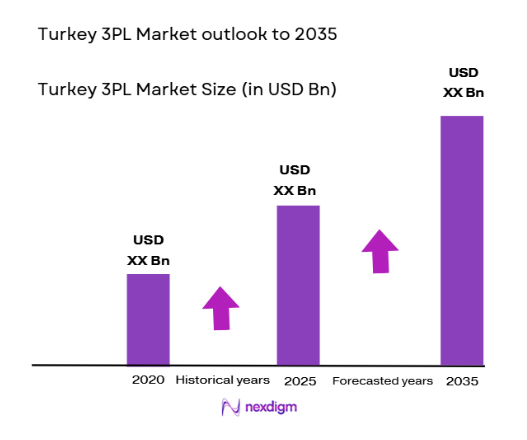
The Turkey 3PL market is valued at approximately USD ~ billion, driven by growing demand from industries like e-commerce, retail, automotive, and manufacturing. The market expansion is also fueled by the increasing adoption of integrated supply chain solutions, automation technologies, and transportation management systems. The growing need for cost-efficient logistics, advanced technology adoption, and the rise of cross-border trade further contribute to market growth.
Dominating countries in the 3PL sector include Turkey, with its strategic location connecting Europe, Asia, and the Middle East. Istanbul and Ankara are central to logistics activities, benefiting from infrastructure development, competitive transportation costs, and favorable government policies. Turkey’s proximity to key European and Middle Eastern markets strengthens its role as a vital logistics hub. The country’s modernized transportation network supports the booming e-commerce and manufacturing industries, driving growth in the logistics sector.
Market Segmentation
By Product Type:
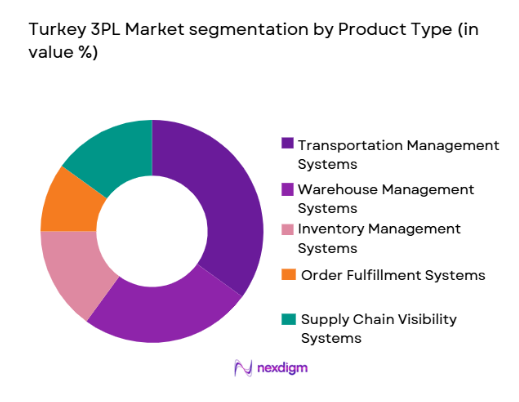
The Turkey 3PL market is segmented by product type into transportation management systems, warehouse management systems, inventory management systems, order fulfillment systems, and supply chain visibility systems. Recently, transportation management systems have dominated the market share due to the increasing demand for efficient, cost-effective transportation solutions. These systems facilitate real-time tracking, optimize delivery routes, and ensure timely deliveries. As demand for quicker and more transparent deliveries grows, the transportation management systems sub-segment has become crucial to the market, offering solutions that cater to both domestic and international logistics needs.
By Platform Type:
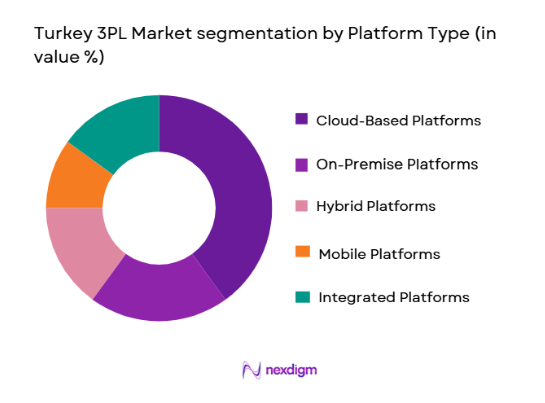
The Turkey 3PL market is also segmented by platform type into cloud-based platforms, on-premise platforms, hybrid platforms, mobile platforms, and integrated platforms. Cloud-based platforms are currently leading the market share due to the growing demand for flexible, scalable solutions. Cloud platforms offer high security, cost efficiency, and real-time data processing, making them an attractive option for businesses looking to streamline operations. With e-commerce growth and the need for faster, more efficient operations, cloud-based platforms offer the flexibility required to scale operations, drive innovation, and improve customer service, making them essential to modern logistics solutions.
Competitive Landscape
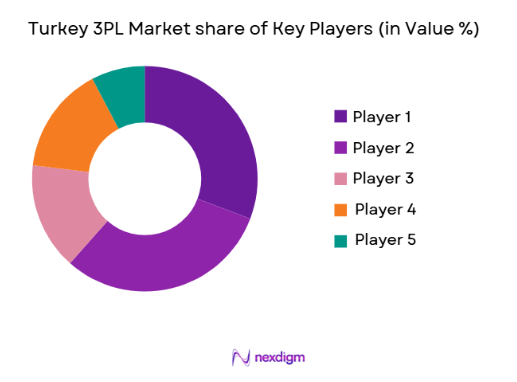
The competitive landscape of the Turkey 3PL market is characterized by a mix of international and local players striving for market dominance. Key players are investing in advanced technologies such as automation, artificial intelligence, and big data analytics to offer integrated, end-to-end solutions. Consolidation in the market is a key trend, with larger players acquiring smaller firms to expand their service offerings and regional presence. The increasing focus on sustainability and customer-centric solutions also shapes competitive strategies, with players focusing on environmental impact reduction and service innovation.
| Company Name | Establishment Year | Headquarters | Technology Focus | Market Reach | Key Products | Revenue (USD Billion) | Additional Parameter |
| Kuehne + Nagel | 1890 | Switzerland | ~ | ~ | ~ | ~ | ~ |
| DB Schenker | 1872 | Germany | ~ | ~ | ~ | ~ | ~ |
| XPO Logistics | 1989 | USA | ~ | ~ | ~ | ~ | ~ |
| CEVA Logistics | 2007 | Switzerland | ~ | ~ | ~ | ~ | ~ |
| Yusen Logistics | 1955 | Japan | ~ | ~ | ~ | ~ | ~ |
Turkey 3PL Market Analysis
Growth Drivers
E-commerce Growth:
The significant expansion of e-commerce in Turkey is a key driver of the 3PL market. With more businesses adopting online sales channels, the demand for logistics services, including transportation, warehousing, and last-mile delivery, has surged. This sector requires fast, reliable, and cost-efficient logistics solutions to meet customer expectations of quick deliveries. The increasing preference for online shopping has pushed traditional retailers to focus on digital transformation and outsource their logistics operations to 3PL providers. As e-commerce continues to grow, 3PL providers are adapting by leveraging new technologies to enhance their service offerings. The demand for warehousing and distribution centers has increased, especially in urban areas, to facilitate the efficient movement of goods. This trend is expected to continue as online retailers push for more robust logistics capabilities, driving long-term growth in the Turkey 3PL market.
Global Supply Chain Integration:
Another key growth driver is the need for global supply chain integration. Turkey’s strategic position as a bridge between Europe, Asia, and the Middle East has positioned the country as a critical logistics hub. As companies increasingly require seamless integration between their domestic and international supply chains, 3PL providers are offering integrated services that include transportation, warehousing, and real-time tracking solutions. By integrating different supply chain functions, 3PL companies are able to offer end-to-end solutions, reducing operational costs, and improving service efficiency. This growth driver is also supported by government initiatives to enhance Turkey’s transportation infrastructure, which provides a competitive advantage to local logistics providers and attracts multinational companies to expand their operations in the region. As international trade continues to grow, the demand for integrated logistics services will keep expanding.
Market Challenges
Infrastructure Limitations:
One significant challenge in the Turkey 3PL market is the limitations in infrastructure development. While Turkey’s location offers logistical advantages, infrastructure in certain areas, particularly outside major urban hubs, can impede the efficiency of supply chains. For instance, congested highways, limited port capacity, and the aging rail system can create bottlenecks that delay shipments and increase costs. Although Turkey is investing heavily in infrastructure projects, some regions still lack modern logistics facilities, which reduces the country’s overall competitiveness as a logistics hub. Without a sustained focus on upgrading infrastructure, these limitations could restrict the growth potential of the 3PL market. To address this, the government and private players must prioritize smart logistics solutions, such as automation and predictive analytics, to improve the existing infrastructure and better manage logistics operations.
Labor Shortages and Skills Gap:
Another significant challenge facing the Turkey 3PL market is labor shortages and the skills gap. With the rapid growth of the logistics sector, there is an increasing demand for skilled workers in areas such as supply chain management, warehouse operations, and last-mile delivery. However, there is a lack of qualified professionals to meet this demand. This skills gap is compounded by the growing need for workers who are proficient in new technologies such as automation, artificial intelligence, and data analytics. As a result, 3PL providers face challenges in recruiting and retaining top talent. To mitigate these challenges, companies will need to invest in training programs and collaborations with academic institutions to build a future workforce capable of handling the demands of an increasingly tech-driven logistics sector.
Opportunities
Smart Logistics Technology:
One of the most significant opportunities in the Turkey 3PL market is the adoption of smart logistics technologies. With advancements in artificial intelligence, machine learning, and Internet of Things (IoT) technologies, 3PL providers can streamline operations, reduce operational costs, and enhance customer service. The integration of these technologies enables real-time tracking, predictive maintenance, and improved supply chain visibility. As these technologies become more affordable and accessible, more 3PL providers are adopting them to stay competitive and meet the growing demand for efficient, data-driven logistics solutions. The increasing focus on sustainability and environmental impact reduction also presents an opportunity for logistics providers to leverage smart technologies to minimize energy consumption and optimize resource usage.
Urban Logistics and Last-Mile Delivery:
The increasing urbanization of Turkey’s population presents significant opportunities for growth in urban logistics and last-mile delivery services. With more people moving to cities, especially in regions like Istanbul, Ankara, and Izmir, the demand for quick, efficient last-mile delivery services has risen sharply. E-commerce growth is a major driver behind this shift, with consumers expecting faster deliveries and improved customer experiences. To meet these demands, 3PL providers are focusing on urban logistics strategies that include smaller, more flexible delivery vehicles, optimized delivery routes, and even drone delivery solutions. As urban centers continue to grow, last-mile delivery will become an increasingly important component of the logistics industry, offering an opportunity for 3PL providers to innovate and capture a larger share of the market.
Future Outlook
The future of the Turkey 3PL market is promising, with projected growth driven by the expanding e-commerce sector and technological advancements. Over the next five years, the market will likely witness the continued adoption of automation and AI, with logistics providers increasingly using these tools to optimize their operations and enhance customer experience. Government support for infrastructure development will continue, improving connectivity and reducing bottlenecks in transportation networks. Demand for last-mile delivery solutions and green logistics initiatives will also rise, reflecting broader global trends toward sustainability and environmental responsibility. Regulatory changes in both domestic and international trade policies are expected to further stimulate market activity, creating new opportunities for growth.
Major Players
- Kuehne + Nagel
- DB Schenker
- XPO Logistics
- CEVA Logistics
- Yusen Logistics
- DHL Supply Chain
- Geodis
- DSV Panalpina
- C.H. Robinson
- TFI International
- Xiamen International Port Group
- Sinotrans
- Mitsui-Soko Holdings
- Hitachi Transport System
- Bolloré Logistics
Key Target Audience
- Investments and venture capitalist firms
- Government and regulatory bodies
- Manufacturers and suppliers
- E-commerce companies
- Retail chains
- Logistics service providers
- Technology providers for logistics solutions
- Freight forwarders
Research Methodology
Step 1: Identification of Key Variables
This step involves identifying the most crucial variables that affect the Turkey 3PL market, such as demand drivers, technological advancements, and regional market dynamics.
Step 2: Market Analysis and Construction
In this step, data is gathered from both primary and secondary sources to understand the market structure and key dynamics. This information is then used to construct a robust market model.
Step 3: Hypothesis Validation and Expert Consultation
The hypotheses developed from the analysis are tested through consultations with industry experts, ensuring the accuracy and relevance of the market model.
Step 4: Research Synthesis and Final Output
The final step involves synthesizing all the data, validating the results, and preparing the market report, which provides actionable insights for stakeholders.

- Executive Summary
- Research Methodology (Definitions, Scope, Industry Assumptions, Market Sizing Approach, Primary & Secondary Research Framework, Data Collection & Verification Protocol, Analytic Models & Forecast Methodology, Limitations & Research Validity Checks)

- Market Definition and Scope
- Value Chain & Stakeholder Ecosystem
- Regulatory / Certification Landscape
- Sector Dynamics Affecting Demand
- Strategic Initiatives & Infrastructure Growth

- Growth Drivers
Expansion of E-commerce Platforms
Increase in Cross-border Trade
Rising Demand for Real-Time Data
Technological Advancements in Logistics
Government Support for Infrastructure Development - Market Challenges
High Initial Investment in Technology
Complex Regulatory Compliance
Cybersecurity Risks in Supply Chains
Increased Operational Costs
Lack of Skilled Workforce - Market Opportunities
Growth in E-commerce Logistics
Automation and AI Integration
Sustainability Trends in Supply Chains - Trends
Shift Toward Digital Supply Chains
Integration of AI and Robotics in Warehouses
Rise in Demand for Real-Time Tracking
Sustainability Initiatives in Logistics
Adoption of Blockchain for Transparency - Government Regulations & Defense Policy
Data Protection Regulations
Customs and Import Regulations
Government Investments in Infrastructure - SWOT Analysis
- Stakeholder and Ecosystem Analysis
- Porter’s Five Forces Analysis
- Competition Intensity and Ecosystem Mapping

- By Market Value, 2020-2025
- By Installed Units, 2020-2025
- By Average System Price, 2020-2025
- By System Complexity Tier, 2020-2025

- By System Type (In Value%)
Transportation Management Systems
Warehouse Management Systems
Inventory Management Systems
Order Fulfillment Systems
Supply Chain Visibility Systems - By Platform Type (In Value%)
Cloud-Based Platforms
On-premise Platforms
Hybrid Platforms
Mobile Platforms
Integrated Platforms - By Fitment Type (In Value%)
On-Demand Solutions
Custom Solutions
Enterprise Solutions
Modular Solutions
Cloud Solutions - By EndUser Segment (In Value%)
Retailers
Manufacturers
Automotive Industry
Healthcare & Pharmaceuticals
E-commerce Providers - By Procurement Channel (In Value%)
Direct Procurement
Third-Party Procurement
Online Platforms
Government Tenders
Private Sector Procurement - By Material / Technology (In Value%)
Automation & Robotics
AI & Machine Learning
Internet of Things (IoT)
Blockchain Technology
Cloud Computing

- Market structure and competitive positioning
- Market share snapshot of major players
- CrossComparison Parameters (System Type, Platform Type, Procurement Channel, EndUser Segment, Fitment Type, Technology, Service Offerings, Market Reach, Pricing, Customer Support)
- SWOT Analysis of Key Players
- Pricing & Procurement Analysis
- Key Players
Kuehne + Nagel
DHL Supply Chain
XPO Logistics
CEVA Logistics
DB Schenker
Yusen Logistics
TURKCEV
GEFCO
Samskip
Arkas Logistics
TUIK Logistics
TNT Express
MNG Kargo
FedEx
UPS

- E-commerce Growth Driving Demand for Logistics
- Manufacturers Seeking Efficient Supply Chains
- Retailers Prioritizing Faster Deliveries
- Healthcare Industry Adopting 3PL Solutions

- Forecast Market Value, 2026-2035
- Forecast Installed Units, 2026-2035
- Price Forecast by System Tier, 2026-2035
- Future Demand by Platform, 2026-2035


 Request a Sample
 Ask for Customization
 Get a Quote
 Enquire Now