

 Download PDF
 Download PDF
Market Overview
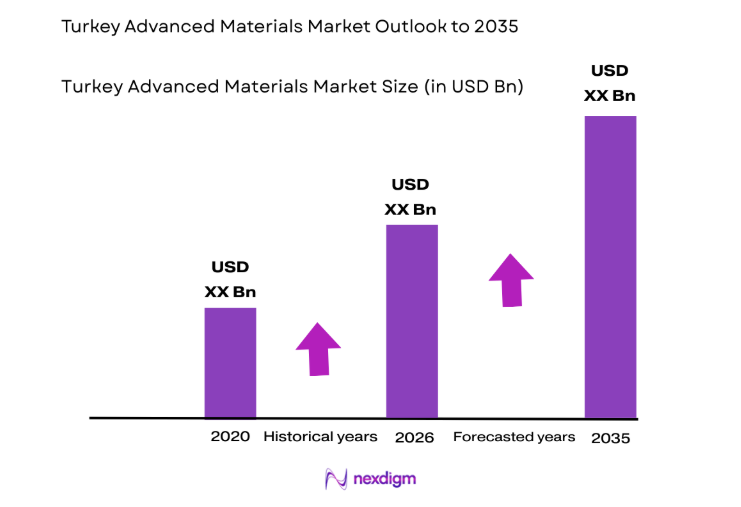
The Turkey Advanced Materials market is valued at approximately USD ~ billion based on a recent historical assessment, driven by significant demand across industries such as automotive, aerospace, electronics, and construction. The market is largely fueled by innovations in material science, with advanced composites, nanomaterials, and high-performance alloys driving growth. Furthermore, industries are increasingly adopting advanced materials to enhance the efficiency, durability, and performance of products, which boosts the market’s expansion.
Key regions contributing to the dominance of advanced materials in Turkey include Istanbul, Bursa, and Kocaeli. Istanbul remains the industrial hub, with strong infrastructure and the presence of major industrial players driving demand for advanced materials in construction, automotive, and aerospace sectors. Bursa, known for its automotive industry, plays a crucial role in the development and application of advanced materials for vehicle manufacturing, while Kocaeli is home to a significant number of industrial manufacturing plants and material research centers.
Market Segmentation
By Product Type
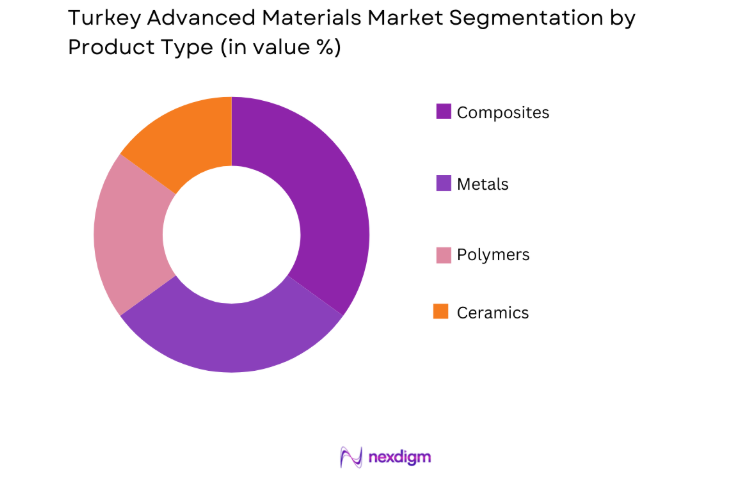
The Turkey Advanced Materials market is segmented by product type into metals, ceramics, polymers, and composites. Recently, composites have dominated the market share due to their increasing use in industries such as automotive, aerospace, and construction. Composites, known for their lightweight, strength, and resistance to corrosion, are highly sought after for reducing energy consumption and improving performance in applications where traditional materials fall short. The demand for composites in Turkey has grown as industries look for more sustainable, durable, and cost-effective materials, especially in sectors focused on innovation and technological advancement.
By Application Type
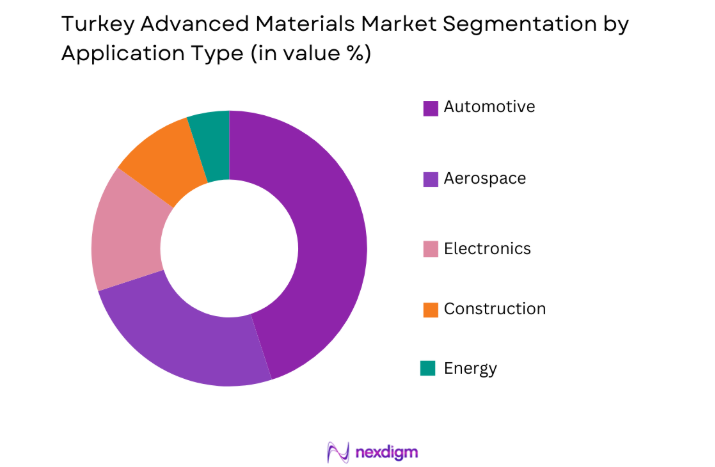
The Turkey Advanced Materials market is also segmented by application type into automotive, aerospace, electronics, construction, and energy. Automotive applications hold the largest market share due to the increasing demand for lightweight, high-strength materials that contribute to fuel efficiency, safety, and performance. In particular, the use of advanced polymers and composites in vehicle manufacturing has become essential as the automotive industry strives to meet stringent environmental regulations and improve vehicle performance. As Turkey’s automotive sector grows, advanced materials will continue to play a key role in its evolution.
Competitive Landscape
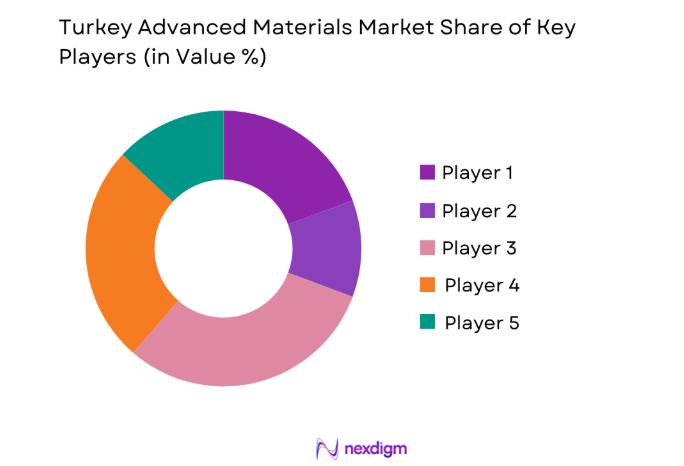
The competitive landscape of the Turkey Advanced Materials market is shaped by both global leaders and local players striving to offer innovative solutions. The market is witnessing consolidation as major companies focus on integrating new technologies and enhancing their product offerings. Local companies are benefiting from collaborations with international firms, enabling access to advanced manufacturing processes and R&D capabilities. In addition, the demand for sustainable materials has pushed companies to focus on environmentally friendly solutions, driving further competition in the market.
| Company Name | Establishment Year | Headquarters | Technology Focus | Market Reach | Key Products | Revenue | Industry-Specific Focus |
| BASF | 1865 | Ludwigshafen, Germany | ~ | ~ | ~ | ~ | ~ |
| 3M | 1902 | St. Paul, USA | ~ | ~ | ~ | ~ | ~ |
| Dow Chemical Company | 1897 | Midland, USA | ~ | ~ | ~ | ~ | ~ |
| ArcelorMittal | 2006 | Luxembourg | ~ | ~ | ~ | ~ | ~ |
| Saint-Gobain | 1665 | Courbevoie, France | ~ | ~ | ~ | ~ | ~ |
Turkey Advanced Materials Market Analysis
Growth Drivers
Technological Advancements in Materials Science
The Turkey Advanced Materials market is experiencing significant growth due to continuous advancements in materials science. Innovations in materials such as high-performance composites, nanomaterials, and smart polymers are enabling industries to improve product performance, reduce environmental impact, and enhance durability. For example, the development of lightweight composites has allowed for the production of more energy-efficient vehicles and aircraft, which is crucial as industries work towards meeting sustainability targets. Furthermore, advancements in nanotechnology have led to the creation of stronger, more flexible materials, opening up new applications in electronics and healthcare. The continuous push for innovation in material properties is driving demand for advanced materials across various industries, with manufacturers seeking to incorporate the latest materials to maintain competitive advantages. As technology evolves, industries in Turkey are increasingly investing in advanced materials to address complex challenges and meet growing consumer demands for performance and sustainability.
Government Support for Sustainable Materials
The Turkish government has also been a key growth driver for the advanced materials market by promoting the use of sustainable materials and reducing carbon footprints. Policies encouraging the use of green materials, such as eco-friendly composites and energy-efficient construction materials, have spurred industry growth. The government’s focus on improving infrastructure and supporting industries like automotive, aerospace, and construction has led to increased demand for advanced materials in these sectors. Additionally, government-backed funding programs and incentives for research and development in sustainable materials are accelerating the pace of innovation. This support is crucial as Turkey looks to enhance its industrial competitiveness and meet global environmental standards. As a result, the market for advanced materials is seeing rapid growth, with Turkish companies investing in R&D to develop eco-friendly solutions for a wide range of applications.
Market Challenges
High Production Costs of Advanced Materials
A key challenge facing the Turkey Advanced Materials market is the high cost of producing advanced materials. The production of high-performance composites, nanomaterials, and other advanced materials often requires specialized equipment, highly skilled labor, and significant investment in R&D, which raises the overall cost. For industries such as automotive and aerospace, the need for premium materials to improve performance, safety, and energy efficiency is balanced against the financial challenges of sourcing and manufacturing these materials. While the long-term benefits of advanced materials are clear, many companies face difficulty justifying the initial investment, particularly small and medium-sized enterprises (SMEs). As a result, businesses must find ways to reduce production costs while maintaining material performance and quality, which continues to challenge the market’s growth potential.
Limited Local Manufacturing Capacity
Another significant challenge for the Turkey Advanced Materials market is the limited local manufacturing capacity for high-end materials. While Turkey is home to a thriving industrial base, it largely depends on imports for advanced materials like high-performance alloys, specialized polymers, and certain types of composites. Local manufacturers face difficulties in scaling up production due to the high capital expenditure required for advanced material manufacturing plants and the need for specialized technical expertise. This reliance on imports not only increases material costs but also creates supply chain vulnerabilities, making Turkish industries more susceptible to global market fluctuations and trade disruptions. Expanding domestic manufacturing capabilities for advanced materials is crucial for Turkey to remain competitive in key industries such as automotive and aerospace.
Opportunities
Growing Demand for Lightweight Materials in Automotive and Aerospace
The increasing demand for lightweight materials, particularly in the automotive and aerospace sectors, presents a significant opportunity for the Turkey Advanced Materials market. The global automotive industry is focused on producing fuel-efficient and environmentally friendly vehicles, which requires the use of lightweight yet strong materials. Similarly, in aerospace, weight reduction is critical for improving fuel efficiency and reducing operating costs. Advanced composites, such as carbon fiber and fiberglass, are gaining traction in these industries due to their ability to provide high strength-to-weight ratios. As the demand for these materials grows, Turkish manufacturers have an opportunity to capitalize on the increasing need for lightweight, high-performance materials in both domestic and export markets. This trend is expected to drive the market’s expansion, particularly in industries looking to meet stringent environmental standards and consumer demands for more efficient, durable products.
Expansion of Construction Sector and Infrastructure Projects
The construction industry in Turkey is undergoing significant growth, driven by an expanding population, urbanization, and major infrastructure projects. This growth presents an opportunity for the advanced materials market, particularly in sectors such as building construction, transportation infrastructure, and energy. Advanced materials such as high-strength concrete, energy-efficient glass, and advanced insulation materials are in demand to support the construction of sustainable buildings, bridges, roads, and energy-efficient systems. As the Turkish government and private sector invest in large-scale infrastructure projects, advanced materials will play a pivotal role in ensuring that these projects are durable, energy-efficient, and cost-effective. With a growing focus on sustainable development and green construction practices, the demand for innovative materials in the Turkish construction sector is set to rise.
Future Outlook
Over the next five years, the Turkey Advanced Materials market is expected to continue its growth trajectory, driven by advancements in materials technology, increased demand for lightweight and sustainable materials, and strong government support for infrastructure development. Innovations in nanotechnology, composites, and polymers will provide new opportunities across sectors such as automotive, aerospace, and construction. Additionally, regulatory pressure to meet environmental standards will encourage industries to adopt more eco-friendly materials, further driving the demand for advanced solutions. The expanding construction and automotive sectors will continue to fuel the market’s expansion, positioning Turkey as a key player in the global advanced materials industry.
Major Players
- BASF
- 3M
- Dow Chemical Company
- ArcelorMittal
- Saint-Gobain
- Hexcel Corporation
- Owens Corning
- Solvay
- AkzoNobel
- Toray Industries
- Mitsubishi Chemical
- PPG Industries
- Huntsman Corporation
- Asahi Kasei Corporation
- LG Chem
Key Target Audience
- Investments and venture capitalist firms
- Government and regulatory bodies
- Automotive manufacturers
- Aerospace manufacturers
- Construction firms
- Energy providers
- Industrial equipment manufacturers
Research Methodology
Step 1: Identification of Key Variables
The first step is identifying key variables such as industry growth drivers, technological trends, and consumer preferences that influence the advanced materials market.
Step 2: Market Analysis and Construction
A detailed analysis is conducted to understand market size, segmentation, trends, and regional growth patterns, providing insights into the overall market landscape.
Step 3: Hypothesis Validation and Expert Consultation
Industry experts are consulted to validate the research hypotheses, ensuring the findings reflect real market conditions and expert opinions.
Step 4: Research Synthesis and Final Output
The final market report is synthesized, integrating data analysis, expert feedback, and market insights to create a comprehensive and actionable report for stakeholders.

- Executive Summary
- Research Methodology (Definitions, Scope, Industry Assumptions, Market Sizing Approach, Primary & Secondary Research Framework, Data Collection & Verification Protocol, Analytic Models & Forecast Methodology, Limitations & Research Validity Checks)

- Market Definition and Scope
- Value Chain & Stakeholder Ecosystem
- Regulatory / Certification Landscape
- Sector Dynamics Affecting Demand

- Growth Drivers
Growth in demand for lightweight materials in automotive
Advancements in nanotechnology
Government support for sustainable materials - Market Challenges
High cost of production
Lack of skilled workforce
Environmental concerns regarding material disposal - Market Opportunities
Adoption of smart materials in construction
Emerging applications of advanced materials in healthcare
Rise in demand for eco-friendly materials - Trends
Increased focus on material recyclability
Rising investments in nanomaterial R&D - Government Regulations
Sustainability standards for materials
Government incentives for research in advanced materials
Compliance with environmental regulations - SWOT Analysis
- Porter’s Five Forces

- By Market Value, 2020-2025
- By Installed Units, 2020-2025
- By Average System Price, 2020-2025
- By System Complexity Tier, 2020-2025

- By System Type (In Value%)
Nanomaterials
Composites
High-performance Alloys
Polymers
Ceramics - By Platform Type (In Value%)
Smart Materials
Eco-friendly Materials
Functional Materials
Advanced Coatings - By Fitment Type (In Value%)
Integrated Systems
Standalone Systems
Modular Systems
Custom-built Systems - By End User Segment (In Value%)
Aerospace
Automotive
Electronics
Healthcare

- Market Share Analysis
- Cross Comparison Parameters (System Type, Fitment Type, End User Segment, Platform Type, Technology Integration, Pricing, Complexity Level)
- SWOT Analysis of Key Competitors
- Pricing & Procurement Analysis
- Key Players
BASF
Dow Inc.
3M
General Electric
Saint-Gobain
DuPont
ArcelorMittal
Hexcel Corporation
Alcoa
Schneider Electric
Johnson & Johnson
Samsung Advanced Institute of Technology
LG Chem
Teijin Limited
Aerojet Rocketdyne

- Aerospace sector’s shift to lightweight materials
- Automotive industry’s push for sustainable solutions
- Electronics demand for flexible materials
- Healthcare sector’s increasing use of biocompatible materials

- Forecast Market Value, 2026-2035
- Forecast Installed Units, 2026-2035
- Price Forecast by System Tier, 2026-2035
- Future Demand by Platform, 2026-2035


 Request a Sample
 Ask for Customization
 Get a Quote
 Enquire Now