
 Download PDF
 Download PDF
Market Overview
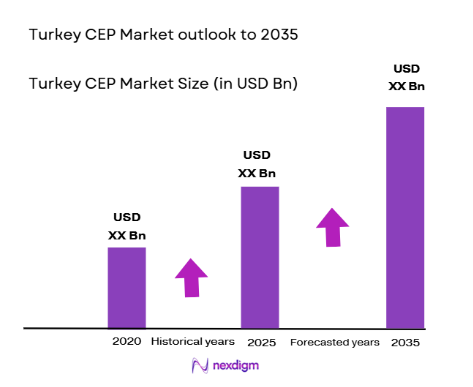
The Turkey CEP market is valued at USD ~ billion, driven primarily by the growing e-commerce sector and the shift towards digital delivery solutions. This growth is fueled by increasing consumer demand for faster and more reliable services, along with technological advancements in automation and data analytics. With a robust logistics infrastructure and expanding urban centers, Turkey’s CEP sector is poised for continued expansion, supported by investments in logistics and IT systems that enhance operational efficiency and customer satisfaction.
The dominant players in the market are concentrated in major cities like Istanbul, Ankara, and Izmir. These cities lead the demand due to their developed infrastructure, higher concentration of businesses, and advanced logistics networks. Istanbul, as a key hub for international trade, significantly drives the growth of the CEP market. Its strategic location at the crossroads of Europe and Asia facilitates cross-border trade, making it a vital area for CEP services. The dominance of these cities is also attributed to their large consumer bases and demand for faster delivery services.
Market Segmentation
By Product Type:
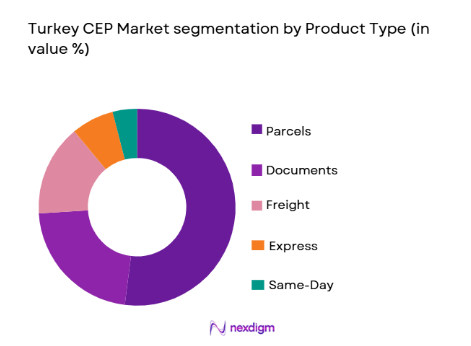
Turkey CEP market is segmented by product type into various sub-segments such as parcels, documents, and freight services. Recently, parcels have had a dominant market share due to factors such as increasing e-commerce activities, rising demand for quick delivery services, and infrastructure improvements that allow faster handling and transportation of smaller packages. The expansion of online retail platforms has further fueled the need for parcel services, especially in major cities where consumers expect quicker delivery times. Moreover, the availability of various delivery options, including express and same-day delivery, has contributed to the parcel segment’s market leadership.
By Delivery Mode:
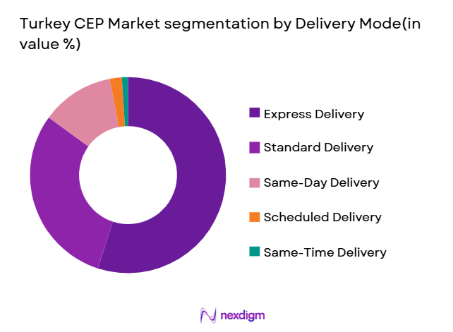
The Turkey CEP market is also segmented by delivery mode, which includes standard delivery, express delivery, and same-day delivery services. Among these, express delivery services hold a dominant market share due to the growing consumer preference for faster shipping, especially in urban areas. The demand for express delivery services has surged as consumers increasingly opt for rapid shipments to meet the needs of their time-sensitive purchases. E-commerce giants and local retailers alike have focused on optimizing their logistics to offer swift deliveries, thus propelling the express delivery segment to the forefront of the market.
Competitive Landscape
The competitive landscape of the Turkey CEP market is characterized by a mix of established global logistics players and a growing number of local delivery service providers. Consolidation within the industry is evident as larger players acquire smaller regional firms to expand their geographical reach and improve operational efficiency. Major international logistics companies have been focusing on innovation, automation, and last-mile delivery solutions to stay competitive. The influence of these players has been growing, especially as e-commerce and digital transformation push the demand for faster and more flexible delivery models.
| Company Name | Establishment Year | Headquarters | Technology Focus | Market Reach | Key Products | Revenue | Additional Parameter |
| Aramex | 1982 | Dubai, UAE | ~ | ~ | ~ | ~ | ~ |
| DHL Express | 1969 | Bonn, Germany | ~ | ~ | ~ | ~ | ~ |
| UPS | 1907 | Atlanta, USA | ~ | ~ | ~ | ~ | ~ |
| Yurtici Kargo | 1982 | Istanbul, Turkey | ~ | ~ | ~ | ~ | ~ |
| MNG Kargo | 2003 | Istanbul, Turkey | ~ | ~ | ~ | ~ | ~ |
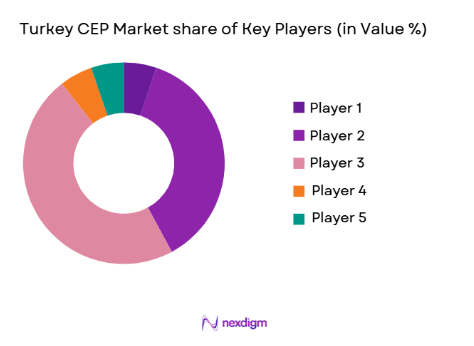
Turkey CEP Market Analysis
Growth Drivers
Expansion of E-commerce:
The rapid growth of the e-commerce industry has significantly impacted the demand for CEP services in Turkey. With a growing preference for online shopping, especially in urban centers, consumers expect faster delivery times and more reliable services. This increasing demand for quick and efficient deliveries has propelled the expansion of CEP services. Furthermore, the rise of cross-border e-commerce has contributed to the growth of parcel services as companies seek faster and more cost-effective delivery options. This trend is expected to continue, with e-commerce companies heavily investing in logistics infrastructure and advanced delivery technologies to meet consumer expectations. As consumer spending continues to shift towards e-commerce, CEP providers are optimizing their operations to ensure faster and more reliable delivery options, particularly in metropolitan areas where competition for delivery speed is intense. This sector’s growth is also supported by increased investment in last-mile delivery solutions, ensuring faster and more efficient services.
Technological Advancements in Logistics:
The adoption of new technologies, such as AI, IoT, and robotics, has been another critical growth driver for Turkey’s CEP market. These technologies help streamline delivery operations, improve route optimization, and reduce delivery times, benefiting both service providers and consumers. AI-powered systems enable real-time tracking of shipments, while robotics and automation in sorting centers increase efficiency and reduce operational costs. The integration of autonomous vehicles and drones for last-mile deliveries is a growing trend in the market. This technological shift is making it possible to meet the rising demand for same-day and express deliveries. Logistics companies are increasingly relying on data-driven solutions to predict delivery times, optimize routes, and track parcels in real time, thus enhancing customer satisfaction. With these innovations, Turkey’s CEP sector is set for rapid growth, as businesses focus on adopting state-of-the-art technologies to improve service quality and maintain competitiveness.
Market Challenges
Logistical Hurdles in Last-Mile Delivery:
One of the main challenges facing Turkey’s CEP market is the complexity of last-mile delivery in densely populated urban areas. Traffic congestion, limited infrastructure, and narrow streets often cause delays in the final stages of delivery. These obstacles complicate efforts to meet consumers’ growing expectations for fast and reliable service. Despite improvements in logistics infrastructure, last-mile delivery remains the most expensive and time-consuming part of the supply chain. As a result, service providers are constantly looking for innovative ways to solve this problem, such as deploying delivery drones and autonomous vehicles. However, the adoption of these technologies is still in its early stages, and widespread implementation is hampered by regulatory issues and infrastructure limitations. The challenge of overcoming these barriers continues to be a significant hurdle for companies looking to stay competitive in the Turkish CEP market.
Regulatory and Compliance Issues:
Regulatory challenges are another significant concern for companies operating in Turkey’s CEP market. Stringent government regulations regarding import-export laws, taxes, and environmental policies can complicate the logistics process, especially for cross-border deliveries. These regulations can lead to delays in shipments and increase costs for CEP providers, who must navigate the complexities of compliance. Changes in regulatory policies, such as the imposition of stricter environmental standards on delivery fleets, also require significant investment in fleet modernization and technology upgrades. As e-commerce continues to grow, the government is likely to introduce more stringent regulations aimed at ensuring the sustainability of the logistics sector, adding further complexity to the operational landscape. Providers will need to stay ahead of these regulatory shifts to avoid penalties and maintain smooth operations.
Opportunities
Growing Demand for Same-Day Delivery:
As Turkish consumers demand faster and more convenient shopping experiences, the opportunity for same-day delivery services is expanding. The increasing prevalence of mobile shopping and the need for quicker gratification have led to an upsurge in demand for rapid delivery options. E-commerce companies, especially those operating in large metropolitan areas like Istanbul and Ankara, are focusing on providing same-day delivery services to meet this growing need. CEP companies are exploring various ways to fulfill this demand, including investing in advanced sorting technologies, expanding their delivery fleets, and optimizing their logistical infrastructure. The rise of urbanization and the increasing popularity of online shopping are expected to continue driving this trend, making same-day delivery a key differentiator in the competitive market. This demand provides a significant growth opportunity for CEP players who are able to invest in the necessary infrastructure and technology to handle same-day deliveries efficiently.
Integration of Green Logistics Solutions:
Another significant opportunity in the Turkish CEP market lies in the adoption of green logistics solutions. With the rising focus on environmental sustainability, both consumers and businesses are increasingly demanding eco-friendly shipping options. This trend is driving companies to explore more sustainable delivery methods, such as electric vehicles, eco-friendly packaging, and carbon offset programs. The Turkish government’s push for greener industries and the introduction of policies to reduce emissions provides additional impetus for the adoption of green logistics. As environmental concerns become a higher priority for businesses and consumers alike, CEP providers that invest in green logistics will be well-positioned to capture a growing segment of the market. This opportunity aligns with global trends towards sustainability, and businesses that embrace this shift can gain a competitive advantage by offering environmentally responsible delivery solutions.
Future Outlook
The Turkey CEP market is expected to continue its growth trajectory over the next five years, driven by technological advancements and the expanding e-commerce sector. The rise of same-day delivery services, along with the integration of automation and AI in logistics, will further shape the market. Regulatory support, including incentives for green logistics solutions, will encourage more sustainable practices in the sector. As consumer demand for faster and more reliable services increases, CEP providers will invest heavily in technology, infrastructure, and last-mile delivery solutions to stay competitive. The market is poised for substantial expansion, with both local and international players focusing on innovation and efficiency.
Major Players
- Aramex
- DHL Express
- UPS
- Yurtici Kargo
- MNG Kargo
- FedEx
- TNT Express
- Kuehne + Nagel
- DB Schenker
- XPO Logistics
- DPD Group
- Poste Italiane
- GLS
- Amazon Logistics
- PTT Kargo
Key Target Audience
- E-commerce platforms
- Retailers
- Logistics service providers
- Freight forwarding companies
- Government agencies
- Third-party logistics providers
- Supply chain managers
- Investors in logistics technology
Research Methodology
Step 1: Identification of Key Variables
This step involves identifying the core variables that influence market dynamics, including economic factors, technological developments, and consumer behavior trends that drive the CEP market.
Step 2: Market Analysis and Construction
Comprehensive analysis is conducted using historical data, industry reports, and current market trends to construct the market structure and forecast the future performance of the CEP market in Turkey.
Step 3: Hypothesis Validation and Expert Consultation
Expert consultations and interviews are conducted with industry stakeholders, including logistics companies, technology providers, and policymakers, to validate the hypotheses and assumptions made in the earlier research stages.
Step 4: Research Synthesis and Final Output
The collected data and insights are synthesized into a comprehensive market report, which provides an in-depth analysis of the Turkey CEP market, including key trends, challenges, growth drivers, and competitive landscape.

- Executive Summary
- Research Methodology (Definitions, Scope, Industry Assumptions, Market Sizing Approach, Primary & Secondary Research Framework, Data Collection & Verification Protocol, Analytic Models & Forecast Methodology, Limitations & Research Validity Checks)

- Market Definition and Scope
- Value Chain & Stakeholder Ecosystem
- Regulatory / Certification Landscape
- Sector Dynamics Affecting Demand
- Strategic Initiatives & Infrastructure Growth

- Growth Drivers
Expansion of E-commerce
Increase in Cross-border Trade
Adoption of AI and Automation in Logistics
Growth in Consumer Expectations for Fast Deliveries
Government Investments in Logistics Infrastructure - Market Challenges
Complexity in Cross-border Regulations
Security Risks in Digital Transactions
Technological Integration Issues
High Operational Costs
Lack of Skilled Workforce in the Logistics Sector - Market Opportunities
Growing Demand for Last-Mile Delivery Solutions
Increasing Adoption of Green Logistics Solutions
Rise of Smart Warehousing Technologies - Trends
Integration of Autonomous Vehicles in Logistics
Adoption of Drones for Last-Mile Delivery
Blockchain in Supply Chain Management
Focus on Environmental Sustainability
Shift Toward Hyperlocal Delivery Networks - Government Regulations & Defense Policy
Regulations on Environmental Impact of Logistics
Tax Incentives for Green Logistics Solutions
Data Privacy and Protection Laws - SWOT Analysis
- Stakeholder and Ecosystem Analysis
- Porter’s Five Forces Analysis
- Competition Intensity and Ecosystem Mapping

- By Market Value, 2020-2025
- By Installed Units, 2020-2025
- By Average System Price, 2020-2025
- By System Complexity Tier, 2020-2025

- By System Type (In Value%)
Logistics Management Systems
Order Fulfillment Systems
Supply Chain Visibility Solutions
Inventory Management Systems
Shipping Management Systems - By Platform Type (In Value%)
Cloud-Based Solutions
On-premise Solutions
Hybrid Solutions
Mobile Platforms
Web-Based Platforms - By Fitment Type (In Value%)
Integrated Solutions
Modular Solutions
Standalone Solutions
Cloud-native Solutions
Edge Computing Solutions - By EndUser Segment (In Value%)
Retailers
E-commerce Companies
Third-Party Logistics Providers
Manufacturers
Distributors - By Procurement Channel (In Value%)
Direct Procurement
Distributors
Online Marketplaces
Retailers
Third-party Providers - By Material / Technology (In Value%)
AI-Powered Platforms
Blockchain-Integrated Solutions
IoT-based Solutions
Cloud Computing Platforms
Big Data Analytics Solutions

- Market structure and competitive positioning
- Market share snapshot of major players
- CrossComparison Parameters (System Type, Platform Type, Procurement Channel, EndUser Segment, Fitment Type, Technology Integration, Market Reach, Service Offering, Customer Support, Operational Efficiency)
- SWOT Analysis of Key Players
- Pricing & Procurement Analysis
- Key Players
Aramex
DHL
FedEx
UPS
TNT Express
Yurtici Kargo
Penta Teknoloji
MNG Kargo
Ceva Logistics
Kuehne + Nagel
DB Schenker
XPO Logistics
KargoNet
Amazon Logistics
Beylikduzu Cargo

- Retailers’ Demand for Faster Delivery Times
- E-commerce Companies’ Need for Scalable Solutions
- Third-Party Logistics Providers’ Interest in Automation
- Manufacturers’ Push for Efficiency in Logistics

- Forecast Market Value, 2026-2035
- Forecast Installed Units, 2026-2035
- Price Forecast by System Tier, 2026-2035
- Future Demand by Platform, 2026-2035


 Request a Sample
 Ask for Customization
 Get a Quote
 Enquire Now