

 Download PDF
 Download PDF
Market Overview
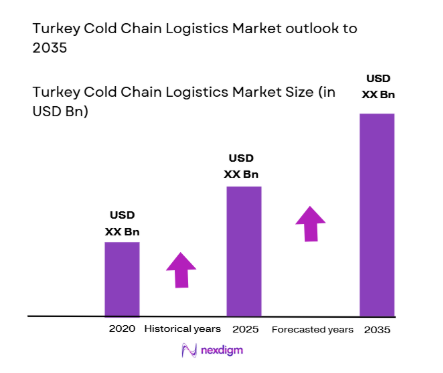
The Turkey Cold Chain Logistics market is valued at USD ~ billion, driven by the increasing demand for perishable food, pharmaceutical products, and e-commerce logistics. This market growth is largely attributed to the expanding food retail sector, coupled with advancements in temperature-controlled transportation systems. The pharmaceutical industry’s reliance on refrigerated storage and distribution to maintain product quality further boosts the market. Technological innovations like IoT-enabled cold chain monitoring and automation are also significant contributors to the market’s development.
Major cities in Turkey, including Istanbul, Ankara, and Izmir, are the key drivers of the cold chain logistics market due to their strategic locations, access to major ports, and substantial infrastructure investments. These cities have become central hubs for supply chains, supporting both domestic and international trade. The growth of e-commerce in these regions has spurred the demand for efficient cold chain logistics services, making them critical to the country’s logistics framework. Government initiatives aimed at improving transport and infrastructure also play a pivotal role in the dominance of these regions.
Market Segmentation
By Product Type:
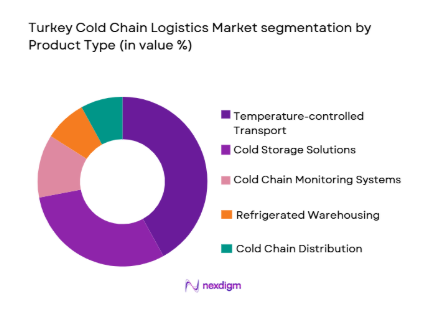
The Turkey Cold Chain Logistics market is segmented by product type into temperature-controlled transport, cold storage solutions, cold chain monitoring systems, refrigerated warehousing, and cold chain distribution. Recently, temperature-controlled transport has dominated the market share, driven by the growing demand for efficient food transportation and the need for high-quality pharmaceutical deliveries. As e-commerce and global food trade increase, the demand for reliable and regulated transportation services has skyrocketed. Factors such as logistics infrastructure, fleet expansion, and consumer demand for fresh goods have made temperature-controlled transport the leader in this market segment.
By Platform Type:
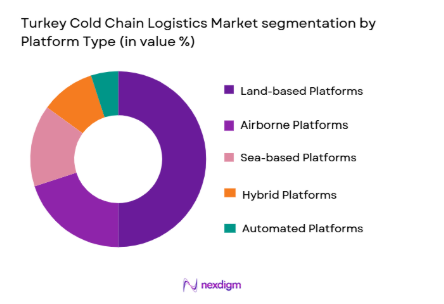
The market is segmented by platform type into land-based platforms, airborne platforms, sea-based platforms, hybrid platforms, and automated platforms. Land-based platforms, particularly trucks and trailers with built-in refrigeration systems, have the largest market share due to Turkey’s strategic road transport networks and increasing demand for overland perishable goods transportation. As road infrastructure continues to improve, land-based platforms remain the most cost-effective and accessible solution for companies operating within Turkey and surrounding regions, making them the dominant player in the market.
Competitive Landscape
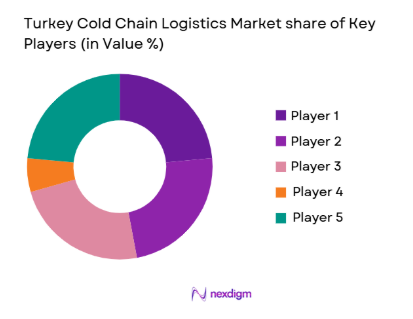
The competitive landscape in Turkey’s cold chain logistics market is characterized by both global and local players, with major companies consolidating their positions through acquisitions, mergers, and collaborations. The presence of both domestic companies and international logistics providers has led to a competitive environment that drives innovation and service improvements. The large investments in infrastructure and the adoption of advanced cold chain technologies further intensify competition, resulting in a constantly evolving landscape. Companies focus on providing end-to-end logistics solutions, integrating monitoring technologies, and enhancing sustainability practices to maintain their competitive edge.
| Company Name | Establishment Year | Headquarters | Technology Focus | Market Reach | Key Products | Revenue | Additional Parameter |
| DB Schenker | 1872 | Germany | ~ | ~ | ~ | ~ | ~ |
| Kuehne + Nagel | 1890 | Switzerland | ~ | ~ | ~ | ~ | ~ |
| XPO Logistics | 1989 | USA | ~ | ~ | ~ | ~ | ~ |
| Agility Logistics | 2006 | Kuwait | ~ | ~ | ~ | ~ | ~ |
| DHL Supply Chain | 1969 | Germany | ~ | ~ | ~ | ~ | ~ |
Turkey Cold Chain Logistics Market Analysis
Growth Drivers
Expansion of E-commerce:
The rapid expansion of the e-commerce sector in Turkey is a significant growth driver for the cold chain logistics market. With the increasing demand for online grocery shopping, the need for reliable and efficient cold chain logistics solutions has grown substantially. E-commerce platforms, particularly in urban areas, require temperature-controlled transport and storage systems to deliver fresh food, pharmaceuticals, and other perishable goods to consumers. The expansion of digital infrastructure and online platforms has created new opportunities for cold chain logistics, making it a central component in the growing e-commerce ecosystem. As more consumers shift to online shopping for fresh products, companies are investing heavily in expanding their cold storage and distribution networks. Additionally, logistics companies are adopting more sophisticated tracking systems, using Internet of Things (IoT) technology to monitor product temperature and condition throughout the supply chain, which further strengthens the demand for cold chain logistics services.
Increasing Demand for Pharmaceuticals:
The growing pharmaceutical industry in Turkey is another major driver of the cold chain logistics market. Pharmaceuticals, particularly vaccines, biologics, and temperature-sensitive drugs, require precise and consistent temperature control throughout their transport and storage to maintain their efficacy and quality. The global focus on health and the increasing demand for healthcare products has necessitated the establishment of sophisticated cold chain systems to ensure the safe and effective delivery of these products. Furthermore, the regulatory landscape surrounding the transportation and storage of pharmaceuticals is becoming stricter, driving companies to invest in state-of-the-art cold chain facilities that comply with stringent health and safety standards. As Turkey becomes a hub for medical tourism and pharmaceutical exports, the need for advanced cold chain solutions continues to grow, fueling the market’s expansion.
Market Challenges
Infrastructure and Technological Gaps:
One of the key challenges facing Turkey’s cold chain logistics market is the significant infrastructure and technological gaps that exist, particularly in rural areas. While major cities like Istanbul and Ankara have modern cold storage facilities and temperature-controlled transportation systems, rural areas face difficulties in establishing the same level of infrastructure. This leads to logistical inefficiencies, delays, and increased costs for companies trying to expand their cold chain networks beyond urban centers. Additionally, the lack of advanced technologies such as IoT-enabled monitoring systems in some regions further complicates the situation, making it harder to ensure the quality and safety of temperature-sensitive goods throughout their journey. Bridging these infrastructure gaps and integrating cutting-edge technology into existing systems will be a major challenge for the industry moving forward.
Regulatory Compliance and Certification Barriers:
Navigating the complex and evolving regulatory landscape is another major challenge for Turkey’s cold chain logistics market. Companies must comply with various local and international regulations governing the transportation and storage of perishable goods, including food safety standards, pharmaceutical regulations, and environmental requirements. These regulations are often stringent, and failure to meet them can result in financial penalties, reputational damage, and loss of customer trust. Additionally, certification processes for temperature-controlled transport and storage facilities can be lengthy and costly, creating barriers for small and medium-sized enterprises looking to enter the market. As the cold chain logistics sector grows, staying abreast of regulatory changes and ensuring compliance will be a continuous challenge for companies.
Opportunities
Adoption of Automation and Smart Technology:
Automation and smart technology adoption present a substantial opportunity for Turkey’s cold chain logistics market. The integration of robotics, AI, and IoT technologies into cold storage and distribution systems can improve operational efficiency, reduce labor costs, and enhance temperature control accuracy. Automated systems allow for real-time tracking of goods, reducing the risk of human error and ensuring that products remain within optimal temperature ranges. Furthermore, the use of AI-powered systems to forecast demand and optimize routes can enhance the overall efficiency of the cold chain. As Turkish companies look to stay competitive and meet the growing demands of the e-commerce and pharmaceutical sectors, the adoption of automation and smart technology in cold chain logistics will provide significant operational advantages and improve service delivery times.
Government Support for Cold Chain Development:
The Turkish government is increasingly investing in the development of cold chain infrastructure, providing an opportunity for the market to expand rapidly. Government policies aimed at modernizing transport networks, improving logistics efficiency, and supporting the agricultural and pharmaceutical sectors are likely to boost the growth of cold chain logistics. Turkey’s strategic location as a transit hub between Europe, the Middle East, and Asia also positions it as an ideal candidate for logistics infrastructure investments. Additionally, government incentives for businesses that invest in cold chain technologies and infrastructure will play a significant role in fostering market growth. As public-private partnerships expand in the logistics sector, these initiatives will improve the overall cold chain infrastructure, benefiting both local and international players.
Future Outlook
The Turkey Cold Chain Logistics market is poised for significant growth over the next five years, driven by advancements in technology, government infrastructure projects, and the continued expansion of e-commerce. As the demand for temperature-sensitive goods grows across industries such as food, pharmaceuticals, and e-commerce, logistics companies will increasingly invest in modernizing their cold chain operations. Technological innovations, such as automation, IoT, and AI, will play a crucial role in enhancing efficiency and accuracy in cold chain logistics. Furthermore, government initiatives supporting the development of logistics infrastructure will provide a favorable environment for market growth. Regulatory support for the sector, coupled with rising consumer expectations for fast and reliable delivery of perishable goods, will create a strong demand for innovative cold chain solutions.
Major Players
- DB Schenker
- Kuehne + Nagel
- XPO Logistics
- Agility Logistics
- DHL Supply Chain
- C.H. Robinson
- Lineage Logistics
- Kerry Logistics
- CEVA Logistics
- Rhenus Logistics
- Yusen Logistics
- DB Schenker Logistics
- DSV Panalpina
- Geodis
- Nippon Express
Key Target Audience
- Investments and venture capitalist firms
- Government and regulatory bodies
- Manufacturers of perishable goods
- Pharmaceutical companies
- E-commerce and retail companies
- Food and beverage distributors
- Third-party logistics providers
- Cold storage and transport service providers
Research Methodology
Step 1: Identification of Key Variables
Market trends, growth drivers, challenges, and regulatory factors are identified to define the scope and boundaries of the market.
Step 2: Market Analysis and Construction
Data is gathered through primary and secondary research, analyzing historical market performance and forming a comprehensive market model.
Step 3: Hypothesis Validation and Expert Consultation
Experts in cold chain logistics and industry stakeholders are consulted to validate assumptions and ensure the accuracy of the market forecast.
Step 4: Research Synthesis and Final Output
The final report synthesizes all gathered data, providing a detailed market overview, growth drivers, challenges, and future outlook for decision-making.

- Executive Summary
- Research Methodology (Definitions, Scope, Industry Assumptions, Market Sizing Approach, Primary & Secondary Research Framework, Data Collection & Verification Protocol, Analytic Models & Forecast Methodology, Limitations & Research Validity Checks)

- Market Definition and Scope
- Value Chain & Stakeholder Ecosystem
- Regulatory / Certification Landscape
- Sector Dynamics Affecting Demand
- Strategic Initiatives & Infrastructure Growth

- Growth Drivers
Increasing Demand for Perishable Food Products
Rising Healthcare and Pharmaceutical Needs
Technological Advancements in Cold Chain Monitoring
E-commerce Growth Driving Cold Chain Logistics
Government Regulations Promoting Cold Chain Development - Market Challenges
High Operational Costs
Lack of Adequate Infrastructure in Rural Areas
Regulatory Compliance and Certification Barriers
Energy Consumption and Sustainability Issues
Lack of Skilled Workforce in Cold Chain Logistics - Market Opportunities
Expansion of E-commerce and Retail Sectors
Technological Innovations in Cold Chain Solutions
Government Initiatives Supporting Cold Chain Infrastructure Development - Trends
Rise in Automation and IoT in Cold Chain Logistics
Increasing Use of Sustainable Refrigerants
Emerging Smart Cold Storage Solutions
Integration of AI and Machine Learning in Cold Chain Optimization
Adoption of Blockchain for Enhanced Cold Chain Transparency - Government Regulations & Defense Policy
Regulations on Food Safety and Quality Standards
Compliance with International Cold Chain Certifications
Government Funding for Cold Chain Infrastructure Projects - SWOT Analysis
- Stakeholder and Ecosystem Analysis
- Porter’s Five Forces Analysis
- Competition Intensity and Ecosystem Mapping

- By Market Value, 2020-2025
- By Installed Units, 2020-2025
- By Average System Price, 2020-2025
- By System Complexity Tier, 2020-2025

- By System Type (In Value%)
Temperature-controlled Transport
Cold Storage Solutions
Cold Chain Monitoring Systems
Refrigerated Warehousing
Cold Chain Distribution - By Platform Type (In Value%)
Land-based Platforms
Airborne Platforms
Sea-based Platforms
Hybrid Platforms
Automated Platforms - By Fitment Type (In Value%)
On-site Solutions
Off-site Solutions
Hybrid Solutions
Integrated Solutions
Modular Solutions - By EndUser Segment (In Value%)
Food & Beverage Industry
Pharmaceutical Industry
Retailers & Supermarkets
E-commerce Platforms
Medical & Healthcare Providers - By Procurement Channel (In Value%)
Direct Procurement
Third-party Logistics Providers
Private Sector Procurement
Online Bidding Platforms
Wholesalers & Distributors - By Material / Technology (in Value%)
Refrigerants & Insulation Materials
Temperature Monitoring Technologies
Cold Chain Packaging Materials
Energy-efficient Cooling Systems
Smart Logistics Solutions

- Market structure and competitive positioning
- Market share snapshot of major players
- CrossComparison Parameters (System Type, Platform Type, Procurement Channel, EndUser Segment, Fitment Type, Technology, Material, Operational Efficiency, Logistics Innovation, Customer Service)
- SWOT Analysis of Key Players
- Pricing & Procurement Analysis
- Key Players
DB Schenker
Kuehne + Nagel
XPO Logistics
Agility Logistics
DHL Supply Chain
Kerry Logistics
C.H. Robinson
CMA CGM Group
CEVA Logistics
Rhenus Logistics
DHL Express
Lineage Logistics
JBS Logistics
United Parcel Service (UPS)
Food Logistics

- Increased Demand from the Pharmaceutical Sector for Cold Chain Logistics
- Food & Beverage Industry’s Need for Efficient Cold Storage Solutions
- Retailers’ Growing Dependence on Cold Chain for Supply Chain Efficiency
- E-commerce Expansion Increasing Cold Chain Demand

- Forecast Market Value, 2026-2035
- Forecast Installed Units, 2026-2035
- Price Forecast by System Tier, 2026-2035
- Future Demand by Platform, 2026-2035


 Request a Sample
 Ask for Customization
 Get a Quote
 Enquire Now