
 Download PDF
 Download PDF
Market Overview
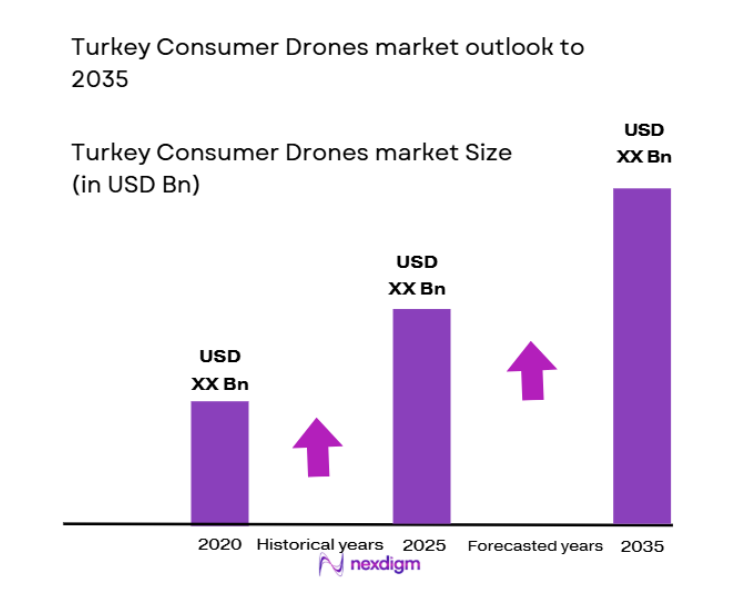
The Turkey consumer drones market is valued at approximately USD ~billion, driven by advancements in drone technology, consumer demand for recreational devices, and increasing adoption across industries like agriculture, surveying, and media. Consumer drones are gaining traction due to affordable prices, improved battery life, and enhanced functionality, making them accessible for both recreational users and businesses. The market is also supported by government incentives for drone usage, contributing to rapid market growth in the region.
Cities such as Istanbul and Ankara are key drivers of this market, benefiting from infrastructure development and innovation ecosystems that support the growth of drone technologies. These cities are home to major players in technology, offering a favorable environment for drone manufacturers. Furthermore, Turkey’s strategic geographic location provides a natural testing ground for consumer drones, especially in sectors such as agriculture and delivery. The Turkish government’s openness to drone regulation and experimentation boosts the sector’s potential.
Market Segmentation
By Product Type
The Turkey consumer drones market is segmented by product type into camera drones, racing drones, toy drones, surveying drones, and agricultural drones. Recently, camera drones have a dominant market share due to their versatility and the growing demand for aerial photography, video recording, and surveillance. Advances in camera technology, lower production costs, and the increasing popularity of drone photography among consumers have contributed to the dominance of camera drones in the market.
By Platform Type
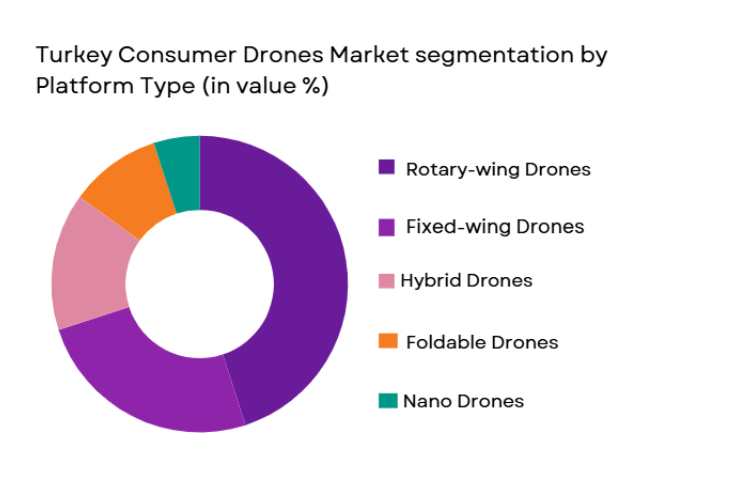
The Turkey consumer drones market is segmented by platform type into fixed-wing drones, rotary-wing drones, hybrid drones, foldable drones, and nano drones. Recently, rotary-wing drones have a dominant market share, favored for their ability to hover in place and capture high-quality images and videos, which is a significant advantage in both recreational and professional applications. Their ability to operate in small spaces and ease of control make them the preferred choice among Turkish consumers.
Competitive Landscape
The Turkey consumer drones market is highly competitive, with leading players focusing on technological innovations, improving drone features, and expanding their distribution networks to capture a larger market share. Consolidation in the market is evident as global players enter the Turkish market and form partnerships with local businesses. The industry is characterized by intense competition among major players offering a range of drones suitable for both recreational and commercial uses.
| Company Name | Establishment Year | Headquarters | Technology Focus | Market Reach | Key Products | Revenue (USD) | Additional Parameter |
| DJI | 2006 | Shenzhen, China | ~ | ~ | ~ | ~ | ~ |
| Parrot | 1994 | Paris, France | ~ | ~ | ~ | ~ | ~ |
| Yuneec International | 1999 | Kunshan, China | ~ | ~ | ~ | ~ | ~ |
| Autel Robotics | 2014 | Shenzhen, China | ~ | ~ | ~ | ~ | ~ |
| Skydio | 2014 | Redwood City, USA | ~ | ~ | ~ | ~ | ~ |
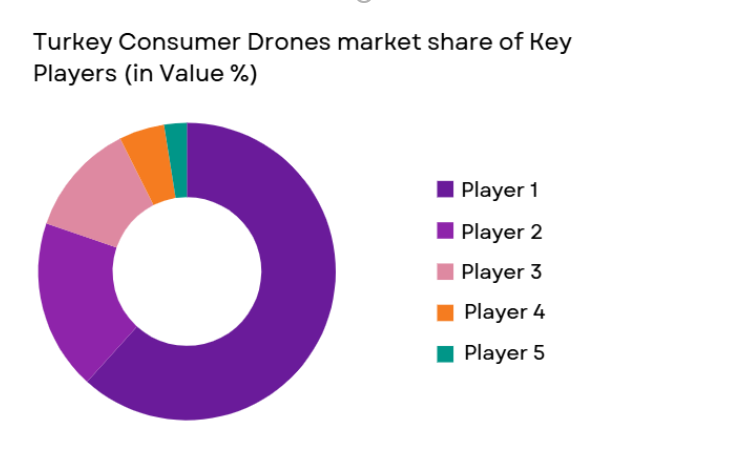
Turkey Consumer Drones Market Analysis
Growth Drivers
Increasing Demand for Aerial Photography
The Turkey consumer drones market has experienced significant growth due to the increasing demand for aerial photography and videography. With the rise in social media content creation, consumers are keen on capturing high-quality images and videos from unique perspectives. Drone photography has become a popular tool for content creators, travel bloggers, and influencers. The affordability of drones, especially with the integration of high-definition cameras and ease of use, has made it accessible for a broader consumer base. Moreover, Turkey’s growing tourism industry drives demand for aerial shots of landscapes and historical sites. Drone sales are expected to continue growing as this trend strengthens, particularly as more users opt for professional-quality content at an affordable price. The integration of AI-powered cameras that can track objects and capture stunning visuals is also propelling this demand.
Advancements in Drone Technology
Technological innovations in consumer drones, such as better battery life, enhanced GPS, and improved stabilization, are driving growth in the Turkey consumer drones market. These advancements allow drones to fly longer distances, carry heavier payloads, and offer more stable flight control. The development of autonomous flight systems has also contributed to the growing appeal of drones for both beginners and experienced users. With the incorporation of AI, drones now feature smart tracking and obstacle avoidance, making them more user-friendly. The continuous reduction in production costs, along with the introduction of foldable drones and nano drones, has made the technology more accessible to a wider audience. As these innovations continue to evolve, it is expected that the Turkey consumer drones market will witness further adoption and market growth in the years to come.
Market Challenges
Regulatory Restrictions and Airspace Management
One of the primary challenges faced by the Turkey consumer drones market is the regulatory restrictions on drone usage. The Turkish government has put in place stringent regulations governing the use of drones, especially in urban areas and near airports. These regulations require drone operators to obtain permits, limiting the freedom of use for consumers and businesses. Additionally, airspace management remains a concern as drone activities can interfere with traditional aviation, requiring a balance between innovation and safety. This has led to limitations on where drones can fly, especially in crowded areas, and may hinder the market’s potential if regulations become stricter. The evolving nature of these laws requires drone manufacturers to continually adapt to new legal frameworks, which can be a significant challenge for market players.
Privacy Concerns and Public Perception
Privacy issues associated with drone use are a significant concern for consumers and regulators alike. Drones equipped with high-definition cameras can capture sensitive information, including personal activities, leading to fears of surveillance and privacy invasion. These concerns are magnified in urban environments, where drones are frequently flown near residential areas. Despite the benefits of drones, the public perception of their role in privacy invasion can hinder market growth. Companies must address these concerns by developing more transparent data-use policies and ensuring that their drones comply with privacy laws. Failing to tackle these concerns may lead to public backlash and reduced consumer trust in drone technologies, posing a challenge for market players looking to expand their reach.
Opportunities
Expansion of Drone Delivery Services
One of the major opportunities in the Turkey consumer drones market lies in the potential for drone delivery services. As e-commerce continues to grow, drone technology presents an efficient solution for last-mile delivery, enabling faster and more cost-effective delivery options. In Turkey, major cities such as Istanbul and Ankara have large urban populations that could benefit from drone delivery services, particularly for small packages, medical supplies, and food delivery. The Turkish government is also providing incentives and creating regulatory frameworks that support the development of drone delivery infrastructure. These developments create an exciting opportunity for drone manufacturers to collaborate with logistics companies, enabling drone technology to become a critical part of Turkey’s logistics and supply chain networks.
Adoption of Drones in Agriculture for Precision Farming
The increasing adoption of drones in agriculture presents a promising opportunity for the Turkey consumer drones market. Drones are being utilized in precision farming to monitor crop health, optimize pesticide use, and assess soil conditions. With a significant portion of Turkey’s economy relying on agriculture, there is an increasing push to modernize farming practices and enhance productivity. The use of drones for aerial surveys, mapping, and crop monitoring offers farmers the ability to make data-driven decisions that improve yields and reduce costs. As the Turkish agricultural sector seeks to increase efficiency, the demand for specialized agricultural drones is expected to grow, opening new opportunities for market expansion.
Future Outlook
Over the next five years, the Turkey consumer drones market is expected to experience continued growth driven by technological innovations, regulatory support, and expanding applications in various sectors. Drone adoption will likely increase in industries such as agriculture, media, and delivery services. Regulatory advancements, particularly around commercial drone use, will provide the necessary infrastructure for further market growth. As drone technology becomes more advanced and accessible, consumer interest is expected to expand, and Turkey will likely become a leader in drone adoption in the region.
Major Players
- DJI
- Parrot
- Yuneec International
- Autel Robotics
- Skydio
- PowerVision
- Hubsan
- HobbyKing
- Walkera
- Xiaomi
- GoPro
- Litchi
- Insitu
- AeroVironment
- SenseFly
Key Target Audience
- Investments and venture capitalist firms
- Government and regulatory bodies
- Drone manufacturers and suppliers
- Commercial drone service providers
- Logistics companies
- Agricultural organizations
- Media and content creators
- Retailers and online platforms
Research Methodology
Step 1: Identification of Key Variables
In this step, key market variables, such as product types, platform types, and consumer preferences, are identified to establish the foundation for the market analysis.
Step 2: Market Analysis and Construction
The market is segmented and analyzed based on various parameters, such as geography, technology, and applications, to construct a comprehensive market model.
Step 3: Hypothesis Validation and Expert Consultation
Market hypotheses are validated through expert consultations, including discussions with industry leaders, manufacturers, and regulatory bodies to ensure accuracy.
Step 4: Research Synthesis and Final Output
The research findings are synthesized into a cohesive report, presenting a detailed market overview, growth drivers, challenges, and future trends, along with actionable insights for stakeholders.

- Executive Summary
- Research Methodology (Definitions, Scope, Industry Assumptions, Market Sizing Approach, Primary & Secondary Research Framework, Data Collection & Verification Protocol, Analytic Models & Forecast Methodology, Limitations & Research Validity Checks)

- Market Definition and Scope
- Value Chain & Stakeholder Ecosystem
- Regulatory / Certification Landscape
- Sector Dynamics Affecting Demand
- Strategic Initiatives & Infrastructure Growth

- Growth Drivers
Increased interest in recreational drone flying
Growth of e-commerce and delivery applications
Advancements in drone technology (AI, sensors)
Lower drone prices making them more accessible
Expansion of drone-friendly regulatory frameworks - Market Challenges
Strict regulations for consumer drones
Battery life limitations
Lack of skilled drone operators
Privacy concerns and public perception
Environmental impact and noise pollution - Market Opportunities
Integration with smart city projects
Use of drones in delivery services
Potential for drones in infrastructure inspection - Trends
Rise of drone racing as a competitive sport
Increased adoption of drones in agriculture for precision farming
Development of autonomous drones
Collaboration between drone companies and tech giants
Advances in drone swarm technology - Government Regulations & Defense Policy
Government regulations on drone safety and airspace usage
Support for drone innovation and integration in commercial spaces
International regulations impacting drone exports and operations - SWOT Analysis
- Stakeholder and Ecosystem Analysis
- Porter’s Five Forces Analysis
- Competition Intensity and Ecosystem Mapping

- By Market Value, 2020-2025
- By Installed Units, 2020-2025
- By Average System Price, 2020-2025
- By System Complexity Tier, 2020-2025

- By System Type (In Value%)
Camera Drones
Racing Drones
Toy Drones
Surveying Drones
Agricultural Drones - By Platform Type (In Value%)
Fixed-wing Drones
Rotary-wing Drones
Hybrid Drones
Foldable Drones
Nano Drones - By Fitment Type (In Value%)
Pre-installed Drones
Modular Drones
Custom Fitment Drones
Portable Drones
Fixed Fitment Drones - By EndUser Segment (In Value%)
Hobbyists
Agriculture
Media & Entertainment
Surveys & Mapping
Research & Education - By Procurement Channel (In Value%)
Direct Purchase from Manufacturer
Retailers & Online Stores
Distributors
Resellers
Leasing & Rentals - By Material / Technology (in Value%)
Carbon Fiber
Plastic
Metal Alloy
Lithium Batteries
Electric Motors

- Market structure and competitive positioning
- Market share snapshot of major players
- CrossComparison Parameters (Price, Technology, Innovation, Market Reach, Distribution Channels, Quality, Brand Recognition, Regulatory Compliance, Customer Service)
- SWOT Analysis of Key Players
- Pricing & Procurement Analysis
- Key Players
DJI
Parrot
Autel Robotics
Yuneec International
Skydio
PowerVision
Hubsan
HobbyKing
Walkera
Xiaomi
GoPro
Litchi
Insitu
AeroVironment
SenseFly

- Growth in drone use among hobbyists and enthusiasts
- Commercial use of drones in agriculture and surveying
- Integration of drones in media and entertainment for cinematic shots
- Increasing adoption in educational and research institutions

- Forecast Market Value, 2026-2035
- Forecast Installed Units, 2026-2035
- Price Forecast by System Tier, 2026-2035
- Future Demand by Platform, 2026-2035


 Request a Sample
 Ask for Customization
 Get a Quote
 Enquire Now