

 Download PDF
 Download PDF
Market Overview
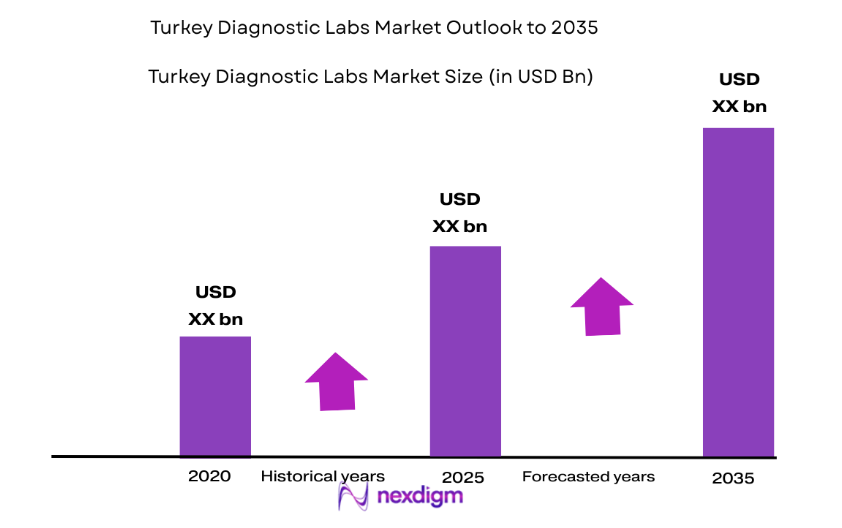
Based on a recent historical assessment, the Turkey Diagnostic Labs market size reached approximately USD ~ billion according to consolidated healthcare expenditure and diagnostics service indicators reported by the Turkish Ministry of Health and OECD health statistics. The market is driven by rising clinical testing demand, expansion of private diagnostic networks, and growing use of molecular and genetic testing services. Increasing hospital infrastructure, digital laboratory automation, and higher chronic disease diagnostics requirements continue to accelerate laboratory service volumes and diagnostic testing utilization across public and private healthcare systems.
Major diagnostic activity is concentrated in Istanbul, Ankara, and Izmir due to advanced healthcare infrastructure, strong hospital networks, and the presence of large diagnostic laboratory chains. These metropolitan healthcare hubs host specialized pathology centers, high-capacity reference laboratories, and advanced molecular diagnostic facilities. Urban healthcare demand, medical tourism inflow, and strong private hospital ecosystems support laboratory service expansion in these cities. Government healthcare investments and university medical research centers also contribute to diagnostic innovation and advanced clinical testing capacity across the country.
Market Segmentation
By Product Type
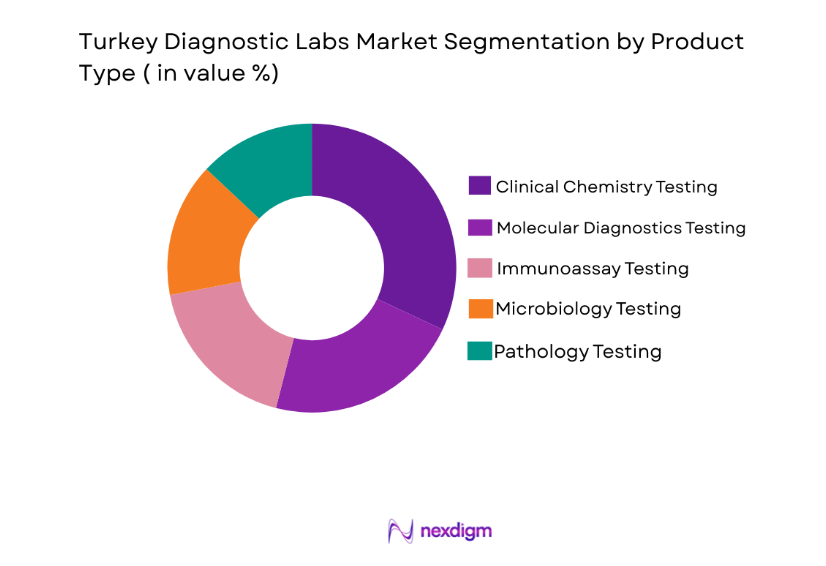
Turkey Diagnostic Labs market is segmented by product type into Clinical Chemistry Testing, Molecular Diagnostics Testing, Immunoassay Testing, Hematology Testing, and Microbiology Testing. Recently, Clinical Chemistry Testing has a dominant market share due to factors such as widespread hospital demand, routine diagnostic screening, strong infrastructure availability, and high patient testing volumes. Clinical chemistry tests are widely used for metabolic disorders, kidney function monitoring, diabetes testing, and liver diagnostics, making them essential across hospitals and diagnostic centers. High automation levels and cost efficiency further strengthen adoption across healthcare facilities. Growing chronic disease prevalence and increasing preventive health screening programs also sustain demand for clinical chemistry testing services across Turkey’s healthcare ecosystem.
By Platform Type
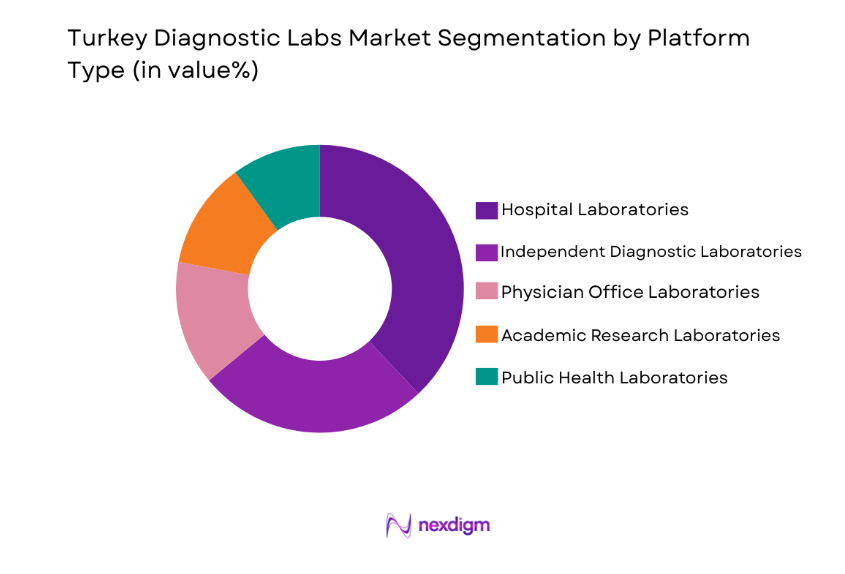
Turkey Diagnostic Labs market is segmented by platform type into Hospital-Based Laboratories, Independent Diagnostic Laboratories, Reference Laboratories, Point-of-Care Diagnostic Platforms, and Mobile Diagnostic Testing Units. Recently, Hospital-Based Laboratories have a dominant market share due to factors such as strong patient inflow, integrated clinical care models, and availability of advanced diagnostic infrastructure. Hospitals maintain in-house laboratories to ensure rapid test results, support emergency care, and improve treatment efficiency. Large healthcare groups and multispecialty hospitals increasingly invest in automated laboratory systems and molecular testing facilities. Growing hospital admissions, expanding healthcare facilities, and increasing diagnostic dependency for treatment decisions reinforce the dominance of hospital-based diagnostic laboratories across the national healthcare system.
Competitive Landscape
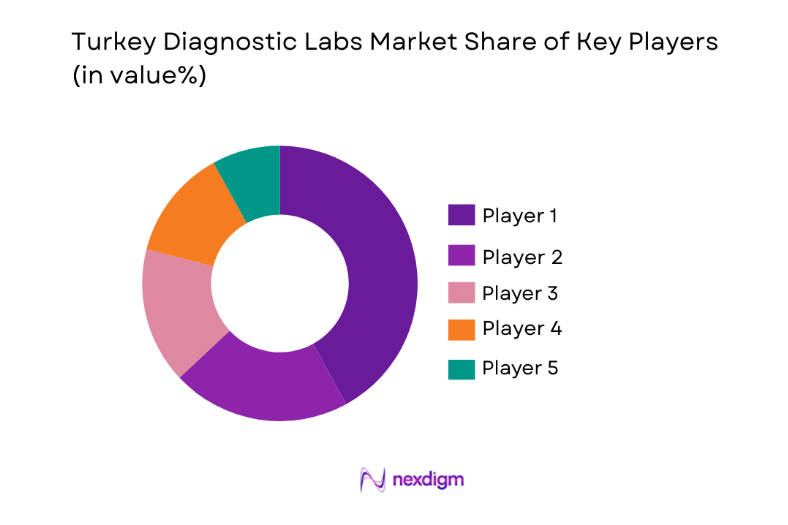
The Turkey Diagnostic Labs market demonstrates a moderately consolidated competitive structure with both domestic healthcare groups and international diagnostic technology providers influencing market dynamics. Large private hospital networks operate extensive laboratory divisions, while independent diagnostic chains expand regional testing coverage. Global diagnostic equipment manufacturers also play a major role by supplying laboratory automation platforms and molecular testing systems. Strategic partnerships, laboratory automation investments, and expansion of specialized testing capabilities are shaping competition among diagnostic providers across Turkey.
| Company Name | Establishment Year | Headquarters | Technology Focus | Market Reach | Key Products | Revenue | Laboratory Network Size |
| Acibadem Labmed Medical Laboratories | 2004 | Istanbul, Turkey | ~ | ~ | ~ | ~ | ~ |
| Synevo Turkey | 1995 | Istanbul, Turkey | ~ | ~ | ~ | ~ | ~ |
| Biruni Laboratory | 1998 | Istanbul, Turkey | ~ | ~ | ~ | ~ | ~ |
| Unilabs | 1987 | Geneva, Switzerland | ~ | ~ | ~ | ~ | ~ |
| Synlab Group | 1998 | Munich, Germany | ~ | ~ | ~ | ~ | ~ |
Turkey Diagnostic Labs Market Analysis
Growth Drivers
Rising Chronic Disease Diagnostic Demand
Rising chronic disease diagnostic demand significantly strengthens the growth of the Turkey diagnostic laboratories market because healthcare providers increasingly rely on laboratory testing for early detection, disease monitoring, and treatment planning. Chronic diseases such as diabetes, cardiovascular disorders, cancer, and metabolic conditions require continuous laboratory testing for clinical evaluation and therapeutic management. Physicians depend on routine blood tests, pathology examinations, and biomarker screening to identify disease progression and adjust treatment protocols. Hospitals and diagnostic laboratories therefore conduct increasing volumes of clinical chemistry tests, immunoassays, and molecular diagnostics. Preventive healthcare awareness among patients further drives diagnostic testing demand because individuals increasingly undergo health screenings and routine laboratory checkups. Public health initiatives promoting early disease detection programs also increase nationwide diagnostic testing volumes. The expansion of hospital infrastructure and private healthcare networks further increases laboratory testing capacity. These factors collectively expand diagnostic laboratory utilization across both public healthcare institutions and private hospital systems throughout the country.
Expansion of Private Healthcare Infrastructure
Expansion of private healthcare infrastructure strongly accelerates the development of the Turkey diagnostic laboratories market because modern hospitals and specialty clinics integrate advanced laboratory facilities within their healthcare systems. Private hospital groups invest heavily in diagnostic laboratories to ensure rapid clinical testing and accurate treatment decision making. Integrated hospital laboratories support emergency diagnostics, pathology analysis, genetic testing, and infectious disease screening within hospital networks. Growing patient demand for high quality healthcare services encourages hospitals to install automated diagnostic analyzers and advanced laboratory information systems. These systems improve testing speed, reduce laboratory turnaround times, and enhance diagnostic accuracy for physicians. Private healthcare providers also collaborate with global diagnostic technology companies to introduce advanced molecular testing platforms and digital pathology solutions. Large hospital networks in metropolitan cities continue expanding diagnostic infrastructure to support increasing patient inflows. As private healthcare investment grows and hospital capacity increases, demand for sophisticated laboratory diagnostics services expands significantly across Turkey.
Market Challenges
High Cost of Advanced Diagnostic Technologies
High cost of advanced diagnostic technologies creates a major challenge for the Turkey diagnostic laboratories market because sophisticated molecular diagnostic systems, automation platforms, and genetic testing equipment require substantial capital investment. Hospitals and diagnostic laboratories must allocate large financial resources to purchase analyzers, sequencing systems, and digital pathology platforms. These technologies also require continuous expenditure on reagents, laboratory consumables, and maintenance services. Smaller diagnostic laboratories often struggle to invest in advanced diagnostic technologies due to financial constraints and limited operational budgets. Import dependence for high end diagnostic equipment further increases procurement costs because many laboratory technologies are sourced from international manufacturers. Currency fluctuations and import regulations may also increase acquisition costs for laboratories purchasing diagnostic equipment. Limited funding availability within public healthcare laboratories restricts technology upgrades across several healthcare facilities. These financial barriers slow the adoption of advanced laboratory diagnostic technologies despite increasing clinical demand.
Regulatory Compliance and Laboratory Accreditation Requirements
Regulatory compliance and laboratory accreditation requirements present another challenge for the Turkey diagnostic laboratories market because diagnostic laboratories must adhere to strict healthcare regulations and quality control standards. Laboratories are required to maintain internationally recognized accreditation systems to ensure testing accuracy, reliability, and patient safety. Compliance with laboratory quality standards requires continuous investment in training, equipment calibration, documentation systems, and laboratory information management software. Accreditation bodies conduct regular inspections and evaluations to verify diagnostic laboratory performance and operational procedures. Smaller laboratories may face operational difficulties in meeting complex regulatory requirements and maintaining compliance documentation. Government oversight related to medical diagnostics, patient data protection, and laboratory reporting also increases administrative responsibilities. These regulatory obligations increase operational complexity and compliance costs for laboratory operators. Consequently, regulatory compliance requirements may slow laboratory expansion and increase operational pressure for smaller diagnostic service providers.
Opportunities
Growth of Molecular and Genetic Diagnostic Testing
Growth of molecular and genetic diagnostic testing presents a major opportunity for the Turkey diagnostic laboratories market because advanced genomic technologies are increasingly used for disease detection and personalized medicine. Molecular diagnostic platforms enable laboratories to identify genetic mutations, infectious pathogens, and cancer biomarkers with high precision. Hospitals and physicians rely on these technologies for targeted cancer therapies, infectious disease detection, and hereditary disease screening. Rapid developments in next generation sequencing and polymerase chain reaction testing technologies significantly expand the scope of laboratory diagnostics services. Medical research institutions and biotechnology companies are also collaborating with diagnostic laboratories to develop innovative genomic testing methods. Growing awareness of personalized medicine among healthcare providers further increases demand for molecular diagnostics services. As healthcare systems increasingly adopt precision medicine approaches, laboratories offering advanced genomic testing capabilities gain strong market opportunities. Expansion of molecular diagnostic laboratories therefore represents a key growth pathway within the national diagnostic testing ecosystem.
Expansion of Preventive Health Screening Programs
Expansion of preventive health screening programs creates significant opportunity for the Turkey diagnostic laboratories market because early disease detection initiatives increase routine laboratory testing volumes nationwide. Preventive healthcare programs encourage individuals to undergo regular health screenings for metabolic disorders, cardiovascular conditions, cancer detection, and infectious diseases. Government healthcare initiatives and employer sponsored health screening programs are expanding access to diagnostic services across different population groups. Preventive testing programs often include blood testing panels, pathology examinations, and biomarker analysis performed through clinical laboratories. Increasing patient awareness regarding early diagnosis and health monitoring further supports demand for laboratory screening services. Corporate health programs and insurance supported preventive testing initiatives are also expanding diagnostic laboratory utilization. Hospitals and independent diagnostic centers continue developing specialized preventive testing packages for patients. As preventive healthcare awareness expands across Turkey, laboratory testing demand is expected to increase significantly.
Future Outlook
The Turkey Diagnostic Labs market is expected to witness steady growth over the next five years as healthcare demand continues to expand across both public and private sectors. Increasing diagnostic testing volumes, technological advancements in laboratory automation, and growing adoption of molecular diagnostics will drive market expansion. Government healthcare investments and preventive health initiatives are likely to strengthen diagnostic infrastructure nationwide. The integration of artificial intelligence, digital pathology, and genomic testing platforms will further enhance diagnostic accuracy and efficiency. Rising medical tourism and private healthcare expansion will also contribute to sustained demand for advanced laboratory services.
Major Players
- AcibademLabmed Medical Laboratories
- Synevo Turkey
- Biruni Laboratory
- Mega Tip Laboratory
- Central Laboratory Turkey
- Unilabs
- Synlab Group
- Abbott Diagnostics
- Roche Diagnostics
- Siemens Healthineers Diagnostics
- Quest Diagnostics
- Labcorp
- Medicana Laboratory Services
- Memorial Health Group Diagnostics
- MLP Care Laboratory Services
Key Target Audience
- Hospital and healthcare network
- Diagnostic laboratory chains
- Pharmaceutical and biotechnology companies
- Healthcare technology companies
- Medical device manufacturers
- Investments and venture capitalist firms
- Government and regulatory bodies
Research Methodology
Step 1: Identification of Key Variables
The research begins by identifying the primary variables affecting the diagnostic laboratory market including healthcare expenditure, laboratory testing demand, technological adoption, regulatory policies, and healthcare infrastructure expansion. These variables help establish the analytical framework for evaluating the market structure and growth patterns.
Step 2: Market Analysis and Construction
Market analysis involves evaluating healthcare datasets, government reports, laboratory service statistics, and industry databases. Data is organized to construct market segmentation models, analyze laboratory service demand, and assess technological adoption trends within diagnostic facilities.
Step 3: Hypothesis Validation and Expert Consultation
Industry experts including laboratory directors, healthcare administrators, and diagnostic equipment providers are consulted to validate research assumptions. Their insights help refine market interpretations and confirm real-world diagnostic service trends.
Step 4: Research Synthesis and Final Output
Collected data and expert insights are synthesized into a comprehensive research report that provides detailed market insights, competitive analysis, and strategic outlook for stakeholders operating within the diagnostic laboratory industry.

- Executive Summary
- Research Methodology (Definitions, Scope, Industry Assumptions, Market Sizing Approach, Primary & Secondary Research Framework, Data Collection & Verification Protocol, Analytic Models & Forecast Methodology, Limitations & Research Validity Checks)

- Market Definition and Scope
- Value Chain & Stakeholder Ecosystem
- Regulatory / Certification Landscape
- Sector Dynamics Affecting Demand

- Growth Drivers
Rising prevalence of chronic diseases requiring frequent laboratory diagnostics
Expansion of private healthcare infrastructure and diagnostic chains across major Turkish cities
Growing adoption of advanced molecular and genetic testing technologies - Market Challenges
High cost of advanced diagnostic equipment and reagents
Regulatory compliance requirements for laboratory accreditation and certification
Shortage of highly skilled laboratory technicians and pathologists - Market Opportunities
Expansion of preventive healthcare programs increasing diagnostic testing demand
Growth of private diagnostic chains in secondary cities and regional healthcare hubs
Integration of digital pathology and AI-assisted diagnostics in laboratories - Trends
Adoption of automated laboratory systems improving testing efficiency
Increasing use of molecular diagnostics for infectious disease detection - Government Regulations
- SWOT Analysis
- Porter’s Five Forces

- By Market Value, 2020-2025
- By Installed Units, 2020-2025
- By Average System Price, 2020-2025
- By System Complexity Tier, 2020-2025

- By System Type (In Value%)
Clinical Chemistry Testing
Molecular Diagnostics Testing
Immunoassay Testing
Hematology Testing
Microbiology Testing - By Platform Type (In Value%)
Hospital-Based Diagnostic Laboratories
Independent Diagnostic Laboratories
Point-of-Care Diagnostic Platforms
Reference Laboratories
Mobile Diagnostic Testing Units - By Fitment Type (In Value%)
In-Hospital Laboratory Installations
Standalone Laboratory Centers
Integrated Hospital-Lab Networks
Mobile and Outreach Diagnostic Units - By End User Segment (In Value%)
Hospitals
Independent Diagnostic Centers
Research and Academic Institutes

- Market Share Analysis
- Cross Comparison Parameters (Test Portfolio Breadth, Laboratory Network Coverage, Technology Integration Level, Pricing Strategy, Turnaround Time Efficiency, Accreditation & Certifications, Strategic Partnerships)
- SWOT Analysis of Key Competitors
- Pricing & Procurement Analysis
- Key Players
Acibadem Labmed Medical Laboratories
Synevo Turkey
Biruni Laboratory
Central Laboratory Turkey
Mega Tip Laboratory
Unilabs
Medicana Laboratory Services
MLP Care Laboratory Services
Memorial Health Group Diagnostics
Synlab Group
Labcorp
Quest Diagnostics
Roche Diagnostics
Siemens Healthineers Diagnostics
Abbott Diagnostics

- Hospitals increasingly integrating in-house laboratories to reduce diagnostic turnaround time
- Private diagnostic chains expanding testing services across metropolitan healthcare clusters
- Academic research institutes adopting advanced laboratory technologies for clinical studies
- Independent diagnostic centers collaborating with hospitals for specialized testing services

- Forecast Market Value, 2026-2035
- Forecast Installed Units, 2026-2035
- Price Forecast by System Tier, 2026-2035
- Future Demand by Platform, 2026-2035


 Request a Sample
 Ask for Customization
 Get a Quote
 Enquire Now