

 Download PDF
 Download PDF
Market Overview
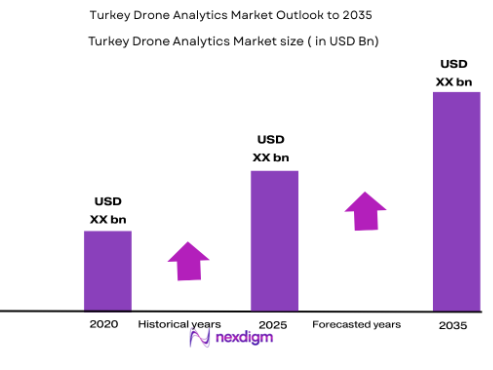
The market for Turkey’s drone analytics is poised for significant growth, driven by increasing investments in surveillance, military, and agricultural applications. As of the most recent assessment, the market size is valued at approximately USD ~ billion, underpinned by the expanding adoption of drones in various sectors. Government policies, technological advancements, and the growing need for real-time data analytics contribute to its expansion. The demand for advanced analytics platforms and the integration of AI in drone operations is expected to further accelerate market development.
Turkey’s dominance in the drone analytics market is attributed to its strategic geographical location and strong government support for defense technology. Major cities such as Istanbul and Ankara, with their technological infrastructure and proximity to defense industries, lead the market. The country’s defense initiatives, coupled with increasing commercial interest in drone technologies, create a fertile environment for market growth. Turkey’s investment in AI and machine learning for drone data processing enhances its competitive edge in the regional market.
Market Segmentation
By Product Type
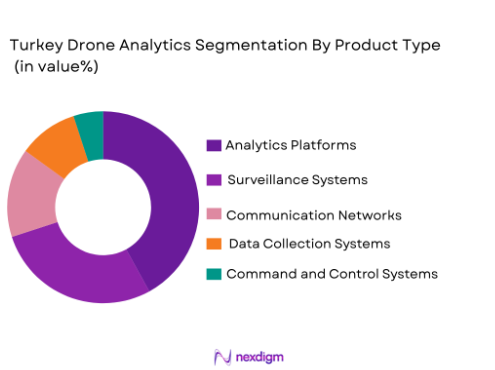
The Turkey drone analytics market is segmented by product type into analytics platforms, surveillance systems, communication networks, data collection systems, and command and control systems. Recently, the analytics platforms sub-segment has dominated the market share due to factors such as demand patterns, brand presence, infrastructure availability, and consumer preference. With the rise of big data and AI, businesses and governments are prioritizing platforms that offer real-time, actionable insights. These platforms’ ability to process vast amounts of data efficiently makes them the leading choice for sectors like defense and agriculture, further boosting their market dominance.
By Platform Type
The Turkey drone analytics market is segmented by platform type into fixed-wing drones, multi-rotor drones, hybrid drones, nano drones, and tethered drones. Recently, multi-rotor drones have dominated the market share due to their versatility, ease of use, and ability to carry heavy payloads for analytics and surveillance tasks. Multi-rotor drones are widely used in defense, agriculture, and infrastructure monitoring due to their agility, stability, and capacity to operate in confined spaces. Their popularity is expected to continue as their capabilities improve, especially with the integration of AI and machine learning for enhanced data analysis.

Competitive Landscape
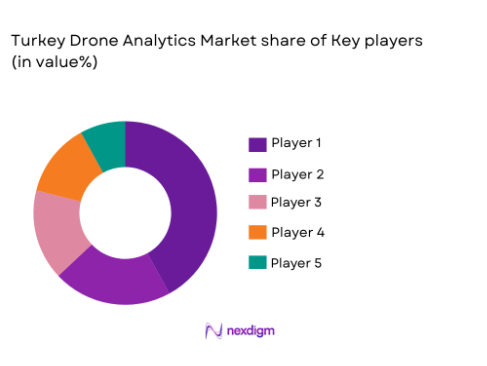
The competitive landscape of Turkey’s drone analytics market is marked by significant consolidation, with major players shaping the development of the technology. The influence of defense contractors, tech companies, and commercial drone manufacturers is evident in their growing market share. As drone analytics technology advances, these companies are merging capabilities to integrate data processing, AI, and analytics into unified platforms.
|
Company Name |
Establishment Year | Headquarters | Technology Focus | Market Reach | Key Products | Revenue | Key Technology |
| Aselsan | 1975 | Ankara, Turkey | ~ | ~ | ~ | ~ | ~ |
| Baykar | 1986 | Istanbul, Turkey | ~ | ~ | ~ | ~ | ~ |
| STM | 1991 | Ankara, Turkey | ~ | ~ | ~ | ~ | ~ |
| Turkish Aerospace Industries | 1984 | Ankara, Turkey | ~ | ~ | ~ | ~ | ~ |
| Roketsan | 1988 | Ankara, Turkey | ~ | ~ | ~ | ~ | ~ |
Market Analysis
Growth Drivers
Government Investment in Defense Technologies
Turkey’s substantial government investment in its defense sector has been a significant driver for the growth of the drone analytics market. The Turkish government has prioritized the development of defense technologies, and drones have become a critical part of their national security strategy. With increasing geopolitical tensions in the region, there is a pressing need for enhanced surveillance and reconnaissance capabilities, which has led to a surge in demand for advanced drone analytics platforms. The Turkish government’s investment in indigenous technologies has also spurred innovation in drone systems, boosting the overall market. These investments provide the necessary resources to expand drone fleets, develop AI-powered analytics tools, and integrate drones into national defense and security operations. Furthermore, partnerships with global defense contractors have provided additional momentum to the industry, reinforcing Turkey’s role as a regional leader in drone analytics.
Technological Advancements in AI and Machine Learning
Advances in artificial intelligence (AI) and machine learning (ML) have also been key growth drivers for Turkey’s drone analytics market. As AI and ML technologies evolve, they offer drones the ability to process data in real time, which is a critical need for various applications in defense, agriculture, and infrastructure monitoring. AI-powered drones can analyze vast amounts of data autonomously, providing actionable insights without human intervention. The integration of AI in drones allows for predictive analytics, which is especially valuable for military and agricultural uses. As technology continues to mature, drone analytics systems are becoming more efficient, accurate, and cost-effective. AI-driven solutions are expected to play a major role in the expansion of the drone analytics market in Turkey, particularly in areas like border surveillance, security, and emergency response, where real-time decision-making is crucial.
Market Challenges
Regulatory Challenges and Compliance Issues
One of the main challenges facing the drone analytics market in Turkey is the complex regulatory environment surrounding the use of drones, especially in commercial applications. Turkish authorities have strict regulations governing the airspace, which impact the ability of businesses to operate drones freely. While the government has taken steps to promote the use of drones in defense and security, commercial sectors still face significant barriers when it comes to drone operations. Compliance with these regulations often requires expensive certifications and licensing processes, which can delay market entry for new companies and slow the overall market growth. In addition, there are concerns regarding privacy and data protection, especially when drones are used for surveillance purposes. As the market grows, regulatory hurdles could slow adoption, particularly in sensitive sectors such as healthcare and agriculture.
Cybersecurity and Data Privacy Risks
As drones collect and transmit vast amounts of sensitive data, cybersecurity remains a major challenge for the market. The integration of drones with advanced analytics systems and the increasing reliance on cloud storage raises concerns about data breaches and cyber-attacks. Turkey’s drone analytics industry is particularly vulnerable to cybersecurity risks because of the complex networks involved in drone operations. The need for secure data transmission, encryption, and storage is becoming increasingly important as drones are used in military and commercial applications. A lack of robust cybersecurity measures could undermine public confidence in drone technology, particularly in sectors like defense and surveillance, where data confidentiality is paramount. The development of stronger cybersecurity protocols and risk management strategies will be essential for mitigating these challenges and ensuring the market’s continued growth.
Opportunities
Expansion of Drone Applications in Agriculture
One of the most promising opportunities for Turkey’s drone analytics market is the expanding use of drones in agriculture. Agriculture is a major sector in Turkey, and drones are increasingly being used for precision farming, crop monitoring, and environmental management. With the rise of AI and machine learning, drones can collect and analyze data in real time to optimize crop yields, reduce waste, and enhance farming efficiency. The demand for drone-powered agricultural analytics is expected to increase as farmers seek to improve productivity and sustainability. The adoption of drones in agriculture offers numerous benefits, including reduced labor costs, better resource management, and improved decision-making. As the agriculture sector in Turkey modernizes, the demand for drone analytics systems will continue to rise, offering substantial market opportunities for businesses involved in this space.
Growth of Smart City Initiatives
Another key opportunity lies in the development of smart cities, which presents a growing demand for drone analytics. Turkish cities, especially Istanbul and Ankara, are moving towards becoming smart cities, where technology is integrated into urban infrastructure for improved efficiency and quality of life. Drones can play a significant role in urban planning, infrastructure maintenance, traffic management, and environmental monitoring. By leveraging drone analytics, municipalities can collect and analyze data on traffic patterns, pollution levels, and urban development, helping to optimize city management. The implementation of smart city initiatives in Turkey will provide new applications for drone analytics technology, driving the market’s expansion in the coming years. As cities adopt more sustainable and data-driven solutions, the role of drones will continue to grow, opening up new avenues for market growth.
Future Outlook
The future outlook for Turkey’s drone analytics market is optimistic, with strong growth expected over the next five years. Driven by advancements in AI, machine learning, and real-time data processing, the market is poised to benefit from increased adoption in defense, agriculture, and infrastructure sectors. Government initiatives to support defense technology and the rise of smart cities will further boost demand for drone analytics solutions. As regulations evolve and new technologies emerge, the market is likely to see innovations that enhance operational efficiency and open up new applications across multiple industries.
Major Players
- Aselsan
- Baykar
- STM
- Turkish Aerospace Industries
- Roketsan
- HAVELSAN
- Herkes İçin Teknoloji
- MKEK
- Onur Havacılık
- ALP Aviation
- Zorlu Holding
- Medetronik
- Dürr AG
- Honeywell Aerospace
Key Target Audience
- Investments and venture capitalist firms
- Government and regulatory bodies
- Military and defense contractors
- Commercial drone service providers
- Agricultural firms
- Infrastructure monitoring agencies
- Technology integration companies
- Smart city development firms
Research Methodology
Step 1: Identification of Key Variables
The first step involves identifying the key variables that influence the drone analytics market, including technological advancements, regulatory changes, and demand from different sectors.
Step 2: Market Analysis and Construction
In this step, a detailed analysis of market trends, drivers, and challenges is conducted to construct a market model that provides insights into the future of the drone analytics industry.
Step 3: Hypothesis Validation and Expert Consultation
The research hypotheses are validated through consultations with industry experts, market leaders, and stakeholders to ensure accuracy and relevance.
Step 4: Research Synthesis and Final Output
The final step involves synthesizing the research findings into a comprehensive market report that highlights trends, opportunities, and challenges, offering actionable insights for stakeholders.

- Executive Summary
- Research Methodology (Definitions, Scope, Industry Assumptions, Market Sizing Approach, Primary & Secondary Research Framework, Data Collection & Verification Protocol, Analytic Models & Forecast Methodology, Limitations & Research Validity Checks)

- Market Definition and Scope
- Value Chain & Stakeholder Ecosystem
- Regulatory / Certification Landscape
- Sector Dynamics Affecting Demand
- Strategic Initiatives & Infrastructure Growth

- Growth Drivers
Government Initiatives to Boost Drone Technology
Advancements in Artificial Intelligence and Machine Learning
Increased Use of Drones in Agriculture and Infrastructure
Rising Demand for Surveillance and Monitoring Solutions
Strategic Investments in Defense and Security Technology - Market Challenges
Regulatory and Compliance Barriers
Cybersecurity Concerns
Technological Integration and Interoperability Issues
High Initial Investment Costs
Limited Access to Advanced Drone Technology in Rural Areas - Market Opportunities
Expansion of Drone Applications in Agriculture
Partnerships with Tech Firms for Enhanced Data Analytics
Rising Demand for Drones in Search and Rescue Operations - Trends
Integration of AI in Drone Analytics
Increase in Drone Usage for Infrastructure Inspections
Growth of Real-Time Data Processing Capabilities
Advancements in Autonomous Flight Technologies
Adoption of Drones for Environmental Monitoring - Government Regulations & Defense Policy
Data Protection and Privacy Regulations
Export Control and Compliance Policies
Government Funding and Grants for Drone Technologies - SWOT Analysis
- Stakeholder and Ecosystem Analysis
- Porter’s Five Forces Analysis
- Competition Intensity and Ecosystem Mapping

- By Market Value, 2020-2025
- By Installed Units, 2020-2025
- By Average System Price, 2020-2025
- By System Complexity Tier, 2020-2025

- By System Type (In Value%)
Command and Control Systems
Data Analytics Platforms
Surveillance and Monitoring Systems
Autonomous Flight Systems
Communication Networks - By Platform Type (In Value%)
Fixed-Wing Drones
Multi-Rotor Drones
Hybrid Drones
Nano Drones
Tethered Drones - By Fitment Type (In Value%)
On-Premise Solutions
Cloud-Based Solutions
Hybrid Solutions
Modular Solutions
Integrated Solutions - By End User Segment (In Value%)
Military and Defense
Commercial Enterprises
Government Agencies
Agriculture
Energy and Utilities - By Procurement Channel (In Value%)
Direct Procurement
Government Tenders
Private Sector Procurement
Online Bidding Platforms
Third-Party Distributors - By Material / Technology (In Value%)
Carbon Fiber Materials
Aluminum Alloys
Lithium Batteries
AI and Machine Learning
Communication Technologies

- Increasing Demand for Drones in Agricultural Monitoring
- Role of Military Forces in Shaping the Market
- Government Policies Promoting Drone Usage in Public Safety
- Commercial Enterprises Leveraging Drones for Logistics

- Market structure and competitive positioning
- Cross Comparison Parameters (System Type, Platform Type, End-user Segment, Procurement Channel, Material/Technology)
- SWOT Analysis of Key Competitors
- Pricing & Procurement Analysis
Key Players
Aselsan
TUSAŞ
Baykar
STM
Turkish Aerospace Industries
Roketsan
HAVELSAN
Herkes İçin Teknoloji
MKEK
Onur Havacılık
ALP Aviation
Zorlu Holding
Medetronik
Dürr AG
Honeywell Aerospace

- Forecast Market Value, 2026-2035
- Forecast Installed Units, 2026-2035
- Price Forecast by System Tier, 2026-2035
- Future Demand by Platform, 2026-2035

- Forecast Market Value, 2026-2035
- Forecast Installed Units, 2026-2035
- Price Forecast by System Tier, 2026-2035
- Future Demand by Platform, 2026-2035


 Request a Sample
 Ask for Customization
 Get a Quote
 Enquire Now