
 Download PDF
 Download PDF
Market Overview
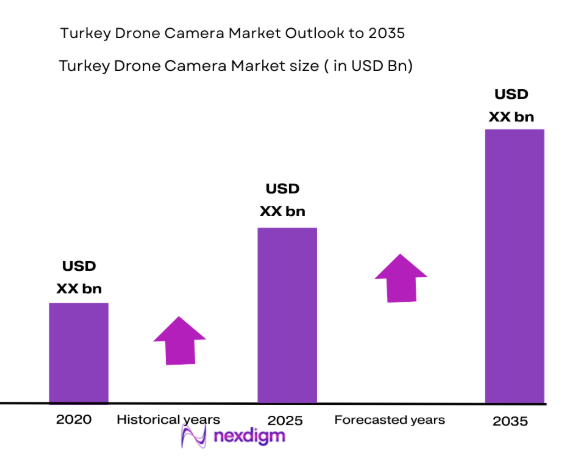
The Turkey drone camera market is experiencing significant growth, with an estimated market size of USD ~ billion. The growth is primarily driven by advancements in camera technology and increasing applications of drones in various sectors such as defense, agriculture, and infrastructure. With the integration of AI and high-resolution imaging, drone cameras have become essential for surveillance, real-time monitoring, and data analytics. These advancements have spurred the demand for cutting-edge drone camera systems across both military and commercial markets.
Cities like Istanbul and Ankara are at the forefront of Turkey’s drone camera market. Their role as technology hubs and their proximity to defense and aerospace industries contribute to their dominance. The Turkish government’s initiatives to support defense and technology development further drive the demand for advanced drone systems. The growing interest in drones for surveillance, agriculture, and environmental monitoring has led to the development of sophisticated camera systems designed to meet these diverse needs.
Market Segmentation
By Product Type:
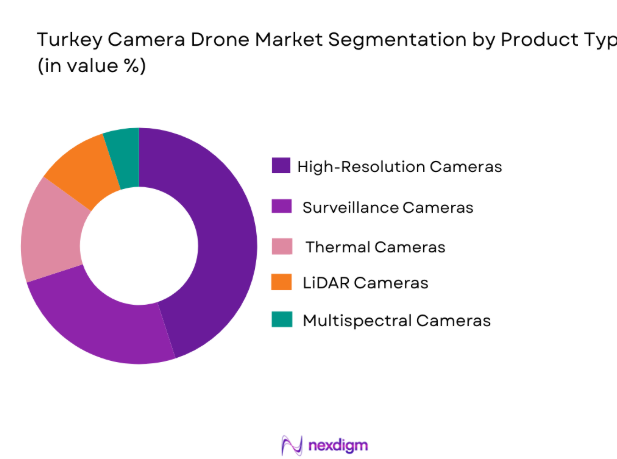
The Turkey drone camera market is segmented by product type into surveillance cameras, high-resolution cameras, thermal cameras, LiDAR cameras, and multispectral cameras. Recently, high-resolution cameras have taken the lead due to factors such as growing demand for detailed imagery in defense, agriculture, and infrastructure sectors. These cameras offer superior imaging capabilities, which are essential for precise data collection and monitoring. The continuous advancements in camera technology, coupled with a rise in the use of drones for both military and commercial applications, further fuel the growth of this sub-segment.
By Platform Type:
The Turkey drone camera market is segmented by platform type into fixed-wing drones, multi-rotor drones, hybrid drones, nano drones, and tethered drones. Recently, multi-rotor drones have taken a dominant market share due to their versatility and efficiency in both military and commercial applications. These drones are preferred for their ability to operate in confined spaces, stable flight performance, and the ease with which they can carry high-resolution camera systems. The ability to maneuver in urban environments and their use in industries such as surveillance, agriculture, and infrastructure monitoring further contributes to their market leadership.

Competitive Landscape
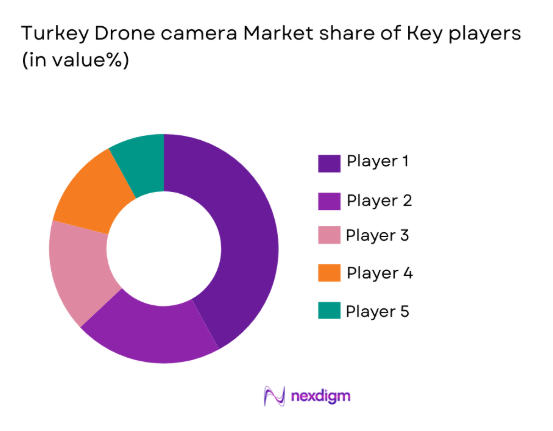
The competitive landscape of the Turkey drone camera market is characterized by a mix of established players and emerging startups. Major defense contractors and technology firms are consolidating their position through strategic partnerships and technological innovation. With the increasing demand for advanced drone camera systems, companies are focusing on enhancing their product offerings through AI and machine learning integration.
|
Company Name |
Establishment Year | Headquarters | Technology Focus | Market Reach | Key Products | Revenue | Key Technology |
| Aselsan | 1975 | Ankara, Turkey | ~ | ~ | ~ | ~ | ~ |
| Baykar | 1986 | Istanbul, Turkey | ~ | ~ | ~ | ~ | ~ |
| STM | 1991 | Ankara, Turkey | ~ | ~ | ~ | ~ | ~ |
| Turkish Aerospace Industries | 1984 | Ankara, Turkey | ~ | ~ | ~ | ~ | ~ |
| Roketsan | 1988 | Ankara, Turkey | ~ | ~ | ~ | ~ | ~ |
Turkey drone camera Market Analysis
Growth Drivers
Technological Advancements in Camera Systems:
The rapid advancement in camera technology has been a significant growth driver for the Turkey drone camera market. Recent innovations in high-resolution imaging, thermal imaging, and LiDAR sensors have opened new possibilities for drone applications in various sectors, including defense, agriculture, and infrastructure. As these technologies continue to evolve, the demand for drones equipped with sophisticated camera systems has risen. High-resolution cameras, for instance, enable drones to capture detailed images that can be analyzed for surveillance, monitoring, and mapping purposes. This has greatly enhanced the operational capabilities of drones, particularly in military surveillance and agricultural monitoring, making them invaluable tools for these industries. The integration of AI and machine learning into camera systems is further boosting the market, as it enables drones to process data in real-time, providing actionable insights with minimal human intervention.
Government Initiatives and Military Investments:
Another key driver for the Turkey drone camera market is the Turkish government’s increasing investment in defense technologies. The Turkish military has been at the forefront of adopting drone technology for surveillance, reconnaissance, and defense applications. With the country’s strategic geopolitical position, there is a growing need for advanced drone systems equipped with high-quality cameras to monitor borders, detect threats, and gather intelligence. The government’s support for local defense companies and initiatives such as funding for indigenous drone programs have also contributed to the expansion of the drone camera market. This investment is expected to continue driving demand for advanced camera systems, particularly in the military and defense sectors. Additionally, these investments are fostering innovation within the industry, enabling local companies to develop cutting-edge camera technologies that can compete on a global scale.
Market Challenges
Regulatory and Compliance Barriers:
One of the major challenges facing Turkey’s drone camera market is the stringent regulatory environment. The use of drones for commercial purposes, particularly in urban areas, is tightly regulated by the government, which imposes restrictions on flight paths, operational altitude, and airspace access. These regulations limit the flexibility of drone operations and can slow down the adoption of drone technologies in various sectors, including agriculture and infrastructure monitoring. For drone camera manufacturers, compliance with these regulations often requires significant investment in certifications and approvals, which can delay product launches and increase costs. Additionally, as drone technology evolves, governments must continuously update regulations to ensure safety and privacy, which can lead to uncertainty for businesses operating in the space.
Cybersecurity Concerns:
As drones are increasingly used for data collection and surveillance, the cybersecurity risks associated with drone operations are becoming more pronounced. Drone cameras often capture sensitive data, including surveillance footage and geospatial information, which can be vulnerable to hacking and data breaches. In particular, the military and government sectors, where drones are widely used for intelligence gathering, are at high risk of cyber-attacks. Ensuring the security of drone cameras and the data they collect is a significant challenge for manufacturers, who must implement robust encryption protocols and secure communication channels to protect against unauthorized access. The evolving nature of cyber threats means that drone camera companies must continuously upgrade their security measures to stay ahead of potential risks, adding complexity and cost to the development process.
Opportunities
Expansion of Drone Applications in Agriculture:
One of the most promising opportunities for the Turkey drone camera market lies in the agricultural sector. With Turkey’s vast agricultural land, drones equipped with high-resolution cameras are increasingly used for crop monitoring, precision agriculture, and environmental management. These drones can capture detailed imagery of crops, soil conditions, and irrigation systems, providing valuable insights to farmers for better decision-making. As the agricultural industry becomes more technology-driven, the demand for drone camera systems that offer real-time data analysis and high-quality imaging is expected to rise. Additionally, the Turkish government’s initiatives to support the modernization of agriculture through technology and innovation are likely to further drive the adoption of drone cameras in the sector.
Growth of Urban Surveillance and Smart City Initiatives:
The rise of smart cities in Turkey also presents significant opportunities for the drone camera market. As cities like Istanbul and Ankara continue to grow, there is an increasing need for advanced surveillance and infrastructure monitoring systems to manage urbanization efficiently. Drones equipped with camera systems are well-suited for tasks such as monitoring traffic, inspecting infrastructure, and managing urban environments in real time. The integration of AI-powered cameras that can process data and provide actionable insights will be particularly valuable in these smart city projects. This growth in demand for urban surveillance and smart city applications presents a lucrative opportunity for drone camera manufacturers to expand their product offerings and tap into new markets.
Future Outlook
The Turkey drone camera market is expected to continue growing over the next five years, driven by advancements in camera technology and increasing demand across defense, agriculture, and infrastructure sectors. With government support for innovation and an expanding military investment in drones, the market is well-positioned for further growth. The integration of AI and machine learning will continue to enhance the capabilities of drone cameras, allowing for more efficient data collection and analysis. Additionally, the development of regulations that support the commercial use of drones will foster increased adoption across various industries.
Major Players
- Aselsan
- Baykar
- STM
- Turkish Aerospace Industries
- Roketsan
- HAVELSAN
- Herkes İçin Teknoloji
- MKEK
- Onur Havacılık
- ALP Aviation
- Zorlu Holding
- Medetronik
- Dürr AG
- Honeywell Aerospace
Key Target Audience
- Investments and venture capitalist firms
- Government and regulatory bodies
- Military and defense contractors
- Commercial drone service providers
- Agricultural firms
- Infrastructure monitoring agencies
- Technology integration companies
- Smart city development firms
Research Methodology
Step 1: Identification of Key Variables
The first step involves identifying the key variables that influence the drone camera market, including technological advancements, regulatory changes, and demand from different sectors.
Step 2: Market Analysis and Construction
In this step, a detailed analysis of market trends, drivers, and challenges is conducted to construct a market model that provides insights into the future of the drone camera industry.
Step 3: Hypothesis Validation and Expert Consultation
The research hypotheses are validated through consultations with industry experts, market leaders, and stakeholders to ensure accuracy and relevance.
Step 4: Research Synthesis and Final Output
The final step involves synthesizing the research findings into a comprehensive market report that highlights trends, opportunities, and challenges, offering actionable insights for stakeholders.

- Executive Summary
- Research Methodology
(Definitions, Scope, Industry Assumptions, Market Sizing Approach, Primary & Secondary Research Framework, Data Collection & Verification Protocol, Analytic Models & Forecast Methodology, Limitations & Research Validity Checks)

- Market Definition and Scope
- Value Chain & Stakeholder Ecosystem
- Regulatory / Certification Landscape
- Sector Dynamics Affecting Demand
- Strategic Initiatives & Infrastructure Growth

- Growth Drivers
Increasing Use of Drones in Military and Surveillance Operations
Technological Advancements in Camera Systems for Drones
Government Initiatives Promoting Advanced Drone Technology
Rising Demand for Real-Time Data and High-Resolution Imaging
Growth of Commercial Applications in Agriculture and Infrastructure - Market Challenges
Regulatory Restrictions on Drone Usage
Cybersecurity and Data Privacy Concerns
High Costs Associated with High-Resolution Cameras
Limited Adoption of Advanced Drone Cameras in Rural Areas
Integration Issues with Existing Drone Systems - Market Opportunities
Expansion of Drones in Search and Rescue Operations
Adoption of Drones in Environmental Monitoring and Conservation
Growth in Demand for Drones in Real Estate and Construction - Trends
Integration of AI and Machine Learning in Drone Cameras
Increasing Popularity of Thermal and Multispectral Cameras
Demand for Autonomous Drones with Camera Systems
Enhancement of Real-Time Data Processing and Analytics
Use of Drones for Precision Agriculture and Monitoring - Government Regulations & Defense Policy
Data Protection and Privacy Regulations
Export Control and Compliance Policies
Government Funding and Grants for Drone Technologies - SWOT Analysis
- Stakeholder and Ecosystem Analysis
- Porter’s Five Forces Analysis
- Competition Intensity and Ecosystem Mapping

- By Market Value, 2020-2025
- By Installed Units, 2020-2025
- By Average System Price, 2020-2025
- By System Complexity Tier, 2020-2025

- By System Type (In Value%)
Surveillance Cameras
High-Resolution Cameras
Thermal Cameras
LiDAR Cameras
Multispectral Cameras - By Platform Type (In Value%)
Fixed-Wing Drones
Multi-Rotor Drones
Hybrid Drones
Nano Drones
Tethered Drones - By Fitment Type (In Value%)
On-Premise Solutions
Cloud-Based Solutions
Hybrid Solutions
Modular Solutions
Integrated Solutions - By EndUser Segment (In Value%)
Military and Defense
Commercial Enterprises
Government Agencies
Agriculture
Energy and Utilities - By Procurement Channel (In Value%)
Direct Procurement
Government Tenders
Private Sector Procurement
Online Bidding Platforms
Third-Party Distributors - By Material / Technology (In Value%)
Carbon Fiber Materials
Aluminum Alloys
Lithium Batteries
AI and Machine Learning
Communication Technologies

- Market structure and competitive positioning
- Market share snapshot of major players
- Cross Comparison Parameters (System Type, Platform Type, End-user Segment, Procurement Channel, Material/Technology)
SWOT Analysis of Key Competitors
Pricing & Procurement Analysis
Key Players
Aselsan
Baykar
STM
Turkish Aerospace Industries
Roketsan
HAVELSAN
Herkes İçin Teknoloji
MKEK
Onur Havacılık
ALP Aviation
Zorlu Holding
Medetronik
Dürr AG
Honeywell Aerospace

- Demand for Drones in Agricultural Monitoring and Crop Management
- Growing Military and Defense Applications of Drone Cameras
- Commercial Usage of Drone Cameras in Infrastructure Inspection
- Use of Drone Cameras for Environmental Surveillance and Research

- Forecast Market Value, 2026-2035
- Forecast Installed Units, 2026-2035
- Price Forecast by System Tier, 2026-2035
- Future Demand by Platform, 2026-2035


 Request a Sample
 Ask for Customization
 Get a Quote
 Enquire Now