

 Download PDF
 Download PDF
Market Overview
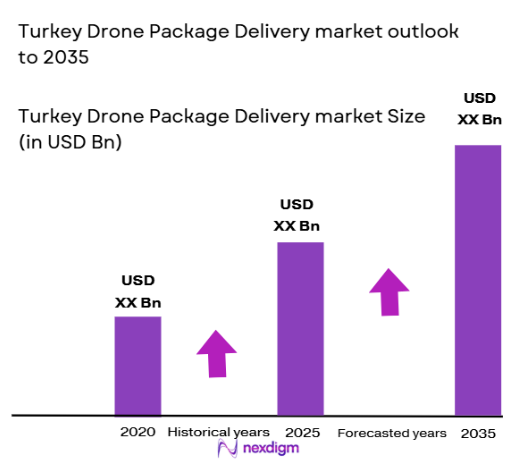
The Turkey Drone Package Delivery market is valued at approximately USD ~ billion based on a recent historical assessment. The market is driven by the rapid adoption of drones in logistics and the growing demand for faster, more efficient delivery methods. Advances in drone technology, such as enhanced battery life, autonomous navigation, and AI-driven flight systems, are fueling this growth. Additionally, government initiatives supporting drone regulations and infrastructure development contribute significantly to the market’s expansion.
Turkey is one of the leading countries in the adoption of drone delivery systems due to its strategic location, growing e-commerce sector, and favorable regulatory environment. Major cities like Istanbul, Ankara, and Izmir have seen an increase in drone usage for last-mile delivery, with companies aiming to reduce traffic congestion and improve delivery times. The country’s supportive stance on drone technology and its robust infrastructure make it a prime location for innovation in the drone package delivery sector.
Market Segmentation
By Product Type:
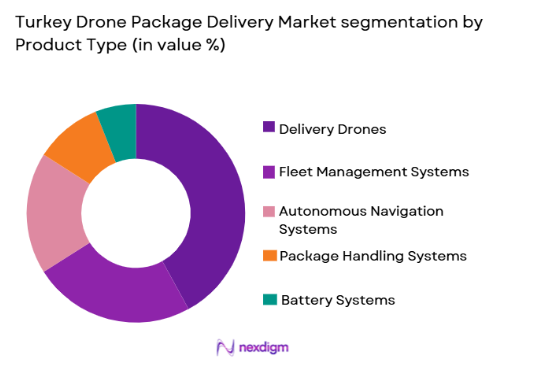
The Turkey Drone Package Delivery market is segmented by product type into various sub-segments. Recently, delivery drones have a dominant market share due to factors such as demand for faster, more efficient delivery solutions, extensive e-commerce growth, and significant advancements in drone technology, including enhanced battery systems and autonomous navigation. Delivery drones are preferred for their ability to carry parcels in urban and rural areas efficiently, leveraging regulatory support for commercial operations. The growing focus on sustainability and reducing carbon emissions also contributes to the dominance of delivery drones.
By Platform Type:
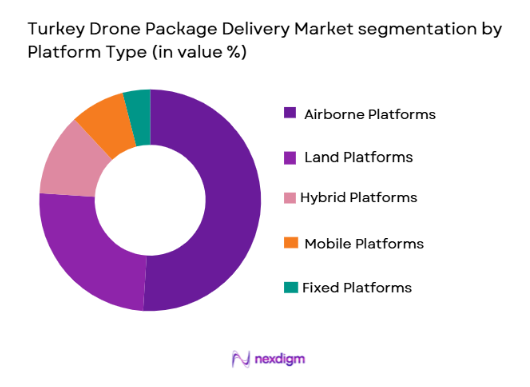
The Turkey Drone Package Delivery market is segmented by platform type into multiple sub-segments. Airborne platforms dominate the market due to their speed, efficiency, and capability to handle a wide range of deliveries, from small packages to large shipments. These platforms are critical for overcoming geographic and infrastructure challenges, enabling direct deliveries to consumers in urban and remote locations. Airborne platforms are also favored for their ability to quickly adapt to regulatory changes and their integration with AI systems for real-time tracking and autonomous navigation.
Competitive Landscape
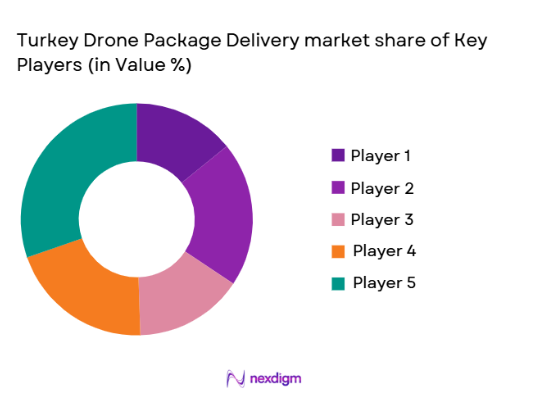
The competitive landscape of the Turkey Drone Package Delivery market is characterized by a combination of established players and innovative startups. Consolidation is happening as larger companies seek to expand their capabilities in drone technology and delivery services. Major players influence the market by setting the bar for technological innovation and regulatory compliance, while also forming strategic partnerships to expand their market reach. Startups are pushing the boundaries of technology and service offerings, providing competition that drives further development.
| Company Name | Establishment Year | Headquarters | Technology Focus | Market Reach | Key Products | Revenue (USD) | Additional Parameter |
| Turkish Aerospace Industries | 1984 | Ankara, Turkey | ~ | ~ | ~ | ~ | ~ |
| Baykar | 1986 | Istanbul, Turkey | ~ | ~ | ~ | ~ | ~ |
| Aselsan | 1975 | Ankara, Turkey | ~ | ~ | ~ | ~ | ~ |
| PeraDrone | 2015 | Istanbul, Turkey | ~ | ~ | ~ | ~ | ~ |
| Flytrex | 2013 | Tel Aviv, Israel | ~ | ~ | ~ | ~ | ~ |
Turkey Drone Package Delivery Market Analysis
Growth Drivers
Technological Advancements in Drone Systems:
The rapid development of drone technologies is one of the major drivers of the Turkey Drone Package Delivery market. Technological advancements, including improvements in battery life, navigation systems, and AI-driven solutions, have allowed drones to carry heavier payloads, cover longer distances, and operate more autonomously. These technological improvements reduce delivery times, increase efficiency, and lower operational costs, making drones an increasingly viable solution for last-mile delivery. Moreover, advances in communication technologies, such as 5G, further enhance the ability of drones to communicate in real-time, allowing for better coordination and efficiency in deliveries. These improvements are fueling the adoption of drones across various sectors, particularly in e-commerce and logistics, where there is a growing demand for faster and more efficient delivery solutions. As technology continues to evolve, the ability to deploy drones on a wider scale and in more regions increases, accelerating market growth. Additionally, the integration of machine learning and AI algorithms into drone flight systems is contributing to the growth of the sector by enabling autonomous operations, reducing human error, and increasing delivery accuracy. The lower cost of drone systems, due to these technological advancements, is expected to drive widespread adoption in the coming years.
Government Regulations and Infrastructure Development:
Government regulations and infrastructure development are crucial factors driving the growth of the Turkey Drone Package Delivery market. The Turkish government has been proactive in creating a regulatory framework that supports the safe and effective use of drones for commercial purposes. This regulatory support includes clear guidelines for airspace management, safety standards, and the certification of drone operators. Additionally, the Turkish government is investing in the necessary infrastructure, such as droneports and air corridors, to facilitate drone operations. These initiatives are aimed at ensuring the safe integration of drones into national airspace and supporting the development of a sustainable drone delivery ecosystem. Regulatory frameworks are also promoting innovation by allowing companies to test and deploy new drone technologies under controlled conditions, which accelerates market growth. The collaboration between public and private sectors in infrastructure development helps overcome logistical challenges and creates a more favorable environment for drone-based delivery systems. As regulations continue to evolve, they are expected to create new opportunities for market players and foster growth in the industry.
Market Challenges
High Operational Costs:
One of the key challenges facing the Turkey Drone Package Delivery market is the high operational costs associated with drone systems. Despite the technological advancements in drone manufacturing, the cost of drones remains a significant barrier for many businesses looking to implement drone delivery solutions. The high price of drones, coupled with maintenance and training expenses, makes it difficult for smaller businesses or startups to adopt drone delivery systems. Additionally, drones require specialized infrastructure such as landing pads, battery charging stations, and safety measures, which add to the overall cost of operation. While operational costs are expected to decrease over time as technology becomes more affordable and scalable, they remain a major challenge for companies aiming to enter the market. To offset these costs, businesses must find ways to optimize their drone fleets, improve operational efficiencies, and scale their operations to achieve profitability. However, this process requires significant investment, which may be challenging for companies with limited financial resources.
Security and Privacy Concerns:
Security and privacy concerns are significant challenges in the Turkey Drone Package Delivery market. The use of drones for delivering packages raises concerns about data privacy, especially when drones are carrying sensitive consumer information or interacting with personal devices. The collection and transmission of data during drone operations, such as GPS coordinates and tracking information, create potential vulnerabilities for cyber-attacks. Moreover, drones could be targeted for theft or sabotage, further exacerbating security concerns. As drone deliveries become more common, the need for robust cybersecurity measures and data protection policies becomes critical. Privacy concerns also extend to airspace management, as drones often operate in densely populated urban areas, raising questions about surveillance and the potential for unauthorized monitoring of individuals. Addressing these concerns through stricter regulations, improved cybersecurity protocols, and transparent data handling practices is essential to gaining public trust and ensuring the continued growth of the market. Companies that can effectively address these security and privacy issues will be better positioned to succeed in the market.
Opportunities
Expansion of Drone Delivery in E-commerce:
The expansion of drone delivery in the e-commerce sector presents a significant opportunity for growth in the Turkey Drone Package Delivery market. The e-commerce industry has experienced rapid growth, driven by increasing consumer demand for fast and convenient delivery options. As the market for online shopping continues to expand, there is a growing need for innovative delivery solutions that can meet consumer expectations for speed and efficiency. Drone delivery offers a promising solution by enabling faster delivery times, especially in congested urban areas where traditional delivery methods can be slow and costly. E-commerce giants are already experimenting with drone-based delivery services to offer customers a more efficient shopping experience. As drone technology advances and regulations evolve, e-commerce companies are expected to invest more in drone fleets, leading to increased adoption across the sector. The use of drones in e-commerce will not only reduce operational costs but also enhance customer satisfaction by enabling rapid delivery, creating a competitive advantage for companies that implement these systems early. Additionally, drones have the potential to reduce the environmental impact of delivery services by offering a more sustainable alternative to traditional delivery trucks.
Integration with Autonomous Technologies:
The integration of drones with autonomous technologies presents a significant opportunity in the Turkey Drone Package Delivery market. The development of autonomous drones, which can navigate and operate without human intervention, is poised to revolutionize the logistics industry. Autonomous drones can reduce the need for human pilots, lowering operational costs and increasing delivery efficiency. By combining drones with autonomous technologies such as AI-driven flight systems and machine learning algorithms, drone fleets can operate more safely, predictably, and reliably. This technology also enables drones to make real-time decisions, improving their ability to adapt to dynamic environments such as changing weather conditions or sudden obstacles. Furthermore, autonomous drones can operate continuously without the need for breaks, leading to greater delivery capacity and reduced delivery times. The integration of autonomous technologies will enhance the scalability of drone delivery systems, allowing businesses to expand their operations and serve more customers. As regulatory frameworks evolve to accommodate autonomous operations, there will be a growing opportunity for market players to capitalize on the benefits of autonomous drone technology, further accelerating market growth.
Future Outlook
Over the next five years, the Turkey Drone Package Delivery market is expected to witness significant growth driven by technological advancements, regulatory support, and the increasing demand for fast delivery solutions. The market will benefit from continued innovations in drone technology, such as enhanced battery life, autonomous systems, and AI integration. Governments are likely to introduce more supportive regulations, facilitating the expansion of drone services. As urbanization increases, demand for efficient last-mile delivery solutions will drive the adoption of drone-based systems, particularly in congested cities. The market is also expected to see greater investment from e-commerce and logistics companies, further accelerating the growth of drone delivery services.
Major Players
- Turkish Aerospace Industries
- Baykar
- Aselsan
- PeraDrone
- Flytrex
- Matternet
- Zipline
- DHL
- UPS
- Amazon Prime Air
- Skyports
- DroneUp
- Wing
- Swoop Aero
- FedEx
Key Target Audience
- Investments and venture capitalist firms
- Government and regulatory bodies
- E-commerce platforms
- Logistics providers
- Drone manufacturers
- Retailers
- Private sector technology firms
- Supply chain management companies
Research Methodology
Step 1: Identification of Key Variables
This step involves defining the critical variables that influence the market, including product types, platform types, and technological advancements. It also includes identifying key drivers and challenges.
Step 2: Market Analysis and Construction
A comprehensive analysis of market trends, segmentation, and demand patterns is conducted, using both primary and secondary research methods. Data is then structured to build a detailed market model.
Step 3: Hypothesis Validation and Expert Consultation
The market model is validated by consulting with industry experts, stakeholders, and relevant market participants. This ensures the reliability and accuracy of the forecast.
Step 4: Research Synthesis and Final Output
The research findings are synthesized into a comprehensive report, including market forecasts, segmentation analysis, and key insights. The final output is reviewed and refined for accuracy.

- Executive Summary
- Research Methodology (Definitions, Scope, Industry Assumptions, Market Sizing Approach, Primary & Secondary Research Framework, Data Collection & Verification Protocol, Analytic Models & Forecast Methodology, Limitations & Research Validity Checks)

- Market Definition and Scope
- Value Chain & Stakeholder Ecosystem
- Regulatory / Certification Landscape
- Sector Dynamics Affecting Demand
- Strategic Initiatives & Infrastructure Growth

- Growth Drivers
Advancements in Drone Technology
E-commerce Growth and Last-Mile Delivery Demand
Government Support for Drone Infrastructure Development - Market Challenges
Regulatory Hurdles in Drone Operations
High Initial Investment Costs and Maintenance
Security and Privacy Concerns in Drone Deliveries - Market Opportunities
E-commerce Logistics Integration
Expansion of Drone Services in Healthcare
Government and Military Sector Collaborations - Trends
Increased Adoption of AI and Machine Learning
Focus on Sustainable and Eco-friendly Drone Solutions
Growth in Urban Air Mobility Solutions
Advancements in Autonomous Drone Operations
Expansion of Drone Delivery in Rural Areas - Government Regulations & Defense Policy
Drone Certification and Airspace Management Regulations
Data Privacy and Security Policies
Government Funding for UAV Technology Development - SWOT Analysis
- Stakeholder and Ecosystem Analysis
- Porter’s Five Forces Analysis
- Competition Intensity and Ecosystem Mapping

- By Market Value, 2020-2025
- By Installed Units, 2020-2025
- By Average System Price, 2020-2025
- By System Complexity Tier, 2020-2025

- By System Type (In Value%)
Autonomous Delivery Drones
Cargo Drones
Heavy Payload Drones
Light Payload Drones
Hybrid Delivery Systems - By Platform Type (In Value%)
Fixed-Wing Drones
Rotary-Wing Drones
Vertical Takeoff and Landing (VTOL) Drones
Hybrid Drones
Multirotor Drones - By Fitment Type (In Value%)
Drone-as-a-Service (DaaS)
On-Premise Drone Solutions
Fleet Management Solutions
Integrated Drone Systems
Stand-Alone Drones - By EndUser Segment (In Value%)
E-commerce & Retail
Healthcare & Pharmaceuticals
Logistics Providers
Government & Military
Agriculture & Forestry - By Procurement Channel (In Value%)
Direct Procurement
Public Tenders
Private Sector Procurement
Online Bidding Platforms
Third-party Distributors - By Material / Technology (in Value%)
Carbon Fiber Materials
Lithium-Polymer Batteries
AI and Machine Learning Technology
Autonomous Navigation Systems
Internet of Things (IoT) Integration

- Market structure and competitive positioning
- Market share snapshot of major players
- CrossComparison Parameters (System Type, Platform Type, End-User Segment, Procurement Channel, Material/Technology, Fitment Type, Technology Adoption, Cost Efficiency, Payload Capacity, Regulatory Compliance)
- SWOT Analysis of Key Players
- Pricing & Procurement Analysis
- Key Players
Turkey Aerospace Industries
STM Turkey
Flytrex
Urban Aeronautics
Prime Air (Amazon)
Parrot Drones
Drone Volt
AeroVironment
Thales Group
UPS Flight Forward
Zipline
Boeing Insitu
Matternet
Autonomous Flight Technologies

- E-commerce demand for last-mile delivery solutions
- Healthcare sector’s need for urgent deliveries
- Logistics companies seeking efficiency improvements
- Government agencies exploring drones for surveillance

- Forecast Market Value, 2026-2035
- Forecast Installed Units, 2026-2035
- Price Forecast by System Tier, 2026-2035
- Future Demand by Platform, 2026-2035


 Request a Sample
 Ask for Customization
 Get a Quote
 Enquire Now