
 Download PDF
 Download PDF
Market Overview
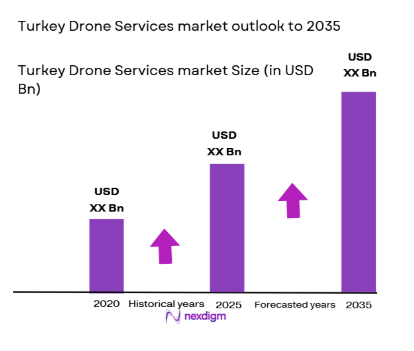
The Turkey Drone Services market is valued at approximately USD ~billion, based on a recent historical assessment. This market is primarily driven by advancements in drone technologies, including AI-driven solutions, as well as increasing demand for drones across multiple industries, such as agriculture, logistics, and infrastructure inspection. Government policies encouraging drone adoption and reducing regulatory barriers have also contributed to market expansion, further boosting its potential in the coming years. The shift towards automation in various sectors and the rise in drone deliveries are significant factors that will drive future market growth.
The dominant players in the Turkey Drone Services market are concentrated in urban regions, particularly in cities like Istanbul and Ankara. These cities have become hubs for technological innovation, supported by strong infrastructure, proximity to tech firms, and government initiatives to support drone-related advancements. Additionally, these areas benefit from a high concentration of industries such as logistics, agriculture, and media, which have rapidly adopted drone technology. The growing demand for drones in public safety and emergency response further strengthens these cities’ dominance in the market.
Market Segmentation
By Product Type
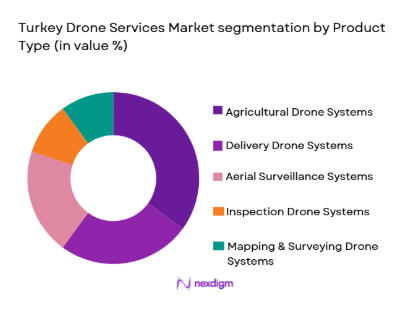
The Turkey Drone Services market is segmented by product type into Aerial Surveillance Systems, Delivery Drone Systems, Agricultural Drone Systems, Inspection Drone Systems, and Mapping & Surveying Drone Systems. Recently, the agricultural drone systems sub-segment has a dominant market share due to factors such as the increasing need for efficient crop monitoring, pest control, and precision farming in Turkey’s vast agricultural landscape. The integration of AI and machine learning in drones for precision agriculture has significantly enhanced the value proposition for farmers, making these drones an essential tool for improving crop yield and reducing operational costs. As the government continues to support modern agricultural practices, demand for these systems is expected to continue growing.
By Platform Type
The Turkey Drone Services market is segmented by platform type into Fixed-wing Platforms, Rotary-wing Platforms, Hybrid Platforms, Passenger Drone Platforms, and Autonomous Platforms. Fixed-wing platforms dominate the market due to their longer flight durations and greater efficiency for tasks such as surveillance, mapping, and surveying. The extended range and ability to cover larger areas make fixed-wing drones highly suitable for agricultural and infrastructure applications. As demand for large-scale aerial surveillance and data collection grows, fixed-wing platforms remain the preferred choice, especially for industries requiring long-duration flight capabilities.

Competitive Landscape
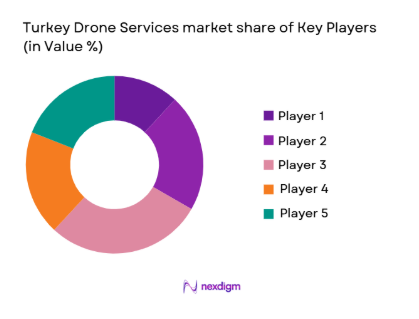
The competitive landscape of the Turkey Drone Services market is characterized by a mix of established players and emerging startups. Major players continue to innovate and consolidate their position in the market, with new entrants focusing on specialized services, such as agricultural drones and delivery systems. The influence of leading companies is significant, as they drive the technological advancements and foster industry partnerships, contributing to the market’s overall growth. The increasing availability of funding, particularly from government-backed initiatives, has led to accelerated development in drone technology and services.
| Company Name | Establishment Year | Headquarters | Technology Focus | Market Reach | Key Products | Revenue (USD) | Market-specific Parameter |
| Turkish Aerospace | 1984 | Ankara, Turkey | ~ | ~ | ~ | ~ | ~ |
| Baykar Makina | 1986 | Istanbul, Turkey | ~ | ~ | ~ | ~ | ~ |
| Aselsan | 1975 | Ankara, Turkey | ~ | ~ | ~ | ~ | ~ |
| Vestel Defense | 1984 | Manisa, Turkey | ~ | ~ | ~ | ~ | ~ |
| STM | 1991 | Istanbul, Turkey | ~ | ~ | ~ | ~ | ~ |
Turkey Drone Services Market Analysis
Growth Drivers
Government Support and Regulatory Easing
Government backing plays a crucial role in the development of the Turkey Drone Services market. The Turkish government has been instrumental in creating a favorable regulatory environment that encourages the adoption of drone technology. This support includes easing airspace regulations, providing subsidies for drone manufacturers, and creating incentives for industries to integrate drones into their operations. With these efforts, Turkey is gradually becoming a leading player in the global drone market. As regulatory hurdles decrease, companies can innovate and deploy more sophisticated drones in sectors like agriculture, logistics, and infrastructure inspection. The increased adoption of drones across industries is largely a result of the regulatory measures implemented by the government, which is expected to remain a key driver of growth in the coming years. Government-led initiatives will continue to promote innovation and attract investment, further enhancing the sector’s overall growth.
Technological Advancements and AI Integration
Another key growth driver for the Turkey Drone Services market is the continuous advancements in drone technology, especially in artificial intelligence (AI) and machine learning. These technologies are revolutionizing the capabilities of drones, making them more autonomous, efficient, and capable of performing complex tasks. Drones equipped with AI can analyze vast amounts of data in real time, making them highly valuable for sectors such as agriculture, surveillance, and logistics. For example, AI-powered agricultural drones can monitor crop health, assess soil conditions, and even perform pest control autonomously. As these technologies continue to evolve, the demand for advanced drones with AI capabilities will grow, positioning Turkey as a major player in the global drone services market.
Market Challenges
High Initial Capital Investment
One of the primary challenges facing the Turkey Drone Services market is the high initial capital investment required for both drone equipment and infrastructure. While drones have become increasingly affordable in some sectors, the advanced systems required for industrial applications like agriculture, logistics, and infrastructure inspection remain expensive. The upfront costs for drones, as well as the need for specialized training and maintenance, can be a significant barrier for small and medium-sized enterprises (SMEs) looking to enter the market. In addition, while drones have the potential to provide long-term savings, the capital-intensive nature of the technology can deter companies from making the initial investment. Overcoming this financial barrier is crucial for the market to reach its full potential, and as the technology matures, costs may decrease, but for now, this remains a key challenge.
Data Security and Privacy Concerns
The use of drones in surveillance, inspection, and delivery operations raises significant data security and privacy concerns. Drones collect large amounts of data, including images, videos, and GPS coordinates, all of which are subject to potential misuse or cyberattacks. As the market expands, both consumers and businesses will require stronger data protection measures to prevent unauthorized access to sensitive information. In particular, drones used in public safety, agriculture, and infrastructure monitoring generate valuable data that, if compromised, could have serious consequences. Addressing these concerns will require both stronger regulatory frameworks and technological solutions to secure drone data. The challenge of ensuring privacy and data security while maintaining the benefits of drone usage will continue to hinder market growth unless robust solutions are implemented.
Opportunities
Emerging Drone Delivery Systems
One of the key opportunities for growth in the Turkey Drone Services market lies in the increasing demand for drone delivery systems. As e-commerce continues to expand, especially with the rise of online shopping platforms, the need for faster and more efficient delivery methods has grown. Drones offer a promising solution to this challenge by reducing delivery times, especially in urban areas with high traffic congestion. Turkey is witnessing increased investment in drone-based delivery solutions, particularly in major cities like Istanbul, where traffic and logistical challenges are a concern. The integration of drones into the delivery infrastructure will not only reduce delivery costs but also offer consumers faster service. This growing trend represents a significant opportunity for companies operating in the drone services market, especially those focused on last-mile delivery solutions.
Growth in Agricultural Applications
The agricultural sector presents a major opportunity for the Turkey Drone Services market, with increasing demand for precision farming solutions. Drones equipped with sensors, cameras, and AI systems can monitor crop health, assess soil conditions, and even apply pesticides and fertilizers. These advancements enable farmers to increase crop yields while reducing the environmental impact of farming practices. As the Turkish government continues to support agricultural innovation, and as farmers increasingly adopt precision agriculture techniques, the demand for agricultural drones is expected to grow substantially. Drones offer farmers an efficient and cost-effective way to manage their crops, monitor yields, and optimize their operations. As awareness of these benefits increases, this segment is set to expand rapidly, positioning the agriculture-focused drone services market for significant growth in the coming years.
Future Outlook
The future outlook for the Turkey Drone Services market is optimistic, with strong growth projected over the next five years. Technological advancements in drone capabilities, including AI, automation, and long-range flight, are expected to drive significant demand across various industries, such as agriculture, logistics, and public safety. Additionally, government policies supporting innovation and infrastructure development will continue to create a favorable environment for drone services. Regulatory support for expanding drone operations will further bolster market growth, providing new opportunities for service providers. As the adoption of drones accelerates, the market is expected to experience continued evolution, with emerging applications, particularly in delivery and environmental monitoring, playing a crucial role in shaping the future of the industry.
Major Players
- Turkish Aerospace Industries
- Baykar Makina
- Aselsan
- Vestel Defense
- STM
- DJI
- Parrot
- AeroVironment
- Skydio
- Northrop Grumman
- Lockheed Martin
- Boeing
- Elbit Systems
- Textron
- General Atomics
Key Target Audience
- Investments and venture capitalist firms
- Government and regulatory bodies
- Drone manufacturers and developers
- Drone service providers
- Agriculture and farming industry stakeholders
- Logistics and transportation companies
- Public safety and law enforcement agencies
- Environmental monitoring and conservation agencies
Research Methodology
Step 1: Identification of Key Variables
Identifying key market variables, such as demand patterns, regulatory policies, and technological advancements, forms the foundation of the research. These variables help define the scope and direction of the study.
Step 2: Market Analysis and Construction
Analyzing the market by segmenting it into relevant categories, such as product type, platform type, and fitment type, allows for a comprehensive understanding of the market dynamics and growth potential.
Step 3: Hypothesis Validation and Expert Consultation
Consulting with industry experts, including drone manufacturers, government representatives, and market analysts, ensures the accuracy and relevance of the research hypothesis. Expert input validates the assumptions used in the market models.
Step 4: Research Synthesis and Final Output
Synthesizing the data gathered from market analysis, expert consultations, and secondary research allows for the development of actionable insights. The final report provides an in-depth overview of the market and its future prospects.

- Executive Summary
- Research Methodology (Definitions, Scope, Industry Assumptions, Market Sizing Approach, Primary & Secondary Research Framework, Data Collection & Verification Protocol, Analytic Models & Forecast Methodology, Limitations & Research Validity Checks)

- Market Definition and Scope
- Value Chain & Stakeholder Ecosystem
- Regulatory / Certification Landscape
- Sector Dynamics Affecting Demand
- Strategic Initiatives & Infrastructure Growth

- Growth Drivers
Rising Demand for Delivery Drones
Technological Advancements in Drone Sensors and AI
Increased Investment in Agricultural Drones
Government Support and Regulatory Easing
Growing Adoption of Drones in Infrastructure Inspection - Market Challenges
High Initial Investment for Commercial Drone Systems
Regulatory and Compliance Barriers
Limited Battery Life and Range Issues
Safety and Privacy Concerns
Lack of Skilled Workforce for Drone Operations - Market Opportunities
Expansion of Drone Usage in Logistics & Delivery
Integration of AI and Automation in Drone Services
Growing Demand for Environmental and Agricultural Monitoring - Trends
Rise in Drone Use for Autonomous Delivery Services
Increasing Investment in Drone-Based Infrastructure Inspection
Advancements in Drone Battery Technology
Integration of Drones with IoT for Smart Cities
Growing Adoption of Drone Services in Disaster Management - Government Regulations & Defense Policy
Regulation of Drone Flight Altitudes and Airspace Usage
Cybersecurity Standards for Drone Services
Government Funding for Drone Technology Research - SWOT Analysis
- Stakeholder and Ecosystem Analysis
- Porter’s Five Forces Analysis
- Competition Intensity and Ecosystem Mapping

- By Market Value, 2020-2025
- By Installed Units, 2020-2025
- By Average System Price, 2020-2025
- By System Complexity Tier, 2020-2025

- Growth Drivers
Rising Demand for Delivery Drones
Technological Advancements in Drone Sensors and AI
Increased Investment in Agricultural Drones
Government Support and Regulatory Easing
Growing Adoption of Drones in Infrastructure Inspection - Market Challenges
High Initial Investment for Commercial Drone Systems
Regulatory and Compliance Barriers
Limited Battery Life and Range Issues
Safety and Privacy Concerns
Lack of Skilled Workforce for Drone Operations - Market Opportunities
Expansion of Drone Usage in Logistics & Delivery
Integration of AI and Automation in Drone Services
Growing Demand for Environmental and Agricultural Monitoring - Trends
Rise in Drone Use for Autonomous Delivery Services
Increasing Investment in Drone-Based Infrastructure Inspection
Advancements in Drone Battery Technology
Integration of Drones with IoT for Smart Cities
Growing Adoption of Drone Services in Disaster Management - Government Regulations & Defense Policy
Regulation of Drone Flight Altitudes and Airspace Usage
Cybersecurity Standards for Drone Services
Government Funding for Drone Technology Research - SWOT Analysis
- Stakeholder and Ecosystem Analysis
- Porter’s Five Forces Analysis
- Competition Intensity and Ecosystem Mapping

- Market share snapshot of major players
- Cross Comparison Parameters (System Type, Platform Type, Procurement Channel, EndUser Segment, Fitment Type)
- SWOT Analysis of Key Players
- Pricing & Procurement Analysis
- Key Players
Turkish Aerospace Industries
Baykar Makina
Vestel Defense
Aselsan
STM
TUSAŞ
Garanti BBVA
Zebra Medical Vision
Elbit Systems
Boeing
Lockheed Martin
Northrop Grumman
DJI
Parrot
Skydio

- Agriculture Increasingly Adopts Drones for Crop Monitoring and Pest Control
- Logistics Sector Investing in Drone Delivery to Enhance Efficiency
- Public Safety Uses Drones for Search and Rescue Operations
- Infrastructure Inspections Moving Towards Autonomous Drone Systems

- Forecast Market Value, 2026-2035
- Forecast Installed Units, 2026-2035
- Price Forecast by System Tier, 2026-2035
- Future Demand by Platform, 2026-2035


 Request a Sample
 Ask for Customization
 Get a Quote
 Enquire Now