
 Download PDF
 Download PDF
Market Overview
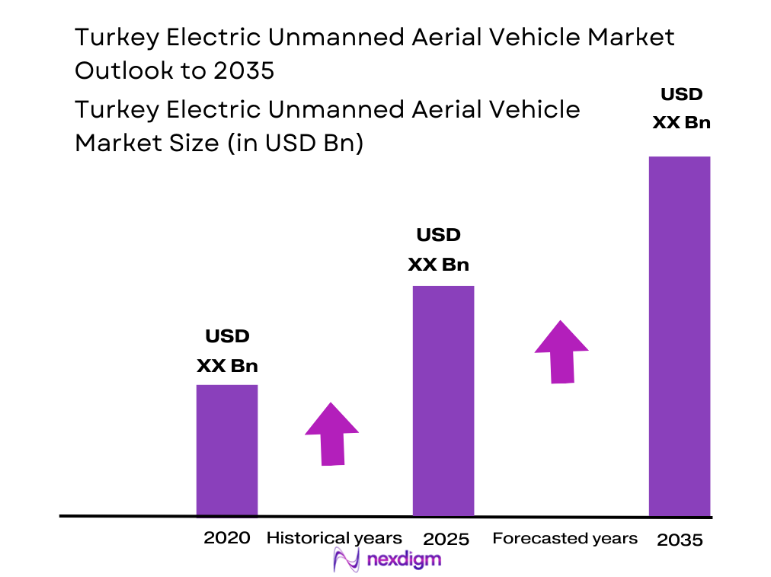
The Turkey Electric Unmanned Aerial Vehicle market is projected to reach approximately USD ~ billion, based on a recent historical assessment. The market growth is driven by advancements in electric propulsion technologies, government investments in defense and security, and the increasing adoption of UAVs for both military and commercial applications. Technological advancements in AI, autonomous systems, and communication infrastructure further support the sector’s expansion, as they enhance the functionality and efficiency of electric UAVs.
Turkey has emerged as a dominant player in the electric unmanned aerial vehicle market due to its growing defense industry, strategic investments in advanced technologies, and strong governmental support. The country’s focus on autonomous systems, combined with a robust manufacturing ecosystem and established aerospace companies, provides a competitive edge in UAV production. Additionally, military demand for surveillance, reconnaissance, and combat drones plays a significant role in the country’s dominance.
Market Segmentation
By Product Type
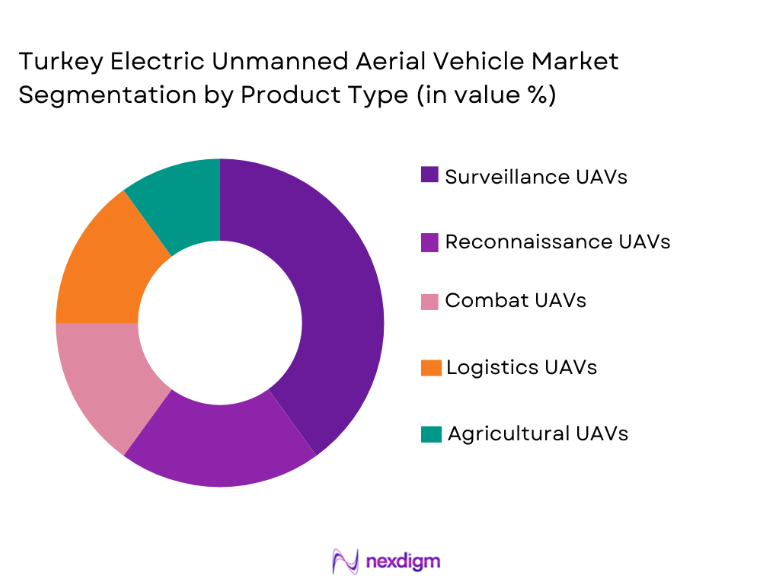
The Turkey Electric Unmanned Aerial Vehicle market is segmented by product type into surveillance UAVs, reconnaissance UAVs, combat UAVs, logistics UAVs, and agricultural UAVs. Recently, surveillance UAVs have a dominant market share due to their increasing application in both military and commercial sectors. Surveillance UAVs are in high demand owing to their ability to provide real-time aerial monitoring for military operations, border security, and agricultural activities. The rise of electric propulsion systems, which offer longer flight times and lower operational costs, has further boosted the adoption of surveillance UAVs in these applications.
By Platform Type
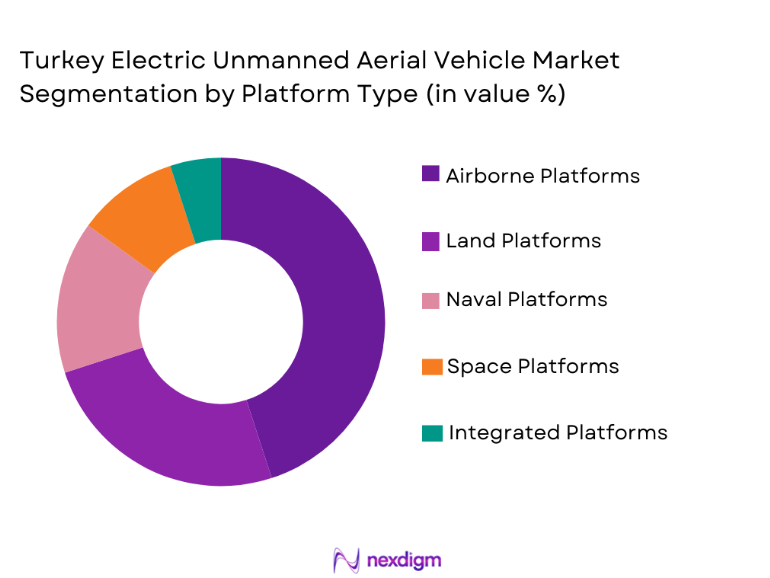
The Turkey Electric Unmanned Aerial Vehicle market is segmented by platform type into land platforms, airborne platforms, naval platforms, space platforms, and integrated platforms. Airborne platforms dominate the market due to their versatility in performing a wide range of functions such as surveillance, reconnaissance, and intelligence gathering. The development of high-end electric-powered airborne platforms capable of carrying significant payloads while maintaining longer flight durations has driven their popularity. Additionally, military forces’ preference for these platforms in various operations contributes to their dominance in the market.
Competitive Landscape
The Turkey Electric Unmanned Aerial Vehicle market is highly competitive, with several key players leading the innovation and production of UAV systems. These players are consolidating the market with strategic partnerships, mergers, and acquisitions to enhance their technological capabilities and extend their market reach. The influence of major aerospace and defense companies also plays a crucial role in shaping the competitive landscape by driving advancements in UAV technologies and electric propulsion systems.
| Company Name | Establishment Year | Headquarters | Technology Focus | Market Reach | Key Products | Revenue | Additional Parameter |
| Baykar Makina | 1986 | Istanbul, Turkey | ~
|
~
|
~
|
~
|
~
|
| Turkish Aerospace Industries (TAI) | 1984 | Ankara, Turkey | ~ | ~
|
~
|
~
|
~
|
| STM | 1991 | Istanbul, Turkey | ~ | ~
|
~
|
~
|
~
|
| Aselsan | 1975 | Ankara, Turkey | ~ | ~
|
~
|
~
|
~
|
| Roketsan | 1988 | Ankara, Turkey | ~ | ~
|
~
|
~
|
~
|
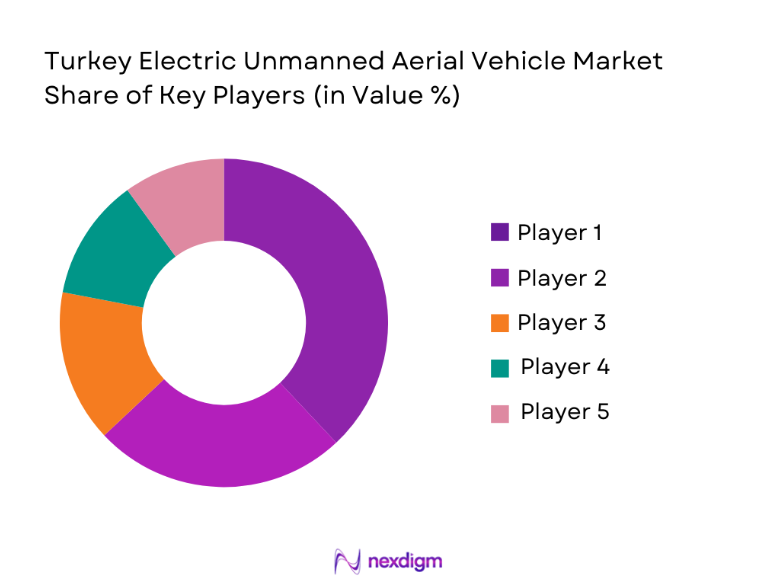
Turkey Electric Unmanned Aerial Vehicle Market Analysis
Growth Drivers
Technological Advancements in Electric Propulsion
Technological advancements in electric propulsion are a key growth driver for the Turkey Electric Unmanned Aerial Vehicle market. Electric UAVs offer a more sustainable and cost-effective alternative to traditional fuel-powered drones. The integration of electric propulsion allows for longer flight durations, quieter operations, and reduced maintenance costs, making them an attractive solution for both military and commercial applications. With the growing demand for energy-efficient solutions in surveillance, reconnaissance, and combat missions, electric UAVs have become increasingly popular. Additionally, advancements in battery technologies and lightweight materials have contributed to the improvement of the UAV’s efficiency and range. The need for environmentally friendly technologies, coupled with the reduction in operating costs, continues to support the adoption of electric propulsion in unmanned aerial vehicles. As these technologies continue to evolve, the market for electric UAVs is expected to see significant expansion in the coming years, driven by both military and commercial sector applications.
Government Investments in Defense and Aerospace
The Turkish government’s investments in defense and aerospace technologies have significantly contributed to the growth of the electric unmanned aerial vehicle market. Through extensive research and development initiatives, the Turkish government has been supporting the development of cutting-edge UAV technologies, with a particular focus on electric propulsion systems. These investments are aimed at enhancing Turkey’s defense capabilities, including border security, surveillance, and reconnaissance missions. With a rising focus on national security and defense modernization, the Turkish government is providing substantial funding for military-grade UAV projects, while also promoting the adoption of UAV technologies in commercial sectors. Additionally, the government’s emphasis on self-reliance in defense technologies has led to an increase in local UAV manufacturing capabilities, which further fuels the growth of the market. These government investments play a crucial role in driving innovation and market expansion by providing both financial support and strategic direction for the electric UAV sector.
Market Challenges
High Initial Capital Investment
A significant challenge faced by the Turkey Electric Unmanned Aerial Vehicle market is the high initial capital investment required for the development and production of advanced electric UAV systems. These systems demand substantial investments in research, testing, and production, which can limit access for smaller players in the market. For companies attempting to enter the UAV industry, the high development costs associated with electric propulsion systems and advanced technologies pose a financial barrier. Although electric UAVs can offer lower operational costs in the long run, the high upfront costs remain a challenge for broader adoption, particularly in smaller markets or among private enterprises with limited budgets. Additionally, specialized components such as batteries, motors, and communication systems further increase the production cost of electric UAVs. As such, companies are forced to navigate the complex balance between developing cutting-edge technologies and managing the associated costs, limiting the speed of market penetration for these advanced systems.
Regulatory and Compliance Issues
The regulatory landscape surrounding the operation of electric unmanned aerial vehicles in Turkey presents another challenge for market growth. While the use of UAVs is gaining traction across military, commercial, and agricultural sectors, inconsistent regulations and compliance issues hinder their widespread adoption. The Turkish government has imposed strict guidelines for UAV operations, including airspace restrictions, certification requirements, and operational limitations. These regulations are primarily aimed at ensuring safety and security, particularly in urban areas and near critical infrastructure. However, they can present obstacles to the timely deployment of electric UAVs in certain regions. Additionally, the need for drones to comply with international aviation standards further complicates the regulatory process. With these regulatory challenges, manufacturers and operators of electric UAVs are faced with delays and additional costs in achieving compliance. As the demand for UAVs continues to rise, it is crucial for regulators and industry players to collaborate and establish clear, streamlined regulations that support both innovation and safety.
Opportunities
Expansion of Commercial UAV Applications
One of the most promising opportunities for the Turkey Electric Unmanned Aerial Vehicle market lies in the expansion of commercial UAV applications. While military and defense sectors have traditionally been the primary consumers of UAV technology, there is a growing demand for drones in industries such as agriculture, logistics, environmental monitoring, and infrastructure inspections. Electric UAVs are particularly suited for these applications due to their lower operational costs, quieter performance, and longer endurance compared to traditional UAVs. For example, in agriculture, electric UAVs are being increasingly used for crop monitoring, irrigation management, and precision farming, as they offer a more sustainable and cost-efficient solution. In logistics, UAVs are being adopted for delivering goods in hard-to-reach areas. The increasing demand for UAVs in these commercial sectors presents a significant growth opportunity, especially as the technology becomes more accessible and cost-effective, further driving market expansion.
Collaboration Between Private and Government Sectors
Another major opportunity in the Turkey Electric Unmanned Aerial Vehicle market lies in the potential for collaboration between private companies and government entities. As Turkey continues to invest in defense technologies, there is an opportunity for private sector players to partner with the government to develop advanced electric UAV systems tailored to national security needs. These collaborations can help accelerate the development of UAV technologies while providing government entities with access to cutting-edge innovations. Furthermore, such partnerships can also extend to the commercial sector, where private companies can collaborate with government agencies to address societal challenges such as infrastructure monitoring, disaster response, and environmental protection. Through public-private collaborations, Turkey has the potential to strengthen its position in the global UAV market, foster innovation, and drive the adoption of electric UAVs across a range of sectors. These alliances will not only help stimulate technological advancements but also expand market opportunities for electric UAV manufacturers and service providers.
Future Outlook
The future of the Turkey Electric Unmanned Aerial Vehicle market looks promising, driven by continued technological advancements, a supportive regulatory environment, and growing demand across multiple sectors. Over the next five years, the market is expected to witness significant growth, fueled by innovations in electric propulsion, AI integration, and government defense initiatives. The expansion of electric UAV applications, from military to commercial sectors, will further drive market dynamics, making Turkey a prominent player in the global UAV market.
Major Players
- Baykar Makina
- Turkish Aerospace Industries (TAI)
- STM
- Aselsan
- Roketsan
- Vestel Defence
- Alp Aviation
- FNSS Defence Systems
- Roketsan
- TEI (Tusaş Engine Industries)
- Kale Group
- HAVELSAN
- Sefa Technology
- Eksen Defence
- MicroAir
Key Target Audience
- Investments and venture capitalist firms
- Government and regulatory bodies
- Defense contractors
- UAV manufacturers
- Aerospace and defense companies
- Commercial UAV operators
- Research and development institutions
- Agriculture and logistics companies
Research Methodology
Step 1: Identification of Key Variables
Identify the critical factors driving the Turkey Electric Unmanned Aerial Vehicle market, including technological developments, government policies, and sector-specific needs.
Step 2: Market Analysis and Construction
Analyze the market size, segmentation, and trends based on current data, and construct a comprehensive view of market dynamics.
Step 3: Hypothesis Validation and Expert Consultation
Consult with industry experts and stakeholders to validate the findings and refine market assumptions and forecasts.
Step 4: Research Synthesis and Final Output
Synthesize the research findings into a final market report, ensuring all data and assumptions are thoroughly checked and documented.

- Executive Summary
- Research Methodology (Definitions, Scope, Industry Assumptions, Market Sizing Approach, Primary & Secondary Research Framework, Data Collection & Verification Protocol, Analytic Models & Forecast Methodology, Limitations & Research Validity Checks)

- Market Definition and Scope
- Value Chain & Stakeholder Ecosystem
- Regulatory / Certification Landscape
- Sector Dynamics Affecting Demand
- Strategic Initiatives & Infrastructure Growth

- Growth Drivers
Technological Advancements in UAV Systems
Increased Demand for Border and Surveillance Security
Government Investments in Defense and Aerospace - Market Challenges
High Capital Investment Requirements
Regulatory Hurdles for UAV Usage
Integration and Interoperability Challenges - Market Opportunities
Expansion of Commercial UAV Applications
Partnerships between Government and Private Companies
Rising Demand for Electric Propulsion UAVs - Trends
Use of AI and Machine Learning in UAV Operations
Development of Hybrid and Electric UAVs
Increased Military Integration of UAV Technologies - Government Regulations
Aviation Safety Regulations
Drone Registration and Compliance Policies
Export Control Regulations

- By Market Value, 2020-2025
- By Installed Units, 2020-2025
- By Average System Price, 2020-2025
- By System Complexity Tier, 2020-2025

- By System Type (In Value%)
Surveillance UAVs
Reconnaissance UAVs
Combat UAVs
Logistics UAVs
Agricultural UAVs - By Platform Type (In Value%)
Land Platforms
Airborne Platforms
Naval Platforms
Space Platforms
Integrated Platforms - By Fitment Type (In Value%)
On-premise Solutions
Cloud-based Solutions
Hybrid Solutions
Modular Solutions
Integrated Solutions - By EndUser Segment (In Value%)
Military Forces
Defense Contractors
Government Agencies
Security Services
Private Sector / Technology Firms - By Procurement Channel (In Value%)
Direct Procurement
Government Tenders
Private Sector Procurement
Online Bidding Platforms
Third-party Distributors

- Market Share Analysis
- CrossComparison Parameters (System Type, Platform Type, EndUser Segment, Procurement Channel, Material/Technology, Fitment Type, Operational Range, Payload Capacity, Propulsion Type, Regulatory Compliance, Security Features, Application Scope)
- SWOT Analysis of Key Competitors
- Pricing & Procurement Analysis
- Porter’s Five Forces
- Key Players
Baykar Makina
Turkish Aerospace Industries (TAI)
STM
Aselsan
Vestel Defence
Alp Aviation
FNSS Defence Systems
Roketsan
TEI (Tusaş Engine Industries)
Aydın Yazılım
Kale Group
HAVELSAN
Sefa Technology
Eksen Defence
MicroAir

- Increasing Military Adoption of UAV Technologies
- Government-Driven Procurement for Surveillance Systems
- Private Sector Investments in UAV Technology
- Agriculture Sector Embracing UAVs for Monitoring and Precision Farming

- Forecast Market Value, 2026-2035
- Forecast Installed Units, 2026-2035
- Price Forecast by System Tier, 2026-2035
- Future Demand by Platform, 2026-2035


 Request a Sample
 Ask for Customization
 Get a Quote
 Enquire Now