

 Download PDF
 Download PDF
Market Overview
The Turkey Energy Storage market is projected to reach a significant size in the coming years, driven by increasing investments in renewable energy sources and grid modernization. The market is supported by factors such as the integration of energy storage systems for improved grid reliability, peak shaving, and energy shifting. Based on a recent historical assessment, the market size for energy storage in Turkey is expected to be valued at over USD ~ billion. The demand is further fueled by the Turkish government’s green energy transition policies and the need for reliable energy storage solutions.
The dominant regions in Turkey for energy storage adoption are the country’s major urban centers and industrial hubs. Cities like Istanbul, Ankara, and Izmir are leading the charge due to their advanced infrastructure, significant energy consumption, and proximity to renewable energy projects. These regions are also benefiting from government incentives and growing support for energy storage technologies. The increasing need for energy resilience in these areas is driving the adoption of energy storage solutions to meet both urban and industrial energy needs. 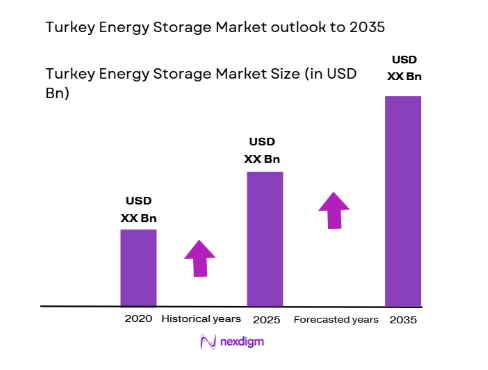
Market Segmentation
By Product Type:
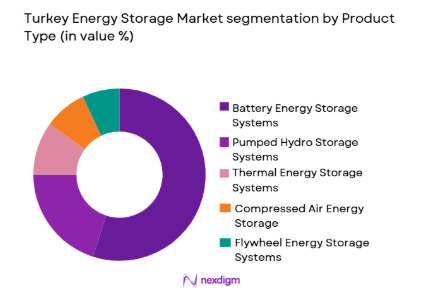
Turkey Energy Storage market is segmented by product type into battery energy storage systems, pumped hydro storage systems, thermal energy storage systems, compressed air energy storage systems, and flywheel energy storage systems. Recently, battery energy storage systems (BESS) have seen dominant market share due to their efficiency, scalability, and cost-effectiveness. As renewable energy generation from wind and solar power increases, BESS has become a preferred choice for storage. The demand for BESS is growing rapidly, especially due to the falling prices of lithium-ion batteries and technological improvements in battery chemistry. This growth is driven by the need for quick-response, large-scale energy storage systems that can stabilize the grid and ensure uninterrupted power supply during peak demand hours or supply interruptions.
By Platform Type:
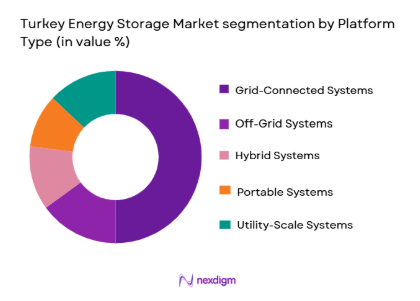
Turkey Energy Storage market is segmented by platform type into grid-connected systems, off-grid systems, hybrid systems, portable systems, and utility-scale systems. Recently, grid-connected systems have seen a dominant market share due to the growing integration of renewable energy sources and government-led renewable energy initiatives. Grid-connected systems allow for efficient energy storage and distribution, thus reducing reliance on fossil fuels and supporting national energy sustainability goals. These systems are being increasingly installed to support national grid stability, balance electricity demand, and ensure a sustainable energy future. With the continued development of Turkey’s electrical infrastructure, grid-connected systems are becoming an integral part of the energy transition strategy.
Competitive Landscape
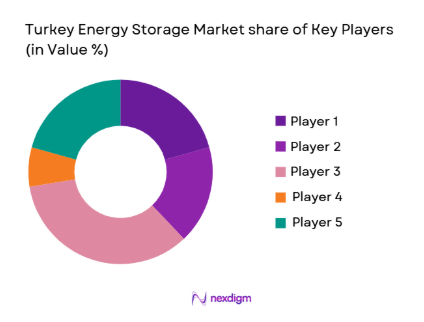
The Turkey Energy Storage market is highly competitive, with a mix of international and domestic players contributing to the market growth. The increasing demand for clean energy solutions and the Turkish government’s green energy initiatives are pushing the development of energy storage technologies. Key players are focused on technological advancements, reducing costs, and ensuring the scalability of their storage solutions. Major players in the market are consolidating to leverage synergies and expand their geographical reach, further driving market dynamics.
| Company Name | Establishment Year | Headquarters | Technology Focus | Market Reach | Key Products | Revenue (USD) | Key Market Segment |
| Siemens Energy | 1847 | Germany | ~ | ~ | ~ | ~ | ~ |
| LG Chem | 1947 | South Korea | ~ | ~ | ~ | ~ | ~ |
| Tesla | 2003 | USA | ~ | ~ | ~ | ~ | ~ |
| Fluence Energy | 2018 | USA | ~ | ~ | ~ | ~ | ~ |
| Schneider Electric | 1836 | France | ~ | ~ | ~ | ~ | ~ |
Turkey Energy Storage Market Analysis
Growth Drivers
Government Support for Renewable Energy Integration:
The Turkish government’s strong commitment to renewable energy adoption is a major growth driver for the energy storage market. With ambitious renewable energy targets, including a large share of wind and solar power, Turkey requires advanced energy storage systems to manage intermittency and stabilize the grid. Energy storage solutions, particularly battery-based systems, are essential to balance supply and demand fluctuations associated with renewable energy. As Turkey continues to develop its energy infrastructure, the need for energy storage is expected to grow significantly, with a focus on improving energy security and achieving sustainability goals. Additionally, government incentives and policies designed to boost green energy adoption are accelerating the demand for energy storage solutions. These measures include subsidies, tax incentives, and support for R&D, which make energy storage more economically viable for both businesses and consumers.
Technological Advancements in Energy Storage:
Continuous technological advancements in energy storage systems are significantly boosting the market. Over recent years, the efficiency and cost-effectiveness of energy storage technologies have improved considerably, with innovations in battery chemistry and manufacturing processes. For instance, lithium-ion batteries have become the dominant energy storage technology due to their high energy density, fast charging, and long life cycles. These advancements not only make energy storage systems more affordable but also expand their potential applications in diverse sectors, including residential, commercial, and industrial energy storage. Moreover, with the rise of electric vehicles (EVs), the integration of EV batteries into grid storage is providing new opportunities for Turkey’s energy storage market. This technological synergy is contributing to the widespread adoption of storage solutions across the country, fostering a more sustainable and resilient energy infrastructure.
Market Challenges
High Initial Capital Investment:
One of the most significant challenges facing the Turkey Energy Storage market is the high initial capital investment required for energy storage systems. Despite the long-term cost savings and efficiency benefits, the upfront cost of energy storage systems can be prohibitive, especially for small to medium-sized enterprises or residential applications. This factor is hindering the widespread adoption of energy storage solutions, as consumers and businesses are often reluctant to invest in high-cost infrastructure without guaranteed returns. Although costs are gradually decreasing due to technological advancements, the capital investment required for large-scale projects remains a significant barrier. Moreover, financing options and subsidies may not always be sufficient to cover the initial costs, further limiting adoption rates in the market. Overcoming this challenge requires targeted government policies and financial incentives to make energy storage solutions more affordable and accessible to a broader range of consumers.
Regulatory and Policy Uncertainty:
The uncertainty surrounding regulations and policies related to energy storage is another major challenge in Turkey. Although there is significant potential for growth in the energy storage market, the lack of clear and consistent regulations can deter investment and slow down market development. Policies governing the integration of energy storage with renewable energy sources, grid management, and energy pricing can vary and change frequently, creating an unstable environment for businesses and investors. Additionally, the regulatory framework for energy storage in Turkey is still evolving, with issues related to grid integration, safety standards, and technical certifications needing further clarification. For energy storage systems to reach their full potential, Turkey must develop a stable, predictable regulatory framework that can foster long-term investment and ensure the smooth deployment of energy storage technologies.
Opportunities
Expansion of Renewable Energy Integration:
One of the most significant opportunities for the Turkey Energy Storage market is the expansion of renewable energy integration into the grid. As Turkey continues to diversify its energy mix, integrating more renewable energy sources such as solar and wind, the demand for energy storage solutions is expected to increase. Energy storage systems play a critical role in ensuring that electricity from renewable sources can be efficiently stored and dispatched when needed, ensuring grid stability and reducing reliance on fossil fuel-based power generation. The Turkish government’s commitment to renewable energy targets, alongside technological advancements in energy storage, presents a promising market opportunity for both domestic and international companies. Moreover, energy storage solutions can also enable more localized and decentralized energy systems, further driving demand for storage applications in rural and off-grid areas.
Integration with Electric Vehicles:
Another opportunity lies in the integration of energy storage systems with electric vehicles (EVs). As the adoption of electric vehicles accelerates in Turkey, there is a growing potential for EV batteries to be used as energy storage systems for the grid. This concept, known as vehicle-to-grid (V2G) technology, allows EVs to store excess electricity and feed it back into the grid when needed, helping to stabilize the energy supply. The growth of the EV market in Turkey presents an exciting opportunity for the energy storage sector to leverage the capacity of EV batteries, which would reduce the need for additional stationary storage solutions. The synergy between electric vehicles and energy storage systems can enhance grid flexibility, reduce energy costs, and provide consumers with new revenue streams, thereby stimulating further growth in the energy storage market.
Future Outlook
The future outlook for the Turkey Energy Storage market is highly positive, with substantial growth expected over the next five years. Technological advancements in battery storage, coupled with strong governmental support for renewable energy integration, are expected to drive the expansion of energy storage systems across Turkey. As renewable energy sources like solar and wind continue to gain traction, the need for reliable, cost-effective energy storage solutions will become even more critical. Additionally, with increasing demand for electric vehicles and energy resilience, energy storage solutions will play a pivotal role in supporting grid modernization and decarbonization efforts in the country. The market is expected to witness increasing investments, the development of innovative storage technologies, and regulatory support to meet Turkey’s renewable energy goals.
Major Players
- Siemens Energy
- LG Chem
- Tesla
- Fluence Energy
- Schneider Electric
- BYD Company
- AES Energy Storage
- Vestas Wind Systems
- General Electric
- ABB
- Panasonic Corporation
- S&C Electric Company
- Enel X
- Northvolt
- Rockwell Automation
Key Target Audience
- Investments and venture capitalist firms
- Government and regulatory bodies
- Renewable energy developers
- Energy storage system integrators
- Industrial energy consumers
- Commercial energy users
- Electric vehicle manufacturers
- Infrastructure developers
Research Methodology
Step 1: Identification of Key Variables
This step involves identifying critical market variables such as technological trends, economic conditions, and consumer behavior that influence energy storage adoption.
Step 2: Market Analysis and Construction
Comprehensive analysis is conducted to segment the market, identify key trends, and forecast growth drivers and challenges.
Step 3: Hypothesis Validation and Expert Consultation
Market hypotheses are validated through consultations with industry experts and analysis of secondary research reports.
Step 4: Research Synthesis and Final Output
The research findings are synthesized, and the final report is compiled, ensuring it aligns with market realities and strategic objectives.

- Executive Summary
- Research Methodology (Definitions, Scope, Industry Assumptions, Market Sizing Approach, Primary & Secondary Research Framework, Data Collection & Verification Protocol, Analytic Models & Forecast Methodology, Limitations & Research Validity Checks)

- Market Definition and Scope
- Value Chain & Stakeholder Ecosystem
- Regulatory / Certification Landscape
- Sector Dynamics Affecting Demand
- Strategic Initiatives & Infrastructure Growth

- Growth Drivers
Rising Demand for Renewable Energy Storage
Government Initiatives to Promote Clean Energy
Technological Advancements in Energy Storage
Increasing Investments in Energy Infrastructure
Energy Security and Grid Stability Needs - Market Challenges
High Initial Capital Investment
Technological Limitations in Energy Storage Systems
Regulatory Barriers and Policy Uncertainty
Lack of Sufficient Charging Infrastructure
Environmental Impact of Energy Storage Technologies - Market Opportunities
Expansion of Renewable Energy Integration
Energy Storage for Electric Vehicles
Development of Advanced Battery Technologies - Trends
Integration of Energy Storage in Smart Grids
Growth in Hybrid and Off-Grid Energy Storage Solutions
Use of Artificial Intelligence for Energy Management
Emerging Interest in Compressed Air Energy Storage
Rise of Consumer-Scale Energy Storage Systems - Government Regulations & Defense Policy
Government Incentives for Energy Storage Adoption
Energy Storage as Part of National Security Strategy
Policies on Reducing Carbon Emissions - SWOT Analysis
- Stakeholder and Ecosystem Analysis
- Porter’s Five Forces Analysis
- Competition Intensity and Ecosystem Mapping

- By Market Value, 2020-2025
- By Installed Units, 2020-2025
- By Average System Price, 2020-2025
- By System Complexity Tier, 2020-2025

- By System Type (In Value%)
Battery Energy Storage Systems
Pumped Hydro Storage Systems
Thermal Energy Storage Systems
Compressed Air Energy Storage Systems
Flywheel Energy Storage Systems - By Platform Type (In Value%)
Grid-Connected Systems
Off-Grid Systems
Hybrid Systems
Portable Systems
Utility-Scale Systems - By Fitment Type (In Value%)
On-Premise Solutions
Cloud-Based Solutions
Hybrid Solutions
Modular Solutions
Integrated Solutions - By EndUser Segment (In Value%)
Utilities
Industrial Manufacturers
Renewable Energy Operators
Commercial & Residential Consumers
Government & Military Organizations - By Procurement Channel (In Value%)
Direct Procurement
Government Tenders
Private Sector Procurement
Online Bidding Platforms
Third-Party Distributors - By Material / Technology (In Value%)
Lithium-Ion Batteries
Lead-Acid Batteries
Sodium-Sulfur Batteries
Vanadium Redox Flow Batteries
Supercapacitors

- Market structure and competitive positioning
- Market share snapshot of major players
- CrossComparison Parameters (System Type, Platform Type, Procurement Channel, EndUser Segment, Fitment Type, Technology, Geography, Regulatory Compliance, Supply Chain, Installation Capabilities)
- SWOT Analysis of Key Players
- Pricing & Procurement Analysis
- Key Players
Samsung SDI
LG Chem
BYD Company
Tesla
AES Energy Storage
Siemens Energy
General Electric
EDF Energy
Vestas Wind Systems
Sungrow Power Supply
Fluence Energy
Eos Energy Storage
AESC
S&C Electric Company
Schneider Electric

- Utilities Increasing Demand for Grid-Scale Storage
- Industries Seeking Energy Storage for Cost Reduction
- Renewable Operators Focusing on Storage Solutions
- Government Institutions Integrating Energy Storage for Energy Security

- Forecast Market Value, 2026-2035
- Forecast Installed Units, 2026-2035
- Price Forecast by System Tier, 2026-2035
- Future Demand by Platform, 2026-2035


 Request a Sample
 Ask for Customization
 Get a Quote
 Enquire Now