
 Download PDF
 Download PDF
Market Overview
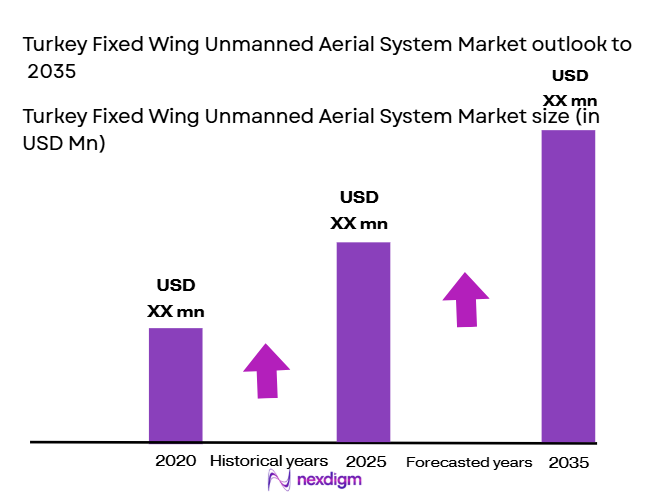
The Turkey Fixed Wing Unmanned Aerial System (UAS) market is valued at USD ~ billion in 2024, driven by increasing defense spending, technological advancements, and the strategic importance of UAVs for national security. The market is expanding as both defense and commercial sectors continue to adopt fixed-wing UAVs for various applications, including surveillance, reconnaissance, and combat missions. Government initiatives, particularly those focusing on defense modernization and autonomous technologies, are fueling the growth of this market. Furthermore, local manufacturers are gaining recognition globally, contributing to the market’s expansion.
Turkey is the dominant player in the region due to its substantial defense investments and the growing adoption of unmanned aerial systems in military and commercial applications. Cities like Ankara and Istanbul lead the market due to the presence of major defense contractors such as Turkish Aerospace Industries (TAI) and STM Savunma. These cities house key industry players, research and development centers, and government bodies that drive innovations and regulations in the UAV sector. Moreover, Turkey’s geopolitical location makes it a strategic hub for UAV production and deployment in the Middle East and neighboring regions.
Market Segmentation
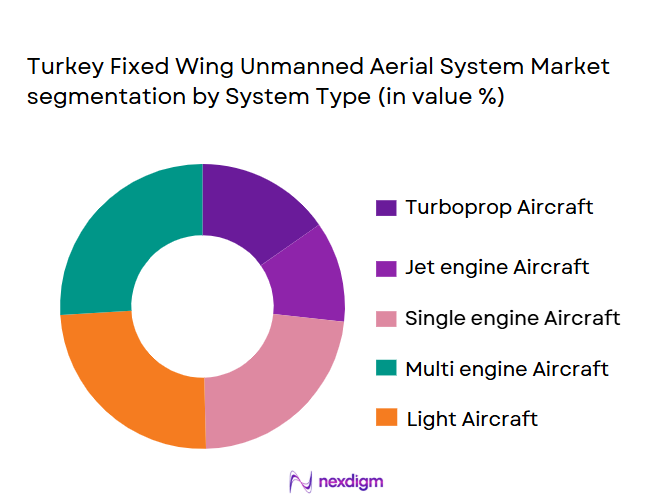
By System Type
The Turkey Fixed Wing Unmanned Aerial System market is segmented by system type, which includes surveillance systems, reconnaissance systems, combat systems, multirole systems, and specialized payload systems. Among these, surveillance systems dominate the market due to their critical role in military intelligence, border patrol, and law enforcement. Surveillance UAVs are equipped with advanced sensors such as radar, infrared, and optical systems, making them highly valuable for intelligence gathering in real-time. Their widespread use across the defense sector, coupled with increasing government investments in border surveillance, positions surveillance UAVs as the dominant subsegment.
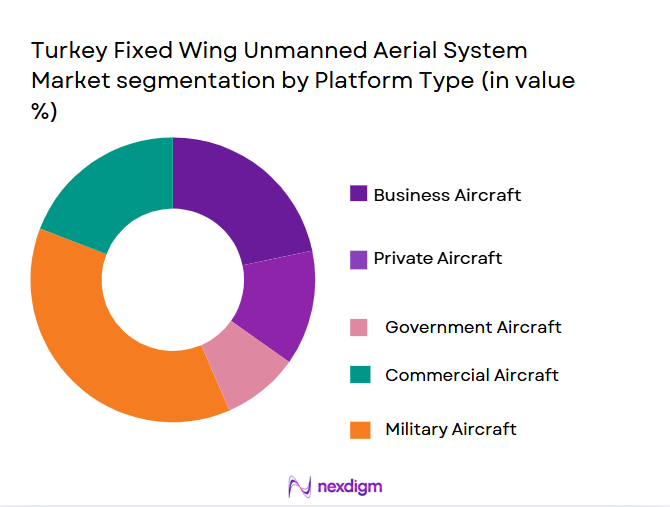
By Platform Type
The market is also segmented by platform type, including aerial platforms, fixed-wing UAVs, vertical takeoff and landing UAVs (VTOL), hybrid UAVs, and suborbital UAVs. Fixed-wing UAVs account for the largest share within this segment due to their extended flight range, high endurance, and ability to carry heavy payloads. These UAVs are extensively used for surveillance, reconnaissance, and combat missions in both military and commercial sectors. Their ability to cover large areas and remain airborne for extended periods makes them highly attractive for defense agencies and global market players.
Competitive Landscape
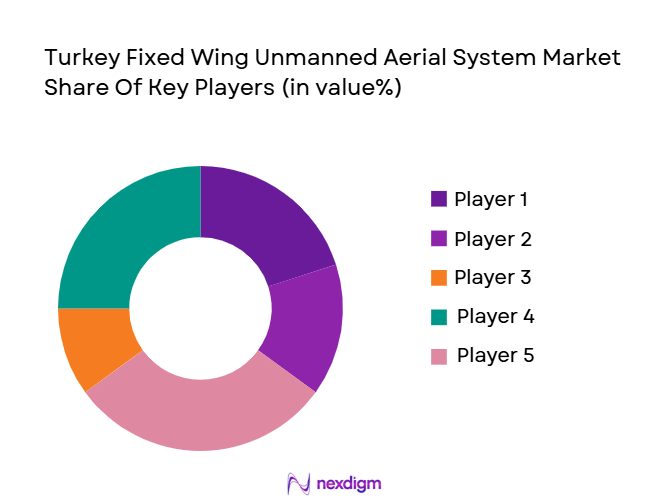
The Turkey Fixed Wing Unmanned Aerial System market is dominated by key players such as Turkish Aerospace Industries, Aselsan, and STM Savunma. These companies leverage their technological capabilities, strong government ties, and extensive R&D investment to lead the market. Local players have a competitive edge over international brands, owing to their ability to design systems tailored for specific defense needs in the region. This has made Turkey one of the most prominent players in the global UAV market, with continued expansion into international defense contracts.
| Company Name | Establishment Year | Headquarters | Product Focus | Annual Revenue (approx.) | R&D Investments | Market Presence | Key Collaborations |
| Turkish Aerospace Industries | 1984 | Ankara, Turkey | ~ | ~ | ~ | ~ | ~ |
| Aselsan | 1975 | Ankara, Turkey | ~ | ~ | ~ | ~ | ~ |
| STM Savunma | 1991 | Ankara, Turkey | ~ | ~ | ~ | ~ | ~ |
| Baykar Makina | 1984 | Istanbul, Turkey | ~ | ~ | ~ | ~ | ~ |
| HAVELSAN | 1982 | Ankara, Turkey | ~ | ~ | ~ | ~ | ~ |
Turkey fixed wing unmanned aerial system Market Dynamics
Growth Drivers
Rising Demand for Advanced Surveillance and Defense Applications
Turkey’s defense industry is experiencing significant growth in demand for advanced surveillance and reconnaissance systems, particularly unmanned aerial vehicles (UAVs). These UAVs are increasingly used for border security, intelligence gathering, and counter-terrorism efforts. As Turkey focuses on strengthening its defense capabilities, the government has allocated over TRY 60 billion to defense spending in 2024, reflecting a substantial increase in national security priorities. UAVs are integral to Turkey’s military strategy, providing real-time intelligence and surveillance capabilities that are vital in modern warfare, particularly in volatile regions such as the Middle East. This rise in defense spending drives a robust market for fixed-wing UAVs as an essential tool for the Turkish Armed Forces and security agencies.
Technological Advancements in UAV Systems
The continuous advancements in UAV technology play a pivotal role in driving market growth. With the incorporation of artificial intelligence (AI), machine learning, and improved sensor technologies, Turkish UAV manufacturers are developing more sophisticated and autonomous systems that enhance operational efficiency. In 2024, Turkish Aerospace Industries (TAI) and other local players have introduced UAVs with greater endurance, advanced payload capacity, and improved autonomous flight capabilities. These advancements allow UAVs to perform complex tasks like long-range surveillance, precise target identification, and autonomous flight management, which are crucial for both military and commercial applications. The technology-driven evolution of UAVs is stimulating demand and expanding market opportunities.
Market Challenges
Regulatory and Certification Hurdles
The integration of UAVs into Turkish civilian airspace is constrained by stringent regulations and certification processes. The Turkish Civil Aviation Authority (SHGM) enforces strict guidelines regarding flight altitudes, safety protocols, and operational permits for UAV operators. These regulatory requirements, which demand comprehensive safety certifications and operational approvals, pose significant barriers to the widespread adoption of UAV technology in non-defense sectors. As a result, commercial sectors like agriculture, logistics, and infrastructure are facing delays in fully integrating UAVs into their operations. The complex regulatory framework can also deter international collaboration and complicate the export of UAVs to other markets.
High Initial and Maintenance Costs
The adoption of fixed-wing UAVs in Turkey is challenged by the high costs associated with both initial acquisition and ongoing maintenance. Military-grade UAVs such as the Bayraktar TB2 and Anka, which are produced domestically, require significant investment in R&D, infrastructure, and training, making them costly for many potential users. Additionally, the maintenance and operational costs, which can exceed TRY 1 million annually for some models, present challenges for sectors outside of defense, particularly small and medium enterprises (SMEs) in industries like agriculture. These high costs make UAVs inaccessible for broader commercial adoption, limiting the overall market penetration of fixed-wing systems.
Opportunities
Expanding Civil Applications in Agriculture and Infrastructure
There is a growing opportunity for fixed-wing UAVs to be used in civil applications, particularly in precision agriculture and infrastructure monitoring. The Turkish agriculture sector, which is valued at TRY 3.5 trillion in 2024, is increasingly adopting UAVs for crop monitoring, land mapping, and pest control. UAVs provide real-time data that helps farmers make better decisions about irrigation, fertilization, and crop management. Additionally, in infrastructure, UAVs are being used to monitor construction projects, assess building conditions, and perform inspections of transportation networks. These growing sectors present significant opportunities for market expansion as more industries recognize the potential of UAV technology to increase operational efficiency and reduce costs.
Potential for International Collaborations and Exports
As Turkey strengthens its UAV manufacturing capabilities, there is considerable potential for international collaborations and the export of Turkish-made UAV systems. In recent years, Turkey has signed agreements with several countries in the Middle East and North Africa to export UAVs and jointly develop UAV technologies. In 2024, agreements with nations such as Qatar and Azerbaijan were reached to supply them with UAVs and establish local manufacturing partnerships. These collaborations not only open new revenue streams for Turkish UAV manufacturers but also enhance the country’s position as a key player in the global UAV market. The potential for exporting UAV technology and engaging in joint ventures with global aerospace and defense companies further bolsters the market’s growth prospects.
Future Outlook
Over the next decade, the Turkey Fixed Wing Unmanned Aerial System market is expected to show strong growth, driven by continuous advancements in UAV technology, increased defense spending, and the growing demand for military and commercial UAV applications. As global defense agencies and private companies continue to adopt UAV technology for diverse use cases like surveillance, reconnaissance, and data collection, the market will see significant expansion. Additionally, innovations in AI and autonomous systems will drive the adoption of more sophisticated UAVs in the coming years.
Major Players in the Market
- Turkish Aerospace Industries
- Aselsan
- STM Savunma
- Baykar Makina
- HAVELSAN
- Alp Aviation
- Ersan UAV Systems
- Goksel Aerospace
- Akınsoft
- Drone Systems Turkey
- Aerospace Industries
- L3 Technologies
- Israel Aerospace Industries
- Lockheed Martin
- Northrop Grumman
Key Target Audience
- Government agencies (Turkish Ministry of Defense)
- Military and Defense contractors
- Investments and venture capitalist firms
- Aerospace and UAV manufacturers
- Regulatory bodies (Turkish Civil Aviation Authority)
- Armed forces (Turkish Air Force, Turkish Navy)
- Private sector companies in surveillance and security
- UAV system procurement teams
- Research Methodology
Research Methodology
Step 1: Identification of Key Variables
The initial phase involves constructing an ecosystem map encompassing all major stakeholders within the Turkey Fixed Wing Unmanned Aerial System market. This phase utilizes a combination of secondary research and proprietary databases to gather industry-level data. The objective is to identify and define the critical variables influencing market dynamics.
Step 2: Market Analysis and Construction
In this phase, we analyze historical data related to the Turkey Fixed Wing Unmanned Aerial System market, assessing market penetration, UAV adoption trends, and resulting revenue generation. We also evaluate market share across different subsegments to gain a clearer picture of market trends and provide reliable forecasts.
Step 3: Hypothesis Validation and Expert Consultation
Market hypotheses are validated through interviews with industry experts and manufacturers involved in UAV production. These consultations help refine market data, provide insights on market developments, and validate the underlying assumptions in our forecasts.
Step 4: Research Synthesis and Final Output
The final phase involves synthesizing the data collected through research and expert consultations to develop accurate market forecasts. We verify and complement the statistics by direct engagement with key UAV manufacturers to ensure the reliability and accuracy of the findings.

- Executive Summary
- Research Methodology (Definitions, Scope, Industry Assumptions, Market Sizing Approach, Primary & Secondary Research Framework, Data Collection & Verification Protocol, Analytic Models & Forecast Methodology, Limitations & Research Validity Checks)

- Market Definition and Scope
- Value Chain & Stakeholder Ecosystem
- Regulatory / Certification Landscape
- Sector Dynamics Affecting Demand
- Strategic Initiatives & Infrastructure Growth

- Growth Drivers
Rising demand for surveillance and reconnaissance applications in defense
Advancements in UAV technology enhancing operational capabilities
Government initiatives and increasing defense budgets in Turkey - Market Challenges
Regulatory and certification hurdles for UAV integration
High initial investment and maintenance costs
Geopolitical tensions affecting market stability - Market Opportunities
Increasing demand for UAVs in civil applications
Potential collaborations with global aerospace and defense companies
Expanding UAV applications in agriculture and infrastructure monitoring - Trends
Shift towards autonomous flight systems
Growing integration of AI and machine learning in UAV operations
Rising focus on hybrid propulsion systems for extended range - Government Regulations & Defense Policy
FDI Rules
Offset Obligations
Export Licenses - SWOT Analysis (Capability Strengths, Cost Vulnerabilities, Competitive Pressures)
- Porter’s Five Forces (Procurement Power, Supplier Concentration, Substitutes, Barriers to Entry)

- By Market Value, 2020-2025
- By Installed Units, 2020-2025
- By Average System Price, 2020-2025
- By System Complexity Tier, 2020-2025

- By System Type (In Value%)
Surveillance Systems
Reconnaissance Systems
Combat Systems
Multirole Systems
Specialized Payload Systems - By Platform Type (In Value%)
Aerial Platforms
Fixed Wing UAVs
Vertical Takeoff and Landing UAVs
Hybrid UAVs
Suborbital UAVs - By Fitment Type (In Value%)
Ground Launch
Vehicle Launch
Manual Launch
Autonomous Launch
Hybrid Launch - By End-user Segment (In Value%)
Military & Defense
Aerospace & Aviation
Surveillance & Intelligence Agencies
Research & Development Organizations
Private Sector (Security & Surveillance) - By Procurement Channel (In Value%)
Government Procurement
Private Sector Procurement
Direct Sales from Manufacturers
Distributor/Reseller Networks
Online Sales

- Market Share Analysis
- Cross Comparison Parameters
(Market Share, Product Innovation, Price Competitiveness, Market Penetration, Technology Integration, R&D Investment, Operational Efficiency, Customer Retention, Regulatory Compliance, Product Portfolio Diversity Geographic Reach, Customer Base) - SWOT Analysis of Key Competitors
- Pricing & Procurement Analysis
- Key Players
Turkish Aerospace Industries
Aselsan
Baykar Makina
STM Savunma
TUSAŞ
Drone Systems Turkey
Alp Aviation
Ersan UAV Systems
HAVELSAN
Aerospace Industries
Kaplan UAV
Akınsoft
Goksel Aerospace
İHA Technologies
L3 Technologies

- Increasing adoption of fixed wing UAVs in military operations
- Growth in demand for UAVs for intelligence, surveillance, and reconnaissance
- Expanding interest from commercial sectors for industrial applications
- Growing government investments in unmanned aerial systems

- Forecast Market Value, 2026-2035
- Forecast Installed Units, 2026-2035
- Price Forecast by System Tier, 2026-2035
- Future Demand by Platform, 2026-2035


 Request a Sample
 Ask for Customization
 Get a Quote
 Enquire Now