

 Download PDF
Market Overview
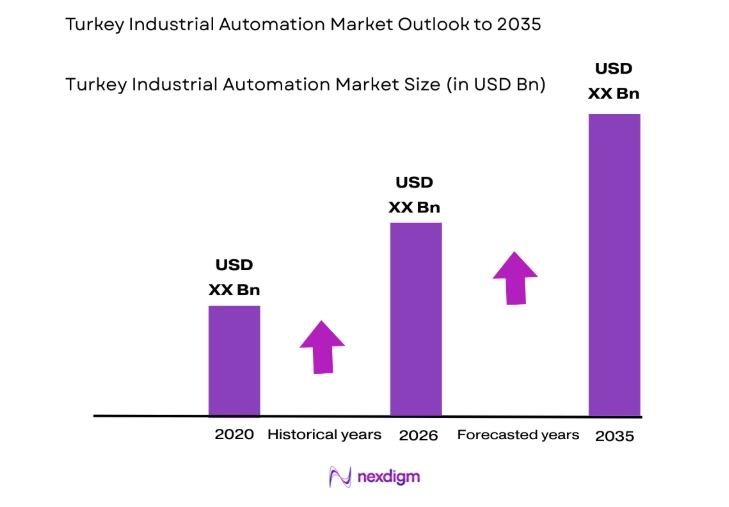
The Turkey Industrial Automation market is projected to reach USD ~ billion in 2024, driven by rapid technological advancements and the increasing demand for automation in manufacturing industries. As companies focus on reducing labor costs, enhancing operational efficiency, and improving product quality, the adoption of robotics, AI, and industrial IoT solutions is accelerating. Additionally, the country’s government policies and incentives aimed at promoting digital transformation are further fueling market growth.
The key cities driving the growth of Turkey’s Industrial Automation market include Istanbul, Ankara, and Izmir. Istanbul, as the commercial hub, is leading the way in adopting automation technologies, with major manufacturing and logistics sectors embracing new solutions. Ankara, the political and industrial center, is witnessing increased government-backed initiatives to enhance automation in the defense, automotive, and electronics sectors. Izmir, with its large manufacturing base, is also witnessing rising investments in automation solutions, contributing to the overall market growth.
Market Segmentation
By Product Type
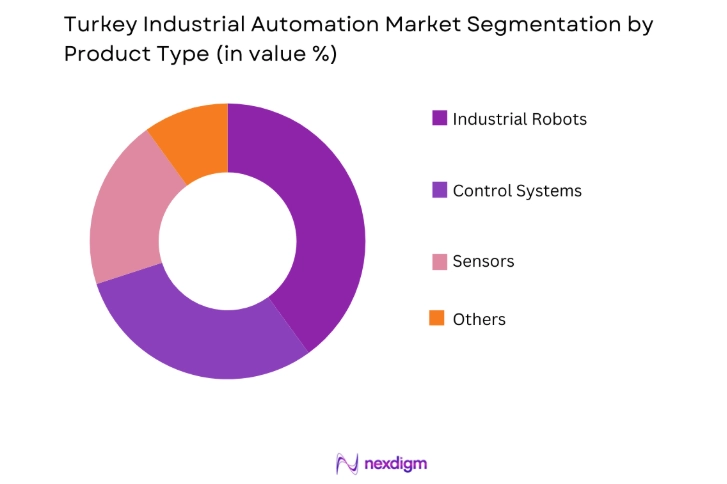
The Turkey Industrial Automation market is segmented by product type into industrial robots, control systems, sensors, and others. Industrial robots have recently dominated the market share due to their role in enhancing manufacturing processes across sectors such as automotive, electronics, and textiles. The demand for industrial robots is increasing as companies seek to improve production efficiency, reduce human errors, and maintain competitiveness. The growing focus on flexible manufacturing systems, which can adapt to different production lines, is further driving the adoption of industrial robots, especially in industries looking to implement automation for custom production processes.
By End-User Industry
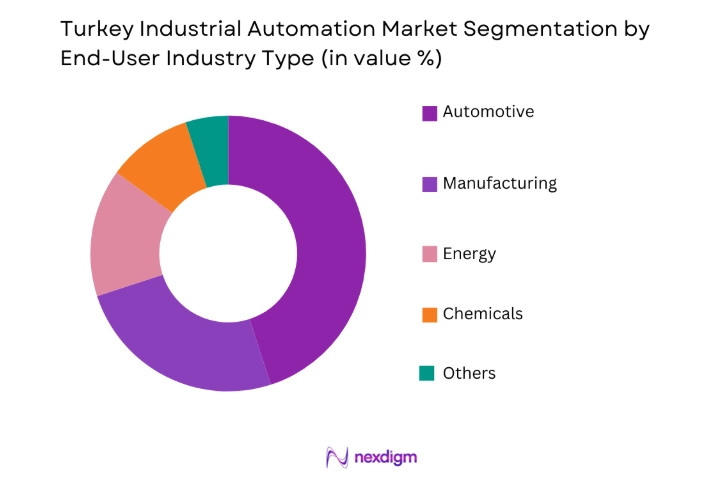
The Turkey Industrial Automation market is segmented by end-user industry into automotive, manufacturing, energy, chemicals, and others. The automotive sector dominates the market due to its high demand for automation to enhance manufacturing processes and improve production flexibility. With the rise of electric vehicles (EVs) and automation in the assembly line, the automotive industry is a major adopter of robotics and smart factory solutions. Additionally, the government’s initiatives to support the growth of domestic automotive production, including EVs, is driving the need for advanced automation technologies to streamline operations and improve productivity.
Competitive Landscape
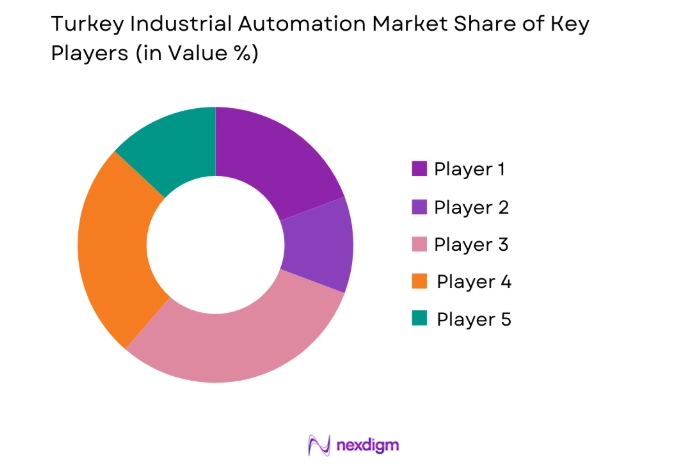
The Turkey Industrial Automation market is highly competitive, with both local and international players driving innovation and adoption. Major global automation companies are expanding their presence in Turkey due to the increasing demand for automation solutions in various industries. In addition, local players are capitalizing on the growing trend of digitization and smart manufacturing. The market is experiencing consolidation as companies strive to offer comprehensive automation solutions, including robotics, control systems, and AI-driven analytics. These players are focusing on forming strategic partnerships, investing in R&D, and providing customized automation solutions to cater to specific industry needs. Government support for digital transformation further bolsters the market’s growth.
| Company Name | Establishment Year | Headquarters | Technology Focus | Market Reach | Key Products | Revenue | Additional Parameter |
| Siemens | 1847 | Munich, Germany | ~ | ~ | ~ | ~ | ~ |
| ABB | 1988 | Zurich, Switzerland | ~ | ~ | ~ | ~ | ~ |
| Schneider Electric | 1836 | Rueil-Malmaison, France | ~ | ~ | ~ | ~ | ~ |
| Rockwell Automation | 1903 | Milwaukee, USA | ~ | ~ | ~ | ~ | ~ |
| Mitsubishi Electric | 1921 | Tokyo, Japan | ~ | ~ | ~ | ~ | ~ |
Turkey Industrial Automation Market Analysis
Growth Drivers
Government Support and Incentives for Digital Transformation
Government initiatives and financial incentives are key growth drivers for the Turkey Industrial Automation market. The Turkish government has been increasingly focusing on initiatives to promote digitalization across industrial sectors, including manufacturing, automotive, and energy. The support for automation technologies through subsidies, tax breaks, and R&D grants is encouraging companies to invest in automated systems, including robotics, AI-driven solutions, and IoT platforms. Additionally, government-led efforts to increase the competitiveness of Turkish manufacturing on the global stage are providing further impetus for the adoption of smart factory solutions. The push towards Industry 4.0 and the government’s role in supporting the development of industrial parks equipped with state-of-the-art automation technologies are significantly contributing to market growth. As the country’s industrial sectors continue to modernize and align with global trends, government initiatives will remain a crucial factor in boosting the adoption of automation technologies.
Growth in the Automotive Industry
The automotive industry in Turkey is experiencing significant growth, driven by the increasing demand for electric vehicles (EVs) and the adoption of automation solutions in vehicle production lines. With an established automotive manufacturing base, Turkey is focusing on automating its production processes to improve efficiency and meet the rising demand for EVs. Automation in the automotive sector, particularly through the integration of industrial robots, is helping to reduce manufacturing costs, improve quality control, and shorten production cycles. As domestic and international manufacturers increasingly shift to EV production and integrate advanced driver-assistance systems (ADAS) into vehicles, the need for automation technologies will continue to grow. Turkey’s government has also introduced policies to support local EV production, further fueling the demand for automation solutions in the automotive sector. The expanding automotive market, coupled with the rise of EV production, presents significant growth opportunities for the Industrial Automation market in Turkey.
Market Challenges
High Initial Investment Costs
One of the primary challenges facing the Turkey Industrial Automation market is the high initial investment required for implementing automation technologies. While automation offers significant long-term benefits in terms of operational efficiency, quality improvement, and cost reduction, the upfront costs of purchasing and installing automation systems can be prohibitive for small and medium-sized enterprises (SMEs). The costs of advanced robotics, IoT systems, and control systems are high, and many businesses may struggle to justify the initial capital expenditure. Additionally, the integration of automation with existing legacy systems can be expensive and complex, requiring specialized expertise and investment in infrastructure. This financial barrier makes it difficult for certain segments of the Turkish market to adopt automation at the scale needed for widespread industry transformation. Overcoming this challenge will require both government support and the development of cost-effective automation solutions that can cater to SMEs.
Skilled Labor Shortage
The shortage of skilled labor to implement and operate industrial automation systems is another significant challenge in the Turkey Industrial Automation market. While automation offers many benefits, it requires a highly skilled workforce capable of operating, maintaining, and troubleshooting complex systems. However, there is a shortage of workers with the necessary technical skills in fields such as robotics, industrial control systems, and AI. This skills gap is hindering the adoption of automation technologies, as companies may struggle to find qualified personnel to handle the advanced systems they are implementing. Additionally, the training and upskilling of existing employees in automation-related fields can be costly and time-consuming. Addressing this challenge will require investments in education and training programs that focus on industrial automation technologies, as well as the development of apprenticeship and certification programs to bridge the skills gap in the workforce.
Opportunities
Expansion in Smart Manufacturing Solutions
The rise of smart manufacturing presents significant opportunities for the Turkey Industrial Automation market. As industries seek to optimize production, reduce waste, and improve product quality, smart manufacturing technologies, which integrate IoT, AI, and automation, are becoming increasingly important. Turkey’s manufacturing sector, particularly in automotive and electronics, is embracing Industry 4.0 principles, using smart sensors, robotics, and real-time data analytics to enhance productivity and decision-making. The growth of smart factories in Turkey, driven by increased demand for flexible and efficient production systems, is creating opportunities for automation solution providers to offer customized and scalable solutions. As Turkish manufacturers look to modernize their operations and compete globally, the demand for smart manufacturing solutions will continue to grow, creating new market opportunities in automation technologies.
Rise in Electric Vehicle Production
The rapid shift towards electric vehicles (EVs) presents a key opportunity for the Turkey Industrial Automation market. The automotive industry’s transition to EVs requires significant changes in manufacturing processes, including automation of battery production, assembly lines, and vehicle testing. Automation solutions are critical to optimizing these processes, reducing labor costs, and increasing production efficiency. The Turkish government’s support for EV manufacturing, along with increased investments in EV infrastructure, will drive the demand for automation solutions tailored to the EV production process. Additionally, Turkey’s position as a key player in the European automotive supply chain provides a strategic opportunity for automation technology providers to offer solutions that support the growing EV market. As the adoption of EVs continues to rise, the need for automated manufacturing systems will present new growth avenues for Turkey’s Industrial Automation market.
Future Outlook
The future outlook for the Turkey Industrial Automation market is highly promising, with continued growth expected in the coming years. The automotive industry’s transition to electric vehicles and the increasing adoption of Industry 4.0 technologies across manufacturing sectors will continue to drive demand for automation solutions. Additionally, the expansion of smart manufacturing, coupled with government incentives for digital transformation, will foster further market development. Technological advancements in robotics, AI, and IoT are expected to enhance the capabilities of automation systems, providing more efficient, flexible, and cost-effective solutions for industries. With a focus on innovation, education, and investment, Turkey’s Industrial Automation market is poised for significant expansion in the next five years.
Major Players
- Siemens
- ABB
- Rockwell Automation
- Schneider Electric
- Mitsubishi Electric
- Honeywell
- Fanuc
- Bosch Rexroth
- Emerson
- Yokogawa Electric
- Mitsubishi Electric
- Beckhoff Automation
- KUKA
- WAGO
- National Instruments
Key Target Audience
- Investments and venture capitalist firms
- Government and regulatory bodies
- Automotive manufacturers
- Electronics manufacturers
- Smart factory solution providers
- Logistics and supply chain companies
- Energy and utilities companies
Research Methodology
Step 1: Identification of Key Variables
Identification of market drivers, technological trends, and key challenges within the Turkish Industrial Automation market.
Step 2: Market Analysis and Construction
Segmentation and competitive landscape analysis to create an accurate model of the market, including key product types and industries.
Step 3: Hypothesis Validation and Expert Consultation
Consultations with industry experts, manufacturers, and stakeholders to validate assumptions and refine the analysis.
Step 4: Research Synthesis and Final Output
Final findings are synthesized into a comprehensive report, providing actionable insights and forecasts.

- Executive Summary
- Research Methodology (Definitions, Scope, Industry Assumptions, Market Sizing Approach, Primary & Secondary Research Framework, Data Collection & Verification Protocol, Analytic Models & Forecast Methodology, Limitations & Research Validity Checks)

- Market Definition and Scope
- Value Chain & Stakeholder Ecosystem
- Regulatory / Certification Landscape
- Sector Dynamics Affecting Demand

- Growth Drivers
Technological advancements in AI and machine learning
Increasing demand for operational efficiency and cost reduction
Growing demand from automotive and manufacturing industries - Market Challenges
High initial capital investment
Complexity of system integration
Security concerns regarding automation systems - Market Opportunities
Expansion of automation in emerging industries
Advancement of smart manufacturing technologies
Increased demand for autonomous systems - Trends
Rising adoption of AI and machine learning in automation
Growth in smart manufacturing and Industry 4.0 - Government Regulations
Regulatory standards for automation and robotics
Compliance with environmental and safety regulations
Government initiatives for promoting automation - SWOT Analysis
- Porter’s Five Forces

- By Market Value, 2020-2025
- By Installed Units, 2020-2025
- By Average System Price, 2020-2025
- By System Complexity Tier, 2020-2025

- By System Type (In Value%)
Industrial Robots
Control Systems
Human-Machine Interface Systems
Programmable Logic Controllers
Industrial Sensors - By Platform Type (In Value%)
Industrial Robots
Automated Guided Vehicles
Machine Vision Systems
CNC Machines - By Fitment Type (In Value%)
Integrated Systems
Modular Systems
Custom Solutions
Cloud-based Solutions - By End User Segment (In Value%)
Manufacturing
Oil & Gas
Automotive

- Market Share Analysis
- Cross Comparison Parameters (System Type, Platform Type, End User Segment, Fitment Type, Cost, Technology, Complexity Level)
- SWOT Analysis of Key Competitors
- Pricing & Procurement Analysis
- Key Players
Siemens
Rockwell Automation
ABB
Schneider Electric
Honeywell
Mitsubishi Electric
Yaskawa Electric
Fanuc Corporation
KUKA AG
Omron Corporation
Bosch Rexroth
Festo AG
Eaton Corporation
Toshiba Corporation
Keyence Corporation

- Growing demand from the automotive industry
- Increased adoption of automation in food processing
- Rising demand for automation in the pharmaceutical industry
- Automation’s role in enhancing productivity in manufacturing

- Forecast Market Value, 2026-2035
- Forecast Installed Units, 2026-2035
- Price Forecast by System Tier, 2026-2035
- Future Demand by Platform, 2026-2035


 Request a Sample
 Ask for Customization
 Get a Quote
 Enquire Now