

 Download PDF
 Download PDF
Market Overview
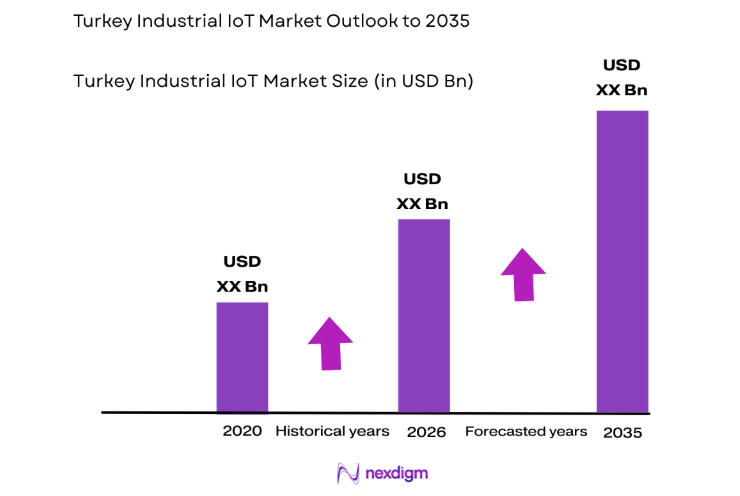
The Turkey Industrial IoT market is expected to reach USD ~ billion based on a recent historical assessment, driven by the increasing adoption of connected devices and systems in industries such as manufacturing, agriculture, and energy. The market is propelled by the need for enhanced operational efficiency, real-time monitoring, predictive maintenance, and cost savings. Technological advancements, such as 5G connectivity, cloud computing, and AI integration, are contributing significantly to the market’s growth by enabling seamless communication and advanced data analytics in industrial operations.
The dominant regions in Turkey for Industrial IoT applications are Istanbul, Ankara, and Izmir. Istanbul stands out due to its concentration of industrial hubs, large-scale enterprises, and global tech companies. Ankara, with a focus on innovation and R&D, fosters IoT-related developments, while Izmir has witnessed growth due to its strong manufacturing base, particularly in textiles and electronics. These cities are crucial for driving the adoption of IoT technologies in Turkey.
Market Segmentation
By Product Type
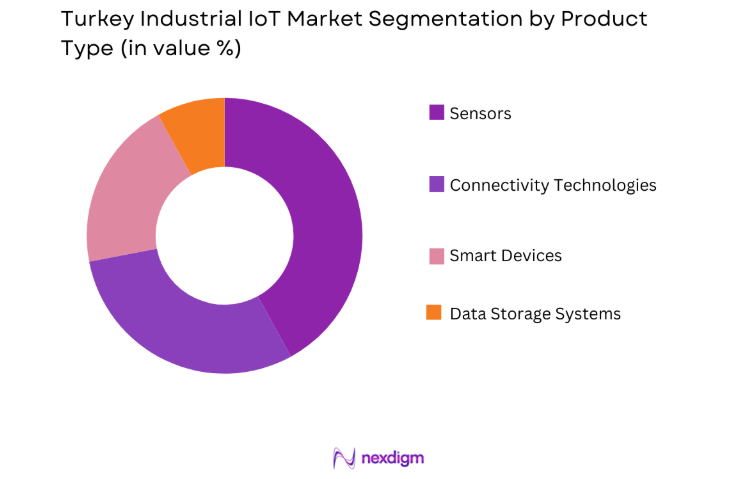
The Turkey Industrial IoT market is segmented by product type into sensors, connectivity technologies, smart devices, and data storage systems. Recently, sensors have dominated the market share due to the increasing demand for real-time data collection and monitoring in industrial applications. These sensors enable precise data acquisition from machines and environments, facilitating predictive maintenance, operational optimization, and safety improvements. Their widespread use in sectors such as manufacturing, agriculture, and energy has led to their dominance in the market.
By Application Type
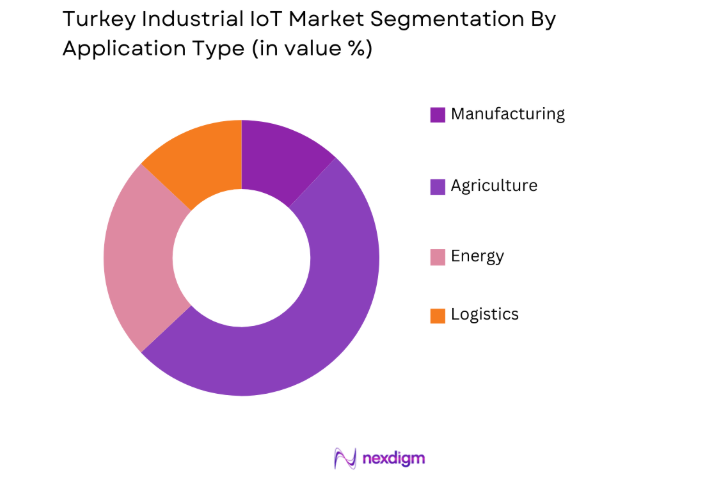
The Turkey Industrial IoT market is also segmented by application type into manufacturing, agriculture, energy, and logistics. Manufacturing applications hold the largest market share as IoT solutions are extensively deployed to automate processes, improve efficiency, and reduce downtime. The integration of IoT technologies in production lines, machinery, and supply chains enables real-time monitoring, predictive maintenance, and optimization of resources, making it the dominant application in the Turkish market.
Competitive Landscape
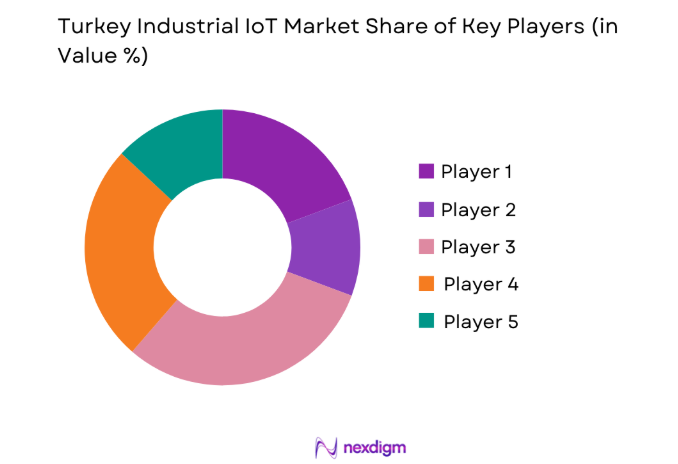
The competitive landscape of the Turkey Industrial IoT market is characterized by significant consolidation as major global and local players strive to innovate and expand their market presence. Leading companies are focusing on providing integrated IoT solutions, including sensors, connectivity, data analytics, and AI-powered systems. The market is also seeing an influx of local startups that are collaborating with multinational corporations to enhance their technology offerings. As a result, the competitive intensity is high, with companies investing heavily in R&D and strategic partnerships to maintain their market position.
| Company Name | Establishment Year | Headquarters | Technology Focus | Market Reach | Key Products | Revenue | Industry-Specific Focus |
| Siemens AG | 1847 | Munich, Germany | ~ | ~ | ~ | ~ | ~ |
| Bosch | 1886 | Stuttgart, Germany | ~ | ~ | ~ | ~ | ~ |
| ABB | 1988 | Zurich, Switzerland | ~ | ~ | ~ | ~ | ~ |
| Schneider Electric | 1836 | Rueil-Malmaison, France | ~ | ~ | ~ | ~ | ~ |
| Honeywell | 1906 | Charlotte, USA | ~ | ~ | ~ | ~ | ~ |
Turkey Industrial IoT Market Analysis
Growth Drivers
Technological Advancements in Connectivity
The growth of the Turkey Industrial IoT market is being driven by advancements in connectivity technologies, particularly 5G and LPWAN (Low Power Wide Area Networks). These technologies provide faster data transmission speeds, lower latency, and more reliable connections, which are crucial for the real-time data processing required in industrial IoT applications. 5G, in particular, is transforming the manufacturing and logistics sectors by enabling faster communication between devices and systems, allowing for seamless integration and automation across operations. The increasing availability of high-speed internet connections and the rollout of 5G networks are further accelerating the adoption of IoT technologies, particularly in industrial sectors that rely on large-scale automation. The demand for real-time insights, predictive maintenance, and optimized processes in manufacturing facilities, energy plants, and other industries is pushing the market toward advanced connectivity solutions.
Growing Adoption of AI and Machine Learning in Industrial IoT
The integration of AI and machine learning technologies into Industrial IoT systems is another key driver of market growth. By leveraging these technologies, industries can unlock the full potential of IoT data, enabling predictive analytics, real-time decision-making, and autonomous operations. AI-powered IoT systems are capable of processing massive amounts of data generated by connected devices, sensors, and machines, providing actionable insights to optimize processes and improve efficiency. In the manufacturing sector, for example, AI-driven IoT solutions enable predictive maintenance, which reduces unplanned downtime and extends equipment lifespans. As AI technology continues to evolve, its integration with IoT systems will drive even more widespread adoption, opening new opportunities for automation, cost reduction, and process optimization across industries.
Market Challenges
High Initial Investment Costs
One of the major challenges facing the Turkey Industrial IoT market is the high initial investment required to implement IoT solutions. Businesses, particularly small and medium-sized enterprises (SMEs), often find it difficult to allocate the capital necessary for IoT adoption, including the cost of hardware, software, connectivity infrastructure, and system integration. While the long-term benefits of Industrial IoT, such as cost savings, improved efficiency, and reduced downtime, are clear, the upfront costs remain a significant barrier to entry for many businesses. The high costs associated with the deployment of IoT systems are especially challenging in industries where budgets are already stretched thin, and companies may struggle to justify the immediate investment without guaranteed short-term returns.
Cybersecurity and Data Privacy Concerns
As more devices are connected to the industrial network, the risk of cyberattacks increases. Industrial IoT systems are highly vulnerable to cyber threats due to the vast amount of data transmitted across networks and the increasing interconnectivity of systems. Cybersecurity concerns are further exacerbated by the complexity of IoT devices, which often lack robust security protocols or are not regularly updated. Hackers could exploit vulnerabilities in IoT systems to gain access to critical infrastructure, disrupt operations, or steal sensitive data. For businesses, ensuring the security and privacy of their IoT systems is a significant challenge that requires investing in cybersecurity measures, regular system updates, and employee training. Additionally, data privacy regulations are becoming more stringent, which further complicates the implementation of IoT systems.
Opportunities
Emerging Demand for Predictive Maintenance
One of the most significant opportunities in the Turkey Industrial IoT market is the growing demand for predictive maintenance solutions. Predictive maintenance allows companies to monitor equipment performance in real-time, identify potential failures before they occur, and schedule maintenance activities to prevent unplanned downtime. This is particularly valuable in industries such as manufacturing, energy, and transportation, where downtime can result in significant financial losses. As businesses increasingly focus on reducing maintenance costs and improving operational efficiency, predictive maintenance solutions powered by IoT sensors and data analytics are gaining traction. The ability to predict when machinery or equipment will need maintenance based on real-time data is a game-changer for industries seeking to optimize their operations and reduce downtime.
Expansion in Smart Manufacturing
The shift towards smart manufacturing presents another key opportunity for the Industrial IoT market in Turkey. As industries look for ways to improve efficiency, quality, and flexibility, the adoption of smart manufacturing technologies is expected to rise. IoT-powered systems enable factories to become more agile by using real-time data to optimize production processes, reduce waste, and manage resources more effectively. With the integration of AI, robotics, and automation, smart factories can adapt to changing market demands, improve product quality, and reduce energy consumption. This transformation is particularly important in sectors such as automotive, electronics, and textiles, where high production volumes and tight margins require efficient operations. As manufacturers in Turkey seek to stay competitive in the global market, the demand for smart manufacturing solutions will drive further growth in the Industrial IoT market.
Future Outlook
Over the next five years, the Turkey Industrial IoT market is expected to experience robust growth, driven by technological advancements, increasing demand for automation, and strong government support for smart manufacturing initiatives. The adoption of 5G connectivity, AI-powered solutions, and predictive maintenance technologies will accelerate IoT integration in industries such as manufacturing, energy, and logistics. Regulatory support aimed at fostering innovation in industrial automation and IoT technologies is also expected to contribute to the market’s expansion. As businesses strive for efficiency, cost reduction, and competitiveness, Industrial IoT will continue to play a key role in driving industrial transformation in Turkey.
Major Players
- Siemens AG
- Bosch
- ABB
- Schneider Electric
- Honeywell
- General Electric
- Cisco Systems
- Rockwell Automation
- IBM
- Microsoft
- PTC
- SAP
- Oracle
- Huawei Technologies
- Intel
Key Target Audience
- Investments and venture capitalist firms
- Government and regulatory bodies
- Manufacturing companies
- Energy and utilities firms
- Logistics providers
- Technology service providers
- Automotive manufacturers
Research Methodology
Step 1: Identification of Key Variables
Identify and define key variables influencing the market, such as technological advancements, industry demand, and market trends.
Step 2: Market Analysis and Construction
Conduct a comprehensive analysis of market trends, segmentation, and growth patterns to build a robust market model.
Step 3: Hypothesis Validation and Expert Consultation
Validate hypotheses by consulting with industry experts and stakeholders to ensure accuracy and relevance in the market insights.
Step 4: Research Synthesis and Final Output
Synthesize the research findings and produce a final market report, incorporating data, trends, and expert opinions for actionable insights.

- Executive Summary
- Research Methodology (Definitions, Scope, Industry Assumptions, Market Sizing Approach, Primary & Secondary Research Framework, Data Collection & Verification Protocol, Analytic Models & Forecast Methodology, Limitations & Research Validity Checks)

- Market Definition and Scope
- Value Chain & Stakeholder Ecosystem
- Regulatory / Certification Landscape
- Sector Dynamics Affecting Demand

- Growth Drivers
Growth in manufacturing automation
Rising demand for predictive maintenance
Government push for smart cities and infrastructure - Market Challenges
Data privacy and security concerns
High implementation costs for SMEs
Lack of skilled workforce - Market Opportunities
Adoption of AI and machine learning for predictive analysis
Rising demand for energy-efficient solutions
Expanding IoT applications in automotive - Trends
Increasing integration of AI in IoT devices
Growth of 5G networks to support IoT scalability - Government Regulations
Data protection and cybersecurity regulations
Government incentives for IoT innovation
Environmental regulations for energy efficiency - SWOT Analysis
- Porter’s Five Forces

- By Market Value, 2020-2025
- By Installed Units, 2020-2025
- By Average System Price, 2020-2025
- By System Complexity Tier, 2020-2025

- By System Type (In Value%)
Industrial Sensors
Industrial Robots
Smart Meters
Edge Computing Devices
Smart Machines - By Platform Type (In Value%)
Cloud-based Platforms
On-premises Platforms
Hybrid Platforms
IoT Platform as a Service - By Fitment Type (In Value%)
Integrated Systems
Standalone Systems
Modular Systems
Custom-built Systems - By End User Segment (In Value%)
Manufacturing
Logistics
Oil & Gas
Energy

- Market Share Analysis
- Cross Comparison Parameters (System Type, Platform Type, End User Segment, Fitment Type, Technology Integration, Pricing, Complexity Level)
- SWOT Analysis of Key Competitors
- Pricing & Procurement Analysis
- Key Players
Siemens
General Electric
Honeywell
Schneider Electric
ABB
Rockwell Automation
Cisco Systems
IBM
Intel
Bosch
Microsoft
SAP
Huawei
Oracle
SAP

- Manufacturing sector’s push towards automation
- Logistics and supply chain demand for real-time data
- Energy sector’s need for smart grids
- Automotive industry’s push for smart factories

- Forecast Market Value, 2026-2035
- Forecast Installed Units, 2026-2035
- Price Forecast by System Tier, 2026-2035
- Future Demand by Platform, 2026-2035


 Request a Sample
 Ask for Customization
 Get a Quote
 Enquire Now