

 Download PDF
 Download PDF
Market Overview
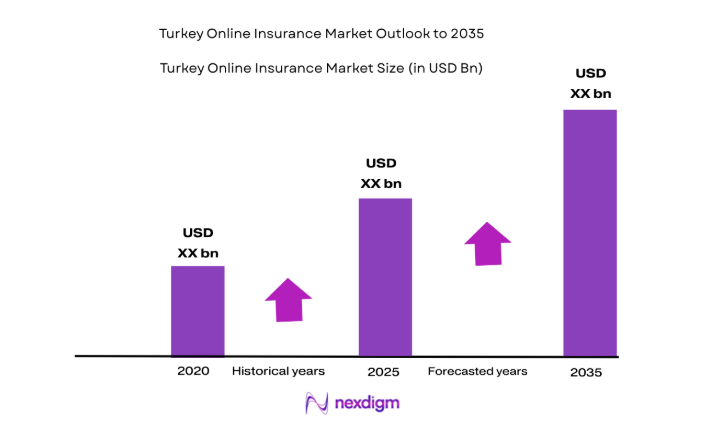
The Turkey Online Insurance Market is growing rapidly, driven by increasing consumer adoption of digital platforms and the growing demand for convenience in purchasing insurance policies. In recent assessments, the market size in terms of premium value is expected to reach approximately USD ~ billion, showcasing a robust trend towards the digitization of insurance processes. As more consumers turn to online platforms for purchasing insurance, the market is expanding significantly across life, health, and motor insurance segments. The proliferation of mobile devices and enhanced digital payment systems further drives market penetration.
Certain cities, including Istanbul and Ankara, dominate the market due to their well-established infrastructure, higher internet penetration, and greater consumer awareness of digital insurance products. Istanbul, as the economic and financial hub, has seen substantial growth in digital insurance adoption, while Ankara benefits from strong government support for digitalization in the insurance sector. These cities continue to be the primary contributors to the market’s expansion, aided by tech advancements and government initiatives encouraging digital transformations in the financial services sector.
Market Segmentation
By Product Type
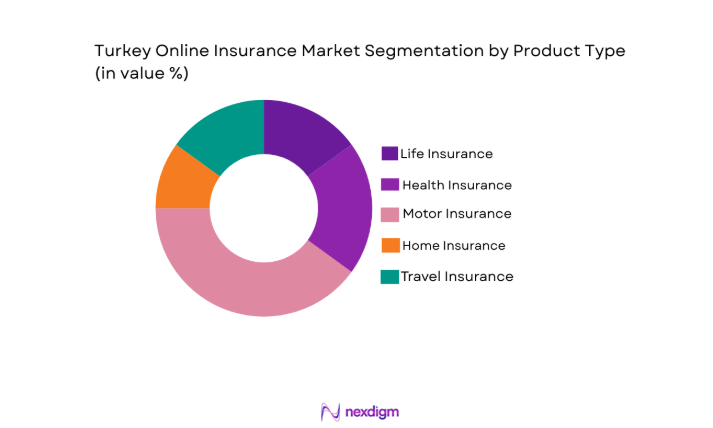
Turkey Online Insurance Market is segmented by product type into life insurance, health insurance, motor insurance, home insurance, and travel insurance. The dominant sub-segment in the Turkish market is motor insurance. This can be attributed to the rising demand for personal vehicle coverage due to increased vehicle ownership and the growing recognition of the necessity of online platforms for policy comparison and purchasing. With digital penetration increasing across urban populations, more individuals are opting for online policies to benefit from faster service and competitive pricing.
By Platform Type
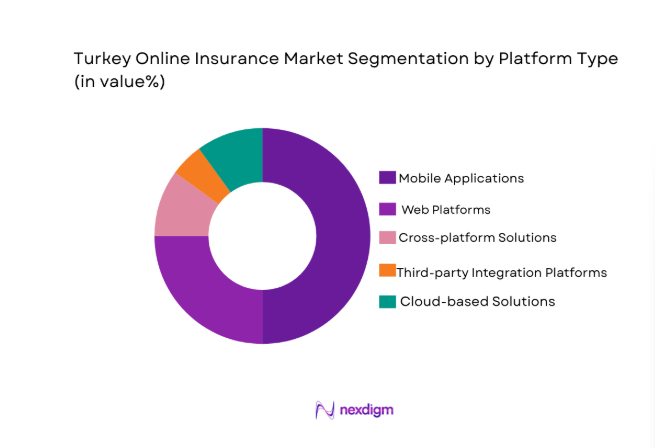
Turkey Online Insurance Market is segmented by platform type into mobile applications, web platforms, cross-platform solutions, third-party integration platforms, and cloud-based solutions. Mobile applications dominate the market due to their ease of use, high accessibility, and widespread smartphone penetration. Consumers prefer mobile apps for their convenience, allowing them to access insurance products anytime and anywhere. The integration of mobile payment systems further enhances the appeal of these platforms, contributing to their large share in the market.
Competitive Landscape
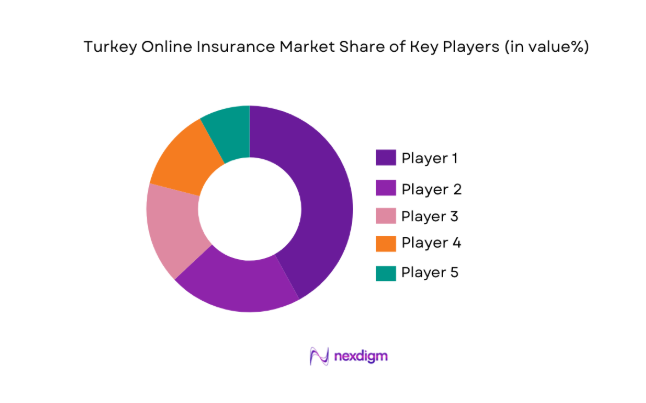
The competitive landscape of the Turkey Online Insurance Market is characterized by consolidation, with several large international and local players dominating the space. These players influence the market by offering diverse products, competitive pricing strategies, and integrated technology solutions for customer engagement. The increasing focus on customer-centric solutions and AI-based claims processing is reshaping the competitive environment, resulting in heightened competition for market share among leading companies.
| Company Name | Establishment Year | Headquarters | Technology Focus | Market Reach | Key Products | Revenue | Additional Parameter |
| Axa Sigorta | 1985 | Istanbul, Turkey | ~ | ~ | ~ | ~ | ~ |
| Allianz Turkey | 1993 | Istanbul,
Turkey |
~ | ~ | ~ | ~ | ~ |
| Mapfre Sigorta | 2000 | Istanbul, Turkey | ~ | ~ | ~ | ~ | ~ |
| Zurich Sigorta | 1986 | Istanbul, Turkey | ~ | ~ | ~ | ~ | ~ |
| Generali Sigorta | 2001 | Istanbul, Turkey | ~ | ~ | ~ | ~ | ~ |
Turkey Online Insurance Market Analysis
Growth Drivers
Increasing internet penetration
The significant rise in internet penetration across Turkey has facilitated the adoption of online insurance platforms, allowing users to easily compare and purchase policies. This driver is particularly strong among younger, tech-savvy populations who seek the convenience of online transactions. As mobile internet access improves, the number of consumers turning to digital insurance options increases significantly. This growth driver continues to gain traction, supported by Turkey’s improving digital infrastructure and higher smartphone penetration rates. As mobile apps and web platforms become more streamlined, consumers are shifting away from traditional insurance agents, thus driving the demand for digital platforms. The rise of online payment systems further bolsters the growth of online insurance, enhancing the ease of purchasing and processing claims.
Digital marketing and consumer awareness
As insurance companies in Turkey increasingly shift their focus to digital platforms, digital marketing campaigns play a crucial role in educating and engaging consumers. These campaigns highlight the advantages of online insurance, such as cost-effectiveness, speed, and convenience. With more consumers becoming aware of the benefits of online transactions, the adoption of online insurance is expected to grow. As the digital ecosystem continues to evolve, more individuals will opt for online platforms, contributing to the growth of the market.
Market Challenges
Cybersecurity threat
With the growth of the online insurance sector, there is an increasing concern regarding cybersecurity risks. As more consumers engage with digital insurance platforms, personal and financial data becomes vulnerable to cyberattacks. This challenge is particularly pressing in Turkey, where digital literacy is increasing, but security measures may not be as advanced. Cybersecurity risks lead to a lack of consumer confidence in online transactions and insurance processes. Insurers must invest in robust cybersecurity infrastructure to protect customer data and maintain trust. Without enhanced security measures, there is the risk of damaging the reputation of online insurance platforms, leading to a decline in market participation.
Regulatory hurdles and compliance
As Turkey’s online insurance market grows, there will likely be a tightening of regulations governing digital transactions, data protection, and consumer rights. The need to comply with evolving regulatory standards can be challenging for insurance companies, especially when it comes to cross-border transactions and handling sensitive data. These regulations may impose additional costs on insurers, making it difficult for smaller companies to compete. Navigating these complex legal frameworks while maintaining compliance will be a significant challenge for the sector moving forward.
Opportunities
Integration of telematics for motor insurance
One significant opportunity in the Turkish online insurance market is the integration of telematics for motor insurance. By using telematics, insurance companies can offer personalized pricing based on real-time data about driving behavior. This technology allows for dynamic pricing models that reflect actual driving habits, encouraging safer driving and reducing premiums for consumers who exhibit lower-risk behaviors. The demand for telematics-enabled insurance is expected to rise as consumers become more aware of its benefits. This trend is particularly appealing in Turkey, where the automotive sector is growing rapidly.
Expansion of micro-insurance products
Micro-insurance is an emerging opportunity in Turkey’s online insurance market. With the increasing penetration of smartphones and internet access, insurance companies can offer affordable, small-scale policies to a broader population, especially targeting low-income individuals who previously could not afford traditional insurance. This opportunity allows insurers to tap into underserved markets and broaden their customer base. As consumers become more familiar with the concept of micro-insurance, demand is expected to rise, contributing to market expansion.
Future Outlook
The future outlook of the Turkey Online Insurance Market is expected to remain strong, driven by advancements in technology, shifting consumer behavior, and regulatory support for digital transformation. Over the next five years, digital insurance platforms will likely witness increased adoption, particularly in the health and motor insurance sectors. The integration of advanced technologies such as AI, IoT, and blockchain will revolutionize the industry, offering consumers better products and improved claims processing efficiency. With ongoing government efforts to foster digital growth, the market will continue to expand, driven by demand-side factors such as increasing smartphone usage, internet connectivity, and consumer demand for convenience.
Major Players
- Axa Sigorta
- Allianz Turkey
- Mapfre Sigorta
- Zurich Sigorta
- Generali Sigorta
- Anadolu Sigorta
- Bupa Acıbadem Sigorta
- Sompo Japan Sigorta
- Raya Insurance
- MetLife Sigorta
- Turkey Sigorta
- Yapı Kredi Sigorta
- QBE Insurance
- Fiba Sigorta
- Eureko Sigorta
Key Target Audience
- Investments and venture capitalist firms
- Government and regulatory bodies
- Financial institutions
- Insurance brokers and agents
- Large corporations
- E-commerce platforms
- Startups in the insurance technology space
- Online insurance aggregators
Research Methodology
Step 1: Identification of Key Variables
The first step involves identifying key market variables, including the current market size, trends, and consumer behavior patterns that influence the online insurance sector in Turkey.
Step 2: Market Analysis and Construction
Data is collected through secondary research and analysis of existing reports, followed by primary research through surveys and expert consultations to understand consumer preferences and market dynamics.
Step 3: Hypothesis Validation and Expert Consultation
The hypotheses derived from the research are validated by consulting with industry experts and key stakeholders in the Turkish insurance market to ensure accuracy.
Step 4: Research Synthesis and Final Output
The final output is synthesized by compiling all relevant data and analysis into a comprehensive market report that provides actionable insights for stakeholders.

- Executive Summary
- Research Methodology (Definitions, Scope, Industry Assumptions, Market Sizing Approach, Primary & Secondary Research Framework, Data Collection & Verification Protocol, Analytic Models & Forecast Methodology, Limitations & Research Validity Checks)

- Market Definition and Scope
- Value Chain & Stakeholder Ecosystem
- Regulatory / Certification Landscape
- Sector Dynamics Affecting Demand
- Strategic Initiatives & Infrastructure Growth

- Growth Drivers
Increasing smartphone penetration
Growing adoption of digital payment solutions
Rising awareness of online insurance benefits
Advancements in data analytics and AI
Government support for digitalization in insurance - Market Challenges
Lack of trust in online platforms
Cybersecurity threats and data privacy concerns
Regulatory challenges in digital insurance
Slow adoption among older generations
Complexity in policy comparison and selection - Market Opportunities
Expansion of digital insurance for SMEs
Emerging markets for digital life insurance products
Integration of telematics for auto insurance - Trends
Growth in mobile insurance applications
Integration of AI for automated claims processing
Adoption of blockchain for transparent insurance contracts
Increased focus on personalized insurance products
Rising popularity of subscription-based insurance models - Government Regulations & Defense Policy
Data protection and privacy laws
Insurance regulatory reforms
Incentives for digital transformation in the insurance sector - SWOT Analysis
- Stakeholder and Ecosystem Analysis
- Porter’s Five Forces Analysis
- Competition Intensity and Ecosystem Mapping

- By Market Value, 2020-2025
- By Installed Units, 2020-2025
- By Average System Price, 2020-2025
- By System Complexity Tier, 2020-2025

- By System Type (In Value%)
Life Insurance
Health Insurance
Motor Insurance
Home Insurance
Travel Insurance - By Platform Type (In Value%)
Mobile Applications
Web Platforms
Cross-platform Solutions
Third-party Integration Platforms
Cloud-based Solutions - By Fitment Type (In Value%)
Direct-to-Consumer Platforms
Agent-based Platforms
Aggregator Platforms
Corporate Solutions
Multi-channel Platforms - By End User Segment (In Value%)
Individual Consumers
SMEs
Large Enterprises
Government Agencies
Non-profit Organizations - By Procurement Channel (In Value%)
Direct Online Sales
Broker Channels
Aggregator Websites
Mobile App-based Sales
Partnerships with Financial Institutions

- Market structure and competitive positioning
Market share snapshot of major players - Cross Comparison Parameters (System Type, Platform Type, Procurement Channel, End User Segment, Fitment Type)
- SWOT Analysis of Key Competitors
- Pricing & Procurement Analysis
- Key Players
Axa Sigorta
Allianz Turkey
Mapfre Sigorta
Zurich Sigorta
Generali Sigorta
Anadolu Sigorta
Bupa Acıbadem Sigorta
Sompo Japan Sigorta
Raya Insurance
MetLife Sigorta
Turkey Sigorta
Yapı Kredi Sigorta
QBE Insurance
Fiba Sigorta
Eureko Sigorta

- Consumers’ growing preference for online insurance options
- SMEs seeking affordable, flexible insurance solutions
- Corporate adoption of digital platforms for employee benefits
- Government support for digital health insurance policies

- Forecast Market Value, 2026-2035
- Forecast Installed Units, 2026-2035
- Price Forecast by System Tier, 2026-2035
- Future Demand by Platform, 2026-2035


 Request a Sample
 Ask for Customization
 Get a Quote
 Enquire Now