
 Download PDF
 Download PDF
Market Overview
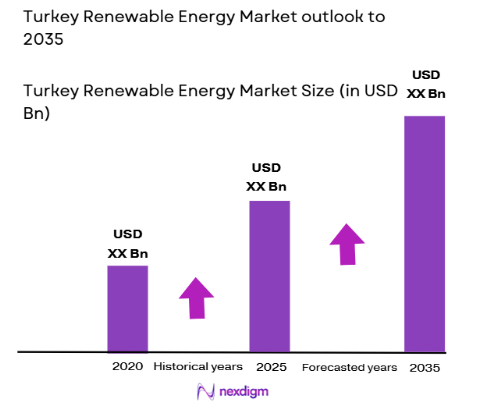
The Turkey Renewable Energy Market is expected to reach a significant market size based on recent historical assessments. The market growth is primarily driven by the government’s strategic initiatives, including substantial investments in clean energy technologies. These efforts are reinforced by policies promoting the transition to sustainable energy sources and decreasing reliance on fossil fuels. With increasing public and private investments, the renewable energy market in Turkey is forecast to expand further, with solar, wind, and geothermal sectors leading the charge.
Dominant cities in Turkey’s renewable energy landscape include Istanbul, Ankara, and Izmir, which benefit from favorable geographical conditions and robust infrastructure. These cities have seen increasing investments in renewable energy projects, driven by their strategic location and large-scale adoption of sustainable energy solutions. Turkey’s growing renewable energy capacity is supported by these cities’ development of state-of-the-art infrastructure, the availability of government incentives, and increasing demand for energy security and sustainability.
Market Segmentation
By System Type:
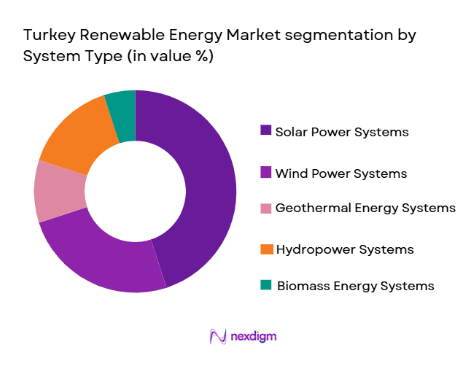
The Turkey Renewable Energy market is segmented by system type into solar power systems, wind power systems, geothermal energy systems, hydropower systems, and biomass energy systems. Recently, solar power systems have a dominant market share due to factors such as the country’s high solar radiation potential and cost-effective technology advancements. The government’s initiatives to increase solar capacity through subsidies and incentives have further supported the growth of this sub-segment, making it the leader in the renewable energy space.
By Platform Type:
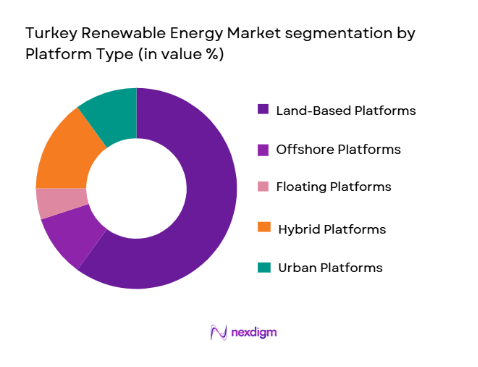
The Turkey Renewable Energy market is also segmented by platform type, including land-based platforms, offshore platforms, floating platforms, hybrid platforms, and urban platforms. Land-based platforms currently dominate the market due to their established infrastructure and scalability. These platforms are widely used in both solar and wind energy projects across Turkey, taking advantage of the country’s vast land areas and favorable terrain for renewable energy production.
Competitive Landscape
The competitive landscape of the Turkey Renewable Energy market is highly dynamic, with major players leading the market through technological innovation and large-scale project developments. These players drive the consolidation of the market, supported by both domestic and international investments. Their technological advancements and ability to secure government contracts ensure their strong position in Turkey’s transition to renewable energy.
| Company Name | Establishment Year | Headquarters | Technology Focus | Market Reach | Key Products | Revenue | Additional Parameter |
| Siemens Gamesa | 1976 | Spain | ~ | ~ | ~ | ~ | ~ |
| Vestas Wind Systems | 1945 | Denmark | ~ | ~ | ~ | ~ | ~ |
| First Solar | 1999 | United States | ~ | ~ | ~ | ~ | ~ |
| Enel Green Power | 2008 | Italy | ~ | ~ | ~ | ~ | ~ |
| Nordex SE | 1985 | Germany | ~ | ~ | ~ | ~ | ~ |
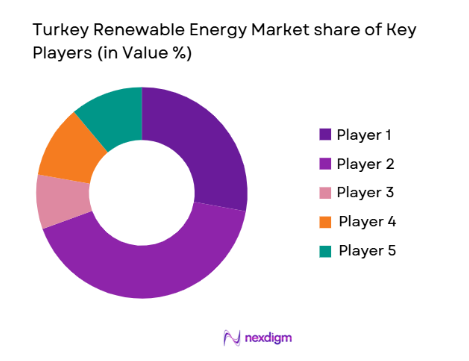
Turkey Renewable Energy Market Analysis
Growth Drivers
Government Incentives:
Government incentives have played a crucial role in accelerating the adoption of renewable energy in Turkey. The country’s renewable energy policy includes various financial mechanisms, including subsidies, grants, and tax incentives, designed to make renewable energy projects more attractive to investors. These incentives have made solar and wind projects highly viable for both local and international players. Furthermore, the Turkish government’s target to meet ambitious renewable energy goals by 2030 has driven substantial investments into the sector. With an increasing focus on sustainable energy, the government’s push for a greener future continues to stimulate market growth. This policy support significantly lowers entry barriers, attracting new entrants and ensuring continuous expansion of renewable capacity. The result is a vibrant, rapidly evolving renewable energy landscape in Turkey, contributing significantly to energy security and sustainability.
Technological Advancements:
Technological advancements in renewable energy generation and storage have been key growth drivers in Turkey’s renewable energy market. Innovations in solar photovoltaic cells, wind turbine efficiency, and energy storage systems have drastically reduced the cost of renewable energy production. These advancements have enhanced the scalability of renewable energy projects in Turkey, especially in remote and off-grid locations. As costs continue to decrease, renewable technologies are becoming more accessible to a wider range of consumers, from industrial players to residential homes. Additionally, innovations in smart grid systems have improved the efficiency of energy distribution, making renewable energy a more reliable and cost-effective source of power. This has further strengthened the renewable energy market’s foundation, pushing it toward broader integration into Turkey’s national grid and international export.
Market Challenges
Regulatory Hurdles:
Despite the government’s support for renewable energy, regulatory hurdles still pose significant challenges in Turkey’s renewable energy market. Complex permitting processes, delays in project approvals, and inconsistent regulatory frameworks can slow down the development of renewable energy projects. These challenges are exacerbated by the bureaucracy involved in acquiring land and permits, which can significantly impact project timelines. Investors often face lengthy approval processes for both large-scale infrastructure and small-scale renewable energy projects, especially in urban areas where land availability is limited. Furthermore, shifting regulations and changes in government policy create uncertainty, which can deter potential investors from committing to long-term projects. Inconsistent regulatory policies can hinder the growth of the renewable sector, despite the overall favorable market conditions.
Infrastructure Deficiencies:
Another challenge facing Turkey’s renewable energy market is the insufficient development of infrastructure to support large-scale renewable energy projects. The country’s energy grid, although extensive, has limitations in handling the intermittency of renewable energy sources like wind and solar. This results in inefficiencies in energy distribution and storage, particularly in rural areas where renewable energy generation is concentrated. The lack of sufficient storage solutions and smart grid technology further complicates the integration of renewable energy into the national grid. As demand for renewable energy increases, it is essential for Turkey to invest heavily in modernizing its infrastructure to accommodate future energy needs and ensure the efficient distribution of clean energy. Overcoming these infrastructure challenges will be crucial to realizing the country’s renewable energy ambitions.
Opportunities
Expansion of Solar and Wind Energy Projects:
With Turkey’s abundant solar and wind resources, there is a significant opportunity for the continued expansion of solar and wind energy projects. The government’s renewable energy targets and commitment to decreasing fossil fuel dependency create a favorable environment for these projects. The Turkish government has introduced various funding programs and incentives that encourage both local and foreign investors to develop large-scale wind and solar farms. The continued decrease in the cost of wind and solar technology makes these projects more financially feasible, providing an opportunity for rapid market expansion. As urban areas increasingly adopt renewable energy solutions, rural regions are expected to see growth in distributed energy generation, including community solar and wind projects. This transition to cleaner energy will also enhance Turkey’s energy security and reduce reliance on energy imports.
Energy Storage Solutions:
Another growing opportunity within Turkey’s renewable energy market is the development of energy storage solutions. As renewable energy sources like wind and solar are intermittent, energy storage technologies are essential for ensuring a steady and reliable power supply. Turkey’s renewable energy market offers a lucrative opportunity for the development and adoption of advanced battery storage systems, particularly in regions with high renewable energy generation potential. The market for energy storage solutions is expected to grow rapidly as Turkey seeks to enhance the grid’s stability and reliability while integrating higher shares of renewable energy. Government support for innovative energy storage technologies, such as large-scale battery systems, can drive this opportunity forward, helping Turkey achieve its renewable energy goals and meet growing domestic and industrial demand.
Future Outlook
The future of Turkey’s renewable energy market looks promising, with continued growth expected across various sectors, particularly in solar and wind energy. Technological innovations and favorable government policies will drive this expansion, supported by growing investments in energy storage solutions and grid modernization. Increasing demand for clean energy from both industrial and residential sectors will further fuel market growth, positioning Turkey as a key player in the global renewable energy landscape.
Major Players
- Siemens Gamesa
- Vestas Wind Systems
- First Solar
- Enel Green Power
- Nordex SE
- Acciona
- GE Renewable Energy
- Suzlon Energy
- Goldwind
- Nordex
- Trina Solar
- JinkoSolar
- SunPower
- Canadian Solar
- RWE AG
Key Target Audience
- Investments and venture capitalist firms
- Government and regulatory bodies
- Renewable energy project developers
- Energy infrastructure developers
- Industrial energy consumers
- Residential energy consumers
- E-commerce and utility companies
- Environmental NGOs
Research Methodology
Step 1: Identification of Key Variables
This step involves identifying critical market variables such as technological advancements, regulatory landscape, and energy demand patterns that impact market dynamics.
Step 2: Market Analysis and Construction
Here, market segments are analyzed based on various parameters, including system types, platform types, and geographic regions. A detailed market model is constructed to understand the growth trends and barriers.
Step 3: Hypothesis Validation and Expert Consultation
Experts in the renewable energy industry provide insights and validate market assumptions, ensuring the research framework aligns with industry realities.
Step 4: Research Synthesis and Final Output
In the final step, the compiled research is synthesized, and findings are consolidated to produce a comprehensive market report, offering actionable insights for stakeholders.

- Executive Summary
- Research Methodology (Definitions, Scope, Industry Assumptions, Market Sizing Approach, Primary & Secondary Research Framework, Data Collection & Verification Protocol, Analytic Models & Forecast Methodology, Limitations & Research Validity Checks)

- Market Definition and Scope
- Value Chain & Stakeholder Ecosystem
- Regulatory / Certification Landscape
- Sector Dynamics Affecting Demand
- Strategic Initiatives & Infrastructure Growth

- Growth Drivers
Government Support for Renewable Energy Investments
Technological Advancements in Renewable Energy Systems
Rising Energy Demand and Sustainability Initiatives
Favorable Geographical Conditions for Solar and Wind Energy
International Investments and Partnerships in Turkey’s Renewable Sector - Market Challenges
High Initial Capital Investment for Renewable Energy Projects
Integration Challenges with Existing Energy Infrastructure
Regulatory and Compliance Barriers
Technological Gaps in Energy Storage Solutions
Market Volatility and Energy Price Fluctuations - Market Opportunities
Expansion in Solar Energy Adoption
Development of Offshore Wind Energy Projects
Collaboration with Private Sector for Renewable Energy Solutions - Trends
Growth in Decentralized Energy Generation Systems
Increased Focus on Energy Storage Solutions
Advancements in Smart Grid Technologies
Shift Towards Clean Energy in Urban Areas
Integration of AI and IoT in Renewable Energy Systems - Government Regulations & Defense Policy
Renewable Energy Incentives and Tax Benefits
Grid Connection Standards and Policies
Supportive Government Plans for Green Energy Transition - SWOT Analysis
- Stakeholder and Ecosystem Analysis
- Porter’s Five Forces Analysis
- Competition Intensity and Ecosystem Mapping

- By Market Value, 2020-2025
- By Installed Units, 2020-2025
- By Average System Price, 2020-2025
- By System Complexity Tier, 2020-2025

- By System Type (In Value%)
Solar Power Systems
Wind Power Systems
Geothermal Energy Systems
Hydropower Systems
Biomass Energy Systems - By Platform Type (In Value%)
Land-Based Platforms
Offshore Platforms
Floating Platforms
Hybrid Platforms
Urban Platforms - By Fitment Type (In Value%)
Onshore Solutions
Offshore Solutions
Integrated Solutions
Distributed Generation Solutions
Microgrid Solutions - By EndUser Segment (In Value%)
Government Agencies
Industrial Users
Residential Users
Commercial Users
Agricultural Sector - By Procurement Channel (In Value%)
Direct Procurement
Government Tenders
Private Sector Procurement
Third-party Distributors
Online Platforms - By Material / Technology (In Value%)
Photovoltaic Cells
Wind Turbine Components
Geothermal Heat Pumps
Hydropower Turbines
Biomass Conversion Technologies

- Market structure and competitive positioning
- Market share snapshot of major players
- CrossComparison Parameters (System Type, Platform Type, Procurement Channel, EndUser Segment, Fitment Type, Material / Technology, System Complexity Tier, Region, Market Growth, Technological Innovation)
- SWOT Analysis of Key Players
- Pricing & Procurement Analysis
- Key Players
Siemens Gamesa
Enel Green Power
Vestas Wind Systems
Sungrow Power Supply
GE Renewable Energy
Nordex SE
First Solar
Turbine Services Ltd.
Acciona
Nordex
TotalEnergies
Schneider Electric
Orsted
Iberdrola
Kalyon Energy

- Government Agencies’ Push for Renewable Energy Adoption
- Industrial Sector’s Shift Towards Sustainable Energy
- Residential Sector Demand for Solar Power Systems
- Commercial Sector Investment in Energy Efficiency Solutions

- Forecast Market Value, 2026-2035
- Forecast Installed Units, 2026-2035
- Price Forecast by System Tier, 2026-2035
- Future Demand by Platform, 2026-2035


 Request a Sample
 Ask for Customization
 Get a Quote
 Enquire Now