

 Download PDF
 Download PDF
Market Overview
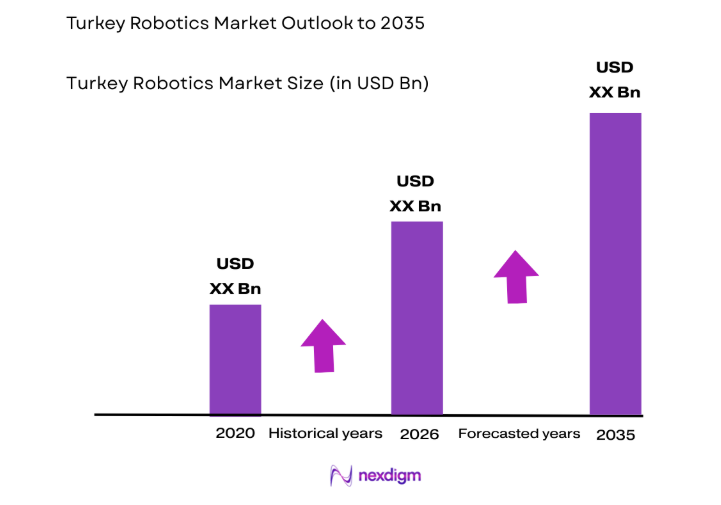
The Turkey robotics market is valued at approximately USD ~ billion in 2024, driven by increasing adoption across manufacturing, healthcare, and logistics sectors. Factors contributing to this growth include advancements in automation, improvements in robotics technology, and a robust industrial base. The demand for robotics solutions is being spurred by the need for efficiency, safety, and cost-effectiveness in manufacturing processes. The market’s growth is further supported by the expanding use of artificial intelligence and machine learning in robotic systems, enabling higher precision and flexibility in robotic applications.
The dominant regions in the Turkey robotics market include Istanbul, Ankara, and Izmir, where there is a high concentration of industrial facilities, technology hubs, and research institutions. These cities have become key centers of innovation, with favorable government policies promoting industrial automation. Istanbul leads the market due to its strategic location, infrastructure, and strong presence of multinational corporations. Ankara, with its focus on research and development, supports the country’s robotics innovation. Izmir is emerging as a hub for manufacturing and automation, contributing to the regional growth of robotics technology.
Market Segmentation
By Product Type
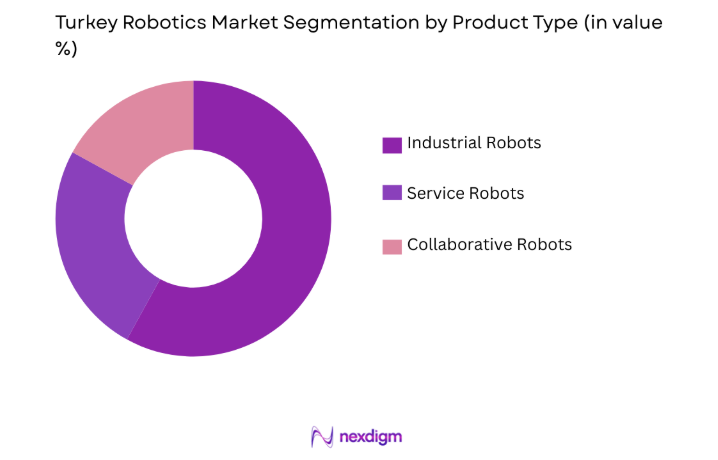
The Turkey robotics market is segmented by product type into industrial robots, service robots, and collaborative robots. Recently, industrial robots have dominated the market share due to the increasing demand for automation in sectors such as automotive, electronics, and heavy industries. The growing need for increased efficiency and precision in production lines has driven the adoption of industrial robots, which are seen as crucial for maintaining competitiveness in global markets.
By Application Type
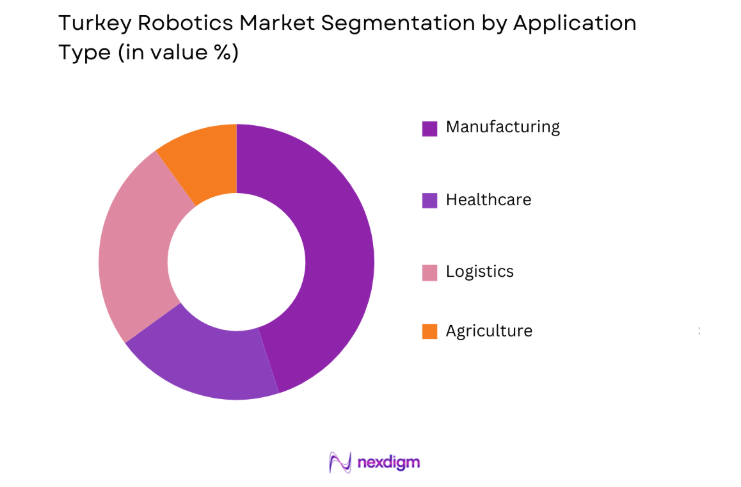
The Turkey robotics market is also segmented by application type into manufacturing, healthcare, logistics, and agriculture. The manufacturing segment has the largest share, as robotics play a significant role in streamlining production processes and improving output quality. Robotics systems are used extensively in automotive manufacturing, where precision and speed are crucial for maintaining production targets. Their ability to handle repetitive tasks, enhance safety, and optimize resources has driven this segment’s dominance.
Competitive Landscape
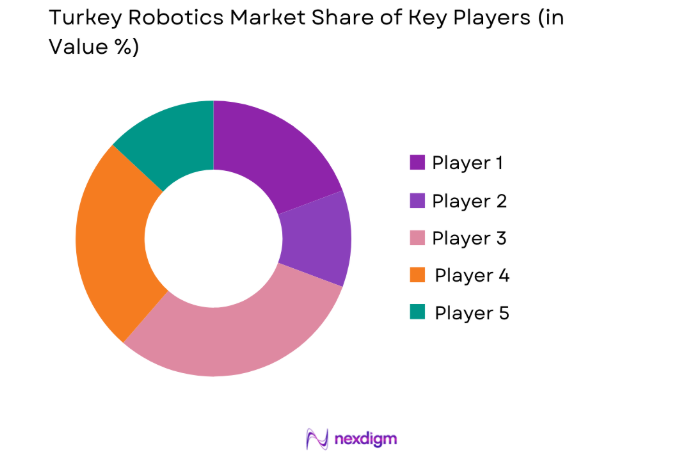
The competitive landscape of the Turkey robotics market is influenced by both global players and local innovators. The market is consolidating, with key international companies entering partnerships or acquiring local firms to expand their footprint. Major players focus on integrating artificial intelligence, machine learning, and IoT in their robotics solutions to enhance product offerings. Local players are benefiting from government initiatives and regulatory support that encourage innovation in the sector. The leading firms are pushing the boundaries of automation across multiple industries, with investments in R&D playing a central role in maintaining competitiveness.
| Company Name | Establishment Year | Headquarters | Technology Focus | Market Reach | Key Products | Revenue (USD) | Industry-Specific Focus |
| ABB Robotics | 1988 | Zurich, Switzerland | ~ | ~ | ~ | ~ | ~ |
| KUKA Robotics | 1898 | Augsburg, Germany | ~ | ~ | ~ | ~ | ~ |
| FANUC Corporation | 1956 | Oshino, Japan | ~ | ~ | ~ | ~ | ~ |
| Yaskawa Electric | 1915 | Kitakyushu, Japan | ~ | ~ | ~ | ~ | ~ |
| TM Robotics | 1998 | Japan | ~ | ~ | ~ | ~ | ~ |
Turkey Robotics Market Analysis
Growth Drivers
Technological Advancements in Artificial Intelligence
The growth of the Turkey robotics market is significantly driven by advancements in artificial intelligence (AI). The integration of AI in robotic systems allows for enhanced decision-making capabilities, enabling robots to perform tasks with higher precision and adaptability. This has made robotics solutions more attractive to industries that require automation for complex tasks such as precision assembly and inspection. As AI technology improves, the ability of robots to work autonomously and interact with human operators in collaborative environments continues to expand, thus fostering growth across various sectors, particularly in manufacturing and healthcare. Moreover, the rise of machine learning algorithms has further boosted the demand for smarter and more efficient robots capable of learning from their environment and improving performance over time.
Government Support for Robotics Innovation
The Turkish government’s increasing focus on industrial automation is a key growth driver for the robotics market. The government has implemented policies and financial incentives aimed at encouraging the adoption of robotics in key industries, such as automotive, electronics, and textiles. These initiatives are designed to improve the productivity and competitiveness of domestic manufacturers by making them more reliant on robotic systems. As a result, the robotics market is benefiting from financial support, grants, and subsidies that help offset the costs of implementing robotic technologies. Additionally, government-backed programs that foster innovation and research in robotics have contributed to the growth of local robotics firms, enabling them to compete in the global market.
Market Challenges
High Initial Investment Costs
One of the major challenges faced by the Turkey robotics market is the high initial cost of implementing robotic systems. While robots can significantly improve operational efficiency and reduce labor costs in the long run, the upfront investment required for procurement, installation, and maintenance remains a barrier for many small and medium-sized enterprises (SMEs). These companies often find it difficult to allocate the necessary resources for robotics technology, hindering their adoption in industries outside of the major automotive and electronics sectors. Although the long-term savings from robotics adoption are evident, the high initial costs remain a significant challenge for many businesses looking to automate their operations.
Technological Integration and Workforce Transition
Another challenge facing the Turkey robotics market is the need for seamless integration between robotics systems and existing infrastructure. Many businesses, particularly in traditional sectors such as textiles and food processing, struggle to incorporate advanced robotic systems into their legacy equipment and processes. This integration requires significant changes to production lines and additional investments in complementary technologies such as sensors, control systems, and software. Furthermore, there is a concern regarding workforce displacement, as automation may result in job losses or the need for reskilling of the labor force. Addressing these concerns while ensuring smooth transitions in the workplace is a key challenge for robotics adoption.
Opportunities
Expansion in Healthcare Robotics
The healthcare sector presents significant growth opportunities for the Turkey robotics market. With an aging population and increasing demand for medical procedures, robotics in healthcare can provide essential solutions, such as robotic surgery, rehabilitation, and elder care. The adoption of robotic systems in hospitals, clinics, and healthcare facilities is expected to increase as these technologies offer higher precision, faster recovery times, and reduced human error in critical medical procedures. Additionally, with advancements in telemedicine and remote healthcare solutions, there is an increasing opportunity for robotics to play a vital role in improving access to quality healthcare in underserved regions of Turkey.
Growth of Collaborative Robotics
Collaborative robots, or cobots, are expected to see significant growth in Turkey as industries increasingly embrace automation in areas requiring direct human-robot interaction. Cobots are designed to work safely alongside human operators without the need for safety barriers, making them ideal for small and medium-sized enterprises (SMEs) that want to implement automation but cannot afford to replace their entire workforce. The growing acceptance of cobots in sectors such as logistics, electronics assembly, and consumer goods manufacturing presents a unique opportunity for robotics companies to provide cost-effective and flexible automation solutions to a broader range of industries.
Future Outlook
Over the next five years, the Turkey robotics market is expected to witness substantial growth driven by advancements in artificial intelligence, robotics technology, and government support for industrial automation. Demand for robotics systems is anticipated to rise across sectors such as manufacturing, logistics, healthcare, and agriculture as companies seek greater efficiency and flexibility in their operations. Technological developments, particularly in collaborative and autonomous robots, will open new opportunities for small and medium-sized enterprises (SMEs) to adopt robotics solutions. With regulatory support for innovation and increasing investments in robotics R&D, Turkey is poised to become a key player in the global robotics market.
Major Players
- ABB Robotics
- KUKA Robotics
- FANUC Corporation
- Yaskawa Electric
- TM Robotics
- Universal Robots
- Epson Robots
- Mitsubishi Electric
- Denso Robotics
- Kawasaki Robotics
- Omron Corporation
- AUBO Robotics
- Staubli Robotics
- Festo Automation
- Hyundai Robotics
Key Target Audience
- Investments and venture capitalist firms
- Government and regulatory bodies
- Robotics manufacturers and developers
- Industrial automation companies
- Healthcare institutions and medical technology providers
- Automotive manufacturers and suppliers
- Logistics companies
Research Methodology
Step 1: Identification of Key Variables
The research process begins by identifying the key variables that influence the robotics market, such as technological trends, market demand, and regulatory influences. These variables help in shaping the market’s overall scope and direction.
Step 2: Market Analysis and Construction
Comprehensive data collection and market analysis are conducted to understand market size, segmentation, growth drivers, challenges, and opportunities. The analysis involves reviewing industry reports, market data, and competitive intelligence.
Step 3: Hypothesis Validation and Expert Consultation
Experts in robotics, automation, and related fields are consulted to validate the hypotheses generated during the analysis. This step ensures that the research accurately reflects market realities and aligns with expert insights.
Step 4: Research Synthesis and Final Output
The final research synthesis is prepared, combining all the findings and insights to present a detailed and actionable market report. The research is then finalized and presented to stakeholders.

- Executive Summary
- Research Methodology (Definitions, Scope, Industry Assumptions, Market Sizing Approach, Primary & Secondary Research Framework, Data Collection & Verification Protocol, Analytic Models & Forecast Methodology, Limitations & Research Validity Checks)

- Market Definition and Scope
- Value Chain & Stakeholder Ecosystem
- Regulatory / Certification Landscape
- Sector Dynamics Affecting Demand

- Growth Drivers
Technological advancements in robotics
Rising demand for automation in manufacturing
Government initiatives to support industrial automation - Market Challenges
High upfront costs of robotic systems
Integration complexities with legacy systems
Concerns over workforce displacement - Market Opportunities
Growth of service robots in healthcare and logistics
Adoption of collaborative robots in small-medium enterprises
Expansion of robots in agriculture and farming - Trends
Increased use of AI and machine learning in robotics
Rise of autonomous robots for logistics and warehouse management - Government Regulations
Regulatory standards for robot safety
Compliance with environmental regulations
Government funding for robotics research - SWOT Analysis
- Porter’s Five Forces

- By Market Value, 2020-2025
- By Installed Units, 2020-2025
- By Average System Price, 2020-2025
- By System Complexity Tier, 2020-2025

- By System Type (In Value%)
Industrial Robots
Collaborative Robots
Articulated Robots
SCARA Robots
Delta Robots - By Platform Type (In Value%)
Manufacturing Robots
Service Robots
Autonomous Mobile Robots
Robotic Arms - By Fitment Type (In Value%)
Integrated Robots
Standalone Robots
Modular Robots
Hybrid Robots - By End User Segment (In Value%)
Automotive
Manufacturing
Healthcare

- Market Share Analysis
- Cross Comparison Parameters (System Type, Platform Type, End User Segment, Fitment Type, Technology Integration, Pricing, Complexity Level)
- SWOT Analysis of Key Competitors
- Pricing & Procurement Analysis
- Key Players
ABB
KUKA
Fanuc Corporation
Yaskawa Electric
Universal Robots
Omron Corporation
Mitsubishi Electric
Denso Robotics
Staubli Robotics
Epson Robots
Kawasaki Robotics
Honda Robotics
Siasun Robot & Automation
Rethink Robotics
Teradyne

- Increased adoption of robotics in automotive
- Growing demand for robots in logistics and warehousing
- Rise of medical robotics for surgery and rehabilitation
- Automation’s role in reducing costs in manufacturing

- Forecast Market Value, 2026-2035
- Forecast Installed Units, 2026-2035
- Price Forecast by System Tier, 2026-2035
- Future Demand by Platform, 2026-2035


 Request a Sample
 Ask for Customization
 Get a Quote
 Enquire Now