
 Download PDF
 Download PDF
Market Overview
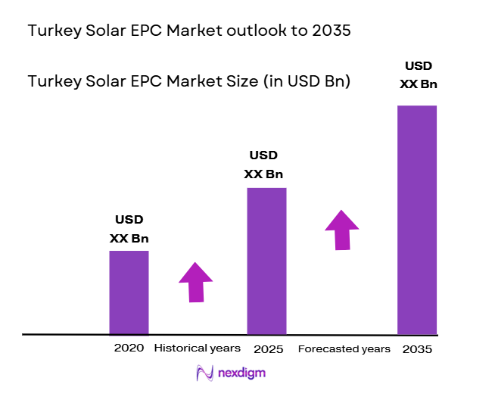
The Turkey Solar EPC market is estimated to reach a significant value based on a recent historical assessment. This market is driven by various factors, such as government incentives and the increasing adoption of renewable energy to reduce carbon footprints. With a growing demand for solar power, the market is expected to witness substantial growth. The rise of large-scale solar projects in Turkey and the government’s active role in promoting sustainable energy systems play key roles in expanding this market. The country’s increasing focus on solar power as a sustainable energy source is accelerating the demand for solar engineering, procurement, and construction (EPC) services, making it one of the most promising markets in the region.
Turkey has emerged as a dominant player in the solar EPC market due to its strategic location, abundant solar resources, and government-led initiatives promoting renewable energy. Key regions like Istanbul, Ankara, and Konya are major hubs driving solar energy adoption. These areas are well-connected to infrastructure and have favorable climatic conditions, making them ideal for large-scale solar projects. Additionally, Turkey’s regulatory framework, including renewable energy support mechanisms, has fostered a positive environment for the expansion of the solar EPC sector.
Market Segmentation
By Product Type:
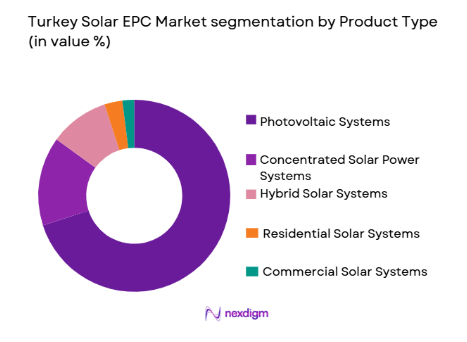
The Turkey Solar EPC market is segmented by product type into photovoltaic (PV) systems, concentrated solar power (CSP) systems, and hybrid solar systems. Recently, photovoltaic systems have a dominant market share due to the increasing demand for clean and affordable energy, the growing adoption of solar power in residential, commercial, and industrial sectors, and the cost-effectiveness of PV technology. With technological advancements and the continuous decline in the cost of PV panels, the demand for PV systems is expected to continue driving growth. The availability of skilled labor, as well as government incentives, has further bolstered the widespread adoption of PV systems across the country.
By Platform Type:
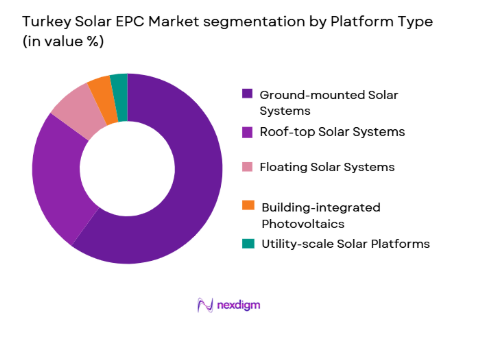
The Turkey Solar EPC market is segmented by platform type into ground-mounted solar systems, rooftop solar systems, and floating solar systems. Recently, ground-mounted solar systems have a dominant market share due to their scalability, higher energy production potential, and suitability for large-scale solar projects. Ground-mounted systems have been widely adopted for utility-scale installations, making them ideal for regions with ample land availability. In addition, lower maintenance costs and the ability to harness higher solar energy yield contribute to the dominance of ground-mounted solar systems. The growing number of utility-scale solar farms further supports their market dominance.
Competitive Landscape
The competitive landscape of the Turkey Solar EPC market is characterized by the presence of several large players, each contributing to the growth of the sector. The market has witnessed consolidation, with major global players entering the market due to its potential for growth, driven by Turkey’s renewable energy goals and attractive policy frameworks. These players have been leveraging advanced technologies to enhance their product offerings and strengthen their market presence. The major players in the market continue to influence industry trends, set benchmarks for solar energy projects, and contribute significantly to the overall market growth. Consolidation and strategic partnerships are expected to continue in the upcoming years.
| Company Name | Establishment Year | Headquarters | Technology Focus | Market Reach | Key Products | Revenue | Additional Market-specific Parameter |
| Enel Green Power | 2008 | Italy | ~ | ~ | ~ | ~ | ~ |
| Siemens Gamesa | 1976 | Spain | ~ | ~ | ~ | ~ | ~ |
| BayWa r.e. Solar Systems | 2009 | Germany | ~ | ~ | ~ | ~ | ~ |
| Kalyon Energy | 2000 | Turkey | ~ | ~ | ~ | ~ | ~ |
| Çalik Enerji | 1981 | Turkey | ~ | ~ | ~ | ~ | ~ |
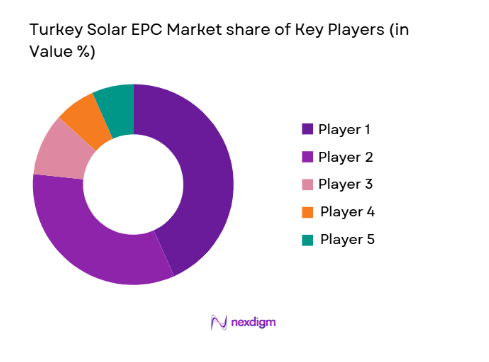
Turkey Solar EPC Market Analysis
Growth Drivers
Government Incentives for Renewable Energy:
Government incentives for renewable energy have been a major driver of the Turkey Solar EPC market. The Turkish government has implemented policies aimed at reducing the country’s dependency on fossil fuels while promoting the use of renewable energy. These initiatives include feed-in tariffs (FiT) and long-term power purchase agreements (PPAs) for solar energy producers. Additionally, tax exemptions and subsidies for solar projects have attracted both local and foreign investors. With these favorable conditions, the Turkish government has successfully created an environment that encourages the growth of the solar energy sector, especially in terms of large-scale projects. As a result, solar EPC services are experiencing increased demand for project development, including installation, operation, and maintenance. This trend is expected to continue as Turkey works towards meeting its renewable energy targets.
Technological Advancements in Solar Energy:
Technological advancements in solar energy systems, particularly in photovoltaic (PV) technology, have significantly contributed to the growth of the Turkey Solar EPC market. The continuous decline in the cost of solar panels, coupled with efficiency improvements, has made solar energy increasingly accessible for businesses and consumers. The integration of advanced technologies like energy storage systems, smart grid solutions, and energy management systems is expected to play a crucial role in the growth of the solar EPC market. As solar energy continues to evolve and become more efficient, the demand for EPC services will rise. Innovations in system integration and performance monitoring also contribute to enhancing the overall energy output and efficiency of solar installations, making the technology more attractive for large-scale projects.
Market Challenges
High Initial Capital Investment:
One of the primary challenges in the Turkey Solar EPC market is the high initial capital investment required for solar projects. Despite the long-term financial benefits and incentives, the upfront cost of solar panels, inverters, and energy storage systems can be a barrier for potential investors, especially in large-scale projects. Small and medium-sized businesses, as well as residential consumers, may find it difficult to afford the initial investment needed to implement solar systems. While government subsidies and financial support programs help mitigate this issue, the capital-intensive nature of solar installations remains a significant hurdle. Additionally, the costs associated with infrastructure development and grid integration further increase the financial burden, slowing the adoption of solar technologies in certain sectors.
Regulatory and Policy Uncertainties:
The Turkey Solar EPC market faces regulatory and policy uncertainties that hinder its full potential. While the Turkish government has made significant strides in encouraging the development of renewable energy, the lack of long-term policy clarity has created an element of risk for investors. Frequent changes in regulations, delays in permitting processes, and varying local laws can disrupt project timelines and increase costs. These uncertainties discourage private sector investment, particularly for large-scale solar projects. As the market evolves, a more stable regulatory framework is essential to instill confidence and attract the necessary capital for sustained growth in the sector.
Opportunities
Expansion of Solar Energy in Rural Areas:
One of the most significant opportunities in the Turkey Solar EPC market is the expansion of solar energy infrastructure in rural areas. These areas often lack access to reliable grid power, creating a strong demand for off-grid solar solutions. By harnessing solar energy, these rural regions can enjoy a more sustainable and cost-effective energy source. Moreover, the government’s rural electrification initiatives and renewable energy targets are encouraging the adoption of solar power in less developed areas. Solar EPC companies have a unique opportunity to capitalize on this demand by offering affordable, scalable solutions for rural electrification. This shift not only improves energy access but also contributes to regional development and job creation in remote areas.
Partnerships with Private Sector for Technological Advancements:
The Turkey Solar EPC market also presents opportunities for collaborations between private sector companies and EPC providers. By forming partnerships, solar energy companies can leverage cutting-edge technologies such as advanced inverters, battery storage systems, and smart grids. These collaborations will enable the development of more efficient and cost-effective solar power systems, particularly for industrial and commercial applications. As demand for solar power increases across various sectors, companies in the EPC space can benefit from stronger technological alliances and access to improved infrastructure. Furthermore, private sector participation can help unlock additional funding, making it easier to scale projects and enhance solar energy delivery to businesses and consumers.
Future Outlook
The Turkey Solar EPC market is poised for substantial growth in the coming years. The country’s focus on renewable energy is expected to drive increased demand for solar power, particularly in utility-scale installations. Technological advancements in solar energy and energy storage systems will further enhance market prospects. Regulatory support from the Turkish government, including tax incentives and favorable policy frameworks, is likely to encourage more investments in solar projects. These factors, combined with a growing awareness of the environmental impact of traditional energy sources, will contribute to the continued expansion of the Turkey Solar EPC market.
Major Players
- Enel Green Power
- Siemens Gamesa
- BayWa r.e. Solar Systems
- Kalyon Energy
- Çalik Enerji
- Renesola
- First Solar
- Trina Solar
- Canadian Solar
- JinkoSolar
- JA Solar
- SunPower
- Vestas
- SolarWorld
- SolarEdge
Key Target Audience
- Investments and venture capitalist firms
- Government and regulatory bodies
- Solar project developers
- Energy consultants and analysts
- Renewable energy equipment suppliers
- Industrial and commercial users of solar energy
- Financial institutions and investors
- Renewable energy technology developers
Research Methodology
Step 1: Identification of Key Variables
The key market variables and growth drivers for the Turkey Solar EPC market are identified based on both primary and secondary research sources.
Step 2: Market Analysis and Construction
Market data is gathered and analyzed to construct market models, segmentations, and future growth forecasts based on identified variables.
Step 3: Hypothesis Validation and Expert Consultation
A detailed review and validation of the hypotheses are conducted through expert consultations and feedback from industry stakeholders.
Step 4: Research Synthesis and Final Output
The final market report is synthesized, ensuring the accuracy of data and the clarity of insights, leading to a comprehensive output of findings.

- Executive Summary
- Research Methodology (Definitions, Scope, Industry Assumptions, Market Sizing Approach, Primary & Secondary Research Framework, Data Collection & Verification Protocol, Analytic Models & Forecast Methodology, Limitations & Research Validity Checks)

- Market Definition and Scope
- Value Chain & Stakeholder Ecosystem
- Regulatory / Certification Landscape
- Sector Dynamics Affecting Demand
- Strategic Initiatives & Infrastructure Growth

- Growth Drivers
Government incentives for renewable energy
Increase in solar energy adoption due to environmental awareness
Technological advancements in solar PV and energy storage
Falling installation costs of solar systems
Growing demand for clean energy in the industrial sector - Market Challenges
High initial capital investment for solar systems
Limited grid capacity and infrastructure
Regulatory barriers and policy uncertainties
Intermittency and energy storage challenges
Lack of skilled workforce in solar energy sector - Market Opportunities
Expansion of solar energy infrastructure in rural areas
Integration of solar with energy storage systems
Collaborations between private sector and government for solar projects - Trends
Rise of solar-plus-storage systems
Increased focus on utility-scale solar power plants
Growth of floating solar power installations
Shift towards solar as a sustainable energy solution for commercial buildings
Advances in energy management software for solar systems - Government Regulations & Defense Policy
Government policies promoting renewable energy growth
Incentives for solar energy projects under renewable energy schemes
Regulation of land use for large-scale solar projects - SWOT Analysis
- Stakeholder and Ecosystem Analysis
- Porter’s Five Forces Analysis
- Competition Intensity and Ecosystem Mapping

- By Market Value, 2020-2025
- By Installed Units, 2020-2025
- By Average System Price, 2020-2025
- By System Complexity Tier, 2020-2025

- By System Type (In Value%)
Photovoltaic (PV) Systems
Concentrated Solar Power (CSP) Systems
Hybrid Solar Systems
Residential Solar Systems
Commercial Solar Systems - By Platform Type (In Value%)
Ground-mounted Solar Systems
Roof-top Solar Systems
Floating Solar Systems
Building-integrated Photovoltaics (BIPV)
Utility-scale Solar Platforms - By Fitment Type (In Value%)
On-grid Solar Systems
Off-grid Solar Systems
Hybrid Systems
Portable Systems
Community Solar Projects - By EndUser Segment (In Value%)
Residential
Commercial
Industrial
Government & Public Infrastructure
Agricultural - By Procurement Channel (In Value%)
Direct Procurement
Government Tenders
Private Sector Procurement
Project Developers
Third-party Distributors - By Material / Technology (in Value%)
Monocrystalline Solar Panels
Polycrystalline Solar Panels
Thin-film Solar Panels
Solar Inverters
Solar Batteries

- Market structure and competitive positioning
- Market share snapshot of major players
- CrossComparison Parameters (System Type, Platform Type, Procurement Channel, EndUser Segment, Fitment Type, Material/Technology, Price Trends, Project Size, Geographic Reach, Innovation Capability)
- SWOT Analysis of Key Players
- Pricing & Procurement Analysis
- Key Players
Enel Green Power
Siemens Gamesa
BayWa r.e. Solar Systems
TÜV Rheinland
Kalyon Energy
Çalik Enerji
Renesola
First Solar
SolarWorld
Trina Solar
Canadian Solar
JinkoSolar
JA Solar
SunPower
Vestas

- Increasing residential adoption of solar power systems
- Commercial sector leading in solar energy adoption
- Government’s role in promoting solar energy through incentives
- Industrial sector moving towards energy independence with solar power

- Forecast Market Value, 2026-2035
- Forecast Installed Units, 2026-2035
- Price Forecast by System Tier, 2026-2035
- Future Demand by Platform, 2026-2035


 Request a Sample
 Ask for Customization
 Get a Quote
 Enquire Now