
 Download PDF
 Download PDF
Market Overview
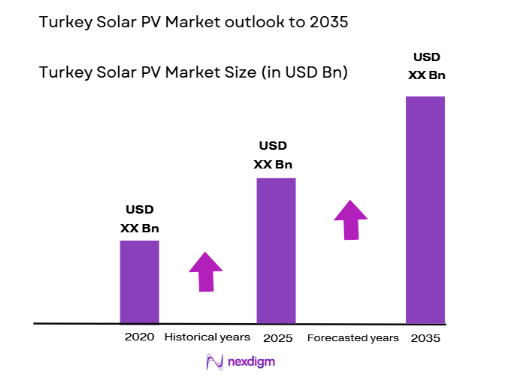
The Turkey Solar PV Market is expected to grow significantly due to increasing investments in renewable energy, favorable government policies, and the country’s strategic location for solar energy generation. The market is projected to reach a value of approximately USD ~ billion by 2024, driven by the expansion of both residential and commercial solar installations. With a growing commitment to reduce carbon emissions, Turkey’s government has implemented several initiatives, such as feed-in tariffs and incentives, which have helped accelerate the growth of the solar PV sector.
Turkey remains one of the dominant players in the solar energy space, with regions such as Ankara, Izmir, and Gaziantep driving much of the market. These areas are known for their favorable climatic conditions, high solar irradiance levels, and substantial investments in renewable energy infrastructure. The government’s focus on solar energy as part of its broader energy diversification strategy also plays a significant role in the market’s dominance. Additionally, the country is positioning itself as an attractive hub for solar PV manufacturing, further contributing to its market leadership.
Market Segmentation
By Product Type:
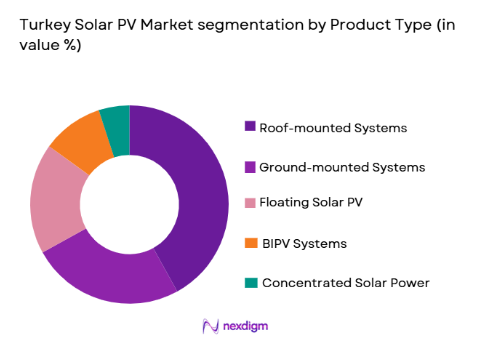
Turkey Solar PV market is segmented by product type into various sub-segments. Recently, roof-mounted systems have seen a dominant market share due to factors such as increasing demand for residential solar energy solutions, governmental support for decentralized energy generation, and the integration of solar solutions in urban areas. Roof-mounted systems allow for greater flexibility, reduce dependency on external energy sources, and promote sustainable living. The expansion of residential solar installations, aided by declining panel prices and ease of installation, is driving the shift towards this sub-segment.
By Platform Type:
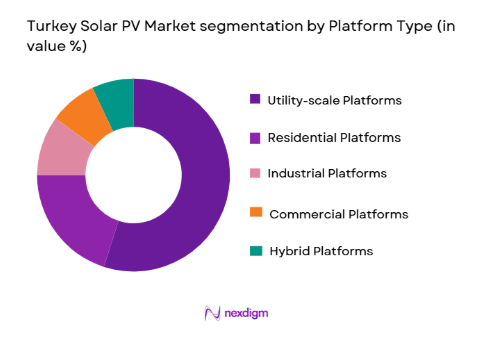
Turkey Solar PV market is segmented by platform type into various sub-segments. Recently, utility-scale platforms have become the dominant market share holder, due to the high efficiency and large-scale generation capacity they offer. These platforms are typically located in rural or industrial areas with optimal solar exposure. The demand for utility-scale solar PV systems is driven by the government’s increasing investment in large renewable energy projects and the growing demand for clean energy from both public and private sectors.
Competitive Landscape
The competitive landscape of the Turkey Solar PV market is characterized by the presence of both domestic and international players. Market consolidation is evident as major players focus on vertical integration, controlling not only the manufacturing of solar panels but also the installation and maintenance services. The competition is increasingly influenced by the presence of global companies offering advanced technology solutions, alongside local firms benefiting from government incentives.
| Company Name | Establishment Year | Headquarters | Technology Focus | Market Reach | Key Products | Revenue | Additional Market-Specific Parameter |
| Trina Solar | 1997 | China | ~ | ~ | ~ | ~ | ~ |
| Jinko Solar | 2006 | China | ~ | ~ | ~ | ~ | ~ |
| First Solar | 1999 | USA | ~ | ~ | ~ | ~ | ~ |
| Canadian Solar | 2001 | Canada | ~ | ~ | ~ | ~ | ~ |
| REC Group | 1996 | Singapore | ~ | ~ | ~ | ~ | ~ |
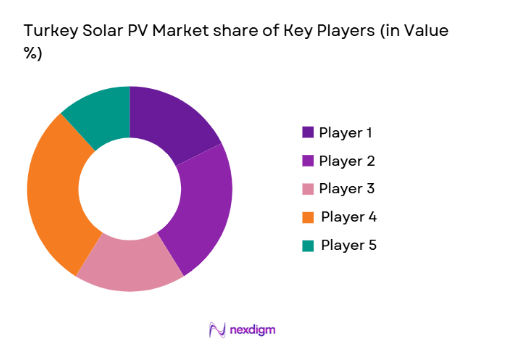
Turkey Solar PV Market Analysis
Growth Drivers
Government Policies and Incentives:
The Turkish government has consistently implemented policies that support the growth of renewable energy, particularly solar PV. Government programs, including feed-in tariffs and direct incentives, have made solar energy more accessible to businesses and residential customers. These policies have created a favorable investment climate, with a steady rise in both large-scale and decentralized solar PV projects. Over the years, the country has introduced several reforms aimed at diversifying its energy mix, and solar energy has become a key element of this transition. The financial incentives help lower the initial cost of installation, while regulatory support such as tax exemptions and subsidies promote the adoption of solar PV systems. As a result, the adoption of solar PV in Turkey continues to rise, making it one of the most attractive markets for solar energy development in the region.
Declining Cost of Solar Technology:
The significant reduction in the cost of solar technology has been a major growth driver for the Turkey Solar PV market. Over the past decade, the price of solar panels, inverters, and other PV components has dropped substantially, making solar energy increasingly affordable. Technological advancements in panel efficiency and manufacturing processes have led to lower production costs, and as a result, end-users are now able to install solar systems at a fraction of the cost they would have incurred earlier. This has helped expand the solar PV market to new consumer segments, including middle-income households and small businesses that were previously unable to afford solar installations. The drop in costs is also encouraging large-scale projects, with developers and utilities increasingly looking to meet energy demands through cost-effective solar solutions.
Market Challenges
Grid Integration Issues:
One of the key challenges facing the growth of the Turkey Solar PV market is the integration of solar power into the national grid. As more solar power is generated, there is a need for a robust grid infrastructure that can accommodate fluctuating solar output and balance supply and demand. While Turkey has made strides in modernizing its grid, the country still faces challenges in terms of grid capacity and energy storage. Solar energy generation can vary throughout the day and is affected by weather conditions, meaning that grid operators must be able to efficiently manage these variations to avoid power shortages or surpluses. The lack of sufficient grid connectivity and smart grid solutions in certain regions of Turkey can slow the progress of solar energy expansion.
High Initial Capital Investment:
Although the cost of solar technology has decreased significantly, the initial capital investment required for solar PV systems can still be a barrier for many potential consumers, particularly in the residential market. Despite government incentives and financing options, the upfront costs of purchasing and installing solar panels, inverters, and associated infrastructure may still be too high for some households and businesses, limiting the potential market size. Moreover, while solar energy provides long-term savings on energy bills, the high initial outlay can deter many individuals and organizations from making the switch to renewable energy. As a result, the market is somewhat constrained by affordability issues, particularly among lower-income households and small businesses.
Opportunities
Expansion of Solar Energy in Rural Areas:
Rural areas in Turkey offer significant opportunities for the expansion of solar PV installations. Many of these regions have abundant sunlight, making them ideal for solar energy generation. Additionally, rural areas often lack reliable access to centralized electricity grids, creating an opportunity for decentralized solar PV systems. The growing awareness of the benefits of solar power in these areas, coupled with government support, is helping drive the demand for solar installations in these regions. Rural areas can benefit from off-grid solar solutions that provide reliable and affordable electricity, thereby improving the quality of life for residents and reducing energy costs. This shift is expected to fuel significant growth in the solar PV market, particularly in areas where traditional grid infrastructure is lacking or underdeveloped.
Integration of Energy Storage Solutions:
As the solar PV market grows, the demand for energy storage solutions is also on the rise. The integration of battery storage with solar power systems can help address the issue of intermittency and improve energy reliability. Energy storage systems allow users to store excess solar energy generated during the day for use during the evening or on cloudy days. This increases the self-consumption rate and reduces dependence on the grid. The growing affordability of energy storage technologies, along with technological advancements that make them more efficient and durable, is expected to play a significant role in the expansion of the Turkey Solar PV market. Both residential and commercial customers are increasingly looking for integrated solar and storage solutions to meet their energy needs sustainably.
Future Outlook
The Turkey Solar PV Market is expected to continue its growth trajectory over the next five years, driven by technological advancements, favorable government policies, and an increasing shift towards clean energy solutions. The country is projected to see a significant rise in both residential and commercial solar installations, particularly with the ongoing development of energy storage solutions that address intermittency issues. Technological innovations in solar efficiency and grid integration are also anticipated to contribute to market growth. Furthermore, the government’s continued support for solar energy, including subsidies and incentives, will encourage further adoption. As the demand for renewable energy intensifies, Turkey’s solar PV market is well-positioned to meet its energy goals and further reduce its carbon footprint.
Major Players
- Trina Solar
- JinkoSolar
- First Solar
- Canadian Solar
- REC Group
- LONGi Solar
- Yingli Green Energy
- Hanwha Q CELLS
- Risen Energy
- JA Solar
- SunPower
- Sharp Solar
- SolarEdge
- ABB
- SMA Solar Technology
Key Target Audience
- Investments and venture capitalist firms
- Government and regulatory bodies
- Solar panel manufacturers
- Residential customers
- Commercial enterprises
- Energy distributors and utilities
- Renewable energy contractors
- Industry consultants
Research Methodology
Step 1: Identification of Key Variables
Identifying key variables influencing the market, including technology trends, market demand, and government policies.
Step 2: Market Analysis and Construction
Conducting market analysis using primary and secondary research, and constructing a detailed market model.
Step 3: Hypothesis Validation and Expert Consultation
Validating hypotheses through expert interviews, industry reports, and market feedback.
Step 4: Research Synthesis and Final Output
Synthesizing collected data into a comprehensive report with detailed market forecasts and trends.

- Executive Summary
- Research Methodology (Definitions, Scope, Industry Assumptions, Market Sizing Approach, Primary & Secondary Research Framework, Data Collection & Verification Protocol, Analytic Models & Forecast Methodology, Limitations & Research Validity Checks)

- Market Definition and Scope
- Value Chain & Stakeholder Ecosystem
- Regulatory / Certification Landscape
- Sector Dynamics Affecting Demand
- Strategic Initiatives & Infrastructure Growth

- Growth Drivers
Government Incentives for Renewable Energy
Declining Solar Panel Costs
Technological Advancements in Solar PV Systems
Increasing Demand for Clean Energy
Rising Public Awareness on Renewable Energy - Market Challenges
Regulatory Barriers to New Installations
Grid Integration Issues
High Initial Capital Investment
Lack of Skilled Workforce
Fluctuating Solar Radiation in Some Regions - Market Opportunities
Expanding Solar Energy Capacity in Rural Areas
Development of Energy Storage Systems
Increased Investment in Solar Infrastructure - Trends
Increase in Residential Solar PV Installations
Shift Towards Hybrid Energy Systems
Rising Adoption of Solar Tracking Systems
Improved Efficiency of Solar Cells
Integration of AI and IoT in Solar Monitoring Systems - Government Regulations & Defense Policy
Renewable Energy Incentives and Subsidies
Grid Access for Solar Energy Producers
Solar Energy Export Policies - SWOT Analysis
- Stakeholder and Ecosystem Analysis
- Porter’s Five Forces Analysis
- Competition Intensity and Ecosystem Mapping

- By Market Value, 2020-2025
- By Installed Units, 2020-2025
- By Average System Price, 2020-2025
- By System Complexity Tier, 2020-2025

- By System Type (In Value%)
Roof-mounted Systems
Ground-mounted Systems
Floating Solar PV
Concentrated Solar Power Systems
BIPV (Building Integrated Photovoltaic) Systems - By Platform Type (In Value%)
Residential Platforms
Commercial Platforms
Industrial Platforms
Utility-scale Platforms
Hybrid Platforms - By Fitment Type (In Value%)
On-grid Systems
Off-grid Systems
Hybrid Systems
Portable Systems
Building-integrated Systems - By EndUser Segment (In Value%)
Residential Consumers
Commercial Establishments
Industrial Corporations
Government Organizations
Utility Providers - By Procurement Channel (In Value%)
Direct Procurement
Government Tenders
Private Sector Procurement
Online Platforms
Third-party Distributors - By Material / Technology (In Value%)
Silicon-based Technology
Thin-film Technology
Perovskite Solar Cells
Organic Photovoltaics
Bifacial Solar Panels

- Market structure and competitive positioning
- Market share snapshot of major players
- CrossComparison Parameters (System Type, Platform Type, Procurement Channel, EndUser Segment, Fitment Type, Material / Technology, Region, Pricing Strategy, Installation Time, After-sales Service)
- SWOT Analysis of Key Players
- Pricing & Procurement Analysis
- Key Players
First Solar
Trina Solar
JinkoSolar
LONGi Solar
Canadian Solar
Risen Energy
JA Solar Technology
SunPower
Hanwha Q CELLS
Sharp Solar
SolarEdge
Sungrow
Enphase Energy
GE Renewable Energy
REC Group

- Increasing Residential Adoption of Solar PV
- Growth in Commercial Solar Installations
- Focus on Large-Scale Solar Power Projects
- Government and Utility-based Solar Initiatives

- Forecast Market Value, 2026-2035
- Forecast Installed Units, 2026-2035
- Price Forecast by System Tier, 2026-2035
- Future Demand by Platform, 2026-2035


 Request a Sample
 Ask for Customization
 Get a Quote
 Enquire Now