

 Download PDF
 Download PDF
Market Overview
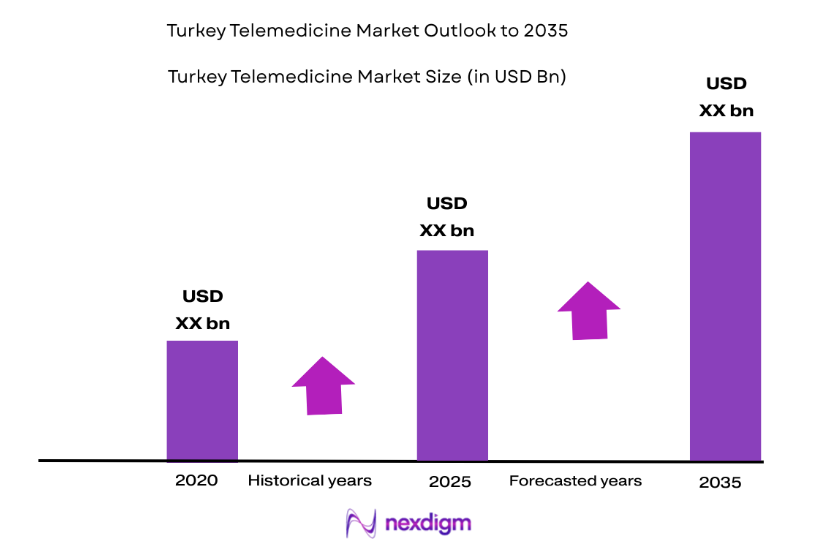
Based on a recent historical assessment, the Turkey Telemedicine market reached approximately USD ~ million, driven by rapid digital healthcare transformation, expanded teleconsultation adoption, and nationwide digital health initiatives promoted by the Ministry of Health. Growth has been supported by increasing smartphone penetration, rising demand for remote consultations, and integration of telemedicine platforms with hospital information systems. According to data referenced from the Turkish Ministry of Health and OECD digital health assessments, hospitals and private healthcare providers increasingly rely on telehealth platforms to improve access, efficiency, and patient engagement across healthcare networks.
Istanbul and Ankara have emerged as dominant telemedicine hubs due to their advanced healthcare infrastructure, concentration of tertiary hospitals, and strong adoption of digital health technologies. Istanbul benefits from the presence of leading private hospital chains, telehealth startups, and telecom infrastructure that supports remote consultations and mobile health platforms. Ankara’s prominence is driven by government institutions, regulatory oversight, and national e-health platforms that coordinate digital healthcare services. Additionally, cities such as Izmir are witnessing growing telemedicine adoption supported by private healthcare investments and expanding digital healthcare service networks.
Market Segmentation
By Product Type
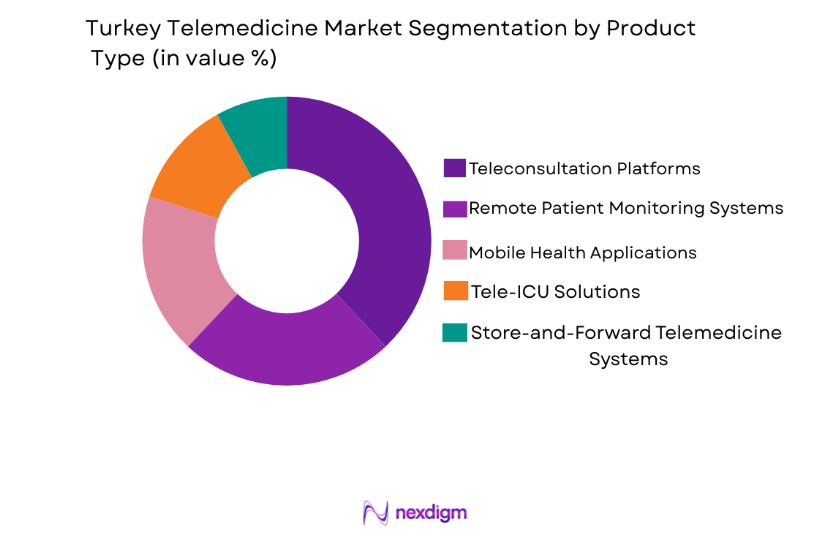
Turkey Telemedicine market is segmented by product type into remote patient monitoring systems, teleconsultation platforms, tele-ICU systems, mobile health applications, and store-and-forward telemedicine systems. Recently, teleconsultation platforms have a dominant market share due to factors such as increasing demand for virtual doctor visits, widespread smartphone usage, and integration of video consultation tools with hospital information systems. The ability to provide real-time consultations, reduce patient travel time, and improve healthcare accessibility has made teleconsultation platforms the preferred solution among hospitals and clinics across Turkey.
By Platform Type
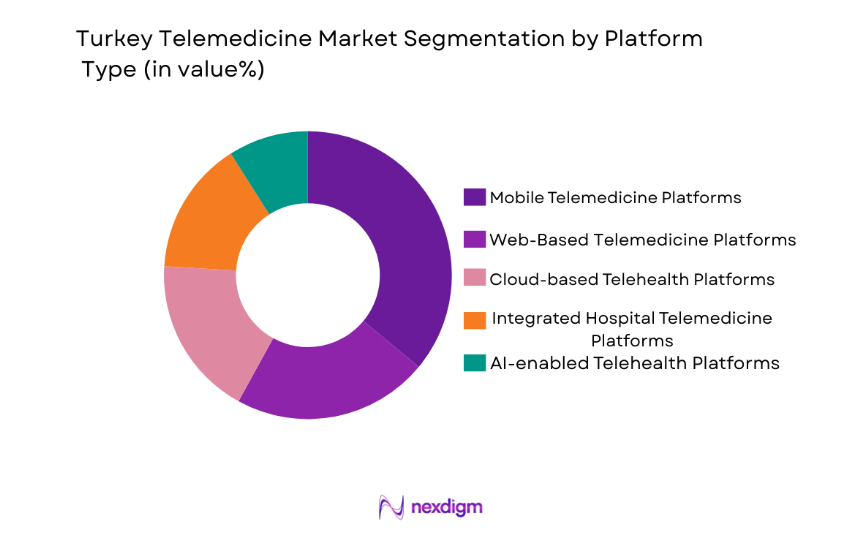
Turkey Telemedicine market is segmented by platform type into web-based telemedicine platforms, mobile telemedicine platforms, cloud-based telehealth platforms, integrated hospital telemedicine platforms, and AI-enabled telehealth platforms. Recently, mobile telemedicine platforms have a dominant market share due to widespread smartphone penetration, consumer preference for on-demand healthcare access, and the availability of mobile health applications developed by hospitals and telecom operators. Mobile platforms allow patients to access consultations, prescriptions, and monitoring services from personal devices, making healthcare services more accessible and convenient.
Competitive Landscape
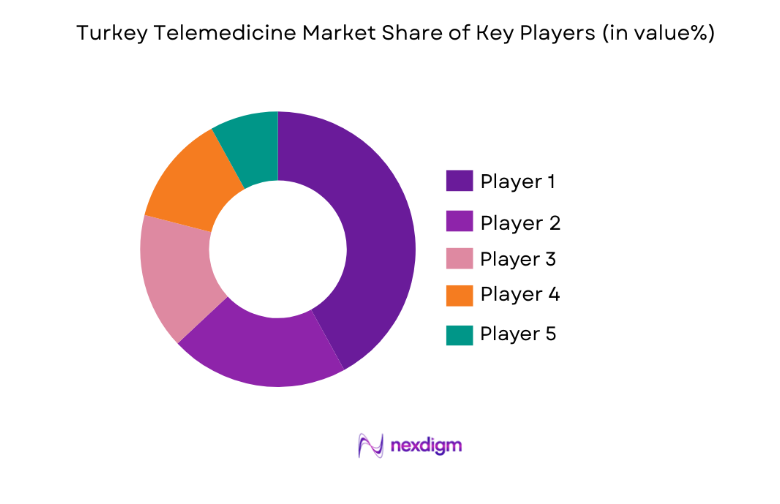
The Turkey Telemedicine market exhibits moderate consolidation with a combination of international digital health technology providers and regional healthcare technology companies competing for market presence. Large global healthcare technology firms influence technological standards, while telecom providers and local telehealth platforms strengthen regional service delivery. Strategic partnerships between hospitals, telecom operators, and digital health startups continue to accelerate telemedicine deployment across the country.
| Company Name | Establishment Year | Headquarters | Technology Focus | Market Reach | Key Products | Revenue | Telehealth Platform Integration |
| Teladoc Health | 2002 | United States | ~ | ~ | ~ | ~ | ~ |
| Amwell | 2006 | United States | ~ | ~ | ~ | ~ | ~ |
| Philips Healthcare | 1891 | Netherlands | ~ | ~ | ~ | ~ | ~ |
| Siemens Healthineers | 2017 | Germany | ~ | ~ | ~ | ~ | ~ |
| Turkcell | 1994 | Turkey | ~ | ~ | ~ | ~ | ~ |
Turkey Telemedicine Market Analysis
Growth Drivers
Expansion of Digital Health Infrastructure and National e-Health Programs
Turkey’s telemedicine market growth is strongly supported by the rapid expansion of digital health infrastructure and government backed e-health initiatives designed to modernize healthcare delivery systems across the country. The Turkish Ministry of Health has actively invested in national electronic health records, digital appointment systems, and telehealth platforms that facilitate remote consultations and patient monitoring. Hospitals and clinics increasingly integrate telemedicine solutions with existing hospital information systems to streamline patient management and improve clinical efficiency. These initiatives allow healthcare providers to deliver consultations remotely while maintaining centralized access to medical records. The digital transformation strategy adopted by the healthcare system encourages both public and private healthcare institutions to adopt telemedicine services. Telecom providers have also contributed by expanding broadband and mobile network coverage, enabling seamless telehealth connectivity even in remote areas. Increased smartphone penetration among the population further strengthens the demand for mobile healthcare services. As digital healthcare infrastructure continues to expand nationwide, telemedicine services are becoming a core component of healthcare delivery models.
Rising Demand for Remote Healthcare Services and Convenience-Driven Care
Changing patient expectations and healthcare accessibility challenges have significantly increased demand for remote healthcare services across Turkey. Urban populations increasingly prefer virtual consultations for routine healthcare needs due to convenience, reduced waiting times, and lower travel requirements. Telemedicine platforms allow patients to access doctors, obtain prescriptions, and receive medical guidance from home through mobile applications or online portals. Rural communities also benefit from telemedicine services by gaining access to specialists located in major cities without the need for long distance travel. Hospitals and clinics have recognized telemedicine as an efficient method to manage patient load and improve healthcare accessibility. The integration of digital scheduling systems and video consultation platforms has streamlined communication between healthcare professionals and patients. Healthcare providers increasingly use telemedicine platforms for follow up visits and chronic disease monitoring. This model reduces hospital congestion and improves patient satisfaction. As remote healthcare services become normalized, the adoption of telemedicine solutions is expected to accelerate across healthcare systems.
Market Challenges
Regulatory and Data Privacy Compliance Requirements in Digital Healthcare Platforms
One of the most significant challenges affecting the Turkey telemedicine market is the complex regulatory environment surrounding digital healthcare services and patient data protection. Telemedicine providers must comply with strict healthcare regulations governing patient confidentiality, electronic medical records, and cross platform healthcare service delivery. Regulations related to patient data storage, cybersecurity, and secure communication channels require telehealth providers to invest heavily in secure digital infrastructure. Hospitals and digital health companies must ensure compliance with healthcare data protection standards while integrating telemedicine solutions with existing hospital information systems. These regulatory obligations increase operational costs and extend implementation timelines for telemedicine platforms. Smaller healthcare providers and digital health startups often face difficulties in meeting regulatory compliance requirements due to limited financial and technical resources. Furthermore, regulatory frameworks continue to evolve as governments attempt to address emerging digital healthcare challenges. The need for continuous compliance with updated regulations creates uncertainty for telemedicine companies planning long term investments. As regulatory oversight expands, telemedicine providers must adapt their technology infrastructure and operational practices to meet national healthcare data protection standards.
Integration Complexity with Legacy Hospital Information Systems and Healthcare IT Infrastructure
Another critical challenge facing the telemedicine market in Turkey is the complexity associated with integrating telemedicine platforms with legacy healthcare IT systems already used by hospitals and clinics. Many healthcare institutions operate with older hospital information systems that were not originally designed to support telehealth services or remote patient management tools. Integrating new telemedicine platforms with these systems requires extensive software customization, data migration, and system compatibility testing. Healthcare providers must ensure that telehealth solutions can securely access patient records, diagnostic data, and appointment scheduling systems without compromising data integrity. The integration process can be time consuming and technically demanding for hospitals lacking advanced digital infrastructure. Healthcare organizations may also need to upgrade their internal IT systems to support telemedicine services effectively. These upgrades require financial investment and skilled technical personnel capable of managing digital transformation projects. Inconsistent interoperability standards between healthcare technology vendors further complicate system integration efforts. As hospitals attempt to modernize their digital infrastructure, integration challenges remain a key barrier to rapid telemedicine adoption.
Opportunities
Expansion of AI-Driven Telehealth Diagnostics and Remote Monitoring Solutions
The increasing integration of artificial intelligence technologies into telemedicine platforms presents a major opportunity for the Turkey telemedicine market. AI powered diagnostic tools enable healthcare providers to analyze patient data, detect early disease indicators, and support clinical decision making during remote consultations. Telemedicine platforms equipped with AI algorithms can assist doctors in evaluating symptoms, interpreting medical imaging, and identifying potential health risks. Remote patient monitoring devices connected to telehealth platforms allow continuous health tracking for patients with chronic conditions. These devices transmit real time health data such as heart rate, blood pressure, and glucose levels to healthcare providers through digital platforms. AI systems can analyze this data and generate alerts for medical professionals when abnormal patterns are detected. Healthcare providers increasingly recognize the value of combining AI technologies with telemedicine platforms to enhance diagnostic accuracy and patient monitoring capabilities. As healthcare systems adopt more data driven approaches to patient care, AI integrated telehealth platforms are expected to become essential digital healthcare tools.
Growth of Telemedicine Services for Chronic Disease Management and Aging Population Care
Turkey’s growing prevalence of chronic diseases and an expanding aging population create strong opportunities for telemedicine solutions focused on long term patient monitoring and remote care services. Chronic illnesses such as diabetes, cardiovascular diseases, and respiratory conditions require regular monitoring and continuous medical consultation. Telemedicine platforms allow healthcare providers to monitor patient health remotely while maintaining consistent communication with patients through digital channels. Remote patient monitoring technologies enable physicians to track health indicators without requiring frequent hospital visits. This approach improves patient adherence to treatment plans and enhances healthcare efficiency. Elderly populations benefit significantly from telemedicine services because they often face mobility challenges when visiting healthcare facilities. Telemedicine consultations and remote monitoring tools allow elderly patients to receive regular healthcare support while remaining at home. Healthcare providers can also coordinate care between specialists and caregivers using telehealth platforms. As healthcare systems increasingly emphasize preventive and long term care management, telemedicine solutions are expected to expand rapidly.
Future Outlook
The Turkey Telemedicine market is expected to experience sustained expansion as healthcare providers continue integrating digital technologies into medical services. Increasing adoption of mobile health platforms, remote patient monitoring devices, and artificial intelligence diagnostics will reshape telemedicine service delivery. Government support for digital healthcare initiatives and expansion of broadband connectivity will further strengthen the telehealth ecosystem. Hospitals and private healthcare providers are anticipated to expand telemedicine platforms to improve patient access and operational efficiency.
Major Players
- Teladoc Health
- Amwell
- Philips Healthcare
- Siemens Healthineers
- GE HealthCare
- Medtronic
- Turkcell
- Türk Telekom
- Vodafone Turkey
- Babylon Health
- DoktorTakvimi
- Practo
- AMD Global Telemedicine
- Oracle Health
- BioTelemetry
Key Target Audience
- Healthcare Technology Investors
- Telemedicine Platform Providers
- Hospitals and Healthcare Networks
- Digital Health Technology Companies
- Investments and Venture Capitalist Firms
- Government and Regulatory Bodies
- Healthcare IT Infrastructure Providers
Research Methodology
Step 1: Identification of Key Variables
Key variables such as healthcare digitalization trends, telemedicine platform adoption rates, healthcare infrastructure capacity, and patient demand for remote healthcare services are identified. These variables help establish the structural framework for analyzing the telemedicine market environment.
Step 2: Market Analysis and Construction
Market analysis involves examining healthcare policies, digital infrastructure development, telehealth technology adoption, and hospital integration capabilities. Data from healthcare organizations, regulatory bodies, and digital health platforms are synthesized to construct a comprehensive market model.
Step 3: Hypothesis Validation and Expert Consultation
Industry experts including healthcare administrators, telemedicine technology providers, and healthcare IT specialists are consulted to validate key assumptions. Expert feedback ensures that market insights reflect real industry dynamics and digital healthcare transformation trends.
Step 4: Research Synthesis and Final Output
Collected data is synthesized through comparative analysis and validated with industry benchmarks. The final research output integrates qualitative insights and quantitative evaluation to produce a comprehensive market assessment.

- Executive Summary
- Research Methodology (Definitions, Scope, Industry Assumptions, Market Sizing Approach, Primary & Secondary Research Framework, Data Collection & Verification Protocol, Analytic Models & Forecast Methodology, Limitations & Research Validity Checks)

- Market Definition and Scope
- Value Chain & Stakeholder Ecosystem
- Regulatory / Certification Landscape
- Sector Dynamics Affecting Demand

- Growth Drivers
Rising Digital Health Investments and National E-Health Initiatives
Increasing Demand for Remote Healthcare Access in Urban and Rural Areas
Expansion of Mobile Health and Broadband Infrastructure - Market Challenges
Data Privacy and Healthcare Cybersecurity Concerns
Integration Issues with Existing Hospital Information Systems
Regulatory Complexity and Reimbursement Limitations - Market Opportunities
Expansion of AI-driven Remote Diagnostics and Monitoring Solutions
Growth of Telemedicine Services for Chronic Disease Management
Partnerships Between Telecom Providers and Healthcare Institutions - Trends
Adoption of Mobile-first Telehealth Platforms
Integration of AI and Analytics in Virtual Care Delivery - Government Regulations
- SWOT Analysis
- Porter’s Five Forces

- By Market Value, 2020-2025
- By Installed Units, 2020-2025
- By Average System Price, 2020-2025
- By System Complexity Tier, 2020-2025

- By System Type (In Value%)
Remote Patient Monitoring Systems
Teleconsultation Platforms
Tele-ICU Systems
Mobile Health Applications
Store-and-Forward Telemedicine Systems - By Platform Type (In Value%)
Web-based Telemedicine Platforms
Mobile Application Platforms
Cloud-based Telehealth Platforms
Integrated Hospital Telemedicine Platforms
AI-enabled Telehealth Platforms - By Fitment Type (In Value%)
Standalone Telemedicine Platforms
Integrated Healthcare IT Solutions
Cloud-hosted Telemedicine Systems
Hybrid Telehealth Deployment Systems - By End User Segment (In Value%)
Hospitals and Health Systems
Clinics and Ambulatory Care Centers
Homecare and Remote Patient Monitoring Providers

- Market Share Analysis
- Cross Comparison Parameters (Technology Integration Level, Teleconsultation Capabilities, Remote Monitoring Features, Platform Scalability, Healthcare Provider Partnerships, Data Security Standards, Pricing Models)
- SWOT Analysis of Key Competitors
- Pricing & Procurement Analysis
- Key Players
Teladoc Health
Amwell
Siemens Healthineers
Philips Healthcare
GE HealthCare
Medtronic
Turkcell
Türk Telekom
Vodafone Turkey
DoktorTakvimi
Practo
Babylon Health
AMD Global Telemedicine
Oracle Health
BioTelemetry

- Hospitals Expanding Virtual Consultation and Tele-ICU Capabilities
- Clinics Leveraging Telehealth Platforms to Increase Patient Reach
- Homecare Providers Using Remote Monitoring for Chronic Disease Patients
- Healthcare Networks Integrating Telemedicine with Electronic Health Records

- Forecast Market Value, 2026-2035
- Forecast Installed Units, 2026-2035
- Price Forecast by System Tier, 2026-2035
- Future Demand by Platform, 2026-2035


 Request a Sample
 Ask for Customization
 Get a Quote
 Enquire Now