

 Download PDF
 Download PDF
Market Overview
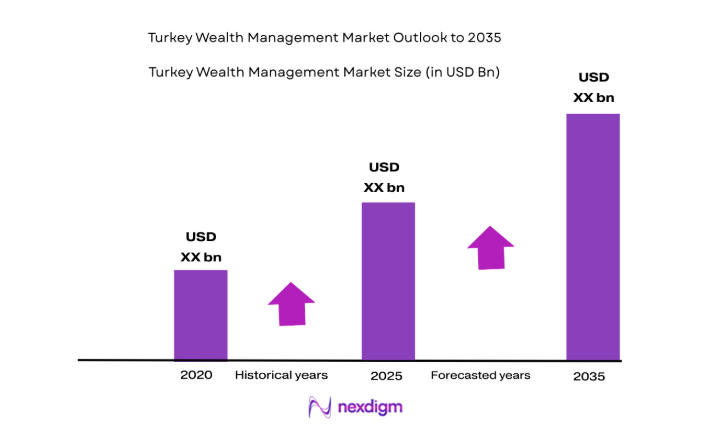
The wealth management market in Turkey is poised for growth, driven by increasing affluence among the population and rising demand for personalized financial services. The market is expected to reach USD ~ billion, supported by the demand for sophisticated investment and estate planning services. Wealth management firms are leveraging advancements in technology, such as AI and digital platforms, to cater to an expanding customer base. This trend is expected to continue as more individuals and families seek to optimize their assets and investments in a dynamic economic environment.
Istanbul remains the primary hub for wealth management services in Turkey, attributed to its financial infrastructure, large number of high-net-worth individuals (HNWIs), and proximity to regional markets. Other major cities, such as Ankara and Izmir, have seen an uptick in wealth management demand due to rising disposable income and an increasing awareness of financial planning. These cities benefit from a growing number of investment opportunities and the increasing sophistication of local financial services.
Market Segmentation
By Product Type
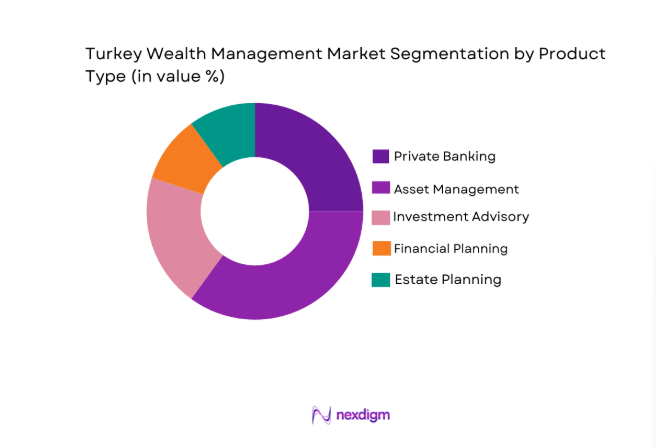
The wealth management market in Turkey is segmented by product type into various offerings including private banking services, asset management, investment advisory, financial planning, and estate planning solutions. Recently, asset management services have gained dominant market share due to the increasing interest in portfolio diversification and long-term wealth accumulation. Factors driving this dominance include the expanding investor base, the availability of innovative products, and the growing importance of retirement and estate planning among affluent individuals. The increasing shift towards self-directed investment options, powered by digital tools and platforms, has further bolstered the demand for asset management services in Turkey.
By Platform Type
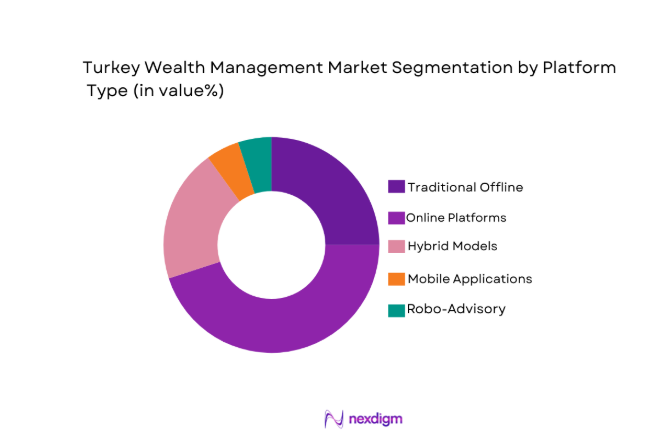
The wealth management market is also segmented by platform type, which includes traditional offline services, online platforms, and hybrid models combining both. Online platforms have seen the most significant rise in market share, driven by increased accessibility, lower fees, and the convenience they offer to tech-savvy investors. These platforms cater to a broader audience, including the younger generation of investors who prefer digital engagement. The flexibility, cost-effectiveness, and range of services available through online platforms make them a popular choice, especially for individuals looking to actively manage their investments.
Competitive Landscape
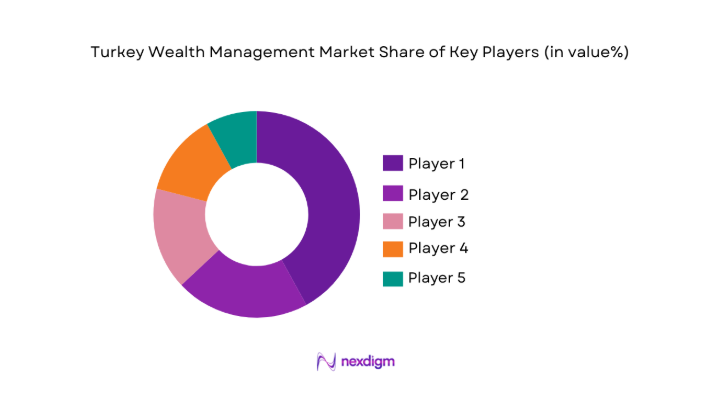
The Turkish wealth management market is highly competitive, with both global and local players vying for dominance. Large international banks, alongside boutique wealth management firms, provide a wide array of services from investment management to tax planning and family office solutions. The market is seeing consolidation, with local firms seeking partnerships or acquisitions with international wealth management brands to expand their market reach. Technology-driven firms and digital platforms are also reshaping the competitive dynamics, pushing established firms to modernize their offerings. Key players continue to focus on delivering personalized and diverse wealth management solutions to cater to the growing needs of affluent clients in Turkey.
| Company Name | Establishment Year | Headquarters | Technology Focus | Market Reach | Key Products | Revenue | Market-Specific Parameter |
| Garanti BBVA Private Banking | 1990 | Istanbul, Turkey | ~ | ~ | ~ | ~ | ~ |
| Yapı Kredi Private Banking | 1944 | Istanbul, Turkey | ~ | ~ | ~ | ~ | ~ |
| QNB Finansinvest | 1996 | Istanbul, Turkey | ~ | ~ | ~ | ~ | ~ |
| İşbank Private Banking | 1924 | Istanbul, Turkey | ~ | ~ | ~ | ~ | ~ |
| Halk Yatırım | 2000 | Istanbul, Turkey | ~ | ~ | ~ | ~ | ~ |
Turkey Wealth Management Market Analysis
Growth Drivers
Technological Advancements in Wealth Management Solutions
The integration of advanced technologies such as Artificial Intelligence (AI), Big Data analytics, and blockchain has greatly enhanced the capabilities of wealth management services. AI allows wealth managers to offer more personalized advice and automated solutions, improving efficiency and customer satisfaction. These technological tools enable faster data processing, better risk management, and enhanced decision-making, which in turn help meet the growing demand for tailored investment strategies. With Turkey’s tech-savvy population increasingly seeking digital solutions, wealth management firms are rapidly adopting innovative technologies to remain competitive and expand their customer base. Additionally, AI-powered robo-advisory platforms provide an affordable and accessible means for lower-income investors to access financial planning services. As these technologies continue to mature, the wealth management industry in Turkey is poised for continued growth and development, with firms investing heavily in digital transformation to stay ahead in a rapidly evolving market.
Shift Towards Sustainable and Impact Investing
Another key driver of growth in Turkey’s wealth management market is the increasing demand for sustainable and impact investing. Affluent individuals and institutions are increasingly looking to align their investment portfolios with their values, particularly in environmental, social, and governance (ESG) factors. This trend is not only prevalent among the younger generation of investors but also among institutional investors and family offices, which are increasingly incorporating ESG criteria into their investment decisions. This shift is driven by greater awareness of climate change, social inequality, and corporate governance, leading to a growing interest in sustainable investment products. As a result, wealth managers are incorporating ESG investment strategies into their offerings, providing clients with more ethical and socially responsible options. This growing focus on sustainability is expected to drive significant growth in the wealth management market as firms adapt to the demand for ethical investing options.
Market Challenges
Regulatory Challenges in Wealth Management
One of the key challenges facing the wealth management market in Turkey is the regulatory landscape. The evolving financial regulations require firms to continuously adapt their business models to comply with national and international standards. These regulations impact areas such as anti-money laundering (AML), know-your-customer (KYC) practices, and data privacy laws, which impose additional costs on wealth management firms. As Turkey continues to align its regulatory framework with global standards, firms face the ongoing challenge of ensuring compliance with both domestic and international regulations. Non-compliance can lead to severe penalties, damage to reputation, and loss of client trust, making it crucial for firms to invest in regulatory technology and ensure they stay ahead of changing laws. As the regulatory environment tightens, wealth managers must continuously evaluate and upgrade their compliance strategies to avoid penalties and maintain the integrity of their operations.
Market Fragmentation and Competition
Despite the overall growth of the wealth management market in Turkey, there remains significant fragmentation. The market is crowded with both local and international players, making it difficult for smaller firms to compete effectively. The dominance of large institutions with established brands and extensive resources poses a challenge to newer entrants seeking to gain market share. Additionally, the rise of digital wealth management platforms and robo-advisors has introduced new competition from non-traditional financial service providers, further intensifying competition. Wealth managers are under pressure to differentiate themselves by offering unique services, building stronger client relationships, and incorporating cutting-edge technology. This fragmentation increases the difficulty of achieving economies of scale, particularly for smaller players, and requires firms to focus on niche markets or specialized services to thrive in this competitive landscape.
Opportunities
Expansion of Digital Platforms in Wealth Management
The shift towards digital platforms in wealth management presents significant growth opportunities for firms in Turkey. With the increasing demand for user-friendly and accessible financial services, the adoption of digital platforms is accelerating, particularly among younger, tech-savvy investors. These platforms offer a wide range of services, including online portfolio management, asset allocation, and financial planning tools. Digital platforms not only reduce costs but also provide clients with the flexibility to manage their investments at their convenience. As more wealth management firms invest in digital tools and mobile applications, they can reach a broader customer base, including the mass affluent and younger generations who prefer self-directed investment options. The expansion of digital platforms is expected to drive greater market penetration and offer firms new revenue streams, especially in an increasingly connected world where clients expect seamless and personalized services.
Growth in Cross-border Wealth Management Services
Another key opportunity in the Turkish wealth management market lies in the growth of cross-border services. As Turkey’s high-net-worth individuals (HNWIs) expand their global investment portfolios, the demand for international wealth management services is increasing. Turkish investors are increasingly seeking exposure to foreign markets, particularly in Europe, the Middle East, and Asia, for diversification and enhanced returns. This trend is further fueled by the increasing mobility of HNWIs, who often seek global citizenship or residency through investment programs. Wealth managers can seize this opportunity by offering specialized cross-border wealth management services, including tax planning, estate management, and investment advisory tailored to international regulations and market conditions. This opportunity for expansion is particularly relevant as Turkish investors seek to protect and grow their wealth globally, requiring bespoke solutions that cross national borders and navigate complex international tax laws.
Future Outlook
The Turkish wealth management market is expected to see steady growth over the next five years, driven by technological advancements, regulatory support, and increased demand for sustainable investments. Digital platforms and AI tools will continue to transform the sector, allowing wealth managers to offer more personalized and efficient services to a broader client base. Additionally, growing interest in impact investing and cross-border wealth management will open new avenues for growth. Turkey’s stable economic outlook and expanding middle class are set to fuel demand for wealth management services, further driving market expansion.
Major Players
- Garanti BBVA Private Banking
- Yapı Kredi Private Banking
- QNB Finansinvest
- İşbank Private Banking
- Halk Yatırım
- Akbank Private Banking
- Denizbank Private Banking
- Ziraat Bankası
- Vakıfbank Private Banking
- TEB Private Banking
- Şekerbank Private Banking
- PTT Bank Private Banking
- Odeabank Private Banking
- Türkiye Finans Private Banking
- Fibabanka Private Banking
Key Target Audience
- Investments and venture capitalist firms
- Government and regulatory bodies
- High-net-worth individuals (HNWIs)
- Financial advisory firms
- Private equity firms
- Family offices
- Commercial banks
- Insurance companies
Research Methodology
Step 1: Identification of Key Variables
Identifying critical variables that influence the market such as market demand, regulatory impact, and technological adoption.
Step 2: Market Analysis and Construction
Analyzing the market trends, historical data, and forecasting the future growth trajectory based on available data.
Step 3: Hypothesis Validation and Expert Consultation
Validating hypotheses with industry experts and utilizing their insights to refine market models and predictions.
Step 4: Research Synthesis and Final Output
Synthesizing the research findings to create a comprehensive market report, presenting data and insights that reflect the current state and future potential of the market.

- Executive Summary
- Research Methodology (Definitions, Scope, Industry Assumptions, Market Sizing Approach, Primary & Secondary Research Framework, Data Collection & Verification Protocol, Analytic Models & Forecast Methodology, Limitations & Research Validity Checks)

- Market Definition and Scope
- Value Chain & Stakeholder Ecosystem
- Regulatory / Certification Landscape
- Sector Dynamics Affecting Demand
- Strategic Initiatives & Infrastructure Growth

- Growth Drivers
Increase in Disposable Income and Wealth Accumulation
Shift Towards Digital and Online Wealth Management Platforms
Growing Demand for Personalized Financial Planning
Economic Stability and Growth in Turkey
Technological Advancements in Wealth Management Solutions - Market Challenges
Regulatory Complexity and Compliance Requirements
Market Volatility and Investment Risks
Lack of Financial Literacy Among Target Clients
Security and Privacy Concerns in Digital Wealth Management
High Operational Costs for Wealth Management Firms - Market Opportunities
Rise in Demand for Sustainable and Impact Investing
Partnerships Between Financial Institutions and Tech Companies
Expansion of Wealth Management Solutions in Emerging Markets - Trends
Increase in Use of AI for Personalized Financial Advice
Growth in Robo-Advisory Services for Mass Affluent Clients
Integration of Blockchain for Secure Transactions and Transparency
Move Towards Hybrid Wealth Management Models
Customization of Wealth Products for Specific Client Segments - Government Regulations & Defense Policy
Regulatory Changes in Wealth Management in Turkey
Government Policies to Encourage Investment in Technology
Tax Incentives for Wealth and Estate Planning Solutions - SWOT Analysis
- Stakeholder and Ecosystem Analysis
- Porter’s Five Forces Analysis
- Competition Intensity and Ecosystem Mapping

- By Market Value, 2020-2025
- By Installed Units, 2020-2025
- By Average System Price, 2020-2025
- By System Complexity Tier, 2020-2025

- By System Type (In Value%)
Private Banking Services
Investment Advisory Services
Wealth & Asset Management Platforms
Financial Planning Tools
Insurance & Risk Management Solutions - By Platform Type (In Value%)
Online Platforms
Mobile Applications
Client Portal Solutions
Wealth Management Software Solutions
Hybrid Systems (Online + Offline) - By Fitment Type (In Value%)
Personalized Wealth Management Solutions
Automated Wealth Management Platforms
Tailored Investment Portfolios
Comprehensive Financial Planning Services
Managed Asset Solutions - By End User Segment (In Value%)
High Net-Worth Individuals (HNWIs)
Ultra High Net-Worth Individuals (UHNWIs)
Family Offices
Corporates & Institutions
Independent Wealth Advisors - By Procurement Channel (In Value%)
Direct Procurement from Wealth Managers
Third-party Distribution Channels
Online Platforms and Marketplaces
Referral & Word of Mouth
Private Wealth Management Firms

- Market structure and competitive positioning
Market share snapshot of major players - Cross Comparison Parameters (System Type, Platform Type, Procurement Channel, End User Segment, Fitment Type)
- SWOT Analysis of Key Competitors
- Pricing & Procurement Analysis
- Key Players
Garanti BBVA Private Banking
Yapı Kredi Private Banking
QNB Finansinvest
İşbank Private Banking
Halk Yatırım
Fiba Portföy Yönetimi
Oyak Yatırım
Vakıf Yatırım
Ziraat Bankası
Denizbank Private Banking
Akbank Private Banking
Mizuho Bank Turkey
Turk Eximbank
ING Bank Turkey
Pektaş Yatırım

- High Net-Worth Individuals Seeking Comprehensive Wealth Management
- Family Offices Looking for Long-term Investment Strategies
- Institutional Investors Demanding Tailored Wealth Solutions
- Corporates Increasing Focus on Employee Wealth Management Plans

- Forecast Market Value, 2026-2035
- Forecast Installed Units, 2026-2035
- Price Forecast by System Tier, 2026-2035
- Future Demand by Platform, 2026-2035


 Request a Sample
 Ask for Customization
 Get a Quote
 Enquire Now