

 Download PDF
 Download PDF
Market Overview
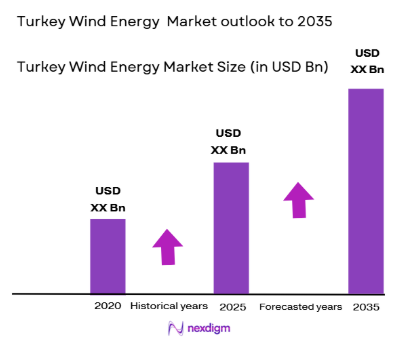
The Turkey Wind Energy Market is projected to witness substantial growth, with a market size in the range of USD ~ billion by 2024, driven by government incentives, technological advancements in turbine efficiency, and a growing demand for renewable energy. As the country seeks to meet its energy demands and reduce dependence on fossil fuels, wind energy is becoming a key focus. The expansion of both onshore and offshore wind farms, coupled with rising environmental concerns, is propelling this growth. Based on recent historical data, the market is expected to maintain a positive trajectory through increased investment in green energy solutions.
Turkey has emerged as a leader in the wind energy sector in the region, with notable dominance in cities like Izmir, Balikesir, and Aegean regions, which offer favorable wind conditions. The government’s commitment to renewable energy sources through its renewable energy support mechanisms plays a significant role in the dominance of these areas. Furthermore, the integration of wind energy into the national grid, supported by infrastructural development and technological innovation, is driving Turkey’s position in the global wind energy market.
Market Segmentation
By Product Type:
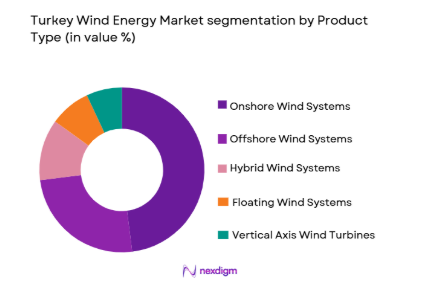
The Turkey Wind Energy Market is segmented by product type into onshore wind systems, offshore wind systems, hybrid wind systems, floating wind systems, and vertical axis wind turbines. Recently, onshore wind systems have had a dominant market share due to factors such as lower initial investment costs, established infrastructure, and high demand in regions with favorable wind conditions. This sub-segment has benefited from substantial government support and infrastructure development, ensuring efficient electricity generation. Moreover, the growth of rural and coastal areas as ideal locations for these systems has further cemented the dominance of onshore wind systems, driving continued adoption.
By Platform Type:
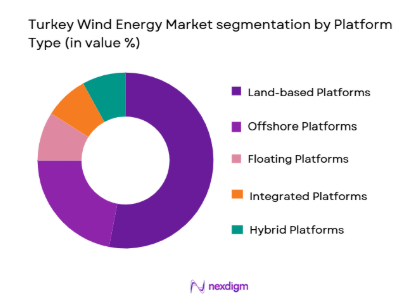
The Turkey Wind Energy Market is segmented by platform type into land-based platforms, offshore platforms, floating platforms, integrated platforms, and hybrid platforms. Recently, land-based platforms have had a dominant market share due to the availability of large land areas with favorable wind conditions, lower setup costs, and well-established infrastructure for installation and maintenance. The availability of suitable sites and government incentives for land-based wind projects has led to their widespread adoption. Furthermore, the established grid connections in these areas contribute to the strong market presence of land-based platforms.
Competitive Landscape
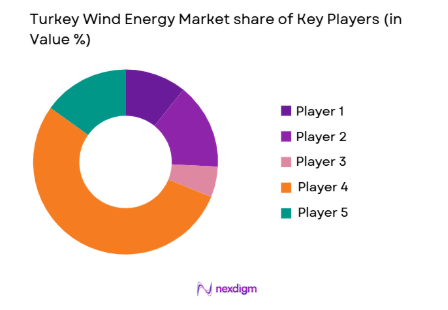
The Turkey Wind Energy Market is characterized by a competitive landscape with numerous key players who focus on technological advancements and strategic partnerships to strengthen their market presence. The market sees a high level of consolidation with the involvement of major energy companies and international players who are expanding their footprint in Turkey’s renewable energy space. These companies drive competition through innovation, cost reduction, and expanding their project portfolios to meet the growing energy demand. The influence of large players such as Siemens Gamesa and Vestas continues to shape the market dynamics, while government policies provide further support to the industry.
| Company Name | Establishment Year | Headquarters | Technology Focus | Market Reach | Key Products | Revenue (USD Billion) | Additional Parameter |
| Siemens Gamesa | 1976 | Spain | ~ | ~ | ~ | ~ | ~ |
| Vestas | 1945 | Denmark | ~ | ~ | ~ | ~ | ~ |
| Nordex | 1985 | Germany | ~ | ~ | ~ | ~ | ~ |
| General Electric | 1892 | USA | ~ | ~ | ~ | ~ | ~ |
| Enel Green Power | 2008 | Italy | ~ | ~ | ~ | ~ | ~ |
Turkey Wind Energy Market Analysis
Growth Drivers
Government Support for Renewable Energy:
The Turkish government’s active initiatives to expand renewable energy generation have been a key driver for the wind energy market. The government has introduced favorable policies such as the Renewable Energy Resource Areas (YEKA) and Feed-in Tariffs (FiTs), which provide attractive financial incentives for investors and project developers. The introduction of these programs has led to rapid development in wind energy infrastructure, especially in onshore wind farms, and has attracted foreign investments into the country. These incentives play a crucial role in reducing the financial risks of developing large-scale wind projects, making Turkey a more attractive destination for renewable energy investments. As part of its long-term energy strategy, Turkey aims to increase its renewable energy capacity significantly, thus creating a supportive market environment for wind energy growth. The alignment of these policies with Turkey’s goal to reduce greenhouse gas emissions by 2030 is expected to continue driving demand for wind energy solutions.
Technological Advancements in Wind Turbines:
The continuous improvement in wind turbine technology has driven the growth of the Turkey Wind Energy Market. Advancements in turbine efficiency, such as increased rotor sizes and improved blade design, have made wind energy more economically viable. Moreover, innovations in digital monitoring and control systems have enhanced the operational efficiency and lifespan of turbines, further attracting investment in wind energy infrastructure. The incorporation of AI and machine learning in turbine management systems allows for predictive maintenance, which reduces downtime and maintenance costs, contributing to the overall cost-effectiveness of wind projects. Additionally, the development of offshore wind turbines with greater power output is expanding the potential for wind energy generation, especially in Turkey’s coastal regions. These technological advancements enable the industry to optimize power generation, meet growing energy demands, and achieve energy efficiency targets.
Market Challenges
High Initial Capital Investment:
One of the main challenges faced by the Turkish wind energy market is the high capital investment required for the establishment of wind farms. While the operational costs of wind farms are relatively low, the initial cost of purchasing and installing turbines, land acquisition, and establishing grid connections can be significant. This financial barrier has limited the pace of development, especially for smaller players who are unable to secure financing for large-scale projects. Despite the financial incentives offered by the government, the upfront capital required remains a major hurdle for many investors. Additionally, the long payback period associated with wind energy projects can deter potential investors, further slowing market growth. The need for financing solutions tailored to renewable energy projects is crucial to addressing this challenge and enabling the industry to scale faster. Increased financial support from both public and private sectors is necessary to overcome this barrier and accelerate the development of wind energy in Turkey.
Regulatory Uncertainty:
The wind energy industry is highly dependent on favorable government policies and regulations, and any changes in these regulations can introduce risks for project developers. Delays in the approval of permits, uncertainty regarding the continuation of support schemes like FiTs, and shifting environmental regulations can disrupt the progress of wind energy projects. Such uncertainties can also lead to increased project costs and delays in implementation, making it difficult for developers to plan effectively. Investors are often hesitant to commit to long-term projects without clear and stable regulatory frameworks, which can hinder the overall growth of the wind energy market. The market’s reliance on regulatory certainty requires an emphasis on transparent and stable policies to ensure continued investment and market development.
Opportunities
Expansion of Offshore Wind Farms:
Given Turkey’s extensive coastline and favorable wind conditions in the Aegean and Mediterranean Seas, the development of offshore wind farms has the potential to unlock substantial new capacity for energy generation. Offshore wind technology, which benefits from higher and more consistent wind speeds, can significantly increase the efficiency and output of wind energy systems. As technological advancements in offshore wind turbines continue, the costs associated with offshore wind projects are expected to decrease, making them more economically viable. Turkey’s government has already made strides in promoting offshore wind energy through policy frameworks that support both onshore and offshore development. As demand for clean energy rises, offshore wind projects could play a crucial role in meeting Turkey’s renewable energy goals and reducing reliance on fossil fuels.
Energy Storage Solutions:
The intermittent nature of wind energy, with fluctuations in power generation, has been a challenge in terms of grid stability and reliability. However, the growing adoption of energy storage systems, such as batteries and pumped storage, offers a solution to this issue by storing excess energy during periods of high wind generation. By integrating energy storage with wind power projects, Turkey can ensure a more consistent and reliable supply of renewable energy, reducing the dependency on conventional power sources. Furthermore, energy storage can help optimize grid management, balancing supply and demand efficiently. The advancement of energy storage technologies, combined with government support for clean energy storage systems, presents an excellent opportunity for Turkey’s wind energy sector to increase its share of the national energy mix.
Future Outlook
The future outlook for Turkey’s wind energy market over the next five years appears highly promising, with expectations for continued growth driven by supportive government policies, technological advancements, and rising demand for clean energy. The government’s commitment to renewable energy goals, coupled with technological improvements in turbine efficiency and offshore wind development, will likely propel the market. Additionally, the integration of energy storage systems with wind farms will enhance grid stability and increase the reliability of wind energy as a key power source. The growing environmental awareness and the country’s push for sustainability are expected to drive further demand for wind energy, ensuring the sector’s robust growth in the coming years.
Major Players
- Siemens Gamesa
- Vestas
- Nordex
- General Electric
- Enel Green Power
- Suzlon Energy
- Goldwind
- Senvion
- Mitsubishi Heavy Industries
- Acciona
- Dongfang Electric Corporation
- Siemens Energy
- Mitsubishi Electric
- Ingeteam
- GE Renewable Energy
Key Target Audience
- Investments and venture capitalist firms
- Government and regulatory bodies
- Energy developers and infrastructure operators
- Utilities and energy companies
- Wind turbine manufacturers
- Independent power producers
- Regional energy agencies
- Commercial and industrial energy consumers
Research Methodology
Step 1: Identification of Key Variables
Identification of key market variables, including demand drivers, technological trends, and regulatory factors affecting the Turkey Wind Energy Market.
Step 2: Market Analysis and Construction
Thorough market analysis to construct the market size, growth trends, and segmentation across various categories such as product type, platform type, and technology.
Step 3: Hypothesis Validation and Expert Consultation
Validation of hypotheses through interviews and consultations with industry experts, including market participants and regulatory bodies.
Step 4: Research Synthesis and Final Output
Synthesis of findings from multiple sources, integrating them into the final report to provide actionable insights for stakeholders in the wind energy market.

- Executive Summary
- Research Methodology (Definitions, Scope, Industry Assumptions, Market Sizing Approach, Primary & Secondary Research Framework, Data Collection & Verification Protocol, Analytic Models & Forecast Methodology, Limitations & Research Validity Checks)

- Market Definition and Scope
- Value Chain & Stakeholder Ecosystem
- Regulatory / Certification Landscape
- Sector Dynamics Affecting Demand
- Strategic Initiatives & Infrastructure Growth

- Growth Drivers
Government Incentives and Subsidies
Increased Demand for Renewable Energy
Technological Advancements in Wind Turbines
Geopolitical Efforts to Reduce Energy Dependency
Growing Demand for Clean Energy Solutions - Market Challenges
High Initial Capital Investment
Geographic and Environmental Limitations
Regulatory and Policy Uncertainty
Supply Chain and Manufacturing Constraints
Lack of Skilled Workforce - Market Opportunities
Expansion of Offshore Wind Farms
Integration with Energy Storage Systems
Emerging Demand from Energy-Intensive Industries - Trends
Technological Advancements in Wind Turbine Efficiency
Integration of Artificial Intelligence in Wind Energy Operations
Rise of Floating Wind Turbine Technology
Increase in Hybrid Wind and Solar Projects
Growth in Energy Storage Integration with Wind Energy - Government Regulations & Defense Policy
Energy Efficiency Standards
Subsidy Programs for Renewable Energy
Support for Wind Energy R&D and Innovation - SWOT Analysis
- Stakeholder and Ecosystem Analysis
- Porter’s Five Forces Analysis
- Competition Intensity and Ecosystem Mapping

- By Market Value, 2020-2025
- By Installed Units, 2020-2025
- By Average System Price, 2020-2025
- By System Complexity Tier, 2020-2025

- By System Type (In Value%)
Onshore Wind Systems
Offshore Wind Systems
Hybrid Wind Systems
Floating Wind Systems
Vertical Axis Wind Turbines - By Platform Type (In Value%)
Land-Based Platforms
Offshore Platforms
Floating Platforms
Integrated Platforms
Hybrid Platforms - By Fitment Type (In Value%)
On-premise Solutions
Cloud-based Solutions
Hybrid Solutions
Modular Solutions
Integrated Solutions - By EndUser Segment (In Value%)
Private Sector Developers
Government and Public Sector
Industrial Users
Utilities and Energy Companies
Independent Power Producers - By Procurement Channel (In Value%)
Direct Procurement
Government Tenders
Private Sector Procurement
Online Bidding Platforms
Third-party Distributors - By Material / Technology (in Value%)
Wind Turbine Blades
Power Electronics
Control and Monitoring Systems
Structural Materials
Energy Storage Systems

- Market structure and competitive positioning
- Market share snapshot of major players
- CrossComparison Parameters (System Type, Platform Type, Procurement Channel, EndUser Segment, Fitment Type, Material/Technology, Regional Presence, Technological Innovation, Cost Structure, Strategic Initiatives)
- SWOT Analysis of Key Players
- Pricing & Procurement Analysis
- Key Players
Siemens Gamesa
Nordex
GE Renewable Energy
Suzlon Energy
Enel Green Power
Vestas
Nordex Group
MHI Vestas
Siemens Energy
Acciona
Senvion
Dongfang Electric Corporation
Sinovel Wind Group
GE Power
Suzlon Energy

- Growth in Government Procurement of Wind Systems
- Increase in Private Sector Investment
- Technological Partnerships with Global Wind Energy Firms
- Rising Demand for Green Energy from Industrial Sectors

- Forecast Market Value, 2026-2035
- Forecast Installed Units, 2026-2035
- Price Forecast by System Tier, 2026-2035
- Future Demand by Platform, 2026-2035


 Request a Sample
 Ask for Customization
 Get a Quote
 Enquire Now