
 Download PDF
 Download PDF
Market Overview
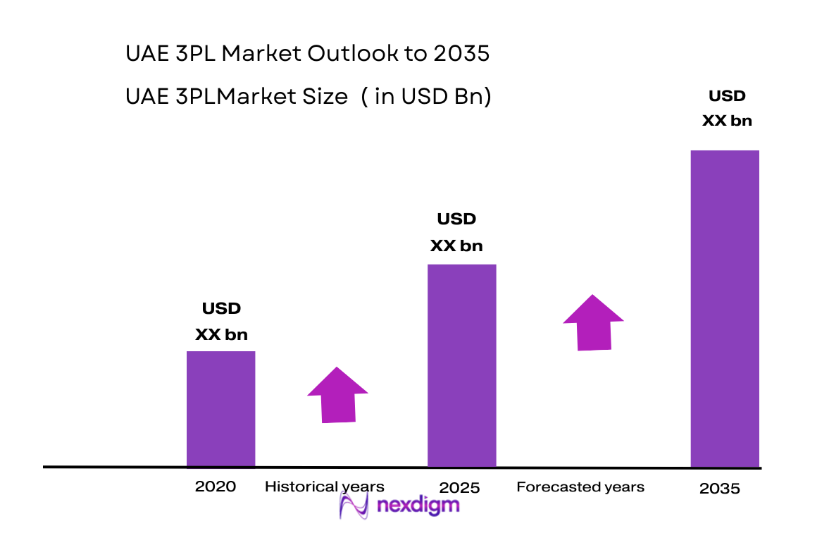
The UAE third-party logistics market recorded a market value of approximately USD ~ billion based on a recent historical assessment, supported by strong trade activity, infrastructure investment, and the expansion of logistics free zones. The market is driven by large-scale re-export operations, integrated supply chain outsourcing, and increasing demand for specialized warehousing and distribution services. Strategic initiatives by the UAE government to strengthen logistics corridors, modern seaports, and cargo airports have further accelerated demand for outsourced logistics services across retail, manufacturing, and energy industries.
Dubai and Abu Dhabi dominate the UAE third-party logistics ecosystem due to their extensive logistics infrastructure, global connectivity, and presence of large international logistics providers. Dubai’s logistics cluster benefits from integrated facilities such as Jebel Ali Port, Al Maktoum International Airport, and multiple free zones supporting distribution and re-export operations. Abu Dhabi continues to expand industrial logistics capabilities through Khalifa Port and associated industrial zones, enabling large-scale supply chain operations for energy, manufacturing, and heavy industry sectors.
Market Segmentation
By Service Type
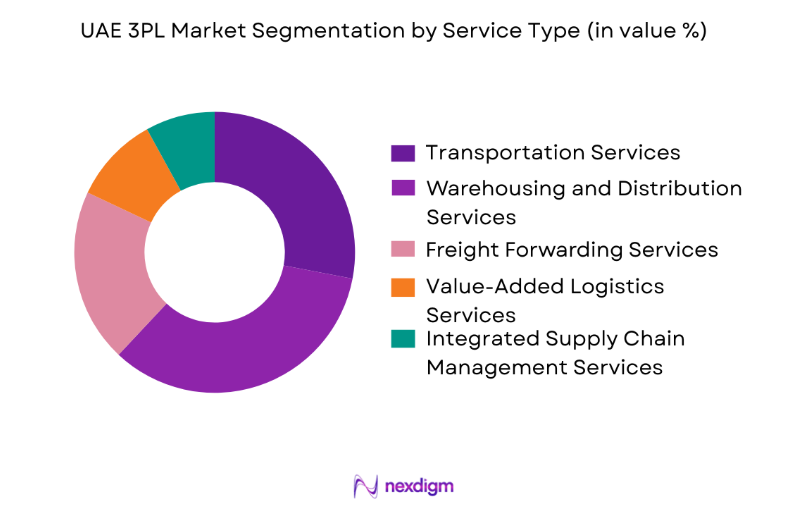
UAE 3PL market is segmented by service type into transportation services, warehousing and distribution services, freight forwarding services, value-added logistics services, and integrated supply chain management services. Recently, warehousing and distribution services have a dominant market share due to factors such as increasing e-commerce fulfillment requirements, regional re-export distribution hubs, and the rapid expansion of logistics free zones. Companies operating in the UAE require large-scale warehousing infrastructure to manage international trade flows, cross-border shipments, and inventory storage for regional distribution across the Middle East and Africa. Growth in temperature-controlled storage facilities, automated distribution centers, and bonded warehouses has strengthened the role of warehousing in the logistics ecosystem. Major logistics companies are investing heavily in advanced warehouse management systems, robotics-enabled storage facilities, and large-scale fulfillment centers to support growing demand from retail, pharmaceuticals, and consumer goods industries. As supply chains become increasingly complex, companies rely on warehousing partners to manage inventory optimization, packaging, labeling, and distribution activities. Government initiatives supporting logistics parks and free trade zones have further expanded available warehousing capacity across the country.
By End User Industry
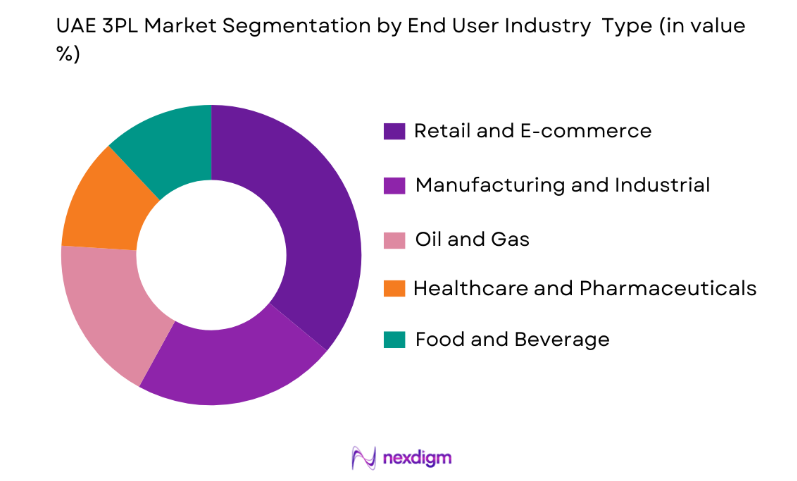
UAE 3PL market is segmented by end user industry into retail and e-commerce, manufacturing and industrial, oil and gas, healthcare and pharmaceuticals, and food and beverage industries. Recently, retail and e-commerce has a dominant market share due to factors such as rapid digital commerce expansion, increasing cross-border online purchases, and large fulfillment operations established by global and regional retailers. The UAE functions as a central distribution hub for consumer products entering Middle Eastern markets, which increases logistics demand for inventory storage, order fulfillment, and last-mile delivery. Major online marketplaces and retailers operate advanced fulfillment centers that rely heavily on outsourced logistics providers for inventory management and parcel distribution. Logistics companies are developing specialized e-commerce logistics services including automated sorting systems, same-day delivery capabilities, and integrated order tracking technologies. Retail supply chains also require efficient returns management, packaging services, and high-volume distribution operations, which further increases demand for 3PL providers. As consumer demand for fast delivery and product availability continues to expand, logistics providers are strengthening e-commerce supply chain infrastructure across major urban centers.
Competitive Landscape
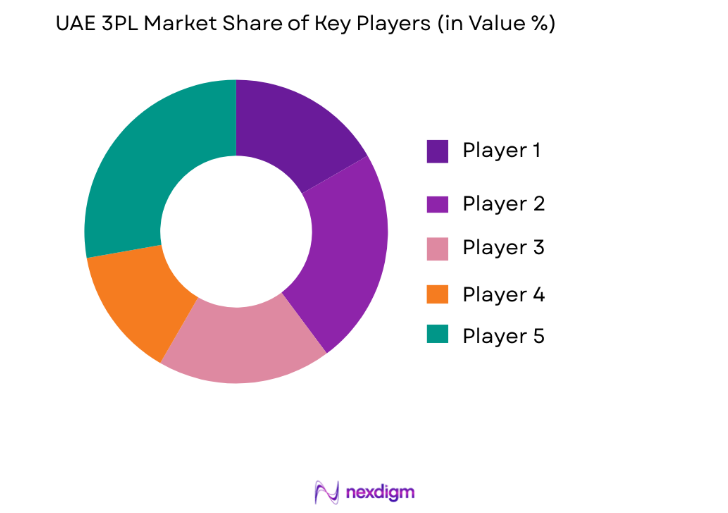
The UAE 3PL market is moderately consolidated with a mix of global logistics companies and regional supply chain providers competing across transportation, warehousing, and freight management services. Large multinational firms dominate complex logistics operations due to extensive international networks, advanced supply chain technologies, and strong capital investment capabilities. Regional logistics companies maintain competitive advantages in local distribution, regional trade routes, and specialized industry logistics services. Strategic partnerships with port operators, airlines, and industrial zones further strengthen competitive positioning.
| Company Name | Establishment Year | Headquarters | Technology Focus | Market Reach | Key Products | Revenue | Logistics Infrastructure Coverage |
| DHL Supply Chain | 1969 | Germany | ~ | ~ | ~ | ~ | ~ |
| Aramex | 1982 | UAE | ~ | ~ | ~ | ~ | ~ |
| Agility Logistics | 1979 | Kuwait | ~ | ~ | ~ | ~ | ~ |
| Kuehne + Nagel | 1890 | Switzerland | ~ | ~ | ~ | ~ | ~ |
| DB Schenker | 1872 | Germany | ~ | ~ | ~ | ~ | ~ |
UAE 3PL Market Analysis
Growth Drivers
Expansion of Global Trade and Re-Export Logistics Infrastructure
Explanation continues in the same sentence. The UAE has developed one of the most advanced logistics ecosystems in the Middle East, driven by large-scale investments in maritime ports, international airports, and integrated logistics zones that facilitate global trade flows and re-export operations. Strategic geographic positioning between Europe, Asia, and Africa enables the country to function as a global trade gateway for multinational corporations managing regional distribution networks. Major infrastructure assets such as Jebel Ali Port, Khalifa Port, and Al Maktoum International Airport enable high cargo throughput and efficient multimodal logistics connectivity. These facilities support large volumes of containerized cargo, air freight shipments, and bulk logistics operations serving industries ranging from manufacturing to consumer goods distribution. Logistics free zones and industrial clusters offer tax incentives and customs advantages that encourage international companies to establish regional supply chain hubs. Multinational corporations increasingly outsource transportation, warehousing, and freight management functions to specialized logistics providers operating within these trade corridors. The development of advanced container terminals, automated cargo handling systems, and digital customs platforms improves logistics efficiency and reduces trade processing times. Logistics providers are expanding integrated service portfolios that include inventory management, freight consolidation, and regional distribution planning for global clients. As international trade continues to expand through the UAE’s logistics infrastructure network, demand for third-party logistics providers continues to strengthen across the supply chain ecosystem.
Rapid Expansion of E-Commerce and Omnichannel Retail Logistics Networks
Explanation continues in the same sentence. The rapid expansion of digital commerce across the UAE has significantly increased demand for outsourced logistics services that support inventory management, fulfillment operations, and last-mile delivery networks. Online retail platforms require highly efficient distribution systems capable of processing high order volumes while maintaining fast delivery timelines across metropolitan areas. Retail companies rely heavily on logistics partners to manage warehousing infrastructure, automated sorting centers, and parcel distribution networks that support e-commerce operations. Fulfillment centers located within logistics free zones enable retailers to manage large product inventories while supporting cross-border distribution across regional markets. Logistics providers are implementing advanced warehouse management systems, robotics-based storage solutions, and automated packaging technologies to handle growing parcel volumes. Consumer expectations for same-day or next-day delivery services further increase operational complexity for retailers, which drives demand for specialized logistics providers with scalable distribution capabilities. Logistics firms are also investing in route optimization software, digital tracking systems, and integrated order management platforms that improve operational efficiency across delivery networks. As e-commerce marketplaces continue to expand product categories and regional distribution coverage, logistics outsourcing becomes a strategic requirement for retailers seeking efficient supply chain operations. The growth of digital commerce platforms therefore represents one of the most significant demand drivers for third-party logistics services across the UAE.
Market Challenges
High Logistics Infrastructure Costs and Operational Expenses
Explanation continues in the same sentence. Developing and maintaining large-scale logistics infrastructure requires significant capital investment in warehousing facilities, cargo handling equipment, transportation fleets, and digital logistics technologies. Logistics companies operating in the UAE must invest heavily in advanced distribution centers, automated storage systems, and specialized cargo handling equipment to remain competitive in high-volume logistics operations. Real estate costs associated with industrial zones and logistics parks can significantly increase operational expenditures for logistics providers managing large warehousing footprints. Additionally, transportation fleets require continuous investment in vehicle maintenance, fuel consumption, and regulatory compliance with transportation safety standards. Advanced logistics technologies including warehouse automation systems, digital freight platforms, and inventory tracking systems require significant capital expenditure and continuous upgrades. Smaller logistics providers may struggle to compete with multinational logistics firms that possess stronger financial resources and advanced technology capabilities. Fluctuations in fuel costs and global shipping rates can further affect logistics pricing structures and operational profitability. Maintaining skilled logistics workforce teams for complex supply chain operations also adds to labor costs across the industry. As logistics service expectations continue to rise among large multinational clients, providers must maintain significant investment levels in infrastructure and technology to sustain operational competitiveness.
Supply Chain Disruptions and Global Trade Volatility
Explanation continues in the same sentence. Global supply chains are increasingly affected by geopolitical tensions, shipping disruptions, and fluctuating trade regulations that influence cargo flows through major logistics hubs. The UAE functions as a critical global trade gateway, meaning disruptions in international shipping routes or cargo demand can significantly affect logistics activity across ports and distribution centers. Trade policy changes, customs regulations, and cross-border documentation requirements may create operational complexity for logistics providers managing international shipments. Shipping delays, port congestion, and container shortages can increase transportation costs and disrupt inventory planning for companies relying on efficient supply chain operations. Logistics providers must continuously adapt to shifting trade patterns, evolving import-export regulations, and changes in global freight demand. Economic fluctuations affecting key trading partners may also influence cargo volumes passing through the UAE logistics network. Managing supply chain resilience requires logistics providers to develop diversified transportation networks, flexible warehousing capacity, and contingency planning systems. Companies must also invest in digital supply chain visibility platforms that enable real-time monitoring of shipments and potential disruptions. These operational uncertainties create significant strategic challenges for logistics providers attempting to maintain reliable service performance within global supply chain networks.
Opportunities
Expansion of Smart Logistics and Automated Warehousing Technologies
Explanation continues in the same sentence. Rapid technological innovation in logistics automation is creating new opportunities for third party logistics providers operating across the UAE supply chain ecosystem. Automated storage and retrieval systems, robotics-enabled picking technologies, and artificial intelligence-driven inventory management platforms are transforming modern warehousing operations. Logistics providers investing in smart warehouses can significantly increase storage efficiency, order processing speed, and operational accuracy while reducing manual labor requirements. Automated sorting systems and digital warehouse management platforms also enable logistics companies to process higher shipment volumes during peak demand periods. These advanced technologies support the growing complexity of omnichannel retail logistics operations that require real-time inventory visibility and rapid fulfillment capabilities. Logistics parks across the UAE are increasingly integrating automation technologies within large-scale distribution centers to support regional trade operations. Smart logistics infrastructure can also reduce operational costs over the long term through improved resource utilization and reduced human error. The growing availability of artificial intelligence tools for route optimization and demand forecasting further enhances logistics efficiency across transportation networks. As companies seek more advanced supply chain capabilities, investment in smart logistics infrastructure represents a major opportunity for logistics providers across the UAE.
Development of Regional Distribution Hubs Serving Middle East and Africa Markets
Explanation continues in the same sentence. The UAE’s geographic location and advanced logistics infrastructure enable the country to function as a central distribution hub serving multiple international markets. Many multinational companies use UAE logistics centers to distribute goods across the Middle East, Africa, and South Asia regions through integrated transportation networks. Logistics providers supporting these distribution operations manage large-scale warehousing facilities, inventory consolidation hubs, and multimodal transportation services connecting seaports, airports, and land transport corridors. The expansion of regional trade agreements and cross-border commerce creates growing demand for centralized logistics operations that can efficiently distribute goods across multiple countries. Industrial free zones and logistics parks provide companies with customs advantages and advanced infrastructure that support high-volume regional distribution activities. Logistics companies offering integrated freight forwarding, inventory management, and cross-border transportation services are well positioned to capture growth opportunities within these regional supply chain networks. Increasing industrial diversification across the Middle East further strengthens demand for regional distribution hubs managing manufacturing inputs and consumer goods logistics. As global companies expand their presence across emerging markets, the UAE continues to strengthen its position as a strategic logistics gateway connecting international supply chains.
Future Outlook
The UAE 3PL market is expected to experience continued expansion as international trade activity, logistics infrastructure development, and digital commerce growth strengthen supply chain demand. Technological innovation including automation, artificial intelligence, and digital freight management systems will further transform logistics operations. Government initiatives supporting logistics zones, port modernization, and multimodal transport connectivity will enhance supply chain capacity. Increasing regional distribution activities and cross-border e-commerce operations will continue to expand logistics outsourcing demand across the country.
Major Players
- DHL Supply Chain
- Aramex
- Agility Logistics
- Gulf Agency Company
- Kuehne + Nagel
- DB Schenker
- CEVA Logistics
- DSV
- UPS Supply Chain Solutions
- FedEx Logistics
- MilahaLogistics
- Al-Futtaim Logistics
- RSA Global
- Yusen Logistics
- Hellmann Worldwide Logistics
Key Target Audience
- Logistics and supply chain companies
- Retail and e-commerce enterprises
- Manufacturing and industrial companies
- Oil and gas industry companies
- Transportation infrastructure developers
- Investments and venture capitalist firm
- Government and regulatory bodies
- International trade and export companies
Research Methodology
Step 1: Identification of Key Variables
Key market variables including logistics service demand, trade volumes, supply chain outsourcing trends, infrastructure investments, and transportation network capacity were identified to understand the structural drivers of the UAE 3PL market. Industry indicators such as cargo throughput, port capacity, and logistics infrastructure development were also evaluated.
Step 2: Market Analysis and Construction
Market data was analyzed using supply chain industry reports, trade statistics, logistics infrastructure assessments, and company financial disclosures to construct a comprehensive view of the market. Both macroeconomic indicators and sector-specific logistics activity were incorporated into the analytical framework.
Step 3: Hypothesis Validation and Expert Consultation
Preliminary findings were validated through consultation with logistics industry experts, supply chain professionals, and infrastructure analysts to ensure the accuracy of assumptions and market insights. Feedback from industry participants helped refine key market drivers and operational trends.
Step 4: Research Synthesis and Final Output
All collected data points were synthesized through comparative analysis and triangulation methods to produce the final market report. The research integrates quantitative data with qualitative industry insights to provide a comprehensive understanding of market dynamics and future growth potential.

- Executive Summary
- Research Methodology (Definitions, Scope, Industry Assumptions, Market Sizing Approach, Primary & Secondary Research Framework, Data Collection & Verification Protocol, Analytic Models & Forecast Methodology, Limitations & Research Validity Checks)

- Market Definition and Scope
- Value Chain & Stakeholder Ecosystem
- Regulatory / Certification Landscape
- Sector Dynamics Affecting Demand

- E-commerce Retailers Increasing Outsourcing of Fulfillment and Distribution
- Manufacturers Utilizing Contract Logistics for Regional Distribution
- Oil and Gas Sector Requiring Specialized Industrial Logistics Solutions
- Healthcare Sector Demand for Temperature Controlled Logistics Services

- By Market Value, 2020-2025
- By Installed Units, 2020-2025
- By Average System Price, 2020-2025
- By System Complexity Tier, 2020-2025

- By System Type (In Value%)
Transportation Management Services
Warehousing and Distribution Services
Freight Forwarding Services
Integrated Supply Chain Management Services
Value Added Logistics Services - By Platform Type (In Value%)
Road Freight Logistics Platforms
Air Cargo Logistics Platforms
Sea Freight Logistics Platforms
Multimodal Logistics Platforms
Digital Logistics Management Platforms - By Fitment Type (In Value%)
- Dedicated Contract Logistics
Shared Warehousing Solutions
On-Demand Logistics Services
Integrated Logistics Outsourcing
Hybrid Logistics Service Models - By EndUser Segment (In Value%)
Retail and E-commerce Companies
Manufacturing and Industrial Enterprises
Oil and Gas Industry Companies

- Market Share Analysis
- Cross Comparison Parameters (Service Portfolio Breadth, Logistics Infrastructure Network, Technology Integration Capability, Industry Vertical Expertise, Regional Distribution Coverage)
- SWOT Analysis of Key Competitors
- Pricing & Procurement Analysis
- Key Players
DHL Supply Chain
Aramex
Agility Logistics
Gulf Agency Company
Kuehne + Nagel
DB Schenker
CEVA Logistics
DSV
UPS Supply Chain Solutions
FedEx Logistics
Milaha Logistics
Al-Futtaim Logistics
RSA Global
Yusen Logistics
Hellmann Worldwide Logistics

- E-commerce Retailers Increasing Outsourcing of Fulfillment and Distribution
- Manufacturers Utilizing Contract Logistics for Regional Distribution
- Oil and Gas Sector Requiring Specialized Industrial Logistics Solutions
- Healthcare Sector Demand for Temperature Controlled Logistics Services

- Forecast Market Value, 2026-2035
- Forecast Installed Units, 2026-2035
- Price Forecast by System Tier, 2026-2035
- Future Demand by Platform, 2026-2035


 Request a Sample
 Ask for Customization
 Get a Quote
 Enquire Now