

 Download PDF
 Download PDF
Market Overview
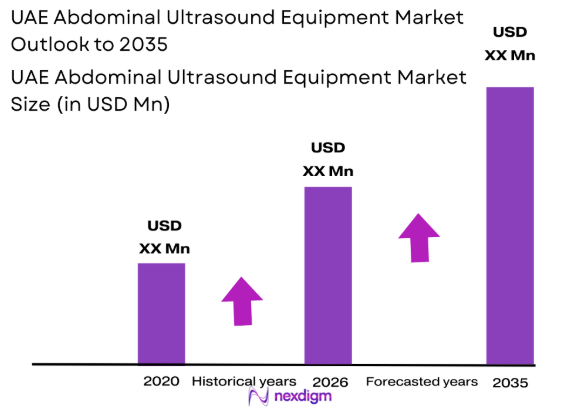
The UAE abdominal ultrasound equipment market is valued at approximately USD ~ million in recent historical assessments, driven by the increasing demand for non-invasive diagnostic technologies, particularly in healthcare settings. This growth is supported by advances in ultrasound technology, such as portable devices and high-definition imaging systems, which improve diagnostic accuracy. The market also benefits from the growing healthcare infrastructure in the UAE, spurred by rising government investments in healthcare and the expansion of private healthcare services.
Key cities like Dubai and Abu Dhabi dominate the UAE abdominal ultrasound market due to their well-developed healthcare sectors and advanced medical facilities. These cities offer extensive healthcare services, including state-of-the-art diagnostic imaging, backed by significant investments in medical technologies. Additionally, Dubai’s positioning as a medical tourism hub contributes to a higher demand for advanced medical imaging solutions, further reinforcing the market’s growth in these regions.
Market Segmentation
By Product Type
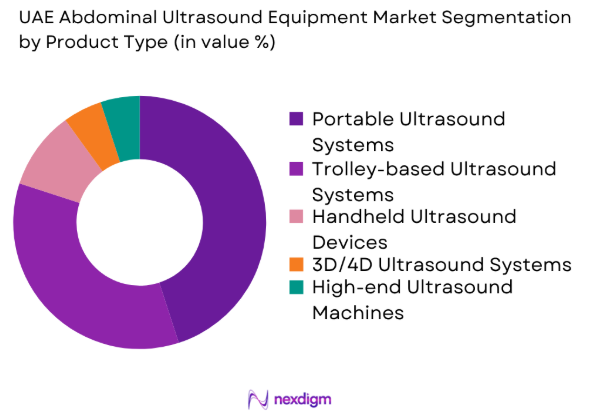
The UAE abdominal ultrasound equipment market is segmented by product type into portable ultrasound systems, trolley-based systems, and handheld devices. Portable ultrasound systems have emerged as the dominant segment, primarily due to the increasing preference for flexible, mobile solutions that can be used in diverse clinical settings, including ambulatory care and rural areas. These systems offer affordability, ease of use, and reduced operational costs, making them an ideal choice for many healthcare providers.
By End-User Segment
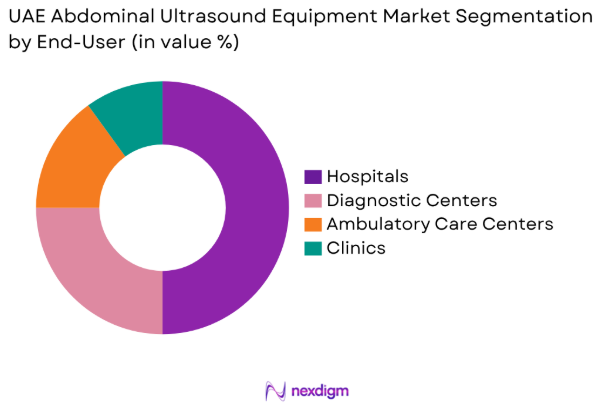
The UAE abdominal ultrasound equipment market is segmented by end-user into hospitals, diagnostic centers, ambulatory care centers, and clinics. Hospitals hold the dominant share due to their high-volume diagnostic needs and the growing trend of advanced medical imaging integration into hospital systems. Hospitals benefit from large budgets, access to specialized medical professionals, and the need for comprehensive diagnostic capabilities, making them the largest consumers of abdominal ultrasound equipment.
Competitive Landscape
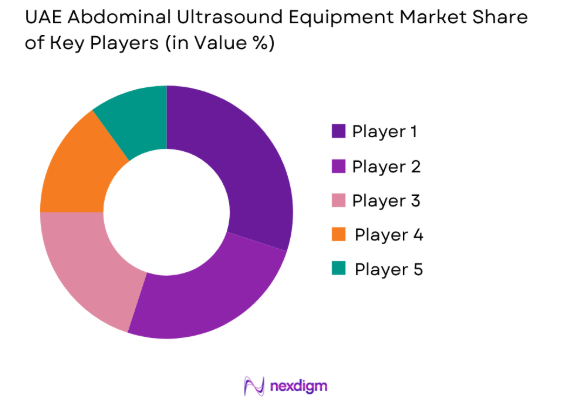
The UAE abdominal ultrasound equipment market is competitive, with significant consolidation among global and regional players. Major players are focusing on expanding their product offerings and improving their technological capabilities to cater to the increasing demand for advanced ultrasound systems in diagnostic imaging. The influence of key players is notable in terms of market share, brand presence, and distribution networks, ensuring the availability of high-quality products across the UAE.
| Company Name | Establishment Year | Headquarters | Technology Focus | Market Reach | Key Products | Revenue (USD) | Market-specific Parameter |
| GE Healthcare | 1892 | Chicago, USA | ~ | ~ | ~ | ~ | ~ |
| Philips Healthcare | 1891 | Amsterdam, Netherlands | ~ | ~ | ~ | ~ | ~ |
| Siemens Healthineers | 1847 | Erlangen, Germany | ~ | ~ | ~ | ~ | ~ |
| Mindray | 1991 | Shenzhen, China | ~ | ~ | ~ | ~ | ~ |
| Canon Medical Systems | 1933 | Tokyo, Japan | ~ | ~ | ~ | ~ | ~ |
UAE Abdominal Ultrasound Equipment Market Analysis
Growth Drivers
Healthcare Expansion
The expansion of healthcare infrastructure in the UAE, especially in cities like Dubai and Abu Dhabi, is a primary growth driver for the abdominal ultrasound equipment market. The government’s investment in healthcare has facilitated the development of world-class healthcare facilities, increasing the demand for advanced diagnostic equipment. This demand is further supported by a rising preference for non-invasive diagnostic methods, such as ultrasound, which enhances patient comfort and reduces recovery time compared to invasive procedures. Healthcare investments are also supported by the UAE’s ambitious Vision 2030, which aims to improve the quality of medical services across the country. As healthcare facilities grow in number and sophistication, the need for advanced ultrasound systems will continue to drive market growth.
Technological Advancements
Continuous innovations in ultrasound technology are significantly driving the growth of the UAE abdominal ultrasound market. New developments, such as portable and handheld ultrasound systems, have made it easier for healthcare professionals to perform diagnostic imaging outside of traditional hospital settings. These innovations not only provide more flexibility but also help reduce the cost of diagnostic imaging, making ultrasound systems more accessible to a wider range of healthcare providers. Furthermore, advancements in imaging quality, including the integration of 3D and 4D capabilities, are pushing the demand for high-performance ultrasound equipment. As the technology improves, more healthcare facilities in the UAE are adopting these systems, resulting in increased market penetration and higher sales.
Market Challenges
High Initial Cost of Ultrasound Equipment
One of the significant challenges facing the UAE abdominal ultrasound equipment market is the high initial cost of advanced ultrasound systems. While the technology has improved, ultrasound systems, especially portable and high-end machines, remain expensive. This can be a barrier for smaller healthcare providers, clinics, and hospitals that may struggle to afford the upfront investment required to purchase these advanced systems. Although the operational costs of ultrasound systems are generally low, the capital-intensive nature of acquiring such equipment makes it difficult for some healthcare organizations to keep up with the latest technological advancements. This challenge is particularly prominent in less developed regions or rural areas where budgets are more constrained.
Regulatory and Certification Delays
Another challenge facing the market is the complexity and delays in obtaining regulatory approvals and certifications for new ultrasound equipment. The UAE’s healthcare regulatory environment is rigorous, requiring manufacturers to navigate extensive certification processes before they can enter the market. This creates a delay in the introduction of new products and can restrict the availability of cutting-edge ultrasound systems. Furthermore, any changes to international certification standards, such as those from the FDA or the European Medicines Agency, require local manufacturers and distributors to adjust their processes, causing additional hurdles in the market. These regulatory challenges can increase the time-to-market for ultrasound equipment, delaying product availability and hindering the growth of the market.
Opportunities
Rise in Point-of-Care Testing
One of the significant opportunities in the UAE abdominal ultrasound equipment market is the increasing demand for point-of-care testing. Point-of-care ultrasound devices are portable, cost-effective, and allow for faster diagnostics, making them ideal for use in ambulatory care centers, rural healthcare settings, and emergency departments. These devices enable immediate diagnosis, reducing patient wait times and improving treatment outcomes. With the growing preference for quick and efficient healthcare services, the market for point-of-care ultrasound equipment is expected to expand rapidly. As demand for these devices increases, healthcare facilities across the UAE are likely to invest more in portable ultrasound systems to meet patient needs.
Integration of AI and Machine Learning in Ultrasound Imaging
The integration of artificial intelligence (AI) and machine learning (ML) in abdominal ultrasound systems presents a significant opportunity for growth in the UAE market. AI-powered ultrasound systems have the potential to improve diagnostic accuracy, assist with image interpretation, and reduce human error in diagnosis. These advancements make ultrasound imaging even more efficient, with applications in various medical specialties, including obstetrics, cardiology, and oncology. As AI and ML technologies continue to evolve, healthcare providers in the UAE are likely to adopt these intelligent systems to enhance their diagnostic capabilities, leading to an increase in market demand. The growing focus on AI and ML in medical devices positions the UAE abdominal ultrasound market for substantial future growth.
Future Outlook
The UAE abdominal ultrasound equipment market is poised for strong growth in the next five years, driven by advancements in technology and rising healthcare demand. The trend toward more portable, affordable, and AI-integrated ultrasound devices is expected to revolutionize diagnostic capabilities across the country. Continued government support for healthcare infrastructure development and increased investments in medical technologies will fuel further expansion of the market. Additionally, evolving patient needs and a shift towards non-invasive procedures will continue to drive demand for high-quality ultrasound equipment, creating a favorable market outlook for the future.
Major Players
- GE Healthcare
- Philips Healthcare
- Siemens Healthineers
- Mindray
- Canon Medical Systems
- Fujifilm Holdings
- Samsung Medison
- Esaote
- Hitachi Healthcare
- Analogic Corporation
- Toshiba Medical Systems
- Shenzhen Comen Medical Instruments
- Allengers
- Draeger Medical
- SonoScape
Key Target Audience
- Investments and venture capitalist firms
- Government and regulatory bodies
- Healthcare service providers
- Diagnostic imaging centers
- Ultrasound equipment distributors
- Healthcare technology developers
- Medical device procurement managers
- Private and public hospitals
Research Methodology
Step 1: Identification of Key Variables
The first step involves identifying the key variables that affect the abdominal ultrasound equipment market, including technological advancements, regulatory influences, and economic factors.
Step 2: Market Analysis and Construction
Market analysis and construction involve compiling data on the current market size, growth drivers, challenges, and trends, followed by segmentation analysis across different product types and end-user categories.
Step 3: Hypothesis Validation and Expert Consultation
Experts in the medical imaging field are consulted to validate hypotheses, ensuring that all assumptions made in the research process align with current industry realities and expert opinions.
Step 4: Research Synthesis and Final Output
The final step involves synthesizing all gathered information into a cohesive report, ensuring the results are presented clearly, backed by data, and aligned with market expectations.

- Executive Summary
- Research Methodology (Definitions, Scope, Industry Assumptions, Market Sizing Approach, Primary & Secondary Research Framework, Data Collection & Verification Protocol, Analytic Models & Forecast Methodology, Limitations & Research Validity Checks)

- Market Definition and Scope
- Value Chain & Stakeholder Ecosystem
- Regulatory / Certification Landscape
- Sector Dynamics Affecting Demand
- Strategic Initiatives & Infrastructure Growth

- Growth Drivers
Increasing Healthcare Investments
Technological Advancements in Ultrasound Technology
Rising Demand for Non-invasive Diagnostic Procedures - Market Challenges
High Initial Cost of Advanced Ultrasound Systems
Lack of Skilled Operators
Regulatory Hurdles in the Healthcare Sector - Market Opportunities
Growing Adoption in Rural and Underserved Areas
Integration of Artificial Intelligence with Ultrasound Systems
Expanding Demand for Point-of-Care Diagnostics - Trends
Miniaturization of Ultrasound Devices
AI and Machine Learning in Diagnostic Imaging
Telemedicine Integration with Ultrasound Devices - Government Regulations
- SWOT Analysis of Key Competitors
- Porter’s Five Forces

- By Market Value, 2020-2025
- By Installed Units, 2020-2025
- By Average System Price, 2020-2025
- By System Complexity Tier, 2020-2025

- By System Type (In Value%)
Portable Ultrasound Systems
Trolley/Cart-based Ultrasound Systems
Handheld Ultrasound Devices
3D/4D Ultrasound Systems
High-end Ultrasound Machines - By Platform Type (In Value%)
Mobile Ultrasound Platforms
Fixed Ultrasound Platforms
Laptop-based Ultrasound Systems
Tablet-based Ultrasound Systems
Cloud-based Ultrasound Platforms - By Fitment Type (In Value%)
Transabdominal Ultrasound
Transvaginal Ultrasound
Endocavity Ultrasound
Intraoperative Ultrasound
Intracavitary Ultrasound - By End-User Segment (In Value%)
Hospitals
Diagnostic Centers
Ambulatory Care Centers
Clinics
Homecare Settings - By Procurement Channel (In Value%)
Direct Procurement from Manufacturers
Third-Party Distribution Channels
Online Sales Platforms
Public Tender Procurement
Private Healthcare Procurement

- Market Share Analysis
- Cross Comparison Parameters (Device Type, Market Value, System Complexity, Procurement Channel, Regulatory Compliance)
- SWOT Analysis of Key Competitors
- Pricing & Procurement Analysis
- Key Players
GE Healthcare
Philips Healthcare
Siemens Healthineers
Mindray
Canon Medical Systems
Fujifilm Holdings
Samsung Medison
Esaote
Hitachi Healthcare
Analogic Corporation
Toshiba Medical Systems
Shenzhen Comen Medical Instruments
Allengers
Draeger Medical
SonoScape

- Hospitals
- Diagnostic Centers
- Clinics
- Ambulatory Care Centers

- Forecast Market Value, 2026-2035
- Forecast Installed Units, 2026-2035
- Price Forecast by System Tier, 2026-2035
- Future Demand by Platform, 2026-2035


 Request a Sample
 Ask for Customization
 Get a Quote
 Enquire Now