

 Download PDF
Market Overview
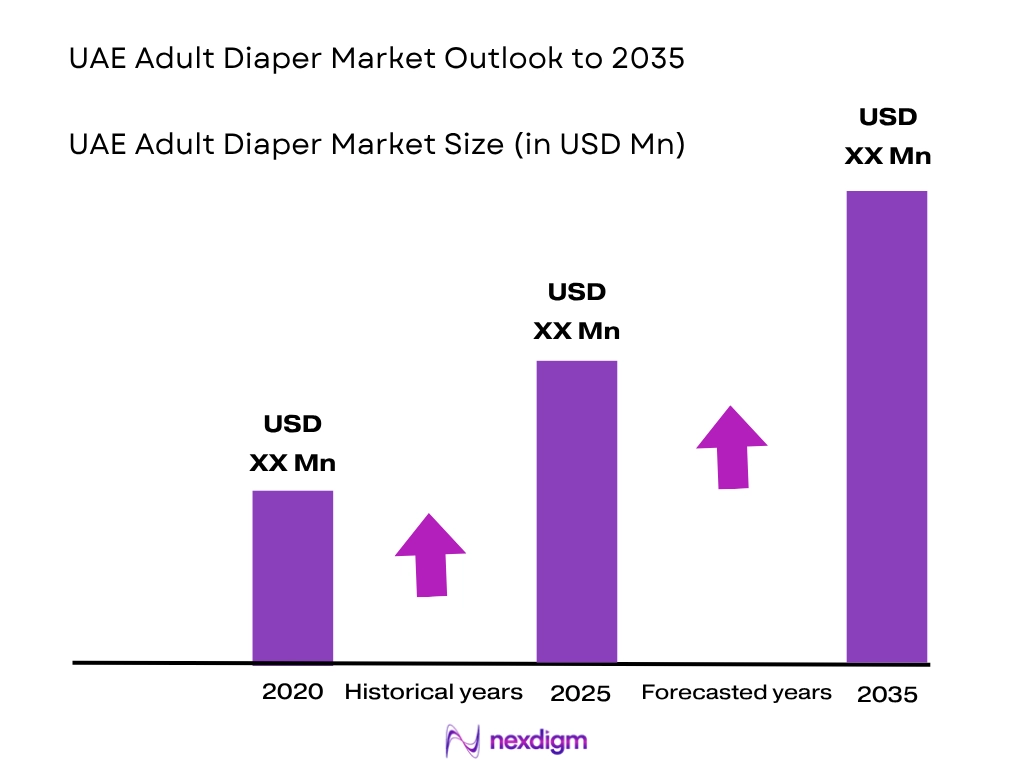
The UAE Adult Diaper market has witnessed consistent growth, supported by the country’s rapidly aging population and rising healthcare awareness. In 2025, the market was valued at approximately USD ~ million and is expected to continue expanding as the healthcare sector increasingly caters to elderly needs and incontinence prevalence rises. This growth is driven by the rise in disposable incomes, an increase in elder care facilities, and better access to healthcare products. As the demand for adult diapers grows, both global players like Procter & Gamble and Kimberly-Clark, and regional manufacturers, are ramping up their production capabilities to meet market needs.
The UAE adult diaper market is largely driven by the demand from major cities such as Dubai and Abu Dhabi. These cities have witnessed rapid urbanization and are home to a significant expatriate population, including aging seniors who require incontinence care. Additionally, these cities lead in healthcare facilities, with private and public hospitals adopting advanced care solutions. The market is also fueled by the increasing healthcare and medical tourism sectors in Dubai, positioning it as a key hub for adult diaper products in the GCC region.
Market Segmentation
By Product Type
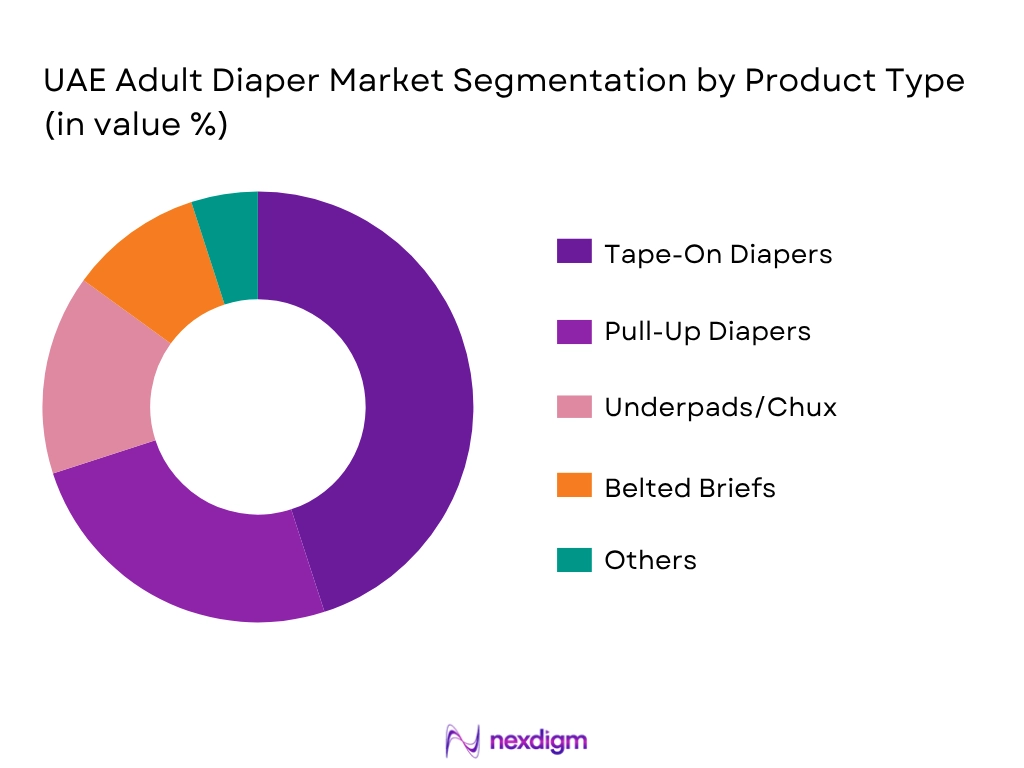
The UAE Adult Diaper market is segmented by product type into Tape-On Diapers, Pull-Up Diapers, Underpads/Chux, Belted Briefs, and other specialized diapers. Among these, the Tape-On Diapers segment dominates the market due to their ease of use, secure fit, and affordability. These diapers are preferred by caregivers and institutions because they are suitable for individuals with limited mobility and require a more secure fastening system. The simplicity and efficiency of Tape-On Diapers make them popular in healthcare facilities such as hospitals and nursing homes, which further contributes to their dominance.
By Consumer Category
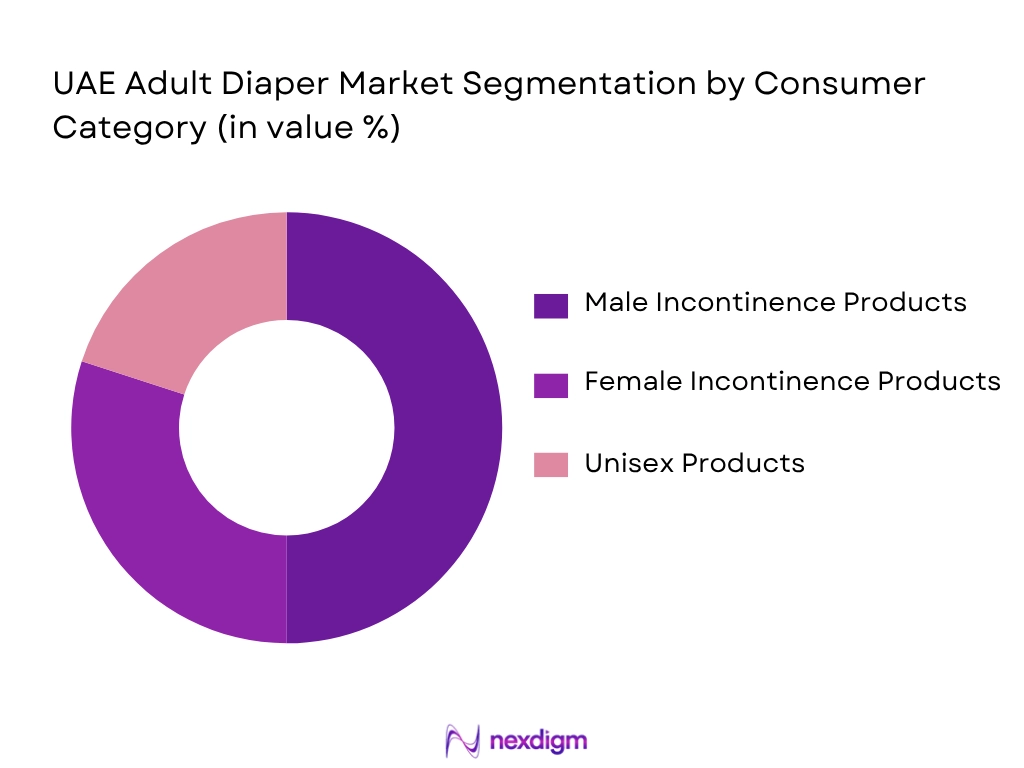
The market is also segmented by consumer category into Male Incontinence Products, Female Incontinence Products, and Unisex Products. Currently, Male Incontinence Products hold a dominant market share in the UAE due to the higher incidence of incontinence in men, particularly among the aging population. With the growing number of elderly male patients who require continuous care and support for incontinence management, manufacturers have focused on creating more specialized male incontinence solutions. These products cater specifically to men’s needs and comfort, driving their dominance in the segment.
Competitive Landscape
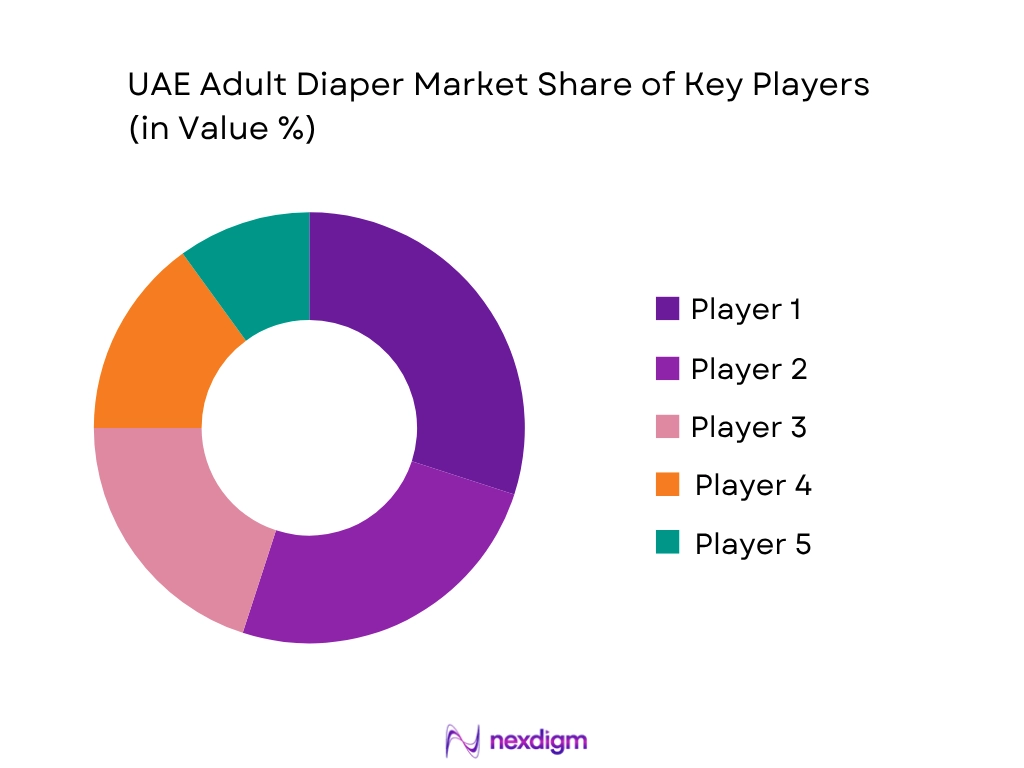
The UAE Adult Diaper market is dominated by both global giants and regional players. Global brands such as Procter & Gamble, Kimberly-Clark, and Unicharm have established a strong foothold due to their extensive distribution networks, brand recognition, and research & development capabilities. On the other hand, regional players like Fine Hygienic and Napco National have also made significant strides by offering cost-effective, locally produced products tailored to regional needs. The market is highly competitive, with companies continuously innovating in product quality, pricing, and distribution channels to capture a larger share of the growing demand.
| Company | Establishment Year | Headquarters | Product Portfolio | Distribution Network | Pricing Strategy | R&D/Innovation Focus | Market Position |
| Procter & Gamble | 1837 | USA | ~ | ~ | ~ | ~ | ~ |
| Kimberly-Clark | 1872 | USA | ~ | ~ | ~ | ~ | ~ |
| Unicharm | 1961 | Japan | ~ | ~ | ~ | ~ | ~ |
| Fine Hygienic | 1958 | UAE | ~ | ~ | ~ | ~ | ~ |
| Napco National | 1969 | USA | ~ | ~ | ~ | ~ | ~ |
UAE Adult Diaper Market Analysis
Growth Drivers
Aging Population Growth
The UAE is witnessing rapid demographic shifts, with a steadily increasing aging population. According to data from the United Nations (UN), the population of individuals aged 60 years and above in the UAE is expected to increase from 4.4% of the total population in 2020 to 7.3% by 2025. This growth is primarily driven by increased life expectancy, which stands at 78 years, as reported by the World Bank. The elderly population is more prone to incontinence, resulting in higher demand for adult diapers. In addition to this, the government has been focusing on improving the quality of healthcare for senior citizens, with initiatives aimed at enhancing elder care services. A higher life expectancy, coupled with the increase in chronic health conditions like diabetes, hypertension, and mobility impairments, significantly contributes to the growing need for adult diapers. Additionally, the government is actively investing in healthcare infrastructure to support this demographic shift, with a projected increase in healthcare expenditure reaching AED 6.7 billion in 2025. This uptick in healthcare spending provides a favorable environment for the growth of the adult diaper market, particularly in urban regions like Dubai and Abu Dhabi.
Increased Healthcare Spending
Healthcare spending in the UAE is seeing an upward trend, primarily driven by the country’s efforts to modernize its healthcare system and accommodate a growing population. According to the World Bank, UAE’s total healthcare expenditure is estimated to reach AED 28.4 billion by 2026, up from AED 24.5 billion in 2023. A significant portion of this spending is earmarked for elder care and chronic condition management, which directly impacts the demand for incontinence products such as adult diapers. Moreover, the government has been actively pushing for universal healthcare coverage, which will further increase the affordability and accessibility of incontinence care products, particularly for the elderly and individuals suffering from incontinence. The World Health Organization’s (WHO) report on healthcare access highlights that the UAE’s spending on healthcare as a percentage of GDP stands at approximately 4.4%, which is higher than the global average of 3.5%. With the government’s focus on healthcare for the elderly, there is an increasing demand for adult diapers, which are critical in managing incontinence in the aging population.
Market Challenges
Cultural Stigma Around Incontinence
In the UAE, there remains a significant cultural stigma surrounding incontinence, which presents a barrier to wider adoption of adult diapers. According to a report by the UAE Ministry of Health, public awareness regarding incontinence care is low, particularly in traditional and rural areas, where societal taboos hinder open conversations about aging and incontinence. The stigma surrounding the use of adult diapers, especially in public spaces or in the workplace, limits consumer willingness to purchase these products. This is compounded by the lack of tailored educational campaigns that could promote understanding and normalize incontinence care. The government has been addressing these cultural challenges by promoting healthcare awareness programs, but societal change is a slow process. Additionally, healthcare professionals report that the lack of open discussions regarding incontinence has led to suboptimal management of the condition, delaying the adoption of adult diapers and other necessary care products. Overcoming this cultural hurdle is crucial to unlocking the full potential of the adult diaper market.
High Cost of Premium Diapers
The adult diaper market in the UAE faces a challenge with the high cost of premium diapers, which limits their accessibility, particularly to low-income consumers. According to the UAE Central Bank, inflation in healthcare products, including adult diapers, has led to price hikes of approximately 7-8% annually over the past two years. This price increase can be attributed to factors such as the rising costs of raw materials, the import-dependent nature of the market, and the strong reliance on international brands, whose products are often sold at premium prices. Additionally, adult diapers manufactured locally, though more affordable, often do not meet the high-quality standards expected by consumers in the UAE. A report from the UAE Consumer Protection Department indicates that while the government has taken steps to regulate the price of medical products, the costs for advanced, high-absorbency diapers continue to rise due to logistical challenges and global supply chain disruptions. The high price point of premium products restricts broader consumer adoption, especially among middle- and low-income households, limiting market penetration.
Market Opportunities
E-commerce Expansion
The UAE’s e-commerce sector is experiencing rapid growth, and this expansion presents a significant opportunity for the adult diaper market. As of 2024, the UAE’s e-commerce industry is expected to generate approximately AED 12.5 billion in revenue, according to the UAE Ministry of Economy. The rise in online shopping, driven by factors such as increased internet penetration (currently 99% in the UAE) and the widespread use of smartphones, has made it easier for consumers to purchase healthcare products like adult diapers discreetly. E-commerce platforms such as Amazon.ae, Noon, and Carrefour are now offering a broad range of adult diaper products, making them more accessible to consumers across the UAE. The convenience and privacy offered by online shopping have contributed to the rising demand for adult diapers, particularly among individuals who may be reluctant to purchase such products in-store due to cultural taboos. Moreover, the government’s push for digitalization and the establishment of a robust e-commerce framework have further facilitated market growth, creating new opportunities for both global and local manufacturers to tap into the expanding online consumer base.
Premium/Sustainable Product Demand
There is a rising demand for premium and sustainable adult diaper products in the UAE market. With increased consumer awareness about sustainability, many are seeking eco-friendly alternatives to traditional disposable diapers. The UAE government’s Vision 2021 initiative, which emphasizes sustainable development and reducing the ecological footprint, has further accelerated the shift towards environmentally conscious products. According to a report from the UAE Sustainability Council, the demand for eco-friendly products in the country has seen a 15% increase year-over-year, particularly among environmentally aware consumers. In response to this, diaper manufacturers are introducing biodegradable materials, and eco-friendly packaging, and promoting sustainable manufacturing practices. Additionally, as more consumers opt for higher-quality, longer-lasting products, premium diapers are gaining traction. This trend is driven by both local and international consumers who prioritize comfort, performance, and sustainability in their purchasing decisions. The growing middle-class population, with increased disposable incomes, is also fueling the demand for premium adult diapers.
Future Outlook
The UAE Adult Diaper market is set to experience steady growth over the next decade, propelled by the continued increase in the aging population and greater awareness of incontinence products. As the elderly population grows, particularly in urban areas like Dubai and Abu Dhabi, the demand for adult diapers will increase. Healthcare advancements, coupled with rising disposable income, will further contribute to this market’s growth. Manufacturers are also expected to introduce more premium, eco-friendly products to cater to evolving consumer preferences.
Major Players
- Procter & Gamble
- Kimberly-Clark
- Unicharm
- Essity (TENA)
- Ontex Group NV
- Abena
- Fine Hygienic
- Saudi Paper Manufacturing Co.
- Emirates Pulp & Tissue Group LLC
- Napco National
- Al Bardi Paper Mill
- Hayat Kimya
- Eurocare International
- Domtar Corp.
- Hartmann Group
Key Target Audience
- Investments and Venture Capitalist Firms
- Government and Regulatory Bodies (e.g., Ministry of Health and Prevention – UAE)
- Healthcare Providers
- Medical Product Distributors
- E-commerce Retailers
- Healthcare Institutions (Hospitals and Nursing Homes)
- Diaper Manufacturers
- Insurance Companies (providing healthcare coverage)
Research Methodology
Step 1: Identification of Key Variables
The research begins by identifying and mapping the major factors that influence the UAE Adult Diaper market. This step involves secondary research using industry reports, databases, and expert insights to define variables such as market size, consumer demographics, and purchasing patterns.
Step 2: Market Analysis and Construction
Next, historical data is compiled to assess the market’s growth trajectory. We analyze variables like product demand, regional preferences, and competitive dynamics, integrating these insights to build an accurate market profile.
Step 3: Hypothesis Validation and Expert Consultation
Our hypotheses are validated through expert consultations, including interviews with key industry stakeholders such as manufacturers, distributors, and healthcare professionals. These consultations help refine the data and ensure its accuracy.
Step 4: Research Synthesis and Final Output
The final step synthesizes the insights from all phases, producing a comprehensive market report. We engage directly with market players to validate product features, consumer trends, and future forecasts, ensuring that the research reflects a holistic and up-to-date understanding of the market.

- Executive Summary
- Research Methodology (Market Definitions & Assumptions, Data Sources & Sizing Approach, Secondary & Primary Research, Expert Interviews, Forecasting Methodology, Limitations and Assumptions)

- Definition and Scope
- Market Genesis and Evolution
- Timeline of Major Product Launches and Player Entry
- Supply Chain and Value Chain Analysis
- Demand Ecosystem Across Retail, Homecare, and Institutional Care
- Product Technology Evolution Across Thin-Core, Odor-Control, Leak-Guard, and Breathable Materials

- Growth Drivers (Aging Population Growth; Rise in Incontinence Prevalence; Increased Healthcare Spending; Rising Elder Care Facilities)
- Market Challenges (Cultural Stigma Around Incontinence; High Cost of Premium Diapers; Raw Material Price Volatility; Import Dependency)
- Opportunities (E-commerce Expansion; Premium/Sustainable Product Demand; Growth in Home Health Care Services; Insurance Coverage Programs)
- Trends (Premiumization of Products; Eco-friendly/Biodegradable Diapers; Smart Diaper Technology; Private-Label Growth)
- Government Regulation (Healthcare Quality Standards; Product Safety and Labeling; Import Tariffs/Duties for Hygiene Products)
- SWOT Analysis (Strengths, Weaknesses, Opportunities, Threats of UAE Market)
- Stakeholder Ecosystem (Healthcare Providers, Insurance, Retailers, Caregivers)
- Porter’s Five Forces (Supplier Power, Buyer Power, Competitive Rivalry, Threat of New Entrants, Substitutes)
- Competition Ecosystem (Key Players’ positioning, Private-label vs Branded competition)

- By Value (2020-2025)
- By Volume (2020-2025)
- By Average Selling Price (2020-2025)

- By Product Type (In Value %)
Tape-On (Tab-Style) Adult Diapers
Pull-Up (Pant-Style) Adult Diapers
Underpads/Chux
Belted Briefs (Adjustable)
Specialized/Night-use Diapers - By Consumer Category (In Value %)
Male Incontinence Products
Female Incontinence Products
Unisex Products - By End-User/Application (In Value %)
Home Care (Private Consumer Use)
Hospitals and Clinics (Acute Care)
Long-Term Care/Nursing Homes
Old-Age Homes - By Distribution Channel (In Value %)
Pharmacies/Drugstores
Supermarkets/Hypermarkets
Online Retail (E-commerce)
Medical Supply Distributors
Convenience
Direct Sales - By Region (In Value %)
Abu Dhabi Emirate
Dubai Emirate
Northern Emirates

- Market Share of Major Players (by Value/Volume, latest year, product category)
- Cross Comparison Parameters (Company Overview; Business Strategy; Product Portfolio (diaper types, features); Distribution Network; Production Capacity; Pricing Strategy; R&D/Innovation; Unique Value Propositions)
- SWOT Analysis of Major Players (Dependence on Retail Channels, Institutional Strength, Brand Recall, Premium Innovation, Private Label Risk)
- Pricing Analysis (Average Price by SKU and Segment for Major Players)
- Detailed Profiles of Major Companies
Procter & Gamble Co.
Kimberly-Clark Corp.
Unicharm Corp.
Essity AB (TENA)
Ontex Group NV
Abena A/S
Fine Hygienic Holding
Saudi Paper Manufacturing Co.
Emirates Pulp & Tissue Group LLC
Napco National (USA)
Al Bardi Paper Mill (Gulf)
Hayat Kimya San. A.S. (Canbebe)
Eurocare International Ltd.
Domtar Corp. (Attends)
Hartmann Group

- Demand & Utilization (Penetration Rates, Usage Patterns: Daily Unit Usage, Nighttime Usage, Change Frequency, Absorbency Need, Care Setting)
- Purchasing Power and Affordability (Out-of-Pocket Spend, Insurance Support, Medicaid Coverage, Bulk Buying, Subscription Savings)
- Reimbursement/Insurance Policies (if any) and Budget Constraints
Regulatory/Compliance Requirements (e.g. Quality Certifications for medical supplies) - Needs, Preferences & Pain Point Analysis (Comfort, Odor Control, Discretion, Cultural Acceptance)
- Decision-Making Process (Role of caregivers vs patient; Influences: doctor/hospital recommendations)
- Product Selection Criteria (Absorbency, Waist Size, Gender Fit, Breathability, Wetness Indicator, Refastenable Tabs, Price per Unit)

- By Value (2026–2035)
- By Volume (2026–2035)
- By Average Selling Price Projection (2026–2035)


 Request a Sample
 Ask for Customization
 Get a Quote
 Enquire Now