
 Download PDF
Market Overview
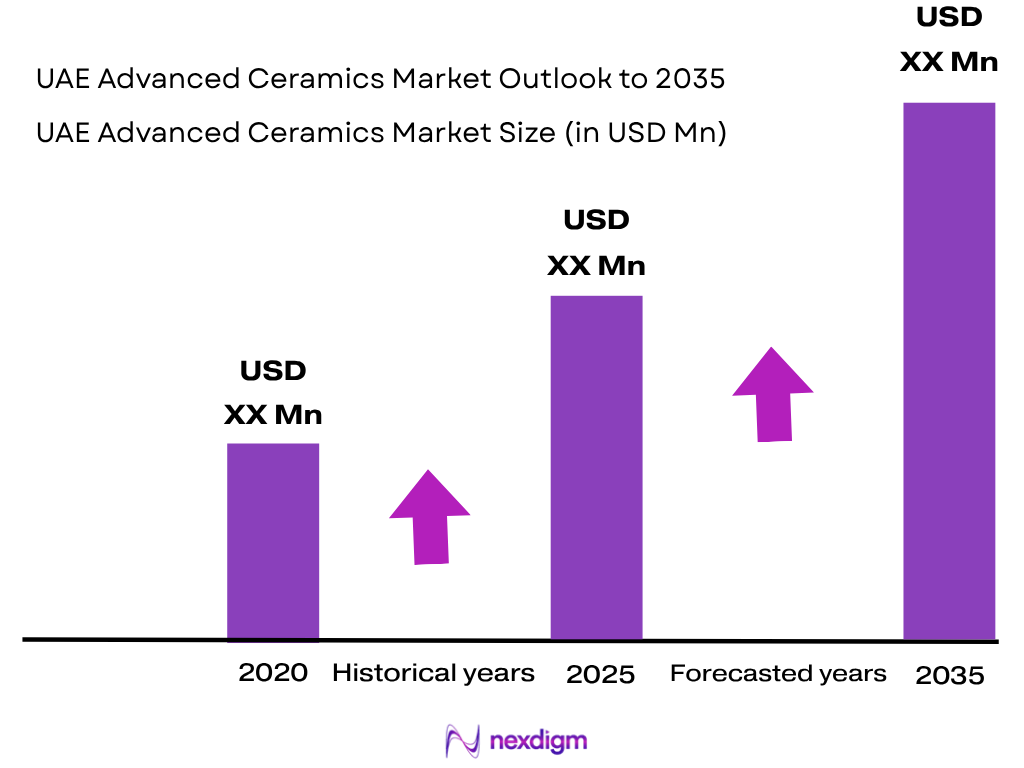
The UAE Advanced Ceramics Market is supported by the country’s transition toward advanced manufacturing, industrial localization and technology-intensive applications. The UAE Policy for Advanced Industries emphasizes Fourth Industrial Revolution technologies, manufacturing competitiveness, advanced skills and industrial innovation, creating a favorable environment for engineered materials. Oil and gas remains an important application base: ADNOC reported that the SARB field reached 140,000 barrels per day following a 25% production-capacity increase, while the company targets 5 million barrels per day of production capacity. These operating conditions sustain demand for wear-, corrosion- and temperature-resistant ceramic components.
Abu Dhabi and Dubai are expected to remain the principal demand centers for advanced ceramics because their industrial ecosystems connect energy, aerospace, defence, electronics, manufacturing and logistics applications. Abu Dhabi has particularly strong exposure to oil and gas, petrochemicals, energy and defence, while Dubai provides a major manufacturing, trading and distribution platform through industrial and free-zone infrastructure. The UAE’s industrial policy specifically seeks integration of industrial and logistics capabilities between emirates, while its advanced-industries policy encourages industrial clusters and localization.
Market Segmentation
By Material Type
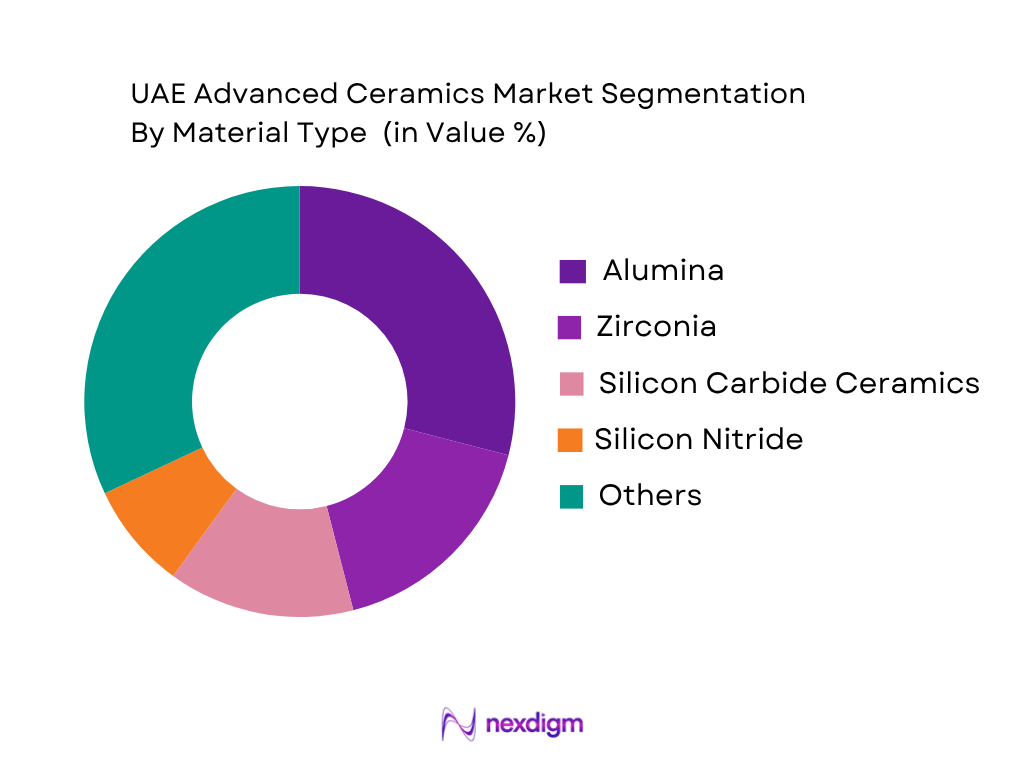
The UAE Advanced Ceramics Market is segmented by material type into alumina, zirconia, silicon carbide, silicon nitride, aluminum nitride, titanate ceramics, ferrite ceramics, piezoelectric ceramics and other advanced ceramic materials. Alumina ceramics are expected to represent the leading material category, supported by their broad suitability for electrical insulation, wear components, industrial equipment, electronic substrates and high-temperature applications. Alumina combines electrical insulation, hardness, chemical resistance and thermal stability, allowing manufacturers to use it across a wider range of industrial applications than highly specialized materials. Silicon carbide and silicon nitride remain important for extreme-temperature, wear and mechanical applications, while aluminum nitride has particular relevance to thermal-management and electronics applications. CeramTec identifies mechanical, thermal, electrical, chemical, wear and temperature resistance as central properties of high-performance ceramics, while CoorsTek maintains material families spanning alumina, aluminum nitride, silicon carbide, silicon nitride, zirconia and titanate.
By End-Use Industry
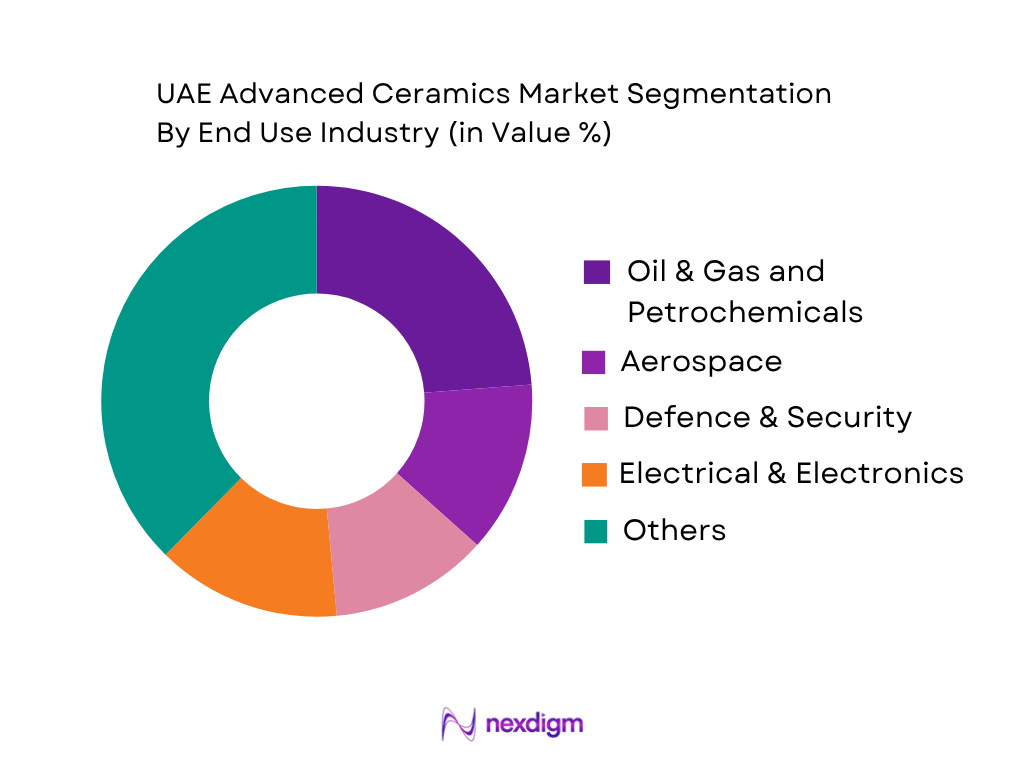
The UAE Advanced Ceramics Market is segmented by end-use industry into oil & gas and petrochemicals, aerospace, defence and security, electrical and electronics, medical and healthcare, automotive and transportation, energy and power, industrial machinery, chemical processing, and environmental and water treatment. Oil & gas and petrochemicals are expected to remain the dominant end-use segment because advanced ceramics provide corrosion resistance, wear resistance, thermal stability and dimensional reliability in demanding operating environments. The UAE’s substantial energy infrastructure creates applications for ceramic seals, valves, wear components, filtration systems and downhole equipment. CoorsTek specifically identifies downhole motors, drilling tools, mechanical seals, valves, ceramic flow components and other oil-and-gas applications within its technical-ceramics portfolio. At the same time, aerospace and defence applications are gaining strategic importance as the UAE expands advanced manufacturing and industrial localization.
Competitive Landscape
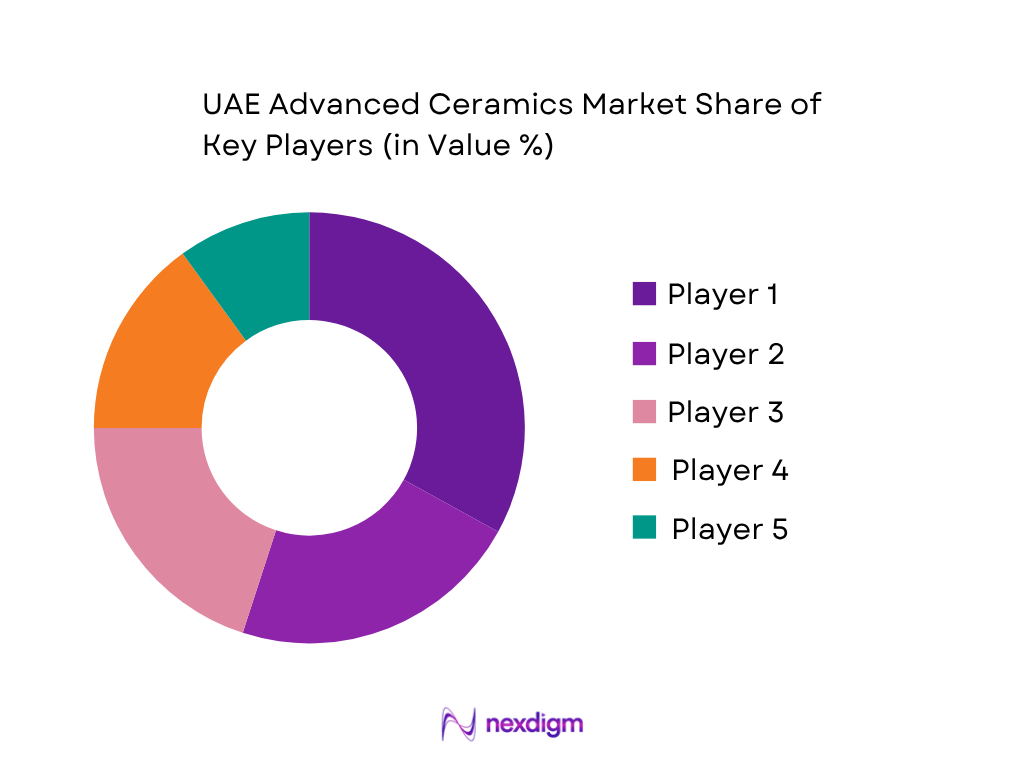
The UAE Advanced Ceramics Market is characterized by international advanced-material suppliers serving specialized industrial applications rather than a large base of mass-market domestic producers. CeramTec, CoorsTek, KYOCERA, Saint-Gobain Performance Ceramics & Refractories and 3M represent important global competitive benchmarks because of their portfolios spanning structural ceramics, electronic ceramics, semiconductor components, oil-and-gas components, medical ceramics, aerospace applications and high-temperature industrial products. CoorsTek reports more than 400 proprietary ceramic material formulations and more than 5,000 employees, while CeramTec reports more than 10,000 products and components and more than 3,500 employees.
| Company | Established | Headquarters | Material Portfolio | Key Product Capability | Major Application Coverage | Manufacturing / Technology Capability | UAE Relevance |
| CeramTec | 1903 | Plochingen, Germany | ~ | ~ | ~ | ~ | ~ |
| CoorsTek | 1910 | Colorado, USA | ~ | ~ | ~ | ~ | ~ |
| KYOCERA | 1959 | Kyoto, Japan | ~ | ~ | ~ | ~ | ~ |
| Saint-Gobain Performance Ceramics & Refractories | — | Courbevoie, France | ~ | ~ | ~ | ~ | ~ |
| 3M | 1902 | Saint Paul, USA | ~ | ~ | ~ | ~ | ~ |
UAE Advanced Ceramics Market Analysis
Growth Drivers
Aerospace Manufacturing Expansion
The UAE’s expansion of aerospace manufacturing, maintenance, repair and overhaul, and aviation infrastructure is creating demand for advanced ceramics that can withstand high temperatures, corrosion, wear and demanding mechanical conditions. The International Monetary Fund reported that UAE real GDP grew 4.0% in 2024, while non-hydrocarbon activity expanded strongly, with manufacturing, construction, transportation and financial services among the principal contributors to economic diversification. The IMF also recorded 5.3% non-hydrocarbon activity growth in Q1 2025, indicating continued industrial momentum. The aviation ecosystem is particularly relevant because advanced ceramics are used in thermal barriers, engine-related components, wear-resistant parts, electrical insulation and high-temperature systems. The UAE’s broader investment environment supports this demand: IMF data put gross domestic investment at 27.5% of GDP in 2024, while exports of goods and services increased by 5.0%. These conditions support the development of manufacturing and aerospace supply chains requiring specialized materials. The World Bank recorded UAE GDP at USD 552.32 billion in 2024 and GDP per capita at USD 50,273.5, indicating substantial economic capacity to support capital-intensive industrial applications. The combination of manufacturing expansion, aviation activity and infrastructure investment is therefore strengthening the addressable application base for alumina, zirconia, silicon carbide, silicon nitride and other high-performance ceramics.
Oil & Gas Equipment Demand
Oil and gas remains a fundamental industrial application environment for advanced ceramics in the UAE because drilling, production, processing and petrochemical operations require materials capable of resisting high temperatures, aggressive chemicals, pressure, erosion and mechanical wear. IMF data show that the UAE recorded USD 603.646 billion in merchandise exports in 2024, demonstrating the scale of its trade-oriented industrial economy, while oil-related activities contributed materially to national output. The IMF reported that hydrocarbon GDP was affected by production-management measures in 2024, but also projected a substantial rebound as OPEC+ production constraints were progressively reversed. In the 2025 Article IV assessment, UAE hydrocarbon production increased during 2025 as quota conditions changed, while the country continued investing in infrastructure and diversification. Advanced ceramics benefit from this industrial base through applications such as ceramic seals, liners, bearings, valves, wear components, electrical insulators and corrosion-resistant components used across oilfield and petrochemical equipment. The UAE Ministry of Economy reported real GDP of AED 1.776 trillion in 2024, with non-oil GDP reaching AED 1.342 trillion, demonstrating that industrial demand is being reinforced by a broader economic base rather than hydrocarbons alone. IMF data also show that private-sector credit grew 8.6% in 2024, supporting investment and industrial activity. Consequently, the continuing scale of hydrocarbon operations, petrochemical processing and associated industrial infrastructure provides a stable application environment for advanced ceramics, particularly silicon carbide, alumina and zirconia components designed for harsh operating conditions. .
Market Challenges
Imported Advanced Ceramic Material Dependency
Dependence on imported advanced ceramic powders, substrates, components and specialized processing equipment remains a structural challenge because the UAE’s advanced ceramics ecosystem is still developing relative to mature manufacturing centers. The challenge is amplified by the technical requirements of advanced ceramic production, where consistent powder chemistry, particle-size control, sintering conditions and precision machining directly influence component performance. IMF data indicate that UAE imports of goods and services grew 5.6% in 2024, while merchandise exports reached USD 603.646 billion, illustrating the country’s highly integrated position in international trade. This integration provides access to global materials but also exposes domestic users to external supply-chain disruptions, shipping constraints, geopolitical risks and qualification dependencies. The World Bank recorded UAE GDP at USD 552.32 billion in 2024, while population reached approximately 11.3 million, indicating a comparatively small domestic industrial market relative to the scale required to support highly specialized upstream ceramic powder production. IMF data further show that the UAE maintained gross official reserves of USD 238.2 billion in 2024, providing substantial external buffers, but financial strength does not automatically eliminate technical dependence on overseas suppliers. For advanced ceramics, the issue is therefore less about the ability to purchase materials and more about maintaining qualified sources for ultra-high-purity alumina, zirconia, silicon carbide, silicon nitride, aluminum nitride and specialty ceramic formulations. Establishing domestic powder-processing, forming and sintering capabilities could reduce supply vulnerability, but doing so requires specialized equipment, process expertise and customer qualification.
High Precision Manufacturing Requirements
Advanced ceramics present manufacturing challenges because their value depends on tight dimensional tolerances, controlled microstructures, high material purity and specialized processing from powder preparation through forming, sintering, grinding and finishing. The UAE’s broader industrial transformation is increasing the relevance of these capabilities, but the country must continue building specialized manufacturing capacity to serve aerospace, defence, semiconductor, energy and medical applications. IMF data show that manufacturing represented 9.4% of UAE nominal GDP in 2024, while construction accounted for 8.3%, demonstrating a meaningful industrial and infrastructure base in which precision-material technologies can develop. The IMF also reported that non-hydrocarbon activity expanded 5.3% in Q1 2025, led partly by manufacturing and construction, indicating continuing demand for industrial upgrading. However, advanced ceramics require substantially more process control than conventional ceramics. Small variations in powder morphology, binder content, sintering temperature or machining conditions can affect density, fracture toughness, thermal conductivity and dielectric performance. The UAE therefore faces a capability-building requirement spanning precision grinding, hot pressing, reaction bonding, tape casting, injection molding and advanced coating technologies. IMF data also show private-sector credit growth of 8.9% projected for 2025, indicating continued financing conditions for industrial investment, but capital availability must translate into specialized production capabilities and qualified personnel. The challenge is particularly significant for applications where components must pass lengthy OEM qualification procedures before entering aerospace, defence, semiconductor or medical supply chains.
Market Opportunities
Aerospace Ceramic Matrix Composites
Aerospace ceramic matrix composites represent a significant long-term opportunity because they combine low density with high-temperature capability and can address applications where conventional metallic materials face thermal and weight limitations. The opportunity is supported by the UAE’s expanding non-hydrocarbon economy and investment-led industrial diversification. IMF data show that UAE real GDP expanded 4.0% in 2024, while non-hydrocarbon activity grew 5.0% according to the latest national economic data. Manufacturing accounted for 9.4% of nominal GDP in 2024, providing an established industrial base from which higher-value materials processing can develop. The UAE also recorded gross domestic investment equivalent to 27.5% of GDP in 2024, demonstrating sustained investment intensity across infrastructure and productive assets. These conditions create a favorable environment for aerospace materials requiring advanced processing, including silicon-carbide-based ceramic matrix composites, thermal protection systems and high-temperature components. The opportunity extends beyond local aircraft manufacturing into maintenance, repair and overhaul, aerospace component servicing and specialized supply-chain activities. IMF data further indicate that exports of goods and services grew 5.0% in 2024, reinforcing the importance of internationally competitive industrial capabilities. For advanced ceramics suppliers, the strategic opportunity is to establish regional capabilities in material preparation, composite fabrication, coating, machining and component qualification rather than limiting participation to imported finished products. Such capabilities could position the UAE as a specialized production and service hub connecting Middle Eastern aerospace operators with advanced ceramic technology suppliers.
Oil & Gas Ceramic Components
Oil and gas ceramic components offer a strong opportunity because the UAE’s hydrocarbon and petrochemical infrastructure creates recurring requirements for wear-resistant, corrosion-resistant and high-temperature materials. Advanced ceramic components can be applied to seals, liners, valve components, bearings, insulating parts, flow-control systems and other equipment exposed to aggressive operating environments. The UAE’s merchandise exports reached USD 603.646 billion in 2024, according to World Bank data sourced from the World Trade Organization, highlighting the scale of the country’s externally oriented industrial economy. The UAE Ministry of Economy reported AED 434 billion of oil-related economic activity in 2024, while total real GDP reached AED 1.776 trillion. This industrial base creates opportunities for localized ceramic-component manufacturing, refurbishment and technical services. IMF data also show that the UAE’s gross official reserves stood at USD 238.2 billion in 2024, while the current-account balance reached 14.5% of GDP, reflecting substantial external financial capacity. These conditions can support investment in domestic production capabilities for advanced ceramic components and coatings. The opportunity is particularly relevant where imported ceramic parts have long lead times or require application-specific engineering. Local manufacturing could focus initially on lower-complexity but high-value components and subsequently expand toward engineered assemblies, ceramic-metal interfaces and advanced protective coatings. With manufacturing already representing 9.4% of nominal GDP, the UAE has a sufficiently developed industrial platform to integrate advanced ceramics into oilfield equipment, petrochemical plants and related maintenance ecosystems.
Future Outlook
The UAE Advanced Ceramics Market is expected to benefit from continued industrial diversification, localization of advanced manufacturing and increasing demand for materials capable of operating under extreme thermal, mechanical, electrical and chemical conditions. Government policy explicitly identifies advanced industries, Fourth Industrial Revolution technologies, industrial innovation and sustainable manufacturing as priorities. Advanced ceramics should therefore gain relevance in aerospace, defence, oil and gas, electronics, semiconductor equipment, energy, medical devices and water-treatment applications. The UAE’s R&D governance framework also links advanced technology development with priority industries and national economic objectives.
The strongest future opportunities are likely to occur where ceramics replace metals or polymers in demanding applications, particularly high-temperature components, electrical insulation, thermal-management substrates, wear parts, ceramic coatings and precision components. Semiconductor and electronics applications are also strategically important because advanced ceramics offer thermal stability, chemical resistance and precision. CoorsTek, for example, supplies semiconductor components supporting deposition, etch, lithography, ion implantation, diffusion, epitaxy, thermal processing, CMP and wafer handling.
Major Players
- CeramTec
- CoorsTek
- KYOCERA Corporation
- Morgan Advanced Materials
- Saint-Gobain Performance Ceramics & Refractories
- 3M
- MARUWA Co., Ltd.
- NGK Insulators
- Murata Manufacturing
- Ferrotec Holdings Corporation
- Vesuvius
- Rauschert
- CUMI – Carborundum Universal
- TOTO Ltd.
- Materion Corporation
Key Target Audience
- Advanced ceramics manufacturers and component producers
- Oil & gas equipment manufacturers and service providers
- Aerospace and defence manufacturers and system integrators
- Electrical, electronics and semiconductor equipment manufacturers
- Medical device and healthcare equipment manufacturers
- Investments and venture capitalist firms (Industrial Technology, Advanced Materials and Manufacturing Investments)
- Government and regulatory bodies (Ministry of Industry and Advanced Technology, Ministry of Economy, Ministry of Energy and Infrastructure, Abu Dhabi Department of Economic Development)
- Industrial distributors, technology suppliers and engineering procurement companies
Research Methodology
Step 1: Identification of Key Variables
The initial phase establishes the UAE Advanced Ceramics ecosystem across material suppliers, ceramic processors, component manufacturers, distributors and end users. Variables include material type, product category, manufacturing process, application, end-use industry, import dependency and domestic production capability. Particular attention is given to aerospace, defence, oil & gas, electronics, medical and energy applications.
Step 2: Market Analysis and Construction
Historical and current information is compiled to construct the UAE Advanced Ceramics Market using both top-down and bottom-up approaches. Demand is mapped across materials, components and end-use industries, while supply is assessed through domestic manufacturing, imports, distributors and international suppliers. Trade flows and application-level demand are reconciled to strengthen the market estimate.
Step 3: Hypothesis Validation and Expert Consultation
Market hypotheses are developed around material substitution, application adoption, procurement patterns, technology requirements and localization potential. These hypotheses are validated through discussions with manufacturers, distributors, industrial buyers and technical specialists. Particular emphasis is placed on qualification requirements and the technical specifications used by oil & gas, aerospace, defence and electronics customers.
Step 4: Research Synthesis and Final Output
The final stage triangulates demand-side and supply-side findings to establish the market structure and competitive landscape. Company portfolios, manufacturing capabilities, application exposure and regional presence are assessed alongside UAE industrial-policy developments. The final output integrates market sizing, segmentation, competitive benchmarking, future opportunities and strategic recommendations.

- Executive Summary
- Research Methodology (Market Definitions and Scope, Advanced Ceramics Classification, Market Sizing Framework, Top-Down Assessment, Bottom-Up Assessment, Demand-Side Assessment, Supply-Side Assessment, Production and Import Reconciliation, Application-Level Demand Mapping, Primary Industry Interviews, Expert Validation, Data Triangulation, Forecasting Framework, Assumptions and Limitations)

- Definition and Scope
- Evolution of the UAE Advanced Ceramics Ecosystem
- Industry Genesis and Development Pathway
- Advanced Ceramics Value Chain Analysis
- Advanced Ceramics Supply Chain Analysis

- Growth Drivers (Aerospace Manufacturing Expansion, Oil & Gas Equipment Demand, Defence Industrialization, Electronics and Semiconductor Applications, Industrial Diversification, Advanced Manufacturing Adoption, Energy Infrastructure Development, Medical Technology Expansion)
- Market Challenges (Imported Advanced Ceramic Material Dependency, High Precision Manufacturing Requirements, Limited Local Powder Production, Technology and Equipment Dependency, Skilled Workforce Constraints, OEM Qualification Cycles, High Material Purity Requirements, Competition from Alternative Advanced Materials)
- Market Opportunities (Aerospace Ceramic Matrix Composites, Oil & Gas Ceramic Components, Defence Armour Ceramics, Semiconductor Equipment Ceramics, Power Electronics Substrates, Advanced Bioceramics, Thermal Management Ceramics, Domestic Ceramic Powder Processing, High-Performance Ceramic Coatings)
Market Trends (Industrial Localization, High-Purity Ceramic Materials, Semiconductor Component Localization, Ceramic Matrix Composites, Thermal Management, Smart Manufacturing, Precision Ceramic Components, Additive Manufacturing, Advanced Ceramic Coatings) - Government and Regulatory Environment (Industrial Development, Advanced Manufacturing, Defence Localization, Aerospace Development, Investment Incentives, R&D Programs, Technology Transfer, Manufacturing Localization)
- SWOT Analysis
- Porter’s Five Forces Analysis
- PESTLE Analysis

- By Market Value (2026-2035)
- By Production Volume (2026-2035)
- By Domestic Consumption Volume (2026-2035)
- By Domestic Production (2026-2035)
- By Import Volume (2026-2035)
- By Export Volume (2026-2035)
- By Material Consumption (2026-2035)

- By Material Type (In Value %)
Alumina Ceramics
Zirconia Ceramics
Silicon Carbide Ceramics
Silicon Nitride Ceramics
Aluminum Nitride Ceramics
Titanate Ceramics
Ferrite Ceramics
Piezoelectric Ceramics
Other Advanced Ceramic Materials - By Product Type (In Value %)
Monolithic Ceramics
Ceramic Coatings
Ceramic Filters
Ceramic Matrix Composites
Ceramic Substrates
Ceramic Components
Ceramic Powders
Ceramic Tubes and Rods
Ceramic Plates and Discs - By Ceramic Function (In Value %)
Structural Ceramics
Electronic Ceramics
Electrical Ceramics
Bioceramics
Wear-Resistant Ceramics
Thermal Ceramics
High-Temperature Ceramics
Dielectric Ceramics
Optical Ceramics - By Manufacturing Process (In Value %)
Dry Pressing
Isostatic Pressing
Injection Molding
Extrusion
Tape Casting
Slip Casting
Hot Pressing
Hot Isostatic Pressing
Spark Plasma Sintering
Additive Manufacturing
Precision Machining - By End-Use Industry (In Value %)
Oil & Gas and Petrochemicals
Aerospace
Defence & Security
Electrical & Electronics
Medical & Healthcare
Automotive and Transportation
Energy and Power
Industrial Machinery
Chemical Processing
Environmental and Water Treatment - By Application (In Value %)
Oil & Gas Wear Components
High-Temperature Components
Ceramic Filters
Catalyst Supports
Thermal Barrier Components
Electronic Substrates
Power Electronics Components
Electrical Insulators
Semiconductor Equipment Components
Medical and Dental Components
Armour and Defence Components
Aerospace Engine Components - By Geography (In Value %)
Abu Dhabi (Khalifa Industrial Zone, Oil & Gas, Aerospace, Defence, Energy)
Dubai (Jebel Ali, Aerospace, Electronics, Industrial Manufacturing, Logistics)
Sharjah (Industrial Areas, Manufacturing, Engineering, Ceramics)
Other Emirates (Industrial and Specialized Manufacturing Applications)

- Market Share Analysis of Major Players (By Material, Product Type, End-Use Industry, Application, Domestic Sales, Export Sales)
- Cross Comparison Parameters (Material Portfolio Breadth, Ceramic Component Manufacturing Capability, Powder-to-Component Integration, Precision Machining Capability, High-Purity Material Capability, Oil & Gas Application Capability, Aerospace & Defence Qualification Capability, R&D and Technology Development Intensity)
- SWOT Analysis of Major Players
- Pricing and Cost Structure Analysis
- Detailed Profiles of Major Companies
CeramTec
CoorsTek
KYOCERA Corporation
Morgan Advanced Materials
Saint-Gobain Performance Ceramics & Refractories
3M
MARUWA Co., Ltd.
NGK Insulators
Murata Manufacturing
Ferrotec Holdings Corporation
Vesuvius
Rauschert
CUMI – Carborundum Universal
TOTO Ltd.
Materion Corporation

- End-User Demand Structure
- Oil & Gas and Petrochemical Customer Demand
- Aerospace and Defence Purchasing Requirements
- Electrical, Electronics and Semiconductor Consumer Analysis
- Healthcare and Medical Device Demand

- By Market Value (2026-2035)
- By Production Volume (2026-2035)
- By Domestic Consumption Volume (2026-2035)
- By Domestic Production (2026-2035)
- By Import Volume (2026-2035)
- By Export Volume (2026-2035)
- By Material Consumption (2026-2035)


 Request a Sample
 Ask for Customization
 Get a Quote
 Enquire Now