
 Download PDF
 Download PDF
Market Overview
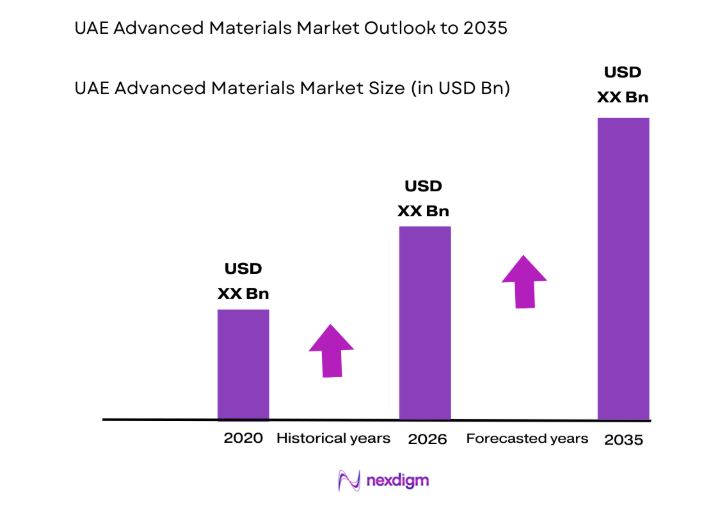
A recent historical assessment indicates that the UAE Advanced Materials market reached approximately USD ~ according to industry insights referenced from the International Energy Agency materials supply tracking and regional industrial materials trade statistics. Market expansion is driven by strong demand for high performance materials used in aerospace components, advanced construction composites, semiconductor materials, renewable energy equipment, and lightweight automotive parts. Government supported manufacturing diversification and technological innovation programs further accelerate adoption of advanced materials across industrial sectors.
Industrial demand for advanced materials is concentrated across major economic centers including Abu Dhabi and Dubai where large industrial clusters, aerospace manufacturing facilities, petrochemical complexes, and advanced construction projects operate. These cities dominate due to strong logistics infrastructure, industrial free zones, access to global supply chains, and government backed innovation hubs supporting high value materials manufacturing. Their integrated industrial ecosystems attract multinational material technology companies establishing production, research, and distribution operations.
Market Segmentation
By Product Type
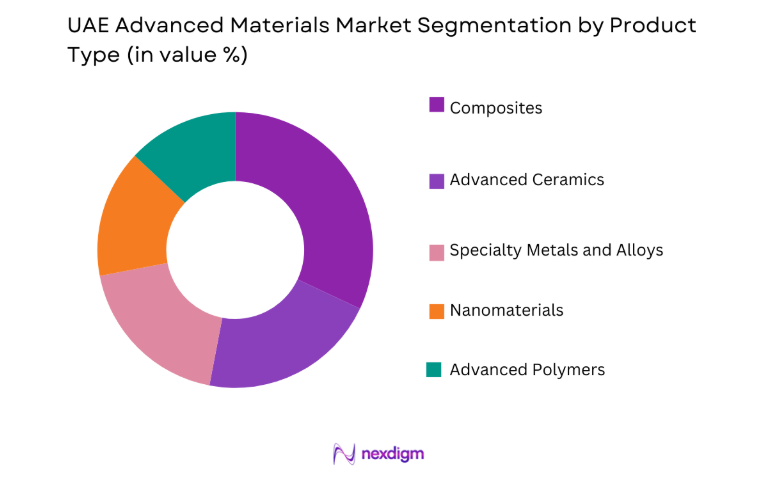
By Product Type UAE Advanced Materials market is segmented by product type into composites, advanced ceramics, specialty metals and alloys, nanomaterials, and advanced polymers. Recently, composites has a dominant market share due to factors such as demand patterns, brand presence, infrastructure availability, or consumer preference. Composite materials are widely used in aerospace structures renewable energy equipment construction components and automotive lightweight manufacturing applications. Industrial manufacturers prefer composites because they provide high strength to weight ratios corrosion resistance and improved durability compared with traditional materials. Large scale infrastructure development projects across the UAE also rely heavily on composite materials used in bridges buildings transportation infrastructure and marine structures.
By End Use Industry
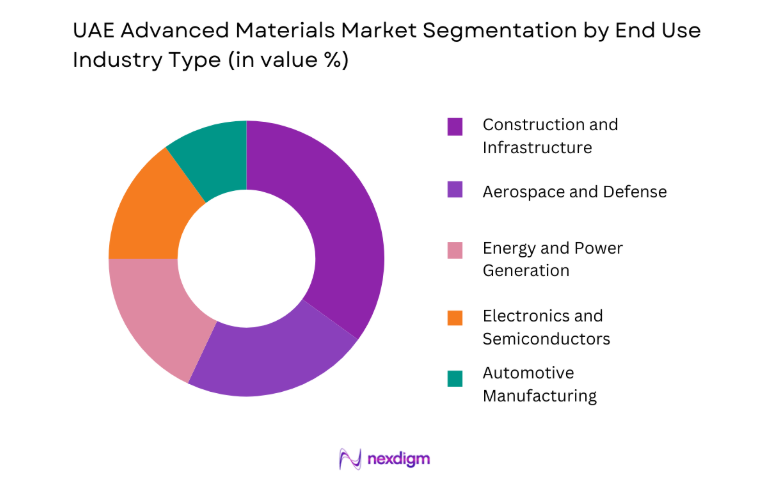
By End Use Industry UAE Advanced Materials market is segmented by end use industry into aerospace and defense, construction and infrastructure, electronics and semiconductors, energy and power generation, and automotive manufacturing. Recently, construction and infrastructure has a dominant market share due to factors such as demand patterns, brand presence, infrastructure availability, or consumer preference. The UAE’s large scale urban development projects require advanced materials capable of providing durability structural strength and energy efficiency across buildings transportation networks and smart infrastructure systems. Construction companies increasingly adopt high performance composites advanced polymers and specialty alloys to improve structural integrity while reducing long term maintenance requirements.
Competitive Landscape
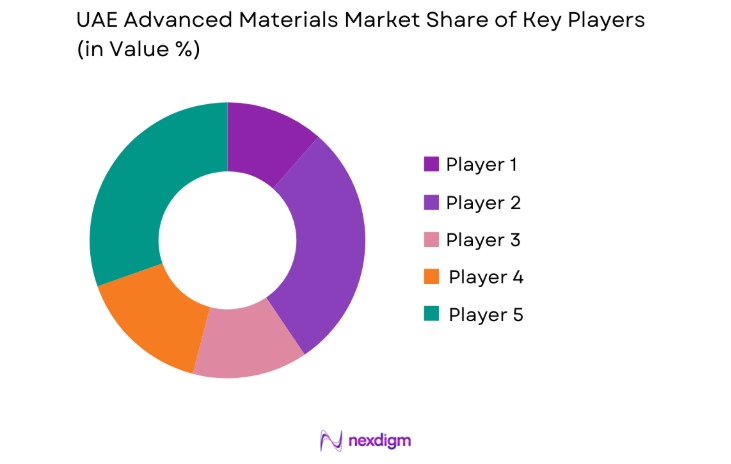
The UAE Advanced Materials market features a competitive environment dominated by multinational material science companies supplying high performance composites specialty alloys and advanced polymers. Market consolidation occurs through strategic partnerships with aerospace manufacturers construction developers and energy companies requiring advanced materials for specialized industrial applications. Leading global suppliers leverage strong research capabilities manufacturing expertise and international supply chains to maintain technological leadership and support industrial innovation across the region.
| Company Name | Establishment Year | Headquarters | Technology Focus | Market Reach | Key Products | Revenue | Advanced Materials Capability |
| BASF SE | 1865 | Germany | ~ | ~ | ~ | ~ | ~ |
| DuPont | 1802 | United States | ~ | ~ | ~ | ~ | ~ |
| Toray Industries | 1926 | Japan | ~ | ~ | ~ | ~ | ~ |
| Solvay | 1863 | Belgium | ~ | ~ | ~ | ~ | ~ |
| Mitsubishi Chemical Group | 1933 | Japan | ~ | ~ | ~ | ~ | ~ |
UAE Advanced Materials Market Analysis
Growth Drivers
Expansion of Aerospace Manufacturing and Lightweight Structural Material Demand
The UAE’s rapidly growing aerospace manufacturing ecosystem significantly increases demand for advanced materials used in aircraft structures engine components and aerospace interior systems. Aerospace manufacturers require high strength lightweight materials capable of maintaining structural integrity under extreme temperature pressure and aerodynamic conditions. Composite materials and advanced alloys provide superior strength durability and corrosion resistance compared with traditional metal structures used in older aircraft designs. Aircraft manufacturers operating within regional aerospace clusters integrate carbon fiber composites advanced polymers and specialty alloys into aircraft wings fuselage components and structural frames. Lightweight materials help reduce aircraft weight thereby improving fuel efficiency and operational performance. Airlines also prioritize lightweight material technologies that support long term operational cost reduction by lowering fuel consumption across commercial aviation fleets. Government supported aerospace innovation initiatives encourage collaboration between global material science companies and aerospace manufacturers operating in the region. These partnerships accelerate development of next generation composite materials engineered for aerospace performance requirements. Expansion of aerospace manufacturing and maintenance facilities therefore creates sustained demand for advanced material technologies supporting aircraft production and maintenance activities across the UAE industrial ecosystem.
Large Scale Infrastructure Development Requiring High Performance Construction Materials
The UAE’s continuous investment in large scale urban development projects significantly drives demand for advanced materials used in modern infrastructure construction. Advanced composites specialty metals and high performance polymers offer superior durability corrosion resistance and structural stability compared with conventional building materials. Construction developers increasingly utilize advanced materials to build energy efficient skyscrapers transportation infrastructure bridges and smart urban facilities capable of withstanding extreme environmental conditions. High performance construction materials also help improve structural lifespan reducing long term maintenance costs for large infrastructure projects. Advanced insulation materials and lightweight structural components improve building energy efficiency while supporting sustainable construction standards adopted across modern urban developments. Engineering firms prefer advanced materials capable of providing high strength while reducing total structural weight within complex architectural designs. Infrastructure developers also integrate advanced materials into renewable energy projects including solar power installations wind turbine structures and smart grid infrastructure. Continued expansion of urban infrastructure projects across major economic centers therefore supports strong long term demand for advanced material technologies used in modern construction and engineering applications.
Market Challenges
Dependence on Imported Raw Materials and Global Supply Chain Volatility
Advanced materials manufacturing often depends on highly specialized raw materials including rare earth elements specialty metals high purity chemicals and advanced polymer precursors sourced from global mining and chemical production regions. The UAE lacks significant domestic mineral resources required for large scale production of many advanced material inputs. Industrial manufacturers must therefore rely heavily on international supply chains to obtain these critical materials necessary for advanced materials production. Global geopolitical tensions trade restrictions and disruptions in mining supply chains can significantly affect availability and pricing of specialized material inputs. Transportation costs and international logistics complexities further increase procurement expenses associated with importing high purity materials used in advanced materials manufacturing processes. Sudden fluctuations in raw material supply can disrupt production schedules for companies operating advanced materials facilities. Manufacturers must often maintain strategic inventory reserves or diversify sourcing partners to reduce exposure to supply chain risks. However diversification strategies may increase procurement costs and operational complexity. These supply chain vulnerabilities therefore represent a major challenge affecting stability and long term competitiveness of advanced materials manufacturing activities within the UAE.
High Research and Development Costs Associated with Advanced Material Innovation
Development of advanced materials requires significant investment in research laboratories testing facilities material synthesis equipment and specialized scientific expertise. Material scientists must conduct extensive experimentation to design materials with precise mechanical thermal and chemical properties suitable for demanding industrial applications. Research and development programs often require long development cycles before commercial products reach industrial manufacturing scale. Companies must invest heavily in advanced analytical equipment capable of testing structural performance corrosion resistance thermal stability and durability of new materials under extreme conditions. Collaboration between industry research institutions and engineering companies also increases development costs associated with advanced material innovation programs. Additionally intellectual property protection regulatory certification and industrial safety testing further extend development timelines for advanced materials. Smaller companies may face financial constraints that limit their ability to compete with large multinational material science corporations possessing extensive research infrastructure. These high innovation costs can slow commercialization of new advanced materials technologies and restrict market entry for emerging material developers operating within the region.
Opportunities
Growing Renewable Energy Infrastructure Requiring Advanced Materials for Energy Systems
Rapid expansion of renewable energy infrastructure across the UAE creates major opportunities for advanced materials used in solar energy systems wind turbine components and energy storage technologies. Solar power plants require specialized materials including high purity silicon advanced coatings composite structures and lightweight mounting systems designed to withstand extreme desert environments. Advanced materials improve durability thermal stability and efficiency of photovoltaic panels operating under high temperature conditions. Wind turbine blades utilize carbon fiber composites and advanced polymers capable of maintaining structural integrity under strong wind loads and continuous rotational stress. Energy storage technologies including advanced batteries also rely on specialized materials such as lithium compounds nanomaterials and advanced electrolytes to improve energy density and operational performance. Large scale renewable energy projects therefore stimulate demand for innovative materials supporting efficient power generation and storage systems. Government initiatives promoting clean energy development further encourage research investment and industrial production of materials supporting renewable energy infrastructure. These developments create strong long term growth opportunities for advanced materials suppliers operating within the UAE energy technology ecosystem.
Emergence of Semiconductor Manufacturing and Electronics Technology Development
The expansion of semiconductor manufacturing and advanced electronics technology development across the UAE significantly increases demand for high purity advanced materials used in semiconductor fabrication and microelectronics production. Semiconductor manufacturing processes require specialized materials including silicon wafers advanced chemical precursors photoresists specialty gases and ultra high purity metals used in microchip fabrication. Advanced materials play essential roles in producing integrated circuits sensors power electronics and high performance computing components supporting digital technology industries. Electronics manufacturers require materials with precise electrical thermal and structural properties capable of supporting complex semiconductor fabrication processes. As the UAE strengthens its technology manufacturing ecosystem demand for advanced materials supporting microelectronics production increases accordingly. Global semiconductor companies investing in regional research facilities require reliable access to high quality material inputs used in chip fabrication and electronics assembly. Advanced materials suppliers therefore gain opportunities to develop specialized production capabilities supporting emerging semiconductor manufacturing activities. Continued growth of electronics manufacturing and digital technology industries strengthens long term demand for advanced materials technologies across the region.
Future Outlook
The UAE Advanced Materials market is expected to experience strong expansion as industrial sectors increase adoption of high performance materials across aerospace construction energy and electronics industries. Technological innovation in composite materials nanotechnology and advanced polymers will drive material performance improvements. Government initiatives promoting industrial diversification and advanced manufacturing will encourage material research investments. Rising renewable energy infrastructure development and digital technology manufacturing will further stimulate demand for specialized advanced materials.
Major Players
- BASF SE
- DuPont
- Toray Industries
- Solvay
- Mitsubishi Chemical Group
- Arkema
- 3M Company
- Covestro AG
- Huntsman Corporation
- SABIC
- LG Chem
- Dow Inc
- Hexcel Corporation
- Teijin Limited
- Sumitomo Chemical
Key Target Audience
- Aerospace manufacturing companies
- Construction and infrastructure developers
- Energy and renewable power companies
- Semiconductor manufacturing companies
- Automotive manufacturers
- Investments and venture capitalist firms
- Government and regulatory bodies
Research Methodology
Step 1: Identification of Key Variables
Key variables influencing the UAE Advanced Materials market are identified including industrial demand for high performance materials technology adoption across aerospace energy electronics and construction sectors and supply chain availability of specialized raw materials used in advanced materials manufacturing.
Step 2: Market Analysis and Construction
Industrial production data international materials trade statistics technology adoption indicators and manufacturing activity trends are analyzed to construct a comprehensive analytical framework representing demand patterns for advanced materials across multiple industrial sectors operating within the UAE.
Step 3: Hypothesis Validation and Expert Consultation
Material science experts industrial engineers and technology specialists provide validation of research assumptions regarding material performance requirements industrial demand patterns and emerging technology adoption influencing the development of the UAE advanced materials industry.
Step 4: Research Synthesis and Final Output
All collected data insights and industry expert perspectives are synthesized to produce the final research output outlining market structure competitive dynamics technological developments and industrial adoption trends shaping the future of the UAE Advanced Materials market.

- Executive Summary
- Research Methodology (Definitions, Scope, Industry Assumptions, Market Sizing Approach, Primary & Secondary Research Framework, Data Collection & Verification Protocol, Analytic Models & Forecast Methodology, Limitations & Research Validity Checks)

- Market Definition and Scope
- Value Chain & Stakeholder Ecosystem
- Regulatory / Certification Landscape
- Sector Dynamics Affecting Demand

- Growth Drivers
Expansion of Aerospace and Defense Manufacturing Programs in the UAE
Increasing Demand for High Performance Materials in Energy Infrastructure Projects
Growing Semiconductor and Electronics Manufacturing Ecosystem in the Region - Market Challenges
High Production Costs and Specialized Manufacturing Requirements
Limited Domestic Raw Material Supply Chains for Advanced Materials
Dependence on Imported Technology and Specialized Processing Equipment - Market Opportunities
Expansion of Renewable Energy Infrastructure Requiring Advanced Composite Materials
Growing Demand for Lightweight Materials in Aerospace and Aviation Manufacturing
Development of Nanomaterials for Electronics and High Performance Industrial Applications - Trends
Increasing Integration of Nanotechnology in High Performance Material Engineering
Growing Use of Advanced Composites in Aerospace Structural Applications - Government Regulations
- SWOT Analysis
- Porter’s Five Forces

- By Market Value, 2020-2025
- By Installed Units, 2020-2025
- By Average System Price, 2020-2025
- By System Complexity Tier, 2020-2025

- By System Type (In Value%)
Advanced Composite Materials
High Performance Polymers
Advanced Ceramics
Nanomaterials
Metal Matrix Composites - By Platform Type (In Value%)
Aerospace and Defense Platforms
Energy and Power Infrastructure Platforms
Construction and Infrastructure Platforms
Electronics and Semiconductor Platforms - By Fitment Type (In Value%)
Structural Components
Thermal and Insulation Systems
Electronic and Semiconductor Components
Industrial Equipment Components - By End User Segment (In Value%)
Aerospace and Defense Industry
Energy and Utilities Industry
Construction and Infrastructure Industry

- Market Share Analysis
- Cross Comparison Parameters (Material Technology Portfolio, Manufacturing Capability, Application Sector Coverage, Supply Chain Integration, Pricing Structure, Innovation Capability, Regional Distribution Network)
- SWOT Analysis of Key Competitors
- Pricing & Procurement Analysis
- Key Players
Toray Industries
Hexcel Corporation
Solvay SA
Teijin Limited
SGL Carbon SE
3M Company
DuPont de Nemours
Dow Inc
BASF SE
Saint Gobain
Huntsman Corporation
Mitsubishi Chemical Group
Evonik Industries
Arkema SA
Reliance Industries Limited

- Aerospace Manufacturers Increasing Adoption of Lightweight Composite Materials
- Energy Companies Utilizing Advanced Materials for High Temperature Infrastructure Systems
- Construction Companies Deploying Advanced Materials for Sustainable Infrastructure Projects
- Electronics Manufacturers Utilizing Nanomaterials in Semiconductor and Device Production

- Forecast Market Value, 2026-2035
- Forecast Installed Units, 2026-2035
- Price Forecast by System Tier, 2026-2035
- Future Demand by Platform, 2026-2035


 Request a Sample
 Ask for Customization
 Get a Quote
 Enquire Now