

 Download PDF
 Download PDF
Market Overview
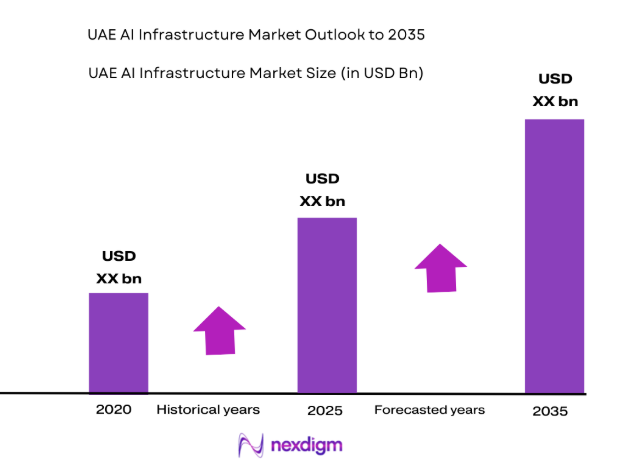
The UAE AI infrastructure market is expected to reach approximately USD ~ billion, driven by substantial investments from both the government and private sector. The UAE’s commitment to becoming a global leader in AI by 2031, along with initiatives like the UAE National Artificial Intelligence Strategy, has accelerated the demand for AI technologies. This growth is supported by investments in AI-powered infrastructure, including data centers, cloud platforms, and AI processors, which are crucial to the integration of AI across various industries, including healthcare, transport, and education.
Key cities like Dubai and Abu Dhabi lead the region in AI adoption due to their advanced technological ecosystems and strategic development plans. The UAE’s government has set a clear vision to foster AI research, attract global talent, and create a conducive environment for tech startups. As a result, the country’s investment in AI infrastructure is set to significantly enhance the digital landscape, positioning it as a key player in the Middle East’s AI revolution.
Market Segmentation
By Product Type:
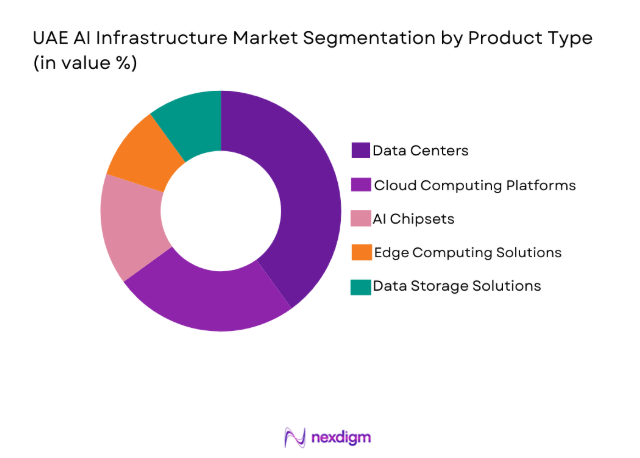
The UAE AI infrastructure market is segmented by product type into data centers, cloud computing platforms, AI chipsets, edge computing solutions, and data storage solutions. The data center segment has a dominant market share, driven by the increasing demand for cloud computing services and the rapid growth of AI-based applications. The UAE’s focus on creating smart cities and enhancing digital services has led to a significant rise in data center installations to support AI workloads. These data centers provide critical support for AI model training, real-time data processing, and secure cloud storage, making them a key component of the market’s expansions.
By Platform Type:
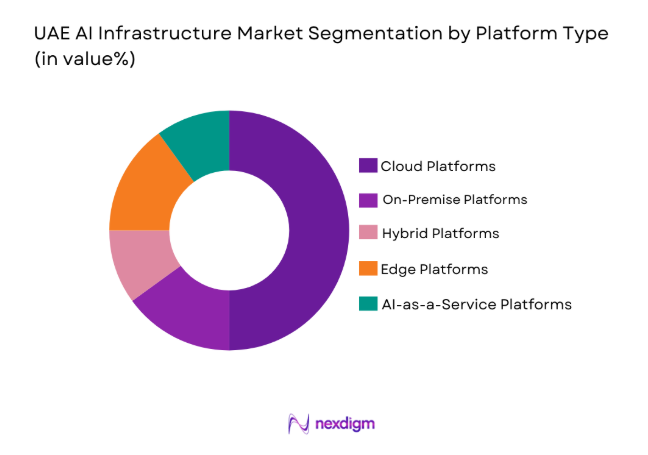
The market is segmented by platform type into cloud platforms, on-premise platforms, hybrid platforms, edge platforms, and AI-as-a-service platforms. Cloud platforms dominate the market, driven by the widespread adoption of cloud computing for AI-based applications. The scalability, flexibility, and cost-effectiveness of cloud solutions have made them the preferred choice for businesses across various sectors, including healthcare, finance, and retail. The UAE’s robust cloud infrastructure and government initiatives encouraging cloud adoption have further bolstered the dominance of cloud platforms in the AI infrastructure market.
Competitive Landscape
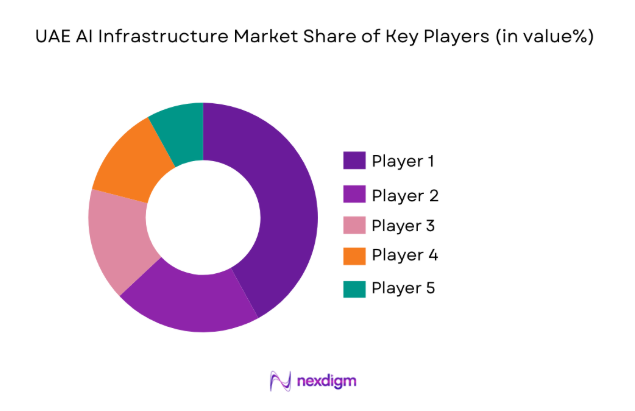
The competitive landscape of the UAE AI infrastructure market is characterized by both global technology giants and local players offering innovative solutions. Consolidation in the market is increasing, with several partnerships and acquisitions being formed to address the rising demand for AI-powered infrastructure. Major players are focusing on expanding their regional presence, leveraging strategic alliances to provide integrated AI solutions across different sectors.
| Company Name | Establishment Year | Headquarters | Technology Focus | Market Reach | Key Products | Revenue | AI Adoption Rate |
| Microsoft Corporation | 1975 | Redmond, USA | ~ | ~ | ~ | ~ | ~ |
| IBM Corporation | 1911 | Armonk, USA | ~ | ~ | ~ | ~ | ~ |
| Google LLC | 1998 | Mountain View, USA | ~ | ~ | ~ | ~ | ~ |
| Huawei Technologies | 1987 | Shenzhen, China | ~ | ~ | ~ | ~ | ~ |
| Oracle Corporation | 1977 | Redwood Shores, USA | ~ | ~ | ~ | ~ | ~ |
UAE AI Infrastructure Market Analysis
Growth Drivers
Government Investment in AI Initiatives:
The UAE government’s substantial investment in AI technologies and smart city projects has been a key driver of growth in the AI infrastructure market. The government’s commitment to becoming a global leader in AI by 2031 has led to the launch of initiatives such as the UAE National Artificial Intelligence Strategy, which focuses on integrating AI into various sectors, including healthcare, transport, and education. These initiatives not only provide financial support to AI startups but also encourage multinational companies to invest in AI infrastructure in the UAE. This strategy has helped create a conducive environment for the growth of AI technologies, leading to an increased demand for AI infrastructure such as data centers, cloud computing platforms, and AI chips. The government’s focus on building a robust digital infrastructure, coupled with its efforts to attract global AI talent, further strengthens the country’s AI ecosystem. This government-driven momentum is expected to continue driving AI infrastructure growth across the region.
Private Sector Adoption of AI Technologies:
The private sector’s growing adoption of AI technologies has further fueled market growth, especially in sectors like healthcare, telecommunications, and finance. Companies in the UAE are increasingly using AI to optimize business operations, enhance customer experiences, and drive innovation. The shift toward AI-driven automation has spurred the demand for high-performance computing infrastructure, including AI processors, cloud platforms, and edge computing solutions. As more enterprises integrate AI into their operations, the need for scalable and efficient AI infrastructure is expected to rise. Companies are also investing in AI for predictive analytics, fraud detection, and personalized marketing, all of which require robust AI infrastructure. The rapid digital transformation across industries has created an ongoing demand for AI infrastructure, positioning the UAE as a hub for AI development in the Middle East.
Market Challenges
High Infrastructure Costs:
One of the major challenges facing the UAE AI infrastructure market is the high cost of developing and maintaining the required infrastructure. Building advanced data centers, integrating AI processors, and maintaining cutting-edge cloud and edge computing platforms involve substantial investments. The costs associated with implementing AI technologies in industries such as healthcare and transportation are significant, which can create barriers for small and medium-sized enterprises (SMEs) looking to adopt AI solutions. While large corporations can afford these investments, the high costs can limit the accessibility of AI infrastructure to smaller players, thus hindering widespread adoption. Furthermore, the cost of upgrading existing infrastructure to support AI technologies may be prohibitive for some organizations, slowing down the overall market growth. This challenge highlights the need for affordable AI infrastructure solutions and government incentives to mitigate the financial burden.
Data Privacy and Security Concerns:
As AI technologies become more prevalent in the UAE, concerns regarding data privacy and security have emerged as significant challenges. With the increasing use of AI in sectors such as healthcare and finance, the need for stringent data protection measures has become paramount. The large volumes of sensitive data processed by AI systems require robust cybersecurity measures to prevent unauthorized access and breaches. The complexity of AI algorithms further complicates data security, as ensuring the privacy of data used for training AI models can be difficult to manage. Moreover, the UAE’s legal and regulatory framework surrounding data privacy may not yet be fully equipped to address the unique challenges posed by AI, leading to potential compliance issues. This challenge calls for stronger regulatory frameworks, better security protocols, and the establishment of standards for the responsible use of AI technologies in the UAE.
Opportunities
Expansion of AI-as-a-Service (AIaaS):
The rise of AI-as-a-Service (AIaaS) represents a significant opportunity for the UAE AI infrastructure market. AIaaS provides businesses with access to powerful AI tools and models without the need for substantial capital investment in infrastructure. This model enables organizations of all sizes to leverage AI technologies for various applications, such as customer service automation, predictive analytics, and supply chain optimization. The UAE’s focus on fostering innovation and supporting tech startups creates a conducive environment for the growth of AIaaS platforms. Furthermore, the increasing availability of cloud-based AI services makes AI more accessible to enterprises across different sectors. As demand for AIaaS continues to grow, AI infrastructure providers can capitalize on this opportunity by offering scalable, secure, and affordable solutions. The growth of AIaaS also aligns with the UAE’s digital transformation goals and its efforts to create a more technology-driven economy.
AI in Smart Cities:
The development of smart cities presents another lucrative opportunity for the UAE AI infrastructure market. As part of the country’s Vision 2021, the government has prioritized the creation of smart cities that leverage AI technologies to enhance urban living. AI-powered solutions are expected to play a critical role in areas such as traffic management, energy efficiency, waste management, and public safety. The increasing focus on integrating AI into smart city projects has created significant demand for AI infrastructure, including data centers, cloud platforms, and edge computing solutions. Additionally, the growing population and urbanization in the UAE necessitate the development of more efficient infrastructure to support smart city technologies. This shift toward AI-driven urban development presents a long-term growth opportunity for AI infrastructure providers, as the country continues to invest in building sustainable and connected cities that are powered by AI technologies.
Future Outlook
The future outlook for the UAE AI infrastructure market over the next five years remains optimistic, driven by technological advancements, government support, and the rising adoption of AI across various sectors. With an increased focus on building smart cities, the demand for AI infrastructure is expected to grow, supported by investments in cloud platforms, data centers, and edge computing. Regulatory support for AI adoption and innovation will continue to drive growth, especially as the UAE aims to become a global AI hub. Technological developments such as the introduction of 5G networks and AI-driven automation will further bolster demand for AI infrastructure, creating new opportunities for businesses and infrastructure providers alike.
Major Players
- Huawei Technologies
- IBM Corporation
- Microsoft Corporation
- Google LLC
- Amazon Web Services
- Oracle Corporation
- Intel Corporation
- Cisco Systems
- SAP SE
- Nvidia Corporation
- Dell Technologies
- Qualcomm Incorporated
- Fujitsu Limited
- Alibaba Group
- Ericsson
Key Target Audience
- Investments and venture capitalist firms
- Government and regulatory bodies
- Telecom companies
- AI solution providers
- Data center operators
- Technology integrators
- System integrators
- Startups in AI and cloud computing
Research Methodology
Step 1: Identification of Key Variables
Identify the key drivers, constraints, and trends affecting the UAE AI infrastructure market through secondary research.
Step 2: Market Analysis and Construction
Analyze existing market conditions, historical data, and forecast trends to construct a detailed market size model.
Step 3: Hypothesis Validation and Expert Consultation
Validate hypotheses by consulting industry experts, reviewing government policies, and assessing technological trends.
Step 4: Research Synthesis and Final Output
Synthesize the findings from all research methods to generate a comprehensive market report, including actionable insights.

- Executive Summary
- Research Methodology
(Definitions, Scope, Industry Assumptions, Market Sizing Approach, Primary & Secondary Research Framework, Data Collection & Verification Protocol, Analytic Models & Forecast Methodology, Limitations & Research Validity Checks)

- Market Definition and Scope
- Value Chain & Stakeholder Ecosystem
- Regulatory / Certification Landscape
- Sector Dynamics Affecting Demand
- Strategic Initiatives & Infrastructure Growth

- Growth Drivers
Government Support for AI Integration
Rising Adoption of Smart Cities and Infrastructure
Increased Demand for AI in Healthcare and Telecom Sectors
Rapid Expansion of Cloud Computing and Data Centers
Strategic Alliances with Global AI Providers - Market Challenges
High Initial Investment Costs for AI Infrastructure
Data Privacy and Security Concerns
Regulatory Barriers and Compliance Issues
Shortage of Skilled AI Professionals
High Energy Consumption of AI Systems - Market Opportunities
Expansion in AI-as-a-Service Solutions
Partnerships with Tech Giants for AI Integration
Growth in AI for Healthcare and Smart City Projects - Trends
Increased Use of AI for Automation in Industries
Focus on AI-driven Edge Computing Solutions
Advancements in AI Chipset Technologies
Growth of AI-driven Data Centers
Integration of AI in IoT Solutions - Government Regulations & Defense Policy
Data Privacy Regulations in AI Applications
Government Initiatives for AI Infrastructure Funding
Cybersecurity Policies for AI Systems - SWOT Analysis
Stakeholder and Ecosystem Analysis
Porter’s Five Forces Analysis
Competition Intensity and Ecosystem Mapping

- By Market Value, 2020-2025
- By Installed Units, 2020-2025
- By Average System Price, 2020-2025
- By System Complexity Tier, 2020-2025

- By System Type (In Value%)
Data Centers
Cloud Computing Platforms
AI Chipsets
Edge Computing Solutions
Data Storage Solutions - By Platform Type (In Value%)
Cloud Platforms
On-Premise Platforms
Hybrid Platforms
Edge Platforms
AI-as-a-Service Platforms - By Fitment Type (In Value%)
Integrated Solutions
Modular Solutions
Customized Solutions
Cloud-based Solutions
On-premise Solutions - By EndUser Segment (In Value%)
Public Sector / Government Agencies
Private Sector / Enterprises
Telecommunications
Healthcare
Retail - By Procurement Channel (In Value%)
Direct Procurement
Government Tenders
Private Sector Procurement
Online Bidding Platforms
Third-party Distributors - By Material / Technology (In Value%)
AI Hardware (GPUs, TPUs)
Cloud Storage
AI Software Solutions
Edge Computing Hardware
AI Algorithms & Models

- Market structure and competitive positioning
Market share snapshot of major players
CrossComparison Parameters (System Type, Platform Type, Procurement Channel, EndUser Segment, Fitment Type)
SWOT Analysis of Key Competitors
Pricing & Procurement Analysis - Key Players
Huawei Technologies
IBM Corporation
NVIDIA Corporation
Microsoft Corporation
Google LLC
Amazon Web Services
Intel Corporation
Dell Technologies
Qualcomm Incorporated
Oracle Corporation
SAP SE
Alibaba Group
Cisco Systems
Apple Inc.
AMD Inc.

- Government’s Strategic Adoption of AI Technologies
- Enterprises Investing in AI for Business Optimization
- Healthcare Sector’s Use of AI for Diagnostics and Treatment
- Retail Sector Leveraging AI for Customer Insights

- Forecast Market Value, 2026-2035
- Forecast Installed Units, 2026-2035
- Price Forecast by System Tier, 2026-2035
- Future Demand by Platform, 2026-2035


 Request a Sample
 Ask for Customization
 Get a Quote
 Enquire Now