
 Download PDF
 Download PDF
Market Overview
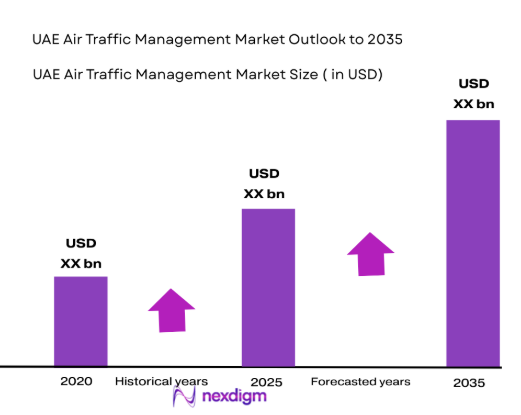
The UAE Air Traffic Management market is experiencing significant growth, driven by the country’s rapidly expanding aviation industry and increasing air traffic volumes. With a booming tourism sector and a strategic geographical location connecting Asia, Europe, and Africa, demand for advanced air traffic management systems has surged. The market size is primarily influenced by government investments in airport infrastructure and airspace management technologies. Based on a recent historical assessment, the total market value for the UAE’s air traffic management systems is estimated at USD ~ billion, supported by both public and private sector initiatives. The UAE is a dominant player in the air traffic management sector, thanks to its strategic location, cutting-edge aviation infrastructure, and role as a global hub for travel and commerce. The UAE government’s continuous investment in airports and air traffic technologies, particularly in Dubai and Abu Dhabi, has placed the nation at the forefront of aviation services in the Middle East. These cities are known for their modern air traffic control systems, serving as models for the region and fueling the market’s demand for innovation and efficiency.
Market Segmentation
By Product Type:
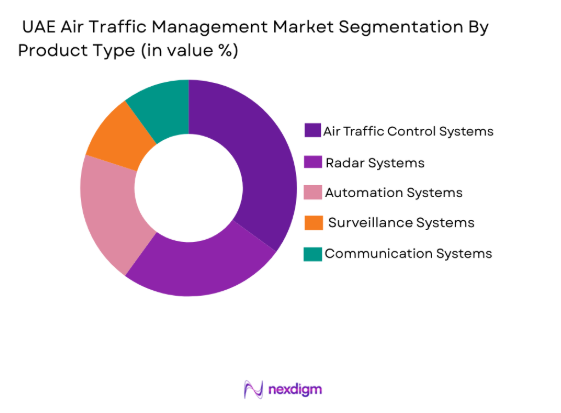
The UAE Air Traffic Management market is segmented by product type into systems such as radar, automation, surveillance, communication, and air traffic control systems. Among these, air traffic control systems have the dominant market share, driven by the need for enhanced safety, air traffic flow, and the growing demand for airspace management due to increasing air traffic. The UAE’s geographical location and the continuous expansion of Dubai International and Abu Dhabi International airports have spurred this demand. These systems are crucial for real-time tracking, managing flight paths, and ensuring airspace safety in busy hubs, driving the substantial growth of this sub-segment.
By Platform Type:
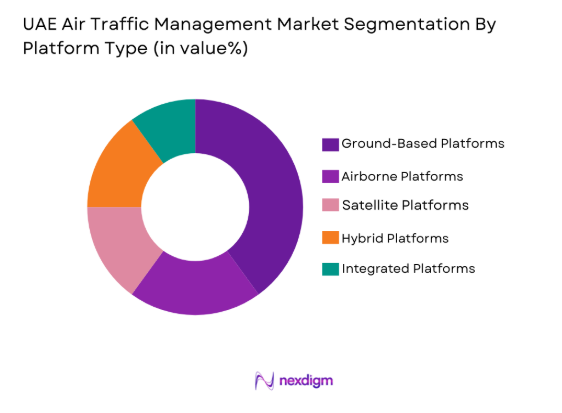
The UAE Air Traffic Management market is segmented by platform type into airborne, ground-based, satellite, hybrid, and integrated platforms. Recently, ground-based platforms have dominated the market share due to their extensive use in controlling airspace and managing flight routes. These platforms are crucial in managing operations at the country’s major international airports, which handle significant air traffic volumes. Ground-based systems ensure the continuous and reliable operation of air traffic control, enhancing safety and efficiency in busy airspace regions like Dubai and Abu Dhabi, where air traffic is consistently high. Additionally, ground-based platforms provide cost-effective solutions for controlling large areas of airspace, a factor that contributes to their dominance in the market.
Competitive Landscape
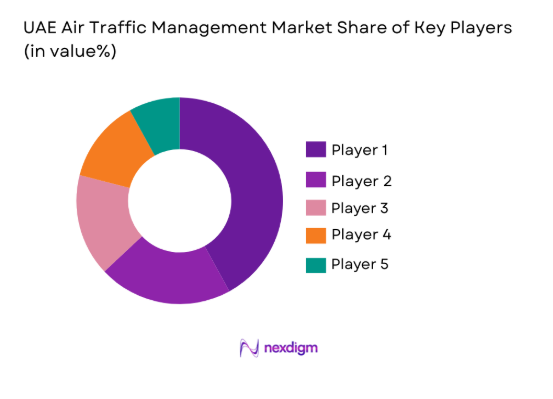
The UAE Air Traffic Management market is highly competitive, with several established global players and a few regional companies vying for market share. Major players have strengthened their positions by offering comprehensive solutions, focusing on radar technologies, automation systems, and integrated air traffic management solutions. A wave of consolidation in the market is evident as companies aim to leverage technological advancements and the growing demand for smart aviation infrastructure. The influence of major players is significantly high, driving market innovation and setting new industry standards.
|
Company Name |
Establishment Year | Headquarters | Technology Focus | Market Reach | Key Products | Revenue (USD) | Additional Parameter |
| Thales Group | 2000 | Paris, France | ~ | ~ | ~ | ~ | ~ |
| Raytheon Technologies | 1985 | Waltham, USA | ~ | ~ | ~ | ~ | ~ |
| Indra Sistemas | 1968 | Madrid, Spain | ~ | ~ | ~ | ~ | ~ |
| Harris Corporation | 2000 | Melbourne, USA | ~ | ~ | ~ | ~ | ~ |
| Siemens AG | 1847 | Munich, Germany | ~ | ~ | ~ | ~ | ~ |
UAE Air Traffic Management Market Analysis
Growth Drivers
Increasing Air Traffic Volumes:
The rise in global air travel has been a significant driver of growth in the UAE Air Traffic Management market. As the region’s airports continue to expand their capacities to accommodate more flights, there is a growing demand for advanced air traffic control systems. Dubai International Airport and Abu Dhabi International Airport are among the busiest airports in the world, and with a steady increase in flight operations, the need for sophisticated air traffic management solutions has grown. The UAE’s strategic location as a transit hub for international flights further elevates the demand for efficient air traffic systems. With more travelers and increased freight traffic, airspace management technologies must be upgraded continuously to handle congestion and improve safety. Furthermore, the UAE’s government has committed substantial investments to modernizing its air traffic control infrastructure, aligning with its vision of becoming a global aviation leader. These investments include the development of cutting-edge radar systems, automation, and communication technologies. As air traffic volumes continue to rise, these systems will be vital for ensuring smooth operations and enhancing the overall efficiency of air travel. The UAE’s airports, airlines, and private sector players are highly focused on optimizing air traffic flow and ensuring that their air traffic control systems can keep pace with the demand.
Technological Advancements in Air Traffic Control Systems:
Advancements in air traffic management technologies, such as automation, surveillance, and radar systems, are driving the market growth in the UAE. As airports handle higher volumes of traffic, the need for innovative solutions to manage airspace becomes critical. Automation in air traffic control systems allows for real-time flight management and enhanced safety measures, particularly in crowded airspaces. Radar systems help monitor aircraft movements, improving safety by providing accurate tracking data for air traffic controllers. Furthermore, the integration of cloud computing and artificial intelligence in air traffic management systems enables enhanced decision-making, better traffic flow management, and predictive analytics. These technological innovations contribute to reducing human error, improving airspace utilization, and ensuring the safe, efficient handling of a large number of flights. The UAE is leading this technological push, having implemented some of the most advanced air traffic control systems in the region, making it a key market for innovation and investment.
Market Challenges
High Implementation and Maintenance Costs:
A major challenge faced by the UAE Air Traffic Management market is the high cost associated with implementing and maintaining advanced air traffic control systems. While these systems are essential for ensuring efficient air traffic management and safety, their initial installation and long-term maintenance are expensive. These systems require significant investments in infrastructure, hardware, software, and ongoing upgrades to keep pace with technological advancements. For instance, radar and automation systems require specialized equipment and regular calibration, which can incur substantial costs. Additionally, the highly skilled workforce needed to operate and maintain these systems adds to operational expenses. For the UAE, which continues to invest in modernizing its airports and airspace management infrastructure, balancing the costs while ensuring high safety and efficiency standards remains a key challenge. As the country expands its aviation network, managing these high costs without compromising on system quality or safety is vital.
Regulatory Barriers:
Regulatory challenges also pose a significant hurdle in the UAE Air Traffic Management market. While the country has made great strides in enhancing its air traffic control systems, it faces numerous regulatory requirements that can slow down the process of technological adoption and system upgrades. Compliance with international standards set by organizations such as the International Civil Aviation Organization (ICAO) and the World Trade Organization (WTO) adds complexity to the regulatory landscape. These regulations govern everything from airspace management to cybersecurity standards, requiring significant coordination between government bodies, regulatory authorities, and technology providers. Additionally, the need to align with regional aviation agreements and protocols adds further layers of complexity, making it challenging for companies to quickly roll out new systems or upgrade existing ones. These regulatory frameworks, while necessary for safety and global cooperation, can delay market growth and increase costs for market players.
Opportunities
Development of Autonomous Air Traffic Management Systems:
One of the most promising opportunities for the UAE Air Traffic Management market is the development and integration of autonomous air traffic management systems. As the demand for air travel continues to increase, manual air traffic control systems may not be sufficient to ensure the safety and efficiency of airspace operations. Autonomous systems, powered by artificial intelligence (AI), machine learning, and cloud computing, can optimize flight routing, manage air traffic more efficiently, and reduce human error. These systems can handle real-time data processing, predict traffic patterns, and make dynamic decisions, ensuring smoother operations in busy airspaces. With the UAE’s strong focus on technology-driven solutions and innovation in aviation, this opportunity is becoming a priority. The government and private players are keen on investing in autonomous solutions to improve safety, reduce operational costs, and accommodate growing air traffic volumes. The integration of unmanned aerial vehicles (UAVs) into airspace management systems further enhances the potential for autonomous systems to become a critical element of future air traffic control.
Public-Private Partnerships in Air Traffic Infrastructure:
Another key opportunity in the UAE Air Traffic Management market lies in the growth of public-private partnerships (PPPs) in air traffic infrastructure. The UAE government has a proven track record of collaborating with private sector firms to develop and enhance critical infrastructure. This collaborative model has the potential to expedite the development and deployment of advanced air traffic management systems. PPPs can provide the necessary capital for innovation, as private players bring in advanced technologies and expertise, while public bodies ensure regulatory alignment and support. Through such partnerships, the UAE can further strengthen its position as a global aviation hub, with state-of-the-art air traffic systems capable of managing increasing volumes of air traffic. By combining government funding with private sector innovation, this model ensures that both safety and efficiency are optimized, and new technologies are swiftly adopted to meet future aviation demands.
Future Outlook
Over the next five years, the UAE Air Traffic Management market is expected to experience significant growth, driven by technological advancements and increasing air traffic. The introduction of smart air traffic management systems, including automation and autonomous solutions, will reshape how airspace is managed. Additionally, continued government investment in airport and air traffic control infrastructure, alongside the push for regional aviation excellence, will fuel this growth. The regulatory environment will support these developments, ensuring safety and efficiency standards are met as the market evolves.
Major Players
- Thales Group
- Raytheon Technologies
- Indra Sistemas
- Harris Corporation
- Siemens AG
- Frequentis AG
- Nav Canada
- BAE Systems
- Horizon Air Traffic Services
- Aireon
- Lockheed Martin
- Rockwell Collins
- SITA
- Honeywell
- NATS Holdings Ltd
Key Target Audience
- Investments and venture capitalist firms
- Government and regulatory bodies
- Airport operators
- Airlines
- Aviation technology developers
- Air traffic control centers
- Aircraft manufacturers
- Airspace management solution providers
Research Methodology
Step 1: Identification of Key Variables
The first step involves identifying the key factors that influence the UAE Air Traffic Management market, such as air traffic volumes, technology adoption, regulatory frameworks, and investment trends.
Step 2: Market Analysis and Construction
In this step, a comprehensive market analysis is conducted, including an assessment of the market size, growth trends, technological advancements, and regulatory influences.
Step 3: Hypothesis Validation and Expert Consultation
Expert consultations are conducted to validate hypotheses and gain insights from industry professionals, regulators, and technology providers in the air traffic management sector.
Step 4: Research Synthesis and Final Output
Finally, the research findings are synthesized into a comprehensive report, highlighting the market’s key trends, drivers, challenges, and opportunities, supported by robust data and insights.


 Request a Sample
 Ask for Customization
 Get a Quote
 Enquire Now