

 Download PDF
 Download PDF
Market Overview
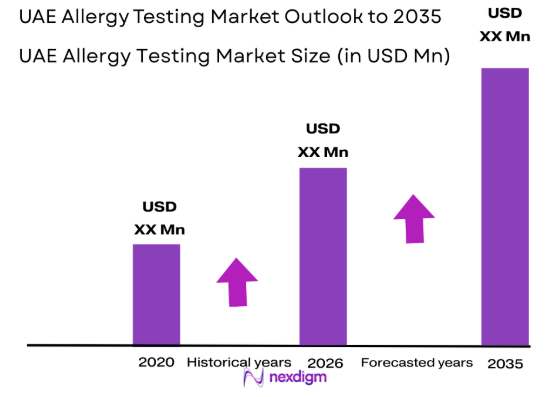
The UAE allergy testing market is experiencing robust growth, valued at USD ~ million based on a recent historical assessment. The market is driven by increased awareness of allergies, advancements in diagnostic technologies, and government initiatives supporting healthcare infrastructure. The growing prevalence of allergic diseases, especially among the urban population, has further fueled the demand for allergy testing solutions. Enhanced healthcare policies and the integration of international standards in medical testing contribute to the continuous expansion of the market.
Dubai and Abu Dhabi are the dominant cities driving the growth of the allergy testing market in the UAE. These cities are equipped with state-of-the-art healthcare facilities and are major hubs for medical tourism, attracting individuals seeking specialized allergy treatments and tests. The government’s focus on improving healthcare services and infrastructure, particularly in metropolitan areas, has led to the development of a strong healthcare ecosystem. Additionally, a growing expatriate population in these cities contributes significantly to the demand for advanced allergy testing services.
Market Segmentation
By System Type
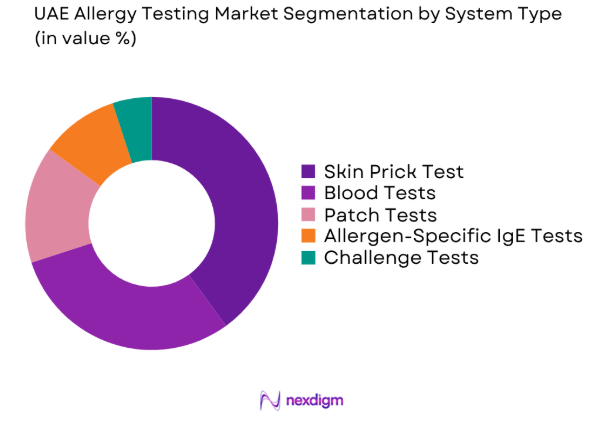
The UAE allergy testing market is segmented by system type into skin prick tests, blood tests, patch tests, allergen-specific IgE tests, and challenge tests. Skin prick tests currently dominate the market, driven by their cost-effectiveness, fast results, and minimal discomfort for patients. The high availability of skilled professionals in major cities and the preference for non-invasive testing methods have made skin prick tests the most widely adopted method. The demand for accurate and rapid results in allergy diagnosis has led to the increased use of these tests across healthcare facilities in urban centers.
By Platform Type
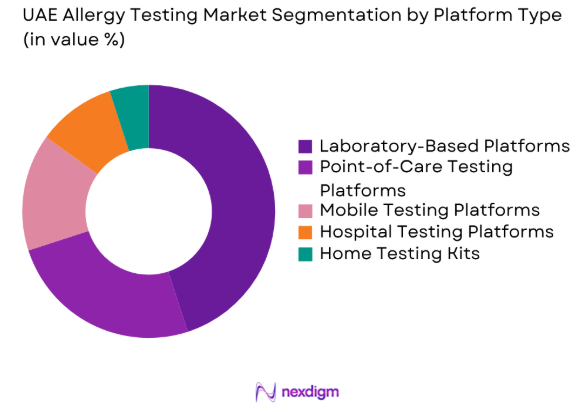
The UAE Allergy Testing market is segmented into laboratory-based platforms, point-of-care testing platforms, mobile testing platforms, hospital testing platforms, and home testing kits. Laboratory-based platforms hold a dominant share due to their high accuracy, detailed testing capabilities, and established presence in diagnostic settings. These platforms are particularly popular in hospitals and specialized clinics where accuracy and reliability are crucial for patient diagnosis. The increasing adoption of advanced technologies, coupled with the growth of specialized diagnostic centers, continues to drive the demand for laboratory-based platforms.
Competitive Landscape
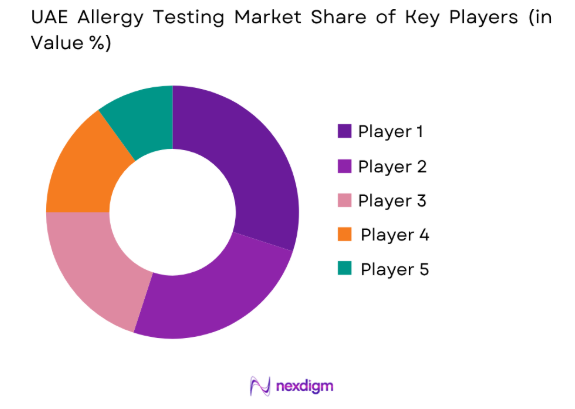
The UAE allergy testing market is competitive, with both international and local players contributing to its growth. Consolidation is occurring as major healthcare providers partner with diagnostic equipment manufacturers to expand their offerings and increase market penetration. The market is characterized by strong competition between established players offering comprehensive diagnostic solutions and smaller companies providing specialized testing services. Major players focus on technological innovation, improving diagnostic accuracy, and expanding service offerings to meet the growing demand for allergy testing in the region.
| Company Name | Establishment Year | Headquarters | Technology Focus | Market Reach | Key Products | Revenue | Market-Specific Parameter |
| Al Harbi Medical | 1997 | Dubai, UAE | ~ | ~ | ~ | ~ | ~ |
| Al Borg Laboratories | 2000 | Dubai, UAE | ~ | ~ | ~ | ~ | ~ |
| Mediclinic Middle East | 1985 | Dubai, UAE | ~ | ~ | ~ | ~ | ~ |
| NMC Healthcare | 1975 | Abu Dhabi, UAE | ~ | ~ | ~ | ~ | ~ |
| Roche Diagnostics | 1896 | Basel, Switzerland | ~ | ~ | ~ | ~ | ~ |
UAE Allergy Testing Market Analysis
Growth Drivers
Increased Prevalence of Allergies
The rising prevalence of allergies in the UAE is a major driver for the allergy testing market. Factors such as air pollution and dietary changes have contributed to a rise in allergic reactions among various age groups. As more individuals suffer from allergies, the demand for testing solutions has increased. Government awareness campaigns and the growing number of healthcare facilities offering specialized allergy services have further supported market growth. This increased prevalence, along with a growing understanding of the importance of early detection, continues to fuel the demand for allergy testing, ensuring that both public and private healthcare sectors play a key role in addressing the issue.
Government Healthcare Initiatives
Government initiatives in the UAE, particularly those focused on enhancing healthcare infrastructure, are crucial in expanding access to allergy testing services. Significant investments have been made to provide high-quality medical care to both citizens and expatriates. Policies like Vision 2021 emphasize healthcare advancements, including the improvement of diagnostic capabilities nationwide. These efforts have led to the establishment of numerous clinics and laboratories dedicated to allergy testing. With continuous government support for healthcare infrastructure, the demand for allergy testing solutions remains strong. These initiatives ensure that both public and private sectors can meet the growing need for accurate and accessible allergy testing services.
Market Challenges
High Cost of Allergy Testing
The high cost of advanced allergy testing methods is a significant challenge in the UAE market. Tests like blood tests and allergen-specific IgE tests require expensive equipment and skilled professionals, leading to elevated service prices. This can limit accessibility, particularly for lower-income segments of the population. Healthcare providers and diagnostic laboratories must balance the high costs of these tests with the need to offer affordable services. Furthermore, the financial burden on patients seeking allergy testing in private clinics may deter potential customers. As a result, accessibility remains a key issue for the broader adoption of allergy testing services in the region.
Regulatory Barriers and Compliance Issues
Regulatory challenges in the approval and certification of allergy testing systems present a major obstacle in the UAE market. The process for obtaining approval involves complex and lengthy procedures, requiring adherence to both international standards and local regulations. This regulatory framework can delay the introduction of new technologies, hindering market growth. Additionally, compliance with health and safety standards, especially for imported devices, adds to the complexity of launching new products. These regulatory hurdles also increase operational costs for healthcare providers and may limit the adoption of innovative solutions. As a result, navigating the regulatory landscape remains a key challenge for the allergy testing market in the UAE.
Opportunities
Expansion in Home-Based Testing
The growing demand for home-based testing solutions presents a significant opportunity for the UAE allergy testing market. With the increasing preference for convenience, at-home allergy testing kits are gaining popularity as an alternative to traditional methods. These kits offer patients the flexibility to perform tests in the comfort of their homes, reducing the need for clinic visits and improving accessibility. The rise in health-conscious consumers seeking quick and accurate results has spurred the development of home testing products. Additionally, advancements in telemedicine and mobile health applications are further driving the adoption of home-based allergy testing solutions, making it a promising area for market growth.
Partnerships with International Healthcare Providers
An opportunity for growth in the UAE allergy testing market lies in expanding partnerships with international healthcare providers. Collaborations between local and global healthcare players can introduce advanced diagnostic tools, improving the quality and accessibility of testing services in the region. These partnerships allow for the transfer of cutting-edge technologies and best practices, fostering innovation in allergy testing solutions. As international healthcare providers bring their expertise, the market will benefit from enhanced service offerings and a wider range of testing options. Moreover, cities with well-established medical tourism infrastructures, such as Dubai and Abu Dhabi, are expected to see increased demand for these advanced solutions, driving further market growth and enhancing the overall healthcare experience in the UAE.
Future Outlook
The future outlook for the UAE allergy testing market is positive, with continued growth expected in the coming years. Driven by the increasing prevalence of allergies and the ongoing government support for healthcare infrastructure, the market will likely experience steady demand for allergy testing services. Technological advancements in diagnostic equipment, including the rise of AI-powered solutions and mobile testing platforms, will further enhance testing accuracy and accessibility. Additionally, home-based testing kits and telemedicine integration will provide new opportunities for market expansion. Overall, the market will benefit from a combination of factors, including regulatory support, healthcare investments, and evolving consumer preferences for convenient testing options.
Major Players
- Al Harbi Medical
- Al Borg Laboratories
- Mediclinic Middle East
- NMC Healthcare
- Roche Diagnostics
- LabCorp
- Abbott Laboratories
- Siemens Healthineers
- ThermoFisher Scientific
- BioMerieux
- QIAGEN
- Sysmex Corporation
- Johnson & Johnson
- Beckman Coulter
- PerkinElmer
Key Target Audience
- Investments and venture capitalist firms
- Government and regulatory bodies
- Healthcare providers
- Medical device manufacturers
- Diagnostic laboratories
- Pharmaceutical companies
- Biotechnology firms
- Healthcare insurance providers
Research Methodology
Step 1: Identification of Key Variables
Identification of relevant market variables such as system types, testing methods, regulatory compliance, and technological factors for accurate market analysis.
Step 2: Market Analysis and Construction
Comprehensive market analysis to construct a clear and reliable market model based on current trends, growth drivers, and challenges.
Step 3: Hypothesis Validation and Expert Consultation
Expert consultations and secondary research from trusted sources to validate hypotheses and ensure accuracy in the market findings.
Step 4: Research Synthesis and Final Output
Synthesizing research data from multiple sources to produce the final market report, ensuring clarity, reliability, and actionable insights.

- Executive Summary
- Research Methodology (Definitions, Scope, Industry Assumptions, Market Sizing Approach, Primary & Secondary Research Framework, Data Collection & Verification Protocol, Analytic Models & Forecast Methodology, Limitations & Research Validity Checks)

- Market Definition and Scope
- Value Chain & Stakeholder Ecosystem
- Regulatory / Certification Landscape
- Sector Dynamics Affecting Demand
- Strategic Initiatives & Infrastructure Growth

- Growth Drivers
Increased Prevalence of Allergies
Technological Advancements in Allergy Testing
Rising Healthcare Awareness - Market Challenges
High Cost of Allergy Testing
Lack of Skilled Professionals
Regulatory Barriers and Compliance Issues - Market Opportunities
Expansion in Home-Based Testing
Government Initiatives to Promote Allergy Awareness
Partnerships with International Healthcare Providers - Trends
Increase in Allergen-Specific Immunotherapies
Integration of AI in Allergy Testing
Rise in E-commerce for Allergy Testing Kits - Government Regulations
- SWOT Analysis of Key Competitors
- Porter’s Five Forces

- By Market Value, 2020-2025
- By Installed Units, 2020-2025
- By Average System Price, 2020-2025
- By System Complexity Tier, 2020-2025

- By System Type (In Value%)
Skin Prick Test
Blood Tests
Patch Tests
Allergen-Specific IgE Tests
Challenge Tests - By Platform Type (In Value%)
Laboratory-Based Platforms
Point-of-Care Testing Platforms
Mobile Testing Platforms
Hospital Testing Platforms
Home Testing Kits - By Fitment Type (In Value%)
In-House Testing Solutions
Outsourced Testing Solutions
Portable Testing Solutions
Integrated Systems
Single-Test Solutions - By End User Segment (In Value%)
Hospitals
Diagnostic Laboratories
Clinics
Home Care Settings
Research Institutions - By Procurement Channel (In Value%)
Direct Procurement
Government Tenders
Private Sector Procurement
Online Bidding Platforms
Third-party Distributors

- Market Share Analysis
- Cross Comparison Parameters (System Type, Platform Type, Procurement Channel, End User Segment, Fitment Type, Testing Methodology, Testing Frequency, Technological Integration, Market Reach, Regulatory Compliance)
- SWOT Analysis of Key Competitors
- Pricing & Procurement Analysis
- Key Players
Al Harbi Medical
Al Borg Laboratories
Dubai Health Authority
Mediclinic Middle East
King’s College Hospital Dubai
NMC Healthcare
Aster DM Healthcare
Laboratories and Medical Services
Gulf Medical Company
Emirates Healthcare
Abbott Laboratories
Roche Diagnostics
Siemens Healthineers
Thermo Fisher Scientific
BioMerieux

- Hospitals Expanding Allergy Testing Services
- Clinics Offering Personalized Allergy Testing
- Research Institutions Focusing on Allergy Treatment Advancements
- Growing Demand from Home Care Settings

- Forecast Market Value, 2026-2035
- Forecast Installed Units, 2026-2035
- Price Forecast by System Tier, 2026-2035
- Future Demand by Platform, 2026-2035


 Request a Sample
 Ask for Customization
 Get a Quote
 Enquire Now