
 Download PDF
Market Overview
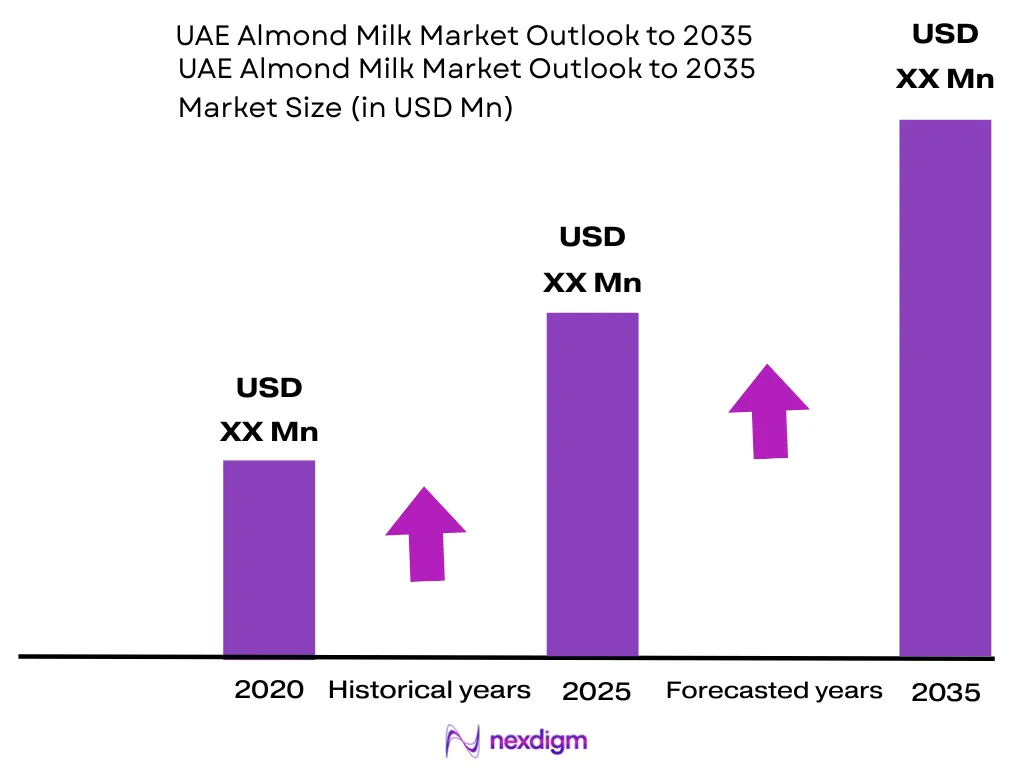
The UAE Almond Milk Market was valued at approximately USD ~ Million in 2024, compared to USD ~ Million in 2023, based on industry trade data, retail sales analysis, and plant-based beverage consumption trends. The market is driven by rising demand for dairy-free alternatives, increasing lactose intolerance awareness, and growing adoption of vegan and flexitarian diets. The UAE’s health-conscious consumer base, expanding premium retail ecosystem, and growing availability of fortified plant-based beverages continue to support almond milk consumption across both retail and foodservice channels.
Market Segmentation
By Product Type
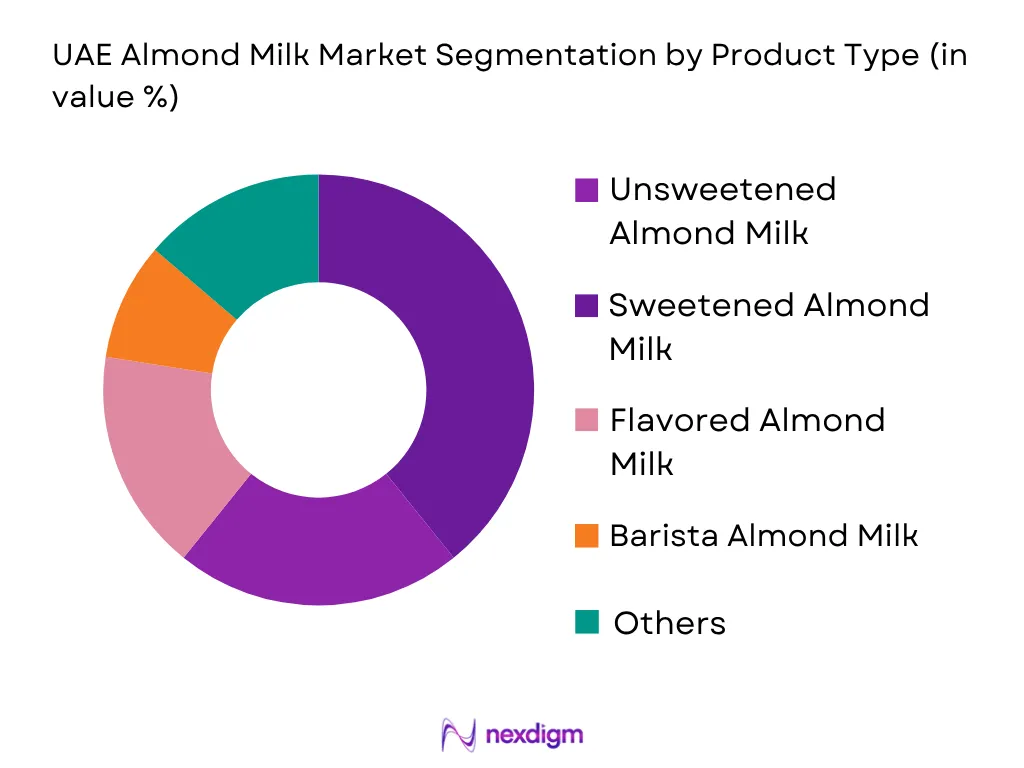
The UAE Almond Milk Market is segmented into unsweetened, sweetened, flavored, barista, and functional almond milk products. Recently, unsweetened almond milk has held the dominant market share under this segmentation due to growing health awareness and increasing consumer preference for low-calorie beverages. Consumers in the UAE are becoming more conscious of sugar intake and actively seek clean-label products that align with fitness and wellness goals. The popularity of keto-friendly and diabetic-friendly dietary lifestyles has further strengthened demand for unsweetened variants. Premium brands such as Almond Breeze, Alpro, Califia Farms, and Silk have expanded their unsweetened product offerings across supermarkets, hypermarkets, and e-commerce platforms. Additionally, healthcare professionals and nutritionists frequently recommend unsweetened plant-based beverages as alternatives to conventional dairy products, contributing to the segment’s leadership position.
By Distribution Channel
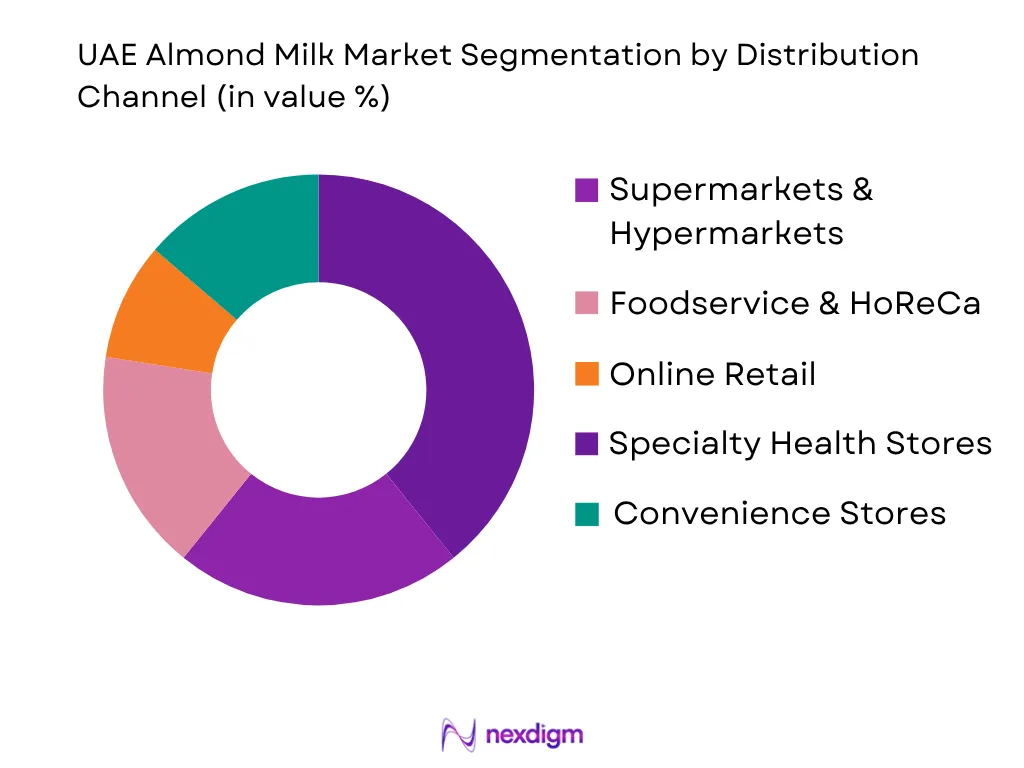
The UAE Almond Milk Market is segmented into hypermarkets and supermarkets, convenience stores, specialty health stores, online retail, and foodservice channels. Recently, hypermarkets and supermarkets have maintained the dominant market share due to their extensive product assortment, strong geographic presence, and ability to offer premium imported brands. Major retailers such as Carrefour, Lulu Hypermarket, Spinneys, Waitrose, and Choithrams provide consumers with a wide variety of almond milk products across multiple price points. These outlets also conduct promotional campaigns and in-store sampling activities that increase product visibility and trial purchases. The convenience of one-stop shopping and the availability of both international and private-label brands further contribute to the dominance of this segment. Strong cold-chain infrastructure and premium shelf placements continue to enhance consumer accessibility and support sustained sales growth through organized retail channels.
Competitive Landscape
The UAE Almond Milk Market is characterized by the presence of several international and regional plant-based beverage manufacturers. The market is highly competitive, with premium imported brands accounting for a significant portion of sales. Major companies focus on product innovation, fortification, clean-label formulations, and expansion across retail and foodservice channels. Strategic partnerships with supermarkets, cafés, and e-commerce platforms have become key competitive strategies. The growing demand for dairy alternatives has encouraged brands to launch new flavors, barista editions, and functional variants tailored to health-conscious consumers.
| Company | Establishment Year | Headquarters | Product Portfolio | Organic Offering | Fortified Variants | E-Commerce Presence | Retail Presence | Foodservice Presence |
| Almond Breeze | 1998 | ~ | ~ | ~ | ~ | ~ | ~ | ~ |
| Califia Farms | 2010 | ~ | ~ | ~ | ~ | ~ | ~ | ~ |
| Koita Foods | 2012 | ~ | ~ | ~ | ~ | ~ | ~ | ~ |
| Silk | 1977 | ~ | ~ | ~ | ~ | ~ | ~ | ~ |
| Alpro | 1980 | ~ | ~ | ~ | ~ | ~ | ~ | ~ |
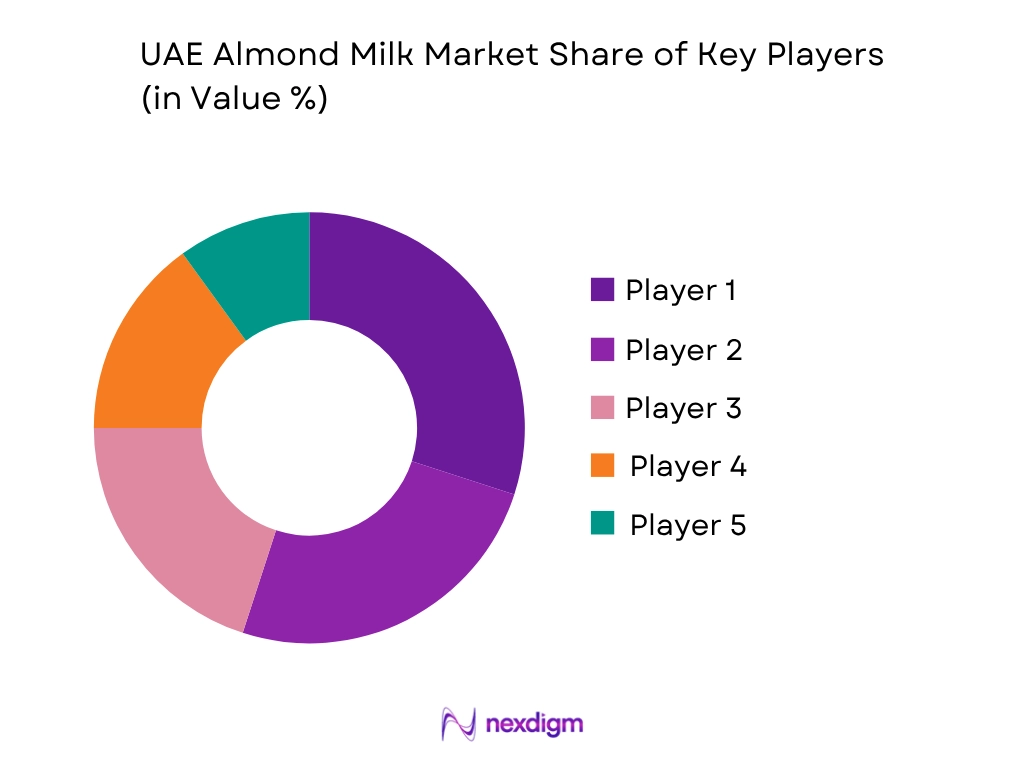
UAE Almond Milk Market Analysis
Growth Drivers
Rising Health Consciousness and Demand for Plant-Based Nutrition
The UAE Almond Milk Market is benefiting from increasing health awareness, rising disposable income, and growing demand for plant-based food and beverage products. According to the IMF, the UAE’s nominal GDP exceeded USD 548 billion in 2024, while GDP per capita remained above USD 49,000, making it one of the highest-income consumer markets globally. The World Bank estimates the UAE population at approximately 11.3 million people, with a large expatriate population exposed to international dietary trends. Dubai Fitness Challenge and other government-led wellness initiatives have contributed to stronger adoption of healthier food alternatives. The UAE imported food products worth over AED 70 billion annually through major ports and logistics hubs, supporting the availability of premium almond milk brands. Rising cases of lactose intolerance and consumer preference for low-calorie beverages have encouraged retailers such as Carrefour, Lulu, Spinneys, and Waitrose to expand plant-based product shelves. The hospitality sector, supported by over 30 million visitors across the UAE, has further increased demand for dairy alternatives in cafés, hotels, and restaurants. These macroeconomic and demographic indicators continue to create a favorable environment for almond milk consumption across the country.
Expansion of Premium Retail and Foodservice Channels
The UAE’s highly developed retail and foodservice sectors are important growth drivers for almond milk consumption. Dubai and Abu Dhabi host thousands of modern retail outlets, specialty health stores, cafés, and international restaurant chains. According to the UAE Ministry of Economy, retail trade contributes significantly to non-oil economic activity, while the country’s non-oil GDP exceeded AED 1.3 trillion. Dubai International Chamber reported that the UAE remains a major re-export and distribution hub connecting Asia, Europe, and Africa. The country’s internet penetration exceeds 99%, supporting online grocery purchases and direct-to-consumer beverage sales. More than 8,000 foodservice establishments operate in Dubai alone, creating substantial opportunities for almond milk usage in specialty coffees, smoothies, and desserts. International coffee chains including Starbucks, Costa Coffee, Tim Hortons, and independent cafés increasingly offer almond milk as a dairy alternative. Rising consumer spending power, supported by a high-income expatriate population, has strengthened demand for premium beverages. As organized retail and foodservice channels continue to expand, almond milk manufacturers benefit from enhanced visibility, wider distribution networks, and greater consumer access across the UAE.
Market Challenges
High Import Dependency and Supply Chain Vulnerability
One of the major challenges facing the UAE Almond Milk Market is its dependence on imported almonds and finished almond milk products. Due to desert climatic conditions and limited agricultural land, commercial almond cultivation within the UAE remains negligible. According to the World Bank, agricultural land accounts for less than 1% of total land area, making food imports essential for national consumption. The UAE imported food and agricultural products valued at more than AED 70 billion, reflecting heavy reliance on international suppliers. Almond sourcing remains concentrated in markets such as the United States, Australia, and Spain, exposing importers to external supply disruptions. Climate-related challenges affecting almond-producing regions can influence product availability and inventory planning. Additionally, fluctuations in shipping costs, freight routes through major global trade corridors, and geopolitical disruptions can affect supply chain efficiency. As almond milk remains a premium category compared to conventional dairy products, manufacturers face pressure to maintain stable inventories while managing international sourcing complexities. These structural dependencies create operational challenges for distributors and retailers serving the growing UAE almond milk consumer base.
Competition from Alternative Plant-Based Beverages
The UAE Almond Milk Market faces increasing competition from other plant-based beverage categories such as oat milk, soy milk, coconut milk, and pea-protein beverages. The country’s highly diverse consumer base encourages experimentation with multiple dairy alternatives rather than loyalty to a single category. According to the UAE Ministry of Economy, food and beverage imports continue to expand as international brands enter the market through organized retail channels. Oat milk has gained traction among specialty coffee chains due to its texture and compatibility with espresso beverages. Coconut milk benefits from widespread consumer familiarity among Asian expatriate populations, while soy milk continues to maintain a strong presence due to affordability and protein content. The UAE’s population of more than 11 million residents, comprising over 200 nationalities, creates highly varied consumption preferences. This diversity intensifies competition among plant-based beverage manufacturers. Almond milk brands must therefore invest in consumer education, product differentiation, and functional nutrition positioning to maintain relevance. The growing number of dairy-alternative options available in supermarkets and online platforms presents a significant challenge for long-term market penetration.
Market Opportunities
Functional and Fortified Product Innovation
The growing focus on preventive healthcare and wellness presents significant opportunities for functional almond milk products in the UAE. The country’s healthcare expenditure exceeded AED 100 billion, reflecting strong consumer and institutional investment in health and nutrition. High-income consumers increasingly seek beverages enriched with calcium, vitamin D, vitamin B12, protein, and other functional ingredients. According to the UAE Government’s National Wellbeing Strategy initiatives, improving lifestyle choices remains a key policy focus, encouraging healthier consumption patterns. The UAE’s young and affluent population actively engages in fitness activities, gym memberships, and sports participation, creating demand for functional nutrition beverages. Premium retail chains have expanded dedicated health-food sections that feature fortified plant-based products. Additionally, the country’s strong digital commerce ecosystem allows niche functional beverage brands to directly target consumers through online channels. Almond milk manufacturers can leverage this trend by introducing specialized formulations focused on bone health, immunity, sports recovery, and weight management. Functional product innovation offers an opportunity to move beyond traditional dairy replacement and position almond milk as a value-added wellness beverage category within the UAE market.
Expansion Across Hospitality and Café Ecosystems
The UAE’s thriving hospitality sector provides a substantial opportunity for almond milk manufacturers. According to the UAE tourism authorities, the country welcomed more than 30 million visitors through major destinations such as Dubai and Abu Dhabi. Dubai alone recorded more than 18 million international overnight visitors, supporting strong demand across cafés, restaurants, hotels, and premium foodservice outlets. The hospitality industry remains a key pillar of economic diversification efforts, generating consistent demand for innovative food and beverage offerings. Specialty coffee consumption continues to grow, with almond milk increasingly featured as a preferred dairy alternative in lattes, cappuccinos, and specialty beverages. Luxury hotels, wellness resorts, and premium dining establishments are expanding plant-based menu offerings to cater to international travelers and health-conscious consumers. The UAE’s position as a regional tourism hub creates continuous exposure to global dietary trends, accelerating adoption of almond milk products. Foodservice partnerships allow manufacturers to increase product trial rates while strengthening brand visibility. The expanding hospitality ecosystem therefore represents a major growth avenue for almond milk suppliers seeking broader market penetration across the UAE.
Future Outlook
The UAE Almond Milk Market is expected to witness robust growth during the forecast period driven by increasing consumer preference for plant-based nutrition, rising awareness of lactose intolerance, and growing adoption of vegan lifestyles. Continuous expansion of premium retail chains, increasing penetration of almond milk in cafés and restaurants, and the introduction of functional and fortified products are expected to support market expansion. Furthermore, sustainability trends and consumer demand for clean-label beverages are likely to encourage innovation among leading manufacturers. E-commerce growth and premiumization strategies are also expected to create new growth opportunities for market participants.
Major Players
- Alpro
- Almond Breeze
- Califia Farms
- Silk
- Koita Foods
- Oatly
- Rude Health
- Minor Figures
- Nestlé
- Pure Harvest
- Natureland Organic
- Pacific Foods
- Provamel
- Vly Foods
- Earth’s Own
Key Target Audience
- Almond Milk Manufacturers
- Plant-Based Beverage Producers
- Foodservice and HoReCa Operators
- Hypermarket and Supermarket Chains
- E-Commerce and Quick Commerce Platforms
- Investments and Venture Capitalist Firms
- Government and Regulatory Bodies (UAE Ministry of Climate Change and Environment, Dubai Municipality, Abu Dhabi Agriculture and Food Safety Authority)
- Food and Beverage Importers & Distributors
Research Methodology
Step 1: Identification of Key Variables
The research process begins with identifying critical variables influencing the UAE Almond Milk Market. This includes demand trends, consumer dietary preferences, retail penetration, import dependency, pricing structures, and product innovation activities. Secondary research is conducted through industry publications, trade databases, government reports, and company disclosures to establish the market ecosystem.
Step 2: Market Analysis and Construction
Historical market data is compiled and analyzed using both top-down and bottom-up approaches. Demand from retail, foodservice, and e-commerce channels is assessed alongside import and consumption patterns. Revenue estimation models are developed using product-level and channel-level analysis to determine market size and segmentation shares.
Step 3: Hypothesis Validation and Expert Consultation
Market assumptions and preliminary findings are validated through discussions with manufacturers, distributors, retailers, and industry stakeholders. These interactions provide insights into market dynamics, consumer preferences, competitive strategies, and future growth prospects. Findings are refined based on expert feedback.
Step 4: Research Synthesis and Final Output
The final stage involves integrating primary and secondary research findings into a comprehensive market framework. Data triangulation techniques are employed to ensure consistency and accuracy. The resulting analysis provides actionable insights regarding market opportunities, competitive positioning, and future growth potential within the UAE Almond Milk Market.

- Executive Summary
- Research Methodology (Market Definitions and Assumptions, Abbreviations, Market Sizing Approach, Bottom-Up Analysis, Top-Down Validation, Primary Research Interviews, Demand-Supply Assessment Framework, Data Triangulation Model, Limitations and Conclusions)

- Definition and Scope
- Market Evolution and Industry Genesis
- Timeline of Almond Milk Brand Entry and Expansion
- Business Cycle Analysis
- Supply Chain and Value Chain Analysis

- Growth Drivers (Rising Lactose Intolerance and Dairy-Free Consumption, Expanding Expatriate Population, Increasing Health and Wellness Awareness, Growth of Premium Retail Channels, Expansion of Café Culture and Specialty Coffee)
- Market Challenges (High Dependence on Imported Almonds, Premium Product Pricing, Competition from Oat and Soy Milk, Limited Local Manufacturing Base, Supply Chain Volatility)
- Market Opportunities (Functional and Fortified Almond Milk Products, Organic and Clean-Label Expansion, HoReCa Channel Penetration, Private Label Development, E-Commerce and Quick Commerce Growth)
- Market Trends (Barista Almond Milk Demand, Sugar-Free Formulations, Sustainable Packaging Adoption, Protein-Enriched Variants, Plant-Based Lifestyle Integration)
- Government Regulations (UAE Food Safety Regulations, ESMA Product Standards, Nutritional Labeling Requirements, Import and Customs Regulations, Organic Product Certification Standards)
- SWOT Analysis
- Stakeholder Ecosystem
- PESTLE Analysis
- Porter’s Five Forces Analysis
- Competition Ecosystem

- By Market Value (2020-2025)
- By Volume Consumption (2020-2025)
- By Average Retail Price (2020-2025)

- By Product Type (In Value %)
Unsweetened Almond Milk
Sweetened Almond Milk
Flavored Almond Milk
Barista Almond Milk
Functional/Fortified Almond Milk - By Packaging Type (In Value %)
Cartons/Tetra Packs
Bottles
Single-Serve Packs
Bulk Foodservice Packs
Sustainable/Recyclable Packaging - By Distribution Channel (In Value %)
Hypermarkets & Supermarkets
Convenience Stores
Specialty Health Stores
Online Retail & Quick Commerce
Foodservice & HoReCa - By End User (In Value %)
Household Consumers
Cafés & Coffee Chains
Hotels & Resorts
Restaurants & Foodservice Operators
Corporate & Institutional Buyers - By Emirate (In Value %)
Dubai
Abu Dhabi
Sharjah
Ajman
Northern Emirates

- Market Share of Major Players (Value Share, Volume Share, Product Type Share, Distribution Channel Share)
- Cross Comparison Parameters (Product Portfolio Breadth, Almond Milk SKU Count, Fortification Portfolio, Organic Product Availability, Retail Distribution Reach, E-Commerce Presence, Foodservice/Barista Product Penetration, Packaging Sustainability Initiatives)
- SWOT Analysis of Major Players
- Pricing Analysis by SKU, Pack Size and Retail Channel
- Detailed Profiles of Major Companies
Alpro
Blue Diamond Almond Breeze
Califia Farms
Silk (Danone)
Rude Health
Minor Figures
Oatly
Koita Foods
Nestlé
Natureland Organic
Pure Harvest Smart Farms
Al Ain Farms
Pacific Foods
Provamel
Nature’s Promise

- Consumer Demographics and Consumption Patterns
- Expatriate vs Local Consumer Preferences
- Health and Wellness Purchasing Behavior
- Dietary Preference Analysis (Vegan, Flexitarian, Lactose-Free, Fitness-Oriented Consumers)
- Premium Product Adoption Analysis
- Consumer Awareness and Brand Loyalty Assessment
- Consumer Pain Point and Satisfaction Mapping
- Average Basket Value Analysis
- Purchase Journey and Decision-Making Framework
- Consumption Frequency and Brand Switching Trends

- By Market Value (2026-2035)
- By Volume Consumption (2026-2035)
- By Average Retail Price (2026-2035)


 Request a Sample
 Ask for Customization
 Get a Quote
 Enquire Now