

 Download PDF
Market Overview
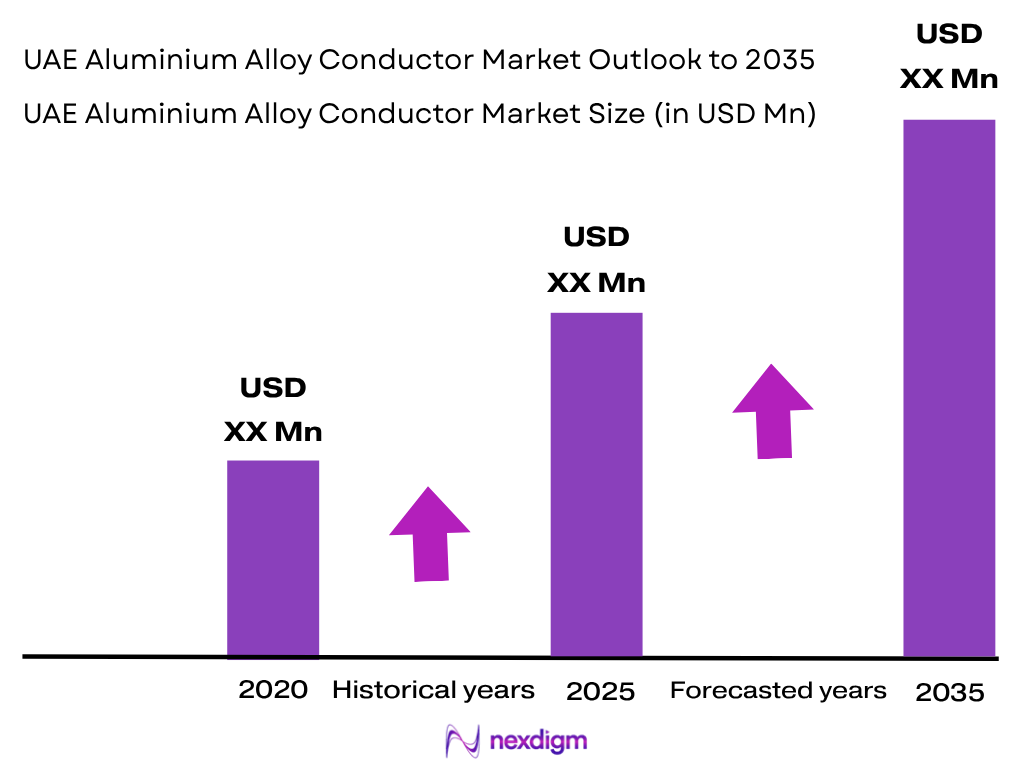
The UAE Aluminium Alloy Conductor Market is driven by continuous investment in electricity transmission networks, renewable energy integration, and replacement of conventional conductors with lightweight high-performance alternatives. The UAE electricity system has experienced increasing demand due to urban development, industrial expansion, and large-scale infrastructure projects. Electricity generation increased in recent years, with renewable and nuclear sources becoming more important within the national energy mix. Wikipedia Aluminium alloy conductors are gaining relevance because they provide improved strength-to-weight performance, reduced sag characteristics, and suitability for long-distance overhead transmission applications. The UAE’s expansion of solar power projects and grid connectivity requirements further supports demand for advanced conductor technologies.
Abu Dhabi and Dubai represent the leading demand centers for aluminium alloy conductors because of their large-scale power infrastructure, industrial zones, and renewable energy projects. Abu Dhabi hosts major electricity generation and transmission assets, while Dubai continues expanding urban infrastructure and smart grid systems. The Mohammed bin Rashid Al Maktoum Solar Park and other renewable energy developments require reliable transmission connectivity and advanced electrical infrastructure. Wikipedia Aluminium alloy conductors are increasingly considered for transmission upgrades because they support efficient electricity transfer with lower mechanical loading compared with traditional alternatives. The presence of major utilities, EPC contractors, and infrastructure developers strengthens adoption across these emirates.
Market Segmentation
By Conductor Type
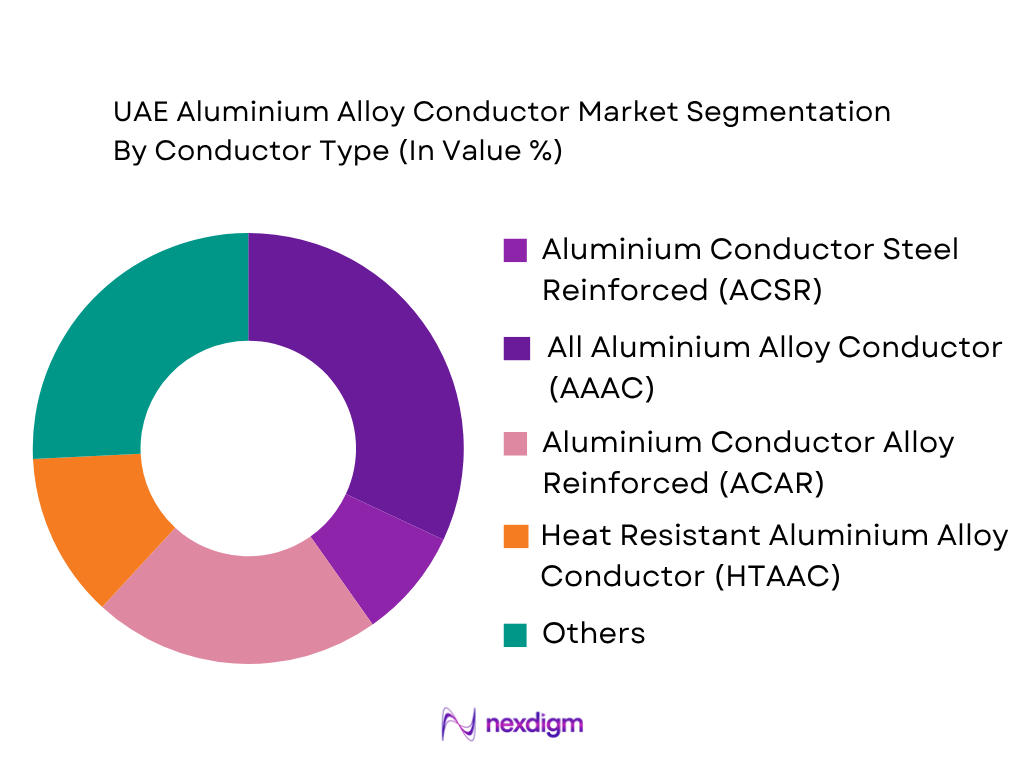
The UAE Aluminium Alloy Conductor Market is segmented by conductor type into all aluminium alloy conductors (AAAC), aluminium conductor alloy reinforced (ACAR), aluminium alloy conductor steel reinforced (AACSR), high temperature low sag conductors (HTLS), aluminium conductor composite core (ACCC), and aluminium conductor steel reinforced (ACSR). AAAC conductors represent the dominant segment with a market share of ~XX% in 2024 due to their balanced electrical performance, corrosion resistance, and suitability for UAE environmental conditions. AAAC conductors are increasingly preferred in overhead transmission and distribution networks because they eliminate steel reinforcement, reducing weight and improving resistance against coastal and desert corrosion. Growing grid modernization activities, renewable energy transmission requirements, and demand for durable overhead conductors support adoption of AAAC solutions. HTLS and composite core conductors are also gaining attention for high-capacity transmission applications where utilities require increased current carrying capability without major infrastructure replacement.
By Application
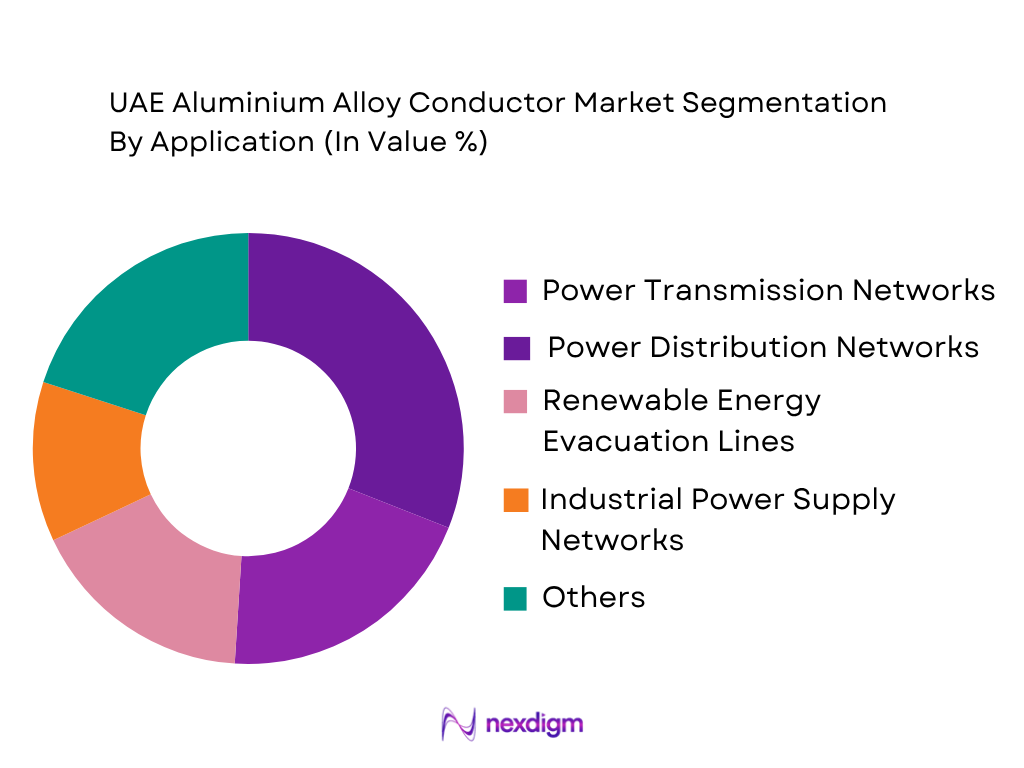
The UAE Aluminium Alloy Conductor Market is segmented by application into power transmission networks, power distribution networks, renewable energy transmission, solar power grid connectivity, wind energy transmission infrastructure, industrial power supply networks, urban electricity distribution, rural electrification projects, and smart grid infrastructure. Power transmission networks represent the dominant application segment with a market share of ~XX% in 2024 due to increasing requirements for high-voltage electricity movement across expanding urban and industrial areas. Aluminium alloy conductors are widely utilized in transmission systems because of their lightweight structure, mechanical strength, and ability to support longer spans. Renewable energy projects are also increasing demand as solar installations require reliable grid connections. The UAE’s renewable capacity expansion and electricity infrastructure modernization programs are strengthening the adoption of advanced conductors for efficient power transfer.
Competitive Landscape
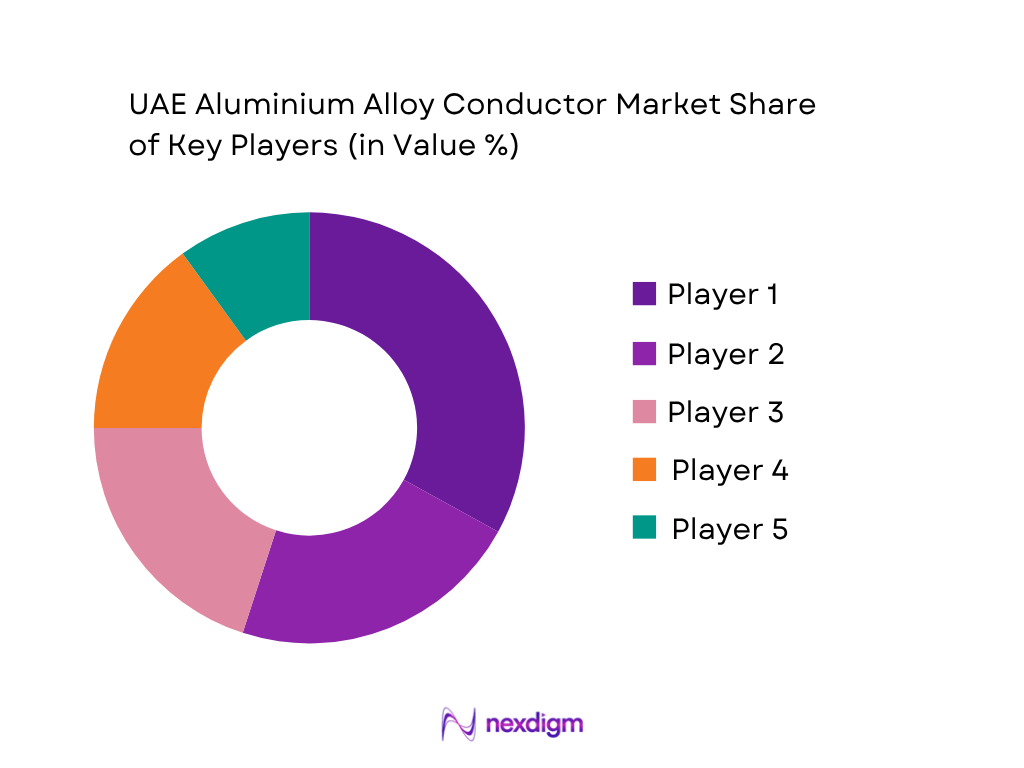
The UAE Aluminium Alloy Conductor Market includes global conductor manufacturers, regional cable producers, and specialized transmission solution providers. Competition is influenced by conductor technology capabilities, transmission project experience, manufacturing capacity, and relationships with utilities and EPC companies. Major participants supply AAAC, ACAR, HTLS, and advanced aluminium conductor solutions for power transmission and renewable energy applications.
| Company | Establishment Year | Headquarters | Aluminium Alloy Conductor Portfolio | Manufacturing Capability | Key Applications | Geographic Presence | Technology Capability | Utility Project Experience |
| Prysmian Group | 1879 | Milan, Italy | ~ | ~ | ~ | ~ | ~ | ~ |
| Nexans | 1897 | Paris, France | ~ | ~ | ~ | ~ | ~ | ~ |
| Southwire Company LLC | 1950 | Carrollton, USA | ~ | ~ | ~ | ~ | ~ | ~ |
| Apar Industries Limited | 1958 | Mumbai, India | ~ | ~ | ~ | ~ | ~ | ~ |
| Sterlite Power | 2005 | Mumbai, India | ~ | ~ | ~ | ~ | ~ | ~ |
UAE Aluminium Alloy Conductor Market Analysis
Growth Drivers
Expansion of Power Transmission Infrastructure and Renewable Energy Grid Development
The UAE Aluminium Alloy Conductor Market is supported by continuous expansion of electricity transmission infrastructure, renewable energy integration, and increasing requirements for efficient power evacuation systems. The UAE recorded a total installed renewable energy capacity of more than 6 GW in 2024, driven mainly by large-scale solar projects, creating additional requirements for reliable transmission networks and advanced conductors. The country’s electricity demand is influenced by population growth, industrial activity, and urban infrastructure expansion, with the World Bank reporting UAE population levels above 10 million and GDP exceeding USD 500 billion, reflecting strong economic activity requiring dependable electricity supply. Aluminium alloy conductors are increasingly preferred for transmission applications because they provide lower weight, high mechanical strength, and improved corrosion resistance compared with traditional solutions. The UAE’s transmission network expansion is also linked with industrial zones, smart city developments, and renewable energy projects requiring higher grid efficiency. Electricity infrastructure investments by utilities such as Abu Dhabi Transmission and Despatch Company and Dubai Electricity and Water Authority are supporting adoption of advanced conductor technologies. The country’s growing renewable power capacity, including solar installations exceeding several gigawatts, is increasing demand for high-performance aluminium alloy conductors capable of handling long-distance electricity transmission under high-temperature desert conditions.
High Voltage Transmission Network Expansion and Replacement of Conventional Conductors
The UAE Aluminium Alloy Conductor Market benefits from increasing modernization of high-voltage transmission networks and replacement of ageing conventional conductors with lightweight, high-capacity alternatives. The UAE continues to develop interconnected electricity infrastructure to support industrial zones, urban expansion, and renewable energy integration. The country’s electricity consumption remains among the highest globally on a per-capita basis, supported by economic activities including manufacturing, construction, oil and gas, and commercial infrastructure. According to World Bank indicators, UAE GDP reached above USD 500 billion, highlighting sustained demand for reliable electricity systems. Aluminium alloy conductors support transmission upgrades because they enable improved current carrying capacity while reducing mechanical loading on towers and structures. The UAE’s renewable energy strategy has increased the need for transmission lines connecting solar generation facilities with demand centers, particularly between Abu Dhabi and Dubai. Large-scale solar developments require efficient grid infrastructure capable of managing variable electricity generation. Additionally, the UAE’s industrial sector contributes significantly to electricity demand, with manufacturing activities expanding under economic diversification programs. These developments encourage utilities and EPC contractors to adopt advanced conductors, including AAAC and HTLS technologies, for improving grid reliability, reducing losses, and increasing transmission efficiency.
Market Challenges
Fluctuation in Aluminium Raw Material Prices and Dependence on Imported Advanced Conductor Technologies
The UAE Aluminium Alloy Conductor Market faces challenges due to fluctuations in aluminium raw material prices and dependence on imported specialized conductor technologies. Aluminium remains a globally traded commodity, and price volatility affects manufacturing costs, procurement planning, and project budgeting for conductor manufacturers. The UAE has a strong aluminium production industry, with primary aluminium production exceeding 2 million tonnes annually through major smelting operations, but advanced alloy conductor manufacturing capabilities remain limited compared with global production centers. The World Bank commodity outlook highlights continued volatility in industrial metal markets due to global demand changes, energy costs, and supply chain conditions. Advanced conductors such as HTLS and composite-core aluminium conductors require specialized manufacturing processes, material expertise, and quality testing capabilities. Many high-performance conductor technologies are supplied through international manufacturers, increasing dependence on imported technical solutions. Additionally, transmission projects require compliance with strict electrical, mechanical, and environmental specifications, increasing engineering complexity. Extreme UAE climate conditions, including high temperatures, sand exposure, and coastal humidity, require conductors with strong thermal and corrosion resistance. These factors increase technical requirements for aluminium alloy conductors and create challenges for manufacturers seeking localized production and cost optimization.
High Initial Investment Requirements and Technical Specification Requirements
The UAE Aluminium Alloy Conductor Market experiences challenges related to high initial investment requirements, complex installation processes, and stringent technical specifications for transmission infrastructure. Aluminium alloy conductors require advanced manufacturing capabilities, specialized equipment, and skilled technical expertise, increasing entry barriers for domestic producers. Transmission projects involve significant engineering requirements, including conductor selection, tower compatibility assessment, thermal performance evaluation, and environmental durability testing. The UAE’s power infrastructure operates under strict reliability standards due to high electricity demand from urban areas, industrial facilities, and commercial developments. The country’s electricity consumption per capita remains among the highest globally, requiring transmission systems capable of maintaining stable supply during peak demand periods. Advanced conductor installation also requires specialized equipment and experienced contractors, which can increase project execution complexity. Conventional aluminium conductors remain competitive in some applications due to established supply chains and familiarity among utilities and contractors. Furthermore, delays in large infrastructure projects can impact conductor procurement schedules and investment planning. The UAE’s harsh environmental conditions require additional performance considerations, including resistance to thermal expansion, corrosion, and mechanical stress. These technical factors influence adoption decisions and require manufacturers to demonstrate long-term reliability before deployment in critical transmission networks.
Market Opportunities
Renewable Energy Transmission Expansion and Smart Grid Deployment
The UAE Aluminium Alloy Conductor Market presents opportunities due to renewable energy expansion, smart grid development, and increasing requirements for efficient electricity transmission. The UAE has established ambitious renewable energy targets, with solar power becoming a major component of future electricity generation. Renewable capacity in the country exceeded 6 GW in 2024, creating demand for transmission infrastructure connecting generation facilities with consumption centers. Aluminium alloy conductors are suitable for renewable energy transmission because they offer lightweight construction, high strength, and efficient electricity transfer across long-distance overhead networks. Smart grid deployment is also creating opportunities for advanced conductor technologies as utilities focus on improving network reliability, reducing transmission losses, and enhancing grid management. Digitalization of electricity networks requires infrastructure capable of supporting increasing power flows from distributed and renewable energy sources. Government initiatives such as energy diversification programs and utility modernization projects are encouraging investment in advanced transmission technologies. Cross-emirate electricity connectivity projects require conductors capable of operating under high-temperature desert conditions while maintaining efficiency. The UAE’s economic growth, with GDP exceeding USD 500 billion according to international economic indicators, supports continued infrastructure investment. These factors create opportunities for AAAC, HTLS, and other advanced aluminium conductor technologies in future grid development projects.
High Temperature Low Sag Conductor Adoption and Domestic Aluminium Alloy Manufacturing Development
The UAE Aluminium Alloy Conductor Market has opportunities through adoption of high-temperature low sag conductors, domestic manufacturing development, and grid efficiency improvement projects. HTLS conductors allow utilities to increase transmission capacity using existing infrastructure by operating at higher temperatures with reduced sag characteristics. This capability is valuable in the UAE, where high ambient temperatures can affect transmission efficiency and conductor performance. The UAE aluminium industry provides a strong foundation for developing advanced conductor manufacturing capabilities, with domestic aluminium production exceeding 2 million tonnes annually. Localizing aluminium alloy conductor production could reduce dependence on imported technologies and strengthen supply chain resilience. Renewable energy expansion is also increasing demand for transmission upgrades, particularly for large-scale solar projects requiring efficient power evacuation. The UAE’s infrastructure development plans emphasize energy security, industrial growth, and technology localization, supporting opportunities for advanced electrical materials. Smart grid initiatives and transmission modernization projects require conductors with improved thermal performance, durability, and operational efficiency. The adoption of advanced aluminium alloy conductors can help utilities improve network capacity without extensive new infrastructure development. These factors create opportunities for manufacturers, technology providers, and infrastructure companies involved in advanced conductor production and grid modernization.
Future Outlook
The UAE Aluminium Alloy Conductor Market is expected to witness continued development due to electricity demand growth, renewable energy integration, and modernization of transmission infrastructure. Expansion of solar power projects, smart grid initiatives, and high-voltage transmission requirements will support demand for advanced conductor technologies. Aluminium alloy conductors are expected to gain importance as utilities focus on improving transmission efficiency, reducing line losses, and increasing network reliability. The adoption of HTLS and lightweight conductor technologies will further influence future grid development.
Major Players
- Prysmian Group
- Nexans
- Southwire Company LLC
- Apar Industries Limited
- Sterlite Power
- LS Cable & System
- ZTT International
- Henan Tong-Da Cable Co., Ltd.
- Midal Cables Ltd.
- Dubai Cable Company (DUCAB)
- Tratos Group
- General Cable Technologies Corporation
- NPA Skawina
- Hellenic Cables
- Sumitomo Electric Industries
Key Target Audience
- Power Transmission Utilities
- Electricity Distribution Companies
- Renewable Energy Developers
- Investments and Venture Capitalist Firms
- Government and Regulatory Bodies (UAE Ministry of Energy and Infrastructure, Dubai Electricity and Water Authority, Abu Dhabi Department of Energy)
- EPC Contractors and Infrastructure Developers
- Aluminium Producers and Cable Manufacturers
- Industrial Power Consumers
Research Methodology
Step 1: Identification of Key Variables
The initial phase involves developing an ecosystem map covering aluminium producers, conductor manufacturers, utilities, EPC companies, renewable energy developers, and transmission infrastructure stakeholders. Secondary research is conducted to identify market variables including conductor technologies, application areas, demand drivers, supply conditions, and regulatory factors influencing the UAE Aluminium Alloy Conductor Market.
Step 2: Market Analysis and Construction
This phase involves analyzing historical market trends through supply-side and demand-side assessment. Factors including transmission infrastructure expansion, renewable energy connectivity, conductor installation volumes, technology adoption, and utility procurement patterns are evaluated to construct a comprehensive market framework.
Step 3: Hypothesis Validation and Expert Consultation
Market assumptions are validated through discussions with industry participants including conductor manufacturers, utility professionals, EPC companies, and infrastructure specialists. These interactions provide operational insights regarding product preferences, technical requirements, competitive dynamics, and future adoption trends.
Step 4: Research Synthesis and Final Output
The final stage integrates quantitative and qualitative findings from industry assessments, stakeholder discussions, and market analysis. Data validation is performed through triangulation methods to ensure accurate representation of market structure, competitive landscape, segmentation, and future development opportunities.

- Executive Summary
- Research Methodology (Market Definition and Scope, UAE Aluminium Alloy Conductor Market Classification, Aluminium Alloy Conductor Technology Mapping, AAAC Conductor Assessment, ACAR Conductor Evaluation, AACSR Conductor Analysis, Aluminium Alloy Strand Composition Assessment, High-Temperature Low-Sag Conductor Evaluation, Composite Reinforced Conductor Assessment, Conductor Design and Engineering Analysis, Electrical Conductivity Assessment, Tensile Strength Evaluation, Thermal Performance Analysis, Sag Performance Assessment, Corrosion Resistance Assessment, Weight Reduction Analysis, Transmission Application Mapping, Distribution Network Assessment, Grid Modernization Assessment, Manufacturing Capability Assessment, Domestic Production Assessment, Import Dependency Assessment, Supply-Side Assessment, Demand-Side Assessment, Top-Down Market Sizing, Bottom-Up Market Sizing, Primary Industry Interviews, Data Triangulation, Forecasting Framework)

- Definition and Scope
- UAE Aluminium Alloy Conductor Industry Evolution
- Aluminium Alloy Conductor Value Chain Analysis
- Aluminium Alloy Conductor Supply Chain Analysis

- Growth Drivers (Expansion of Power Transmission Infrastructure, Renewable Energy Grid Development, Electricity Demand Growth, Grid Modernization Initiatives, High Voltage Transmission Network Expansion, Solar Power Integration, Industrial Electricity Demand Growth, Replacement of Conventional Conductors, Urban Infrastructure Development)
- Market Challenges (Fluctuation in Aluminium Raw Material Prices, High Initial Investment Requirements, Competition from Conventional Aluminium Conductors, Dependence on Imported Advanced Conductor Technologies, Limited Domestic Alloy Manufacturing Capability, Technical Specification Requirements, Extreme Climate Conditions, Installation Complexity, Transmission Project Delays)
- Market Opportunities (Renewable Energy Transmission Expansion, Offshore Solar and Renewable Grid Development, Smart Grid Deployment, High Temperature Low Sag Conductor Adoption, Cross-Emirate Power Transmission Projects, Domestic Aluminium Alloy Manufacturing Development, Grid Efficiency Improvement Projects, Advanced Conductor Technology Adoption, Transmission Capacity Enhancement)
- Market Trends (Increasing Adoption of AAAC Conductors, High Strength Aluminium Alloy Development, Lightweight Transmission Solutions, Smart Grid Integration, Renewable Energy Grid Connectivity, Advanced Alloy Processing Technologies, Transmission Network Optimization, Corrosion Resistant Conductor Development)
- Government Regulations and Standards (UAE Electricity Transmission Standards, Emirates National Grid Requirements, Dubai Electricity and Water Authority Grid Standards, Abu Dhabi Transmission and Dispatch Company Requirements, Federal Electricity Regulations, IEC Conductor Standards, Electrical Safety Regulations, Transmission Line Design Standards, Renewable Energy Grid Connection Standards)
- SWOT Analysis
- Porter’s Five Forces Analysis
- PESTLE Analysis
- Stakeholder Ecosystem
- Competition Ecosystem

- By Market Value (2020-2025)
- By Aluminium Alloy Conductor Production Volume (2020-2025)
- By Installed Conductor Length (2020-2025)
- By Average Selling Price per Conductor Kilometer (2020-2025)
- By AAAC Conductor Consumption Volume (2020-2025)

- By Conductor Type (In Value %)
All Aluminium Alloy Conductors (AAAC)
Aluminium Conductor Alloy Reinforced (ACAR)
Aluminium Alloy Conductor Steel Reinforced (AACSR)
High Temperature Low Sag Conductors (HTLS)
Aluminium Conductor Composite Core (ACCC)
Aluminium Conductor Steel Reinforced (ACSR)
Hybrid Aluminium Alloy Conductors - By Voltage Level (In Value %)
Low Voltage Transmission Conductors
Medium Voltage Distribution Conductors
High Voltage Transmission Conductors
Extra High Voltage Conductors
Ultra High Voltage Transmission Conductors - By Application (In Value %)
Power Transmission Networks
Power Distribution Networks
Renewable Energy Transmission
Solar Power Grid Connectivity
Wind Energy Transmission Infrastructure
Industrial Power Supply Networks
Urban Electricity Distribution
Rural Electrification Projects
Smart Grid Infrastructure - By End-Use Industry (In Value %)
Electric Utilities
Renewable Energy Sector
Oil and Gas Industry
Industrial Manufacturing Sector
Construction and Infrastructure Sector
Commercial Buildings
Residential Power Networks
Government Infrastructure Projects - By Installation Type (In Value %)
Overhead Transmission Lines
Overhead Distribution Lines
Grid Expansion Projects
Grid Modernization Projects
Transmission Line Replacement Projects
New Power Infrastructure Development - By Region (In Value %)
Dubai
Abu Dhabi
Sharjah
Ras Al Khaimah
Fujairah
Ajman
Umm Al Quwain
Rest of UAE

- Market Share of Major Players (By UAE Revenue, Aluminium Alloy Conductor Portfolio, AAAC Technology Capability, ACAR Manufacturing Capability, HTLS Conductor Capability, Production Capacity, Voltage Application Coverage, Transmission Project Experience, Utility Partnerships, Customization Capability, Technical Support Capability, Distribution Network, Import and Manufacturing Presence)
- Cross Comparison Parameters (Conductor Type Portfolio Strength, Electrical Conductivity Performance, Tensile Strength Capability, Thermal Capacity Performance, Sag Reduction Capability, Corrosion Resistance in Desert Conditions, High Voltage Transmission Experience, Manufacturing and Supply Capability)
- SWOT Analysis of Major Players
- Major Companies
Prysmian Group
Nexans
Southwire Company LLC
Apar Industries Limited
Sterlite Power
LS Cable & System
ZTT International
Henan Tong-Da Cable Co., Ltd.
Guangdong Jingyi Metal Co., Ltd.
NPA Skawina
Hindustan Aluminium Corporation
Midal Cables Ltd.
General Cable Technologies Corporation
Dubai Cable Company (DUCAB)
Tratos Group

- Electric Utility Requirement Assessment
- Transmission Network Expansion Demand Analysis
- Renewable Energy Project Requirement Assessment
- Solar Power Transmission Application Analysis
- Industrial Electricity Infrastructure Assessment
- Oil and Gas Sector Power Network Requirement Analysis
- Smart Grid Infrastructure Requirement Assessment
- High Voltage Transmission Project Assessment
- Grid Modernization Requirement Analysis

- By Market Value (2026-2035)
- By Aluminium Alloy Conductor Production Volume (2026-2035)
- By Installed Conductor Length (2026-2035)
- By Average Selling Price per Conductor Kilometer (2026-2035)
- By AAAC Conductor Consumption Volume (2026-2035)


 Request a Sample
 Ask for Customization
 Get a Quote
 Enquire Now