
 Download PDF
Market Overview
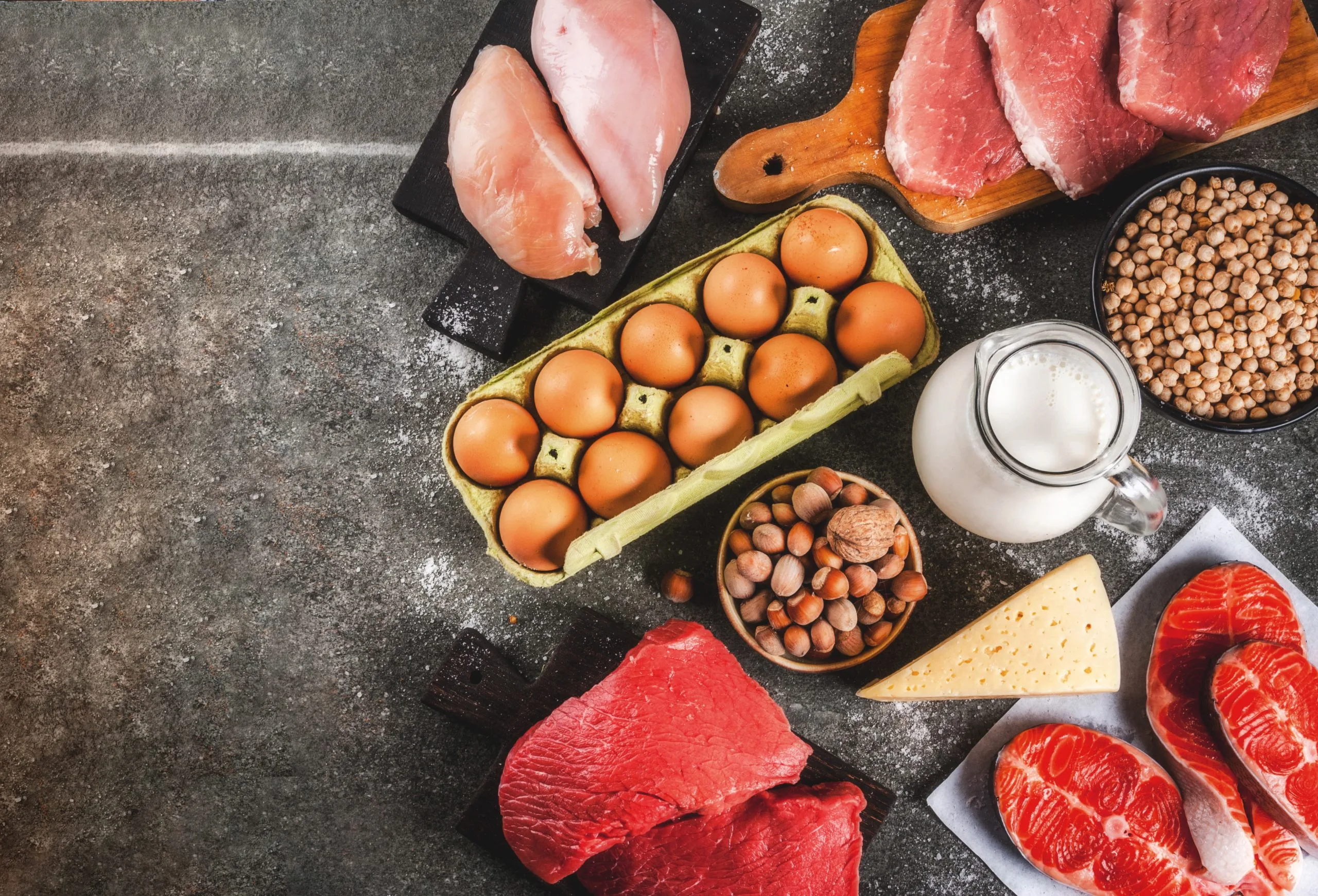
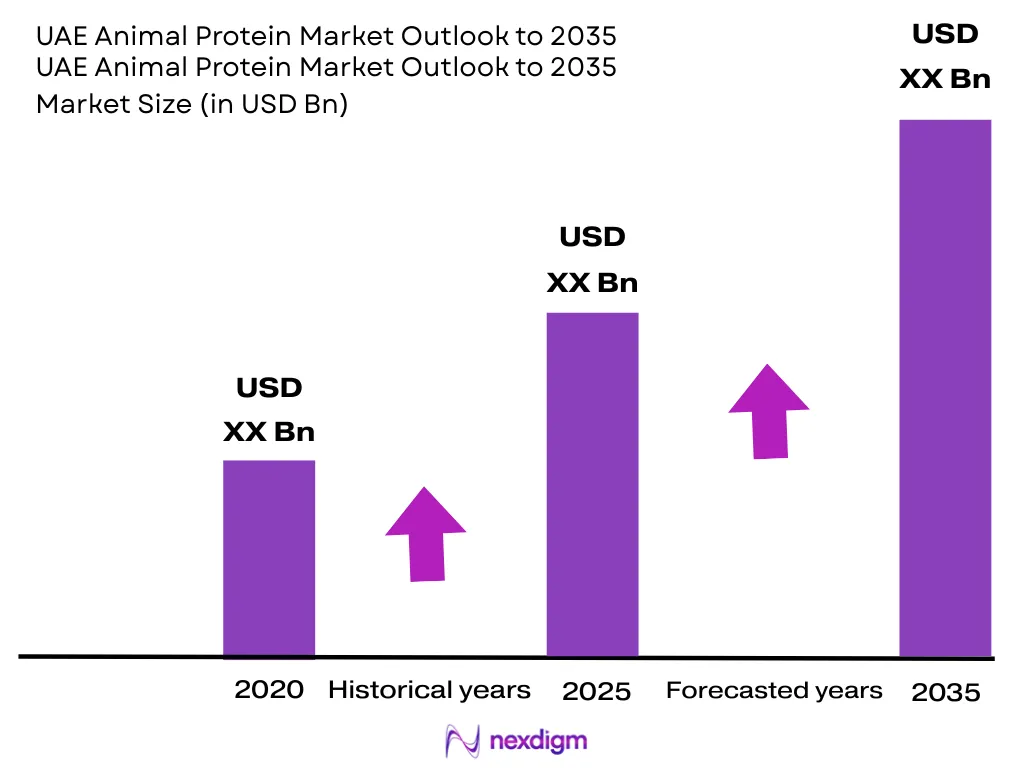
The UAE Animal Protein Market was valued at USD ~ Billion in 2024, based on domestic consumption, import volumes, re-export activity, and processing revenues across poultry, beef, lamb and mutton, camel meat, seafood, and egg products. The United Arab Emirates, with a population of approximately 10 million people — of which over 88% are expatriates — is one of the world’s most import-dependent and consumption-intensive animal protein markets relative to its size. The UAE imported approximately 85–90% of its total animal protein requirements during the latest reporting period, with imports sourced from Brazil, India, Australia, the United States, France, the Netherlands, and multiple other origins, according to statistics published by the UAE Ministry of Climate Change and Environment (MOCCAE), the Abu Dhabi Agriculture and Food Safety Authority (ADAFSA), and the Dubai Municipality Food Safety Department. The market is uniquely shaped by a large and diverse expatriate population with highly varied protein preferences, a world-class foodservice and hospitality sector generating substantial HoReCa demand, the UAE’s strategic role as a regional food trade and re-export hub, and growing government investment in domestic food security under the UAE National Food Security Strategy 2051. The market continues to be driven by high per capita protein consumption, premium imported meat demand, expanding halal-certified supply chains, and the rapid growth of modern retail, quick commerce, and food delivery platforms.
Market Segmentation
By Protein Type
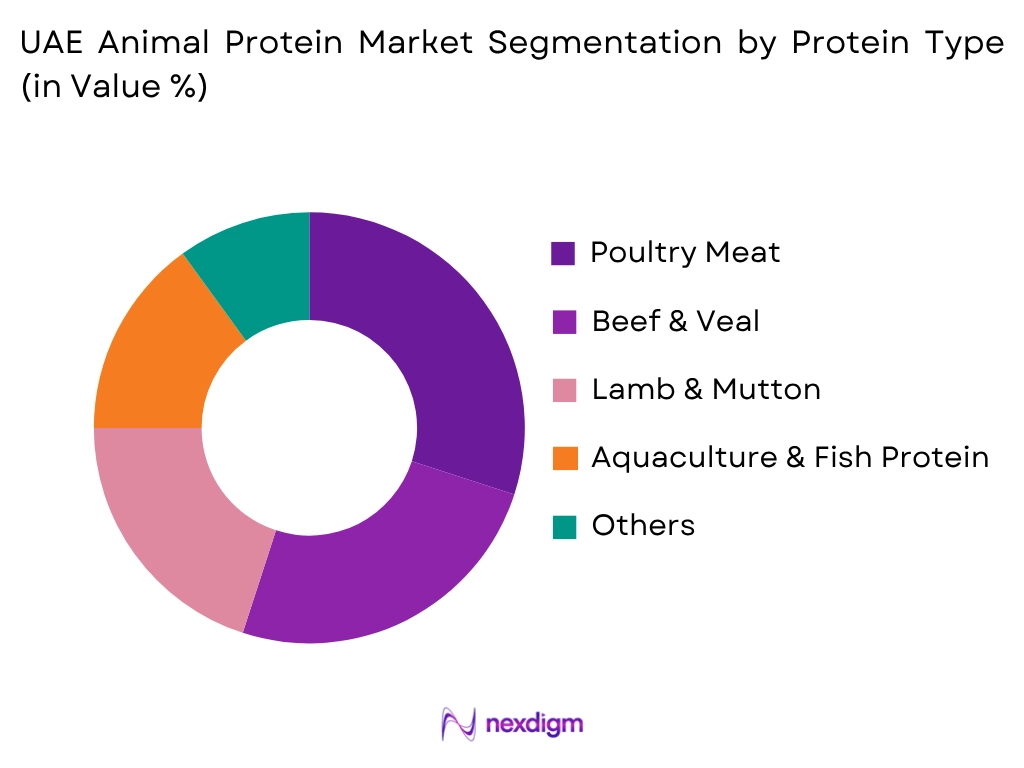
The UAE Animal Protein Market is segmented by protein type into Poultry Meat, Beef & Veal, Lamb & Mutton, Camel Meat, Seafood & Fish Protein, Eggs, and Processed Animal Protein Products. Poultry meat accounts for the largest share of the market by volume owing to its affordability, broad cultural acceptability across the UAE’s diverse expatriate and national consumer base, and widespread availability through both modern retail and traditional butcher channels. The UAE imports the majority of its poultry from Brazil — which is the country’s dominant supplier of frozen Halal-certified chicken — as well as from France, the Netherlands, and the United States. Lamb and mutton hold significant cultural importance for Emirati nationals and South Asian, Middle Eastern, and African expatriate communities, with live sheep imports for local slaughter and chilled and frozen imports from Australia, New Zealand, and Somalia representing the primary supply channels. The beef segment is characterised by a clear premium tier — encompassing Wagyu, USDA Prime, and Australian MSA-graded products — driven by the UAE’s internationally renowned restaurant, hotel, and fine dining sector. Camel meat, while a relatively small segment by volume, holds cultural significance for UAE nationals and is gaining attention as a premium and sustainable protein offering. The seafood segment benefits from the UAE’s coastal geography, traditional fish consumption among Emirati nationals, and strong demand from Asian expatriate communities.
By Distribution Channel
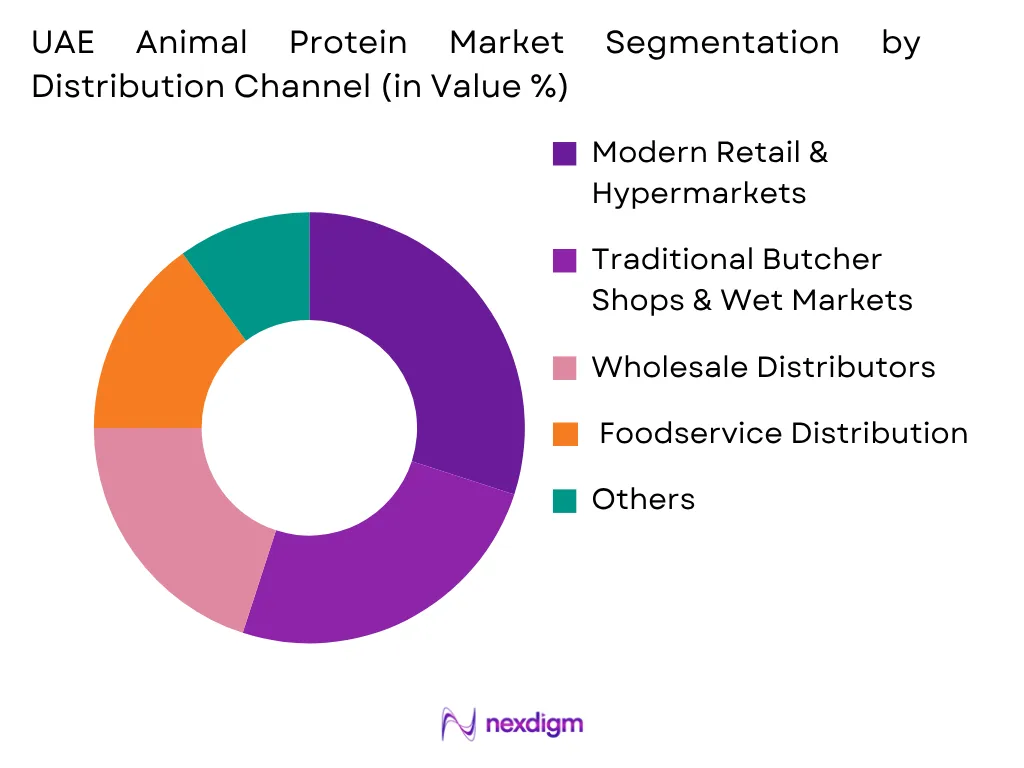
The UAE Animal Protein Market is segmented by distribution channel into Modern Retail & Hypermarkets, Traditional Butcher Shops & Wet Markets, Wholesale & Cash-and-Carry, Foodservice & Hotel Distribution, Re-Export & Trading Markets, and Online Grocery & Quick Commerce. Modern retail and hypermarkets represent the dominant organised distribution channel, with leading formats including Carrefour, Lulu Hypermarket, Spinneys, Waitrose UAE, Choithrams, and Union Coop offering extensive chilled and frozen meat ranges to a diverse consumer base across all seven emirates. The UAE’s world-class food retail infrastructure, including temperature-controlled supply chains, imported specialty meat counters, and branded halal-certified product ranges, supports premium consumption patterns across multiple demographic segments. Traditional butcher shops and wet markets — particularly in areas with high concentrations of South Asian, Arab, and African expatriate communities — continue to serve significant volumes of fresh and live-slaughter product. The foodservice and hotel distribution channel is of exceptional importance in the UAE given the country’s position as one of the world’s leading tourism and hospitality destinations, with Dubai and Abu Dhabi hosting thousands of hotels, restaurants, and catering operations that collectively generate substantial and consistent demand for premium animal protein products. Online grocery and quick commerce platforms including Noon, Instashop, Carrefour Now, and Talabat Mart are experiencing rapid growth across the UAE’s hyper-connected urban consumer base.
Competitive Landscape
The UAE Animal Protein Market is characterised by a competitive landscape dominated by import-oriented distributors, regional food conglomerates, and domestic producers operating within the constraints of the country’s climate and limited arable land. Unlike most markets, competitive dynamics in the UAE are shaped less by domestic production scale and more by import sourcing efficiency, halal certification credentials, cold chain logistics capability, retail and foodservice distribution networks, and brand equity among the country’s diverse multinational consumer base. A small number of domestically integrated producers — most notably Al Ain Farms and Al Rawdah Poultry — compete on freshness and local provenance, while large regional food companies including Agthia Group, Al Islami Foods, and Americana Foods compete on processed and value-added product portfolios. Multinational meat exporters from Brazil (BRF, JBS, Marfrig), Australia, India, and the United States compete for market share at the import level, with halal certification, price competitiveness, and cold chain reliability being the primary differentiating factors. The premium segment — particularly Wagyu beef, organic chicken, and specialty lamb cuts — is served by specialist importers catering to the UAE’s luxury hotel and fine dining ecosystem.
| Company | Establishment Year | Headquarters | Primary Protein Focus | Processing Facilities
|
Export Presence | Production Integration | Sustainability Programs | Value-Added Product Portfolio |
| Al Ain Farms | 1981 | ~ | ~ | ~ | ~ | ~ | ~ | ~ |
| Emirates Food Industries (Agthia) | 1978 | ~ | ~ | ~ | ~ | ~ | ~ | ~ |
| Al Islami Foods | 1970 | ~ | ~ | ~ | ~ | ~ | ~ | ~ |
| National Feed & Flour (NFPC) | 1973 | ~ | ~ | ~ | ~ | ~ | ~ | ~ |
| Americana Foods (Kuwait Food Co.) | 1964 | ~ | ~ | ~ | ~ | ~ | ~ | ~ |
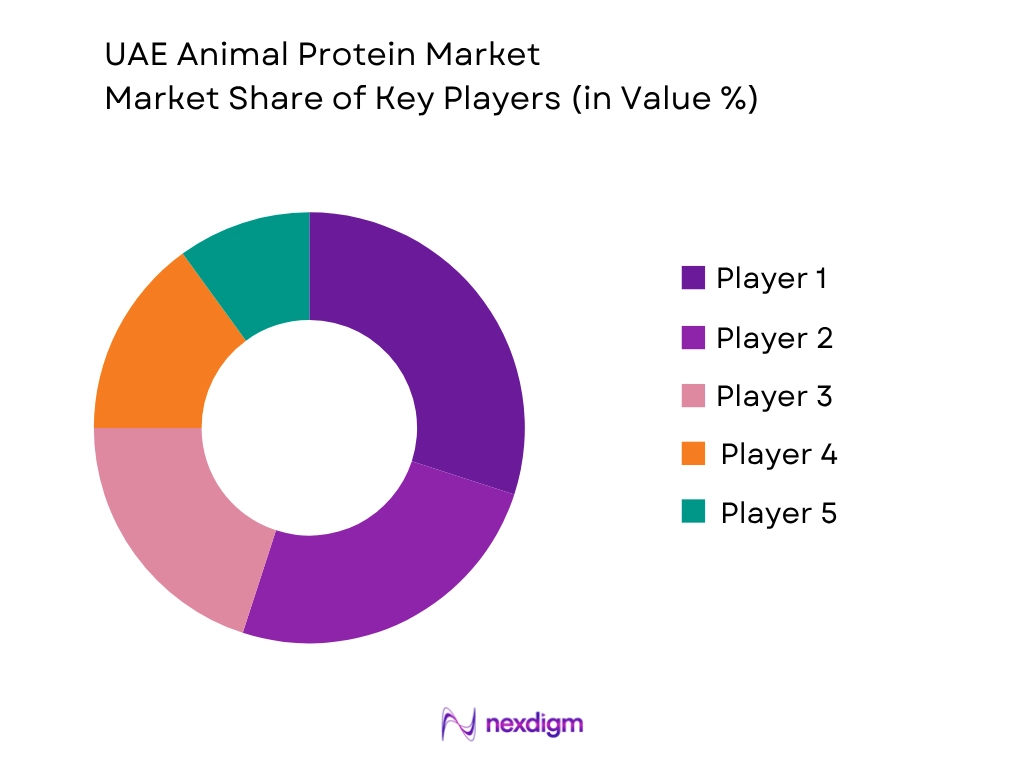
UAE Animal Protein Market Analysis
Growth Drivers
Large and Diverse Expatriate Population Driving High Per Capita Protein Demand
The UAE’s uniquely diverse demographic composition is the most fundamental driver of its animal protein market dynamics. According to the UAE Federal Competitiveness and Statistics Centre (FCSC), the UAE’s total population reached approximately 10 million in 2024, of which approximately 88–90% are non-nationals representing over 200 nationalities. This extraordinary demographic diversity creates simultaneously broad and deep demand for an exceptionally wide range of animal protein products — from halal-certified frozen Brazilian chicken preferred by South Asian and Arab communities, to Australian lamb cuts for Middle Eastern and North African consumers, to premium Wagyu and USDA beef for European, American, and high-income Emirati diners. The World Bank estimated the UAE’s GDP per capita at approximately USD 47,000 in 2024, reflecting the country’s high-income consumer base that sustains premium protein demand across retail, foodservice, and institutional channels. Dubai and Abu Dhabi alone host tens of thousands of restaurants, hotels, and catering operations that collectively generate consistent, high-volume demand for diverse animal protein products across all price tiers. According to the IMF, the UAE economy is projected to maintain steady growth through 2035, supported by continued population inflows, tourism expansion, and economic diversification under Vision 2031. These macroeconomic and demographic foundations create a structurally robust and continuously expanding domestic animal protein consumption base with distinctive preferences for halal certification, product diversity, and premium quality tiers.
UAE as a Regional Food Trade Hub and Re-Export Gateway
The UAE’s strategic geographic position at the crossroads of global trade routes, combined with its world-class port and logistics infrastructure, has established it as the Middle East and North Africa region’s most important food trade and re-export hub, creating structural demand flows that extend significantly beyond domestic consumption. According to Dubai Customs and the UAE Ministry of Economy, the UAE’s food re-export sector generates billions of dirhams in annual trade value, with Jebel Ali Port — operated by DP World and ranked among the world’s top ten container ports — serving as the primary transhipment gateway for animal protein products destined for markets across the GCC, wider MENA region, East Africa, and South Asia. The Dubai Multi Commodities Centre (DMCC) and dedicated free zone food trading infrastructure facilitate efficient import, storage, quality inspection, re-labelling, and re-export of chilled and frozen meat products from global origins. This re-export function creates demand for substantial cold storage, port-side processing, and quality assurance services that support a significant commercial ecosystem beyond retail and foodservice end-markets. The UAE’s bilateral trade agreements, open port policies, and world-class logistics infrastructure — including Al Maktoum International Airport’s dedicated cargo facilities and Jebel Ali Free Zone — continue to reinforce its role as the preferred regional distribution and re-export hub for global animal protein exporters seeking market access across the broader Middle East and African protein import markets.
Market Challenges
High Import Dependency and Food Security Vulnerability
The UAE’s near-total dependence on imported animal protein represents the most fundamental structural challenge for the market, creating persistent food security vulnerability, supply chain disruption risks, and price sensitivity to global commodity and freight market fluctuations. According to MOCCAE and ADAFSA, the UAE imports approximately 85–90% of its total food requirements, with animal protein dependency even higher given the country’s limited arable land, extreme climate conditions, scarce freshwater resources, and lack of domestic livestock grazing capacity. The COVID-19 pandemic, global shipping disruptions in 2021–2022, and regional geopolitical tensions have each demonstrated the potential speed with which import-dependent food supply chains can be destabilised, prompting renewed urgency around domestic food security investment. The World Bank estimates that the UAE’s food import bill runs into tens of billions of dollars annually, making the country significantly exposed to export restrictions imposed by major supplying countries — as experienced when India restricted non-basmati rice exports in 2023 — as well as to shipping route disruptions affecting key trade corridors. The UAE government has responded by substantially accelerating food security investment under the UAE National Food Security Strategy 2051, establishing strategic food reserves, funding domestic controlled environment agriculture projects, and pursuing bilateral food security agreements with key supplying nations. However, achieving meaningful self-sufficiency in animal protein given the country’s climate and resource constraints remains a long-term structural challenge requiring sustained innovation and investment.
Harsh Climate, Water Scarcity, and Domestic Agricultural Production Constraints
The United Arab Emirates’ extreme desert climate, characterised by summer temperatures regularly exceeding 45 degrees Celsius, near-zero annual rainfall averaging approximately 75–100 mm, and severe freshwater scarcity, creates fundamental constraints on domestic livestock and poultry production that limit the country’s ability to reduce import dependency through conventional farming methods. According to the Food and Agriculture Organization (FAO) and the UAE Ministry of Climate Change and Environment, arable land accounts for less than 1% of the UAE’s total land area, and groundwater aquifer depletion rates significantly exceed natural recharge, making conventional pasture-based livestock farming or large-scale open-field feed crop production practically unviable at meaningful scale. Domestic poultry and livestock operations are therefore highly dependent on expensive climate-controlled housed facilities, imported feed ingredients, and energy-intensive cooling infrastructure, resulting in production cost structures that are structurally uncompetitive relative to major global animal protein exporters. Water consumption in livestock production is a particularly acute concern in a country where desalinated water represents the primary freshwater source and carries a significant energy cost and environmental footprint. These constraints mean that the UAE’s domestic animal protein production capacity is unlikely to expand significantly through conventional methods, directing government and private investment increasingly toward controlled environment agriculture, vertical farming, precision fermentation, and alternative protein technologies as longer-term food security solutions.
Market Opportunities
Premium Imported Protein Segment Growth and Halal Re-Export Market Development
The UAE’s established position as a premium food market and regional re-export hub presents significant opportunities for expanding high-value animal protein trade across both domestic and re-export channels. The UAE’s luxury hospitality sector — encompassing over 700 hotels in Dubai alone according to the Dubai Department of Economy and Tourism — generates consistent and growing demand for premium beef cuts including Wagyu, USDA Prime, and Australian MSA-graded products, as well as specialty lamb, organic poultry, and sustainably certified seafood products. Leading specialist importers and distributors catering to this premium hospitality segment are investing in expanded cold storage, direct supplier relationships with premium producers in Japan, Australia, the United States, and New Zealand, and value-added portioning and preparation services to serve the exacting specifications of five-star hotel kitchens and premium restaurants. Simultaneously, the UAE’s halal food re-export market is expanding as Gulf and MENA region countries increase halal certification requirements, and as the UAE positions itself as the leading halal food trade hub in the broader region. According to the Dubai Islamic Economy Development Centre (DIEDC), the UAE aims to be the world’s capital of the Islamic economy, with halal food trade representing a core pillar of this ambition. Investment in halal-certified cold chain infrastructure, internationally recognised halal certification bodies, and dedicated halal food processing and packaging facilities in UAE free zones is creating growing opportunities for companies seeking to serve both domestic and re-export halal protein demand across MENA and beyond.
Domestic Food Security Investment and Agri-Tech Innovation in Controlled Environment Production
The UAE government’s ambitious food security agenda under the UAE National Food Security Strategy 2051 and the Abu Dhabi Food Security Centre is creating significant investment opportunities in domestic animal protein production technologies that circumvent conventional climate and land constraints. According to the Ministry of Climate Change and Environment and the Abu Dhabi Investment Office (ADIO), the UAE has allocated substantial sovereign and private capital toward controlled environment agriculture, vertical farms, smart greenhouses, precision aquaculture, and alternative protein research and development. The UAE has emerged as a leading destination for agri-tech investment in the Middle East, with companies such as Pure Harvest Smart Farms, Badia Farms, and international agri-tech ventures attracted by sovereign investment support, government procurement commitments, and a supportive regulatory environment. In the aquaculture space, the UAE’s National Aquaculture Group (NAQUA) and private aquaculture operators are investing in recirculating aquaculture systems (RAS), offshore fish cage farming, and shrimp aquaculture in climate-controlled facilities to expand domestic seafood production. The government’s commitment to reducing food import dependency from the current 85–90% level to significantly lower levels by 2051 creates long-term procurement and partnership opportunities for domestic and international companies bringing innovative, climate-adapted, and water-efficient animal protein production technologies to the UAE market.
Future Outlook
The UAE Animal Protein Market is expected to maintain steady long-term growth through 2035, supported by continued population growth driven by expatriate inflows, expanding tourism and hospitality sector demand, rising premium protein consumption, and growing government investment in domestic food security and controlled environment agriculture. The market’s import-oriented structure is expected to persist, but with progressive diversification of supply origins, increasing halal certification requirements, and growing demand for sustainably certified and traceable protein products. The UAE’s role as a regional food trade and re-export hub is expected to strengthen further as Jebel Ali Port and free zone logistics infrastructure continue to expand. Domestic production of poultry, eggs, and aquaculture products through climate-controlled facilities is anticipated to grow as a share of supply, supported by government food security mandates and agri-tech investment. Premium protein segments — including Wagyu beef, organic poultry, and certified sustainable seafood — are expected to experience above-market growth rates driven by tourism, high-income consumer demand, and the expanding fine dining ecosystem.
Major Players
- Al Ain Farms
- Emirates Food Industries (Agthia Group)
- Al Islami Foods
- National Feed & Flour (NFPC)
- Americana Foods (Kuwait Food Co.)
- Almarai UAE
- BRF Global (Sadia & Perdix UAE)
- Tyson Foods Middle East
- Sunbulah Group
- Mazrui Agri
- Al Rawdah Poultry
- Doux Middle East
- Pure Breed
- Emirates Snack Foods
- Al Khazna Food
Key Target Audience
- Animal Protein Importers, Distributors and Meat Processing Companies
- Domestic Livestock and Poultry Producers and Integrated Farming Companies
- Food Processing and Packaged Food Manufacturers
- Retail Chains, Wholesale Distributors and Foodservice Operators
- Exporters, Re-Exporters, Importers and International Trading Companies
- Investments and Venture Capitalist Firms
- Government and Regulatory Bodies (UAE Ministry of Climate Change and Environment (MOCCAE), Abu Dhabi Agriculture and Food Safety Authority (ADAFSA), Dubai Municipality Food Safety Department, Emirates Authority for Standardisation and Metrology (ESMA), Abu Dhabi Food Security Centre)
- Cold Chain Logistics, Port Operations, Storage and Distribution Companies
Research Methodology
Step 1: Identification of Key Variables
The research process begins by identifying the complete ecosystem of the UAE Animal Protein Market, including domestic producers, import distributors, food processors, cold chain operators, retail chains, foodservice operators, re-export traders, and regulatory agencies. Extensive secondary research is conducted using government publications, trade authority statistics, customs data, company reports, and proprietary industry databases. This stage helps determine the major variables influencing import volumes, domestic consumption, trade flows, pricing, and investment trends across the market.
Step 2: Market Analysis and Construction
Historical market information is compiled and analysed to estimate the overall market size using both top-down and bottom-up approaches. Import volumes, domestic production output, consumption data, processing revenues, cold storage capacity, re-export statistics, and pricing trends are evaluated to construct a comprehensive market model. Demand-side and supply-side assessments are performed to validate the consistency of market estimates across various industry participants and import origin countries.
Step 3: Hypothesis Validation and Expert Consultation
The preliminary market findings are validated through computer-assisted telephone interviews (CATIs) and structured discussions with executives from meat importing companies, domestic processors, foodservice distributors, retail buyers, industry associations, and regulatory authorities including MOCCAE and ADAFSA. These consultations provide valuable insights regarding import sourcing strategies, cold chain capacity, pricing dynamics, halal certification requirements, and emerging market opportunities, ensuring that the assumptions used in the research accurately reflect current industry conditions.
Step 4: Research Synthesis and Final Output
The final stage integrates findings obtained from secondary research and primary interviews to develop a comprehensive market assessment. Market estimates are cross-verified using UAE customs statistics, MOCCAE trade data, company financial reports, and industry publications. The resulting analysis provides detailed insights into market size, competitive positioning, segmentation, growth drivers, challenges, future opportunities, and strategic recommendations for stakeholders operating within the UAE Animal Protein Market.

- Executive Summary
- Research Methodology (Market Definitions and Assumptions, Abbreviations, Market Sizing Framework, Top-Down Analysis, Bottom-Up Analysis, Demand-Side Assessment, Supply-Side Assessment, Primary Industry Interviews, Trade Flow Validation, Data Triangulation, Forecasting Framework, Limitations and Future Conclusions)

- Definition and Scope
- Market Evolution and Industry Genesis
- Timeline of Major Industry Developments
- UAE Animal Protein Industry Ecosystem
- Supply Chain Analysis

- Growth Drivers (Large Expatriate Population and Diverse Consumer Demand, UAE as a Regional Food Trade and Re-Export Hub, Rising Tourism and Hospitality Sector Demand, Government Food Security Investments and National Programs, Premium and Halal Protein Market Expansion, Controlled Environment Agriculture and Domestic Production Initiatives)
- Market Challenges (High Import Dependency for Animal Protein Supply, Harsh Climate and Agricultural Production Constraints, Feed and Input Cost Pressures, Cold Chain and Logistics Cost Intensity, Regulatory Compliance for Halal Certification, Geopolitical and Supply Chain Disruption Risks)
- Market Opportunities (Food Security Investment in Domestic Production, Premium and Wagyu Beef Import Segment Growth, Halal-Certified Export and Re-Export Market Development, Alternative Protein and Sustainable Seafood Market, Digital Food Retail and Quick Commerce Expansion, Agri-Tech and Vertical Farming Investments)
- Market Trends (UAE National Food Security Strategy 2051, Premiumisation of Imported Protein Products, Expansion of Hypermarket and Specialty Retailer Channels, Sustainability and Carbon Footprint Reduction in Food Supply, Growth of Online Grocery and Meal Kit Platforms, Smart Abattoir and Cold Chain Technology Investment)
- Government Regulations (UAE Ministry of Climate Change and Environment (MOCCAE) Standards, Abu Dhabi Agriculture and Food Safety Authority (ADAFSA), Dubai Municipality Food Safety Department, Emirates Authority for Standardisation and Metrology (ESMA) Halal Standards, Federal Food Safety Law No. 10 of 2015, Import Permit and Veterinary Health Certificate Requirements)
- Trade Policy Analysis (GCC Common External Tariff, Bilateral Trade Agreements, Import Permit Requirements, Halal Certification Protocols, Country-of-Origin Rules, Re-Export Regulations)
- Feed Industry Assessment (Feed Import Dependency, Feed Cost Structure, Domestic Poultry Feed Manufacturing, Climate-Adapted Feed Formulation)
- SWOT Analysis
- PESTLE Analysis
- Porter’s Five Forces Analysis
- Stakeholder Ecosystem
- Competition Ecosystem

- By Market Value (2020-2025)
- By Volume Consumption (2020-2025)
- By Average Selling Price (2020-2025)

- By Protein Type (In Value %)
Poultry Meat
Beef & Veal
Lamb & Mutton
Camel Meat
Seafood & Fish Protein
Eggs
Processed Animal Protein Products - By Product Form (In Value %)
Fresh/Chilled
Frozen
Processed & Value-Added
Cooked & Ready-to-Eat
Marinated & Seasoned Products - By End User (In Value %)
Retail Consumers
Foodservice & HoReCa
Food Processing Industry
Institutional Buyers
Re-Export & Trading Hubs - By Distribution Channel (In Value %)
Modern Retail & Hypermarkets
Traditional Butcher Shops & Wet Markets
Wholesale & Cash-and-Carry
Foodservice & Hotel Distribution
Re-Export & Trading Markets
Online Grocery & Quick Commerce - By Production System (In Value %)
Domestic Commercial Farming
Imported Live Animals for Local Slaughter
Chilled & Frozen Imports
Halal-Certified Import Supply Chains
Controlled Environment Agriculture (CEA) Production - By Animal Protein Grade (In Value %)
Commodity Grade
Premium & Wagyu Grade
Halal Certified - Organic & Free-Range
Re-Export Grade - By Emirate (In Value %)
Dubai
Abu Dhabi
Sharjah
Ajman
Ras Al Khaimah
Fujairah
Umm Al Quwain

- Market Share of Major Players (By Value, Import Volume, Processing Capacity, Protein Category, Distribution Reach)
- Cross Comparison Parameters (Processing Capacity, Import Sourcing Diversity, Distribution Network, Cold Storage Infrastructure, Halal Certification Standards, Product Portfolio Diversity, Sustainability Commitments, Value-Added Product Portfolio)
- SWOT Analysis of Major Players
- Pricing Analysis (By Protein Category, Processing Level, Import Origin, Premium vs Commodity Pricing)
- Detailed Profiles of Major Companies
Al Ain Farms
Emirates Food Industries (Agthia Group)
Al Islami Foods
National Feed & Flour (NFPC)
Americana Foods (Kuwait Food Co.)
Almarai UAE
BRF Global (Sadia & Perdix UAE)
Tyson Foods Middle East
Sunbulah Group
Mazrui Agri
Al Rawdah Poultry
Doux Middle East
Pure Breed
Emirates Snack Foods
Al Khazna Food

Consumption Pattern Assessment (Per Capita Meat Consumption, Protein Preference by Nationality, Meal Frequency, Household Penetration)
Demographic Demand Analysis (Expatriate vs National Consumer Segments, Income Group, Urban Concentration, Emirate-Level Preferences)
Household Expenditure Analysis
Protein Affordability Assessment
Fresh vs Frozen Product Preference

- By Market Value (2026-2035)
- By Volume Consumption (2026-2035)
- By Average Selling Price (2026-2035)


 Request a Sample
 Ask for Customization
 Get a Quote
 Enquire Now