
 Download PDF
Market Overview
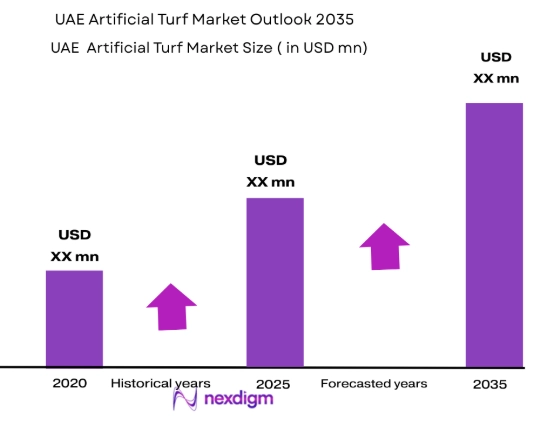
The UAE artificial turf market is experiencing steady growth, driven by the increasing demand for low-maintenance, water-efficient solutions in both commercial and residential landscapes. It is projected to grow to approximately USD ~ million As the country prioritizes sustainable urban development and water conservation due to its arid climate, the market value is expected to grow significantly in the coming years. This growth is further propelled by the expansion of sports infrastructure and recreational facilities, which are increasingly adopting artificial turf to maintain aesthetic and functional standards while reducing operational costs. The overall market is anticipated to continue its expansion as the benefits of artificial turf become more apparent.
The UAE artificial turf market is primarily dominated by cities such as Dubai and Abu Dhabi, which are leaders in infrastructure development and urbanization. These cities have witnessed rapid growth in both the residential and commercial real estate sectors, increasing the demand for artificial turf for landscaping, sports fields, and public spaces. Moreover, Dubai’s positioning as a global hub for sports events, including football and rugby, has led to a higher demand for synthetic turf in sports facilities. The government’s focus on green initiatives and eco-friendly landscaping further strengthens the market’s presence in these cities.
Market Segmentation
By Application
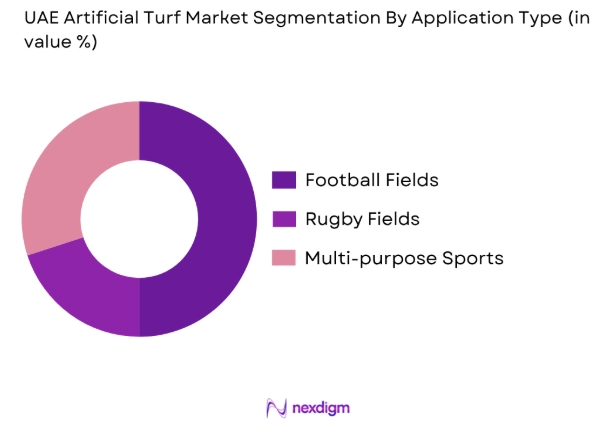
The UAE artificial turf market is segmented by application into sports fields, landscaping, playgrounds, golf courses, and pet areas. Among these, the sports field segment holds a dominant share due to the increasing demand for synthetic turf in sports facilities, particularly football, rugby, and multi-purpose sports fields. Artificial turf offers several advantages over natural grass, including reduced maintenance costs, water conservation, and durability under intense usage. Sports organizations and educational institutions are increasingly opting for artificial turf to meet the growing demand for outdoor sports. Additionally, high-profile sporting events hosted in the UAE, such as the UAE Pro League and international tournaments, contribute significantly to the growth of this segment.
By Distribution Channel
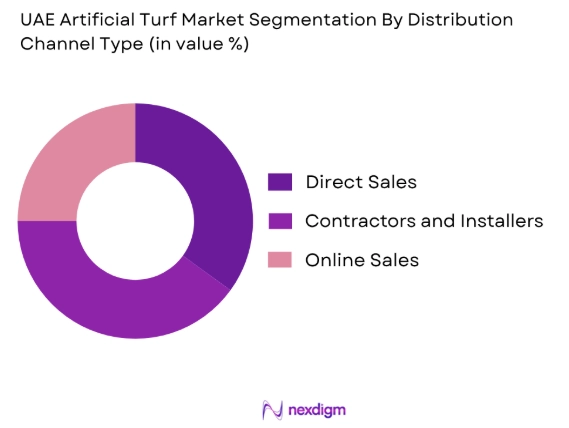
The distribution of artificial turf in the UAE is driven by various channels, including direct sales from manufacturers, distributors, online sales, and contractors. The direct sales and contractor segments hold a significant share, with contractors playing a pivotal role in the supply chain by providing installation and customization services for both residential and commercial clients. Online platforms have gained traction in recent years, especially among homeowners looking for cost-effective solutions for landscaping and small-scale turf installations. The increase in e-commerce activity, coupled with the convenience and cost-effectiveness of purchasing artificial turf online, has provided a substantial boost to this distribution channel.
Competitive Landscape
The UAE artificial turf market is dominated by a few key players, including international turf manufacturers and local distributors. The presence of global brands such as FieldTurf, AstroTurf, and Turf Scotland has heightened competition, while local companies like Emirates Turf and Dubai Artificial Grass have strengthened their foothold in the regional market. The increasing adoption of artificial turf in sports fields and landscapes has created a competitive environment, with companies differentiating themselves through product innovation, customer service, and pricing strategies.
| Company Name | Establishment Year | Headquarters | Product Portfolio | Market Reach | Customization Services | Sustainability Initiatives | Key Clients | Pricing Strategy | Technology Focus |
| FieldTurf | 1988 | Canada | ~ | ~ | ~ | ~ | ~ | ~ | ~ |
| AstroTurf | 1965 | USA | ~ | ~ | ~ | ~ | ~ | ~ | ~ |
| Turf Scotland | 2005 | UAE | ~ | ~ | ~ | ~ | ~ | ~ | ~ |
| Emirates Turf | 2010 | UAE | ~ | ~ | ~ | ~ | ~ | ~ | ~ |
| Dubai Artificial Grass | 2012 | UAE | ~ | ~ | ~ | ~ | ~ | ~ | ~ |
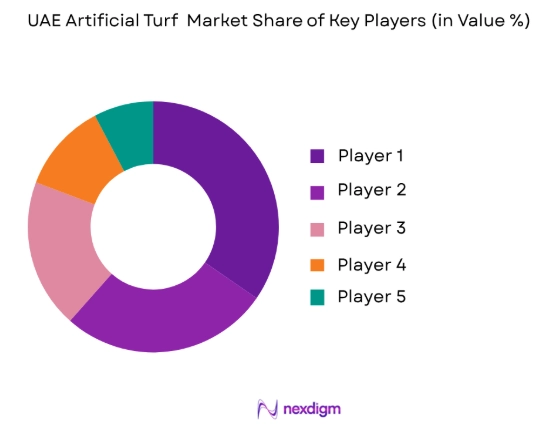
UAE Artificial Turf Market Analysis
Growth Drivers
Increasing Demand for Water-Efficient Landscaping Solutions
The UAE’s arid climate and water scarcity issues have significantly contributed to the growing demand for water-efficient landscaping solutions. Artificial turf offers a sustainable alternative to natural grass, requiring minimal water for maintenance. As water conservation becomes a priority in both residential and commercial properties, artificial turf provides an eco-friendly solution, reducing the need for irrigation. The UAE government’s push for sustainable development, especially in the urban landscape, has accelerated this shift. Landscaping with artificial turf not only conserves water but also reduces overall maintenance costs, making it a favorable choice among developers, property owners, and municipalities.
Expansion of Sports and Recreational Facilities
The expansion of sports infrastructure, including football fields, rugby pitches, and multi-use sports courts, is a major driver of the UAE artificial turf market. The country’s focus on hosting international sporting events, such as football leagues and international tournaments, has led to an increased demand for durable and low-maintenance surfaces. Artificial turf meets the needs of high-performance sports facilities by offering a consistent playing surface that withstands heavy foot traffic and harsh weather conditions. The continuous development of public parks, recreational areas, and community sports centers further contributes to the rising adoption of artificial turf across various sports and leisure applications.
Market Challenges
High Initial Installation Costs
One of the major challenges in the UAE artificial turf market is the high upfront cost associated with purchasing and installing synthetic turf. While the long-term savings in maintenance and water usage make artificial turf a cost-effective option, the initial installation can be expensive compared to natural grass. For both residential and commercial properties, the significant capital investment required can deter potential buyers. Additionally, specialized installation services, which involve expertise and labor, add to the overall expense. These high installation costs can be a barrier for smaller businesses, homeowners, and developers with limited budgets.
Consumer Perceptions and Misconceptions about Artificial Turf
Despite the growing popularity of artificial turf, consumer misconceptions regarding its durability, aesthetics, and environmental impact still pose a challenge. Many potential buyers believe that synthetic turf looks unnatural or requires more maintenance than it actually does. Additionally, concerns about the environmental impact of manufacturing and disposing of artificial turf materials, such as the use of plastics, persist. Overcoming these perceptions requires continuous education and awareness efforts to highlight the benefits of artificial turf, such as water conservation, reduced chemical use, and long lifespan. Educating the public on these aspects is essential for fostering wider adoption across the UAE market.
Opportunities
Growing Adoption in Landscaping for Residential and Commercial Spaces
The UAE’s expanding real estate market, coupled with a growing emphasis on sustainable living, presents significant opportunities for artificial turf adoption in both residential and commercial landscaping. Developers are increasingly integrating synthetic turf into urban projects, such as residential complexes, office parks, and hospitality venues, to provide aesthetically pleasing yet low-maintenance green spaces. Artificial turf offers a practical solution for landscaping in areas with water restrictions, enabling developers to create lush, green environments without the high costs associated with natural grass maintenance. As the trend for sustainable and water-efficient designs grows, the demand for artificial turf will continue to rise in landscaping applications.
Technological Innovations in Artificial Turf Durability and Performance
Ongoing advancements in artificial turf technology present substantial opportunities for the market’s growth. Innovations in materials, such as the development of more durable, UV-resistant, and eco-friendly fibers, are improving the overall performance of synthetic turf. These innovations enhance the lifespan of artificial turf while ensuring it remains aesthetically appealing, even in harsh weather conditions. Furthermore, advancements in turf infills, drainage systems, and maintenance technologies are reducing the long-term operational costs and enhancing the turf’s functionality. As these technologies evolve, the quality and performance of artificial turf continue to improve, encouraging wider adoption in a variety of sectors, including sports, landscaping, and urban development.
Future Outlook
Over the next 5 years, the UAE artificial turf market is expected to show significant growth, driven by continuous urbanization, increased demand for sustainable landscaping solutions, and the expansion of sports infrastructure. Additionally, government initiatives focusing on water conservation and eco-friendly technologies will contribute to the continued adoption of artificial turf. The market will see an increase in turf innovations, improving the product’s durability, performance, and sustainability, further solidifying its position in the construction, landscaping, and sports sectors.
Major Players
- FieldTurf
- AstroTurf
- Turf Scotland
- Emirates Turf
- Dubai Artificial Grass
- GreenTech Turf
- SIS Pitches
- Sporturf
- Artificial Grass UAE
- Xtreme Turf
- Perfect Turf
- Act Global
- Global Syn-Turf
- GreenFields
- Synthetic Turf International
Key Target Audience
- Sports Facility Operators
- Commercial Developers
- Government and Regulatory Bodies
- Landscaping Companies
- Real Estate Developers
- Architects and Urban Planners
- Property Management Companies
- Investments and Venture Capitalist Firms
Research Methodology
Step 1: Identification of Key Variables
In this phase, a comprehensive map of all stakeholders within the UAE artificial turf market will be constructed, identifying key variables such as turf materials, application areas, distribution channels, and customer preferences. This step will involve desk research and the collection of secondary data from industry reports and databases to identify market trends and dynamics.
Step 2: Market Analysis and Construction
This stage focuses on gathering and analyzing historical data related to the UAE artificial turf market. Key metrics like market size, growth rate, customer segmentation, and distribution channels will be assessed to establish the foundation for future projections.
Step 3: Hypothesis Validation and Expert Consultation
To validate the developed hypotheses, interviews with industry experts, manufacturers, contractors, and key players will be conducted. Their insights will help refine the market data and offer real-time validation of trends, customer preferences, and market outlook.
Step 4: Research Synthesis and Final Output
The final phase involves synthesizing the collected data and insights to generate a comprehensive analysis of the UAE artificial turf market. Interviews with stakeholders will be used to ensure that the final output is accurate, reliable, and reflective of current market conditions.

- Executive Summary
- Research Methodology (Market Definitions and Assumptions, Abbreviations, Market Sizing Approach, Bottom-Up Revenue Mapping, Demand-Side and Supply-Side Triangulation, Primary Interviews with Artificial Turf Suppliers, Installers, Landscape Architects, Sports Facility Operators, Commercial Developers, Residential Builders, and Municipalities, Regulatory Mapping Framework, Data Validation Models, Limitations and Future Assumptions)

- Definition and Scope
- Evolution of Artificial Turf Market in the UAE
- Environmental Impact, Sustainability, and Water Conservation Benefits of Artificial Turf
- Business Cycle and Demand Seasonality
- Market Growth Drivers and Trends
- Key Market Segments in Artificial Turf
- Challenges and Barriers in the UAE Artificial Turf Market
- Role of Government Regulations and Urban Development Initiatives

- Growth Drivers
Increasing Demand for Water-Efficient Landscaping Solutions
Expansion of Sports and Recreational Facilities
Government Focus on Sustainable Urban Development
Rise in Residential Landscaping Projects
Increasing Commercial Adoption of Artificial Turf
Technological Advancements in Turf Manufacturing
Awareness of Environmental Benefits and Low Maintenance - Market Challenges
High Initial Installation Costs
Consumer Perceptions and Misconceptions about Artificial Turf
Limited Awareness of Maintenance Practices
Competition from Natural Grass Landscaping
Climate Sensitivity and Heat Management - Opportunities
Growing Adoption in Landscaping for Residential and Commercial Spaces
Expansion of Sports Infrastructure and Stadiums
Partnerships with Municipalities for Public Space Enhancements
Technological Innovations in Artificial Turf Durability and Performance - Trends
Shift Toward Eco-Friendly and Low-Maintenance Landscaping
Integration of Artificial Turf in Smart Cities and Green Initiatives
Expansion of Artificial Turf Use in Commercial and Retail Spaces
Customization in Turf Design for Aesthetic and Functional Purposes - Regulatory Landscape
UAE Standards and Certifications for Artificial Turf
Environmental Regulations and Sustainability Guidelines
Import and Trade Regulations for Artificial Turf Materials - SWOT Analysis
- Stakeholder Ecosystem
- Porter’s Five Forces

- By Value, 2020–2025
- By Volume of Turf Installed, 2020–2025
- By Market Share by Segment, 2020–2025
- By Commercial vs Residential Demand, 2020–2025
- By Turf Type (Sports Fields, Landscaping, and Others), 2020–2025

- By Application (In Value %)
Football Fields
Ruby Fields
Multi – Purpose Sports
- By Distribution Channel (In Value %)
Direct Sales
Contractors and Installers
Online Sales - By Turf Type (In Value %)
Polyethylene Turf
Polypropylene Turf
Nylon Turf
Blended Turf Types - By End User (In Value %)
Government and Municipalities
Commercial Developers
Residential Builders
Sports Facility Operators
Educational Institutions
Landscaping Companies
Retailers and Commercial Establishments
Individual Homeowners
Pet and Animal Care Facilities - By Price Segment (In Value %)
Low-Cost Segment
Mid-Market Segment
Premium Segment - By Region (In Value %)
Dubai
Abu Dhabi
Sharjah
Ajman
Fujairah
Ras Al Khaimah
Umm Al Quwain
Key Urban and Metropolitan Markets
Emerging Suburban and Commercial Developments

- Market Share Analysis
- Cross Comparison Parameters (Revenue by Turf Type, Market Reach, Number of Projects, Customer Base, Price Points, Brand Recognition, Product Portfolio, Installation Network, Sustainability Initiatives, Certification Compliance)
- SWOT Analysis of Key Players
- Pricing Benchmarking
- Company Profiles
FieldTurf
AstroTurf
Turf Scotland
Emirates Turf
Dubai Artificial Grass
GreenTech Turf
SIS Pitches
Sporturf
Artificial Grass UAE
Xtreme Turf
Perfect Turf
Act Global
Global Syn-Turf
GreenFields
Synthetic Turf International

- Demand Patterns and Usage Behavior
- Consumer Preferences for Turf Material and Quality
- Purchase Decision Factors: Cost, Durability, Aesthetics
- Installation Frequency and Turf Replacement Cycles
- Market Share of Turf Suppliers and Installers
- Customer Loyalty and Brand Switching Patterns
- Price Sensitivity and Value Perception
- Market Size by Key End-User Segments

- By Value, 2026–2035
- By Volume of Turf Installed, 2026–2035
- By Market Share by Segment, 2026–2035
- By Commercial vs Residential Demand, 2026–2035
- By Turf Type (Sports Fields, Landscaping, and Others), 2026–2035


 Request a Sample
 Ask for Customization
 Get a Quote
 Enquire Now