
 Download PDF
Market Overview
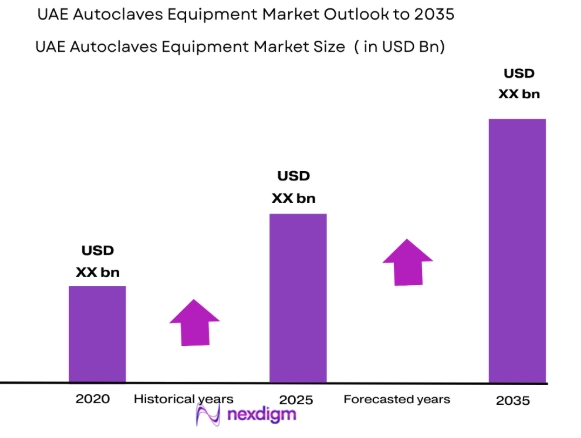
The UAE autoclaves equipment market demonstrates a measurable valuation based on a recent historical assessment, reaching approximately USD ~billion, supported by increased healthcare investments, pharmaceutical manufacturing expansion, and laboratory modernization initiatives. Demand is primarily driven by stringent sterilization requirements across hospitals and industrial applications, along with government-backed infrastructure projects. Growth is further influenced by rising infection control standards and the integration of advanced sterilization technologies across medical and research facilities.
The market is largely concentrated in major urban centers such as Dubai and Abu Dhabi, where healthcare infrastructure, medical tourism, and biotechnology investments are significantly higher. These cities benefit from strong government funding, advanced hospital networks, and regulatory enforcement of sterilization standards. Additionally, industrial zones in Sharjah and Ras Al Khaimah contribute to demand through pharmaceutical and food processing sectors, reinforcing the geographic dominance of these regions due to infrastructure availability and economic diversification strategies.
Market Segmentation
By Product Type
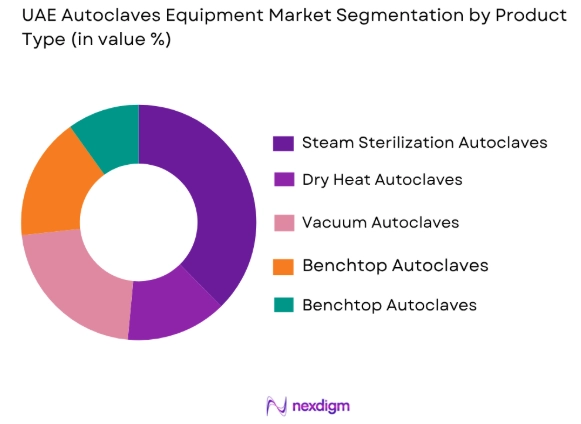
UAE autoclaves equipment market is segmented by product type into steam sterilization autoclaves, dry heat autoclaves, vacuum autoclaves, benchtop autoclaves, and large capacity industrial autoclaves. Recently, steam sterilization autoclaves has a dominant market share due to factors such as widespread adoption in hospitals, cost efficiency, and proven sterilization effectiveness. Healthcare facilities prioritize steam-based systems because of their ability to sterilize a broad range of instruments with consistent performance, supported by regulatory approvals and operational reliability across clinical and laboratory environments.
By End User Segment
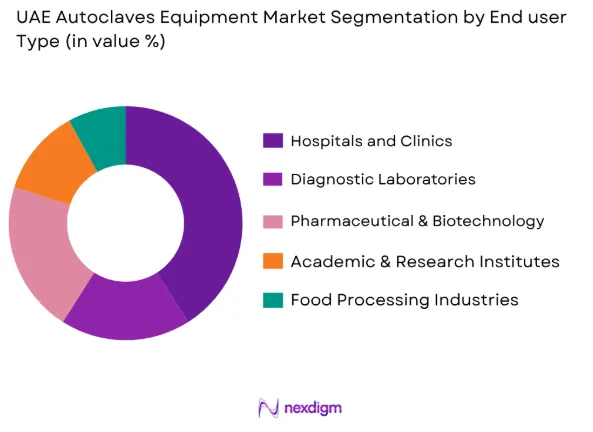
UAE autoclaves equipment market is segmented by end user into hospitals and clinics, diagnostic laboratories, pharmaceutical and biotechnology companies, academic and research institutes, and food processing industries. Recently, hospitals and clinics has a dominant market share due to factors such as high patient volumes, strict infection control protocols, and continuous need for sterilization equipment. The increasing number of multispecialty hospitals and surgical procedures drives consistent demand for high-capacity and reliable autoclave systems across healthcare facilities.
Competitive Landscape
The UAE autoclaves equipment market is moderately consolidated, with a mix of global manufacturers and regional distributors competing on technology, service capabilities, and compliance standards. Leading players maintain strong footholds through advanced product portfolios and established distribution networks, while regional firms focus on pricing and service responsiveness to gain market traction.
| Company Name | Establishment Year | Headquarters | Technology Focus | Market Reach | Key Products | Revenue (USD) | Sterilization Capacity Range |
| Getinge AB | 1904 | Sweden | ~ | ~ | ~ | ~ | ~ |
| STERIS plc | 1985 | USA | ~ | ~ | ~ | ~ | ~ |
| Tuttnauer | 1925 | Netherlands | ~ | ~ | ~ | ~ | ~ |
| Belimed AG | 1966 | Switzerland | ~ | ~ | ~ | ~ | ~ |
| Fedegari Autoclavi S.p.A. | 1953 | Italy | ~ | ~ | ~ | ~ | ~ |
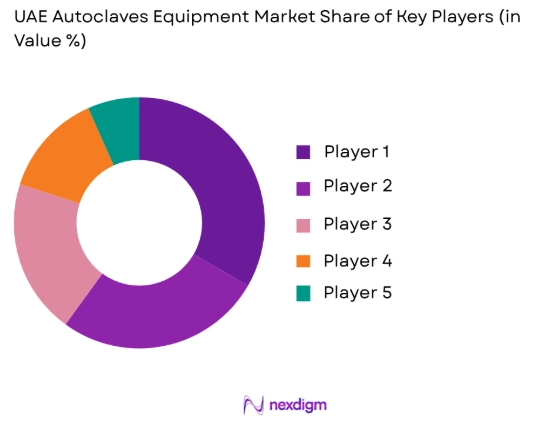
UAE Autoclaves Equipment Market Analysis
Growth Drivers
Expansion of Healthcare Infrastructure and Medical Tourism
The UAE autoclaves equipment market is significantly driven by the rapid expansion of healthcare infrastructure supported by government investments and private sector participation in building advanced hospitals and specialized clinics across key cities. The country has positioned itself as a global hub for medical tourism, attracting patients from across the Middle East, Africa, and Asia due to high-quality healthcare services and internationally accredited medical facilities. This influx of patients has increased the demand for sterilization equipment to maintain strict hygiene standards and reduce infection risks. Hospitals are continuously upgrading their sterilization systems to comply with international standards, leading to increased adoption of high-capacity and automated autoclaves. Furthermore, new hospital construction projects and expansion of existing facilities are directly contributing to equipment procurement. The integration of specialized surgical centers and outpatient facilities has further intensified the need for efficient sterilization processes. Government initiatives aimed at improving healthcare accessibility and quality are also playing a crucial role in driving demand. Investments in public healthcare infrastructure are complemented by private sector participation, creating a competitive environment that encourages technological upgrades. This continuous development ensures sustained demand for autoclaves equipment across the healthcare sector.
Rising Pharmaceutical and Biotechnology Manufacturing Activities
The UAE autoclaves equipment market is also propelled by the growth of pharmaceutical manufacturing and biotechnology research activities within the country, driven by economic diversification strategies and government support for life sciences industries. The establishment of pharmaceutical production hubs and research centers has significantly increased the demand for sterilization solutions to maintain product safety and regulatory compliance. Autoclaves play a critical role in ensuring sterile environments during drug manufacturing and laboratory testing processes. As pharmaceutical companies expand their production capabilities, the need for high-capacity and technologically advanced autoclaves continues to grow. Additionally, biotechnology research facilities require precise sterilization equipment to support experimental processes and maintain contamination-free environments. The government’s focus on reducing dependency on imports and strengthening local manufacturing capabilities further accelerates investment in sterilization infrastructure. International collaborations and partnerships with global pharmaceutical companies are also contributing to technology transfer and adoption of advanced autoclave systems. These developments are supported by favorable regulatory frameworks and incentives for pharmaceutical investments. The increasing emphasis on quality assurance and compliance with global standards reinforces the importance of autoclaves equipment in the pharmaceutical and biotechnology sectors.
Market Challenges
High Capital Investment and Maintenance Costs
The UAE autoclaves equipment market faces significant challenges due to the high initial capital investment required for purchasing advanced sterilization systems, particularly for large hospitals and industrial facilities that demand high-capacity units. These systems often involve complex installation processes and require additional infrastructure modifications, which further increase overall costs. Maintenance and servicing expenses also contribute to the financial burden, as autoclaves require regular calibration, validation, and replacement of components to ensure optimal performance. Smaller healthcare facilities and laboratories may find it difficult to allocate sufficient budgets for such investments, limiting their adoption of advanced sterilization technologies. Additionally, the cost of importing equipment and spare parts can be relatively high due to dependency on international suppliers. Currency fluctuations and logistics costs further impact procurement budgets. The need for skilled technicians to operate and maintain these systems adds to operational expenses, as training and workforce development are required. These financial constraints can slow down the adoption rate of technologically advanced autoclaves. Despite the long-term benefits of improved efficiency and compliance, the upfront cost remains a critical barrier. This challenge is particularly relevant for mid-sized healthcare providers and emerging laboratories.
Regulatory Compliance and Certification Complexity
The UAE autoclaves equipment market is also challenged by the complexity of regulatory compliance and certification requirements that govern sterilization equipment across healthcare and industrial sectors. Manufacturers and distributors must adhere to stringent local and international standards, including ISO certifications and approvals from health authorities, which can be time-consuming and costly. The process of obtaining certifications involves extensive testing, documentation, and validation procedures to ensure product safety and effectiveness. Frequent updates in regulatory frameworks require continuous monitoring and adaptation by market participants. Non-compliance can result in penalties, product recalls, or restrictions on market entry, creating significant risks for companies. Additionally, healthcare facilities must ensure that their sterilization processes meet regulatory guidelines, requiring regular audits and inspections. This adds operational complexity and increases administrative workload. The need for compliance also influences procurement decisions, as buyers prioritize certified and approved equipment. Smaller manufacturers may struggle to meet these requirements, limiting competition in the market. Overall, regulatory complexity creates barriers to entry and operational challenges for existing players.
Opportunities
Adoption of Smart and Automated Sterilization Technologies
The UAE autoclaves equipment market presents strong opportunities through the increasing adoption of smart and automated sterilization technologies that enhance operational efficiency and reduce human intervention. Advanced autoclaves equipped with digital monitoring systems, remote diagnostics, and automated control features are gaining popularity among healthcare and industrial users. These technologies allow real-time tracking of sterilization cycles, ensuring compliance with regulatory standards and improving process reliability. Automation also reduces the risk of human error, which is critical in maintaining sterilization quality. Hospitals and laboratories are increasingly investing in such systems to optimize workflow and improve productivity. Integration with hospital information systems further enhances data management and traceability. The demand for energy-efficient and environmentally sustainable solutions also supports the adoption of modern autoclaves. Manufacturers are focusing on developing innovative products that align with these requirements. The growing awareness of advanced sterilization technologies among end users is driving market expansion. As digital transformation continues across industries, the adoption of smart autoclaves is expected to accelerate.
Expansion of Industrial and Food Processing Applications
The UAE autoclaves equipment market also benefits from expanding applications beyond healthcare, particularly in industrial and food processing sectors where sterilization is essential for product safety and quality assurance. Food processing companies utilize autoclaves for sterilizing packaged foods and ensuring compliance with safety standards. The growth of the food industry, driven by population increase and changing consumption patterns, is creating new demand for sterilization equipment. Industrial applications such as composite material processing and chemical manufacturing also require autoclaves for specialized processes. These sectors are investing in high-capacity and customized autoclave systems to meet production requirements. Government initiatives supporting industrial diversification are further encouraging the adoption of sterilization technologies. The development of industrial zones and manufacturing clusters provides additional opportunities for market growth. Companies operating in these sectors are increasingly prioritizing quality control and regulatory compliance, which necessitates the use of advanced autoclaves. This diversification of applications reduces dependency on the healthcare sector and expands the overall market potential. The trend is expected to continue as industries focus on efficiency and safety standards.
Future Outlook
The UAE autoclaves equipment market is expected to witness steady growth over the next five years, driven by continued investments in healthcare infrastructure and expansion of pharmaceutical manufacturing. Technological advancements such as automation and IoT integration are likely to enhance product efficiency and adoption. Regulatory support and strict sterilization standards will further sustain demand across sectors. Additionally, increasing industrial applications and rising focus on infection control will contribute to long-term market expansion.
Major Players
- Getinge AB
- STERIS plc
- Tuttnauer
- Belimed AG
- Fedegari Autoclavi S.p.A.
- Astell Scientific Ltd
- Priorclave Ltd
- LTE Scientific Ltd
- Yamato Scientific Co., Ltd
- Consolidated Sterilizer Systems
- Benchmark Scientific Inc.
- Shinva Medical Instrument Co., Ltd
- Zirbus Technology GmbH
- Rodwell Autoclave Company
- Steriflow SAS
Key Target Audience
- Hospitals and Healthcare Providers
- Pharmaceutical Manufacturing Companies
- Biotechnology Firms
- Food Processing Companies
- Industrial Manufacturing Units
- Investments and Venture Capitalist Firms
- Government and Regulatory Bodies
- Medical Equipment Distributors
Research Methodology
Step 1: Identification of Key Variables
Key variables influencing the UAE autoclaves equipment market were identified through industry analysis, including demand drivers, pricing trends, regulatory frameworks, and end-user adoption patterns across healthcare and industrial sectors.
Step 2: Market Analysis and Construction
The market was constructed using a combination of bottom-up and top-down approaches, integrating data from company reports, trade statistics, and validated databases to estimate market size and segmentation.
Step 3: Hypothesis Validation and Expert Consultation
Findings were validated through consultations with industry experts, including manufacturers, distributors, and healthcare professionals, ensuring accuracy and alignment with real-world market dynamics.
Step 4: Research Synthesis and Final Output
All collected data and insights were synthesized into a structured report, applying analytical models and forecasting techniques to deliver actionable conclusions and strategic recommendations.

- Executive Summary
- Research Methodology (Definitions, Scope, Industry Assumptions, Market Sizing Approach, Primary & Secondary Research Framework, Data Collection & Verification Protocol, Analytic Models & Forecast Methodology, Limitations & Research Validity Checks)

- Market Definition and Scope
- Value Chain & Stakeholder Ecosystem
- Regulatory / Certification Landscape
- Sector Dynamics Affecting Demand
- Strategic Initiatives & Infrastructure Growth

- Growth Drivers
Rising healthcare infrastructure expansion across UAE
Increasing demand for sterilization in pharmaceutical and biotech sectors
Stringent infection control and sterilization standards - Market Challenges
High initial investment and maintenance costs
Limited availability of skilled technicians for operation
Complex regulatory compliance requirements - Market Opportunities
Growth in medical tourism driving healthcare demand
Expansion of research and biotechnology hubs
Adoption of advanced automated sterilization systems - Trends
Integration of IoT-enabled smart autoclaves
Shift towards energy-efficient and eco-friendly systems
Increasing preference for compact and portable units - Government Regulations
- SWOT Analysis of Key Competitors
- Porter’s Five Forces

- By Market Value, 2020-2025
- By Installed Units, 2020-2025
- By Average System Price, 2020-2025
- By System Complexity Tier, 2020-2025

- By Product Type (In Value%)
Steam Sterilization Autoclaves
Dry Heat Autoclaves
Vacuum Autoclaves
Benchtop Autoclaves
Large Capacity Industrial Autoclaves - By Platform Type (In Value%)
Vertical Autoclaves
Horizontal Autoclaves
Tabletop Units
Portable Autoclaves
Fully Automated Integrated Systems - By End User Segment (In Value%)
Hospitals and Clinics
Diagnostic Laboratories
Pharmaceutical and Biotechnology Companies
Academic and Research Institutes
Food Processing and Industrial Facilities - By Procurement Channel (In Value%)
Direct Manufacturer Procurement
Authorized Distributors
E-Procurement Platforms
Government Tender Contracts
Third-Party Equipment Suppliers

- Market Share Analysis
- Cross Comparison Parameters (Product Portfolio Breadth, Pricing Strategy, Distribution Network Strength, Technological Innovation, After-Sales Service Capability, Sterilization Capacity, Cycle Efficiency, Energy Efficiency, Automation Level, Product Reliability, Regulatory Compliance, Market Presence, Installation Support, Maintenance Responsiveness, Customization Options)
- SWOT Analysis of Key Competitors
- Pricing & Procurement Analysis
- Key Players
Getinge AB
STERIS plc
Tuttnauer|
Belimed AG
Fedegari Autoclavi S.p.A.
Astell Scientific Ltd
Priorclave Ltd
LTE Scientific Ltd
Yamato Scientific Co., Ltd
Consolidated Sterilizer Systems
Benchmark Scientific Inc.
Shinva Medical Instrument Co., Ltd
Zirbus Technology GmbH
Rodwell Autoclave Company
Steriflow SAS

- Hospitals dominating demand due to high sterilization requirements
- Pharmaceutical firms adopting high-capacity autoclaves
- Diagnostic labs focusing on compact and efficient systems
- Research institutes driving demand for precision sterilization equipment

- By Market Value, 2026-2035
- By Installed Units, 2026-2035
- By Average System Price, 2026-2035
- By System Complexity Tier, 2026-2035


 Request a Sample
 Ask for Customization
 Get a Quote
 Enquire Now