
 Download PDF
Market Overview
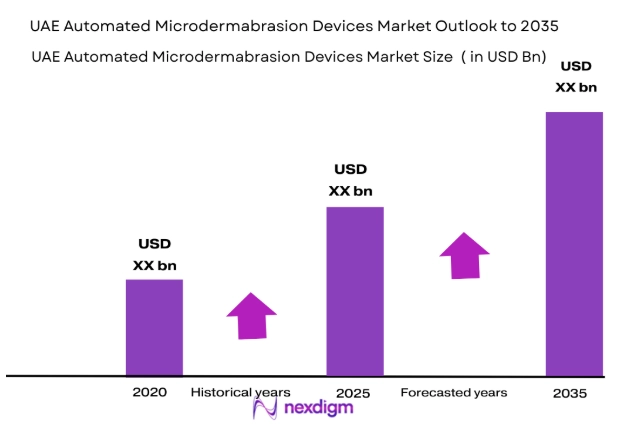
The UAE Automated Microdermabrasion Devices market is valued at USD ~ billion. The market is driven by increasing consumer demand for non-invasive skincare procedures, enhanced awareness of skin health, and the growing presence of dermatology clinics and beauty centers. Innovations in microdermabrasion technology, such as customizable treatments and more portable devices, are also contributing to market growth. The increasing adoption of these devices in both professional and home-use settings is expected to fuel the market’s expansion.
The UAE’s major cities like Dubai and Abu Dhabi dominate the Automated Microdermabrasion Devices market due to their advanced healthcare infrastructure, high disposable income, and rising number of beauty-conscious consumers. These cities have seen a surge in the number of dermatology clinics and beauty spas, which are significantly driving the demand for microdermabrasion devices. Moreover, Dubai’s status as a leading tourist hub attracts a diverse consumer base, further boosting the market.
Market Segmentation
By Product Type
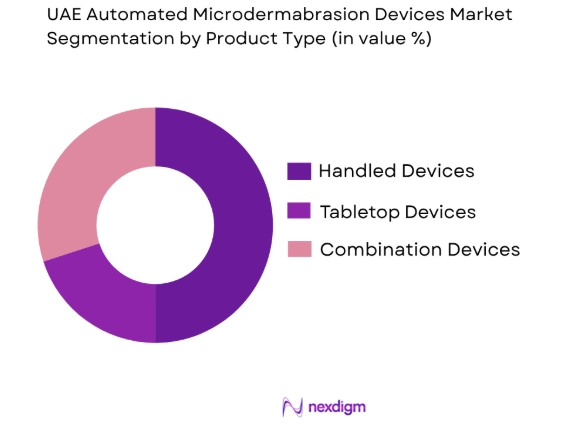
The UAE Automated Microdermabrasion Devices market is segmented by product type into handheld devices, tabletop devices, and combination devices. The handheld devices segment currently holds the largest market share. Handheld devices are preferred due to their compact design, ease of use, and growing popularity for home-use treatments. These devices are designed for personal use, offering convenience and affordability compared to professional-grade tabletop models. Their accessibility has led to their dominance in the market, especially as consumers become more inclined towards self-care treatments.
By End User
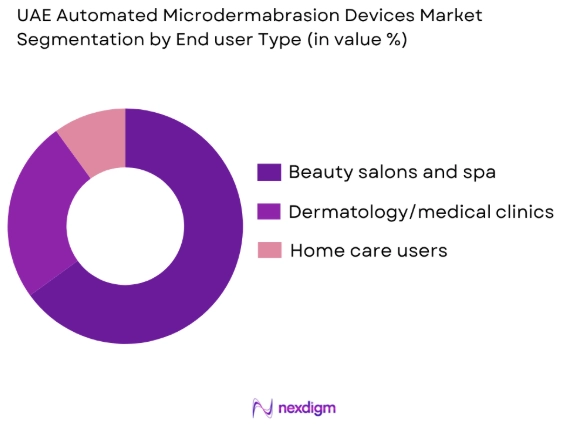
The market is segmented by end user into beauty salons and spas, dermatology clinics, and home care users. Beauty salons and spas are currently the dominant segment due to the high demand for professional skincare treatments. These facilities have adopted automated microdermabrasion devices as part of their offerings, driven by the growing trend of non-invasive treatments in the beauty industry. Beauty salons and spas are key drivers of market expansion, as consumers increasingly seek advanced skincare solutions to address various skin concerns.
Competitive Landscape
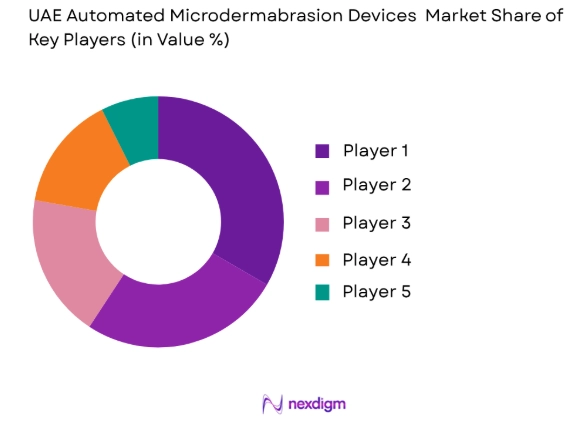
The UAE Automated Microdermabrasion Devices market is dominated by a few key players, including both global giants and regional manufacturers. Companies like Syneron Medical and Clarisonic have established strong brand loyalty with their advanced microdermabrasion devices. Their innovative technology and wide distribution channels contribute significantly to their market share. These players are continuously enhancing their product offerings with more efficient and user-friendly features to cater to the growing demand for home-use and professional devices.
| Company | Establishment Year | Headquarters | Market Share (%) | Technological Advancements | Price Range | Key Product Line | Distribution Channels |
| Syneron Medical | 2000 | Israel | 25% | ~ | ~ | ~ | ~ |
| Clarisonic | 2001 | USA | 20% | ~ | ~ | ~ | ~ |
| DermaSweep | 2007 | USA | 15% | ~ | ~ | ~ | ~ |
| Microderm GLO | 2013 | USA | 10% | ~ | ~ | ~ | ~ |
| NuFACE | 2005 | USA | 10% | ~ | ~ | ~ | ~ |
UAE Automated Microdermabrasion Devices Market Analysis
Growth Drivers
Increasing Demand for Non‑Invasive Aesthetic Procedures
The UAE’s aesthetic treatment landscape reflects a strong preference for non‑invasive cosmetic care, which supports demand for automated microdermabrasion devices. The non‑energy based aesthetic segment in the UAE was valued at USD 215 million in 2026, driven by demand for non‑surgical procedures such as dermal enhancements and skin resurfacing treatments that include microdermabrasion services. This trend is complemented by broader dermatology and aesthetic device market activity: the UAE dermatology devices market generated USD 123.8 million in revenue in 2024, indicating active uptake of skin treatment technologies. Consumer interest in procedures with minimal downtime and reduced risk—compared to surgical options—underpins investment in devices like automated microdermabrasion systems at clinics and skin centers across major cities. The expansion of these services within aesthetic clinics and medical spas enhances clinical adoption, reinforcing non‑invasive treatments as a key driver of market growth.
Rising Beauty Consciousness Among Consumers
Elevated beauty and personal care engagement in the UAE bolsters interest in advanced skin care solutions that include microdermabrasion technology. The overall beauty and personal care products market in the UAE was projected at around USD 1.9 billion in 2025, reflecting strong consumer spending on appearance and self‑care products. This high level of expenditure aligns with a population that prioritizes skincare and aesthetic treatments, creating a supportive environment for technologies that promise visible results like automated microdermabrasion. Macro market behavior indicates growing consumer sophistication and willingness to invest in advanced beauty solutions, with higher disposable incomes supporting purchases of professional‑grade and at‑home devices. The combination of affluent consumers and heightened beauty awareness enhances the adoption potential for automated microdermabrasion devices throughout the UAE aesthetic market.
Market Challenges
High Initial Investment and Equipment Costs
Automated microdermabrasion systems typically require significant capital outlay for professional‑grade models used in clinics and aesthetic centers. Although specific UAE pricing data for these devices is not publicly reported in official macro sources, global device markets indicate that advanced dermatology and aesthetic equipment command higher price points than basic skincare tools. The UAE dermatology devices market itself generated USD 123.8 million in 2024, suggesting a substantial investment base for treatment technologies but also highlighting that cost remains a major factor for smaller providers. High acquisition and maintenance costs can limit the ability of smaller salons, clinics, or solo practitioners to adopt automated microdermabrasion devices, reducing market penetration and slowing overall device uptake in price‑sensitive segments.
Regulatory Compliance and Approval Processes
Medical and aesthetic device applications in the UAE are governed by regulatory frameworks designed to ensure safety and efficacy. Devices such as automated microdermabrasion systems must comply with standards set by authorities like the Emirates Authority for Standardization and Metrology (ESMA) and, where applicable, the Ministry of Health and Prevention (MOHAP). Although specific delays or compliance statistics are not openly published in macro sources, regulatory complexity is noted across broader aesthetic device classifications as a factor influencing market entry timelines and product availability. For example, the UAE non‑energy based aesthetic treatment market enforces stringent certification and licensing processes for devices and practitioners, indicating a landscape where regulatory requirements can impact the speed at which new technologies reach the market. This can increase time‑to‑market and compliance costs for manufacturers and distributors, posing a barrier to rapid innovation and device rollout.
Opportunities
Growing Adoption in Home Care Segments
The broader beauty devices category shows expanding consumer interest in at‑home skincare technologies, with global beauty devices market valuation at USD 120.04 billion in 2024, driven by demand for effective home solutions for skin revitalization. In the UAE context, the skincare devices segment—including treatment technologies—generated USD 109.7 million in revenue in 2022, indicating established consumer engagement with home‑use aesthetic devices. This trend suggests a growing opportunity for automated microdermabrasion products designed for personal use, as consumers increasingly seek convenient alternatives to clinical treatments. As awareness of at‑home aesthetic options rises alongside disposable income and lifestyle shifts, product developers and distributors can target this segment with devices tailored for safe, consumer‑friendly operation.
Increasing Popularity of Personalized Beauty Treatments
Consumers in the UAE are progressively demanding customized and individualized beauty solutions, driven by cultural emphasis on appearance and exposure to global beauty trends. Macro market data for aesthetic and dermatology devices underscores ongoing investments in personalized aesthetic care. The dermatology and aesthetic market size in the UAE reached USD 402.4 million in 2024, reflecting robust consumer participation and diversification in treatment options. Personalized treatments that cater to specific skin types, concerns, and lifestyle goals often leverage technologies like automated microdermabrasion as part of tailored regimens. This creates an opportunity for service providers and device makers to offer bespoke packages and device features that align with individual needs, enhancing market appeal and differentiation.
Future Outlook
Over the next five years, the UAE Automated Microdermabrasion Devices market is expected to continue its growth trajectory. Factors such as rising disposable incomes, increasing awareness of skincare treatments, and a growing preference for non-invasive procedures are set to drive this growth. The emergence of new technologies that make microdermabrasion devices more affordable and user-friendly will also contribute to the expansion of the market. Additionally, as consumers increasingly opt for at-home skincare solutions, the market for portable devices will see significant growth.
Major Players
- Syneron Medical
- Clarisonic
- DermaSweep
- Microderm GLO
- NuFACE
- Dr. Dennis Gross Skincare
- Neutrogena
- L’Oréal Group
- BeautyBio
- PMD Beauty
- Environ
- Silk’n
- Glow Pro
- Diamond Glow
- The Dermacare Clinic
Key Target Audience
- Beauty and Skincare Clinics
- Dermatology Clinics
- Beauty Salons and Spas
- Home Care Users
- Manufacturers of Skincare Devices
- Investments and Venture Capitalist Firms
- Government and Regulatory Bodies (Ministry of Health and Prevention, UAE)
- Retailers and Distributors of Skincare Products
Research Methodology
Step 1: Identification of Key Variables
The initial phase involves identifying the key variables that influence the UAE Automated Microdermabrasion Devices market. This will include analyzing factors such as consumer preferences, market trends, and technological advancements. Data will be gathered through secondary research, including industry reports, government publications, and data from key stakeholders.
Step 2: Market Analysis and Construction
In this phase, we will gather and analyze data on the market size, growth drivers, challenges, and segmentation. The data will be compiled from various sources to construct a comprehensive overview of the market’s structure, including its economic and technological components.
Step 3: Hypothesis Validation and Expert Consultation
Market hypotheses will be developed and validated through interviews with industry experts, manufacturers, and consumers. This step aims to confirm the initial insights and gather real-world input on emerging trends and challenges in the market.
Step 4: Research Synthesis and Final Output
The final phase involves synthesizing the data from various sources and validating it with manufacturers and key industry players. This will help ensure the accuracy of the market size, segmentation, and future trends. The findings will be consolidated into the final research report.

- Executive Summary
- Research Methodology (Market Definitions and Assumptions, Abbreviations, Market Sizing Approach, Consolidated Research Approach, Understanding Market Potential Through In-Depth Industry Interviews, Primary Research Approach, Limitations and Future Conclusions)

- Definition and Scope
- Market Genesis and Evolution
- Market Dynamics
- Major Milestones in the Market
- Supply Chain and Value Chain Analysis

- Growth Drivers
Increasing Demand for Non-Invasive Aesthetic Procedures
Rising Beauty Consciousness Among Consumers
Technological Advancements in Microdermabrasion Devices - Market Challenges
High Initial Investment and Equipment Costs
Regulatory Compliance and Approval Processes - Opportunities
Growing Adoption in Home Care Segments
Increasing Popularity of Personalized Beauty Treatments - Trends
Shift Toward Customized and Portable Devices
Rising Popularity of Multi-functional Devices - Government Regulation
Regulatory Approvals and Certifications
Import and Distribution Regulations - SWOT Analysis
- Stakeholder Ecosystem
- Porter’s Five Forces Analysis
- Competition Ecosystem

- By Value, 2020-2025
- By Volume, 2020-2025
- By Average Price, 2020-2025

- By Product Type, (In Value %)
Handheld Devices
Tabletop Devices
Combination Devices - By End User, (In Value %)
Beauty Salons and Spas
Dermatology Clinics
Home Care Users - By Application, (In Value %)
Anti-Aging
Acne Treatment
Skin Resurfacing
Hyperpigmentation Treatment - By Distribution Channel, (In Value %)
Direct Sales
Retail Outlets
E-commerce - By Region, (In Value %)
Abu Dhabi
Dubai
Sharjah
Other Emirates

- Market Share of Major Players by Value/Volume
- Market Share of Major Players by Product Type Segment
- Cross Comparison Parameters (Company Overview, Business Strategies, Recent Developments, Strengths, Weaknesses, Organizational Structure, Revenues, Revenues by Product Type, Distribution Channels, Margins, Production Plants, Capacity, Unique Value Offerings, Number of Dealers and Distributors, Technological Advancements)
- SWOT Analysis of Major Players
- Pricing Analysis by SKUs for Major Players in the UAE Automated
- Microdermabrasion Devices Market
- Detailed Profiles of Major Companies
Syneron Medical
Clarisonic
DermaSweep
Microderm GLO
Dr. Dennis Gross Skincare
Neutrogena
L’Oréal Group
NuFACE
BeautyBio
PMD Beauty
Environ
Silk’n
Glow Pro
Diamond Glow
The Dermacare Clinic

- Market Demand and Utilization
- Budget Allocations and Purchasing Power
- Regulatory and Compliance Factors for End Users
- End User Pain Points and Preferences
- Decision-Making Process in End User Segments

- By Value, 2026-2035
- By Volume, 2026-2035
- By Average Price, 2026-2035


 Request a Sample
 Ask for Customization
 Get a Quote
 Enquire Now