
 Download PDF
Market Overview
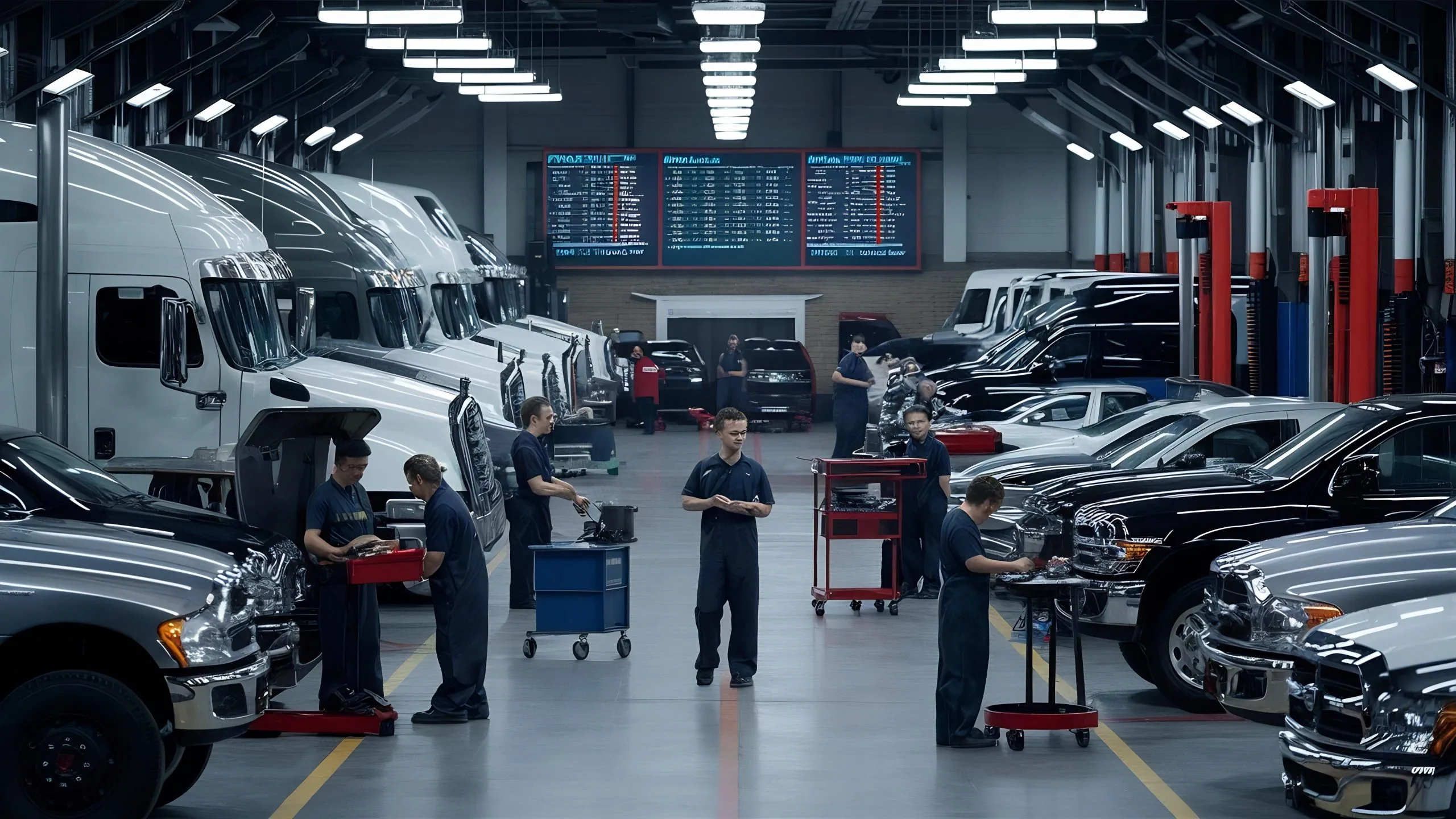
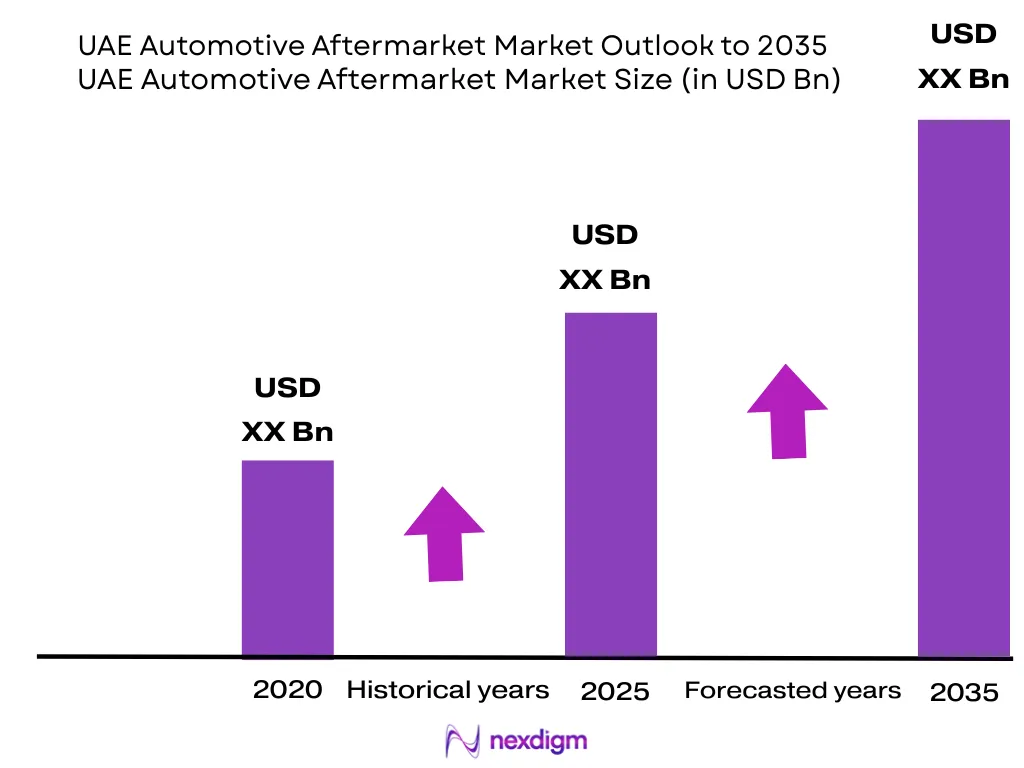
The UAE automotive aftermarket is valued at approximately USD ~ billion, compared with USD ~ billion in the preceding reporting period. Demand is supported by a large installed vehicle base, rising new-car additions and increasing maintenance requirements as vehicles move beyond manufacturer warranty. Passenger-car sales increased from 225,386 units to 268,876 units, expanding the future pool of vehicles requiring tires, batteries, filters, brakes, lubricants, diagnostics and mechanical repairs. Dubai, Abu Dhabi and Sharjah form the principal automotive aftermarket centers. Dubai dominates parts importing, warehousing, digital retailing and re-export activity, while Abu Dhabi benefits from government, corporate, rental and industrial fleets. Sharjah has a dense network of independent garages, used-parts traders and economical repair providers. Supporting this structure, UAE imports of motor-vehicle parts from China reached USD 571.16 million, while the country’s passenger-car sales expanded by 43,490 units between the two latest reported periods. The UAE aftermarket covers replacement parts, mechanical and electrical repair, tires, batteries, lubricants, collision repair, vehicle accessories, detailing and technology-led services performed after the original vehicle sale. The market includes authorized dealership workshops, independent multi-brand chains, specialist garages, fast-fit centers, parts distributors, retailers, online platforms and mobile service providers. Demand is structurally influenced by the country’s hot climate, dust exposure, high use of air-conditioning systems, large SUV population, intensive fleet utilization and strong consumer dependence on private transportation. These conditions accelerate wear in batteries, cooling systems, air filters, cabin filters, tires, brakes, suspension components and automotive fluids. The aftermarket also benefits from vehicles transferring from authorized dealerships to independent workshops after warranties and prepaid service contracts expire.
Market Segmentation
By Aftermarket Offering
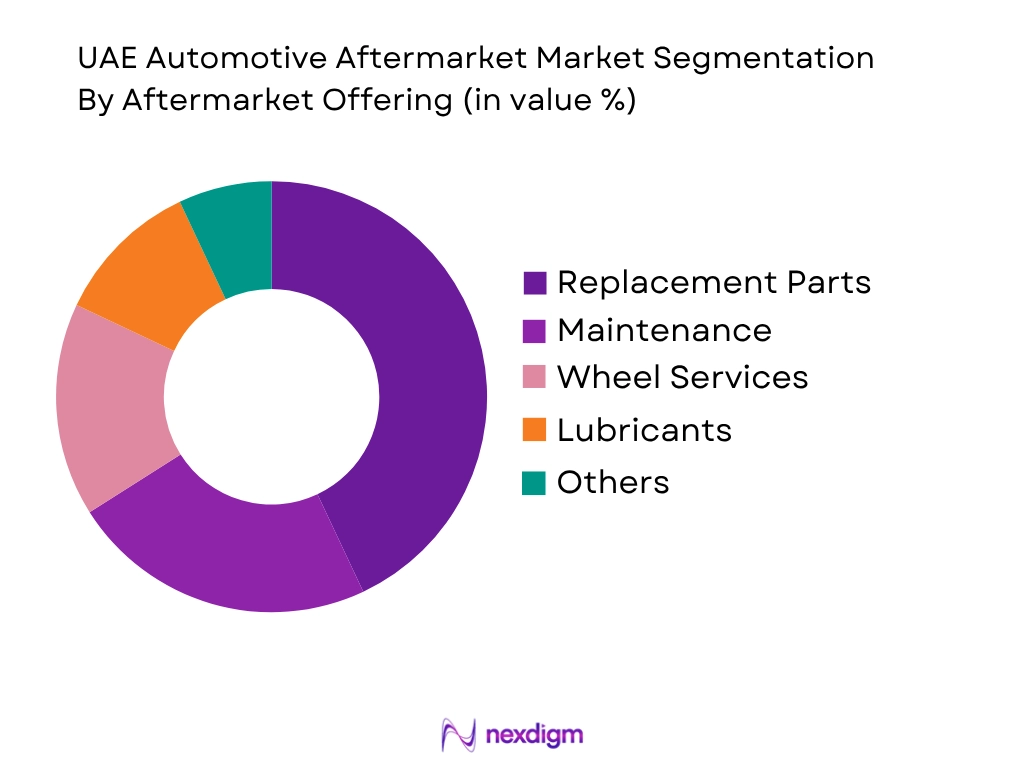
The UAE automotive aftermarket is segmented by offering into replacement parts, maintenance and repair services, tires and wheel services, lubricants and fluids, batteries and electrical services, collision repair, accessories and car-care services. Replacement parts represent the dominant sub-segment, because nearly every workshop activity involves the installation of a component, consumable or wear item. The UAE is highly dependent on imported automotive components, creating a substantial distributor, wholesaler and retailer ecosystem across Dubai and Sharjah. Replacement-parts demand is also diversified across Japanese, European, American, Korean and increasingly Chinese vehicles. Frequently replaced products such as filters, brake pads, spark plugs, belts, suspension components, cooling parts and air-conditioning components generate repeat transactions. Parts revenue is further supported by the difference between genuine, original-equipment-supplier, premium aftermarket, economy aftermarket, remanufactured and used-component price tiers. This gives workshops and vehicle owners multiple purchasing options according to vehicle age, warranty position, intended ownership period and repair budget.
By Service Provider Type
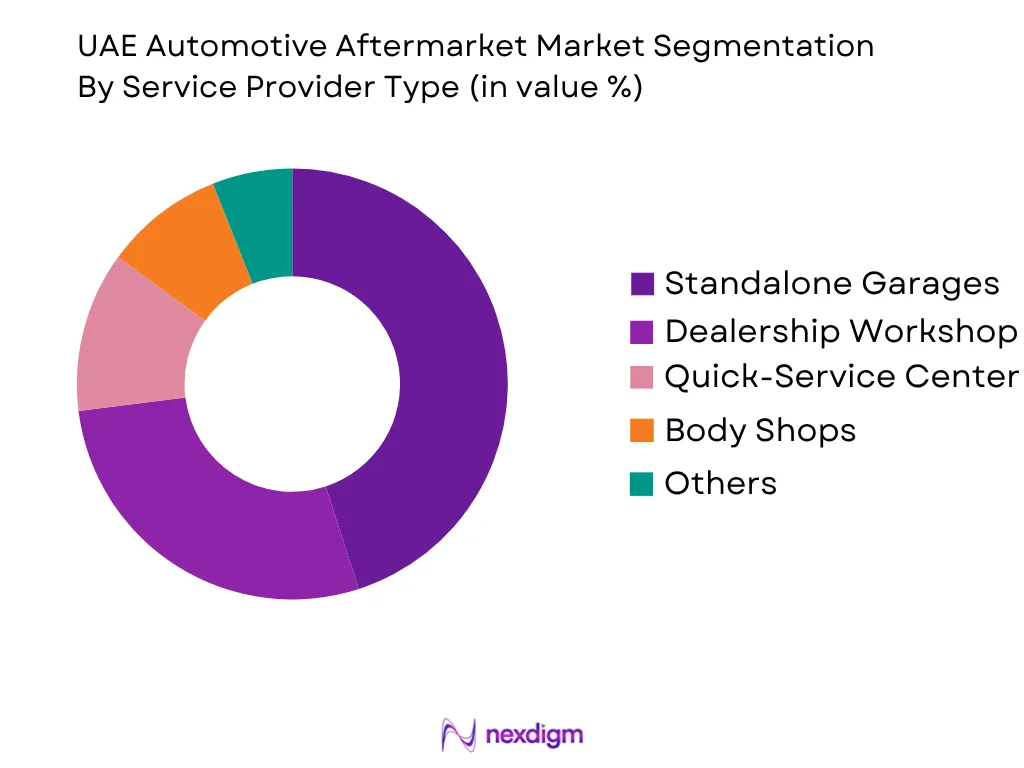
The UAE automotive aftermarket is segmented by service provider into authorized dealership workshops, independent multi-brand workshop chains, standalone independent garages, quick-service centers, specialist tire and battery centers, collision-repair workshops, mobile service providers and fleet-owned workshops. Independent standalone garages hold the dominant market position, supported by their extensive presence, broad vehicle coverage, flexible sourcing and lower labor charges compared with authorized dealership facilities. Independent garages are especially relevant for vehicles outside warranty and for price-conscious owners seeking alternatives to genuine components. Many garages specialize in Japanese, German, American or specific luxury brands, enabling them to offer technical familiarity without dealership-level pricing. Their access to parts traders in Dubai and Sharjah allows rapid sourcing across several quality tiers. The segment also benefits from used-vehicle ownership, older vehicle retention and demand from small commercial fleets. Nevertheless, organized multi-brand workshop chains are gaining ground through standardized processes, digital inspections, service warranties, pickup and delivery, annual maintenance contracts and improved customer transparency.
Competitive Landscape
The UAE automotive aftermarket is fragmented across dealership aftersales networks, large independent workshop chains, fast-fit operators, parts distributors and digital platforms. Al-Futtaim possesses a strong authorized automotive and service ecosystem, while Dynatrade has established a large non-agency workshop operation. AutoPro benefits from fuel-station-linked accessibility, whereas zDegree and PitStopArabia compete through digitally enabled tire purchasing, installation and automotive service convenience. Competition is increasingly based on network coverage, parts availability, repair transparency, turnaround time and fleet servicing capability.
| Company | Establishment Year | Headquarters | Business Model | Core Aftermarket Offering | Vehicle Coverage | Channel Presence | Digital Capability | Fleet Capability |
| Al-Futtaim Auto Centers | 1930s | Dubai, UAE | ~ | ~ | ~ | ~ | ~ | ~ |
| Dynatrade Auto Service | 1992 | Dubai, UAE | ~ | ~ | ~ | ~ | ~ | ~ |
| AutoPro | 2006 | Dubai, UAE | ~ | ~ | ~ | ~ | ~ | ~ |
| zDegree | 2011 | Dubai, UAE | ~ | ~ | ~ | ~ | ~ | ~ |
| PitStopArabia | 2015 | Dubai, UAE | ~ | ~ | ~ | ~ | ~ | ~ |
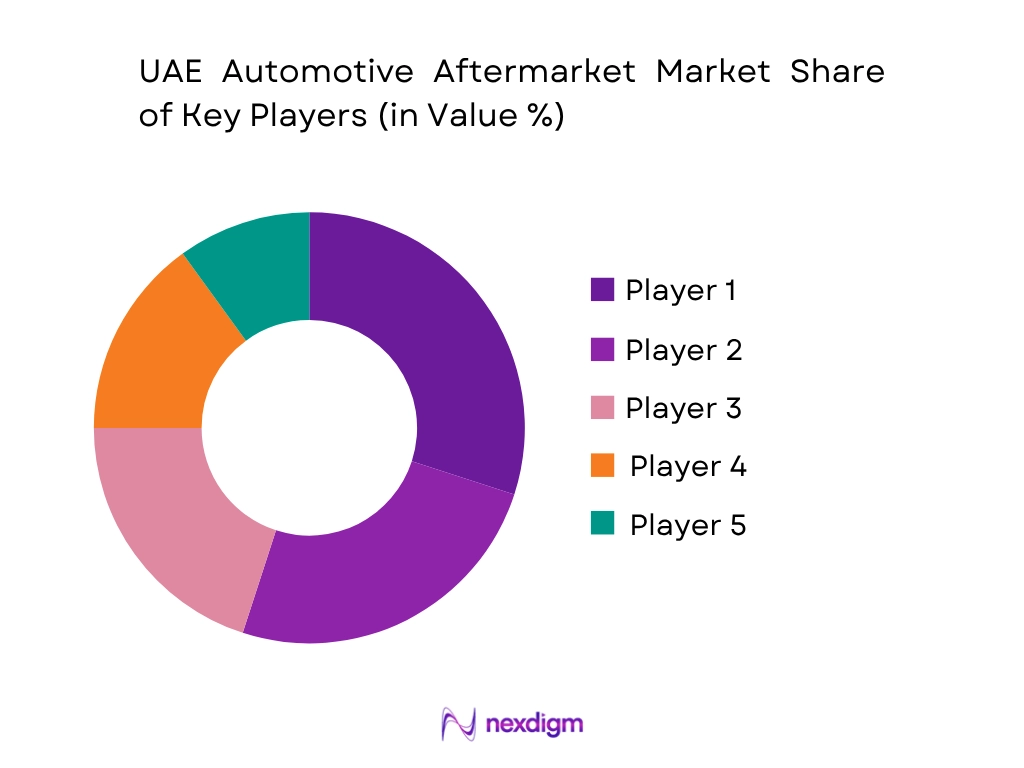
UAE Automotive Aftermarket Market Analysis
Growth Drivers
Expanding Vehicle Parc and Intensive Commercial-Fleet Utilization
The expanding number of privately owned, rental, logistics and commercial vehicles is a primary growth driver for the UAE automotive aftermarket because every additional operating vehicle creates recurring requirements for scheduled servicing, tires, batteries, lubricants, filters, brake components, cooling-system parts and mechanical repairs. Dubai’s Roads and Transport Authority reported that approximately 3.5 million vehicles were using Dubai’s roads during daytime hours in 2024, while registered vehicles had increased by 10% over the preceding two years. Commercial activity is particularly important: Dubai had more than 400,000 vehicles registered in commercial and logistics transport operations in 2024, following the addition of more than 100,000 vehicles in one year. The city also had 73,861 registered heavy vehicles, which require intensive maintenance because of high mileage, heavier loads and demanding operating cycles. Rental activity reinforces this aftermarket demand. Dubai’s rental fleet expanded from 49,725 vehicles in 2023 to 71,040 vehicles in 2024, while the number of active rental companies increased from 2,627 to 3,494 after 867 new companies entered the sector. These vehicles typically operate at higher annual mileage than privately owned cars and must comply with fleet-maintenance schedules, inspection requirements and customer-service standards. Rental operators therefore generate concentrated demand for preventive maintenance, rapid mechanical repairs, tire replacement, batteries, bodywork and vehicle preparation between rental cycles.
Urban Population Concentration and Mobility-Led Economic Activity
The UAE’s highly urbanized population structure supports automotive aftermarket demand by concentrating residents, businesses, vehicle fleets and repair infrastructure within major metropolitan corridors. World Bank data recorded the UAE’s urban population at approximately 88.01% of the total population in 2024, meaning most vehicle activity is concentrated around Dubai, Abu Dhabi, Sharjah, Ajman and their connected commuter routes. Abu Dhabi’s official population reached 4,135,985 residents in 2024, while the IMF subsequently reported a national population of approximately 11.465 million. Large urban populations support private-car ownership, taxis, delivery fleets, rental vehicles and employee transportation, all of which require recurring aftermarket services.
Urban mobility intensity is visible in official transport data. Dubai’s public transport, shared-mobility and taxi systems carried 747.1 million riders in 2024, compared with 702 million riders in 2023. These passenger movements involved metro and tram systems but also substantial road-based operations through buses, taxis, ride-hailing vehicles, hourly rentals and demand-responsive services. Abu Dhabi’s public bus network separately recorded more than 95 million passenger trips, operated 146 routes and maintained a fleet of 796 buses in 2024. Although public transport can reduce some private-car journeys, it creates a substantial institutional aftermarket for buses, taxis, limousines and shared-mobility fleets that operate for extended hours and require controlled maintenance schedules.
Dubai’s commercial and logistics ecosystem also included 12,100 licensed companies and more than 400,000 registered commercial vehicles in 2024. This scale increases demand for commercial tires, braking systems, suspension components, diesel-engine parts, batteries, cooling systems, lubricants and fleet diagnostics. The UAE’s climate intensifies these requirements: continuous air-conditioning use places pressure on compressors, condensers, cooling fans and electrical systems, while heat exposure affects battery life, rubber components and tires. Dust creates additional replacement demand for engine-air filters, cabin filters and cleaning services.
Market Challenges
Increasing Technical Complexity of Electric, Hybrid and Digitally Connected Vehicles
The growing technical complexity of the UAE vehicle parc is a major challenge for independent workshops and conventional parts businesses. Modern vehicles increasingly incorporate high-voltage systems, advanced driver-assistance sensors, electronic control units, connected diagnostics, battery-management systems and software-dependent components. Dubai Electricity and Water Authority reported more than 400 EV Green Charger stations and over 730 charging points across Dubai in 2024. By June 2025, the wider network operated by DEWA and licensed charge-point operators had expanded to more than 1,100 charging points. This infrastructure development indicates a widening population of electrified vehicles that requires capabilities substantially different from traditional engine and transmission repair.
Electric and hybrid vehicles reduce demand for certain conventional items, including engine oil, spark plugs, exhaust components and some transmission-related parts. However, they introduce requirements for high-voltage battery diagnosis, thermal-management systems, power electronics, charging ports, onboard chargers, electric compressors and regenerative-braking systems. Workshops must segregate high-voltage work areas, use insulated equipment and establish safe battery-isolation procedures. Incorrect repair practices can expose technicians, customers and workshop facilities to electrical, thermal and fire risks.
Shortage of Specialized Technicians and Uneven Workshop Capability
A shortage of technicians trained in advanced diagnostics, vehicle electronics, hybrid systems, high-voltage safety and ADAS calibration represents a structural challenge for the UAE automotive aftermarket. The country’s workshop base includes authorized dealer facilities, organized multi-brand chains, fast-fit centers and numerous standalone garages. This diversity expands service availability, but it also creates substantial differences in technician competency, equipment quality, repair documentation and safety practices. The challenge is becoming more significant as the vehicle population expands and introduces a wider range of propulsion systems, electronic architectures and country-of-origin platforms.
Official vehicle and mobility indicators demonstrate the workload confronting the technical labor base. Dubai recorded approximately 3.5 million vehicles on its roads during daytime hours in 2024, more than 400,000 commercial and logistics vehicles, and 73,861 heavy vehicles. The rental fleet reached 71,040 vehicles, operated by 3,494 active rental companies. Each category creates different technical requirements: rental vehicles need rapid turnaround, heavy vehicles require commercial diagnostics and brake expertise, logistics fleets depend on preventive maintenance, and premium passenger cars require specialized electronic and brand-specific knowledge.
Electric-mobility development adds further pressure. Dubai had more than 730 public charging points in 2024 and more than 1,100 points by mid-2025. DEWA reported that its charging initiative had supplied more than 55,200 megawatt-hours of electricity and enabled over 276 million kilometres of electric-vehicle travel by 2026. This operating activity will eventually translate into demand for battery diagnostics, thermal-management repair, charging-system maintenance, tire replacement, suspension service and collision work involving high-voltage components.
Market Opportunities
Fleet Maintenance Contracts and Organized Multi-Brand Service Networks
The expansion of rental, logistics, taxi, limousine and commercial fleets creates a substantial future opportunity for organized multi-brand workshop operators. Current operating data demonstrate a large addressable customer base requiring preventive maintenance, predictable vehicle availability and rapid repair turnaround. Dubai’s rental fleet reached 71,040 vehicles in 2024, compared with 49,725 vehicles in 2023, while active rental companies increased to 3,494 after 867 new companies were registered. Commercial and logistics transport operations accounted for more than 400,000 registered vehicles, supported by 12,100 operating companies, while the heavy-vehicle population reached 73,861 units.
These fleets represent a more structured aftermarket opportunity than irregular retail repair work. Fleet operators require scheduled oil and filter replacement, brake inspection, tire management, battery testing, air-conditioning maintenance, mechanical repairs, accident support and documented service histories. Rental and delivery operators are especially sensitive to vehicle downtime because each unavailable vehicle reduces operating capacity. Workshop groups that guarantee service-level turnaround, maintain reserved parts stocks and provide replacement vehicles or mobile technicians can build recurring contractual relationships.
The operating environment strengthens this opportunity. Dubai recorded 43,443,678 luxury-transport trips in 2024, compared with 30,219,821 trips in 2023. Public transport and shared-mobility systems handled 747.1 million passengers, including substantial taxi, ride-hailing and shared-vehicle activity. Abu Dhabi’s public bus network operated 796 buses across 146 routes and carried more than 95 million passengers. These figures indicate intensive road-vehicle utilization rather than merely a large static vehicle population.
Electric-Vehicle Diagnostics, Advanced Repair and Technology-Enabled Aftermarket Services
The transition toward electric, hybrid and digitally connected mobility creates an opportunity for UAE aftermarket businesses to establish early capabilities in high-voltage diagnostics, battery assessment, thermal-management repair, ADAS calibration and software-enabled maintenance. Current infrastructure confirms that electric mobility has moved beyond a limited pilot stage. DEWA operated more than 400 Green Charger stations with over 730 charging points in 2024. The combined charging network operated by DEWA and licensed private operators exceeded 1,100 charging points in 2025, while the Green Charger initiative had delivered more than 55,200 megawatt-hours of electricity and supported over 276 million kilometres of electric travel by 2026.
These operating vehicles will require aftermarket support throughout their ownership cycles. Although electric vehicles contain fewer conventional powertrain service items, they still require tires, suspension parts, wheel alignment, air-conditioning systems, low-voltage batteries, cabin filters, brake components, cooling circuits and body repairs. Higher vehicle weight and immediate torque can increase stress on tires and suspension components, while the Gulf climate makes battery and cabin thermal management operationally important. Hybrid vehicles create an additional opportunity because workshops must support both internal-combustion and high-voltage systems.
Regulatory progress provides a foundation for professional service development. DEWA issued the first two independent charge-point operator licences in 2024, and the Ministry of Industry and Advanced Technology introduced Cabinet Decree No. 50 of 2024 addressing electric-vehicle technical requirements. Businesses that align workshop design, technician procedures, diagnostic equipment and parts sourcing with these frameworks can build confidence among vehicle owners, insurers, fleet operators and dealership partners.
Future Outlook
The UAE automotive aftermarket is forecast to expand at a ~XX% CAGR during the forecast period, supported by continued vehicle-parc expansion, rising out-of-warranty vehicles and greater utilization of independent workshops. Future growth will increasingly move beyond conventional mechanical servicing toward diagnostics, advanced driver-assistance calibration, connected maintenance, hybrid servicing and electric-vehicle repair.
The large number of recently sold vehicles will progressively enter scheduled maintenance and replacement cycles. New passenger-car sales rose from 225,386 units to 268,876 units across the two most recently reported annual periods, creating a larger downstream opportunity for parts distributors and service providers.
The independent aftermarket is expected to become more organized. Workshop chains will expand through new branches, acquisitions, partnerships and franchise models, while standalone garages will face pressure to improve technician certification, customer communication, repair documentation and warranty practices. Digital vehicle inspections, photographs of defective parts, itemized estimates and electronic service histories will become important trust-building tools.
Chinese vehicle brands will create a major aftermarket opportunity as their installed base matures. Distributors will need model-specific catalogs, VIN-linked identification systems, reliable supplier relationships and regional stocks of body, electrical, cooling and suspension components. Workshop operators will similarly require diagnostic tools, technical information and technician training for a rapidly widening model population.
Electric and hybrid vehicles will alter the revenue mix rather than eliminate aftermarket demand. Requirements will shift toward tires, low-voltage batteries, cooling systems, air-conditioning, electronic modules, charging components, suspension, body parts, software diagnostics and high-voltage battery services. Businesses that invest early in insulated tools, high-voltage safety procedures, battery diagnostics and certified technicians will be better positioned.
Major Players
- Al-Futtaim Auto Centers
- AutoPro
- Dynatrade Auto Service
- Central Trading Company
- Al Muqarram Auto Parts
- Ghassan Aboud Cars and Spare Parts
- Arabian Automobiles Service and Parts
- Al Nabooda Automobiles Aftersales
- Al Tayer Motors Aftersales
- AWR Auto Central
- zDegree
- PitStopArabia
- New East General Trading
- Parts Center
- BuyParts24
Key Target Audience
- Automotive spare-parts manufacturers and component suppliers
- Automotive parts importers, master distributors and wholesale traders
- Authorized vehicle distributors and dealership aftersales operators
- Independent workshop chains, fast-fit centers and specialist garages
- Fleet owners, vehicle-leasing companies and mobility operators
- Automotive e-commerce platforms and workshop-technology providers
- Investments and venture capitalist firms
- Government and regulatory bodies (Ministry of Industry and Advanced Technology, Ministry of Economy and Tourism, Federal Customs Authority, Roads and Transport Authority, Abu Dhabi Mobility and Emirates Authority for Standardization and Metrology functions under MoIAT)
Research Methodology
Step 1: Identification of Key Variables
The research begins with an ecosystem map covering vehicle distributors, parts manufacturers, importers, wholesalers, workshops, fleet operators, insurers and digital platforms. Key variables include active vehicle parc, vehicle age, annual mileage, replacement intervals, repair frequency, average parts price, labor rates, channel margins and workshop throughput.
Step 2: Market Analysis and Construction
Historical information is compiled for passenger-car sales, vehicle registrations, parts imports, workshop networks and major aftermarket categories. A top-down model reviews total automotive expenditure and trade flows, while a bottom-up model calculates demand from the installed vehicle base, component replacement rates and average transaction values.
Step 3: Hypothesis Validation and Expert Consultation
Initial market hypotheses are validated through computer-assisted telephone interviews and structured discussions with importers, distributors, workshop managers, technicians, fleet-maintenance executives and digital platform operators. Interviews examine product movement, genuine-versus-aftermarket demand, inventory turnover, credit terms, repair-order values and competitive positioning.
Step 4: Demand-Side Assessment
Vehicle owners and fleet decision-makers are evaluated according to vehicle type, age, brand origin, warranty status, service frequency and channel preference. The analysis assesses authorized-versus-independent workshop selection, price sensitivity, parts-quality preferences, service transparency expectations and demand for pickup, delivery and mobile maintenance.

- Executive Summary
- Research Methodology (Market Definitions and Assumptions, Abbreviations, Automotive Aftermarket Boundary, Replacement-Rate Modeling, Vehicle Parc–Based Demand Estimation, Top-Down Analysis, Bottom-Up Analysis, Demand-Side Assessment, Supply-Side Assessment, Parts Import Analysis, Workshop Throughput Assessment, Distributor Revenue Reconstruction, Primary Interviews with Parts Importers and Workshop Operators, Data Triangulation, Scenario Forecasting Framework, Limitations and Future Conclusions)

- Definition and Scope
- Market Evolution and Industry Genesis
- Timeline of Major Industry Developments
- Automotive Aftermarket Business Cycle
- Vehicle Parc and Replacement Demand Ecosystem
- Automotive Parts and Service Value Chain Analysis
- Supply Chain Analysis

- Growth Drivers (Rising Vehicle Parc, Aging Out-of-Warranty Vehicles, High Annual Vehicle Mileage, Extreme Heat and Dust Exposure, Expansion of Commercial Fleets, Used-Vehicle Transactions, Multi-Brand Workshop Expansion, Growth of Chinese Vehicle Parc)
- Market Challenges (Counterfeit Parts, Technician Shortage, Parts Fragmentation, Price Competition, Import Lead Times, Workshop Quality Variance)
- Market Opportunities
(EV Servicing, Digital Parts Procurement, Fleet Contracts, Remanufacturing, Mobile Services, Workshop Consolidation) - Market Trends
(Digitalization, Premiumization, Workshop Consolidation, Connected Service, Parts Traceability, Service Convenience) - Government Regulations and Compliance Framework
(MoIAT Conformity Requirements, ECAS Registration, Parts Traceability, Consumer Protection, Workshop Licensing, Environmental Compliance) - SWOT Analysis
Porter’s Five Forces Analysis
PESTLE Analysis

- By Market Value (2020-2025)
- By Replacement Parts Revenue (2020-2025)
- By Maintenance and Repair Service Revenue (2020-2025)

- By Aftermarket Offering (In Value %)
Replacement Parts
Maintenance and Repair Services
Tires and Wheel Services
Batteries and Electrical Services
Lubricants and Fluid Replacement - By Vehicle Origin (In Value %)
Japanese Vehicles
European Vehicles
American Vehicles
Korean Vehicles
Chinese Vehicles
Indian Vehicles
Other Vehicle Origins - By Service Provider Type (In Value %)
Authorized Dealer Workshops
Independent Multi-Brand Workshop Chains
Independent Standalone Garages
Vehicle Brand–Specialist Workshops
Quick-Service and Fast-Fit Centers
Tire and Battery Service Centers
Collision Repair and Body Shops - By Emirate (In Value %)
Dubai
Abu Dhabi
Sharjah
Ajman
Ras Al Khaimah
Fujairah
Umm Al Quwain

- Market Share of Major Players (By Aftermarket Revenue, Parts Revenue, Service Revenue, Workshop Throughput, Distribution Reach)
- Cross Comparison Parameters (Automotive Parts Portfolio Breadth, Workshop and Service-Bay Network, Vehicle Brand and Model Coverage, OEM–OES–Independent Parts Mix, Parts Warehouse and Same-Day Fulfilment Capability, Diagnostic–ADAS–EV Service Readiness, Fleet Maintenance Contract Portfolio, Average Repair Order and Parts-to-Labor Revenue Mix)
- SWOT Analysis of Major Players
- Pricing Analysis by SKU and Service Category
- Detailed Profiles of Major Companies
Al-Futtaim Auto Centers
AutoPro
Dynatrade Auto Service
Central Trading Company
Al Muqarram Auto Parts
Ghassan Aboud Cars and Spare Parts
Arabian Automobiles Service and Parts
Al Nabooda Automobiles Aftersales
Al Tayer Motors Aftersales
AWR Auto Central
ZDegree
PitStopArabia
New East General Trading
Parts Center
BuyParts24

- Individual Vehicle Owner Demand Analysis
- Passenger Car Owner Maintenance Behaviour
- SUV and Crossover Owner Demand Analysis
- Pickup and Light Commercial Vehicle Owner Analysis
- Luxury and Performance Vehicle Owner Analysis

- By Market Value (2026-2035)
- By Replacement Parts Revenue (2026-2035)
- By Maintenance and Repair Service Revenue (2026-2035)


 Request a Sample
 Ask for Customization
 Get a Quote
 Enquire Now