
 Download PDF
Market Overview
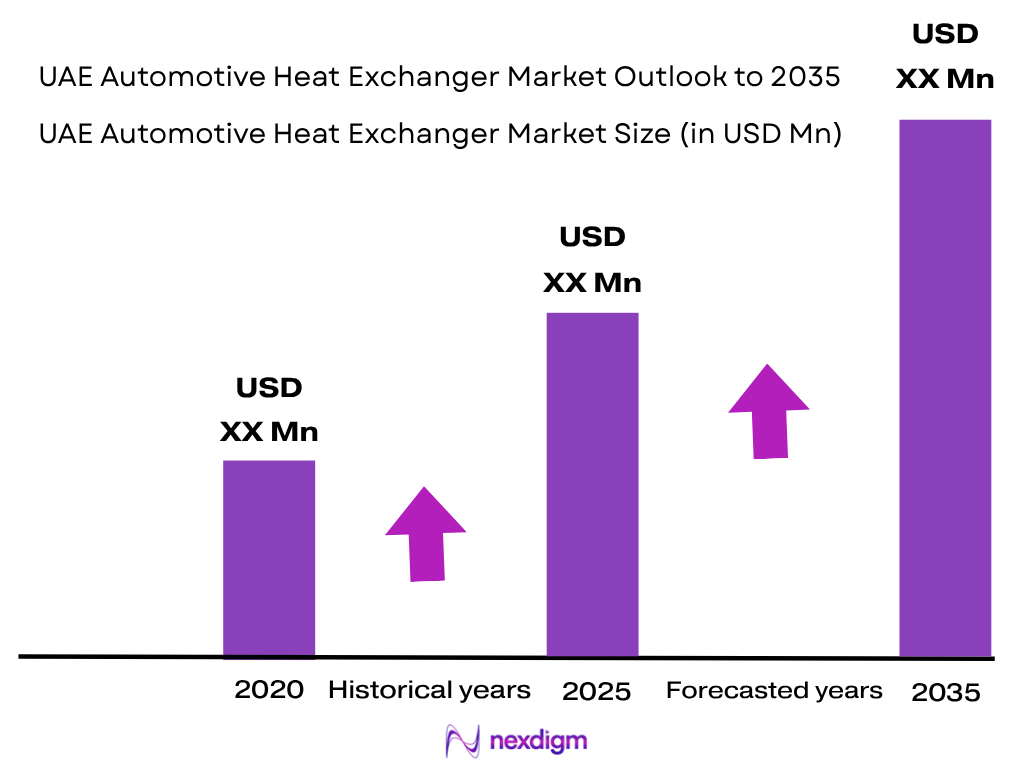
The UAE automotive heat exchanger market is valued at ~USD XX million in 2024, supported by the country’s expanding vehicle fleet, extreme climatic conditions requiring advanced cooling systems, and increasing adoption of efficient thermal management technologies. The UAE recorded approximately 3.7 million registered vehicles, creating continuous demand for radiators, condensers, oil coolers, and HVAC heat exchangers. Growth is further supported by rising passenger vehicle sales, commercial transportation expansion, and increasing electric vehicle adoption requiring battery cooling solutions. Automotive thermal management demand is closely linked with vehicle production, imports, and aftermarket replacement cycles.
The UAE automotive heat exchanger ecosystem is concentrated around Dubai, Abu Dhabi, and Sharjah, driven by their large vehicle populations, commercial activity, and automotive service infrastructure. Dubai dominates due to its position as an automotive trading hub with extensive vehicle import, distribution, and aftermarket networks. Abu Dhabi contributes through government fleets, commercial vehicles, and industrial transportation demand, while Sharjah supports component trading and repair clusters. The UAE’s dependence on imported vehicles from Japan, Europe, South Korea, and China also influences the supplier landscape, increasing demand for replacement heat exchanger components and thermal systems compatible with diverse vehicle platforms.
Market Segmentation
By Heat Exchanger Type
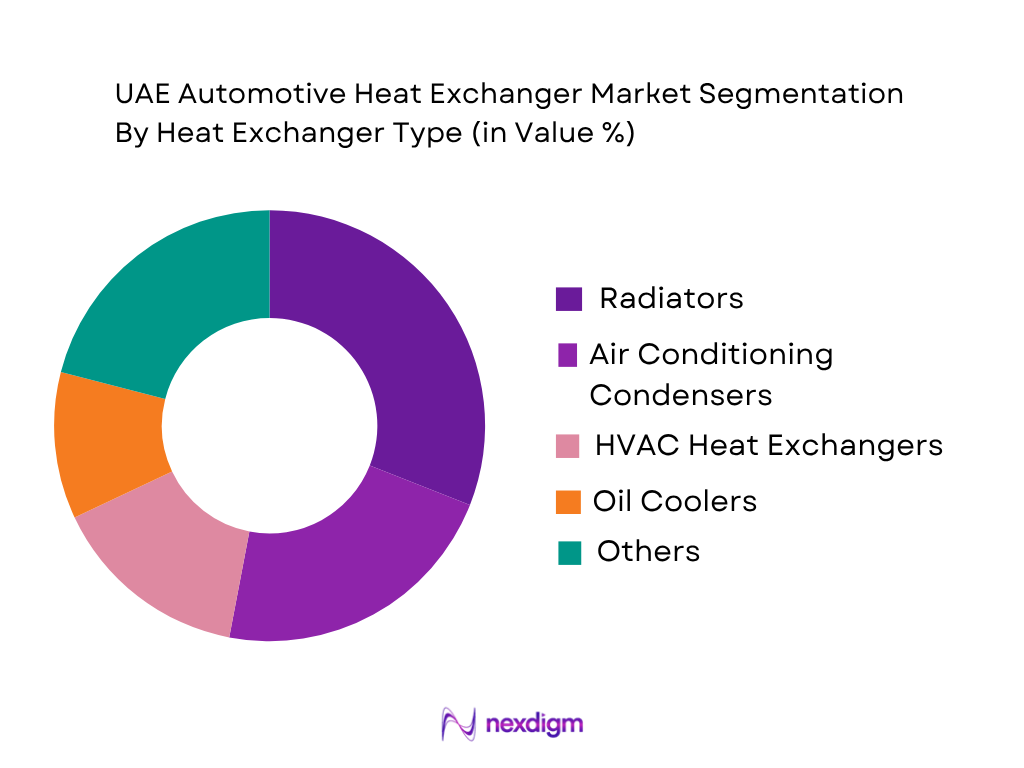
The UAE automotive heat exchanger market is segmented into radiators, air conditioning condensers, HVAC heat exchangers, oil coolers, intercoolers, EGR coolers, and battery cooling heat exchangers. Radiators represent the largest segment, supported by the UAE’s high dependence on internal combustion engine vehicles, harsh desert temperatures, and the requirement for efficient engine cooling systems. Vehicles operating in high ambient temperatures require robust radiator performance to maintain engine reliability. The large passenger vehicle fleet, including Japanese, European, and American models, further supports radiator replacement demand through the aftermarket channel. Air conditioning condensers also represent a significant segment due to the UAE’s extreme climate, where vehicle cooling systems operate extensively throughout the year. Battery cooling heat exchangers are emerging with increasing EV adoption and demand for advanced thermal management solutions.
By Vehicle Type
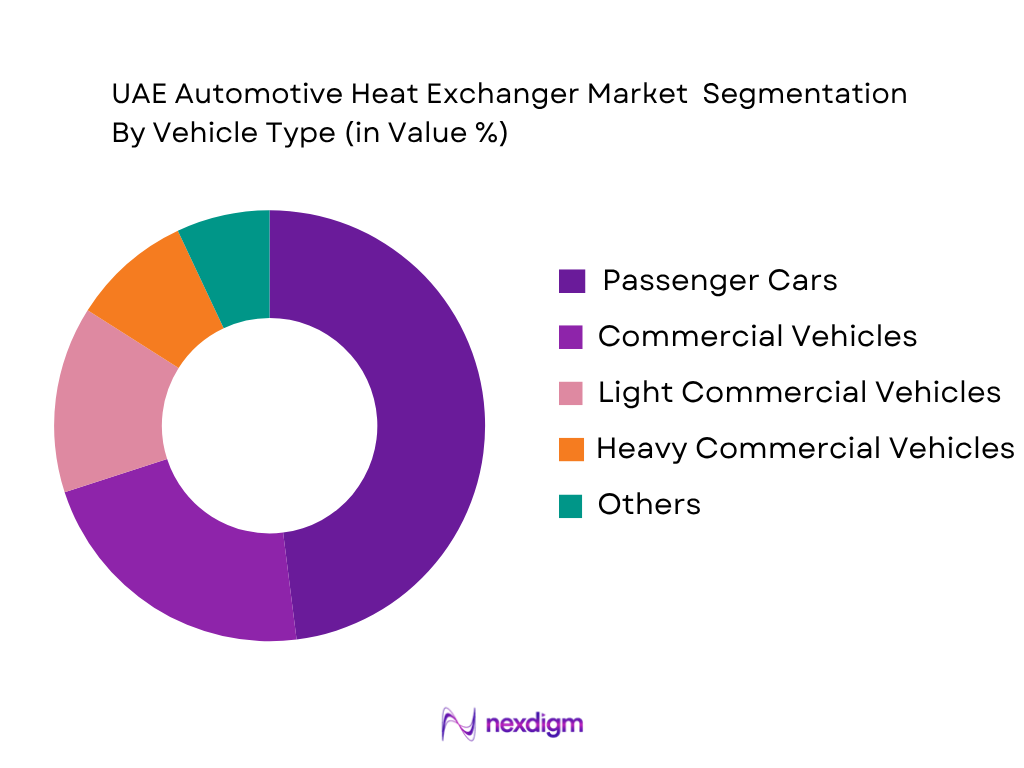
The UAE automotive heat exchanger market is segmented by passenger cars, commercial vehicles, light commercial vehicles, heavy commercial vehicles, electric vehicles, and two-wheelers/three-wheelers. Passenger cars dominate the segment, driven by the UAE’s high vehicle ownership rate, luxury vehicle penetration, and continuous demand for imported vehicles. Passenger vehicles require multiple thermal management components including radiators, condensers, evaporators, and HVAC heat exchangers due to year-round air-conditioning usage. Commercial vehicles represent another important segment due to logistics, construction, and transportation activities across Dubai, Abu Dhabi, and industrial zones. Electric vehicle adoption is gradually increasing, creating demand for battery thermal management systems, cooling plates, and integrated thermal modules. The transition toward electrified mobility is expected to shift supplier focus from conventional engine cooling systems toward advanced thermal solutions.
Competitive Landscape
The UAE automotive heat exchanger market is characterized by the presence of global Tier-1 suppliers, regional distributors, and aftermarket component providers. International manufacturers dominate due to advanced manufacturing capabilities, OEM relationships, and expertise in thermal management technologies. Companies such as DENSO, MAHLE, Valeo, Modine, and Hanon Systems supply advanced cooling components across passenger vehicles, commercial vehicles, and EV platforms.
| Company | Establishment Year | Headquarters | Product Portfolio | OEM Partnerships | EV Thermal Management Capability | Manufacturing Footprint | R&D Capability | Aftermarket Presence |
| DENSO Corporation | 1949 | Japan | ~ | ~ | ~ | ~ | ~ | ~ |
| MAHLE GmbH | 1920 | Germany | ~ | ~ | ~ | ~ | ~ | ~ |
| Valeo SA | 1923 | France | ~ | ~ | ~ | ~ | ~ | ~ |
| Modine Manufacturing | 1916 | USA | ~ | ~ | ~ | ~ | ~ | ~ |
| Hanon Systems | 1986 | South Korea | ~ | ~ | ~ | ~ | ~ | ~ |
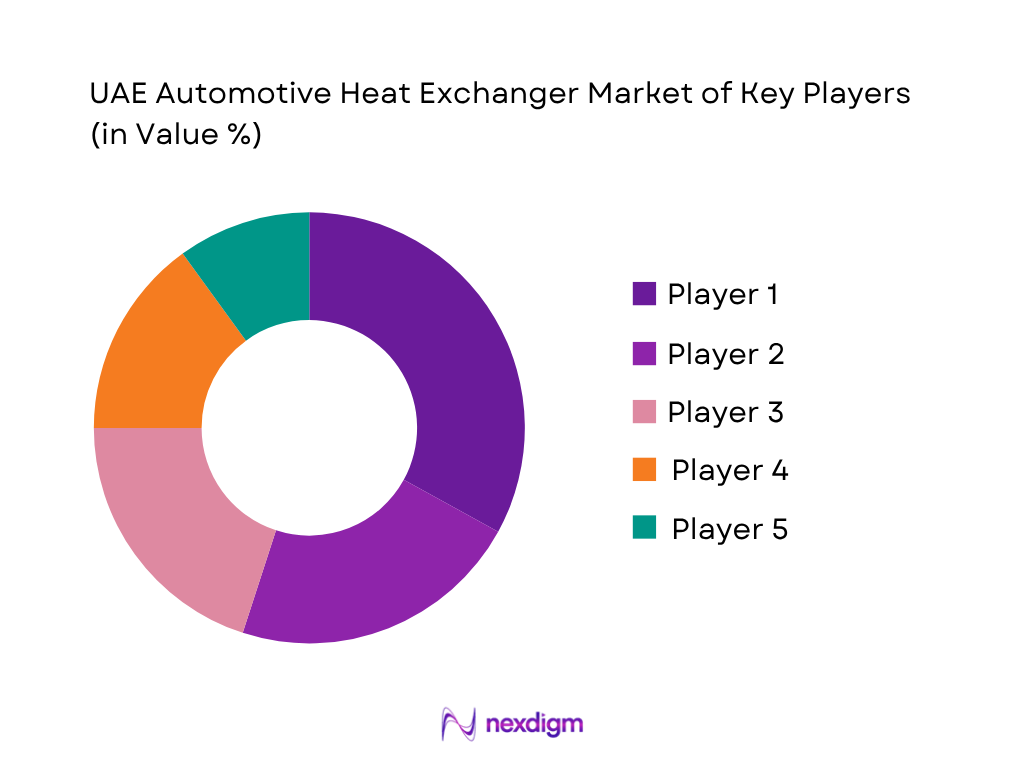
UAE Automotive Heat Exchanger Market Analysis
Growth Drivers
Increasing Vehicle Import Volume
The UAE automotive heat exchanger market is strongly supported by the country’s high dependence on imported vehicles, which creates continuous demand for cooling components, replacement parts, and thermal management systems. According to the UAE Federal Competitiveness and Statistics Centre, the country had more than 3.7 million registered vehicles, creating a large installed base requiring periodic radiator, condenser, and HVAC heat exchanger replacement. The UAE imported vehicles from major automotive manufacturing hubs including Japan, China, South Korea, Germany, and the United States, increasing the diversity of thermal system requirements. Dubai Customs reported that automotive products remain among the major import categories, supported by Dubai’s role as a regional vehicle trading hub connecting markets across the Middle East and Africa. The expansion of re-export activities through Jebel Ali Port, which handled more than 15 million TEUs of containers in 2024, has strengthened automotive parts distribution networks. Increasing vehicle imports directly influence demand for OEM-compatible heat exchangers, aftermarket cooling components, and advanced thermal solutions designed for different vehicle architectures. The growing presence of luxury, premium, and imported passenger vehicles further increases demand for high-performance cooling systems capable of operating under UAE climatic conditions.
Luxury Vehicle Demand Growth
The UAE’s strong luxury vehicle market supports demand for technologically advanced automotive heat exchangers due to higher thermal management requirements in premium vehicles. The country remains one of the largest luxury vehicle markets in the Middle East, driven by high-income consumers, tourism activity, and corporate fleet adoption. According to the International Monetary Fund, the UAE recorded a GDP per capita exceeding USD 50,000, reflecting strong purchasing power supporting premium automotive consumption. Dubai and Abu Dhabi account for a significant concentration of luxury vehicles, including brands from Europe, Japan, and the United States that require sophisticated cooling architectures involving multiple heat exchangers, high-capacity HVAC systems, and efficient engine cooling modules. The UAE luxury vehicle ecosystem also benefits from the presence of specialized service centers and aftermarket networks capable of handling advanced thermal components. Increasing adoption of high-performance SUVs, sports cars, and premium electric vehicles is creating additional demand for lightweight aluminium heat exchangers and integrated thermal management systems. As premium vehicles increasingly incorporate electrified powertrains, manufacturers require advanced battery cooling, power electronics cooling, and cabin climate control solutions.
Market Challenges
High Dependence on Imported Components
The UAE automotive heat exchanger market faces challenges due to significant dependence on imported components, technologies, and manufacturing expertise. The domestic automotive component manufacturing base remains limited compared with major automotive production countries, requiring suppliers and distributors to source products from international manufacturers. According to the UAE Ministry of Economy, the country’s industrial sector is undergoing diversification, but automotive component localization remains an emerging area. Most advanced heat exchangers, including EV battery cooling modules and integrated thermal systems, are supplied by global Tier-1 manufacturers from Japan, Germany, South Korea, China, and Europe. The dependence on imported components exposes the market to international logistics disruptions, currency fluctuations, and extended supply chains. UAE automotive aftermarket suppliers must maintain inventories covering multiple vehicle brands due to the diverse imported vehicle fleet. Additionally, advanced thermal management technologies require specialized manufacturing capabilities, including aluminium brazing, precision welding, and electronic control integration, which limits immediate domestic production capability. Increasing electrification of vehicles will further increase reliance on imported thermal management technologies unless local manufacturing and technology partnerships expand.
Extreme Heat and Dust Exposure
Extreme environmental conditions in the UAE create significant challenges for automotive heat exchanger performance, durability, and maintenance requirements. The country experiences some of the highest ambient temperatures globally, with summer temperatures frequently exceeding 45°C, placing additional stress on vehicle cooling systems. According to the UAE National Center of Meteorology, several regions experience prolonged periods of high temperature combined with dust exposure, requiring automotive components to withstand harsh operating conditions. Heat exchangers operating in UAE conditions must maintain efficiency under high thermal loads while resisting corrosion, sand accumulation, and reduced airflow caused by dust deposits. Radiators, condensers, and HVAC heat exchangers require specialized designs, protective coatings, and frequent maintenance to ensure reliability. The increasing adoption of electric vehicles adds complexity because battery thermal systems require precise temperature control despite extreme external conditions. Manufacturers must develop solutions with improved heat rejection capacity, corrosion resistance, and compact designs. These environmental requirements increase engineering complexity for suppliers and create additional testing requirements before components can be deployed in UAE vehicle applications.
Market Opportunities
EV Battery Cooling Systems
The expansion of electric mobility in the UAE creates significant opportunities for automotive heat exchanger manufacturers through demand for battery cooling systems and integrated thermal management solutions. The UAE government has accelerated electric vehicle adoption through initiatives supporting sustainable transportation and charging infrastructure development. According to the UAE Ministry of Energy and Infrastructure, the country continues to expand clean mobility programs, while Dubai’s electric vehicle charging network operated by the Roads and Transport Authority and DEWA supports increasing EV deployment. Electric vehicles require specialized thermal components including battery cooling plates, chillers, coolant modules, and power electronics cooling systems that differ from conventional engine cooling solutions. The UAE recorded continued growth in EV registrations supported by government fleets, commercial mobility programs, and premium EV adoption. Luxury EV brands entering the UAE market are increasing demand for advanced thermal management systems capable of maintaining battery efficiency in extreme temperatures. Heat exchanger manufacturers can benefit by developing compact aluminium cooling systems, integrated thermal modules, and intelligent temperature management technologies designed specifically for desert operating environments.
Advanced Thermal Management Modules
The growing complexity of modern vehicles creates opportunities for advanced thermal management modules combining multiple cooling functions into integrated systems. Vehicle electrification, hybrid powertrains, and increasing electronic content require efficient management of battery temperature, electric motors, power electronics, and passenger cabin climate control. According to the UAE Ministry of Industry and Advanced Technology, the country is promoting advanced manufacturing capabilities through industrial development programs, creating opportunities for localized automotive component production. The UAE’s automotive market includes premium vehicles, commercial fleets, and imported models requiring sophisticated thermal solutions. Advanced thermal modules can improve vehicle efficiency by integrating radiators, condensers, coolant circuits, and electronic controls into compact designs. Increasing demand for electric buses, fleet electrification, and sustainable transportation solutions further supports adoption of these technologies. Manufacturers developing lightweight aluminium heat exchangers, smart cooling systems, and electronically controlled thermal modules can address future automotive requirements in the UAE. Local partnerships with vehicle distributors, fleet operators, and industrial manufacturers can accelerate technology localization and reduce dependency on imported thermal components.
Future Outlook
The UAE automotive heat exchanger market is expected to experience steady expansion due to increasing vehicle electrification, rising demand for efficient cooling systems, and continuous growth in automotive aftermarket activities. The country’s extreme climate conditions will continue to maintain strong demand for high-performance thermal management components. Future growth will be influenced by EV adoption, advanced battery cooling technologies, lightweight aluminium heat exchangers, and integrated thermal management systems.
The shift toward electric mobility will create opportunities for suppliers offering battery cooling plates, chillers, heat pumps, and intelligent thermal control systems. Commercial fleet modernization and logistics sector growth will further support demand for durable heat exchanger solutions.
Major Players
- DENSO Corporation
- MAHLE GmbH
- Valeo SA
- Modine Manufacturing Company
- Hanon Systems
- Sanden Holdings Corporation
- T.RAD Co., Ltd.
- Nippon Light Metal Holdings
- Calsonic Kansei Corporation
- BorgWarner Inc.
- Bosch Mobility
- Marelli Corporation
- Subros Limited
- AKG Thermal Systems
- Climetal S.L.
Key Target Audience
- Automotive Original Equipment Manufacturers (OEMs)
- Automotive Tier-1 and Tier-2 Component Manufacturers
- Heat Exchanger Manufacturers and Thermal Management Solution Providers
- Electric Vehicle Manufacturers and Battery System Developers
- Commercial Fleet Operators and Logistics Companies
- Automotive Aftermarket Distributors and Spare Parts Suppliers
- Investments and Venture Capitalist Firms (Automotive Technology Investors, Mobility Investment Funds)
- Government and Regulatory Bodies (UAE Ministry of Industry and Advanced Technology, Roads and Transport Authority Dubai, Ministry of Energy and Infrastructure UAE)
Research Methodology
Step 1: Identification of Key Variables
The initial phase involves developing a comprehensive ecosystem map covering automotive OEMs, heat exchanger manufacturers, distributors, aftermarket suppliers, EV manufacturers, and regulatory stakeholders operating in the UAE automotive sector. Secondary research is conducted using automotive production databases, government transportation statistics, import-export records, and industry publications to identify key market variables.
Step 2: Market Analysis and Construction
Historical automotive data is analyzed to understand vehicle fleet composition, replacement cycles, thermal management requirements, and demand patterns across passenger vehicles and commercial vehicles. The market estimation framework evaluates heat exchanger adoption across different vehicle categories, applications, and technology types.
Step 3: Hypothesis Validation and Expert Consultation
Market assumptions are validated through discussions with automotive component manufacturers, distributors, fleet operators, and thermal management specialists. Expert consultations provide insights into OEM supply chains, aftermarket demand, EV thermal management adoption, and technology transition requirements.
Step 4: Research Synthesis and Final Output
The final stage integrates primary and secondary research findings to develop a validated market assessment. Data triangulation is performed by comparing supplier information, vehicle registration trends, technology adoption patterns, and industry-level demand indicators to ensure accuracy.

- Executive Summary
- Research Methodology (Market Definition and Scope, Automotive Heat Exchanger Ecosystem Mapping, Market Sizing Framework, Top-Down Analysis, Bottom-Up Analysis, Vehicle Demand Assessment, OEM and Tier-1 Supplier Assessment, Import-Export Data Analysis, Primary Industry Interviews, Data Validation, Forecasting Methodology, Research Limitations)

- Definition and Scope
- Market Evolution and Automotive Thermal Management Development Timeline
- Major Industry Developments in UAE Automotive Cooling Systems
Automotive Heat Exchanger Value Chain Analysis - Raw Material and Component Supply Chain Analysis
- Automotive Manufacturing and Assembly Ecosystem Analysis
- Role of Heat Exchangers in Internal Combustion Engine, Hybrid and Electric Vehicles
- UAE Automotive Climate Impact on Thermal Management Requirements

- Growth Drivers (Increasing Vehicle Import Volume, Luxury Vehicle Demand Growth, Electric Vehicle Adoption, Extreme Climate Cooling Requirements, Commercial Fleet Expansion, Automotive Aftermarket Development)
- Market Challenges (High Dependence on Imported Components, Extreme Heat and Dust Exposure, Limited Domestic Manufacturing Capability, Raw Material Price Volatility, Advanced EV Thermal Technology Requirements, Supply Chain Dependency)
- Market Opportunities (EV Battery Cooling Systems, Advanced Thermal Management Modules, Electric Vehicle Infrastructure Growth, Lightweight Aluminium Heat Exchangers, Hybrid Vehicle Thermal Solutions, Local Automotive Component Manufacturing)
- Market Trends (EV Thermal Management Adoption, Aluminium Heat Exchanger Integration, Intelligent Cooling Systems, Connected Vehicle Thermal Monitoring, Premium Vehicle Cooling Technologies, Sustainable Automotive Components)
- Government Regulations (UAE Electric Vehicle Strategy, Ministry of Energy and Infrastructure Transportation Policies, Vehicle Emission Regulations, Dubai Green Mobility Initiatives, Automotive Import Standards, Vehicle Safety Regulations)
- SWOT Analysis
- Porter’s Five Forces Analysis
- PESTLE Analysis

- By Market Value (2020-2025)
- By Installed Vehicle Base (2020-2025)
- By Vehicle Production and Import Volume (2020-2025)
- By Heat Exchanger Unit Demand (2020-2025)
- By Average Component Consumption per Vehicle (2020-2025)

- By Heat Exchanger Type (In Value %)
Radiators
Air Conditioning Condensers
Oil Coolers
Intercoolers / Charge Air Coolers
EGR Coolers
Battery Cooling Heat Exchangers
HVAC Heat Exchangers
Transmission Oil Coolers
Power Electronics Cooling Heat Exchangers - By Vehicle Type (In Value %)
Passenger Cars
SUVs and Luxury Vehicles
Light Commercial Vehicles
Heavy Commercial Vehicles
Electric Vehicles
Hybrid Vehicles
Two-Wheelers and Three-Wheelers - By Propulsion Type (In Value %)
Internal Combustion Engine Vehicles
Battery Electric Vehicles
Hybrid Electric Vehicles
Plug-in Hybrid Vehicles
Hydrogen Fuel Cell Vehicles - By Sales Channel (In Value %)
OEM Supply
Tier-1 Automotive Suppliers
Independent Aftermarket
Authorized Service Networks
Fleet Maintenance Providers - By Material Type (In Value %)
Aluminium Heat Exchangers
Copper-Brass Heat Exchangers
Composite Heat Exchangers
Lightweight Aluminium Brazed Components - By Application Area (In Value %)
Engine Cooling Systems
Air Conditioning Systems
Transmission Cooling Systems
Battery Thermal Management Systems
Cabin HVAC Systems
Commercial Fleet Cooling Applications

- Market Share Analysis of Major Players (By Product Category, Vehicle Application, OEM Supply, Aftermarket Presence)
- Cross Comparison Parameters (Product Portfolio Breadth, Heat Exchanger Technology Capability, EV Thermal Management Solutions, OEM Partnership Network, Manufacturing Footprint, Aluminium Processing Capability, R&D Investment Capability, Aftermarket Distribution Network)
- SWOT Analysis of Major Players
- Pricing Analysis by Product Category
- Detailed Profiles of Major Companies
DENSO Corporation
MAHLE GmbH
Valeo
Hanon Systems
Modine Manufacturing Company
T.RAD Co., Ltd.
Sanden Holdings Corporation
Behr GmbH
Dana Incorporated
Nissens Automotive
Koyorad Co., Ltd.
Calsonic Kansei
YINLUN Co., Ltd.
Bosch Mobility
Mahle Behr

- Vehicle Demand Assessment
- Automotive Climate Impact Analysis
- Vehicle Owner Preference Analysis
- Fleet Operator Requirement Analysis
- Electric Vehicle Thermal Management Assessment

- By Market Value (2026-2035)
- By Installed Vehicle Base (2026-2035)
- By Vehicle Production and Import Volume (2026-2035)
- By Heat Exchanger Unit Demand (2026-2035)
- By Average Component Consumption per Vehicle (2026-2035)


 Request a Sample
 Ask for Customization
 Get a Quote
 Enquire Now