
 Download PDF
Market Overview
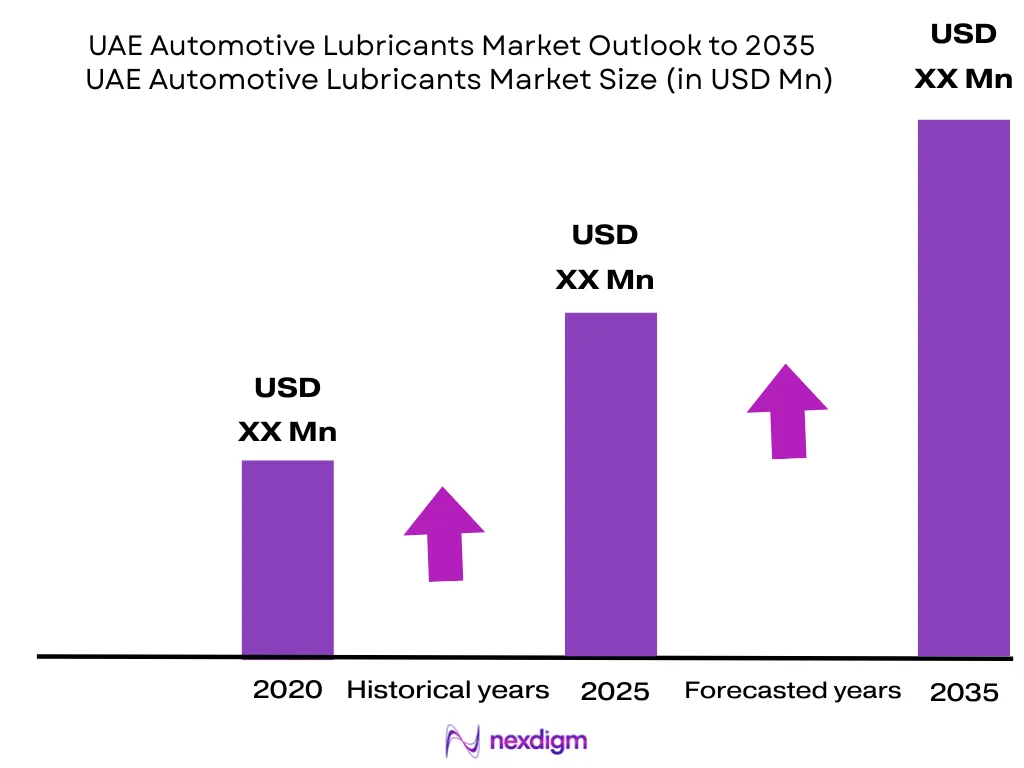
The UAE Automotive Lubricants Market is valued at approximately ~ million, supported by a large vehicle parc, intensive road mobility, commercial fleets and premium vehicle ownership. Dubai alone reached 2.5 million registered vehicles, while daytime vehicle movement reached approximately 3.5 million vehicles. The market benefits from frequent servicing under high-temperature operating conditions, alongside demand for passenger-car motor oils, heavy-duty engine oils, transmission fluids, coolants and synthetic lubricants across private and fleet vehicles. Dubai and Abu Dhabi dominate the UAE Automotive Lubricants Market because of their vehicle concentration, logistics fleets, dealership networks, service stations and lubricant supply infrastructure, while Fujairah is strategically important for blending and exports. Dubai has approximately 2.5 million registered vehicles, representing roughly half of UAE registrations, and its commercial transport ecosystem includes more than 400,000 vehicles. ENOC operates its major lubricant blending facility in Fujairah, while ADNOC Distribution produces and blends automotive lubricants in Abu Dhabi.
Market Segmentation
By Vehicle Type
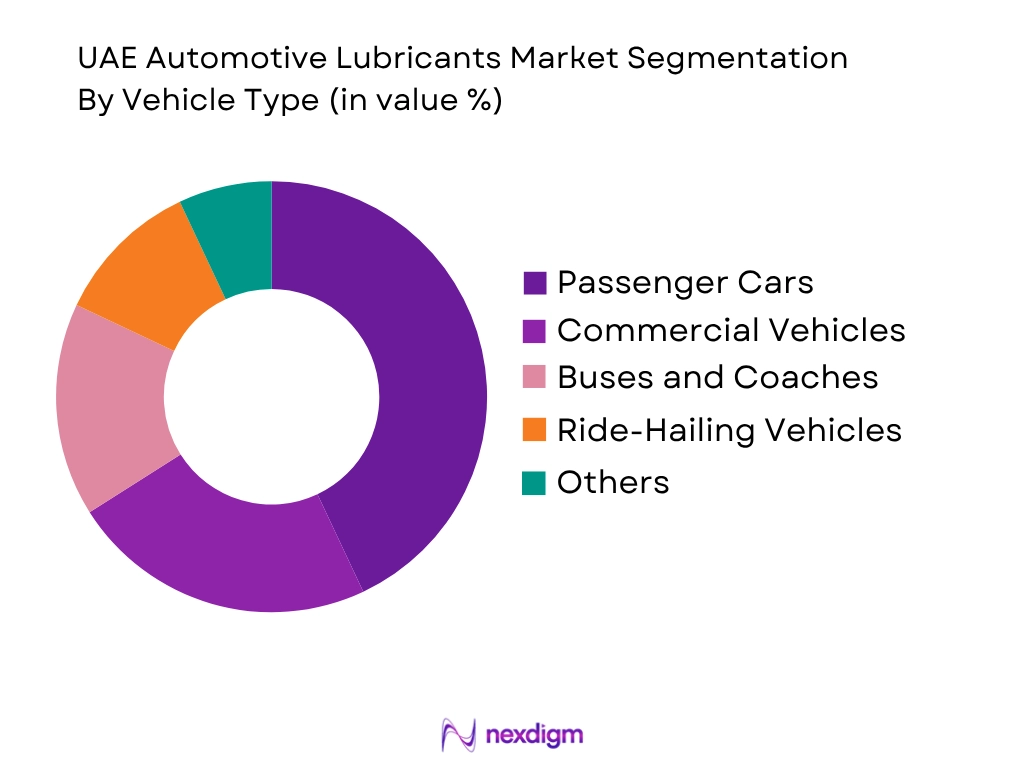
By vehicle type, the UAE Automotive Lubricants Market is segmented into passenger cars, SUVs and 4x4s, light commercial vehicles, medium and heavy commercial vehicles, buses and coaches, and off-highway vehicles. Passenger cars, SUVs and 4x4s collectively dominate lubricant demand because private road transport remains central to mobility, while the UAE has a strong installed base of Japanese, American, Korean and European vehicles. Dubai alone had 2.5 million registered vehicles, with approximately 3.5 million vehicles circulating during daytime hours. SUVs and four-wheel-drive models are particularly relevant because high ambient temperatures, highway driving and desert/off-road usage create requirements for high-performance engine oils, automatic transmission fluids, differential oils, transfer-case fluids and coolants. Dubai’s rental-car fleet also expanded from 49,725 vehicles to 71,040 vehicles, creating a professionally maintained, high-utilisation lubricant-consuming segment. Passenger vehicles therefore generate demand across OEM dealerships, quick-lube centres, fuel stations and independent workshops, with synthetic products increasingly important for newer and premium models.
By Lubricant Technology
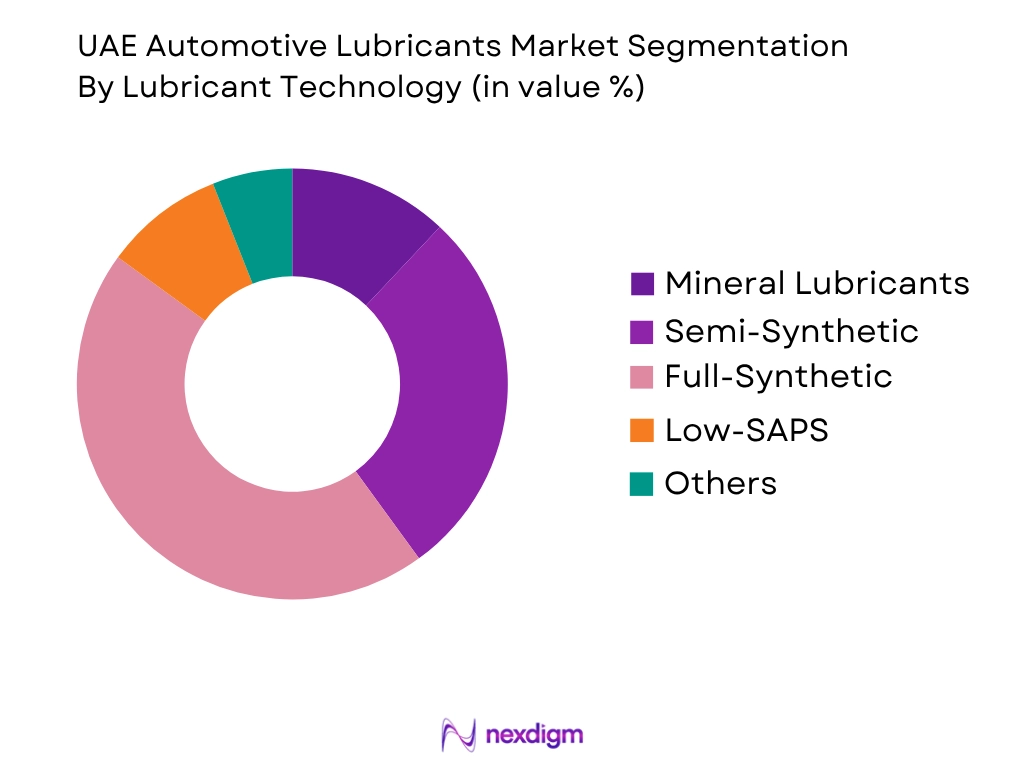
By lubricant technology, the UAE Automotive Lubricants Market is segmented into mineral, semi-synthetic, full-synthetic, low-viscosity synthetic, low-SAPS, re-refined and hybrid/EV-specific fluids. Full-synthetic and semi-synthetic products form the strategically dominant premium segment, supported by the UAE’s relatively modern vehicle fleet, demanding climatic conditions and high presence of luxury, performance and European vehicles. ADNOC Voyager includes premium synthetic formulations engineered for severe operating conditions, while ENOC manufactures products meeting international and OEM specifications at its Fujairah facility. High summer temperatures increase requirements for oxidation stability, viscosity retention and deposit control. Luxury and high-performance vehicles also commonly require manufacturer-approved 0W and 5W oils rather than basic mineral formulations. Electrification is altering this mix: the UAE had approximately 1,000 EV charging points at the end of 2024, encouraging growth in e-drive fluids, battery coolants and specialised greases. Therefore, while mineral products remain important for older vehicles and commercial applications, higher-value synthetic and specialised products are becoming increasingly important.
Competitive Landscape
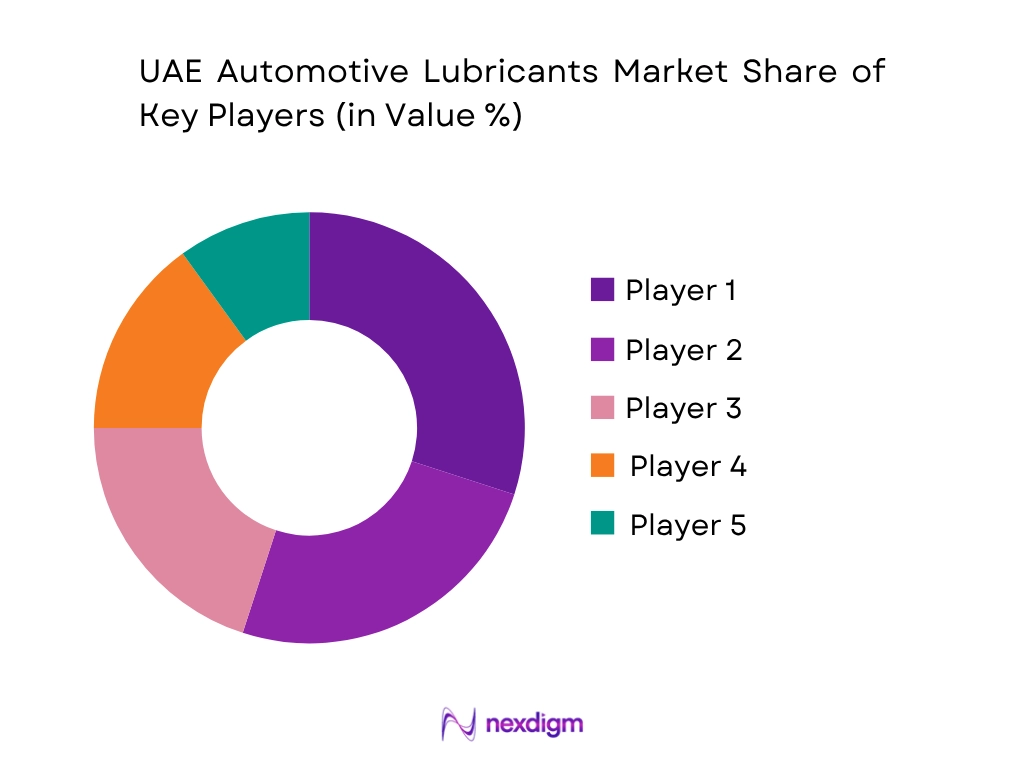
The UAE Automotive Lubricants Market combines strong national energy companies with global lubricant majors. ADNOC Distribution’s Voyager range is a significant domestic competitor and was identified by the company as the UAE’s leading lubricant brand by sales volume in its latest annual reporting. ENOC and Caltex products are locally manufactured through EPPCO Lubricants, while Shell, Castrol and other international brands compete through OEM approvals, synthetic portfolios, distributors and workshop networks. Local manufacturing capacity creates an important competitive advantage by supporting domestic supply and regional re-export.
| Company | Establishment Year | Headquarters | Core Automotive Portfolio | Synthetic Capability | Heavy-Duty Capability | UAE Blending / Manufacturing | Service & Distribution Reach | EV / Future Fluid Readiness |
| ADNOC Distribution | 1973 | Abu Dhabi, UAE | ~ | ~ | ~ | ~ | ~ | ~ |
| ENOC | 1993 | Dubai, UAE | ~ | ~ | ~ | ~ | ~ | ~ |
| EPPCO Lubricants | 1990s | Dubai, UAE | ~ | ~ | ~ | ~ | ~ | ~ |
| Shell | 1907 | London, UK | ~ | ~ | ~ | ~ | ~ | ~ |
| Castrol | 1899 | London, UK | ~ | ~ | ~ | ~ | ~ | ~ |
UAE Automotive Lubricants Market Analysis
Growth Drivers
Expanding Commercial Transport and High-Utilisation Vehicle Fleets
The expansion of commercial transport, logistics, rental vehicles, taxis and app-based mobility is a major structural driver for the UAE Automotive Lubricants Market because these vehicles accumulate substantially greater mileage than typical privately owned cars and consequently generate recurring requirements for engine oils, transmission fluids, axle lubricants, greases and coolants. Dubai Roads and Transport Authority reported that more than 400,000 vehicles were registered in Dubai’s commercial and logistics transport sector in 2024, while the number of operating companies reached 12,100. During 2025, the registered commercial fleet expanded beyond 500,000 vehicles and the number of licensed commercial-transport companies increased to 16,917, demonstrating continued expansion of the lubricant-intensive fleet base. Rental mobility provides another important consumption pool: Dubai’s vehicle-rental fleet increased from 49,725 vehicles to 71,040 vehicles in 2024, while the number of active rental companies reached 3,494. Dubai Taxi Company separately operated 5,960 taxis after adding 744 vehicles, creating another concentrated high-mileage service-fill channel. Such vehicles typically receive maintenance based on mileage and operating hours, meaning they create repeated lubricant replacement occasions rather than relying solely on new-vehicle additions. Taxi, delivery, logistics and rental fleets also create demand beyond crankcase oil because automatic transmissions, differentials, steering systems, braking systems and cooling systems require multiple specialised fluids. The broader macroeconomic environment strengthens this demand base. World Bank data place UAE GDP at USD 552.32 billion in 2024, GDP per capita at USD 50,273.5, and population at 10,986,400 people. IMF data also show UAE crude-oil production at approximately 2.9 million barrels per day in 2024, increasing to around 3.1 million barrels per day in 2025, supporting substantial hydrocarbon, industrial, construction and logistics activity that indirectly sustains heavy commercial transport. For lubricant manufacturers, these conditions make fleet accounts strategically attractive because one logistics, taxi or rental contract can generate recurring consumption across heavy-duty engine oil, automatic transmission fluid, gear oil, chassis grease and coolant. Suppliers able to combine bulk delivery, scheduled replacement, lubricant-condition monitoring and technical support are therefore positioned to capture higher lifetime value than companies dependent solely on packaged retail sales.
Premium Vehicle Ownership, Severe Operating Conditions and Synthetic Lubricant Demand
The UAE’s high-income consumer base, substantial luxury-vehicle population and severe operating environment support demand for premium synthetic automotive lubricants rather than only conventional mineral oils. World Bank data show GDP per capita of USD 50,273.5 in 2024, alongside national GDP of USD 552.32 billion and a population of 10,986,400, providing the economic foundation for widespread ownership of SUVs, luxury vehicles, performance cars and newer automatic-transmission models. Dubai’s luxury transport fleet illustrates this vehicle profile directly: the number of vehicles operating in the luxury transport sector increased from 12,602 units to 16,396 units in 2024, while annual luxury-transport trips rose from 30,219,821 to 43,443,678. Passenger volume simultaneously increased from 52,582,488 riders to 75,592,000 riders. These high-utilisation premium vehicles frequently require SAE 0W-20, 0W-30, 0W-40, 5W-30 or 5W-40 synthetic oils carrying specific API, ACEA or manufacturer approvals, alongside sophisticated automatic transmission fluids, DCT fluids, coolants and differential lubricants. Climatic conditions further strengthen the technical case for higher-performance formulations. Prolonged exposure to extreme summer temperatures increases thermal stress on engines, turbochargers, automatic transmissions and cooling systems, making oxidation stability, viscosity retention, deposit control and high-temperature shear protection commercially important product attributes. The UAE’s SUV and 4×4 culture adds another layer because desert driving, towing and prolonged idling can place additional load on engines, transfer cases and differentials. ADNOC Distribution’s 2024 annual reporting states that its VOYAGER lubricant range maintained its position as the leading lubricant brand in the UAE by sales volume and that the company expanded its product portfolio, illustrating the continuing competitive importance of locally supplied premium automotive lubricants. The UAE therefore provides a favourable environment for synthetic premiumisation: manufacturers can segment customers by European luxury vehicles, Japanese SUVs, American 4x4s, performance cars, fleet vehicles and high-mileage cars rather than treating passenger-car motor oil as a single commodity category. This vehicle diversity supports specialised viscosities, OEM approvals and extended-drain products, helping suppliers move toward technologically differentiated products.
Market Challenges
Accelerating Electric Vehicle Adoption Reducing Conventional Engine-Oil Intensity
The transition toward electric mobility represents the most important structural challenge for the UAE Automotive Lubricants Market because battery-electric vehicles eliminate conventional crankcase engine-oil changes and substantially simplify several mechanical lubrication requirements. The Ministry of Energy and Infrastructure reported that the UAE had approximately 1,000 electric-vehicle charging points at the end of 2024, including 100 charging points deployed through the government-backed UAEV network. This infrastructure is materially larger than the early-stage charging base and demonstrates that electric mobility has moved beyond pilot deployment. The Ministry also introduced a standardized national EV charging framework effective in 2025, signalling increasing institutional support for battery-electric mobility. For conventional lubricant companies, every battery-electric passenger vehicle replacing an internal-combustion vehicle removes repeated future requirements for petrol or diesel engine oil, oil filters and several conventional service items. The impact is particularly significant in a market with high annual mileage generated by taxis, rental fleets and app-based mobility. Dubai alone operated a rental fleet of 71,040 vehicles in 2024, a luxury-transport fleet of 16,396 vehicles, and Dubai Taxi Company operated 5,960 taxis. Electrification of such fleets could reduce engine-oil consumption faster than private-car electrification because fleet vehicles accumulate substantially more kilometres and undergo more frequent scheduled maintenance. The challenge is strategic rather than immediate disappearance of lubricant demand. Traditional ICE vehicles will remain in service for many years, requiring suppliers to maintain broad portfolios of passenger-car motor oils, heavy-duty diesel oils, automatic transmission fluids, differential oils and coolants while simultaneously investing in EV-specific technologies. This parallel portfolio requirement increases formulation, inventory and technical-support complexity. Battery-electric vehicles still require e-drive reduction-gear fluids, electric-motor bearing greases, compressor oils and thermal-management fluids, but these categories have different performance requirements and typically lower replacement frequency than conventional engine oil. Suppliers heavily dependent on high-volume crankcase lubricants therefore face product-mix pressure even if total vehicle mobility continues increasing. The macroeconomic scale of the transition is substantial: World Bank data put UAE GDP at USD 552.32 billion and GDP per capita at USD 50,273.5 in 2024, indicating sufficient purchasing power to accelerate adoption of technologically advanced vehicles. Lubricant manufacturers must consequently shift R&D and channel training toward dielectric properties, copper compatibility, thermal conductivity and e-drive protection while protecting legacy ICE revenue.
Increasing Specification Complexity and Aftermarket Portfolio Management
The UAE Automotive Lubricants Market faces growing technical complexity because its vehicle parc contains a wide mix of European luxury cars, Japanese SUVs, American 4x4s, Korean passenger cars, commercial trucks, taxis, rental vehicles and increasingly electrified models, each requiring different viscosity grades and OEM specifications. This diversity creates inventory, technician-training and product-selection challenges for distributors and workshops. Dubai’s vehicle-rental fleet alone reached 71,040 vehicles in 2024, while its luxury-transport fleet reached 16,396 vehicles and commercial and logistics vehicles exceeded 400,000 units. These fleets encompass numerous powertrains and transmission architectures, meaning one distributor may need to support low-viscosity gasoline oils, Euro-compatible low-SAPS formulations, heavy-duty diesel lubricants, ATFs, CVT fluids, DCT fluids, transfer-case oils, differential lubricants, brake fluids and coolant chemistries simultaneously. The challenge becomes greater as operating conditions require careful fluid selection. High ambient temperatures, prolonged idling and highway operation can expose oils and transmission fluids to severe thermal loads, while modern turbocharged engines require strong deposit control and oxidation stability. Incorrect viscosity or specification selection can affect emissions systems, fuel economy, turbocharger protection and warranty compliance. Electrification further increases complexity because technicians must distinguish between traditional automatic-transmission fluids and dedicated electric drive-unit fluids that can require electrical insulation, copper compatibility and specialised thermal properties. The underlying economy continues to expand the number of commercial service interactions. Dubai Roads and Transport Authority reported 12,100 commercial transport companies in 2024, increasing to 16,917 in 2025, while registered commercial vehicles moved from more than 400,000 to more than 500,000. The larger the fleet ecosystem becomes, the greater the logistical challenge of stocking correct specifications across quick-lube centres, independent workshops, dealerships, service stations and fleet depots. Macroeconomic indicators reinforce the scale: World Bank data record USD 552.32 billion in UAE GDP and 10,986,400 residents in 2024, while IMF data place crude-oil production at approximately 2.9 million barrels per day in 2024 and 3.1 million barrels per day in 2025, reflecting an economy with substantial transport, industrial and energy activity. Lubricant suppliers therefore require increasingly sophisticated vehicle-to-oil databases, SKU rationalisation, mechanic training, product authentication and distributor inventory systems. Companies without these capabilities risk incorrect applications, fragmented stockholding and weakened brand credibility.
Market Opportunities
Premium Synthetic Lubricants, Fleet Contracts and Condition-Based Maintenance
The scale and utilisation intensity of UAE commercial, rental, taxi and luxury fleets create a significant future opportunity for lubricant companies to shift from transactional packaged-oil sales toward premium synthetic products, long-term fleet contracts and condition-based maintenance services. Dubai’s commercial and logistics transport fleet exceeded 400,000 vehicles in 2024 and surpassed 500,000 vehicles in 2025. The number of licensed commercial transport companies increased from 12,100 to 16,917 over the same period. Rental vehicles provide another sizeable addressable group, with Dubai’s fleet reaching 71,040 vehicles, while Dubai Taxi Company operated 5,960 taxis after adding 744 units. Luxury mobility adds high-specification demand: Dubai’s luxury-transport fleet expanded from 12,602 to 16,396 vehicles, completing 43,443,678 trips during 2024 compared with 30,219,821 trips in the preceding period. These current operating metrics give lubricant suppliers a strong installed customer base without requiring speculative future vehicle assumptions. High-utilisation fleet vehicles can support full-synthetic engine oils, extended-drain heavy-duty products, automatic transmission fluids, gear oils, long-life coolants and specialised greases. The more strategically attractive opportunity is to integrate these products with lubricant-condition monitoring. Commercial fleets can use scheduled oil sampling, contamination monitoring and wear-metal analysis to determine optimal replacement intervals, reduce unplanned downtime and standardize maintenance across large vehicle populations. Suppliers can consequently compete through total fleet maintenance efficiency rather than through oil alone. The UAE’s economic structure supports this transition. World Bank figures place national GDP at USD 552.32 billion and GDP per capita at USD 50,273.5 in 2024, while IMF data indicate crude-oil production of approximately 2.9 million barrels per day, increasing to around 3.1 million barrels per day in 2025 and 3.4 million barrels per day in 2026. These figures point to continuing industrial, logistics and infrastructure activity that sustains commercial road transport. Premium synthetic suppliers can therefore target logistics operators, rental companies, taxis, construction fleets and government vehicles with bundled lubricant supply, oil-analysis services, workshop training and digital maintenance dashboards. This creates recurring contracts, improves customer retention and reduces dependence on highly competitive retail shelf space.
EV Fluids, Thermal Management and Next-Generation Automotive Lubrication
Electric mobility creates a sizeable technology opportunity for UAE lubricant manufacturers even though it reduces conventional engine-oil consumption. The Ministry of Energy and Infrastructure reported approximately 1,000 EV charging points nationwide at the end of 2024, including 100 charging points installed through UAEV. The existence of this charging network demonstrates that UAE electric mobility already has sufficient infrastructure to support development of specialised automotive-fluid categories. Battery-electric vehicles do not require traditional crankcase oil, but they introduce requirements for electric drive-unit lubricants, reduction-gear fluids, e-axle fluids, electric-motor bearing greases, high-voltage compressor oils and battery thermal-management coolants. These fluids require different technical characteristics from conventional lubricants, including electrical compatibility, copper protection, low foaming, controlled conductivity, material compatibility and high thermal stability. UAE climatic conditions make thermal-management performance especially relevant because batteries, power electronics and electric motors operate under sustained exposure to high ambient temperatures. The opportunity extends beyond passenger cars to commercial fleets and public mobility. Dubai had more than 400,000 registered commercial and logistics vehicles in 2024, a 71,040-vehicle rental fleet and 16,396 luxury-transport vehicles, giving manufacturers clearly identifiable fleet channels through which future electric and hybrid fluid products can be introduced. Dubai public and shared mobility activity further illustrates vehicle utilisation intensity: Roads and Transport Authority systems recorded 153 million trips across public transport, taxis and shared-mobility services during 2024, including more than 115 million taxi trips and approximately 32 million shared-mobility trips. For lubricant companies, fleet electrification creates an opportunity to establish technical relationships before EV-specific fluid replacement becomes a mature aftermarket category. Domestic suppliers also have the advantage of proximity to vehicle fleets and regional distribution. ADNOC Distribution reported in 2024 that VOYAGER remained the UAE’s leading lubricant brand by sales volume and that its portfolio continued expanding, providing an established platform from which new functional fluids can be commercialised. The macroeconomic backdrop is supportive: World Bank data place UAE GDP at USD 552.32 billion, population at 10,986,400 and GDP per capita at USD 50,273.5 in 2024. Suppliers that develop dedicated hybrid oils, e-drive fluids and thermal-management products can therefore reposition from traditional lubricant vendors toward broader vehicle-fluid technology providers while the existing ICE market remains active.
Future Outlook
The UAE Automotive Lubricants Market is expected to expand at approximately ~ CAGR during 2026-2035, with value growth increasingly driven by synthetic premiumisation rather than simple increases in lubricant volume. Passenger cars, SUVs, commercial fleets, rentals and logistics vehicles will continue to generate recurring service-fill demand. Dubai’s registered vehicle base already reached 2.5 million vehicles, demonstrating the depth of the aftermarket. The commercial transport sector had more than 400,000 vehicles, creating significant demand for diesel engine oils, transmission fluids, axle oils, greases and coolant products. Rental and high-utilisation mobility will create attractive fleet opportunities. Dubai’s rental fleet expanded from 49,725 vehicles to 71,040 vehicles, while Dubai Taxi Company operated 5,960 taxis after adding 744 vehicles to its fleet. Such fleets require disciplined maintenance, predictable drain intervals and downtime management. Synthetic products will gain importance because UAE operating conditions combine extreme heat, extensive highway use and a substantial luxury-car population. OEM-approved SAE 0W-20, 0W-30, 0W-40, 5W-30 and 5W-40 products should increasingly determine competitive positioning in passenger-car service channels.
Major Players
- ADNOC Distribution – Voyager
- ENOC – Protec Lubricants
- EPPCO Lubricants – ENOC and Caltex
- Shell UAE
- Castrol UAE
- TotalEnergies UAE
- ExxonMobil – Mobil
- FUCHS Oil Middle East
- Gulf Oil Middle East
- Petromin Corporation
- Motul Middle East
- PETRONAS Lubricants International
- Valvoline
- LIQUI MOLY
- Emarat Lubricants
Key Target Audience
- Automotive lubricant manufacturers and lubricant blenders
- Base-oil and lubricant additive suppliers
- Passenger-car, SUV and commercial-vehicle OEMs
- Automotive lubricant distributors, quick-lube centres and workshop networks
- Taxi, ride-hailing, rental, logistics and commercial fleet operators
- Used-oil collectors, recyclers and re-refining companies
- Investments and venture capitalist firms
- Government and regulatory bodies (Ministry of Energy and Infrastructure, Ministry of Industry and Advanced Technology, Emirates Authority for Standardization and Metrology functions under MoIAT, Dubai Roads and Transport Authority, Abu Dhabi Mobility)
Research Methodology
Step 1: Identification of Key Variables
The initial phase constructs the UAE Automotive Lubricants Market ecosystem covering base-oil producers, lubricant blenders, additive suppliers, OEM dealerships, independent workshops, fuel stations, fleet operators and recyclers. Critical variables include registered vehicle parc, vehicle age, annual mileage, sump capacity, drain interval, SAE viscosity grades, API/ACEA specifications and synthetic penetration.
Step 2: Market Analysis and Construction
Historical lubricant consumption is constructed from passenger-car, SUV, commercial-vehicle, taxi, rental and construction-equipment activity. Bottom-up calculations assess vehicle numbers, lubricant capacity and service intervals, while supply-side analysis evaluates domestic blending, imports, packaged lubricant distribution, workshop sales and fleet procurement.
Step 3: Hypothesis Validation and Expert Consultation
Market hypotheses are validated through computer-assisted telephone interviews with lubricant manufacturers, distributors, OEM dealerships, quick-lube operators, fleet maintenance managers and independent workshops. Discussions assess synthetic migration, preferred viscosity grades, OEM approvals, drain intervals, fleet contracts, product authentication, high-temperature performance and EV-fluid requirements.
Step 4: Research Synthesis and Final Output
The final stage triangulates bottom-up lubricant demand with vehicle-registration statistics, transport fleet data, domestic blending capabilities and supplier product portfolios. Dubai’s 2.5 million registered vehicles, more than 400,000 commercial transport vehicles, 71,040 rental vehicles, and the UAE’s lubricant manufacturing infrastructure serve as key external validation points.

- Executive Summary
- Research Methodology (Market Definitions and Assumptions, Abbreviations, Market Sizing Approach, Top-Down Analysis, Bottom-Up Analysis, Vehicle Parc Assessment, Annual Mileage Mapping, Sump Capacity Analysis, Lubricant Drain Interval Assessment, Factory-Fill Analysis, Service-Fill Analysis, Passenger Vehicle Demand Assessment, Commercial Fleet Assessment, Workshop and Dealership Assessment, Lubricant Import and Local Blending Analysis, Primary Industry Interviews, Distributor Interviews, Fleet Operator Interviews, Data Triangulation, Forecasting Framework, Limitations and Future Conclusions)

- Definition and Scope
- Market Evolution and Industry Genesis
- Evolution of Automotive Lubricant Consumption
- Development of Passenger Vehicle Lubrication Ecosystem
- SUV and 4×4 Lubrication Ecosystem
- Commercial Vehicle and Fleet Lubrication Ecosystem

- Growth Drivers (Premium Vehicle Parc, SUV Penetration, High Annual Mileage, Fleet Activity, Synthetic Lubricant Adoption, Workshop Infrastructure)
- Market Challenges (Electrification, Long Drain Intervals, Counterfeit Risk, Specification Complexity, Imported Additive Dependence)
- Market Opportunities (Premium Synthetic Oils, Fleet Management, EV Fluids, Re-Refining, High-Temperature Formulations)
- Market Trends (Synthetic Premiumisation, Low-Viscosity Oils, OEM Approvals, Digital Service, EV Fluids, Circular Lubricants)
- Government Regulations (Product Standards, Vehicle Inspection, Environmental Compliance, Used Oil, Import Requirements)
- SWOT Analysis
- Porter’s Five Forces Analysis
- PESTLE Analysis

- By Market Value (2020-2025)
- By Lubricant Consumption Volume (2020-2025)
- By Passenger Car Lubricant Value (2020-2025)

- By Product Type (In Value %)
Passenger Car Motor Oil
Heavy-Duty Diesel Engine Oil
Automatic Transmission Fluid
Continuously Variable Transmission Fluid
Dual-Clutch Transmission Fluid - By Lubricant Technology (In Value %)
Mineral Lubricants
Semi-Synthetic Lubricants
Full-Synthetic Lubricants
Low-Viscosity Synthetic Lubricants
Low-SAPS Lubricants - By Vehicle Type (In Value %)
Passenger Cars
SUVs and Crossovers
4×4 and Off-Road Vehicles
Pickup Trucks
Light Commercial Vehicles - By Emirate (In Value %)
Dubai
Abu Dhabi
Sharjah
Ajman
Ras Al Khaimah
Fujairah
Umm Al Quwain

- Market Share of Major Players (By Value, Volume, Product Type, Vehicle Type, Distribution Channel)
- Cross Comparison Parameters (Passenger-Car and Heavy-Duty Lubricant Portfolio Breadth, API–ACEA–OEM Approval Portfolio, Full-Synthetic and High-Temperature Product Strength, UAE Lubricant Blending and Packaging Footprint, Distributor–Fuel Station–Workshop Network Reach, OEM Factory-Fill and Authorized Service Relationships, Commercial Fleet and Quick-Lube Service Capability, Hybrid–EV Fluid and Circular Lubricant Readiness)
- SWOT Analysis of Major Players
- Detailed Profiles of Major Companies
ADNOC Distribution – Voyager
ENOC – Protec and ENOC Lubricants
EPPCO Lubricants – ENOC and Caltex
Shell UAE
Castrol UAE
TotalEnergies UAE
Mobil Lubricants
FUCHS Oil Middle East
Gulf Oil Middle East
Petromin Corporation
Motul Middle East
PETRONAS Lubricants International
Valvoline
LIQUI MOLY
Emarat Lubricants

- Passenger Car Owner Analysis
- SUV and 4×4 Owner Analysis
- Luxury Vehicle Owner Analysis
- Performance and Sports Car Owner Analysis
- Taxi Fleet Analysis
- Ride-Hailing Fleet Analysis

- By Market Value (2026-2035)
- By Lubricant Consumption Volume (2026-2035)
- By Passenger Car Lubricant Value (2026-2035)


 Request a Sample
 Ask for Customization
 Get a Quote
 Enquire Now