
 Download PDF
Market Overview
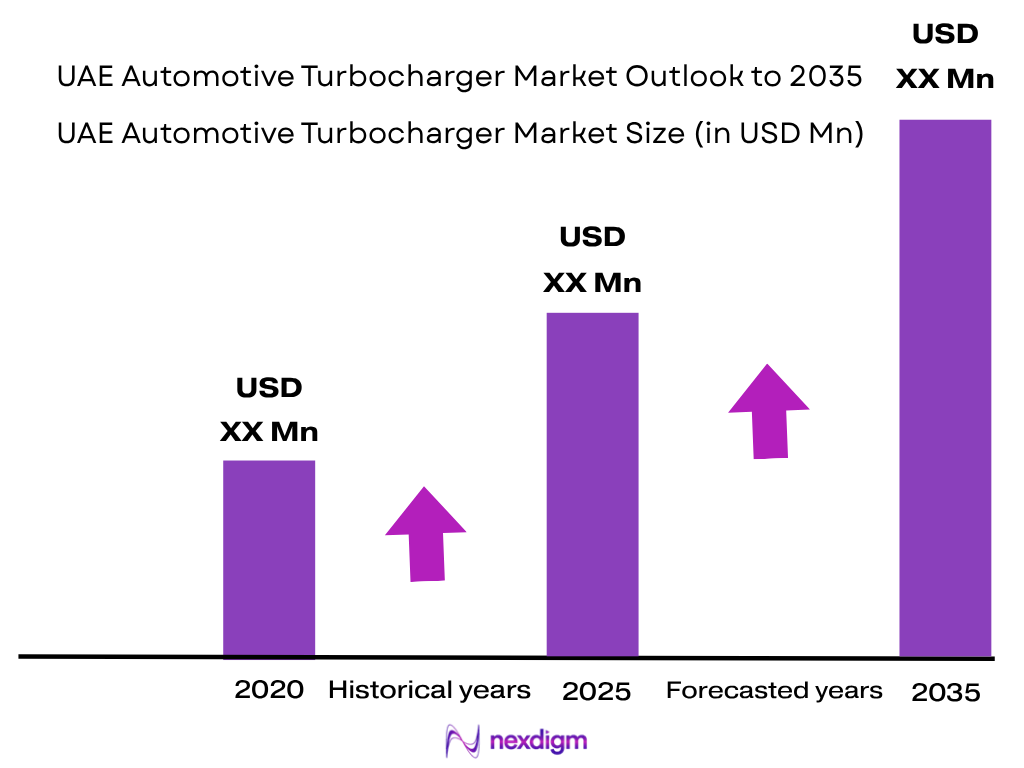
The UAE Automotive Turbocharger Market is valued at approximately ~USD XX million, supported by a large vehicle parc, imported turbocharged SUVs, passenger cars and commercial vehicles, and an extensive replacement ecosystem. Dubai’s registered vehicle population reached 2.5 million vehicles, while its rental fleet expanded from 49,725 vehicles to 71,040 vehicles. The growth of high-utilization fleets, downsized turbocharged gasoline engines and diesel-powered commercial vehicles sustains OEM replacement, CHRA, actuator and complete turbocharger demand.
Dubai, Abu Dhabi and Sharjah are the principal UAE Automotive Turbocharger Market hubs because they concentrate vehicle ownership, premium automobiles, commercial fleets, workshops, automotive parts distributors and regional trading activities. Dubai’s terminals handled 1.3 million vehicles, compared with approximately 846,000 vehicles in the preceding period, while Jebel Ali alone processed nearly 960,000 units. Jafza also accommodates more than 930 automotive and spare-parts companies, reinforcing Dubai’s dominance in imported turbochargers, replacement components and re-export distribution.
Market Segmentation
By Turbocharger Technology
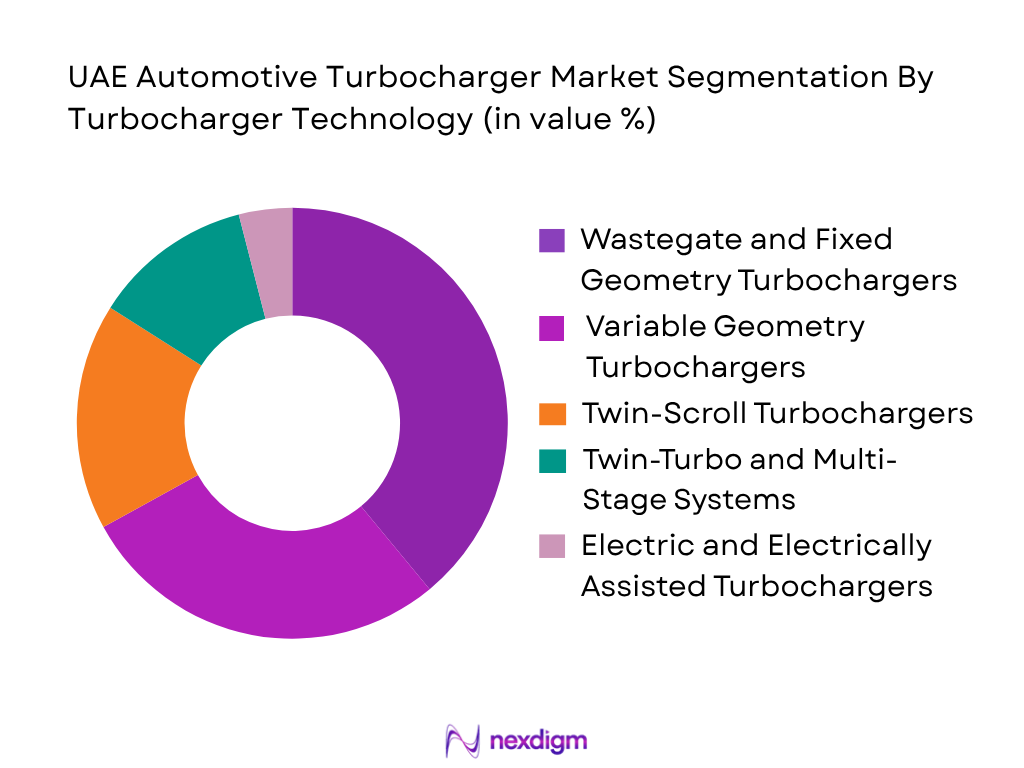
The UAE Automotive Turbocharger Market is segmented into wastegate and fixed-geometry turbochargers, variable-geometry turbochargers, twin-scroll turbochargers, twin-turbo and multi-stage systems, and electric or electrically assisted turbochargers. Wastegate and fixed-geometry systems retain the dominant market position because the UAE operates a large installed base of gasoline-powered passenger cars, crossovers and light commercial vehicles fitted with conventional exhaust-driven boosting systems. These architectures provide relatively simple boost control, established replacement availability and broad fitment across imported Japanese, European, Korean, American and Chinese vehicles. Variable-geometry turbochargers are particularly important in diesel SUVs, pickups and commercial vehicles because adjustable turbine geometry enables greater boost control across varying engine loads. Twin-scroll and twin-turbo configurations have strong relevance in premium and performance vehicles, an important UAE niche. Electric and electrically assisted turbochargers remain comparatively smaller but represent an emerging technology area as 48V hybrid powertrains and advanced boosting architectures enter the vehicle parc.
By Vehicle Type
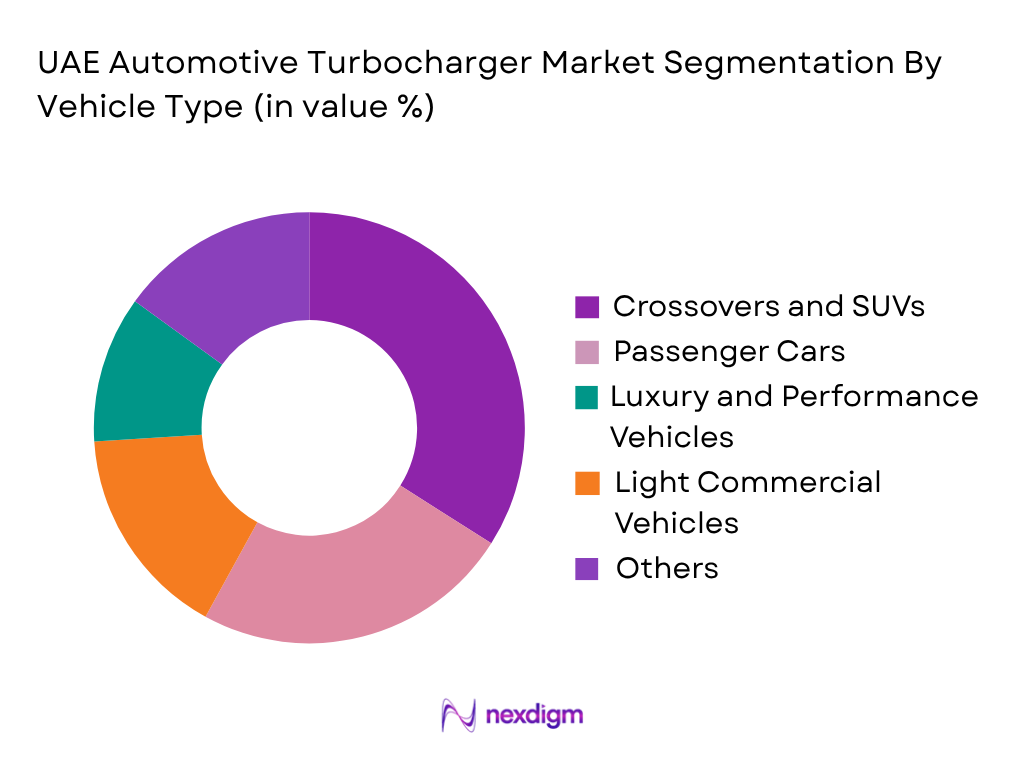
The UAE Automotive Turbocharger Market is segmented into crossovers and SUVs, passenger cars, luxury and performance vehicles, light commercial vehicles, medium and heavy commercial vehicles, and other vehicle categories. Crossovers and SUVs hold the dominant position because the UAE vehicle landscape has substantial exposure to large turbocharged gasoline SUVs, turbo-diesel 4×4 vehicles and premium sport-utility models. These applications combine high engine output requirements with towing, off-road use, highway operation and intensive air-conditioning loads, increasing the importance of reliable forced-induction systems. Passenger cars represent another sizeable category because downsized turbocharged gasoline engines have become common across European and increasingly Asian vehicle portfolios. Heavy commercial vehicles rely extensively on diesel turbocharging to achieve required torque and engine performance. Luxury and performance vehicles also contribute disproportionately to market value because many premium models use twin-scroll, twin-turbo, electronically controlled wastegate and high-performance turbocharger configurations requiring specialized servicing and replacement components.
Competitive Landscape
The UAE Automotive Turbocharger Market is characterized primarily by multinational technology manufacturers whose products reach the country through vehicle OEMs, authorized dealerships, specialist turbocharger distributors and independent aftermarket channels. Garrett Motion, BorgWarner, Cummins Turbo Technologies–Holset, Mitsubishi Heavy Industries and IHI represent key technology participants. Competition is differentiated by gasoline and diesel coverage, variable-geometry capability, electronic actuation, commercial-vehicle expertise, replacement-part availability, high-temperature durability and support for workshops servicing the UAE’s highly diverse imported vehicle parc. Garrett reports more than 100 million turbochargers in use globally, while Cummins Turbo Technologies traces its Holset turbocharger operations to 1952 and specializes heavily in commercial diesel applications.
| Major Player | Establishment Year | Headquarters | Core Turbocharger Portfolio | Gasoline Turbo Capability | Diesel / Commercial Vehicle Capability | VGT Capability | Electrified Boosting Capability | UAE Market Relevance |
| Garrett Motion Inc. | 1954 | Rolle, Switzerland | ~ | ~ | ~ | ~ | ~ | ~ |
| BorgWarner Inc. | 1928 | Auburn Hills, USA | ~ | ~ | ~ | ~ | ~ | ~ |
| Cummins Turbo Technologies – Holset | 1952 | Huddersfield, UK | ~ | ~ | ~ | ~ | ~ | ~ |
| Mitsubishi Heavy Industries | 1884 | Tokyo, Japan | ~ | ~ | ~ | ~ | ~ | ~ |
| IHI Corporation | 1853 | Tokyo, Japan | ~ | ~ | ~ | ~ | ~ |
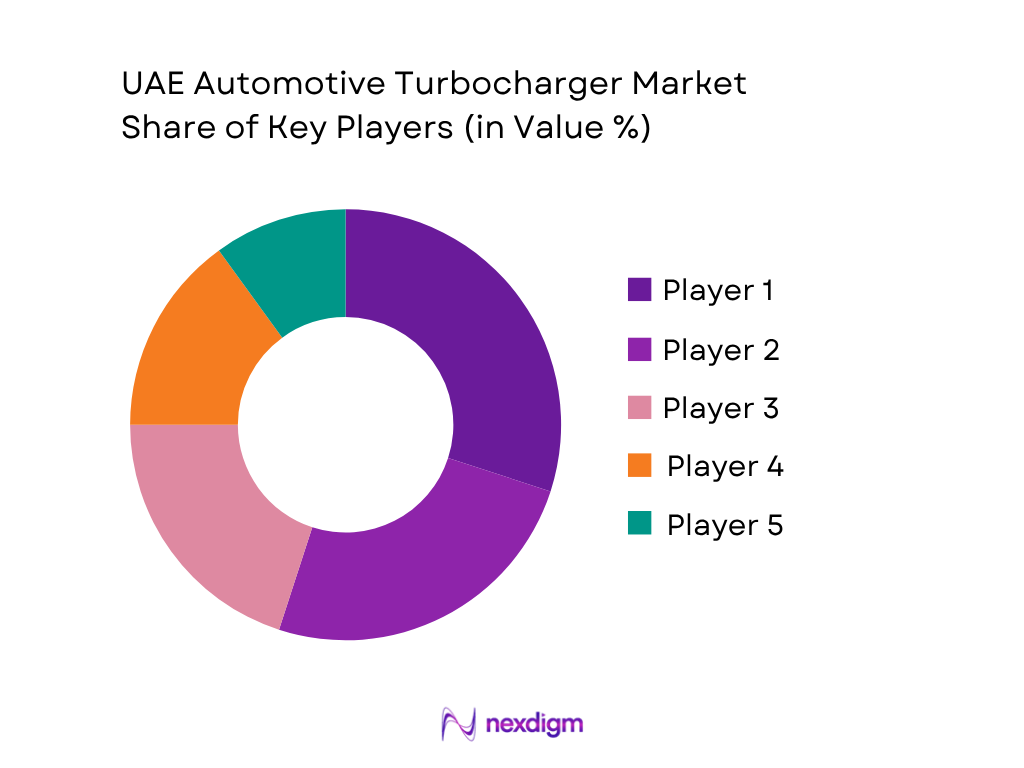
UAE Automotive Turbocharger Market Analysis
Growth Drivers
Expansion of the Vehicle Parc and High-Utilization Fleet Base Supporting Turbocharger Replacement Demand
The expansion of the UAE’s operating vehicle base is a structural growth driver for the UAE Automotive Turbocharger Market because turbocharged passenger cars, SUVs, pickups, vans and commercial vehicles create recurring requirements for complete turbocharger assemblies, center housing rotating assemblies, wastegate actuators, variable-geometry mechanisms and related replacement components. Dubai recorded 2.5 million registered vehicles in 2024, establishing the emirate as a particularly large concentration of the UAE vehicle parc. Replacement exposure is further strengthened by commercial mobility applications where engine operating cycles are substantially more intensive than those of privately owned vehicles. Dubai’s vehicle-rental fleet reached 71,040 vehicles in 2024, compared with 49,725 vehicles in 2023, while the number of active rental companies increased from 2,627 to 3,494. The luxury-transport fleet also reached 16,396 vehicles in 2024, compared with 12,602 vehicles in 2023. These vehicles completed 43,443,678 luxury-transport trips and carried 75,592,000 passengers, demonstrating the operating intensity of an important premium-vehicle segment. This matters directly for turbocharger suppliers because rental, limousine, taxi, commercial and logistics vehicles accumulate substantial engine operating hours, placing greater importance on lubrication integrity, bearing condition, boost-control components, electronic actuators and rapid replacement availability. The UAE economy recorded USD 552.32 billion in GDP in 2024, with GDP per capita reaching USD 50,273.5, supporting a sizeable automotive ecosystem and continued expenditure on vehicle ownership, maintenance and replacement components.
Dubai-Jebel Ali Automotive Trade Scale Expanding Turbocharger Distribution and Replacement Availability
The scale of Dubai’s automotive trade and logistics ecosystem is another major driver for the UAE Automotive Turbocharger Market because turbocharger demand depends not only on vehicles operating domestically but also on the availability of replacement parts for a highly diverse imported vehicle population and the UAE’s role as a redistribution hub for neighboring markets. Dubai terminals handled 1.3 million vehicles in 2024, with Jebel Ali Port alone processing nearly 960,000 vehicles. Jebel Ali Free Zone accommodated more than 930 automotive and spare-parts companies, creating a dense distribution ecosystem through which engine components, turbochargers, CHRA units, electronic actuators, repair kits and other automotive parts can be warehoused and supplied. Infrastructure continued expanding in 2025, with Jebel Ali handling 545,000 vehicles during the first half of 2025. A new 2.6 million-square-foot vehicle storage yard at Terminal 4 added 13,000 car-equivalent units and raised port-wide vehicle storage capacity to 75,000 car-equivalent units. The facility incorporates an 800-metre quay capable of servicing as many as 3 Ro-Ro vessels simultaneously. This logistics capacity is especially relevant to turbochargers because the UAE vehicle parc contains powertrains sourced from China, Japan, Thailand, India, South Korea, Europe and the United States, requiring distributors to stock multiple turbocharger architectures and engine-specific fitments. The broader UAE economy generated USD 552.32 billion in GDP in 2024, with GDP per capita of USD 50,273.5, providing a substantial economic base for automotive trade, warehousing and specialized replacement-component distribution.
Market Challenges
Multi-Origin Imported Vehicle Base Creating Turbocharger Fitment and Inventory Complexity
A major challenge for the UAE Automotive Turbocharger Market is the technical and inventory complexity created by the country’s highly diversified imported vehicle ecosystem. Turbochargers are engine-specific components rather than broadly interchangeable aftermarket products because compressor sizing, turbine housing geometry, boost-control architecture, oil and coolant connections, electronic actuator calibration, variable-vane mechanisms and engine-management interfaces differ materially between individual powertrains. Dubai terminals handled 1.3 million vehicles in 2024, including nearly 960,000 vehicles through Jebel Ali Port. In the first half of 2025 alone, Jebel Ali processed 545,000 vehicles, with substantial vehicle sourcing flows originating from China, Japan, Thailand, India and South Korea. This creates a replacement environment where UAE distributors and workshops must support turbocharged engines originating from multiple engineering ecosystems rather than maintaining inventory around one dominant domestic manufacturing platform. Jafza’s automotive community exceeded 930 automotive and spare-parts companies in 2024, illustrating the size of the trading network required to manage this product diversity. For turbocharger specialists, the challenge extends beyond carrying complete units because aftermarket operators may require specific CHRA assemblies, electronic actuators, variable-nozzle components, oil-feed hardware and installation kits matched to individual engines. Incorrect cross-referencing can result in unsuitable boost characteristics or electronic incompatibility, making technical cataloging, VIN-based identification and supplier traceability critical. Vehicle storage capacity at Jebel Ali subsequently reached 75,000 car-equivalent units, reinforcing the continuing scale of imported-platform diversity that service providers must address.
High-Utilization Commercial and Premium Fleets Increasing Service and Technical Support Requirements
The UAE Automotive Turbocharger Market faces a demanding service environment created by the high utilization of rental, limousine, ride-hailing and commercial vehicles. Turbocharger performance depends heavily on correct engine lubrication, air filtration, boost-control operation, intake integrity and disciplined repair procedures, meaning higher-utilization fleets create a need for fast diagnostics and technically competent replacement rather than simple parts availability. Dubai’s rental fleet reached 71,040 vehicles in 2024, compared with 49,725 vehicles in 2023, while active rental companies increased from 2,627 to 3,494. The premium transportation segment adds another layer of technical complexity. Dubai’s luxury-transport fleet increased from 12,602 vehicles in 2023 to 16,396 vehicles in 2024, with operators completing 43,443,678 trips and transporting 75,592,000 passengers. E-hail operations accounted for 32,556,975 trips, compared with 24,616,527 trips in the preceding period, showing the scale of commercially operated vehicles subject to repeated acceleration, idling, urban operation and high daily mileage. Many vehicles used in premium transportation and rental fleets are modern turbocharged models equipped with electronically controlled wastegates, twin-scroll units, variable-geometry systems or multiple turbochargers, raising technical requirements for diagnosis and repair. Workshops therefore need capabilities extending beyond mechanical disassembly to actuator calibration, boost-pressure testing, oil-system inspection, rotor balancing and engine-control diagnostics. With UAE GDP reaching USD 552.32 billion in 2024 and GDP per capita at USD 50,273.5, the scale of automotive and commercial mobility activity supports substantial service demand but simultaneously raises requirements for specialist technical capability.
Market Opportunities
Expansion of Turbocharger Repair, CHRA Replacement and Certified Remanufacturing Services
The UAE Automotive Turbocharger Market has a significant opportunity to develop more structured turbocharger repair, component replacement and certified remanufacturing services as the operating vehicle base and commercially utilized fleets expand. Dubai had 2.5 million registered vehicles in 2024, providing a substantial installed base from which turbocharger repair and replacement requirements can emerge across passenger cars, SUVs, pickups, vans and commercial vehicles. The opportunity becomes more compelling within high-mileage fleets because Dubai’s rental fleet contained 71,040 vehicles in 2024, while the luxury-transport fleet contained 16,396 vehicles and completed 43,443,678 trips. These operating volumes create a commercial need for solutions that can reduce vehicle downtime while extending the usable life of turbocharger systems. Rather than relying exclusively on replacement of complete turbocharger units, specialist UAE workshops can expand services around CHRA replacement, shaft and bearing inspection, electronic actuator replacement, variable-vane cleaning, wastegate diagnosis, high-speed rotor balancing and validated remanufacturing. The opportunity is particularly relevant for vehicles whose original turbocharger remains serviceable at the housing level but requires replacement of rotating or control components. Dubai’s automotive trading ecosystem provides the supply-chain foundation required to support such services, with more than 930 automotive and spare-parts companies operating within Jafza and 1.3 million vehicles handled across Dubai terminals in 2024. UAE GDP stood at USD 552.32 billion in 2024, while GDP per capita reached USD 50,273.5, supporting professional vehicle ownership, fleet operations and specialized automotive maintenance. Future growth can therefore emerge from higher-quality remanufacturing, standardized testing, traceable components and technically trained turbocharger specialists.
Jebel Ali Regional Distribution Infrastructure Creating a Turbocharger Re-Export and Inventory Hub Opportunity
Dubai’s continuing investment in automotive logistics creates a strong future opportunity for the UAE Automotive Turbocharger Market to operate as a regional inventory, distribution and re-export hub serving the GCC, Middle East and African aftermarket. Dubai terminals handled 1.3 million vehicles in 2024, with nearly 960,000 vehicles moving through Jebel Ali Port, demonstrating an automotive trade ecosystem considerably larger than demand generated solely by locally registered vehicles. Jafza hosted more than 930 automotive and spare-parts companies, providing an established commercial base for importers and regional parts distributors. Infrastructure expansion strengthened this proposition further in 2025 through a 2.6 million-square-foot vehicle yard at Jebel Ali Terminal 4, adding 13,000 car-equivalent units and increasing total vehicle storage capacity to 75,000 car-equivalent units. The facility includes an 800-metre quay capable of handling 3 Ro-Ro vessels simultaneously, while Jebel Ali processed 545,000 vehicles during the first half of 2025. The wider automotive development framework also encompasses approximately 20 million square feet and benefits from connectivity with 77 ports across an international logistics network. For turbocharger businesses, this infrastructure enables centralized stocking of complete turbochargers, CHRA units, electronic actuators, variable-vane components, repair kits and application-specific products for multiple vehicle origins. UAE GDP reached USD 552.32 billion in 2024, with GDP per capita at USD 50,273.5, supporting Dubai’s role as a capital-intensive trading and logistics centre. Current infrastructure therefore provides a measurable foundation for future expansion of specialized turbocharger distribution, regional inventory management and aftermarket fulfillment.
Future Outlook
The UAE Automotive Turbocharger Market is expected to expand at approximately ~X.X% CAGR during 2026–2035. Growth will increasingly shift from basic replacement demand toward advanced electronically controlled turbochargers, variable-geometry systems, twin-scroll technologies and hybridized boosting solutions. The market will continue to benefit from a large combustion-engine vehicle parc even as electrified powertrains gradually change the technology mix. SUVs and crossovers will remain central to turbocharger demand because the UAE combines premium vehicle consumption with extensive use of large gasoline and diesel sport-utility vehicles. Turbocharged engines provide the torque and power characteristics required for heavier vehicle bodies without relying exclusively on larger-displacement naturally aspirated engines. This supports demand for wastegate, variable-geometry and increasingly sophisticated electronic boost-control architectures.
The commercial vehicle sector provides another substantial opportunity. Delivery fleets, heavy trucks, buses, construction vehicles and logistics fleets require turbocharged diesel engines capable of operating under sustained load. Turbocharger replacement and remanufacturing services will therefore remain strategically important, particularly where fleet operators prioritize uptime and rapid component availability.
Major Players
- Garrett Motion Inc.
- BorgWarner Inc.
- Cummins Turbo Technologies – Holset
- Mitsubishi Heavy Industries – MHI Turbocharger
- IHI Corporation – IHI Turbo
- BMTS Technology GmbH & Co. KG
- Melett Limited / BMTS Technology
- Rotomaster International
- Turbo Technics Ltd.
- Precision Turbo & Engine
- HKS Co., Ltd.
- Master Power Turbochargers
- Turbo Energy Private Limited
- Komatsu Turbocharger
- Toyota Industries Corporation – Turbocharger Systems
Key Target Audience
- Automotive Turbocharger Manufacturers
- Passenger Vehicle, SUV and Commercial Vehicle Distributors
- Automotive Tier-1 and Engine System Suppliers
- Turbocharger Importers, Distributors and Jebel Ali Re-Exporters
- Turbocharger Repair, Remanufacturing and Automotive Workshop Networks
- Commercial Vehicle, Rental and Logistics Fleet Operators
- Investments and Venture Capitalist Firms
- Government and Regulatory Bodies (Ministry of Industry and Advanced Technology, Ministry of Energy and Infrastructure, Roads and Transport Authority Dubai, Integrated Transport Centre Abu Dhabi, Dubai Customs)
Research Methodology
Step 1: Identification of Key Variables
The initial phase involves developing a comprehensive ecosystem map for the UAE Automotive Turbocharger Market covering turbocharger manufacturers, OEM distributors, commercial fleets, aftermarket importers, Jebel Ali traders, workshops and remanufacturing specialists. Critical variables include turbocharged vehicle parc, fuel type, engine displacement, vehicle segment, turbocharger architecture, replacement frequency, import activity, fleet utilization and regional re-export demand. Desk research is conducted across automotive registration databases, transport authorities, manufacturer information and international trade sources. This establishes the market boundaries and identifies the principal factors influencing OEM-fitted and replacement turbocharger demand.
Step 2: Market Analysis and Construction
Historical automotive indicators are analyzed to construct market demand from both top-down and bottom-up perspectives. Vehicle populations are classified across passenger cars, SUVs, luxury vehicles, pickups and commercial vehicles and subsequently mapped against turbocharger penetration and applicable turbocharger technologies. Bottom-up calculations incorporate turbocharged engine populations, replacement cycles and aftermarket requirements, while top-down assessment evaluates automotive parts imports, distributor activity and commercial vehicle operations. The two approaches are reconciled to produce a consistent market framework.
Step 3: Hypothesis Validation and Expert Consultation
Market hypotheses are validated through computer-assisted telephone interviews and structured consultations with turbocharger distributors, diesel specialists, fleet operators, automotive workshops, parts traders and engine-system participants. Consultations focus on product fitment, replacement frequency, failure modes, buyer preferences, inventory requirements and remanufacturing practices. Industry discussions also assess demand for VGT systems, electronic actuators, CHRA replacements, high-speed balancing and performance turbochargers. These inputs are used to refine market assumptions and competitive positioning.
Step 4: Research Synthesis and Final Output
The final phase integrates vehicle-parc indicators, supplier information, trade activity, fleet dynamics and primary industry findings. Turbocharger unit demand derived through bottom-up modelling is triangulated against distributor sales patterns and wider automotive activity to improve consistency. The final research framework produces market segmentation, competitive benchmarking, technology assessment, aftermarket analysis and future opportunity mapping. Particular attention is given to Dubai and Jebel Ali as distribution hubs, commercial fleet replacement demand and the transition toward hybrid and electrically assisted boosting technologies.

- Executive Summary
- Research Methodology (Market Definition and Scope, UAE Automotive Turbocharger Taxonomy, Gasoline and Diesel Turbocharger Classification, Passenger SUV Pickup and Commercial Vehicle Mapping, Turbocharged Vehicle Parc Assessment, New Vehicle Registration Assessment, OEM Fitment Mapping, Turbocharger Import and Re-Export Assessment, Replacement Cycle Analysis, Fleet Utilization Assessment, Turbocharger Repair and Remanufacturing Mapping, Authorized and Independent Aftermarket Assessment, Market Sizing Framework)

- Definition and Scope
UAE Automotive Turbocharger Industry Evolution and Technology Development - Automotive Turbocharger Manufacturing and Assembly Process
- Automotive Turbocharger Value Chain Analysis
- UAE Automotive Turbocharger Supply Chain Analysis
- Compressor Wheel Turbine Wheel CHRA Bearing Housing Actuator and Variable Vane Ecosystem Analysis
- UAE Automotive Turbocharger Import Distribution and Re-Export Assessment
- Fleet Procurement Workshop and Turbocharger Service Framework

- Growth Drivers (Large Turbocharged Vehicle Parc, High SUV and Pickup Vehicle Usage, Expansion of Commercial and Rental Fleets, Increasing Adoption of Downsized Turbocharged Gasoline Engines, High Diesel Turbo Penetration in Commercial Vehicles, Growing Luxury and Performance Vehicle Base, Jebel Ali Automotive Parts Distribution, Replacement Demand from High-Utilization Vehicles)
- Market Challenges (Dependence on Imported Turbochargers and Components, High Ambient Temperature and Thermal Stress, Lubrication-Related Turbocharger Failures, Counterfeit and Low-Quality Replacement Units, Electronic Actuator Calibration Requirements, Diverse Imported Engine Specifications, Skilled Turbo Repair Requirements, Battery Electric Vehicle Transition)
- Market Opportunities (Variable Geometry Turbochargers, High-Temperature Turbo Systems, Commercial Vehicle Turbo Replacement, Turbocharger Remanufacturing, CHRA and Actuator Replacement, Performance Turbocharging, Hybrid and Electrically Assisted Turbochargers, GCC and Africa Re-Export Distribution)
- Market Trends (Gasoline Engine Downsizing, Twin-Scroll Turbocharger Adoption, Electronic Wastegate Control, Variable Geometry Diesel Turbochargers, Integrated Exhaust Manifold Turbo Systems, Electrically Assisted Boosting, Turbocharger Remanufacturing, High-Performance Upgrade Turbochargers)
- Regulatory and Standards Landscape (Ministry of Industry and Advanced Technology Vehicle Conformity Requirements, UAE Automotive Spare Parts Conformity Requirements, Emirates Quality Mark Requirements, Vehicle Inspection Requirements, Engine Modification Requirements, Dubai Vehicle Registration Requirements, Commercial Vehicle Inspection Requirements, Imported Automotive Component Compliance)
- SWOT Analysis
- Porter’s Five Forces Analysis
- PESTLE Analysis
- Stakeholder Ecosystem
- Competition Ecosystem

- By Market Value (2020-2025)
- By New Turbocharger Unit Demand (2020-2025)
- By OEM-Fitted Turbocharger Volume (2020-2025)
- By Replacement Turbocharger Volume (2020-2025)
- By Passenger Vehicle Turbocharger Volume (2020-2025)
- By Commercial Vehicle Turbocharger Volume (2020-2025)

- By Turbocharger Technology (In Value %)
Fixed Geometry Turbochargers
Wastegate Turbochargers
Variable Geometry Turbochargers
Twin-Scroll Turbochargers
Twin-Turbo Systems
Bi-Turbo Systems
Sequential Turbocharger Systems
Two-Stage Turbocharger Systems
Electric Turbochargers
Electrically Assisted Turbochargers
Hybrid Boosting Systems - By Vehicle Type (In Value %)
Passenger Cars
Crossovers and SUVs
Luxury and Performance Vehicles
Pickup Trucks
Light Commercial Vehicles
Medium Commercial Vehicles
Heavy Commercial Vehicles
Buses and Coaches
Rental and Limousine Vehicles
Taxi and Ride-Hailing Vehicles
Fleet and Logistics Vehicles
Off-Road and Specialized Vehicles - By Application Type (In Value %)
Passenger Vehicle Gasoline Engines
Passenger Vehicle Diesel Engines
SUV and 4×4 Engines
Luxury and Performance Engines
Pickup Truck Engines
Light Commercial Vehicle Engines
Medium and Heavy Commercial Vehicle Engines
Bus and Coach Engines
Fleet and Rental Vehicle Engines
Construction and Specialized Vehicle Engines
High-Performance and Motorsport Applications - By Fuel Type (In Value %)
Gasoline Turbocharged Vehicles
Diesel Turbocharged Vehicles
Mild-Hybrid Turbocharged Vehicles
Full-Hybrid Turbocharged Vehicles
Plug-In Hybrid Turbocharged Vehicles
Alternative-Fuel Turbocharged Vehicles - By Sales Channel (In Value %)
OEM and Authorized Distributor Channel
Authorized Dealership Parts Networks
OEM Replacement Turbocharger Channel
Independent Automotive Parts Distributors
Jebel Ali Automotive Parts Traders
Turbocharger Specialists
Diesel Fuel Injection and Turbo Specialists
Independent Repair Workshops
Commercial Fleet Service Networks
Online Automotive Parts Channels
Performance Tuning Specialists
Regional Re-Export Distributors - By Region (In Value %)
Dubai
Abu Dhabi
Sharjah
Ajman
Ras Al Khaimah
Fujairah
Umm Al Quwain
Dubai-Jebel Ali Automotive Trade Hub
Sharjah Automotive Repair and Spare Parts Cluster
Abu Dhabi-Mussafah Commercial Vehicle Service Cluster
Other UAE

- Market Share of Major Players (By Revenue, Unit Sales, Gasoline Turbochargers, Diesel Turbochargers, Passenger Vehicles, Commercial Vehicles, OEM Replacement, Independent Aftermarket)
- Cross Comparison Parameters (Gasoline Diesel and Commercial Vehicle Turbocharger Portfolio Breadth, Fixed Geometry VGT Twin-Scroll and Multi-Stage Technology Capability, UAE Authorized Distribution and Jebel Ali Inventory Footprint, Passenger SUV Pickup and Heavy Commercial Vehicle Application Coverage, High-Temperature Desert-Duty Reliability and Thermal Management Capability, OEM Replacement CHRA Remanufactured and Repair Parts Portfolio Strength, Electronic Actuator Vane Calibration and Turbo Diagnostic Support Capability, GCC Africa Re-Export and UAE Aftermarket Service Network Strength)
- SWOT Analysis of Major Players
- Competitive Positioning Matrix
- Product and Technology Portfolio Benchmarking
- Pricing and Distribution Network Benchmarking
- Market Entry Strategy Assessment
- Detailed Profiles of Major Companies
Garrett Motion Inc. – Gasoline Diesel VGT and Electric Turbocharger Systems
BorgWarner Inc. – Wastegate VGT eTurbo and High-Performance Turbocharger Systems
Cummins Turbo Technologies – Holset Commercial Vehicle and Heavy-Duty Turbochargers
Mitsubishi Heavy Industries – MHI Turbocharger Gasoline Diesel and Performance Turbochargers
IHI Corporation – IHI Turbo Passenger Vehicle Commercial Vehicle and Performance Turbochargers
BMTS Technology GmbH & Co. KG – Passenger Vehicle Gasoline and Diesel Turbocharger Systems
Melett Limited / BMTS Technology – CHRA Replacement and Turbocharger Aftermarket Components
Rotomaster International – Replacement and Remanufactured Automotive Turbochargers
Turbo Technics Ltd. – Turbocharger Remanufacturing Balancing and Performance Systems
Precision Turbo & Engine – High-Performance and Motorsport Turbochargers
HKS Co., Ltd. – Performance Vehicle Turbocharger Upgrade Systems
Master Power Turbochargers – Passenger Commercial and Industrial Turbochargers
Turbo Energy Private Limited – Passenger and Commercial Vehicle Turbochargers
Komatsu Turbocharger – Commercial and Heavy-Duty Turbocharger Systems
Toyota Industries Corporation – Automotive Turbocharger Systems

- Turbocharger Buyer Segmentation
- Turbocharger Replacement and Repair Behaviour
- OEM Genuine and Aftermarket Brand Selection Criteria
- Turbocharger Buyer Pain Points
- Turbo Technology and Replacement Type Adoption Assessment
- Replacement and Repurchase Behaviour

- By Market Value (2026-2035)
- By New Turbocharger Unit Demand (2026-2035)
- By OEM-Fitted Turbocharger Volume (2026-2035)
- By Replacement Turbocharger Volume (2026-2035)
- By Passenger Vehicle Turbocharger Volume (2026-2035)
- By Commercial Vehicle Turbocharger Volume (2026-2035)


 Request a Sample
 Ask for Customization
 Get a Quote
 Enquire Now